



 Chat with AI
Exam 9: Microbiology

Exam 1: Anatomy291 Questions
Exam 2: Behavioral science240 Questions
Exam 3: Biochemistry156 Questions
Exam 4: Biostatistics117 Questions
Exam 5: Embryology52 Questions
Exam 6: Genetics103 Questions
Exam 7: Histology24 Questions
Exam 8: Immunology129 Questions
Exam 9: Microbiology336 Questions
Exam 10: Pathology816 Questions
Exam 11: Pathophysiology464 Questions
Exam 12: Pharmacology538 Questions
Exam 13: Physiology272 Questions
Select questions type


A 22-year-old unvaccinated woman comes to the office due to a rash that developed during a recent trip to Southeast Asia. A week ago, while still abroad, she developed a low-grade fever and arthralgias, followed by numerous pinpoint, pink macules and papules on her face. Over the next 48 hours, the rash spread to her trunk and then her extremities. She went to a local emergency department, where she was diagnosed with a viral illness and also found to be approximately 8 weeks pregnant. Her symptoms resolved over the following few days, and she returned to the United States. Physical examination today reveals postauricular lymphadenopathy. Heart and lung examinations are unremarkable. Fetal heart tones are normal. The fetus is at highest risk for developing which of the following complications?
(Multiple Choice)
4.7/5  (75)
(75) A 67-year-old man comes to the emergency department with low-grade fevers and fatigue. He has no history of heart disease. His temperature is 38.4 C (101.1 F), blood pressure is 117/76 mm Hg, pulse is 82/min, and respirations are 14/min. On examination, there is a diastolic murmur at the left sternal border. He has nontender erythematous macules on his hands and feet. Blood cultures show gram-positive cocci that are catalase-negative and able to grow in hypertonic (6.5%) saline and bile. This patient's medical history is most likely to include which of the following procedures within the past month?
(Multiple Choice)
4.7/5 (80)
(80) An outbreak of infection with a seasonal influenza A strain is reported in a small community. The strain is similar to the one that circulated in the preceding year. Approximately 70% of the adult population in that community remains uninfected, despite prolonged and repeated exposure to ill contacts. Which of the following is the most important host factor in preventing influenza infection in these subjects?
(Multiple Choice)
4.9/5 (81)
(81) A 3-year-old boy who recently immigrated to the United States is brought to the emergency department with fever, malaise, and a painful, swollen right knee. He is hypotensive and tachycardic. Medical history is significant for a recent episode of acute otitis media and several vaccinations that are not up to date. Arthrocentesis of the right knee shows cloudy synovial fluid. Gram stain of the aspirate reveals pleomorphic, gram-negative coccobacilli. Cultures performed on a blood agar plate supplemented with a disk containing hematin and nicotinamide adenine dinucleotide (NAD+) grow colonies only near the disk. The organism responsible for this patient's condition most likely produces which of the following virulence factors?
(Multiple Choice)
4.9/5 (88)
(88) A microbiologist is studying the structure and function of bacterial cell walls. In an experiment, group A streptococci are treated with chemicals to solubilize the cell wall. Various cell wall-associated proteins are subsequently extracted. Electron microscopic evaluation of a specific protein shows structural homology with mammalian tropomyosin and myosin. This protein acts as a virulence factor for certain species of the organism. Which of the following is the most likely function of this bacterial cell wall-associated protein?
(Multiple Choice)
4.8/5 (81)
(81) A 64-year-old man comes to the emergency department due to 2 days of abrupt-onset fever, malaise, and myalgia. He has also had nasal discharge, sore throat, and a nonproductive cough. The patient has a history of hypertension and chronic obstructive pulmonary disease. He is a former smoker but does not use alcohol or illicit drugs. Temperature is 38.3 C (101 F), blood pressure is 130/70 mm Hg, pulse is 96/min, and respirations are 18/min. Physical examination shows watery nasal discharge, pharyngeal erythema, and clear lungs on auscultation. Droplet precautions are immediately instituted to prevent spread of the infection. Hand hygiene with an alcohol-based disinfectant following patient contact is also initiated. This patient's infecting pathogen is likely susceptible to the disinfectant due to the presence of which of the following characteristics?
(Multiple Choice)
4.7/5 (80)
(80) A 43-year-old man comes to the office due to fatigue and worsening pedal edema over the past several weeks. The patient was diagnosed with advanced HIV infection and started on antiretroviral therapy 3 months ago. He also has a history of hypertension. Physical examination shows bilateral lower extremity pitting edema. Serum creatinine is elevated and serum phosphorus is decreased compared to test results 3 months ago. Urinalysis reveals moderate proteinuria and glucosuria. Renal biopsy shows cytoplasmic vacuolization in the proximal tubules accompanied by loss of brush border and basement membrane denudation. Intracytoplasmic eosinophilic inclusions are also seen in the proximal tubules. There are no significant interstitial inflammatory infiltrates, and the glomeruli appear normal. Which of the following is the most likely diagnosis in this patient?
(Multiple Choice)
4.9/5 (77)
(77) A 4-week-old girl is brought to the emergency department due to poor feeding and increasing lethargy. The patient was born at term and had been well until 2 days ago, when she started sleeping throughout the day. She has been difficult to arouse for feeds and has had little interest in eating when awake. This morning, the patient had several episodes of emesis after the family attempted to feed her. Temperature is 39.4 C (102.9 F), and she is mildly tachypneic. A lumbar puncture is performed, and the patient is admitted due to concerns for infection. CSF culture grows numerous gray colonies on blood agar, with a narrow area of clearing surrounding each colony. Gram staining shows gram-positive cocci in short chains. Which of the following virulence factors is primarily involved in the pathogenesis of this patient's infection?
(Multiple Choice)
4.8/5 (78)
(78) An outbreak of diarrheal illness occurs in a community after a massive hurricane. The affected patients experience voluminous, watery diarrhea that quickly leads to severe dehydration. Stool examinations of these patients yield oxidase-positive, curved, highly motile, gram-negative rods. Epidemiologic study reveals the source as a contaminated water supply. Which of the following patient populations would be most susceptible to developing this illness?
(Multiple Choice)
4.9/5 (83)
(83) A 26-year-old man is being screened as a potential kidney donor for his mother, who has end-stage renal disease. The patient has no history of diabetes, hypertension, or kidney disease and is up to date with all recommended vaccinations. Physical examination is unremarkable. Blood type and crossmatch testing demonstrate biological compatibility. As part of the evaluation, screening for transmissible diseases is performed and is notable for the following results: 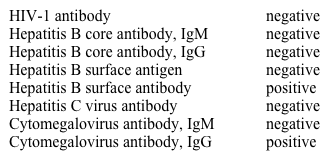 Based on these data, the patient most likely has had which of the following conditions in the past?
 (Multiple Choice)
4.8/5 (78)
(78) A 28-year-old woman is brought to the emergency department due to abrupt onset of high fever, severe headache, photophobia, and confusion. Temperature is 38.9 C (102 F), blood pressure is 90/60 mm Hg, and pulse is 118/min. On examination, the patient is obtunded and diaphoretic. There is increased resistance to passive neck flexion. Pupillary reflexes are brisk and symmetric, and the patient moves all extremities equally to painful stimuli. Lumbar puncture is performed, and cerebrospinal fluid (CSF) analysis reveals neutrophilic pleocytosis, elevated protein, and low glucose. CSF Gram stain shows no bacteria, and fungal antigen testing is negative. Wet mount preparation of the CSF shows motile trophozoites. Which of the following most likely predisposed this patient to her current condition?
(Multiple Choice)
4.8/5 (80)
(80) A 34-year-old woman comes to the office for evaluation of recurrent transient pulmonary infiltrates. The patient has a history of bronchial asthma and has had several exacerbations over the past few years, particularly during the winter months. She is currently asymptomatic. She has no other medical problems and has never traveled outside the United States. Her medications include albuterol as needed and medium-dose inhaled glucocorticoids. Temperature is 37.1 C (98.8 F). Physical examination is unremarkable. Complete blood count shows eosinophilia. A chest CT scan reveals proximal bronchiectasis. This patient's condition is most likely related to colonization with which of the following?
(Multiple Choice)
4.9/5 (84)
(84) A 45-year-old man comes to the physician due to pain, swelling, and erythema affecting his right leg. He says that he suffered a minor cut to his leg a few days ago while cleaning his garage. Physical examination shows an indurated region surrounding a minor laceration that is draining a purulent exudate. He is diagnosed with cellulitis and started on the appropriate treatment. Gram stain of the exudate shows gram-positive cocci in clusters. The organism most likely responsible for this patient's infection synthesizes a protein as part of its peptidoglycan cell wall that does which of the following?
(Multiple Choice)
4.9/5 (76)
(76) Three cases of severe pharyngitis were reported in a community of immigrants. The patients had thick pharyngeal exudates, neck swelling, and difficulty swallowing. One of them died from severe heart failure. The toxin responsible has a mechanism of action most similar to another toxin produced by which of the following bacteria?
(Multiple Choice)
4.8/5 (75)
(75) A 29-year-old woman comes to the office due to severe joint pain in her hands, wrists, and ankles for a week. The pain is so severe that she is unable to perform her daily activities, and taking ibuprofen provides only partial relief. She has no prior medical conditions but developed high fever and diffuse rash during a trip to Puerto Rico 2 weeks ago. Evaluation at a local medical facility was negative for malaria, and her symptoms improved spontaneously after several days. She does not use tobacco, alcohol, or illicit drugs and is in a monogamous relationship with her husband. Temperature is 37 C (98.6 F), blood pressure is 122/70 mm Hg, and pulse is 86/min. Physical examination shows pink, moist oropharyngeal mucosa; no rash; clear lungs; normal heart sounds; and no abdominal organomegaly. There is periarticular swelling and tenderness of the wrists, ankles, and interphalangeal joints of her hands. Range of motion in these joints is decreased due to pain. Laboratory testing reveals lymphopenia. Which of the following is the most likely cause of this patient's joint pain?
(Multiple Choice)
4.9/5 (61)
(61) A 10-month-old boy is brought to the emergency department due to 2 days of fever, irritability, and vomiting. The patient has had no prior significant medical conditions and has received all recommended vaccinations, including protein-conjugated, 13-valent pneumococcal capsular polysaccharide vaccines (PCV13) at ages 2, 4, and 6 months. On physical examination, the patient is febrile and lethargic, with a bulging anterior fontanelle. Lumbar puncture yields turbid fluid with an abundance of neutrophils. Gram stain of cerebrospinal fluid reveals lancet-shaped, gram-positive diplococci. Which of the following best explains this patient's current condition?
(Multiple Choice)
4.8/5 (75)
(75) A 22-year-old woman is brought to the emergency department due to a day of fever, headaches, nausea, vomiting, and myalgias that began suddenly last night. This morning, the patient was lethargic, difficult to arouse, and confused. She is an exchange student who came to the United States 3 months ago, and her medical history is unknown. Temperature is 39.4 C (102.9 F), blood pressure is 100/60 mm Hg, pulse is 112/min, and respirations are 18/min. Physical examination shows nuchal rigidity. Skin examination findings are shown in the image. 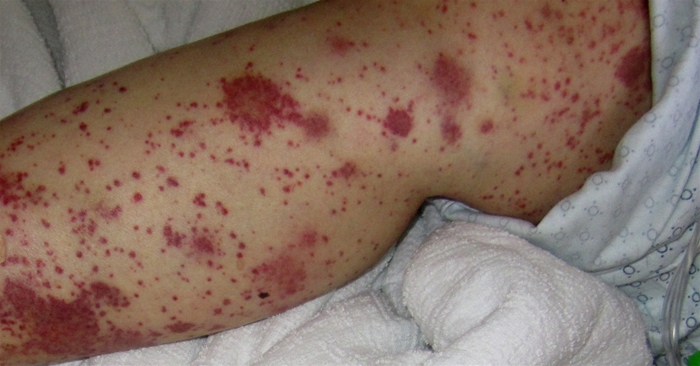 Leukocyte count is elevated, and lumbar puncture with cerebrospinal fluid Gram stain establishes the diagnosis. Which of the following is the primary component of the vaccine that could have prevented this patient's current condition?
 (Multiple Choice)
4.9/5 (77)
(77) A 28-year-old man comes to the emergency department due to 2 weeks of headaches, fever, and episodes of inattentiveness. The patient has a history of Hodgkin lymphoma and is undergoing treatment with combination chemotherapy. Temperature is 38.2 C (100.8 F), blood pressure is 138/84 mm Hg, and pulse is 72/min. Lumbar puncture reveals an elevated opening pressure, and cerebrospinal fluid analysis shows moderately increased protein levels and low glucose levels. Light microscopy of the cerebrospinal fluid is shown in the image. 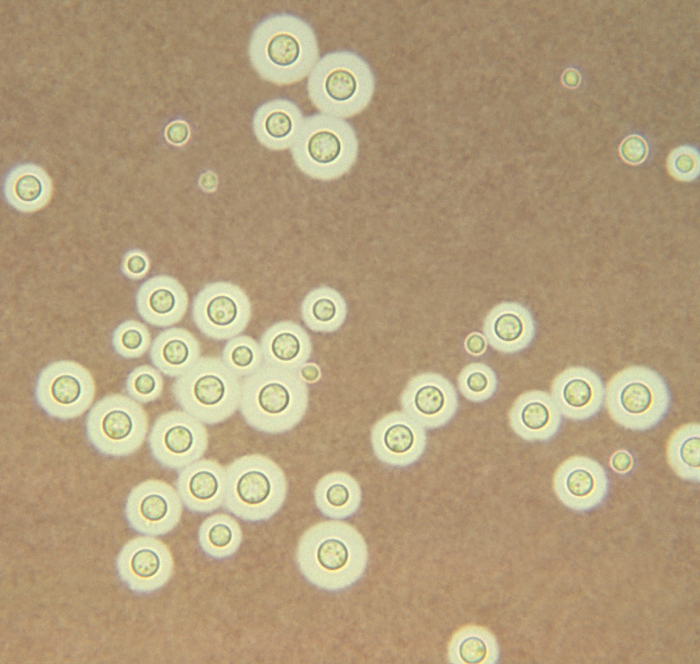 Which of the following should be included in initial treatment for this patient's current condition?
 (Multiple Choice)
4.8/5 (65)
(65) A 34-year-old woman comes to the office due to 3 days of discomfort and swelling in the right axilla. The patient has no known medical problems. She is the local community veterinarian and volunteers as a swim coach at her children's school. She owns a parrot and a hamster. Temperature is 36.9 C (98.4 F). On physical examination, there is an enlarged, tender axillary lymph node on the right, measuring about 3 cm and with slight surrounding erythema but no skin breakdown. There is no other area of lymphadenopathy present. Several scratch marks are seen on the right arm. The organism responsible for the lymphadenopathy is also associated with which of the following conditions?
(Multiple Choice)
4.8/5 (74)
(74) A 1-year-old boy is brought to the emergency department by his mother because of high fever, irritability, and photophobia. He recently underwent ventriculoperitoneal shunt placement for congenital hydrocephalus. On physical examination, his temperature is 38.3° C (101° F), and passive flexion of the neck results in spontaneous flexion of the hips and knees. Blood cultures grow coagulase-negative Staphylococcus. Which of the following is the most important virulence mechanism by which this bacterium causes disease?
(Multiple Choice)
4.9/5 (89)
(89) 
Filters
- Essay(0)
- Multiple Choice(0)
- Short Answer(0)
- True False(0)
- Matching(0)