



 Chat with AI
Exam 9: Microbiology

Exam 1: Anatomy291 Questions
Exam 2: Behavioral science240 Questions
Exam 3: Biochemistry156 Questions
Exam 4: Biostatistics117 Questions
Exam 5: Embryology52 Questions
Exam 6: Genetics103 Questions
Exam 7: Histology24 Questions
Exam 8: Immunology129 Questions
Exam 9: Microbiology336 Questions
Exam 10: Pathology816 Questions
Exam 11: Pathophysiology464 Questions
Exam 12: Pharmacology538 Questions
Exam 13: Physiology272 Questions
Select questions type


A 22-year-old man comes to the office due to a painful lesion on his upper back. The patient developed a small tender papule a few days ago that progressively enlarged and became red and painful. He has had 3 similar lesions on his upper back over the past 6 months, which were treated with incision and drainage and antibiotics. The patient has no other medical issues and takes no medications. He does not use tobacco, alcohol, or illicit drugs. On physical examination, there is a 3-cm tender pustule with surrounding erythema on his right upper back. Gram staining of purulent drainage from the lesion is shown below. 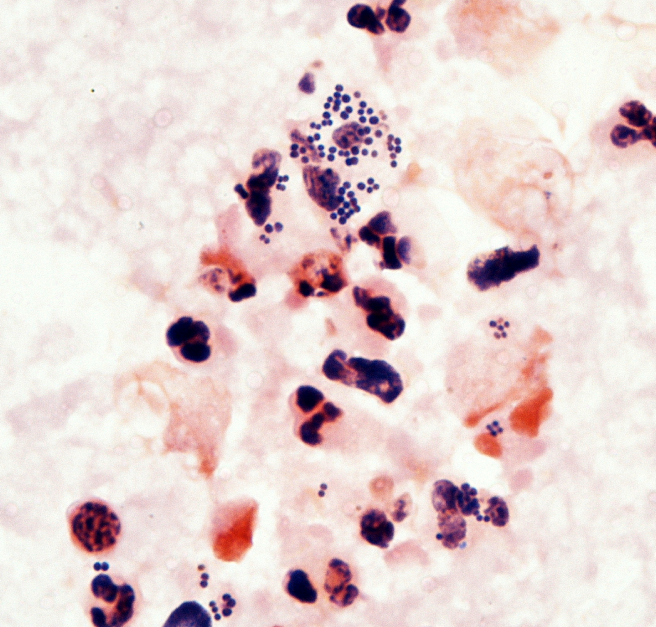 Which of the following most likely predisposed this patient to recurrent infections?
 (Multiple Choice)
4.7/5  (77)
(77) A 24-year-old woman comes to the emergency department due to 2 days of fever. The patient has no chronic medical conditions, drinks alcohol occasionally, and does not use tobacco or illicit drugs. She is sexually active and frequently travels for her work as a freelance journalist. Temperature is 38.3 C (101 F), blood pressure is 118/66 mm Hg, pulse is 106/min, and respirations are 18/min. Physical examination is notable for mild scleral icterus and splenomegaly. Laboratory findings are shown in the exhibit. 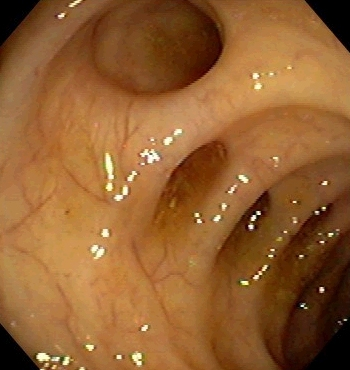 Which of the following infectious agents is most likely responsible for this patient's current condition?
 (Multiple Choice)
4.8/5 (79)
(79) A 7-year-old boy is brought to the emergency department due to fever, headache, vomiting, and confusion. He has no prior medical conditions and is up to date with immunizations. The patient has not traveled recently, and his parents report no exposure to individuals with similar symptoms or ingestion of anything out of the ordinary. They have recently noticed several dead birds around their neighborhood. Temperature is 39 C (102.2 F). Physical examination shows neck rigidity and right lower extremity weakness with fasciculations. Cerebrospinal fluid analysis shows a leukocyte count of 200/mm3 with 20% neutrophils and 80% lymphocytes. Which of the following is the most likely pathogen responsible for this patient's condition?
(Multiple Choice)
4.9/5 (81)
(81) A 34-year-old man comes to the emergency department due to 2 days of fever, malaise, and myalgia. He has also had worsening shortness of breath and cough. The patient works in the mail room at a large company, does not smoke cigarettes, and drinks alcohol occasionally. Chest imaging shows lung infiltrates and prominent widening of the mediastinum. Sputum and blood cultures yield large, gram-positive rods that form colonies resembling a "Medusa head." Which of the following is the most likely bacterial virulence factor contributing to this patient's condition?
(Multiple Choice)
4.8/5 (74)
(74) A 65-year-old man comes to the emergency department due to an episode of hemoptysis that occurred earlier this morning. The patient estimates that he coughed up about 100 mL of blood. Prior to this episode he was in his usual state of health and felt well, with no fevers, night sweats, or weight loss. He has had occasional episodes of blood-tinged sputum over the past few months. The patient's past medical history is significant for tuberculosis (TB) that was effectively treated several years ago. He had smoked a pack of cigarettes daily for 45 years but quit 4 years ago. A representative cut of the CT scan, shown in the image below, demonstrates changes consistent with prior TB infection, including an old left upper lobe cavity. Compared to prior scans, the main difference is that the cavity now appears to be filled with a round mass. 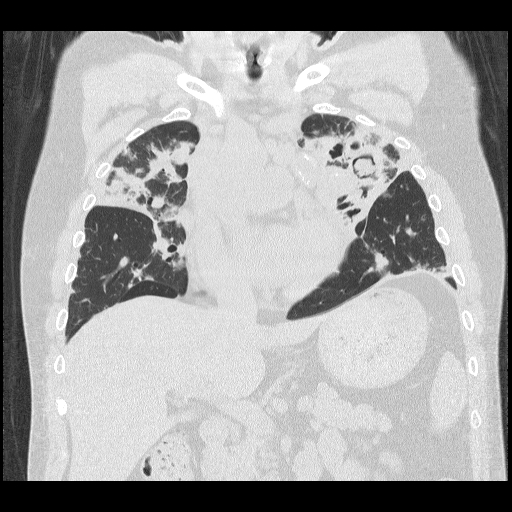 Which of the following best describes this patient's condition?
 (Multiple Choice)
4.8/5 (93)
(93) A 42-year-old man comes to the office due to 2 weeks of progressive fever, chills, abdominal discomfort, and loose stools, which began during a trip to Southeast Asia. He received no pre-travel vaccinations and did not strictly follow food and water safety precautions during the trip. The patient has no chronic medical conditions but has experienced a prior episode of Salmonella enteritidis gastroenteritis, which resolved with symptomatic care. Temperature is 39.4 C (103 F), blood pressure is 110/64 mm Hg, pulse is 62/min, and respirations are 18/min. Physical examination reveals a faint macular rash on the trunk. There is mild tenderness on palpation of lower abdominal quadrants with no guarding or rebound tenderness. Blood culture grows non-lactose fermenting gram-negative rods. Which of the following best explains the prolonged and severe disease course from this pathogen compared to the patient's previous bacterial infection?
(Multiple Choice)
4.9/5 (87)
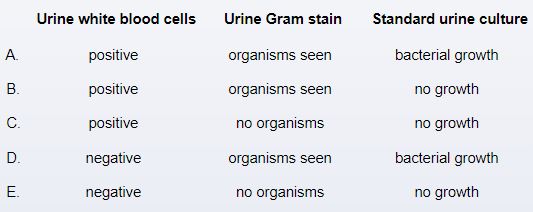
(87) A 19-year-old man comes to the emergency department due to dysuria and scrotal pain. The patient first noticed discomfort with urination and a watery urethral discharge 3 days ago. Yesterday, he developed pain on the left side of the scrotum while sitting in class. Vital signs are normal. On examination, tender swelling is present along the posterior aspect of the left testis, which is otherwise normal in size and position. Diagnostic testing reveals Chlamydia trachomatis as the sole causative pathogen. Which of the following additional results are most consistent with this patient's diagnosis?
(Multiple Choice)
4.7/5 (79)
(79) A 14-year-old girl comes to the emergency department due to rapidly progressive exertional dyspnea and generalized weakness, which were preceded by a mild febrile illness several days ago. She has a history of sickle cell disease and takes a daily folic acid supplement. Her temperature is 37.2 C (99.1 F), blood pressure is 115/70 mm Hg, and pulse is 112/min and regular. On examination, the patient has conjunctival pallor but no icterus. A cardiac flow murmur is present. The abdomen is soft and nontender with no organomegaly. Laboratory studies show a hematocrit of 16% with reticulocyte count of 0.1% (normal range, 0.5%-1.5%). Leukocyte and platelet counts are normal. Which of the following best describes the virus most likely responsible for this patient's current condition?
(Multiple Choice)
4.8/5 (71)
(71) A 23-year-old woman diagnosed with a viral infection participates in a longitudinal research study. The patient experiences symptoms of similar spectrum over a specific time, as shown in the image. 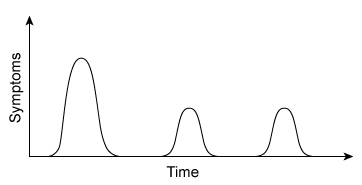 Which of the following mechanisms is most likely responsible for the pattern of illness seen in this patient?
 (Multiple Choice)
4.8/5 (78)
(78) A 34-year-old man comes to the physician due to fever, myalgias, malaise, and progressive fatigue over a 2-week period. He has not experienced any sore throat. He recently received a blood transfusion while hospitalized for a bleeding duodenal ulcer. Physical examination shows mild splenomegaly. There is no lymphadenopathy and no jaundice. Lymphocytosis is identified in the peripheral blood with 30% atypical lymphocytes. The patient's serum fails to agglutinate horse erythrocytes. The agglutination test is repeated a week later and, again, no agglutination is noted. HIV testing is negative. Which of the following is the most likely cause of this patient's condition?
(Multiple Choice)
4.9/5 (79)
(79) Several individuals in a Florida neighborhood develop a febrile illness during the summer. Most of them experience abrupt-onset fever, headache, confusion, and lethargy. Some patients also develop tremors, seizures, and focal motor or sensory deficits. Physical examination shows signs of meningeal irritation and altered mental status. Cerebrospinal fluid evaluation reveals lymphocytic pleocytosis with no organisms seen on Gram stain. Brain imaging shows no abnormalities. Which of the following would be most helpful in controlling this disease outbreak?
(Multiple Choice)
4.7/5 (68)
(68) A 45-year-old man comes to the emergency department due to several days of cough and fever. His temperature is 38.4 C (101.2 F), blood pressure is 117/76 mm Hg, pulse is 92/min, and respirations are 18/min. Physical examination of the right lung reveals occasional rales and decreased breath sounds at the base. A chest x-ray demonstrates a lung infiltrate, hilar adenopathy, and a right-sided pleural effusion. Lung tissue obtained from the patient reveals the findings in the image below: 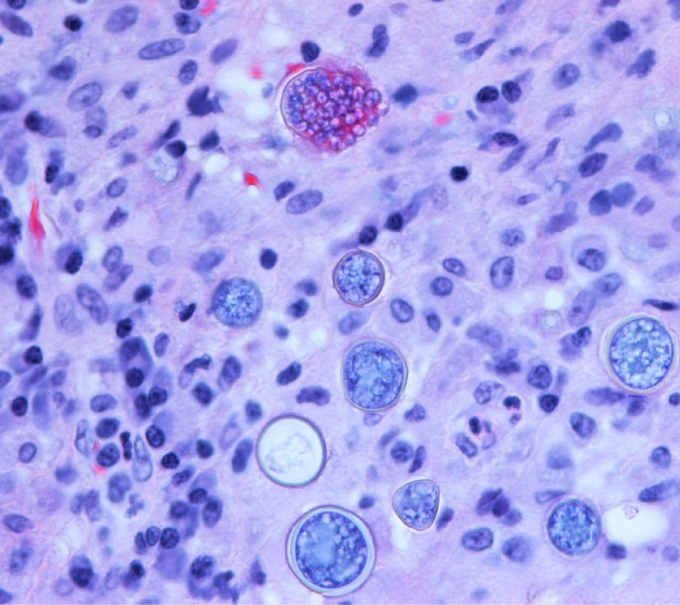 Which of the following is the most likely cause of this patient's condition?
 (Multiple Choice)
4.8/5 (73)
(73) A 1-month-old boy is brought to the emergency department during winter with cough and difficulty breathing. He has had rhinorrhea, cough, and congestion for the past 3 days. Today, the patient began breathing harder and faster with increased cough. Temperature is 37.8 C (100 F) and respirations are 68/min. Oxygen saturation is 91%. The patient is alert and awake and has subcostal and suprasternal retractions. Mucous membranes are moist, and the anterior fontanelle is open and flat. Physical examination reveals diffuse expiratory wheezes and scattered rales. Which of the following pathogens is most likely causing this patient's condition?
(Multiple Choice)
4.8/5 (83)
(83) A 70-year-old man is hospitalized due to abrupt-onset, severe left thigh pain with no preceding trauma. Temperature is 38.9 C (102 F), blood pressure is 90/60 mm Hg, pulse is 120/min, and respirations are 24/min. Left thigh examination shows diffuse swelling with dusky skin discoloration and several bullae filled with hemorrhagic fluid. There is significant tenderness and crepitus on palpation. Gram staining of the bullae fluid reveals numerous gram-positive rods, and subsequent culture grows Clostridium septicum. Which of the following is the greatest risk factor for this patient's current condition?
(Multiple Choice)
4.9/5 (86)
(86) A 68-year-old woman is brought to the emergency department due to confusion and lower extremity weakness. The symptoms began 2 days ago along with fever, headache, malaise, and myalgias. Today, the patient was noted to be confused and had difficulty ambulating due to left lower extremity weakness. The patient has a history of lymphoma in remission, hypertension, and type 2 diabetes mellitus. She drinks alcohol socially but does not use tobacco or illicit drugs. She is visiting her family in Texas for the summer and has never traveled outside the United States. Temperature is 38.3 C (101 F), blood pressure is 130/70 mm Hg, and pulse is 96/min. The patient is oriented to place and person only and has a coarse hand tremor. There is flaccid paralysis of the left lower extremity with preserved sensation. CT scan of the head shows no abnormalities. Lumbar puncture is performed, and cerebrospinal fluid analysis shows lymphocytic pleocytosis and elevated protein. Cerebrospinal fluid polymerase chain reaction testing yields viral RNA. The agent infecting this patient most likely uses which of the following modes of transmission?
(Multiple Choice)
5.0/5 (89)
(89) A 32-year-old man comes to the office for a follow-up appointment. The patient recently returned from a 10-day trip to Honduras. On the fifth day of his trip, he developed malaise, anorexia, and abdominal cramps, quickly followed by watery diarrhea. The patient had 5 or 6 stools daily but no fever. He took no medications and remained hydrated by drinking bottled water and soup. The patient felt better after 2 days and has had no additional symptoms since. He has no other medical conditions. Vital signs are within normal limits and the physical examination shows no abnormalities. Which of the following was most likely involved in producing this patient's gastrointestinal symptoms?
(Multiple Choice)
4.7/5 (76)
(76) A 24-year-old woman comes to the office due to 3 weeks of worsening throat pain and difficulty swallowing. She has no chronic medical problems but has had recurrent vulvovaginal candidiasis and bacterial folliculitis over the past year. The patient has also had an unintentional weight loss of 4.5-kg (10-lb) over the past 3 months. She is an exchange student from Senegal. Physical examination shows generalized lymphadenopathy and oropharyngeal thrush. Upper endoscopy confirms Candida esophagitis. HIV antigen/antibody immunoassay returns positive. Further testing shows a CD4 count of 180/mm3 but there is no detectable plasma HIV-1 RNA. Which of the following best explains the observed laboratory findings in this patient?
(Multiple Choice)
4.8/5 (86)
(86) A 16-year-old girl is brought to the emergency department after she became unresponsive. Temperature is 39.7 C (103.5 F), blood pressure is 70/40 mm Hg, and pulse is 130/min and thready. There is a diffuse petechial and ecchymotic skin rash. Laboratory testing reveals leukocytosis with left shift and evidence of disseminated intravascular coagulation and multiorgan failure. Despite aggressive interventions, the patient dies several hours after admission. Autopsy reveals hemorrhagic necrosis of many internal organs, including the bilateral adrenal glands. Which of the following microbial components is directly responsible for the severity of disease in this patient?
(Multiple Choice)
4.9/5 (73)
(73) A 2-month-old girl is brought to the clinic due to perinatal hepatitis B exposure. Her mother is age 22 and immigrated to the United States shortly after giving birth. The pregnancy was complicated by maternal hepatitis B infection. However, the mother received no prenatal or perinatal care and was not diagnosed with chronic hepatitis B until the immigration process. Maternal HBsAg, HBeAg, and anti-HBc are all positive; anti-HBs is negative. The infant has not been evaluated previously and has not received any immunizations or other medications. She is exclusively breast fed and has been growing normally. Vital signs are normal and physical examination is unremarkable. No hepatomegaly or jaundice is seen. The infant's laboratory results will most likely show which of the following?
(Multiple Choice)
4.8/5 (86)
(86) A 65-year-old man is brought to the emergency department due to high fevers and confusion. His family says that for the past couple of days, he has been acting strangely and has been disoriented. He has also had severe headaches. This morning he was difficult to arouse and reportedly had a seizure on the way to the hospital. His temperature is 39.4 C (103 F), blood pressure is 140/90 mm Hg, and pulse is 112/min. The patient is obtunded with preserved brainstem reflexes and reduced motor responses to pain. CT scan of the head without contrast is negative. Cerebrospinal fluid analysis reveals an elevated opening pressure with a hemorrhagic lymphocytic pleocytosis, increased protein, and normal glucose. An MRI of the brain reveals an abnormal signal in the bilateral temporal lobes. A drug that inhibits which of the following would be most effective in treating this patient's condition?
(Multiple Choice)
4.8/5 (74)
(74) 
Filters
- Essay(0)
- Multiple Choice(0)
- Short Answer(0)
- True False(0)
- Matching(0)