



 Chat with AI
Exam 23: The Circulatory System

Exam 1: The Nature of Science and the Characteristics of Life75 Questions
Exam 2: Organizing the Diversity of Life75 Questions
Exam 3: Major Groups of Living Organisms74 Questions
Exam 4: Chemical Building Blocks77 Questions
Exam 5: Cell Structure and Internal Compartments76 Questions
Exam 6: Cell Membranes, Transport, and Communication73 Questions
Exam 7: Energy and Enzymes68 Questions
Exam 8: Photosynthesis and Cellular Respiration70 Questions
Exam 9: Cell Division77 Questions
Exam 10: Patterns of Inheritance65 Questions
Exam 11: Chromosomes and Human Genetics70 Questions
Exam 12: DNA62 Questions
Exam 13: From Gene to Protein73 Questions
Exam 14: Control of Gene Expression66 Questions
Exam 15: DNA Technology64 Questions
Exam 16: How Evolution Works65 Questions
Exam 17: Evolution of Populations64 Questions
Exam 18: Adaptation and Speciation66 Questions
Exam 19: The Evolutionary History of Life69 Questions
Exam 20: Maintaining the Internal Environment66 Questions
Exam 21: Animal Nutrition and Digestion68 Questions
Exam 22: Gas Exchange68 Questions
Exam 23: The Circulatory System68 Questions
Exam 24: Animal Hormones69 Questions
Exam 25: The Nervous System69 Questions
Exam 26: Sensing the Environment66 Questions
Exam 27: Skeletons, Muscles, and Movement65 Questions
Exam 28: Defenses against Disease67 Questions
Exam 29: Reproduction and Development68 Questions
Exam 30: Animal Behavior61 Questions
Exam 31: Plant Structure, Nutrition, and Transport63 Questions
Exam 32: Plant Growth and Reproduction67 Questions
Exam 33: The Biosphere67 Questions
Exam 34: Growth of Populations65 Questions
Exam 35: Interactions among Organisms70 Questions
Exam 36: Communities of Organisms65 Questions
Exam 37: Ecosystems68 Questions
Exam 38: Global Change65 Questions
Exam 39: Biodiversity and People72 Questions
Exam 40: Cancer: Cell Division Out of Control69 Questions
Exam 41: Harnessing the Human Genome62 Questions
Exam 42: Humans and Evolution60 Questions
Exam 43: Smoking--Beyond Lung Cancer63 Questions
Exam 44: Feeding a Hungry Planet55 Questions
Exam 45: Building a Sustainable Society47 Questions
Select questions type


Capillaries are generally larger in diameter than veins.

Free
(True/False)
4.9/5  (74)
(74) Correct Answer: Verified
False
The left side of the heart pumps blood
Free
(Multiple Choice)
4.7/5 (84)
(84) Correct Answer:Verified
VerifiedB
How does taking a drug like erythropoietin (EPO) benefit an athlete?
Free
(Multiple Choice)
4.8/5 (87)
(87) Correct Answer:Verified
VerifiedD
The wall of the right ventricle of the heart is thinner than that of the left side of the heart because the right ventricle of the heart
(Multiple Choice)
4.9/5 (69)
(69) Which of the following would have an open circulatory system?
(Multiple Choice)
4.8/5 (76)
(76) In the artery leaving the left ventricle, you would expect to find
(Multiple Choice)
4.8/5 (73)
(73) For a blood pressure reading of 110/60, the number 60 represents the pressure in the
(Multiple Choice)
4.8/5 (74)
(74) In human hearts, ventricles receive blood directly from _____.
(Short Answer)
4.8/5 (73)
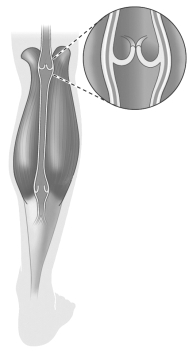
(73) The structure depicted in the figure below (enlarged to give you a better view) uses muscles to open and close in response to the pull of gravity.
(True/False)
4.7/5 (84)
(84) Occasionally, babies are born with a tiny hole between their left and right atria. Usually, the hole closes during early childhood, but if not, the child must undergo surgery to close the hole. Why is this hole likely to be a problem?
(Multiple Choice)
4.8/5 (88)
(88) Which of the following is not an adaptation capillaries have evolved that makes them more efficient at exchanging materials between blood and the adjacent tissues?
(Multiple Choice)
4.8/5 (76)
(76) Hypertension causes low blood pressure in the kidneys, which makes it more difficult for the kidneys to perform their function of filtering the blood.
(True/False)
4.7/5 (68)
(68) Each heartbeat we experience lasts a little less than 1 second and consists of a series of events called the _______ cycle.
(Short Answer)
4.9/5 (88)
(88) 
Filters
- Essay(0)
- Multiple Choice(0)
- Short Answer(0)
- True False(0)
- Matching(0)