



 Chat with AI
Exam 6: Cell Membranes, Transport, and Communication

Exam 1: The Nature of Science and the Characteristics of Life75 Questions
Exam 2: Organizing the Diversity of Life75 Questions
Exam 3: Major Groups of Living Organisms74 Questions
Exam 4: Chemical Building Blocks77 Questions
Exam 5: Cell Structure and Internal Compartments76 Questions
Exam 6: Cell Membranes, Transport, and Communication73 Questions
Exam 7: Energy and Enzymes68 Questions
Exam 8: Photosynthesis and Cellular Respiration70 Questions
Exam 9: Cell Division77 Questions
Exam 10: Patterns of Inheritance65 Questions
Exam 11: Chromosomes and Human Genetics70 Questions
Exam 12: DNA62 Questions
Exam 13: From Gene to Protein73 Questions
Exam 14: Control of Gene Expression66 Questions
Exam 15: DNA Technology64 Questions
Exam 16: How Evolution Works65 Questions
Exam 17: Evolution of Populations64 Questions
Exam 18: Adaptation and Speciation66 Questions
Exam 19: The Evolutionary History of Life69 Questions
Exam 20: Maintaining the Internal Environment66 Questions
Exam 21: Animal Nutrition and Digestion68 Questions
Exam 22: Gas Exchange68 Questions
Exam 23: The Circulatory System68 Questions
Exam 24: Animal Hormones69 Questions
Exam 25: The Nervous System69 Questions
Exam 26: Sensing the Environment66 Questions
Exam 27: Skeletons, Muscles, and Movement65 Questions
Exam 28: Defenses against Disease67 Questions
Exam 29: Reproduction and Development68 Questions
Exam 30: Animal Behavior61 Questions
Exam 31: Plant Structure, Nutrition, and Transport63 Questions
Exam 32: Plant Growth and Reproduction67 Questions
Exam 33: The Biosphere67 Questions
Exam 34: Growth of Populations65 Questions
Exam 35: Interactions among Organisms70 Questions
Exam 36: Communities of Organisms65 Questions
Exam 37: Ecosystems68 Questions
Exam 38: Global Change65 Questions
Exam 39: Biodiversity and People72 Questions
Exam 40: Cancer: Cell Division Out of Control69 Questions
Exam 41: Harnessing the Human Genome62 Questions
Exam 42: Humans and Evolution60 Questions
Exam 43: Smoking--Beyond Lung Cancer63 Questions
Exam 44: Feeding a Hungry Planet55 Questions
Exam 45: Building a Sustainable Society47 Questions
Select questions type


You observe a cell in a solution swelling until it bursts. You have seen an instance of osmosis in
(Multiple Choice)
4.9/5  (75)
(75) The various connections between cells including cell junctions and signaling molecules allow the cells in a multi-cellular organism to "talk" to each other, a principle known as cell-to-cell _______.
(Short Answer)
4.9/5 (79)
(79) Channel proteins require energy for transporting molecules across the plasma membrane
(True/False)
4.9/5 (80)
(80) Receptors in target cells can be located in the plasma membrane, the cytosol, or the __________.
(Short Answer)
4.9/5 (80)
(80) Cells in our liver take up cholesterol by receptor-mediated _____________.
(Short Answer)
4.8/5 (63)
(63) After entering its target cell, a hormone binds to its receptor and interacts with the cell's DNA, resulting in the production of a specific _______.
(Short Answer)
4.8/5 (72)
(72) The arrows in the figure below show the movement of water in relation to a plant cell. 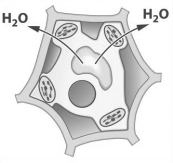 For water to move in the direction indicated, _________ solution must surround the cell.
 (Multiple Choice)
4.9/5 (79)
(79) Soon after a certain molecule enters a cell, the cell begins producing a new type of protein. The molecule was probably a
(Multiple Choice)
4.7/5 (69)
(69) The fragrance of bread baking in a kitchen spreads to other rooms by
(Multiple Choice)
4.7/5 (70)
(70) A white blood cell at the site of a puncture wound engulfs a large cluster of bacteria forming a large internal vesicle. This is an example of
(Multiple Choice)
4.7/5 (86)
(86) A given signaling molecule can bind to several different kinds of cell surface receptors.
(True/False)
4.9/5 (72)
(72) Signaling molecules can be "tagged" by attaching glow-in-the-dark molecules to them. After adding tagged signaling molecules to the fluid around several cells, you observe the cells with a microscope designed to see glow-in-the-dark molecules. After a few minutes, you notice that the plasma membranes of some of the cells begins to glow. This observation indicates that some cells
(Multiple Choice)
4.8/5 (91)
(91) The principle of cell _______ is that different cells in the same organism may have different functions.
(Short Answer)
5.0/5 (69)
(69) The proposed role of capsaicin in anesthesia during surgery is to
(Multiple Choice)
4.8/5 (71)
(71) _____________ junctions act as protein "hooks" between cells in heart muscle.
(Short Answer)
4.8/5 (96)
(96) 
Filters
- Essay(0)
- Multiple Choice(0)
- Short Answer(0)
- True False(0)
- Matching(0)