



 Chat with AI
Exam 3: Water and Life

Exam 1: Introduction: Evolution and Themes of Biology77 Questions
Exam 2: The Chemical Context of Life98 Questions
Exam 3: Water and Life92 Questions
Exam 4: Carbon and the Molecular Diversity of Life86 Questions
Exam 5: The Structure and Function of Large Biological Molecules131 Questions
Exam 6: A Tour of the Cell111 Questions
Exam 7: Membrane Structure and Function88 Questions
Exam 8: An Introduction to Metabolism92 Questions
Exam 9: Cellular Respiration and Fermentation128 Questions
Exam 10: Photosynthesis103 Questions
Exam 11: Cell Communication85 Questions
Exam 12: The Cell Cycle98 Questions
Exam 13: Meiosis and Sexual Life Cycles90 Questions
Exam 14: Mendel and the Gene Idea92 Questions
Exam 15: The Chromosomal Basis of Inheritance75 Questions
Exam 16: The Molecular Basis of Inheritance84 Questions
Exam 17: From Gene to Protein106 Questions
Exam 18: Regulation of Gene Expression116 Questions
Exam 19: Viruses71 Questions
Exam 20: DNA Tools and Biotechnology78 Questions
Exam 21: Genomes and Their Evolution64 Questions
Exam 22: Descent with Modification: A Darwinian View of Life68 Questions
Exam 23: The Evolution of Populations92 Questions
Exam 24: The Origin of Species76 Questions
Exam 25: The History of Life on Earth89 Questions
Exam 26: Phylogeny and the Tree of Life91 Questions
Exam 27: Bacteria and Archaea96 Questions
Exam 28: Protists82 Questions
Exam 29: Plant Diversity I: How Plants Colonized Land93 Questions
Exam 30: Plant Diversity II: The Evolution of Seed Plants119 Questions
Exam 31: Fungi105 Questions
Exam 32: An Overview of Animal Diversity93 Questions
Exam 33: An Introduction to Invertebrates111 Questions
Exam 34: The Origin and Evolution of Vertebrates126 Questions
Exam 35: Plant Structure,Growth,and Development82 Questions
Exam 36: Resource Acquisition and Transport in Vascular Plants100 Questions
Exam 37: Soil and Plant Nutrition99 Questions
Exam 38: Angiosperm Reproduction and Biotechnology107 Questions
Exam 39: Plant Responses to Internal and External Signals137 Questions
Exam 40: Basic Principles of Animal Form and Function98 Questions
Exam 41: Animal Nutrition87 Questions
Exam 42: Circulation and Gas Exchange112 Questions
Exam 43: The Immune System123 Questions
Exam 44: Osmoregulation and Excretion91 Questions
Exam 45: Hormones and the Endocrine System92 Questions
Exam 46: Animal Reproduction104 Questions
Exam 47: Animal Development106 Questions
Exam 48: Neurons,Synapses,and Signalling93 Questions
Exam 49: Nervous Systems85 Questions
Exam 50: Sensory and Motor Mechanisms106 Questions
Exam 51: Animal Behaviour91 Questions
Exam 52: An Introduction to Ecology and the Biosphere90 Questions
Exam 53: Population Ecology89 Questions
Exam 54: Community Ecology97 Questions
Exam 55: Ecosystems and Restoration Ecology98 Questions
Exam 56: Conservation Biology and Global Change90 Questions
Select questions type


Coastal regions tend to have more moderate climates than land-locked areas due to the
(Multiple Choice)
4.9/5  (82)
(82) In living systems molecules involved in hydrogen bonding almost always contain either oxygen or nitrogen or both.How do you explain this phenomenon?
(Multiple Choice)
4.9/5 (59)
(59) If the pH of a solution is increased from pH 5 to pH 7,it means that the
(Multiple Choice)
4.9/5 (81)
(81) Use the following figure to answer the questions below.
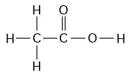 -How many grams would be equal to 1 mol of the compound shown in the figure above?
(carbon = 12,oxygen = 16,hydrogen = 1)
-How many grams would be equal to 1 mol of the compound shown in the figure above?
(carbon = 12,oxygen = 16,hydrogen = 1) (Multiple Choice)
4.9/5 (86)
(86) When snow falls on Lake Superior how are the snow's water molecules impacted?
(Multiple Choice)
4.8/5 (69)
(69) Which of the following statements is true about buffer solutions?
(Multiple Choice)
4.8/5 (90)
(90) Increased atmospheric CO₂ concentrations might have what effect on sea water?
(Multiple Choice)
4.9/5 (80)
(80) The nutritional information on a cereal box shows that one serving of a dry cereal has 200 kilocalories.If one were to burn one serving of the cereal,the amount of heat given off would be sufficient to raise the temperature of 20 kg of water how many degrees Celsius?
(Multiple Choice)
4.9/5 (82)
(82) Carbon dioxide (CO₂)is readily soluble in water,according to the equation CO₂ + H₂O ↔ H₂CO₃.Carbonic acid (H₂CO₃)is a weak acid.Respiring cells release CO₂ into the bloodstream.What will be the effect on pH of blood as that blood first comes in contact with respiring cells?
(Multiple Choice)
4.8/5 (80)
(80) Equal volumes (5 mL)of vinegar from a freshly opened bottle are added to each of the following solutions.After complete mixing,which of the mixtures will have the highest pH?
(Multiple Choice)
4.8/5 (87)
(87) Which of the following solutions would require the greatest amount of base to be added to bring the solution to neutral pH?
(Multiple Choice)
4.8/5 (87)
(87) In a single molecule of water,two hydrogen atoms are bonded to a single oxygen atom by
(Multiple Choice)
4.7/5 (79)
(79) A slice of pizza has 2092 kJ.If we could burn the pizza and use all the heat to warm a 50-L container of cold water,what would be the approximate increase in the temperature of the water? (Note: A litre of cold water weighs about 1 kg.)
(Multiple Choice)
4.8/5 (63)
(63) We can be sure that a mole of table sugar and a mole of vitamin C are equal in their
(Multiple Choice)
4.9/5 (80)
(80) The molar mass of glucose is 180 g/mol.Which of the following procedures should you carry out to make a 1 M solution of glucose?
(Multiple Choice)
5.0/5 (80)
(80) How many grams of acetic acid (C₂H₄O₂)would you use to make 10 L of a 0.1 M aqueous solution of acetic acid? (Note: The atomic masses,in daltons,are approximately 12 for carbon,1 for hydrogen,and 16 for oxygen.)
(Multiple Choice)
4.8/5 (84)
(84) Temperature usually increases when water condenses.Which behaviour of water is most directly responsible for this phenomenon?
(Multiple Choice)
4.7/5 (81)
(81) 
Filters
- Essay(0)
- Multiple Choice(0)
- Short Answer(0)
- True False(0)
- Matching(0)