



 Chat with AI
Exam 2: The Chemical Context of Life

Exam 1: Introduction: Evolution and Themes of Biology77 Questions
Exam 2: The Chemical Context of Life98 Questions
Exam 3: Water and Life92 Questions
Exam 4: Carbon and the Molecular Diversity of Life86 Questions
Exam 5: The Structure and Function of Large Biological Molecules131 Questions
Exam 6: A Tour of the Cell111 Questions
Exam 7: Membrane Structure and Function88 Questions
Exam 8: An Introduction to Metabolism92 Questions
Exam 9: Cellular Respiration and Fermentation128 Questions
Exam 10: Photosynthesis103 Questions
Exam 11: Cell Communication85 Questions
Exam 12: The Cell Cycle98 Questions
Exam 13: Meiosis and Sexual Life Cycles90 Questions
Exam 14: Mendel and the Gene Idea92 Questions
Exam 15: The Chromosomal Basis of Inheritance75 Questions
Exam 16: The Molecular Basis of Inheritance84 Questions
Exam 17: From Gene to Protein106 Questions
Exam 18: Regulation of Gene Expression116 Questions
Exam 19: Viruses71 Questions
Exam 20: DNA Tools and Biotechnology78 Questions
Exam 21: Genomes and Their Evolution64 Questions
Exam 22: Descent with Modification: A Darwinian View of Life68 Questions
Exam 23: The Evolution of Populations92 Questions
Exam 24: The Origin of Species76 Questions
Exam 25: The History of Life on Earth89 Questions
Exam 26: Phylogeny and the Tree of Life91 Questions
Exam 27: Bacteria and Archaea96 Questions
Exam 28: Protists82 Questions
Exam 29: Plant Diversity I: How Plants Colonized Land93 Questions
Exam 30: Plant Diversity II: The Evolution of Seed Plants119 Questions
Exam 31: Fungi105 Questions
Exam 32: An Overview of Animal Diversity93 Questions
Exam 33: An Introduction to Invertebrates111 Questions
Exam 34: The Origin and Evolution of Vertebrates126 Questions
Exam 35: Plant Structure,Growth,and Development82 Questions
Exam 36: Resource Acquisition and Transport in Vascular Plants100 Questions
Exam 37: Soil and Plant Nutrition99 Questions
Exam 38: Angiosperm Reproduction and Biotechnology107 Questions
Exam 39: Plant Responses to Internal and External Signals137 Questions
Exam 40: Basic Principles of Animal Form and Function98 Questions
Exam 41: Animal Nutrition87 Questions
Exam 42: Circulation and Gas Exchange112 Questions
Exam 43: The Immune System123 Questions
Exam 44: Osmoregulation and Excretion91 Questions
Exam 45: Hormones and the Endocrine System92 Questions
Exam 46: Animal Reproduction104 Questions
Exam 47: Animal Development106 Questions
Exam 48: Neurons,Synapses,and Signalling93 Questions
Exam 49: Nervous Systems85 Questions
Exam 50: Sensory and Motor Mechanisms106 Questions
Exam 51: Animal Behaviour91 Questions
Exam 52: An Introduction to Ecology and the Biosphere90 Questions
Exam 53: Population Ecology89 Questions
Exam 54: Community Ecology97 Questions
Exam 55: Ecosystems and Restoration Ecology98 Questions
Exam 56: Conservation Biology and Global Change90 Questions
Select questions type


The atomic number of chlorine is 17.The atomic number of magnesium is 12.What is the formula for magnesium chloride?

Free
(Multiple Choice)
4.9/5  (67)
(67) Correct Answer: Verified
B
 -Which one of the atoms shown would be most likely to form a cation with a charge of +1?
Free
(Multiple Choice)
4.8/5 (77)
(77) Correct Answer:Verified
VerifiedA
Which of the following correctly describes water's unique properties?
Free
(Multiple Choice)
5.0/5 (71)
(71) Correct Answer:Verified
VerifiedE
Use the following figure to answer the questions below.
 -How many neutrons are present in the nucleus of a phosphorus-32 (³²P)atom (see the figure above)?
 (Multiple Choice)
4.7/5 (98)
(98) Use the following figure to answer the questions below.
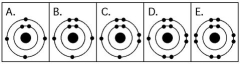 -Which drawing in the figure above depicts an atom with a valence of 3?
 (Multiple Choice)
4.7/5 (71)
(71) Use the following information to answer the questions below.
You are investigating how chemical reactions occur.You place two reactants together and measure the concentration of product at regular intervals.After a time,the amount of product becomes stable.
-This solution has
(Multiple Choice)
4.7/5 (70)
(70) Atoms whose outer electron shells contain 8 electrons tend to
(Multiple Choice)
4.9/5 (73)
(73) Phosphorus-32,a radioactive isotope of phosphorus-31 (atomic number 15),undergoes a form of radioactive decay whereby a neutron turns into a proton and emits radiation in the form of an electron.What is the product of such radioactive decay of phosphorus-32?
(Multiple Choice)
4.9/5 (66)
(66) Oxygen has an atomic number of 8 and a mass number of 16.Thus,what is the atomic mass of an oxygen atom?
(Multiple Choice)
5.0/5 (81)
(81) What is the maximum number of hydrogen atoms that can be covalently bonded in a molecule containing two carbon atoms?
(Multiple Choice)
4.9/5 (65)
(65)
-A group of molecular biologists is trying to synthesize a new artificial compound to mimic the effects of a known hormone that influences sexual behaviour.They have turned to you for advice.Which of the following compounds is most likely to mimic the effects of the hormone?
-A group of molecular biologists is trying to synthesize a new artificial compound to mimic the effects of a known hormone that influences sexual behaviour.They have turned to you for advice.Which of the following compounds is most likely to mimic the effects of the hormone? (Multiple Choice)
5.0/5 (85)
(85) The combining of the metal,sodium,with the poisonous gas,chlorine,to produce an edible product,salt,is a good example of
(Multiple Choice)
4.8/5 (82)
(82) Magnesium has an atomic number of 12.What is the most stable charge for a magnesium ion?
(Multiple Choice)
4.8/5 (99)
(99) Use the following figure to answer the questions below.
-Based on electron configuration,which of these elements in the figure above would exhibit a chemical behaviour most like that of oxygen?
-Based on electron configuration,which of these elements in the figure above would exhibit a chemical behaviour most like that of oxygen? (Multiple Choice)
4.8/5 (92)
(92) Which of the following is not considered to be a weak molecular interaction?
(Multiple Choice)
4.7/5 (74)
(74) The nucleus of a nitrogen atom contains 7 neutrons and 7 protons.Which of the following is a correct statement concerning nitrogen?
(Multiple Choice)
4.9/5 (88)
(88) Why does radiometric dating allow researchers to determine the age of fossils?
(Multiple Choice)
4.8/5 (91)
(91) 
Filters
- Essay(0)
- Multiple Choice(0)
- Short Answer(0)
- True False(0)
- Matching(0)