



 Chat with AI
Exam 1: Anatomy

Exam 1: Anatomy291 Questions
Exam 2: Behavioral science240 Questions
Exam 3: Biochemistry156 Questions
Exam 4: Biostatistics117 Questions
Exam 5: Embryology52 Questions
Exam 6: Genetics103 Questions
Exam 7: Histology24 Questions
Exam 8: Immunology129 Questions
Exam 9: Microbiology336 Questions
Exam 10: Pathology816 Questions
Exam 11: Pathophysiology464 Questions
Exam 12: Pharmacology538 Questions
Exam 13: Physiology272 Questions
Select questions type


A 31-year-old man comes to the emergency department complaining of right-sided scrotal pain and swelling that has gradually worsened over the last 3 days. His temperature is 38.3 C (101 F). On physical examination, his right hemiscrotum is warm, tender, and erythematous. The cremasteric reflex is present. A scrotal ultrasound reveals a fluid collection consistent with a superficial scrotal abscess. Which of the following lymph node groups is most likely to be tender and swollen?
(Multiple Choice)
4.9/5  (83)
(83) A 64-year-old man comes to the office due to progressive low back pain for the past several months that is beginning to interfere with his job. The patient describes pain in the lower back and buttocks, which worsens with prolonged standing or walking and improves with lying down. He also has occasional sharp, shooting pain that radiates down his right leg. The patient works as a greeter for a local supermarket and was recently given a written warning for taking too many breaks during his shift. He has a history of hypertension and osteoarthritis. Spine imaging reveals degenerative joint changes and a large osteophyte compressing the spinal nerve root exiting through the right neural foramen between the L5 and S1 vertebrae. Which of the following examination findings is most likely present in this patient due to the nerve lesion?
(Multiple Choice)
4.9/5 (82)
(82) An 82-year-old woman is sent to the hospital from a nursing home after 2 days of fever, confusion, and lethargy. The patient has a history of mild dementia, hypertension, and osteoarthritis. Her temperature is 38.8 C (102 F), blood pressure is 90/60 mm Hg, and pulse is 116/min. She has mild suprapubic and right costovertebral angle tenderness. Her leukocyte count is 18,000/mm3, and urinalysis is consistent with acute cystitis. A femoral venous access is planned for administration of intravenous fluids and antibiotics. The femoral artery pulsation is palpable immediately below the inguinal ligament. Which of the following describes the optimal cannulation site for the femoral vein?
(Multiple Choice)
5.0/5 (98)
(98) A 35-year-old previously healthy woman comes to the hospital due to several days of productive cough associated with chills and fever. Her sputum is purulent with faint pink streaks of blood. The patient also has sharp pain over the right shoulder and neck area brought on by deep inspiration. Past medical history is unremarkable. Her temperature is 38.3 C (101 F), blood pressure is 130/70 mm Hg, pulse is 98/min, and respirations are 22/min. Examination reveals crackles and dullness over the right lower pulmonary lobe. While listening with the stethoscope over the right midback, the examiner has the patient say the letter "E," and the sound is perceived by the examiner as a loud letter "A." A chest x-ray is obtained and is shown in the image below. 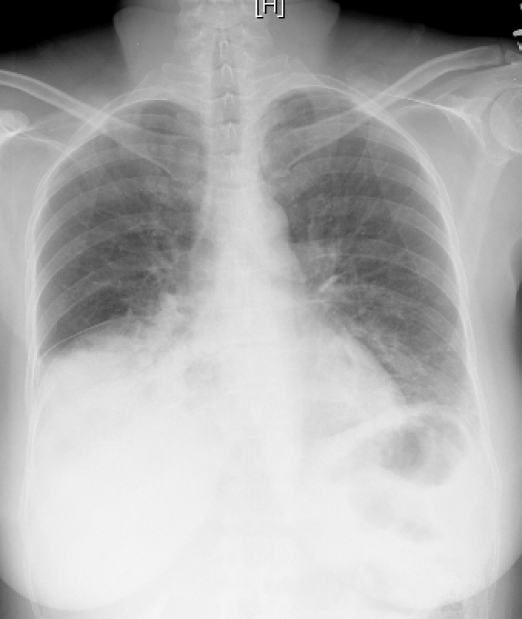 The pain experienced by this patient is most likely carried by which of the following nerves?
 (Multiple Choice)
4.9/5 (84)
(84) A 23-year-old man is brought to the emergency department after sustaining stab injuries in a street fight. The patient feels lightheaded and dizzy. His blood pressure is 100/60 mm Hg and pulse is 115/min. Physical examination shows profuse bleeding from penetrating wounds over the left neck and shoulder area. Intravenous fluids are administered, and a blood transfusion is initiated. Urgent surgical exploration is performed, and the injured blood vessel is repaired. Further exploration shows complete transection of the nerve indicated by the arrow in the image below. 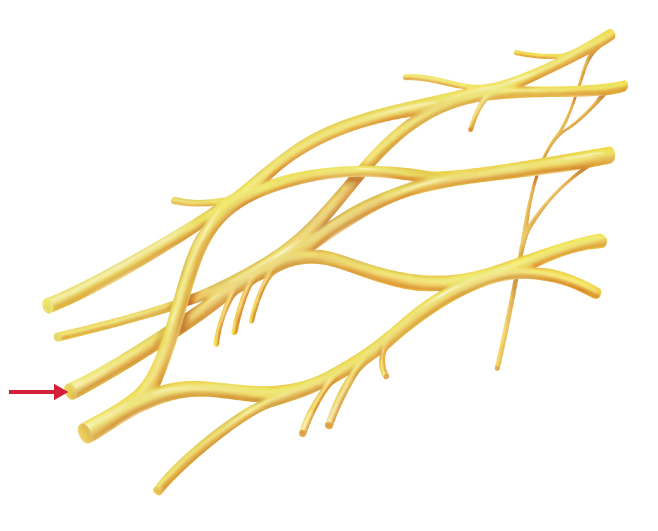 Which of the following actions is most likely to be weakened as a result of this patient's nerve injury?
 (Multiple Choice)
4.8/5 (87)
(87) A 52-year-old man is brought to the emergency department for hematemesis that began an hour earlier. He has regularly consumed large amounts of alcohol for the last 20 years and has been hospitalized numerous times due to ethanol intoxication. Temperature is 36.7 C (98 F), blood pressure is 90/60 mm Hg, pulse is 106/min, and respirations are 22/min. Physical examination shows jaundice and scleral icterus. Examination of the abdomen reveals a palpable spleen and moderate ascites. Endoscopy reveals bleeding esophageal varices. This patient's current condition most likely resulted from chronic shunting of blood through which of the following veins?
(Multiple Choice)
4.8/5 (94)
(94) A 13-year-old boy comes to the office for a postoperative follow-up visit. He was seen in the emergency department 3 weeks earlier with acute abdominal pain and was found to have acute appendicitis. The patient underwent urgent appendectomy without any apparent immediate complications and was released home. Several days later, he started having burning pain at the surgical scar radiating to the suprapubic region but otherwise feels well. Examination shows a healed surgical incision centered over McBurney point. There is a loss of sensation over the right suprapubic area. The cremasteric reflex is normal. Which of the following nerves is most likely injured in this patient?
(Multiple Choice)
4.8/5 (85)
(85) A 63-year-old man comes to the physician's office due to long-standing osteoarthritis that is refractory to over-the-counter analgesics. After discussing various treatment options with his physician, the patient is referred to a surgeon for right total hip arthroplasty. His acute postoperative course is unremarkable. During a follow-up appointment, the patient reports difficulty walking despite minimal pain. On examination, he leans to his right side when walking. When asked to stand on his right leg, the patient's left hip tilts downward. Which of the following nerves is most likely injured in this patient?
(Multiple Choice)
4.9/5 (71)
(71) A 37-year-old woman comes to the office due to left elbow discomfort and swelling for the past several days. The patient recalls no major trauma but has been participating in a high-intensity workout program recently. Physical examination findings are shown in the exhibit.
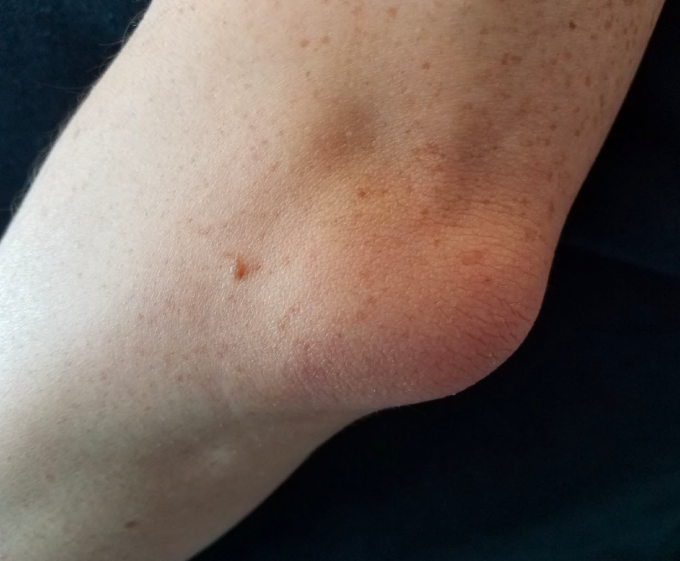 The patient is able to fully extend the elbow without increased pain. Pathology involving which of the following structures is the most likely cause of this patient's current condition?
 (Multiple Choice)
4.8/5 (77)
(77) A 34-year-old man begins treatment with combination chemotherapy for Hodgkin lymphoma. Shortly thereafter, he experiences severe vomiting and requires intravenous fluid supplementation. Which of the following sites in the brain is most likely responsible for his symptoms? 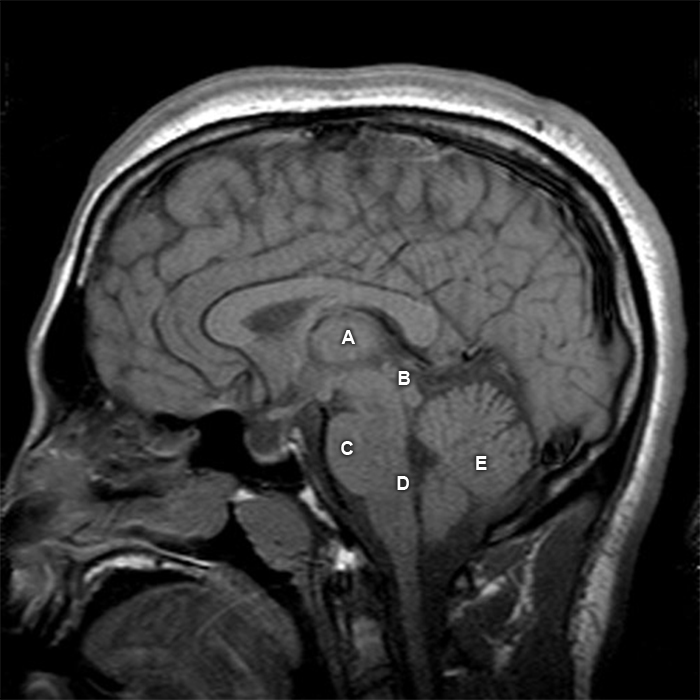
(Multiple Choice)
4.8/5 (76)
(76) A 62-year-old woman comes to the emergency department due to difficulty walking that started 3 hours ago. The patient cannot feel the right side of her body. She has a history of hypertension and diabetes mellitus. She has smoked a pack of cigarettes daily for the past 30 years. The patient's father had a myocardial infarction at age 60. Physical examination shows loss of touch, temperature, and vibratory sensation affecting the right upper and lower extremities. Sensation is also diminished over the right side of the face. Muscle strength is 5/5 throughout. This patient has most likely suffered a stroke affecting which of the following brain structures?
(Multiple Choice)
4.8/5 (91)
(91) A 4-year-old boy is brought to the office due to headaches that have worsened progressively over the past month and are most severe when lying down. He also has had nonbloody, nonbilious emesis for 2 weeks that typically occurs early in the morning. In addition, the child has intermittent blurry vision, particularly when looking up at the mirror while brushing his teeth. Physical examination shows bilateral papilledema, inability to gaze upwards, and bilateral eyelid retraction. Laboratory testing of sodium, growth hormone, luteinizing hormone (LH), and follicle-stimulating hormone (FSH) is normal. Given the early morning emesis and papilledema, a brain mass is suspected and a brain MRI is ordered. Which of the following is the most likely location of the brain lesion in this patient? 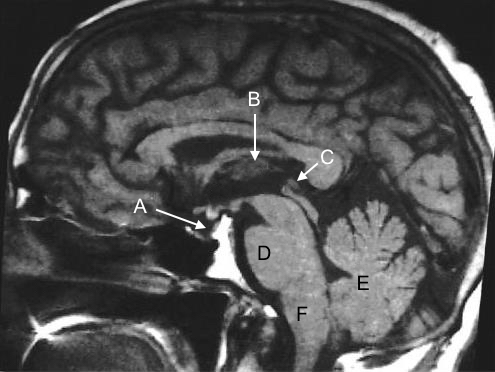
(Multiple Choice)
4.8/5 (77)
(77) A 68-year-old woman comes to the emergency department due to sudden-onset double vision that started immediately after she woke up. The patient notices that her vision worsens when looking to the right. She has no headache, weakness, or numbness. The patient has a prolonged history of hypertension, hyperlipidemia, and type 2 diabetes mellitus. Blood pressure is 160/90 mm Hg and pulse is 86/min and regular. Neurologic examination, including visual acuity, is normal with the exception of the ocular findings shown in the image below. 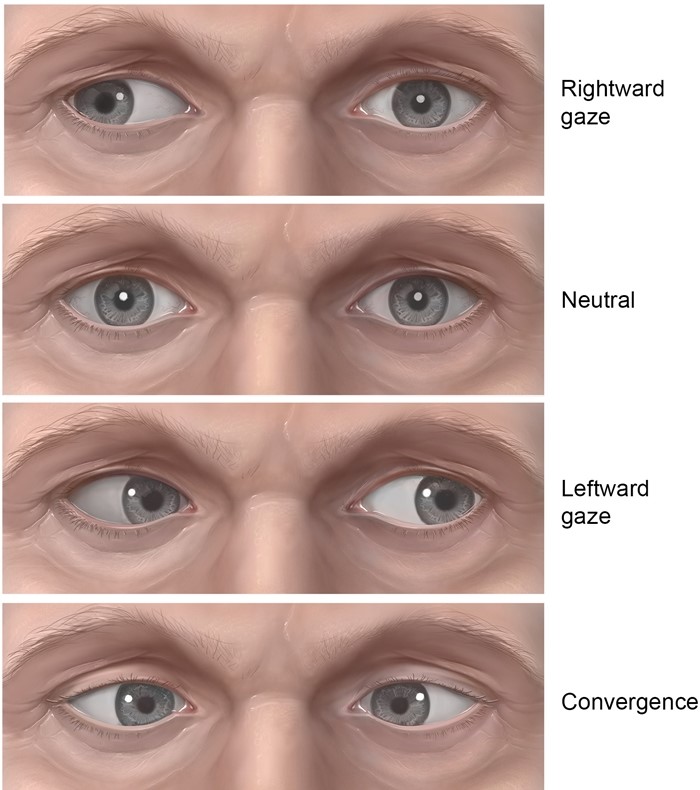 A lesion involving which of the following structures is most likely causing the observed ocular findings in this patient?
 (Multiple Choice)
4.8/5 (81)
(81) A 39-year-old woman is admitted to the hospital for a total abdominal hysterectomy for symptomatic uterine fibroids. The largest fibroid, measuring 8 cm, is located in the lower aspect of the uterus at the level of the cardinal ligament, compressing the bladder anteriorly. The patient has no other medical conditions and no prior surgeries. After the surgery, she develops right-sided back pain. The patient has been able to urinate without difficulty. Injury to which of the following structures is the most likely explanation for this patient's postoperative symptoms?
(Multiple Choice)
5.0/5 (78)
(78) A 56-year-old previously healthy man comes to the office due to decreased hearing in both ears. He reports difficulty understanding conversations in crowded rooms. His wife adds that they often argue about the volume of the television set. The patient cannot remember precisely when he first noticed hearing loss but says it has been present at least 6 months and is getting worse. For the past 12 years, he has worked in a factory where he has to shout to communicate with coworkers and has seldom worn hearing protection. An audiogram is obtained as shown in the image below. 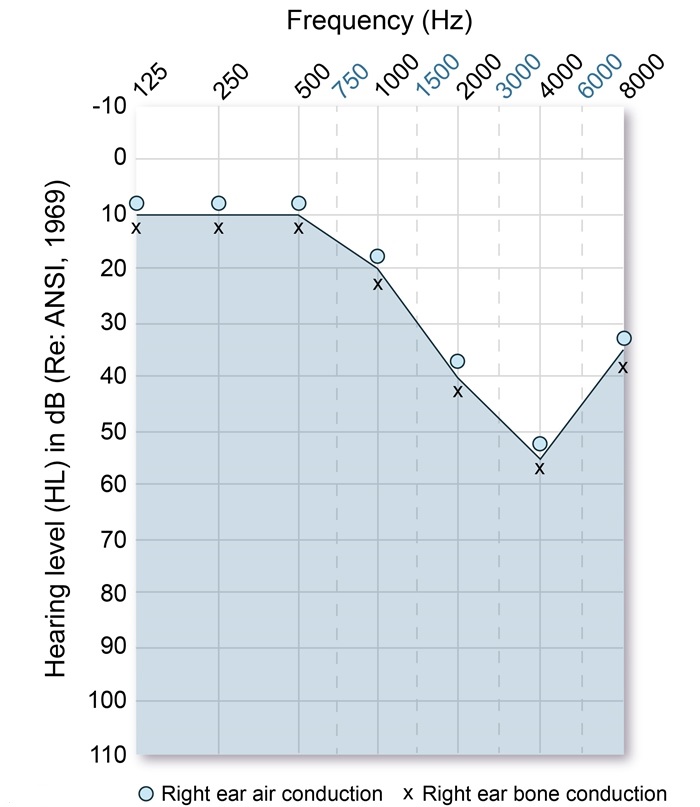 Which of the following is most likely abnormal in this patient?
 (Multiple Choice)
4.7/5 (78)
(78) A 56-year-old man comes to the cardiology clinic because of fatigue, palpitations, and exertional dyspnea over the last several weeks. On physical examination, his heart rate is irregular and measures 122 beats per minute, while his blood pressure is 110/70 mm Hg. The patient undergoes further work-up, including ECG, radiographic studies, and laboratory studies. His ECG shows atrial fibrillation and trans-esophageal echocardiography reveals a thrombus in a dilated left atrium. In the event of an interruption of blood flow secondary to arterial occlusion, which of the following organs would be least vulnerable to infarction?
(Multiple Choice)
4.9/5 (81)
(81) A 58-year-old man comes to the emergency department due to a 3-hour history of abrupt-onset weakness and numbness of the right lower extremity, as well as urinary incontinence. Two months ago, the patient was hospitalized due to left-sided weakness that resolved spontaneously after several hours. At that time, MRI of the head and MR angiography of the head and neck were normal, but the patient was found to have atrial fibrillation. An oral anticoagulant was prescribed at discharge, but the patient has been nonadherent with therapy. Blood pressure is 162/94 mm Hg and pulse is 102/min and irregularly irregular. Physical examination shows weakness and sensory loss in the right lower extremity. Babinski sign is present on the right. Speech is normal, and there is no facial weakness. Examination of the right upper extremity and the left extremities is unremarkable. An embolic occlusion affecting which of the following vascular regions is the most likely cause of this patient's current symptoms?
(Multiple Choice)
4.8/5 (88)
(88) A 9-year old girl is brought to the emergency department by her parents due to severe headache, lethargy, and vomiting. Her symptoms began a few weeks ago with mild intermittent headaches and fatigue and have progressively worsened. A CT scan of the brain reveals a mass lesion, enlarged lateral and third ventricles, and a normal-sized fourth ventricle. Which of the following is the most likely site of obstruction in this patient?
(Multiple Choice)
4.9/5 (74)
(74) A 72-year-old man comes to the primary care clinic with a 6-month history of back and bilateral thigh pain provoked by walking. He normally can walk only 2-3 blocks before having to stop due to pain. However, when he is out walking with his grandchild, leaning on the stroller seems to provide pain relief. The patient also notices an occasional tingling sensation in his lower extremities. He has no prior trauma or history of rheumatologic disorders. On physical examination, muscular strength is normal and the sensory findings are unremarkable. Peripheral pulses are full and symmetric. Thickening of which of the following ligaments is most likely contributing to this patient's current presentation?
(Multiple Choice)
4.7/5 (64)
(64) A 35-year-old man comes to the office due to a painful tongue sore. For the past 2 weeks he has had a fever and has experienced myalgias and arthralgias. He has no known medical problems. The patient works as a driver for a local delivery service. He had unprotected sex with a stranger approximately 1 month ago. Physical examination shows a rash over his trunk and cervical lymphadenopathy. An ulcer is located on the median sulcus of the tongue and is 2 cm anterior to the foramen cecum. Blood is drawn for an HIV test. The pain sensation from his ulcer is most likely carried by which of the following nerves?
(Multiple Choice)
5.0/5 (74)
(74) 
Filters
- Essay(0)
- Multiple Choice(0)
- Short Answer(0)
- True False(0)
- Matching(0)