



 Chat with AI
Exam 1: Anatomy

Exam 1: Anatomy291 Questions
Exam 2: Behavioral science240 Questions
Exam 3: Biochemistry156 Questions
Exam 4: Biostatistics117 Questions
Exam 5: Embryology52 Questions
Exam 6: Genetics103 Questions
Exam 7: Histology24 Questions
Exam 8: Immunology129 Questions
Exam 9: Microbiology336 Questions
Exam 10: Pathology816 Questions
Exam 11: Pathophysiology464 Questions
Exam 12: Pharmacology538 Questions
Exam 13: Physiology272 Questions
Select questions type


A 70-year-old man comes to the office due to 3 weeks of unrelenting low back pain. He was grocery shopping when he first noticed the pain. The patient reports no trauma or leg weakness but describes having to strain to urinate. He has a history of hypertension and hyperlipidemia and has not seen a doctor in the past 5 years. His wife died a year ago, and he now lives alone. The patient is a retired construction worker and has a history of tobacco and marijuana use. There is tenderness in the lower vertebral area. Imaging study of the spine reveals several osteoblastic lesions in the lumbar vertebrae. Which of the following structures was most likely involved during the spread of this patient's disease?
(Multiple Choice)
4.8/5  (82)
(82) A 43-year-old, right-handed woman is evaluated in the clinic for progressively worsening neurologic symptoms. The patient has a history of diabetes mellitus and hyperlipidemia for which she takes metformin and a statin. She has no history of head trauma or seizures. The patient occasionally drinks wine but does not use tobacco or illicit drugs. Her mother has a history of migraine headaches. A brain MRI is obtained and is shown in the image below: 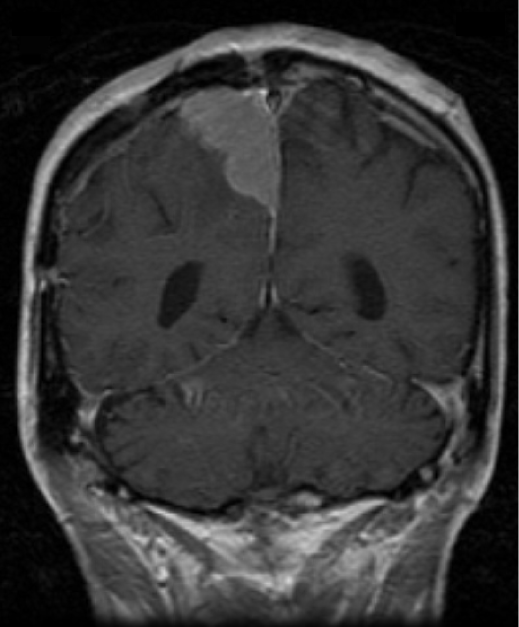 This patient is most likely to have which of the following additional findings?
 (Multiple Choice)
4.8/5 (77)
(77) A 54-year-old woman is evaluated in the clinic due to easy fatigability. The patient has had no weight gain or cold intolerance, and has no history of thyroid problems. Her medical history is significant for gastrectomy due to a nonhealing gastric ulcer. Physical examination shows a shiny tongue and pale palmar creases. Her gait is unstable when her eyes are closed, and vibration sense is markedly decreased over the lower extremities. There is mild symmetrical loss of strength affecting the proximal lower extremity muscles. Blood hemoglobin level is 7.2 g/dL and white blood cell count is 3,600/mm3. Stool tests for occult blood are repeatedly negative. Which of the following spinal cord lesions is most likely present in this patient?
(Multiple Choice)
4.9/5 (73)
(73) A 13-year-old boy is brought to the office due to right knee pain. Several weeks ago, he developed mild anterior knee pain that has gradually worsened and now causes him to limp. The pain has significantly limited his participation in basketball practice. It is relieved by rest and can be reproduced when the patient straightens out his right knee while seated in a chair. Further evaluation reveals an avulsion fracture affecting a developing secondary ossification center due to muscle overuse. Which of the following structures is most likely involved in this patient's disease process?
(Multiple Choice)
4.9/5 (92)
(92) A 71-year-old man comes to the office due to a painful rash on his right forehead. Two days ago, he felt burning pain on his right forehead and today noticed some blisters. On examination, there is a vesicular rash involving the right forehead and right side of the nose. The patient is at risk of blindness in the right eye due to involvement of which of the following cranial nerves?
(Multiple Choice)
5.0/5 (80)
(80) A 52-year-old man comes to the hospital following 4 weeks of vague back and abdominal pain. He also has experienced episodic fever, anorexia, and a 2-kg (4.4-lb) weight loss. The patient was recently diagnosed with HIV and has not yet begun taking antiretroviral therapy. He has a history of intravenous drug use. A CT scan of the abdomen reveals an infection involving the structure indicated by the arrow in the image below. 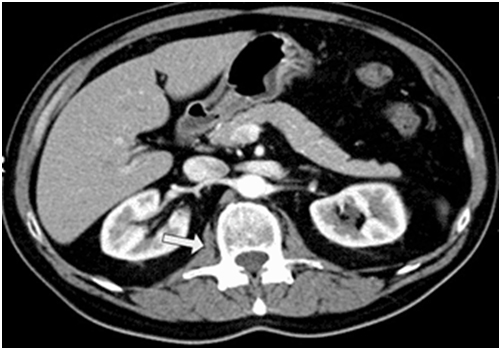 Which of the following structures is involved by this patient's infectious process?
 (Multiple Choice)
4.8/5 (83)
(83) A 67-year-old woman comes to the clinic due to decreased vision in her right eye that she noticed a week ago. The patient says that her sight in the right eye is "narrower" than in the left. Her past medical history is significant for hypertension, type 2 diabetes mellitus, and hyperlipidemia. She also suffers from intermittent lower limb claudication and has had 2 prior episodes of transient vision loss in her right eye. Visual field testing reveals a right nasal hemianopia. MRI/magnetic resonance angiography of the head and neck reveal a right internal carotid artery aneurysm. Which of the following portions of the visual pathway is most likely disrupted in this patient? 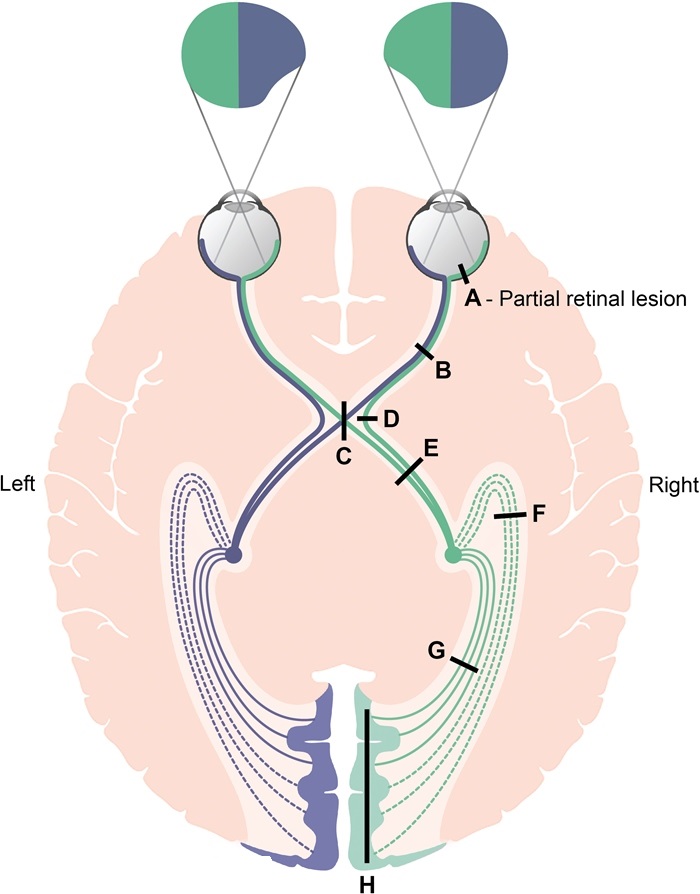
(Multiple Choice)
4.8/5 (86)
(86) An 18-year-old previously healthy woman is brought to the emergency department with 2 days of fever, headache, and lethargy. She has also had nausea and several episodes of vomiting. Her temperature is 38.9 C (102 F), blood pressure is 110/60 mm Hg, and pulse is 108/min. On physical examination, the patient is diaphoretic, delirious, and has a petechial rash on the trunk and extremities. Signs of meningeal irritation are present. CT scan of the head reveals no mass lesions. She is scheduled for a lumbar puncture for cerebrospinal fluid analysis. During this procedure, which of the following anatomical landmarks helps locate the optimal site for needle insertion?
(Multiple Choice)
4.8/5 (78)
(78) A 21-year-old previously healthy man comes to the emergency department with acute onset of severe left scrotal pain and nausea. The pain started after he returned home from the gym following an intense workout. He denies any trauma, fever, or dysuria. Examination shows a swollen and tender left testis that lies higher than the right testis. Doppler ultrasound shows decreased arterial blood flow in the left spermatic cord entering the testis. Which of the following is the likely origin of the artery involved in this patient's condition?
(Multiple Choice)
4.8/5 (80)
(80) A 53-year-old man who has not seen a physician in years presents to your office complaining of abdominal distention. He states "Last month my stomach started to swell up and it hasn't gotten any better". He has no other medical problems. The patient admits to drinking 10-12 beers a day for the last 20 years. His temperature is 36.7 C (98 F), blood pressure is 116/72 mm Hg, pulse is 78/min and respirations are 20/min. On examination his abdomen is distended with engorged paraumbilical veins. There is also palmar erythema and multiple spider angiomas are present. You decided to place him on a low-salt diet and start therapy with furosemide and spironolactone, with subsequent improvement of his abdominal distention. Before beginning this patient's treatment, which of the following structures labeled on the image below is expected to have an increased pressure? 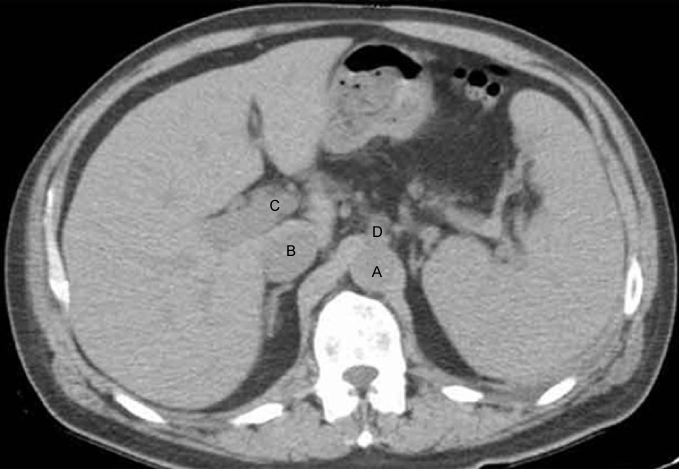
(Multiple Choice)
5.0/5 (74)
(74) A 53-year-old man comes to the office due to double vision. The patient lives in a two-story house and has had difficulty walking down stairs because he sees duplicates of every step and doesn't "know which ones are real." He does not have significant problems walking up stairs. The patient is also frustrated because he has trouble reading certain things, such as the morning newspaper and work-related documents. He has had no eye trauma, headache, focal weakness, or numbness. The patient has a history of hypertension and type 2 diabetes mellitus. He exercises regularly and does not use tobacco, alcohol, or illicit drugs. A lesion affecting which of the following structures is most likely responsible for this patient's visual symptoms?
(Multiple Choice)
4.8/5 (80)
(80) A 4-day-old premature infant in the neonatal intensive care unit becomes hypotonic and less responsive. She was delivered vaginally at 30 weeks gestation, and her birth weight was 1,200 g (2 lb 10 oz). Physical examination shows a lethargic infant with weak and high-pitched crying, prominent scalp veins, and tense fontanelles. Cranial ultrasound reveals blood in the lateral ventricles. Which of the following structures is the most likely source of the bleeding?
(Multiple Choice)
4.8/5 (81)
(81) A 36-year-old woman is evaluated for several months of tingling and numbness of the right hand and fingers that has progressed to dull, aching pain. The symptoms initially were intermittent but have become persistent, with the pain worsening overnight. The patient works as an office secretary and has had difficulty typing and holding the phone due to hand weakness. On examination, she has weakness of thumb opposition and atrophy of the thenar eminence. The patient attempted treatment with conservative measures but had no significant improvement and has now been referred for surgery. During surgery, incision of which of the following structures is most likely to improve this patient's symptoms?
(Multiple Choice)
4.9/5 (73)
(73) A 26-year-old previously healthy man is brought to the emergency department following a motorbike accident. He is found to have a maxillofacial injury. His condition is stabilized, and surgical repair is performed. While recovering, the patient develops difficulty chewing food. On examination, the jaw deviates to the right side when the patient is instructed to open his mouth. The nerve that has been injured in this patient exits the skull through which of the following foramina?
(Multiple Choice)
4.9/5 (86)
(86) A 62-year-old man is brought to the office by his son due to memory impairment and frequent falls. The patient has been living alone since the death of his wife a year ago. His son, who is visiting from out of town, found his father in poor living conditions. The patient was forgetful and did not know the location of various items in his house, where he has lived for more than 20 years. His gait is also unsteady, and he had had several falls. The son says his father has always been "a drinker" and may have been drinking more recently. The patient is indifferent to his son's concerns and says he feels fine. Vital signs are within normal limits. On physical examination, bilateral lateral gaze palsy and nystagmus are present. Muscle strength and deep tendon reflexes are normal, but the gait is ataxic. On memory testing, he recalls 0 out of 3 objects after 5 minutes. A lesion of which of the following labeled structures on a normal brain MRI is most specifically associated with this patient's current condition? 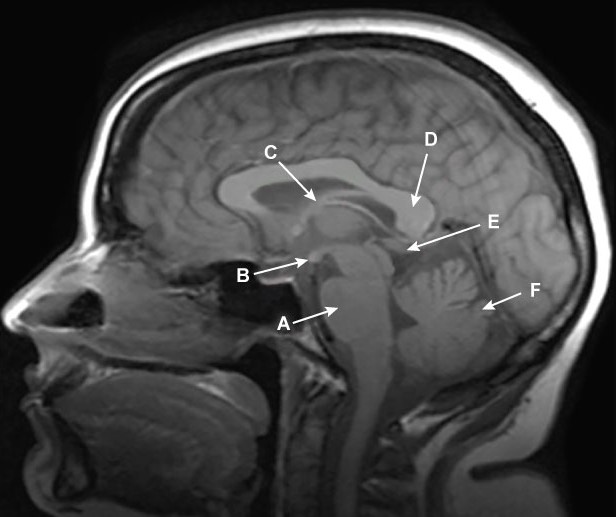
(Multiple Choice)
4.8/5 (91)
(91) A 52-year-old postmenopausal woman comes to the office due to urine leakage with coughing and sneezing. She has no dysuria, urgency, or changes in urinary frequency. The patient has had 3 spontaneous vaginal deliveries. On pelvic examination, there is mild vulvovaginal atrophy and anterior vaginal wall prolapse. The remainder of the physical examination is normal. The patient is advised to perform exercises to strengthen her pelvic floor as part of treatment for her symptoms. Which of the following structures is the most likely target of the exercise?
(Multiple Choice)
4.9/5 (81)
(81) A 48-year-old woman comes to the office due to painful, heavy menses for the past 6 months. The patient has 4-5 days of heavy bleeding, often soaking through a tampon or sanitary napkin every few hours. Menstrual periods occur every 28-30 days. The patient is not on contraception and has no significant medical history. Vital signs are normal. Urine pregnancy test is negative. After an appropriate workup, a hysterectomy is performed, and the surgical specimen is shown below: 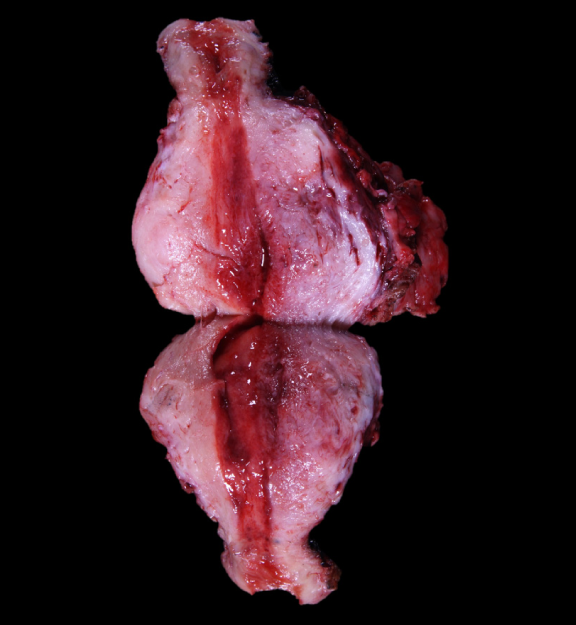 Which of the following is the most likely diagnosis?
 (Multiple Choice)
4.8/5 (94)
(94) A 45-year-old man comes to the office due to right ankle pain for the past 2 days. The patient was running downhill on a dirt trail when he twisted his ankle inward. Since then, he has had pain and swelling at the right ankle but is able to walk unassisted. The patient has no other medical conditions and takes no chronic medications. On examination, there is bluish discoloration over the lateral aspect of the joint. He has maximal tenderness to palpation at the anterolateral aspect of the ankle joint. Forced inversion of the foot also increases the pain. Which of the following structures is most likely injured in this patient?
(Multiple Choice)
4.9/5 (84)
(84) A 20-year-old man is brought to the emergency department after a motor vehicle collision. Blood pressure is 130/84 mm Hg, pulse is 108/min, and respirations are 18/min. The airway is intact, and breath and heart sounds are normal. There is bruising across the central lower abdomen and the suprapubic area is tender to palpation. Chest x-ray and pelvic x-ray reveal no fractures. Bedside ultrasound shows intraperitoneal free fluid. Urine dipstick test is positive for blood. CT scan of the abdomen and pelvis is most likely to reveal which of the following injuries in this patient?
(Multiple Choice)
4.8/5 (90)
(90) A 56-year-old man comes to the physician complaining of early satiety, nausea, and vague epigastric pain for the past 4 months. He has a 36-pack-year smoking history and admits to drinking alcohol daily for the past 15 years. On physical examination, the patient appears thin and cachectic. Palpation of his abdomen reveals splenomegaly. Abdominal CT scan shows a large irregular mass extending posteriorly from the greater curvature of the stomach, impinging on the splenic artery and vein as they pass below. Tissues supplied by which of the following arteries would most likely be affected by compression of the splenic artery?
(Multiple Choice)
4.8/5 (77)
(77) 
Filters
- Essay(0)
- Multiple Choice(0)
- Short Answer(0)
- True False(0)
- Matching(0)