



 Chat with AI
Exam 1: Anatomy

Exam 1: Anatomy291 Questions
Exam 2: Behavioral science240 Questions
Exam 3: Biochemistry156 Questions
Exam 4: Biostatistics117 Questions
Exam 5: Embryology52 Questions
Exam 6: Genetics103 Questions
Exam 7: Histology24 Questions
Exam 8: Immunology129 Questions
Exam 9: Microbiology336 Questions
Exam 10: Pathology816 Questions
Exam 11: Pathophysiology464 Questions
Exam 12: Pharmacology538 Questions
Exam 13: Physiology272 Questions
Select questions type


A 45-year-old man is brought to the emergency department after a motor vehicle accident. He is unable to void and complains of a full bladder sensation. Foley catheter placement is attempted, but the procedure is aborted once resistance is encountered and the patient begins complaining of pain. A CT scan of his chest, abdomen, and pelvis shows a left hemothorax and pelvic fracture. This patient is most likely to have an injury involving which of the following portions of the urogenital tract? 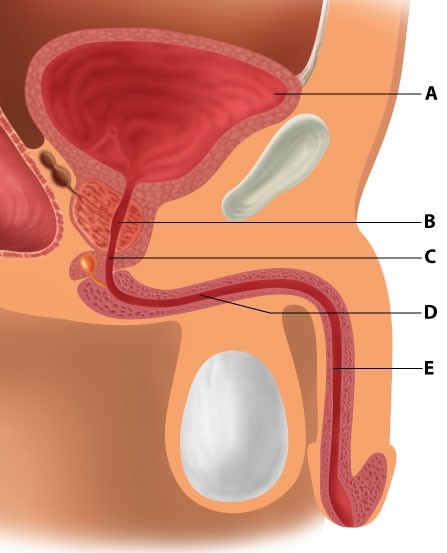
(Multiple Choice)
4.9/5  (81)
(81) A 32-year-old female presents to your office with severe nausea and recurrent bilious vomiting. Her symptoms initially began as postprandial epigastric pain and early satiety, but have progressed over the last two weeks. She works as an actress, and tells you that her symptoms only started when she "landed a role in a soap opera" and was inspired to lose 25 lbs. on a "crash diet". On physical exam, her abdomen is tender and slightly distended with high-pitched bowel sounds. Concerned about a small bowel obstruction, you admit the patient to the hospital. A laparotomy is performed, and it is observed that the angle between her superior mesenteric artery and her aorta is significantly decreased. Which of the following structures is most likely to be obstructed by the artery?
(Multiple Choice)
4.9/5 (84)
(84) A 16-year-old girl comes to the office due to several months of left elbow pain. The pain is worse with activity and limits her exercise. She has attempted treatment with over-the-counter ibuprofen and acetaminophen but has had only partial relief. Medical history is notable for seasonal allergies, and current medications include a fluticasone nasal spray. Further evaluation shows that the patient's condition is due to a tendon injury. A long-acting glucocorticoid injection is administered at the most tender spot, as marked in the image below. 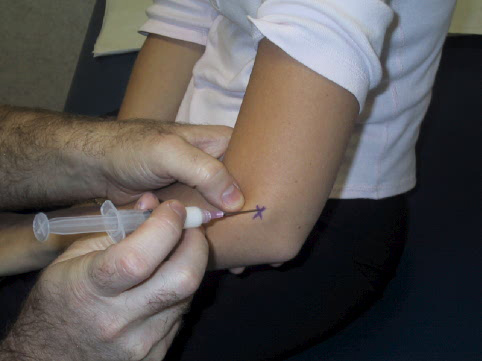 Which of the following actions is most likely performed by the affected muscle?
 (Multiple Choice)
4.8/5 (76)
(76) A 26-year-old woman is evaluated for increasing discomfort in the right posterior mandible. The patient has no prior medical conditions and takes no medications. Physical examination is unremarkable with the exception of a partially erupted right mandibular third molar tooth. Radiographs reveal impaction of the molar tooth. Surgical tooth extraction under general anesthesia is performed. During the surgery, the inferior alveolar nerve that is close to the tooth is inadvertently injured. Which of the following is the most likely to be observed on the injured side?
(Multiple Choice)
4.8/5 (81)
(81) A 24-year-old man is brought to the emergency department due to right arm pain after a fall. While rock climbing at a nearby national park, the patient lost his grip and fell approximately 3 m (10 ft) onto the boulders below. He says, "I landed on my right arm and heard something snap." The patient did not strike his head or lose consciousness. He has no chronic medical conditions and takes no daily medications. Vital signs are within normal limits. Physical examination shows extensive bruising over the lateral right arm and a total inability to extend the right wrist. X-ray reveals a midshaft fracture of the right humerus. Which of the following arteries is most likely to be injured in this patient?
(Multiple Choice)
4.9/5 (80)
(80) A 32-year-old man undergoes evaluation for episodes of paroxysmal supraventricular tachycardia. An electrophysiology study reveals focal atrial tachycardia that originates in the crista terminalis of the right atrium. Radiofrequency ablation is planned to destroy the ectopic focus and treat the arrhythmia. Which of the following nerves is in close proximity to the treatment site and is at risk for injury during the ablation?
(Multiple Choice)
4.8/5 (71)
(71) A 16-year-old boy is brought to the emergency department due to severe right groin pain that has worsened over the past 12 hours. During the last month, the patient has had several episodes of mild scrotal pain while walking between classes at school. He has no history of traumatic injury and is sexually active. Medical history is unremarkable except for an inguinal hernia repaired a year ago. Temperature is 36.9 C (98.4 F), blood pressure is 116/78 mm Hg, and pulse is 86/min. On examination, the right hemiscrotum is swollen and tender. The bisected gross specimen from an orchiectomy is shown in the image below. 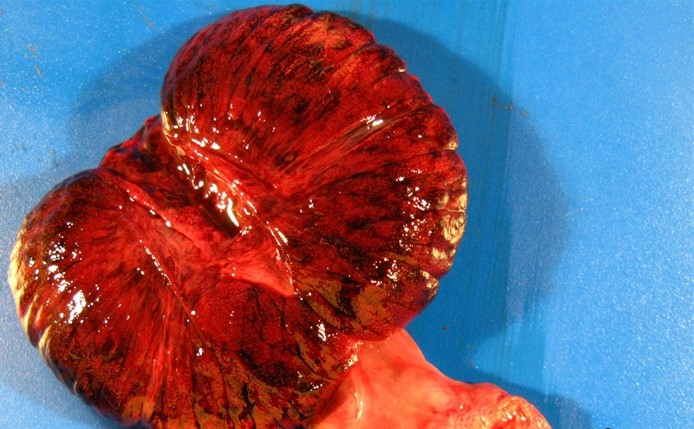 Which of the following is the most likely mechanism of this patient's acute testicular pain?
 (Multiple Choice)
4.7/5 (74)
(74) A 37-year-old previously healthy man comes to the office for evaluation of enlarged lymph nodes. He has an 8-week history of progressively enlarging cervical lymph nodes associated with subjective fevers, fatigue, and drenching night sweats. After initial assessment, the patient undergoes excisional biopsy of enlarged lymph nodes in the left posterior triangle of the neck. Two weeks later, during a follow-up visit, he describes difficulty with overhead activities such as combing his hair or placing dishes on overhead shelves. Examination shows a left shoulder droop with weakness of left arm abduction above 100 degrees. Other shoulder movements are normal, and there is no sensory loss. Which of the following muscles is most likely paralyzed in this patient?
(Multiple Choice)
4.8/5 (78)
(78) A 48-year-old man is evaluated for abdominal pain and diarrhea. The patient characterizes his stool as voluminous and foul smelling. He has no significant past medical history. The patient drinks 6 cans of beer daily. On examination, he has normal bowel sounds and mild epigastric tenderness. A 72-hour stool collection shows excessive excretion of fecal fat. A CT scan of the abdomen is shown in the image below. Involvement of which of the following structures is most likely causing this patient's symptoms? 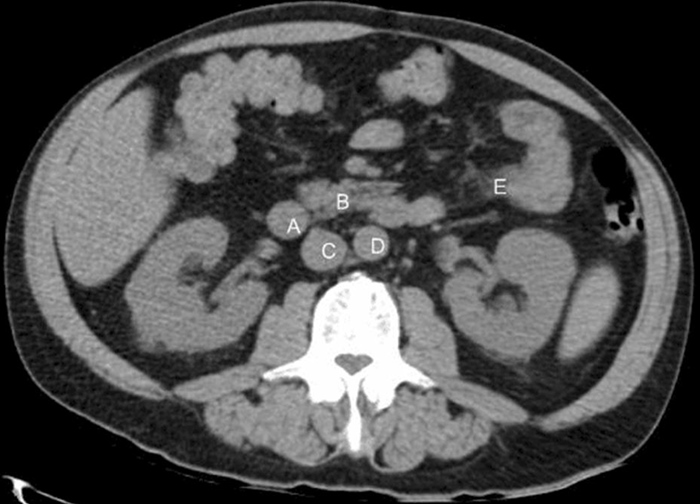
(Multiple Choice)
5.0/5 (75)
(75) A 17-year-old girl is brought to the hospital due to abdominal pain, nausea, and vomiting. She began having periumbilical pain and nausea several hours ago and initially attributed her symptoms to some "bad food" she ate at a potluck lunch earlier in the day. However, her pain progressively worsened and became localized to the right lower quadrant. Temperature is 101 F (38.3 C), blood pressure is 124/78 mm Hg, pulse is 92/min, and respirations are 14/min. On examination, the patient has right lower quadrant tenderness with guarding. Laboratory evaluation shows leukocytosis. Surgical intervention is planned. During surgery, which of the following landmarks is most helpful in identifying the diseased organ?
(Multiple Choice)
4.7/5 (79)
(79) A 12-year-old girl is brought to the emergency department following a sports injury involving the right lower extremity. The patient was playing soccer when she jumped and turned to the right to avoid being kicked by another player. She landed on her right foot with her foot internally rotated and her knee extended. Since the injury, the patient has been able to bear weight but says the knee feels unstable and she is afraid that it may give way, causing her to fall. Physical examination shows swelling of the right knee. Stability testing shows excessive anterior translation of the tibia relative to the femur. Which of the following ligaments is most likely injured?
(Multiple Choice)
4.7/5 (96)
(96) A 44-year-old man comes to the office for evaluation of a neck lump. The patient first noticed the lump 6 months ago while he was shaving and says that it seems to be growing in size. He has no pain, shortness of breath, cough, hoarseness, or difficulty swallowing. The patient had Hodgkin lymphoma 20 years ago, which was successfully treated with radiation therapy to his chest and neck. Physical examination shows a firm mass in the left thyroid lobe. There is no lymphadenopathy. Serum TSH level is normal. Fine-needle aspiration biopsy reveals papillary thyroid cancer. A total thyroidectomy is performed. During an attempt to ligate the inferior thyroid artery, a nervous structure in close proximity is inadvertently damaged. Which of the following was most likely injured during the surgery?
(Multiple Choice)
4.9/5 (86)
(86) A 16-year-old boy is brought to the emergency department after an eye injury during a baseball game. He was batting for his high school team when the opposing pitcher made a wild throw and the baseball hit him in the right eye. The patient has since been having diplopia that worsens when he looks up. On physical examination, he has mild periorbital ecchymosis, enophthalmos, and limited vertical movement of the right eye. Visual acuity and left eye examination are normal. CT scan of the head reveals an orbital floor fracture. Which of the following additional findings is most likely to be seen in this patient?
(Multiple Choice)
4.8/5 (80)
(80) A 20-year-old college football quarterback is evaluated in the emergency department for acute right shoulder pain. One hour ago, the patient sustained a blow to the arm when tackled mid-throw during a championship game. On physical examination, there is flattening of the right deltoid muscle and insensitivity of the overlying skin to pinprick. Peripheral pulses in the upper extremities are intact. Which of the following injuries is most likely responsible for this patient's findings?
(Multiple Choice)
4.9/5 (77)
(77) A 63-year-old man is admitted to the hospital after suffering a cerebral infarction. A swallow study performed during the acute recovery period shows oropharyngeal dysphagia. Despite being maintained on the appropriate dietary restrictions, the patient experiences an episode of vomiting while lying on his back and subsequently develops pneumonia. Which of the following lung regions is most likely to be affected?
(Multiple Choice)
4.9/5 (83)
(83) A 28-year-old woman, gravida 1 para 0, at 38 weeks gestation undergoes spontaneous vaginal delivery. After an uncomplicated delivery of the fetus and placenta, a maternal laceration is noted at the posterior vaginal opening through the vaginal mucosa and submucosa. Which of the following structures is most likely damaged in this patient?
(Multiple Choice)
4.9/5 (90)
(90) A 56-year-old man is brought to the emergency department due to weakness and difficulty speaking. He has a history of hypertension, cigarette smoking, and polysubstance use. The patient experienced a headache while smoking crack cocaine the previous night. This morning, he was found on the bed unable to move or speak. On physical examination, the patient is awake with normal pupillary responses. Vertical eye movements are intact, but horizontal eye movements are impaired. There is loss of motor strength in the upper and lower extremities bilaterally. Ischemic infarction from cocaine-induced vasospasm is suspected. A lesion involving which of the brain regions is the most likely cause of this patient's current condition?
(Multiple Choice)
4.9/5 (81)
(81) A 14-year-old boy comes to the office with his mother due to progressive anterior knee pain affecting the left leg for the past 2 months. The pain started as a mild ache toward the end of a hiking trip. The patient reports no fever, night sweats, or trauma to the knee. On physical examination, he has a normal gait. The hips, knees, and ankles have full range of motion. An area of mild swelling tender to palpation is located about 3 cm below the inferior border of the patella. An x-ray of the left knee is shown in the exhibit.
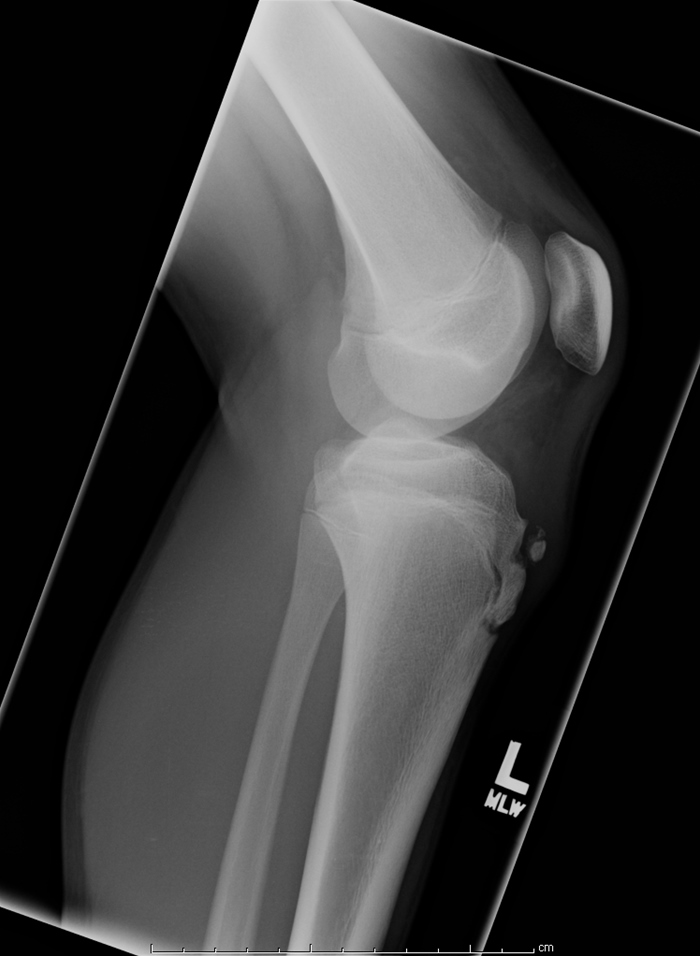 Overuse of which of the following muscles most likely contributed to this patient's condition?
 (Multiple Choice)
4.8/5 (80)
(80) A 21-year-old man is brought to the emergency department following an assault. He was attempting to escape and turned away just as his attacker lunged toward him from behind with a knife. The patient suffered a 4-cm-wide penetrating injury with significant associated blood loss. Following initial stabilization, he is transferred to the operating room. Surgical exploration reveals injury to a muscle that assists in internal rotation of the arm and is innervated by the thoracodorsal nerve. Which of the following muscles depicted in the cadaveric specimen is most likely injured in this patient? 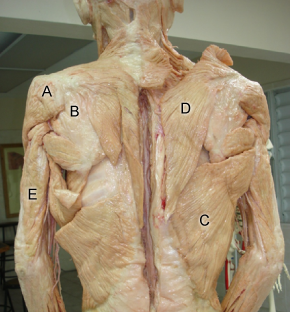
(Multiple Choice)
4.9/5 (76)
(76) A 74-year-old man comes to the office due to chronic constipation. Bowel movements occur once every 3 days and are hard and pellet-like. The patient frequently strains when he tries to defecate and never feels completely evacuated. The constipation is occasionally so severe that he uses his fingers to remove stool from the anorectal vault. Medical history is significant for Parkinson disease, for which he takes carbidopa-levodopa. Vital signs are unremarkable. A resting tremor is present on physical examination. The abdomen is distended but nontender to palpation. This patient's condition is most likely due to inadequate relaxation of which of the following muscles during defecation?
(Multiple Choice)
4.8/5 (70)
(70) 
Filters
- Essay(0)
- Multiple Choice(0)
- Short Answer(0)
- True False(0)
- Matching(0)