



 Chat with AI
Exam 1: Anatomy

Exam 1: Anatomy291 Questions
Exam 2: Behavioral science240 Questions
Exam 3: Biochemistry156 Questions
Exam 4: Biostatistics117 Questions
Exam 5: Embryology52 Questions
Exam 6: Genetics103 Questions
Exam 7: Histology24 Questions
Exam 8: Immunology129 Questions
Exam 9: Microbiology336 Questions
Exam 10: Pathology816 Questions
Exam 11: Pathophysiology464 Questions
Exam 12: Pharmacology538 Questions
Exam 13: Physiology272 Questions
Select questions type


A 46-year-old gardener comes to the office due to knee pain. It began abruptly 3 days earlier and improved only minimally with acetaminophen. The patient spends hours on his knees several times a week while working. Past medical history is notable for hypertension and seasonal allergies. His current medications include lisinopril, loratadine, and fluticasone nasal spray. Examination of the lower extremity shows no visible erythema or abrasions, but there is sharp, localized pain on palpation. Passive range of motion is normal in all joints, but the patient has severe pain when walking around the room or climbing onto the examination table. Which of the following bursae is most likely affected in this patient?
(Multiple Choice)
4.8/5  (76)
(76) A 23-year-old man comes to the physician complaining of right-sided testicular swelling. He first noticed the swelling 1 week ago while getting ready for work. He denies any testicular pain or history of trauma. However, he has noticed a heavy, pressing sensation involving his scrotum and lower abdomen. Physical examination reveals asymmetric swelling of the right testis, and subsequent ultrasonography shows a solid testicular mass. If malignant, this patient's tumor is most likely to spread to which of the following lymph node groups?
(Multiple Choice)
4.9/5 (84)
(84) A 5-year-old boy has developed persistent food-seeking behavior over the past few months. His mother initially thought that the boy was undergoing a growth spurt, but despite how much she fed him he never seemed satisfied. He has gained more than 4.5 kg (10 lb). The patient has also started complaining of a headache and nausea in the morning. His physical examination is significant for BMI of 32 kg/m2. Temperature is 37.2 C (99 F), blood pressure is 100/70 mm Hg, pulse is 92/min, and respirations are 16/min. His pediatrician becomes concerned about possible central nervous system involvement. This patient's food-seeking behavior could be explained by a lesion causing impairment of which hypothalamic nucleus?
(Multiple Choice)
4.8/5 (84)
(84) A 54-year-old man comes to the physician for evaluation of exertional chest pain. He first noticed the pain a couple months ago when he was shoveling snow off his driveway and has since experienced several episodes while doing other strenuous tasks. He describes the pain as a heavy, crushing sensation and says it is relieved with rest. The patient undergoes coronary angiography and is found to have severe stenosis of the right coronary artery and left anterior descending and circumflex arteries. He is referred to a surgeon for coronary artery bypass grafting. During the procedure, a portion of his great saphenous vein is removed and grafted to one of the diseased coronary arteries to bypass its atherosclerotic narrowing. The vein used as a graft during this patient's procedure can be accessed at which of the following sites?
(Multiple Choice)
4.7/5 (69)
(69) A 20-year-old man comes to the hospital with knee pain after he tripped and landed on his right knee during a soccer game. The anterior portion of his tibia impacted directly against the ground, and he has been unable to bear weight since the injury. On physical examination, the patient's knee appears swollen, and there is excessive posterior displacement of the tibia when pressure is applied to his anterior tibia with the knee in the flexed position. An axial MRI cross section of the right knee at the level of the tibial plateau is shown below. Which of the following structures is most likely injured in this patient? 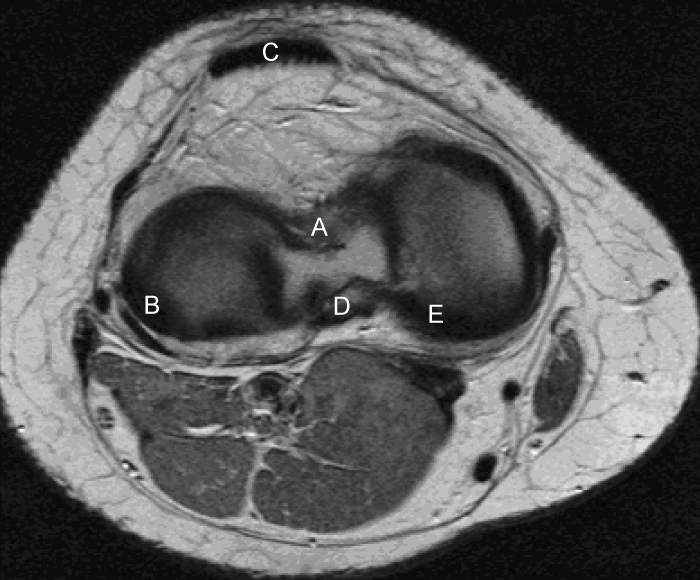
(Multiple Choice)
4.9/5 (83)
(83) A 64-year-old man with type 2 diabetes mellitus is evaluated in the clinic due to occasional dizziness. His symptoms usually occur while playing table tennis. The patient has not had any falls or loss of consciousness. He has no known history of coronary artery disease or stroke. The patient has smoked a pack of cigarettes daily for the past 40 years and occasionally drinks alcohol. Orthostatic vital signs are normal. ECG shows normal sinus rhythm. Doppler ultrasound evaluation of the left vertebral artery reveals retrograde (caudal) flow instead of normal antegrade flow. Which of the following arteries is most likely to be occluded based on these ultrasound findings?
(Multiple Choice)
4.8/5 (76)
(76) A 15-year-old girl comes to the office due to pelvic and crampy lower abdominal pain that seems to recur at the beginning of each month and resolves after a day or two. The pain began approximately 6 months ago and has significantly worsened each month. The patient has never had a menstrual period. She has never had sexual intercourse. Weight, height, and BMI are average for age and sex. Breast and pubic hair development are at sexual maturity rating (Tanner stage) 5. Digital rectal examination reveals a palpable mass anterior to the rectum. A pregnancy test is negative. Which of the following is the most likely diagnosis?
(Multiple Choice)
4.9/5 (80)
(80) A 58-year-old man comes to the office with upper abdominal pain, fatigue, and anorexia. He says his symptoms began about a month ago and seem to be getting worse. The patient has a history of cirrhosis due to chronic hepatitis C. Physical examination shows cachexia and worsening ascites. Imaging studies reveal a large mass in the right hepatic lobe consistent with unresectable hepatocellular cancer. The patient is scheduled to undergo percutaneous embolization of the artery supplying the tumor. Contrast material administration into which of the following structures is most likely to visually enhance the artery prior to embolization?
(Multiple Choice)
4.7/5 (81)
(81) A 55-year-old man comes to the office due to swelling in his groin that he first noticed 2 weeks ago. Physical examination shows a bulge above the inguinal ligament that increases in size when the patient is asked to cough. He is referred to a surgeon and scheduled to undergo elective laparoscopic hernia repair. Which of the following landmarks will best aid the surgeon in distinguishing an indirect from a direct inguinal hernia?
(Multiple Choice)
5.0/5 (78)
(78) A 25-year-old man comes to the office due to right arm weakness. The patient injured his right shoulder several months ago in a motor vehicle accident and has had difficulty elevating his arm since. On examination, there is diminished pinprick and temperature sensation over a small area in the right upper lateral arm and prominent atrophy of the right deltoid with 3/5 strength on right shoulder abduction. Reflexes and handgrip strength are normal in the upper extremities bilaterally. This patient most likely injured which of the following nerves?
(Multiple Choice)
4.7/5 (81)
(81) An 18-year-old primigravida at 27 weeks gestation comes to the emergency department due to severe right upper quadrant pain. The pain started 2 hours ago, and the patient has also had nausea, vomiting, and irregular uterine contractions. Temperature is 36.7 C (98.1 F), blood pressure is 172/118 mm Hg, and pulse is 110/min. BMI is 34 kg/m2. On abdominal examination, tenderness to palpation is present over the right upper quadrant. Aspartate aminotransferase (SGOT) is 220 U/L and alanine aminotransferase (SGPT) is 240 U/L. Abdominal imaging reveals a hepatic subcapsular hematoma. This patient is most at risk for which of the following complications?
(Multiple Choice)
4.9/5 (69)
(69) A 53-year-old man comes to the emergency department due to severe lower back pain. The patient's back pain started 2 weeks ago without any preceding trauma and has been keeping him awake at night. The pain has acutely worsened over the past 2 days and is not relieved with over-the-counter pain medications. His vital signs are within normal limits. Examination shows low back pain that is worse with back flexion and raising of the legs; it radiates into his left leg. Pinprick in the perianal area does not cause rapid contraction of the anal sphincter. The rest of the neurologic examination is normal. Which of the following nerve roots is most likely to be involved in this patient's condition?
(Multiple Choice)
4.9/5 (78)
(78) A 7-year-old boy is brought to the emergency department after injuring his right knee in a bicycle accident. Physical examination shows a swollen right knee with abrasion of the overlying skin. Distal motor and sensory innervation are intact, and popliteal and pedal pulses are normal. No other significant trauma is noted. X-ray reveals a nondisplaced patellar fracture. The patient is referred to orthopedics and placed in a leg cylinder cast. On follow-up a week after cast placement, he has paresthesia and numbness of the dorsum of the right foot along with weakness in foot dorsiflexion and eversion. Which of the following is the most likely site of nerve compression in this patient?
(Multiple Choice)
4.8/5 (87)
(87) A 21-year-old man comes to the emergency department after suffering an injury during a football game. He was falling to the ground when he was struck forcefully from behind by the helmet of an opposing player. The patient was able to ambulate after the injury but has since had severe pain worsened by deep breaths. His blood pressure is 110/65 mm Hg, pulse is 110/min, and respirations are 16/min. On examination, there is bruising and tenderness over the left posterior chest wall. There is normal spinal range of motion and no midline tenderness. Gait and lower extremity neurologic examination are normal. Imaging studies reveal a fracture of the left 12th rib. Which of the following structures is most likely to be lacerated by the fractured bone?
(Multiple Choice)
4.9/5 (79)
(79) A 56-year-old man comes to the office for evaluation of right leg pain and numbness. The pain started 2 days ago during an 8-hour car ride during which the patient was a backseat passenger in a small car. Midway through the car ride, he began to have numbness and burning pain over the lateral aspect of the right thigh. The patient has tried stretching to relieve the pain, but it has only worsened and he is now unable to wear a belt due to the discomfort. He has type 2 diabetes mellitus and has gained 11.3 kg (25 lb) over the past year. BMI is 42 kg/m2. On examination, lower extremity strength is 5/5 bilaterally. The right leg has a large area of numbness over the upper lateral thigh. Straight leg raise is negative. Reflexes are symmetrical and intact. Compression of which of the following nerves is the most likely cause of this patient's presentation?
(Multiple Choice)
4.8/5 (76)
(76) A 71-year-old man comes to the hospital due to 3 hours of persistent retrosternal chest pain and dyspnea. After prompt evaluation, he is diagnosed with acute myocardial infarction and undergoes cardiac catheterization. During cannulation of the right common femoral artery, the arterial wall is penetrated superior to the right inguinal ligament. Percutaneous coronary intervention is then performed, after which firm pressure is applied to achieve hemostasis. Soon after the procedure, the patient becomes cold, clammy, and hypotensive. Physical examination shows a 5cm region of ecchymosis surrounding the femoral puncture site. Internal bleeding is suspected. Which of the following is the most likely location of the blood collection?
(Multiple Choice)
5.0/5 (75)
(75) A 19-year-old woman is evaluated in the clinic due to right hand clumsiness. The patient injured the right upper extremity after falling off her bicycle 6 months ago. She has since had a "pins and needles" sensation in the right hand associated with mild weakness. The patient is worried as these symptoms are interfering with her piano lessons and she has an upcoming recital in 3 weeks. Physical examination shows decreased sensation over the fifth digit and a flattened hypothenar eminence. Triceps reflexes are 2+ and symmetric bilaterally. The nerve affected in this patient is commonly injured at which of the following locations?
(Multiple Choice)
4.9/5 (89)
(89) A 52-year-old man is being evaluated for nonspecific, chronic abdominal pain. As part of the workup, he undergoes an abdominal CT scan with intravenous contrast, which reveals no significant findings. An axial image from the scan is shown below. 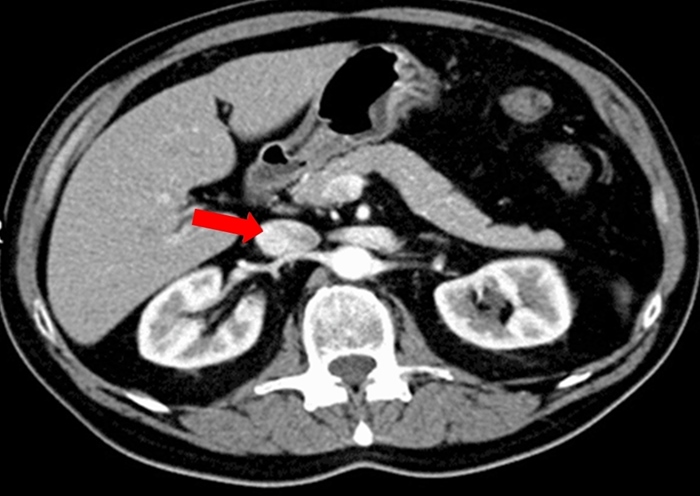 Which of the following statements best describes the structure indicated by the arrow?
 (Multiple Choice)
4.9/5 (86)
(86) A 16-year-old boy comes to the emergency department due to right knee pain after a fall. His symptoms started after a ski accident in which he twisted the right lower leg outward relative to the thigh. He has no medical conditions and currently takes no medications. On examination, there is swelling and tenderness on the medial aspect of the right knee. Widening of the medial joint line can be felt when a gentle force is applied to the lateral knee with the lower leg kept stationary. Which of the following labelled structures is most likely injured in this patient? 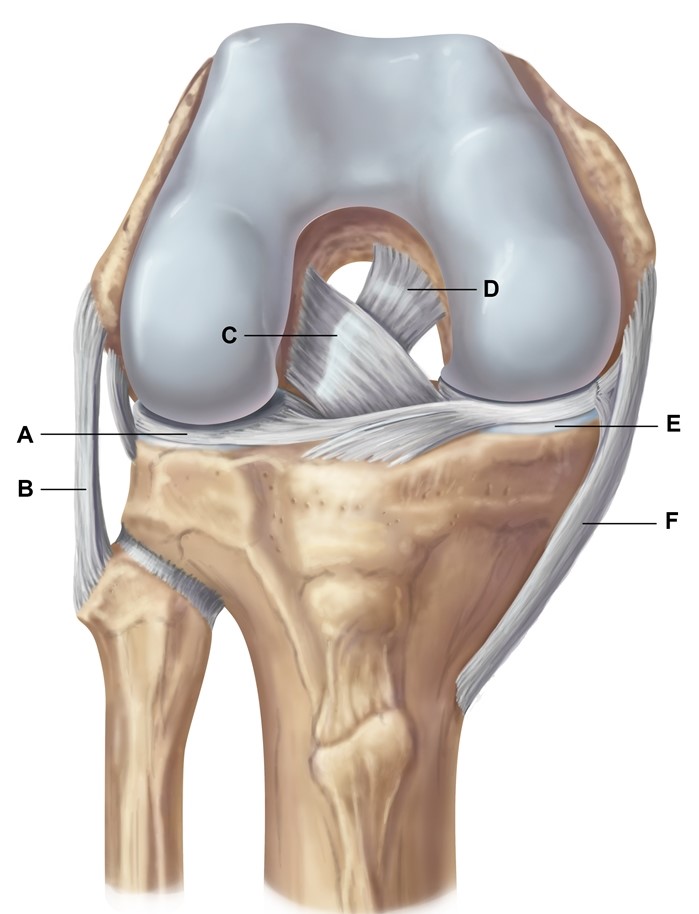
(Multiple Choice)
4.8/5 (78)
(78) A 65-year-old man comes to the office due to right lower abdominal pain that radiates to his groin and difficulty walking for the past week. Climbing stairs has been particularly hard for him, and he has fallen several times due to knee buckling. Medical history is significant for diabetes mellitus, hypertension, and atrial fibrillation. The patient takes warfarin for chronic anticoagulation. On physical examination, the right patellar reflex is decreased compared to the left. Abdominal CT scan is shown below: 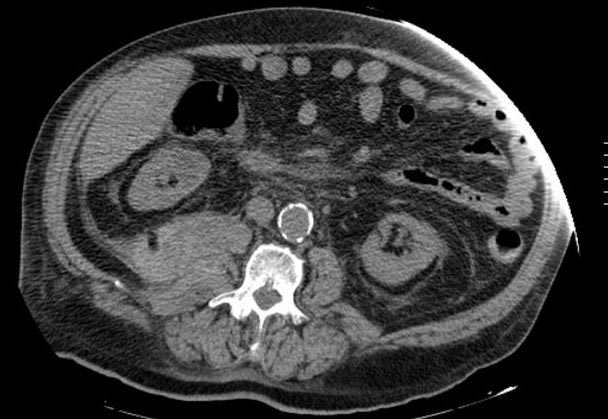 Which of the following additional findings is most likely to be seen in this patient?
 (Multiple Choice)
4.8/5 (76)
(76) 
Filters
- Essay(0)
- Multiple Choice(0)
- Short Answer(0)
- True False(0)
- Matching(0)