



 Chat with AI
Exam 1: Anatomy

Exam 1: Anatomy291 Questions
Exam 2: Behavioral science240 Questions
Exam 3: Biochemistry156 Questions
Exam 4: Biostatistics117 Questions
Exam 5: Embryology52 Questions
Exam 6: Genetics103 Questions
Exam 7: Histology24 Questions
Exam 8: Immunology129 Questions
Exam 9: Microbiology336 Questions
Exam 10: Pathology816 Questions
Exam 11: Pathophysiology464 Questions
Exam 12: Pharmacology538 Questions
Exam 13: Physiology272 Questions
Select questions type


A 65-year-old man is evaluated in the clinic due to several months of abdominal pain and vomiting. The pain starts 2 to 3 hours after meals, is characterized as crampy, and is often associated with bilious vomiting. Lately, the patient has been tolerating only liquids and has consequently lost 12 lbs in the past 4 months. On physical examination, he has mild epigastric tenderness on deep palpation. Contrast-enhanced CT scan of the abdomen shows an irregular mass in the third portion of the duodenum that is infiltrating beyond the gut wall. If this mass continues to enlarge, which of the following structures is most likely to be compromised in this patient?
(Multiple Choice)
5.0/5  (90)
(90) A 26-year-old woman is evaluated in the clinic due to absence of her last 3 menstrual periods. The patient has also developed bilateral milky nipple discharge. Menarche was at age 13. Until now, she has had regular menses, lasting 4-5 days, every 28 days. The patient says she takes acetaminophen for occasional headaches and a medication that "stops the voices" in her head. BMI is 29 kg/m2. Pelvic examination is unremarkable. Urine β-hCG testing is negative. Interruption of which of the following central nervous system pathways is the most likely cause of this patient's presenting symptoms?
(Multiple Choice)
4.9/5 (75)
(75) A 50-year-old man comes to the office due to a lump in his neck that has been present for 4 months and is enlarging. On examination, there is a firm, nontender, nonmobile mass in the right anterior neck. Otoscopic examination shows a clear right middle ear effusion. Needle biopsy of the neck mass is consistent with regional nodal spread of squamous cell carcinoma. Which of the following is the most likely site of the primary tumor?
(Multiple Choice)
4.8/5 (79)
(79) A 52-year-old man is brought to the emergency department due to repeated vomiting that began 2 hours ago. His vomit is dark brown and has a granular consistency. The patient has a history of dyspepsia, for which he takes over-the-counter antacids as needed and degenerative knee arthritis, for which he takes naproxen regularly. He drinks 2-3 beers daily. Temperature is 36.7 C (98 F), blood pressure is 114/62 mm Hg, pulse is 102/min, and respirations are 14/min. Physical examination reveals mild epigastric tenderness with no rebound or guarding. Hemoglobin is 9 g/dL. Endoscopy shows a deep, bleeding ulcer on the posterior wall of the duodenal bulb. This patient's ulcer has most likely penetrated which of the following arteries?
(Multiple Choice)
4.8/5 (85)
(85) A 56-year-old woman is brought to the emergency department with sudden onset of headache and partial loss of vision. She has a 3-year history of atrial fibrillation. Physical examination shows a visual field defect involving the black areas illustrated below. 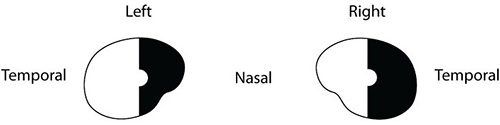 This patient most likely has occlusion of which of the following arteries?
 (Multiple Choice)
4.7/5 (75)
(75) A 67-year-old man comes to the emergency department due to progressive fever and lethargy. The patient has also had severe right shoulder and abdominal pain, nausea, and vomiting for the past 2 days. He had an appendectomy during childhood and a pacemaker placed 10 years ago for symptomatic sinus bradycardia. He has no other medical problems and takes no medications. The patient does not use tobacco but drinks an occasional beer. Temperature is 38.4 C (101.1 F), blood pressure is 80/50 mm Hg, and pulse is 120/min and regular. Abdominal examination shows generalized tenderness with rebound tenderness. Right shoulder examination is normal. Upright chest x-ray is shown below. 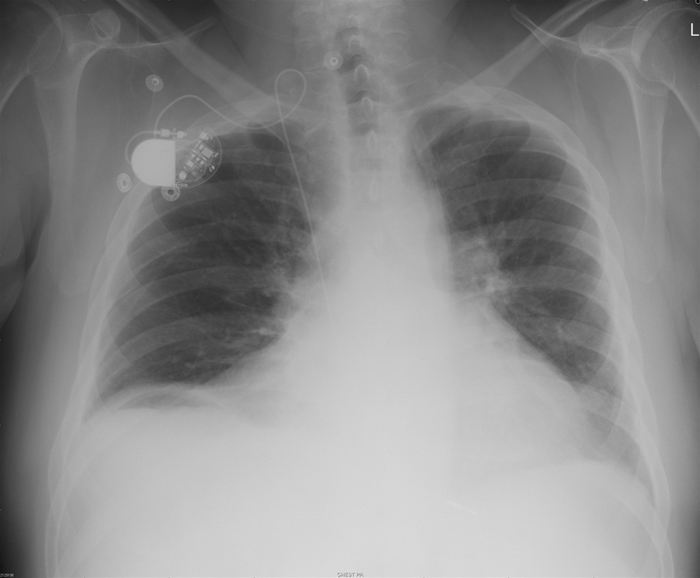 Which of the following is the most likely cause of this patient's condition?
 (Multiple Choice)
4.8/5 (81)
(81) A 65-year-old man is brought to the emergency department due to an acute change in mental status. The patient was having dinner with his family when he suddenly had difficulty using his fork and appeared confused. Other medical conditions include type 2 diabetes mellitus, hyperlipidemia, and hypertension. The patient is a high school calculus teacher and has a 40-pack-year smoking history. Blood pressure is 180/98 mm Hg and pulse is 98/min and regular. On physical examination, the patient is well oriented, answers questions appropriately, and has no motor, sensory, or visual deficits. He is unable to add simple numbers such as 17 plus 9; he is also unable to recognize or distinguish his fingers. Which of the following brain areas is most likely affected in this patient? 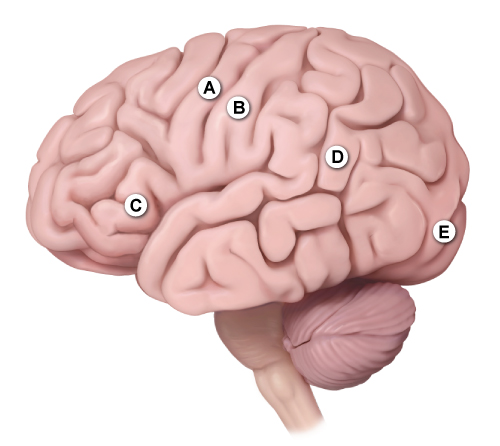
(Multiple Choice)
4.8/5 (96)
(96) A 14-year-old previously healthy girl is evaluated for a 3-month history of low back pain. She is a member of her school gymnastics team, and the pain is worse after training sessions. The patient reports no significant back trauma and has had no weakness or numbness in the lower extremities. Menarche was at age 9 and she has had regular menstruations. Vital signs are within normal limits. Physical examination shows tenderness in the L5 region, but no neurologic deficits are present. A spine x-ray reveals anterior displacement of L5 vertebra relative to the S1 vertebra. This patient's condition is most likely caused by injury to which of the following structures?
(Multiple Choice)
5.0/5 (85)
(85) A 64-year-old woman is brought to the emergency department due to stroke-like symptoms. The patient has a history of transient ischemic attacks as well as other risk factors for cerebrovascular disease, including hypertension, type 2 diabetes mellitus, and hyperlipidemia. Urgent brain imaging reveals occlusion of a vessel indicated by the arrow in the exhibit.
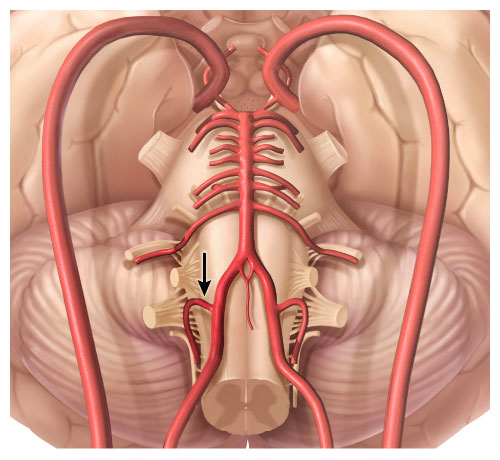 Which of the following findings is most likely to be observed in this patient?
 (Multiple Choice)
4.9/5 (79)
(79) A 54-year-old man comes to the office due to episodic burning substernal chest pain. His pain increases with activity and improves with rest. The patient has a history of hypertension and hyperlipidemia. He has smoked a pack of cigarettes daily for the past 30 years. His blood pressure is 140/85 mm Hg and pulse is 76/min. Cardiac auscultation reveals a S4 heart sound. Lung and abdominal examinations are unremarkable. An ECG at rest shows left ventricular hypertrophy. A myocardial perfusion scan reveals inducible ischemia of the inferior surface of the heart. Which of the following coronary arteries is most likely occluded in this patient?
(Multiple Choice)
4.9/5 (89)
(89) A 72-year-old man is brought to the emergency department due to involuntary movements of his right arm that started several hours ago. He was watching television when his arm "threw the remote control across the room." His past medical history is significant for long-standing hypertension and diabetes mellitus. The patient does not use alcohol, tobacco, or illicit drugs. Physical examination shows wild, large-amplitude, flinging movements affecting the proximal muscles of his right arm. Which of the following areas of the brain is most likely injured in this patient?
(Multiple Choice)
4.7/5 (103)
(103) A 32-year-old male presents to the ER with sudden-onset heart palpitations. His blood pressure is 100/70 mmHg, and his heart rate is 160/min with regular rhythm. The physician instructs the patient to do the "Valsalva maneuver" to relieve these symptoms. Which of the following structures indicated on the pelvic CT image below is most important in performing the Valsalva maneuver? 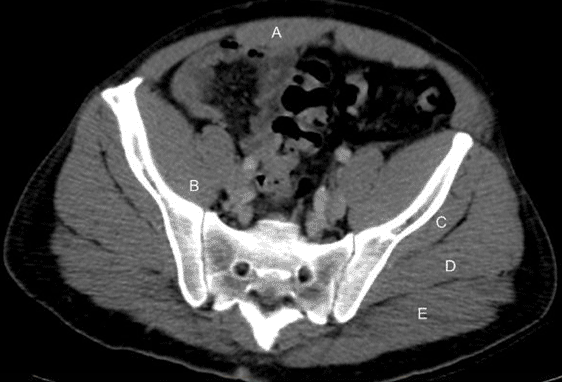
(Multiple Choice)
4.8/5 (81)
(81) A 55-year-old man comes to the office due to progressive headaches over the past 2 months. The headaches are throbbing, often associated with nausea, and worsen whenever the patient coughs or bears down during a bowel movement. Medical history is significant for episodic migraine without aura. MRI of the brain with gadolinium reveals a cystic mass, as shown in the image below: 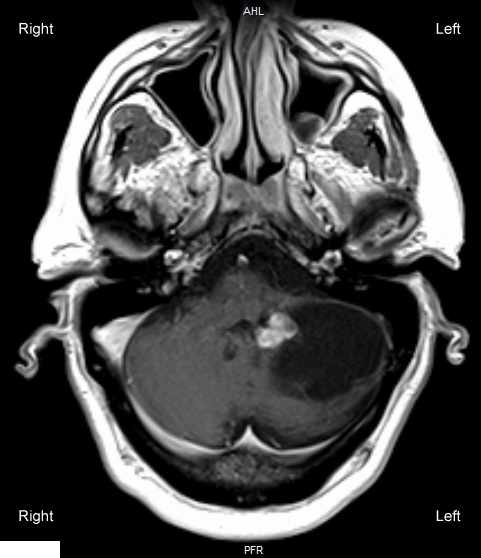 Which of the following findings is most likely to be seen on physical examination of this patient?
 (Multiple Choice)
4.9/5 (81)
(81) A 33-year-old man comes to the emergency department due to fever, chills, cough, and shortness of breath over the last week. He smokes a pack of cigarettes a day, consumes 2 or 3 alcoholic beverages daily, and uses intravenous heroin 2 or 3 times per week. He is febrile and tachycardic. Blood cultures grow Staphylococcus aureus. Chest x-ray shows bilateral nodular lesions with areas of cavitation. The valve most likely affected in this patient can be best evaluated by auscultation at which of the following sites? 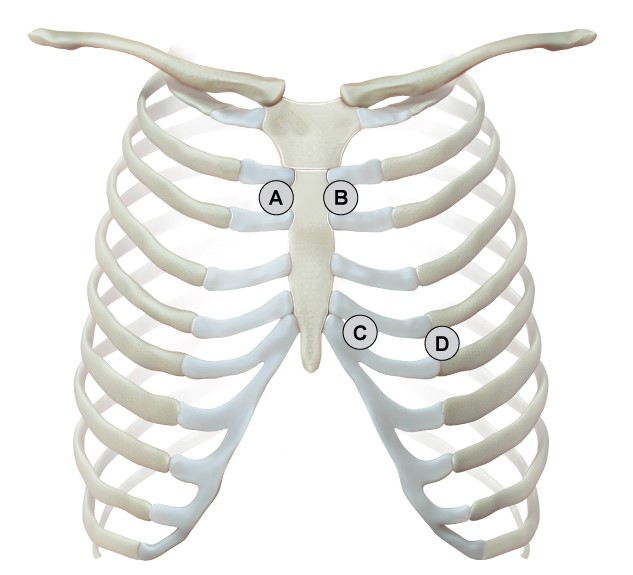
(Multiple Choice)
4.8/5 (83)
(83) A 63-year-old man comes to the office due to poor urine flow for several months. The patient says that it takes about 10 seconds to initiate a urinary stream. He also needs to strain when urinating or the stream just stops before his bladder is empty. He has tried behavioral modifications, but the symptoms continue to be bothersome. The patient takes lisinopril for hypertension. He has smoked a pack of cigarettes a day for 30 years. His father had urothelial cancer of the bladder. He reports significant improvement several months after starting finasteride. A therapeutic effect on which of the following structures is most likely responsible for this patient's symptomatic improvement? 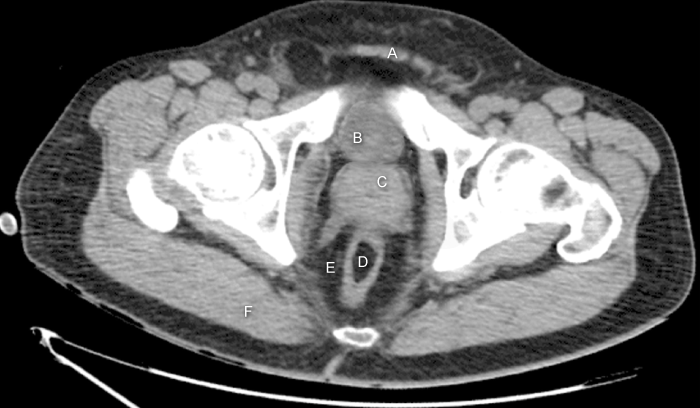
(Multiple Choice)
4.7/5 (73)
(73) A 37-year-old woman is brought to the emergency department following a motor vehicle collision. She lost control of her car while going around a corner and struck a brick wall head on. The patient has severe pain at the right hip with any movement. Examination shows that the right lower extremity is adducted and internally rotated and appears shorter than the contralateral leg. Range of motion testing at the hip is limited in all directions due to severe pain. X-ray of the hip is shown in the exhibit.
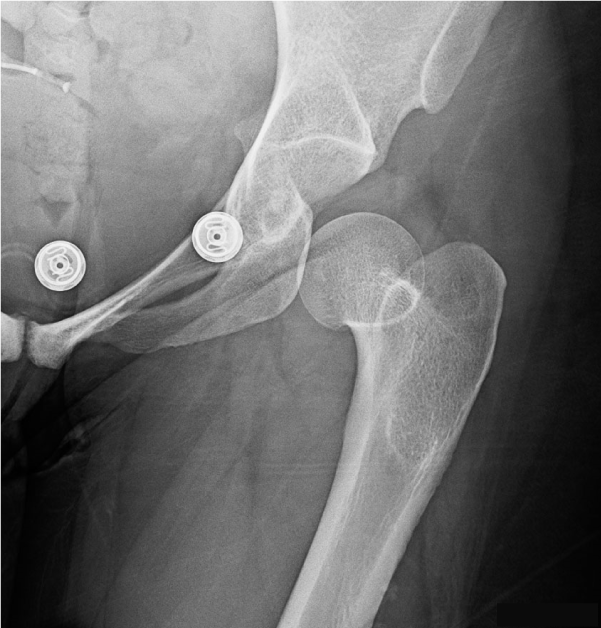 Which of the following structures is most vulnerable to involvement from this patient's injury?
 (Multiple Choice)
4.8/5 (74)
(74) A 34-year-old woman comes to the physician complaining of double vision. She first experienced difficulty focusing her eyes while at work yesterday. Upon waking up this morning, her symptoms had progressed to frank diplopia. Her past medical history is insignificant. A complete physical examination is performed, including a full neurologic assessment. Shining light into her right eye causes constriction of her right pupil, but not the left pupil. Shining light into her left eye causes constriction of only her right pupil. Which of the following additional physical examination findings is likely to be found in this patient?
(Multiple Choice)
4.8/5 (80)
(80) A 52-year-old man comes to the office due to a chronic cough for the last 3 weeks. The patient says, "I haven't been coughing up phlegm, but sometimes I notice some blood on the tissue when I cough particularly hard." He has smoked 2 packs of cigarettes daily for the past 30 years and drinks 3 or 4 cans of beer on weekends. He works as a welder on an assembly line and says his father died of lung cancer at age 70. Physical examination shows right-sided face and arm swelling and engorgement of subcutaneous veins on the same side of the neck. Which of the following veins is most likely obstructed in this patient?
(Multiple Choice)
4.7/5 (82)
(82) A 48-year-old man comes to the office due to right inguinal discomfort. The patient first noticed "bumps" in his groin when he was dressing in the morning. He does not know how long they have been present but thinks they are relatively new. The patient was treated for gonorrhea several years ago but has no other medical problems. He drinks alcohol occasionally but does not use tobacco or illicit drugs. His mother died of metastatic melanoma. Cardiopulmonary examination is normal. The abdomen is soft and nontender. The right inguinal lymph nodes are enlarged and tender, as are several nodes in the right popliteal area. The distribution of lymphadenopathy in this patient would most likely be seen in which of the following conditions?
(Multiple Choice)
4.9/5 (85)
(85) A 24-year-old man is being evaluated for a nerve block procedure. The patient has had intermittent burning and stabbing pain in the left groin since undergoing mesh repair of an inguinal hernia a year ago. The pain is often brought on by physical activity and coughing. He has no other medical conditions and takes no medications. Vital signs are within normal limits. On physical examination, there is no weakness of anterior abdominal or lower extremity muscles. Lightly touching the upper medial thigh or upper part of the scrotum elicits burning pain. Cremasteric reflex is normal. The clinical diagnosis is entrapment of a nerve traversing the superficial inguinal ring with the spermatic cord. Blockade of which of the following nerves with a local anesthetic injection is most likely to relieve this patient's symptoms?
(Multiple Choice)
4.8/5 (71)
(71) 
Filters
- Essay(0)
- Multiple Choice(0)
- Short Answer(0)
- True False(0)
- Matching(0)