



 Chat with AI
Exam 36: Transport in Vascular Plants

Exam 1: Introduction: Themes in the Study of Life66 Questions
Exam 2: The Chemical Context of Life83 Questions
Exam 3: Water and the Fitness of the Environment66 Questions
Exam 4: Carbon and the Molecular Diversity of Life68 Questions
Exam 5: The Structure and Function of Large Biological Molecules109 Questions
Exam 6: A Tour of the Cell75 Questions
Exam 7: Membrane Structure and Function75 Questions
Exam 8: An Introduction to Metabolism79 Questions
Exam 9: Cellular Respiration: Harvesting Chemical Energy103 Questions
Exam 10: Photosynthesis74 Questions
Exam 11: Cell Communication62 Questions
Exam 12: The Cell Cycle80 Questions
Exam 13: Meiosis and Sexual Life Cycles68 Questions
Exam 14: Mendel and the Gene Idea90 Questions
Exam 15: The Chromosomal Basis of Inheritance75 Questions
Exam 16: The Molecular Basis of Inheritance72 Questions
Exam 17: From Gene to Protein84 Questions
Exam 18: Control of Gene Expression101 Questions
Exam 19: Viruses38 Questions
Exam 20: Biotechnology70 Questions
Exam 21: Genomes and Their Evolution37 Questions
Exam 22: Descent With Modification: a Darwinian View of Life57 Questions
Exam 23: The Evolution of Populations84 Questions
Exam 24: The Origin of Species60 Questions
Exam 25: The History of Life on Earth85 Questions
Exam 26: Phylogeny and the Tree of Life90 Questions
Exam 27: Bacteria and Archaea78 Questions
Exam 28: Protists79 Questions
Exam 29: Plant Diversity I: How Plants Colonized Land74 Questions
Exam 30: Plant Diversity Ii: the Evolution of Seed Plants101 Questions
Exam 31: Fungi87 Questions
Exam 32: An Introduction to Animal Diversity82 Questions
Exam 33: Invertebrates98 Questions
Exam 34: Vertebrates112 Questions
Exam 35: Plant Structure, Growth, and Development77 Questions
Exam 36: Transport in Vascular Plants84 Questions
Exam 37: Soil and Plant Nutrition85 Questions
Exam 38: Angiosperm Reproduction and Biotechnology86 Questions
Exam 39: Plant Responses to Internal and External Signals111 Questions
Exam 40: Basic Principles of Animal Form and Function74 Questions
Exam 41: Animal Nutrition68 Questions
Exam 42: Circulation and Gas Exchange78 Questions
Exam 43: The Immune System85 Questions
Exam 44: Osmoregulation and Excretion49 Questions
Exam 45: Hormones and the Endocrine System71 Questions
Exam 46: Animal Reproduction85 Questions
Exam 47: Animal Development75 Questions
Exam 48: Neurons, Synapses, and Signaling52 Questions
Exam 49: Nervous Systems48 Questions
Exam 50: Sensory and Motor Mechanisms59 Questions
Exam 51: Animal Behavior74 Questions
Exam 52: An Introduction to Ecology and the Biosphere71 Questions
Exam 53: Population Ecology80 Questions
Exam 54: Community Ecology74 Questions
Exam 55: Ecosystems79 Questions
Exam 56: Conservation Biology and Restoration Ecology65 Questions
Select questions type


A water molecule could move all the way through a plant from soil to root to leaf to air and pass through a living cell only once. This living cell would be a part of which structure?
(Multiple Choice)
4.9/5  (73)
(73) As a biologist, it is your job to look for plants that have evolved structures with a selective advantage in dry, hot conditions. Which of the following adaptations would be least likely to meet your objective?
(Multiple Choice)
4.8/5 (59)
(59) A plant cell with a  S of -0.65 MPa maintains a constant volume when bathed in a solution that has a
 S of -0.30 MPa and is in an open container. The cell has a
S of -0.65 MPa maintains a constant volume when bathed in a solution that has a S of -0.30 MPa and is in an open container. The cell has a (Multiple Choice)
4.9/5 (63)
(63) The amount and direction of movement of water in plants can always be predicted by measuring which of the following?
(Multiple Choice)
4.8/5 (89)
(89) Which of the following is not a function of the plasma membrane proton pump?
(Multiple Choice)
5.0/5 (76)
(76) Water rises in plants primarily by the cohesion-tension model. Which of the following is not True about this model?
(Multiple Choice)
4.8/5 (82)
(82) Phloem transport is described as being from source to sink. Which of the following would most accurately complete this statement about phloem transport as applied to most plants in the late spring? Phloem transports __________ from the __________ source to the __________ sink.
(Multiple Choice)
4.8/5 (88)
(88) Which of the following is not part of the transpiration-cohesion-tension mechanism for the ascent of xylem sap?
(Multiple Choice)
4.9/5 (66)
(66) Most angiosperms have alternate phyllotaxy. What allows each leaf to get the maximum exposure to light and reduces shading of lower leaves?
(Multiple Choice)
4.9/5 (92)
(92) Phloem transport of sucrose can be described as going from "source to sink." Which of the following would not normally function as a sink?
(Multiple Choice)
4.8/5 (89)
(89) The earliest land plants were nonvascular plants that grew leafless photosynthetic shoots above the shallow freshwater in which they lived.
(True/False)
5.0/5 (81)
(81) Trace the uptake of water and minerals from root hairs to the vessels in a root, following a symplastic route and an apoplastic route. Label the routes.
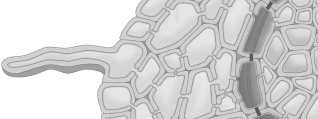
(Essay)
4.8/5 (70)
(70) Water potential is generally most negative in which of the following parts of a plant?
(Multiple Choice)
4.8/5 (61)
(61) Which structure or compartment is not part of the plant's apoplast?
(Multiple Choice)
4.7/5 (73)
(73) Which of the following would be least likely to affect osmosis in plants?
(Multiple Choice)
5.0/5 (81)
(81) Which of the following statements about transport in plants is False?
(Multiple Choice)
4.8/5 (83)
(83) Active transport would be least important in the normal functioning of which of the following plant tissue types?
(Multiple Choice)
4.8/5 (63)
(63) 
Filters
- Essay(0)
- Multiple Choice(0)
- Short Answer(0)
- True False(0)
- Matching(0)