



 Chat with AI
Exam 28: Protists

Exam 1: Introduction: Themes in the Study of Life66 Questions
Exam 2: The Chemical Context of Life83 Questions
Exam 3: Water and the Fitness of the Environment66 Questions
Exam 4: Carbon and the Molecular Diversity of Life68 Questions
Exam 5: The Structure and Function of Large Biological Molecules109 Questions
Exam 6: A Tour of the Cell75 Questions
Exam 7: Membrane Structure and Function75 Questions
Exam 8: An Introduction to Metabolism79 Questions
Exam 9: Cellular Respiration: Harvesting Chemical Energy103 Questions
Exam 10: Photosynthesis74 Questions
Exam 11: Cell Communication62 Questions
Exam 12: The Cell Cycle80 Questions
Exam 13: Meiosis and Sexual Life Cycles68 Questions
Exam 14: Mendel and the Gene Idea90 Questions
Exam 15: The Chromosomal Basis of Inheritance75 Questions
Exam 16: The Molecular Basis of Inheritance72 Questions
Exam 17: From Gene to Protein84 Questions
Exam 18: Control of Gene Expression101 Questions
Exam 19: Viruses38 Questions
Exam 20: Biotechnology70 Questions
Exam 21: Genomes and Their Evolution37 Questions
Exam 22: Descent With Modification: a Darwinian View of Life57 Questions
Exam 23: The Evolution of Populations84 Questions
Exam 24: The Origin of Species60 Questions
Exam 25: The History of Life on Earth85 Questions
Exam 26: Phylogeny and the Tree of Life90 Questions
Exam 27: Bacteria and Archaea78 Questions
Exam 28: Protists79 Questions
Exam 29: Plant Diversity I: How Plants Colonized Land74 Questions
Exam 30: Plant Diversity Ii: the Evolution of Seed Plants101 Questions
Exam 31: Fungi87 Questions
Exam 32: An Introduction to Animal Diversity82 Questions
Exam 33: Invertebrates98 Questions
Exam 34: Vertebrates112 Questions
Exam 35: Plant Structure, Growth, and Development77 Questions
Exam 36: Transport in Vascular Plants84 Questions
Exam 37: Soil and Plant Nutrition85 Questions
Exam 38: Angiosperm Reproduction and Biotechnology86 Questions
Exam 39: Plant Responses to Internal and External Signals111 Questions
Exam 40: Basic Principles of Animal Form and Function74 Questions
Exam 41: Animal Nutrition68 Questions
Exam 42: Circulation and Gas Exchange78 Questions
Exam 43: The Immune System85 Questions
Exam 44: Osmoregulation and Excretion49 Questions
Exam 45: Hormones and the Endocrine System71 Questions
Exam 46: Animal Reproduction85 Questions
Exam 47: Animal Development75 Questions
Exam 48: Neurons, Synapses, and Signaling52 Questions
Exam 49: Nervous Systems48 Questions
Exam 50: Sensory and Motor Mechanisms59 Questions
Exam 51: Animal Behavior74 Questions
Exam 52: An Introduction to Ecology and the Biosphere71 Questions
Exam 53: Population Ecology80 Questions
Exam 54: Community Ecology74 Questions
Exam 55: Ecosystems79 Questions
Exam 56: Conservation Biology and Restoration Ecology65 Questions
Select questions type


The following questions refer to the description and Table 28.1 below.
Diatoms are encased in Petri-plate-like cases (valves) made of translucent hydrated silica whose thickness can be varied. The material used to store excess calories can also be varied. At certain times, diatoms store excess calories in the form of the liquid polysaccharide, laminarin, and at other times, as oil. Below are data concerning the density (specific gravity) of various components of diatoms, and of their environment.
Table 28.1: Specific Gravities of Materials Relevant to Diatoms
Material Specific Gravity (//) Pure water 1000 Seawater 1026 Hydrated silica 2250 Liquid laminarin 1500 Diatom oil 910
-Which pair of alternatives is highlighted by the life cycle of the cellular slime molds, such as Dictyostelium?
(Multiple Choice)
4.7/5  (88)
(88) Plastids that are surrounded by more than two membranes are evidence of
(Multiple Choice)
4.8/5 (74)
(74) Can P. bursaria live in association with any and all strains/species of Chlorella? In an experiment to help answer this question, Chlorella was collected, and cultured separately, from three different sources: (1)P. bursaria cytoplasm, (2)free-living Chlorella, and (3)from cytoplasm of other protist species. A population of P. bursaria was treated with the herbicide, paraquat, which killed all of its zoochlorellae, but otherwise left P. bursaria unharmed. The zoochlorella-free paramecia were then introduced to a 1:1:1 mixture of Chlorella from the three cultures listed above, and subsequently reestablished a contingent of zooclorellae. Two weeks later, zoochlorellae were collected from the P. bursaria cells and tested to determine which Chlorella strain(s)had been maintained within P. bursaria. The different strains of Chlorella are morphologically indistinguishable. Consequently, which of these would be the best test to perform on Chlorella, both before and after re-establishment of zoochlorellae, to determine which Chlorella strains had been maintained within P. bursaria?
(Multiple Choice)
4.8/5 (74)
(74) Which organisms represent the common ancestor of all photosynthetic plastids found in eukaryotes?
(Multiple Choice)
4.8/5 (74)
(74) The following questions refer to the description and Table 28.1 below.
Diatoms are encased in Petri-plate-like cases (valves) made of translucent hydrated silica whose thickness can be varied. The material used to store excess calories can also be varied. At certain times, diatoms store excess calories in the form of the liquid polysaccharide, laminarin, and at other times, as oil. Below are data concerning the density (specific gravity) of various components of diatoms, and of their environment.
Table 28.1: Specific Gravities of Materials Relevant to Diatoms
Material Specific Gravity (//) Pure water 1000 Seawater 1026 Hydrated silica 2250 Liquid laminarin 1500 Diatom oil 910
-The largest seaweeds belong to which group?
(Multiple Choice)
4.8/5 (85)
(85) The following questions refer to the description and Table 28.1 below.
Diatoms are encased in Petri-plate-like cases (valves) made of translucent hydrated silica whose thickness can be varied. The material used to store excess calories can also be varied. At certain times, diatoms store excess calories in the form of the liquid polysaccharide, laminarin, and at other times, as oil. Below are data concerning the density (specific gravity) of various components of diatoms, and of their environment.
Table 28.1: Specific Gravities of Materials Relevant to Diatoms
Material Specific Gravity (//) Pure water 1000 Seawater 1026 Hydrated silica 2250 Liquid laminarin 1500 Diatom oil 910
-You are designing an artificial drug-delivery "cell" that can penetrate animal cells. Which of these protist structures should provide the most likely avenue for research along these lines?
(Multiple Choice)
4.8/5 (87)
(87) A large seaweed that floats freely on the surface of deep bodies of water would be expected to lack which of the following?
(Multiple Choice)
4.8/5 (86)
(86) Which process results in genetic recombination, but is separate from the process wherein the population size of Paramecium increases?
(Multiple Choice)
4.9/5 (85)
(85) A P. bursaria cell that has lost its zoochlorellae is said to be "aposymbiotic." It might be able to replenish its contingent of zoochlorellae by ingesting them without subsequently digesting them. Which of these situations would be most favorable to the re-establishment of resident zoochlorellae, assuming compatible Chlorella are present in P. bursaria's habitat?
(Multiple Choice)
4.9/5 (79)
(79) If both host and alga can survive apart from each other, then which of these best accounts for their ability to live together?
(Multiple Choice)
4.9/5 (82)
(82) The following questions refer to the description and Table 28.1 below.
Diatoms are encased in Petri-plate-like cases (valves) made of translucent hydrated silica whose thickness can be varied. The material used to store excess calories can also be varied. At certain times, diatoms store excess calories in the form of the liquid polysaccharide, laminarin, and at other times, as oil. Below are data concerning the density (specific gravity) of various components of diatoms, and of their environment.
Table 28.1: Specific Gravities of Materials Relevant to Diatoms
Material Specific Gravity (//) Pure water 1000 Seawater 1026 Hydrated silica 2250 Liquid laminarin 1500 Diatom oil 910
-Typically as cells grow, their increase in volume outpaces their increase in surface area, and continued survival requires undergoing asexual reproduction to reestablish a healthy surface area to volume ratio. Thus, which of these is least likely to contribute to the ability of a single-celled foraminiferan to grow to a diameter of several centimeters?
(Multiple Choice)
4.9/5 (93)
(93) Which of these statements is False and therefore does not support the hypothesis that certain eukaryotic organelles originated as bacterial endosymbionts? Such organelles
(Multiple Choice)
4.9/5 (82)
(82) The strongest evidence for the endosymbiotic origin of eukaryotic organelles is the similarity between extant prokaryotes and which of the following?
(Multiple Choice)
4.9/5 (76)
(76) Is P. bursaria's ability to detect and move toward light an innate ability, or is it due to the presence of zoochlorellae? Arrange the following steps in the proper sequence needed to answer this question.
1) Introduce P. bursaria from both the experimental and control populations to an aquarium that lacks free-living Chlorella, but that contains bacterial prey.
2) Remove equal amounts of water from the well-lit side of the aquarium and the poorly lit side of the aquarium, census the number and kind of P. bursaria present in each sample.
3) Shine light on only one side of the aquarium containing aposymbiotic P. bursaria.
4) Expose one population of P. bursaria (the experimental population)to an herbicide to kill its zoochlorellae.
5) Collect healthy P. bursaria from the well-lit side of an aquarium and divide it into two equal populations: a control population and an experimental population.
(Multiple Choice)
4.8/5 (68)
(68) The following questions refer to the description and Table 28.1 below.
Diatoms are encased in Petri-plate-like cases (valves) made of translucent hydrated silica whose thickness can be varied. The material used to store excess calories can also be varied. At certain times, diatoms store excess calories in the form of the liquid polysaccharide, laminarin, and at other times, as oil. Below are data concerning the density (specific gravity) of various components of diatoms, and of their environment.
Table 28.1: Specific Gravities of Materials Relevant to Diatoms
Material Specific Gravity (//) Pure water 1000 Seawater 1026 Hydrated silica 2250 Liquid laminarin 1500 Diatom oil 910
-Which of the following correctly pairs a protist with one of its characteristics?
(Multiple Choice)
4.9/5 (84)
(84) In test tube 1, you observe an organism feeding. Your sketch of the organism looks very similar to Figure 28.1. When light, especially red and blue light, is shone on the tubes, oxygen bubbles accumulate on the inside of test tubes 2 and 3. Chemical analysis of test tube 3 indicates the presence of substantial amounts of silica. Chemical analysis of test tube 2 indicates the presence of a chemical that is toxic to fish and humans. Microscopic analysis of organisms in tubes 2, 4, and 5 reveals the presence of permanent, membrane-bounded sacs just under the plasma membrane. Microscopic analysis of organisms in tube 4 reveals the presence of an apicoplast in each. Microscopic analysis of the contents in tube 5 reveals the presence of one large nucleus and several small nuclei in each organism.
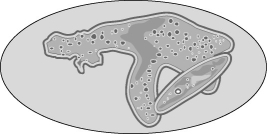 Figure 28.1 You are given five test tubes, each containing an unknown protist, and your task is to read the description below and match these five protists to the correct test tube.
-Test tube 5 contains
Figure 28.1 You are given five test tubes, each containing an unknown protist, and your task is to read the description below and match these five protists to the correct test tube.
-Test tube 5 contains (Multiple Choice)
5.0/5 (83)
(83) Which process allowed the nucleomorphs of chlorarachniophytes to be first reduced, and then (in a few species)lost altogether, without the loss of any genetic information?
(Multiple Choice)
4.9/5 (88)
(88) If the chloroplasts of the zoochlorellae are very similar to those found in the photosynthetic cells of land plants, then Chlorella is probably what type of alga?
(Multiple Choice)
4.9/5 (78)
(78) 
Filters
- Essay(0)
- Multiple Choice(0)
- Short Answer(0)
- True False(0)
- Matching(0)