



 Chat with AI
Exam 28: Protists

Exam 1: Introduction: Themes in the Study of Life66 Questions
Exam 2: The Chemical Context of Life83 Questions
Exam 3: Water and the Fitness of the Environment66 Questions
Exam 4: Carbon and the Molecular Diversity of Life68 Questions
Exam 5: The Structure and Function of Large Biological Molecules109 Questions
Exam 6: A Tour of the Cell75 Questions
Exam 7: Membrane Structure and Function75 Questions
Exam 8: An Introduction to Metabolism79 Questions
Exam 9: Cellular Respiration: Harvesting Chemical Energy103 Questions
Exam 10: Photosynthesis74 Questions
Exam 11: Cell Communication62 Questions
Exam 12: The Cell Cycle80 Questions
Exam 13: Meiosis and Sexual Life Cycles68 Questions
Exam 14: Mendel and the Gene Idea90 Questions
Exam 15: The Chromosomal Basis of Inheritance75 Questions
Exam 16: The Molecular Basis of Inheritance72 Questions
Exam 17: From Gene to Protein84 Questions
Exam 18: Control of Gene Expression101 Questions
Exam 19: Viruses38 Questions
Exam 20: Biotechnology70 Questions
Exam 21: Genomes and Their Evolution37 Questions
Exam 22: Descent With Modification: a Darwinian View of Life57 Questions
Exam 23: The Evolution of Populations84 Questions
Exam 24: The Origin of Species60 Questions
Exam 25: The History of Life on Earth85 Questions
Exam 26: Phylogeny and the Tree of Life90 Questions
Exam 27: Bacteria and Archaea78 Questions
Exam 28: Protists79 Questions
Exam 29: Plant Diversity I: How Plants Colonized Land74 Questions
Exam 30: Plant Diversity Ii: the Evolution of Seed Plants101 Questions
Exam 31: Fungi87 Questions
Exam 32: An Introduction to Animal Diversity82 Questions
Exam 33: Invertebrates98 Questions
Exam 34: Vertebrates112 Questions
Exam 35: Plant Structure, Growth, and Development77 Questions
Exam 36: Transport in Vascular Plants84 Questions
Exam 37: Soil and Plant Nutrition85 Questions
Exam 38: Angiosperm Reproduction and Biotechnology86 Questions
Exam 39: Plant Responses to Internal and External Signals111 Questions
Exam 40: Basic Principles of Animal Form and Function74 Questions
Exam 41: Animal Nutrition68 Questions
Exam 42: Circulation and Gas Exchange78 Questions
Exam 43: The Immune System85 Questions
Exam 44: Osmoregulation and Excretion49 Questions
Exam 45: Hormones and the Endocrine System71 Questions
Exam 46: Animal Reproduction85 Questions
Exam 47: Animal Development75 Questions
Exam 48: Neurons, Synapses, and Signaling52 Questions
Exam 49: Nervous Systems48 Questions
Exam 50: Sensory and Motor Mechanisms59 Questions
Exam 51: Animal Behavior74 Questions
Exam 52: An Introduction to Ecology and the Biosphere71 Questions
Exam 53: Population Ecology80 Questions
Exam 54: Community Ecology74 Questions
Exam 55: Ecosystems79 Questions
Exam 56: Conservation Biology and Restoration Ecology65 Questions
Select questions type


Theoretically, P.bursaria can obtain zoochlorella either vertically (via the asexual reproduction of its mother cell)or horizontally (by ingesting free-living Chlorella from its habitat). Consider a P. bursaria cell containing zoochlorellae, but whose habitat lacks free-living Chlorella. If this cell subsequently undergoes many generations of asexual reproduction, if all of its daughter cells contain roughly the same number of zoochlorellae as it had originally contained, and if the zoochlorellae are all haploid and identical in appearance, then what is True?
(Multiple Choice)
4.7/5  (71)
(71) The following questions refer to the description and Table 28.1 below.
Diatoms are encased in Petri-plate-like cases (valves) made of translucent hydrated silica whose thickness can be varied. The material used to store excess calories can also be varied. At certain times, diatoms store excess calories in the form of the liquid polysaccharide, laminarin, and at other times, as oil. Below are data concerning the density (specific gravity) of various components of diatoms, and of their environment.
Table 28.1: Specific Gravities of Materials Relevant to Diatoms
Material Specific Gravity (//) Pure water 1000 Seawater 1026 Hydrated silica 2250 Liquid laminarin 1500 Diatom oil 910
-A certain unicellular eukaryote has a siliceous (glasslike)shell and autotrophic nutrition. To which group does it belong?
(Multiple Choice)
4.8/5 (86)
(86) Which term most accurately describes the nutritional mode of healthy P. bursaria?
(Multiple Choice)
5.0/5 (75)
(75) In life cycles with an alternation of generations, multicellular haploid forms alternate with
(Multiple Choice)
5.0/5 (90)
(90) The Irish potato famine was caused by an organism that belongs to which group?
(Multiple Choice)
4.8/5 (82)
(82) Which of these are actual mutualistic partnerships that involve a protist and a host organism?
(Multiple Choice)
4.9/5 (93)
(93) A biologist discovers a new unicellullar organism that possesses more than two flagella and two small, but equal-sized, nuclei. The organism has reduced mitochondria (mitosomes), no chloroplasts, and is anaerobic. To which clade does this organism probably belong?
(Multiple Choice)
4.7/5 (73)
(73) The following questions refer to the description and Table 28.1 below.
Diatoms are encased in Petri-plate-like cases (valves) made of translucent hydrated silica whose thickness can be varied. The material used to store excess calories can also be varied. At certain times, diatoms store excess calories in the form of the liquid polysaccharide, laminarin, and at other times, as oil. Below are data concerning the density (specific gravity) of various components of diatoms, and of their environment.
Table 28.1: Specific Gravities of Materials Relevant to Diatoms
Material Specific Gravity (//) Pure water 1000 Seawater 1026 Hydrated silica 2250 Liquid laminarin 1500 Diatom oil 910
-Which of the following produce the dense glassy ooze found in certain areas of the deep-ocean floor?
(Multiple Choice)
5.0/5 (90)
(90) The following questions refer to the description and Table 28.1 below.
Diatoms are encased in Petri-plate-like cases (valves) made of translucent hydrated silica whose thickness can be varied. The material used to store excess calories can also be varied. At certain times, diatoms store excess calories in the form of the liquid polysaccharide, laminarin, and at other times, as oil. Below are data concerning the density (specific gravity) of various components of diatoms, and of their environment.
Table 28.1: Specific Gravities of Materials Relevant to Diatoms
Material Specific Gravity (//) Pure water 1000 Seawater 1026 Hydrated silica 2250 Liquid laminarin 1500 Diatom oil 910
-Water's density and, consequently, its buoyancy decrease at warmer temperatures. Based on this consideration and using data from Table 28.1, at which time of year should one expect diatoms to be storing excess calories mostly as oil?
(Multiple Choice)
4.8/5 (89)
(89) In test tube 1, you observe an organism feeding. Your sketch of the organism looks very similar to Figure 28.1. When light, especially red and blue light, is shone on the tubes, oxygen bubbles accumulate on the inside of test tubes 2 and 3. Chemical analysis of test tube 3 indicates the presence of substantial amounts of silica. Chemical analysis of test tube 2 indicates the presence of a chemical that is toxic to fish and humans. Microscopic analysis of organisms in tubes 2, 4, and 5 reveals the presence of permanent, membrane-bounded sacs just under the plasma membrane. Microscopic analysis of organisms in tube 4 reveals the presence of an apicoplast in each. Microscopic analysis of the contents in tube 5 reveals the presence of one large nucleus and several small nuclei in each organism.
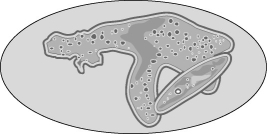 Figure 28.1 You are given five test tubes, each containing an unknown protist, and your task is to read the description below and match these five protists to the correct test tube.
-Test tube 2 contains
Figure 28.1 You are given five test tubes, each containing an unknown protist, and your task is to read the description below and match these five protists to the correct test tube.
-Test tube 2 contains (Multiple Choice)
4.8/5 (75)
(75) The following questions refer to the description and Table 28.1 below.
Diatoms are encased in Petri-plate-like cases (valves) made of translucent hydrated silica whose thickness can be varied. The material used to store excess calories can also be varied. At certain times, diatoms store excess calories in the form of the liquid polysaccharide, laminarin, and at other times, as oil. Below are data concerning the density (specific gravity) of various components of diatoms, and of their environment.
Table 28.1: Specific Gravities of Materials Relevant to Diatoms
Material Specific Gravity (//) Pure water 1000 Seawater 1026 Hydrated silica 2250 Liquid laminarin 1500 Diatom oil 910
-Using dead diatoms to "pump" CO? to the seafloor is feasible only if dead diatoms sink quickly. Consequently, application of mineral fertilizers, such as iron, should be most effective at times when diatom
(Multiple Choice)
4.8/5 (82)
(82) Which term accurately describes the behavior of Paramecium species that lack zoochlorellae in an aquarium with light coming from one side only?
(Multiple Choice)
4.8/5 (90)
(90) In test tube 1, you observe an organism feeding. Your sketch of the organism looks very similar to Figure 28.1. When light, especially red and blue light, is shone on the tubes, oxygen bubbles accumulate on the inside of test tubes 2 and 3. Chemical analysis of test tube 3 indicates the presence of substantial amounts of silica. Chemical analysis of test tube 2 indicates the presence of a chemical that is toxic to fish and humans. Microscopic analysis of organisms in tubes 2, 4, and 5 reveals the presence of permanent, membrane-bounded sacs just under the plasma membrane. Microscopic analysis of organisms in tube 4 reveals the presence of an apicoplast in each. Microscopic analysis of the contents in tube 5 reveals the presence of one large nucleus and several small nuclei in each organism.
Figure 28.1 You are given five test tubes, each containing an unknown protist, and your task is to read the description below and match these five protists to the correct test tube.
-Test tube 4 contains
Figure 28.1 You are given five test tubes, each containing an unknown protist, and your task is to read the description below and match these five protists to the correct test tube.
-Test tube 4 contains (Multiple Choice)
4.7/5 (66)
(66) The following questions refer to the description and Table 28.1 below.
Diatoms are encased in Petri-plate-like cases (valves) made of translucent hydrated silica whose thickness can be varied. The material used to store excess calories can also be varied. At certain times, diatoms store excess calories in the form of the liquid polysaccharide, laminarin, and at other times, as oil. Below are data concerning the density (specific gravity) of various components of diatoms, and of their environment.
Table 28.1: Specific Gravities of Materials Relevant to Diatoms
Material Specific Gravity (//) Pure water 1000 Seawater 1026 Hydrated silica 2250 Liquid laminarin 1500 Diatom oil 910
-A gelatinous seaweed that grows in shallow, cold water and undergoes heteromorphic alternation of generations is most probably what type of alga?
(Multiple Choice)
4.9/5 (90)
(90) Which of the following statements concerning living phytoplanktonic organisms are True?
1) They are important members of communities surrounding deep-sea hydrothermal vents.
2) They are important primary producers in most aquatic food webs.
3) They are important in maintaining oxygen in Earth's seas and atmosphere.
4) They are most often found growing in the sediments of seas and oceans.
5) They can be so concentrated that they affect the color of seawater.
(Multiple Choice)
4.9/5 (81)
(81) The following questions refer to the description and Table 28.1 below.
Diatoms are encased in Petri-plate-like cases (valves) made of translucent hydrated silica whose thickness can be varied. The material used to store excess calories can also be varied. At certain times, diatoms store excess calories in the form of the liquid polysaccharide, laminarin, and at other times, as oil. Below are data concerning the density (specific gravity) of various components of diatoms, and of their environment.
Table 28.1: Specific Gravities of Materials Relevant to Diatoms
Material Specific Gravity (//) Pure water 1000 Seawater 1026 Hydrated silica 2250 Liquid laminarin 1500 Diatom oil 910
-Some protists, formerly united as the "amitochondriate" clade, have recently been shown to be rather diverse. Some of them possess neither mitochondria nor mitochondrial genes (and have been classified as fungi). Others possess no mitochondria, but do have mitochondrial genes in their nuclear genome. Still others have modified mitochondria (viz. mitosomes or hydrogenosomes). Which statement(s)represent(s)consequences of these recent findings?
1) The amitochondriates do not comprise a True clade.
2) The "amitochondriate hypothesis" concerning the root of the eukaryotic tree has been strengthened.
3) Just as there is a diversity of cyanobacterial descendants among eukaryotes, so too is there a diversity of alpha-proteobacterial descendants among the eukaryotes.
4) If the amitochondriate organisms continued to be recognized as a taxon, this taxon would be polyphyletic.
5) Horizontal gene transfer involving mitochondrial genes has occurred in some amitochondriate organisms.
(Multiple Choice)
4.7/5 (75)
(75) The following questions refer to the description and Table 28.1 below.
Diatoms are encased in Petri-plate-like cases (valves) made of translucent hydrated silica whose thickness can be varied. The material used to store excess calories can also be varied. At certain times, diatoms store excess calories in the form of the liquid polysaccharide, laminarin, and at other times, as oil. Below are data concerning the density (specific gravity) of various components of diatoms, and of their environment.
Table 28.1: Specific Gravities of Materials Relevant to Diatoms
Material Specific Gravity (//) Pure water 1000 Seawater 1026 Hydrated silica 2250 Liquid laminarin 1500 Diatom oil 910
-A biologist discovers an alga that is marine, multicellular, and lives at a depth reached only by blue light. This alga probably belongs to which group?
(Multiple Choice)
4.9/5 (95)
(95) Which two genera have members that can evade the human immune system by frequently changing their surface proteins?
1) Plasmodium
2) Trichomonas
3) Paramecium
4) Trypanosoma
5) Entamoeba
(Multiple Choice)
4.7/5 (67)
(67) Which of these precautions would have been most important to insuring the validity of the results?
(Multiple Choice)
4.8/5 (69)
(69) 
Filters
- Essay(0)
- Multiple Choice(0)
- Short Answer(0)
- True False(0)
- Matching(0)