



 Chat with AI
Exam 4: Carbon and the Molecular Diversity of Life

Exam 1: Introduction: Themes in the Study of Life66 Questions
Exam 2: The Chemical Context of Life83 Questions
Exam 3: Water and the Fitness of the Environment66 Questions
Exam 4: Carbon and the Molecular Diversity of Life68 Questions
Exam 5: The Structure and Function of Large Biological Molecules109 Questions
Exam 6: A Tour of the Cell75 Questions
Exam 7: Membrane Structure and Function75 Questions
Exam 8: An Introduction to Metabolism79 Questions
Exam 9: Cellular Respiration: Harvesting Chemical Energy103 Questions
Exam 10: Photosynthesis74 Questions
Exam 11: Cell Communication62 Questions
Exam 12: The Cell Cycle80 Questions
Exam 13: Meiosis and Sexual Life Cycles68 Questions
Exam 14: Mendel and the Gene Idea90 Questions
Exam 15: The Chromosomal Basis of Inheritance75 Questions
Exam 16: The Molecular Basis of Inheritance72 Questions
Exam 17: From Gene to Protein84 Questions
Exam 18: Control of Gene Expression101 Questions
Exam 19: Viruses38 Questions
Exam 20: Biotechnology70 Questions
Exam 21: Genomes and Their Evolution37 Questions
Exam 22: Descent With Modification: a Darwinian View of Life57 Questions
Exam 23: The Evolution of Populations84 Questions
Exam 24: The Origin of Species60 Questions
Exam 25: The History of Life on Earth85 Questions
Exam 26: Phylogeny and the Tree of Life90 Questions
Exam 27: Bacteria and Archaea78 Questions
Exam 28: Protists79 Questions
Exam 29: Plant Diversity I: How Plants Colonized Land74 Questions
Exam 30: Plant Diversity Ii: the Evolution of Seed Plants101 Questions
Exam 31: Fungi87 Questions
Exam 32: An Introduction to Animal Diversity82 Questions
Exam 33: Invertebrates98 Questions
Exam 34: Vertebrates112 Questions
Exam 35: Plant Structure, Growth, and Development77 Questions
Exam 36: Transport in Vascular Plants84 Questions
Exam 37: Soil and Plant Nutrition85 Questions
Exam 38: Angiosperm Reproduction and Biotechnology86 Questions
Exam 39: Plant Responses to Internal and External Signals111 Questions
Exam 40: Basic Principles of Animal Form and Function74 Questions
Exam 41: Animal Nutrition68 Questions
Exam 42: Circulation and Gas Exchange78 Questions
Exam 43: The Immune System85 Questions
Exam 44: Osmoregulation and Excretion49 Questions
Exam 45: Hormones and the Endocrine System71 Questions
Exam 46: Animal Reproduction85 Questions
Exam 47: Animal Development75 Questions
Exam 48: Neurons, Synapses, and Signaling52 Questions
Exam 49: Nervous Systems48 Questions
Exam 50: Sensory and Motor Mechanisms59 Questions
Exam 51: Animal Behavior74 Questions
Exam 52: An Introduction to Ecology and the Biosphere71 Questions
Exam 53: Population Ecology80 Questions
Exam 54: Community Ecology74 Questions
Exam 55: Ecosystems79 Questions
Exam 56: Conservation Biology and Restoration Ecology65 Questions
Select questions type


Which of the following is a False statement concerning amino groups?
(Multiple Choice)
4.9/5  (84)
(84) The following questions refer to the molecules shown in Figure 4.8.
A.
 B.
 C.
 D.
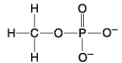 E.
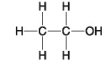 -Testosterone and estradiol are male and female sex hormones, respectively, in many vertebrates. In what way(s)do these molecules differ from each other?
B.
C.
D.
E.
-Testosterone and estradiol are male and female sex hormones, respectively, in many vertebrates. In what way(s)do these molecules differ from each other? (Multiple Choice)
4.9/5 (71)
(71) How many structural isomers are possible for a substance having the molecular formula C₄H₁₀?
(Multiple Choice)
4.9/5 (63)
(63) Choose the term that correctly describes the relationship between these two sugar molecules: 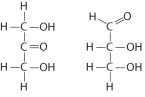
(Multiple Choice)
4.8/5 (84)
(84) The following questions refer to the molecules shown in Figure 4.8.
A.
B.
C.
D.
E.
-Which molecule functions to transfer energy between organic molecules?
B.
C.
D.
E.
-Which molecule functions to transfer energy between organic molecules? (Short Answer)
4.9/5 (84)
(84) A compound contains hydroxyl groups as its predominant functional group. Which of the following statements is True concerning this compound?
(Multiple Choice)
4.7/5 (77)
(77) The following questions refer to the functional groups shown in Figure 4.6.
A.
D.
B.
 E. - SH
C.
 -Which is a carboxyl functional group?
E. - SH
C.
-Which is a carboxyl functional group? (Short Answer)
4.8/5 (82)
(82) The following questions refer to the functional groups shown in Figure 4.6.
A.
D.
B.
E. - SH
C.
-Which is an acidic functional group that can dissociate and release H+ into a solution?
E. - SH
C.
-Which is an acidic functional group that can dissociate and release H+ into a solution? (Short Answer)
4.8/5 (76)
(76) 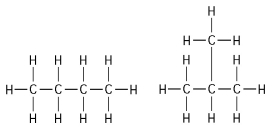 -The two molecules shown in Figure 4.1 are best described as
 (Multiple Choice)
4.9/5 (95)
(95) Figure 4.4  -What is the name of the functional group shown in Figure 4.4?
 (Multiple Choice)
4.9/5 (72)
(72) How many electron pairs does carbon share in order to complete its valence shell?
(Multiple Choice)
4.9/5 (78)
(78) The following questions refer to the molecules shown in Figure 4.8.
A.
B.
C.
D.
E.
-Which of the following hydrocarbons has a double bond in its carbon skeleton?
B.
C.
D.
E.
-Which of the following hydrocarbons has a double bond in its carbon skeleton? (Multiple Choice)
4.8/5 (89)
(89) A chemist wishes to make an organic molecule less acidic. Which of the following functional groups should be added to the molecule in order to do so?
(Multiple Choice)
5.0/5 (90)
(90) The following questions refer to the molecules shown in Figure 4.7.
A.
 B.
 C.
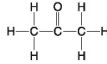 D.
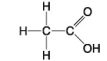 E.
 -Which molecule is water soluble because it has a hydroxyl functional group?
B.
C.
D.
E.
-Which molecule is water soluble because it has a hydroxyl functional group? (Short Answer)
4.7/5 (83)
(83) Amino acids are acids because they always possess which functional group?
(Multiple Choice)
5.0/5 (61)
(61) The following questions refer to the molecules shown in Figure 4.8.
A.
B.
C.
D.
E.
-Which molecule can function as a base?
B.
C.
D.
E.
-Which molecule can function as a base? (Short Answer)
4.8/5 (77)
(77) 
Thalidomide and L-dopa, shown below, are examples of pharmaceutical drugs that occur as enantiomers, or molecules that 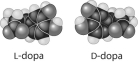
(Multiple Choice)
4.8/5 (72)
(72) The following questions refer to the molecules shown in Figure 4.7.
A.
B.
C.
D.
E.
-Which molecule has a carbonyl functional group in the form of an aldehyde?
B.
C.
D.
E.
-Which molecule has a carbonyl functional group in the form of an aldehyde? (Short Answer)
4.8/5 (77)
(77) 
Filters
- Essay(0)
- Multiple Choice(0)
- Short Answer(0)
- True False(0)
- Matching(0)