



 Chat with AI
Exam 12: The Cell Cycle

Exam 1: Introduction: Evolution and Themes of Biology77 Questions
Exam 2: The Chemical Context of Life98 Questions
Exam 3: Water and Life92 Questions
Exam 4: Carbon and the Molecular Diversity of Life86 Questions
Exam 5: The Structure and Function of Large Biological Molecules131 Questions
Exam 6: A Tour of the Cell111 Questions
Exam 7: Membrane Structure and Function88 Questions
Exam 8: An Introduction to Metabolism92 Questions
Exam 9: Cellular Respiration and Fermentation128 Questions
Exam 10: Photosynthesis103 Questions
Exam 11: Cell Communication85 Questions
Exam 12: The Cell Cycle98 Questions
Exam 13: Meiosis and Sexual Life Cycles90 Questions
Exam 14: Mendel and the Gene Idea92 Questions
Exam 15: The Chromosomal Basis of Inheritance75 Questions
Exam 16: The Molecular Basis of Inheritance84 Questions
Exam 17: From Gene to Protein106 Questions
Exam 18: Regulation of Gene Expression116 Questions
Exam 19: Viruses71 Questions
Exam 20: DNA Tools and Biotechnology78 Questions
Exam 21: Genomes and Their Evolution64 Questions
Exam 22: Descent with Modification: A Darwinian View of Life68 Questions
Exam 23: The Evolution of Populations92 Questions
Exam 24: The Origin of Species76 Questions
Exam 25: The History of Life on Earth89 Questions
Exam 26: Phylogeny and the Tree of Life91 Questions
Exam 27: Bacteria and Archaea96 Questions
Exam 28: Protists82 Questions
Exam 29: Plant Diversity I: How Plants Colonized Land93 Questions
Exam 30: Plant Diversity II: The Evolution of Seed Plants119 Questions
Exam 31: Fungi105 Questions
Exam 32: An Overview of Animal Diversity93 Questions
Exam 33: An Introduction to Invertebrates111 Questions
Exam 34: The Origin and Evolution of Vertebrates126 Questions
Exam 35: Plant Structure,Growth,and Development82 Questions
Exam 36: Resource Acquisition and Transport in Vascular Plants100 Questions
Exam 37: Soil and Plant Nutrition99 Questions
Exam 38: Angiosperm Reproduction and Biotechnology107 Questions
Exam 39: Plant Responses to Internal and External Signals137 Questions
Exam 40: Basic Principles of Animal Form and Function98 Questions
Exam 41: Animal Nutrition87 Questions
Exam 42: Circulation and Gas Exchange112 Questions
Exam 43: The Immune System123 Questions
Exam 44: Osmoregulation and Excretion91 Questions
Exam 45: Hormones and the Endocrine System92 Questions
Exam 46: Animal Reproduction104 Questions
Exam 47: Animal Development106 Questions
Exam 48: Neurons,Synapses,and Signalling93 Questions
Exam 49: Nervous Systems85 Questions
Exam 50: Sensory and Motor Mechanisms106 Questions
Exam 51: Animal Behaviour91 Questions
Exam 52: An Introduction to Ecology and the Biosphere90 Questions
Exam 53: Population Ecology89 Questions
Exam 54: Community Ecology97 Questions
Exam 55: Ecosystems and Restoration Ecology98 Questions
Exam 56: Conservation Biology and Global Change90 Questions
Select questions type


In the cells of some organisms,mitosis occurs without cytokinesis.This will result in
(Multiple Choice)
5.0/5  (83)
(83) Successfully growing cells in a culture requires the researcher to understand
(Multiple Choice)
4.7/5 (81)
(81) 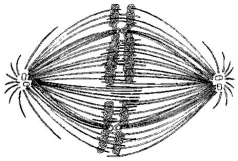 -If the cell whose nuclear material is shown in the figure above continues toward completion of mitosis,which of the following events would occur next?
 (Multiple Choice)
4.9/5 (74)
(74) Which of the following is released by platelets in the vicinity of an injury?
(Multiple Choice)
4.9/5 (86)
(86) The following questions are based on the following figure.
 -Which number represents the point in the cell cycle during which the chromosomes are replicated?
 (Multiple Choice)
4.8/5 (88)
(88) Movement of the chromosomes during anaphase would be most affected by a drug that
(Multiple Choice)
5.0/5 (64)
(64) The following questions are based on the following figure.
-Which number represents DNA synthesis?
-Which number represents DNA synthesis? (Multiple Choice)
4.7/5 (92)
(92) A particular cell has half as much DNA as some other cells in a mitotically active tissue.The cell in question is most likely in
(Multiple Choice)
4.9/5 (81)
(81) Some cells have several nuclei per cell.How could such multinucleated cells be explained?
(Multiple Choice)
4.8/5 (80)
(80) Nucleotides can be radiolabelled before they are incorporated into newly forming DNA and can therefore be assayed to track their incorporation.In a set of experiments,a student-faculty research team used labelled T nucleotides and introduced these into the culture of dividing human cells at specific times.
-The research team used the setup to study the incorporation of labelled nucleotides into a culture of lymphocytes and found that the lymphocytes incorporated the labelled nucleotide at a significantly higher level after a pathogen was introduced into the culture.They concluded that
(Multiple Choice)
5.0/5 (82)
(82) Which of the following is a protein synthesized at specific times during the cell cycle that associates with a kinase to form a catalytically active complex?
(Multiple Choice)
4.7/5 (81)
(81) Once a cell completes mitosis,molecular division triggers must be turned off.What happens to MPF during mitosis?
(Multiple Choice)
4.8/5 (93)
(93) During which phase of mitosis do the chromatids become chromosomes?
(Multiple Choice)
4.9/5 (84)
(84) Use the following information to answer the questions below.
A student is looking through his light microscope (~450 X)at a squashed and stained onion root tip.Some,but not all,of the cells have clearly visible chromosome strands.
-When a cell is in anaphase of mitosis,which of the following will he see?
(Multiple Choice)
4.8/5 (84)
(84) You observe cells under the microscope and notice that,as they undergo mitosis,the nucleus remains intact.You conclude that these cells are
(Multiple Choice)
4.8/5 (84)
(84) 
Filters
- Essay(0)
- Multiple Choice(0)
- Short Answer(0)
- True False(0)
- Matching(0)