



 Chat with AI
Exam 12: Physiology

Exam 1: Anatomy265 Questions
Exam 2: Behavioral Sciences178 Questions
Exam 3: Biochemistry102 Questions
Exam 4: Embryology59 Questions
Exam 5: Epidemiology, Biostatistics, and Medical Informatics94 Questions
Exam 6: Genetics88 Questions
Exam 7: Histology46 Questions
Exam 8: Immunology147 Questions
Exam 9: Microbiology and Virology330 Questions
Exam 10: Pathology817 Questions
Exam 11: Pharmacology and Toxicology509 Questions
Exam 12: Physiology339 Questions
Exam 13: Psychiatry and Psychotherapy23 Questions
Select questions type


A 14-year- old boy football player visits your office for an annual health maintinance visit. He is doing well with no prior medical disease. he added that he wasn't able to play for the end of the game because he was feeling fatigued. he increased his endurance training seassion. which of the following is responsible for increase skeletal muscle group after a prolonged time of training?
(Multiple Choice)
4.8/5  (67)
(67) A 60-year-old man comes to the office for follow up appointment, he feels shortenss of breath while walking his dog around the block. He states that he is experiencing a dyspnea while sleeping therefor he uses 3 pillows or sleep on the recliner. The patient had an acute myocardial infarction 2 years ago and has been nonadherent with his medications. Physical examination shows bibasilar lung crackles, jugular venous distension, and bilateral pitting edema in the lower extremities. Which of the following is most likely present in this patient?
(Multiple Choice)
4.9/5 (88)
(88) A 28-year-old woman, gravida 2 para 1, at 18 weeks gestation comes to the office for a routine prenatal appointment. She is feeling well and has had no complications during this pregnancy. The patient has no chronic medical conditions and has had no previous surgeries. Her only medications are a daily prenatal vitamin and an iron supplement. Blood pressure is 110/70 mm Hg and pulse is 62/min. BMI is 24 kg/m2. Cardiopulmonary examination is unremarkable. The uterus is consistent with 18 weeks gestation and fetal heart tones are normal. There is mild bilateral pedal edema to the shins. Compared to a nonpregnant state, which of the following changes are most likely expected in this patient? 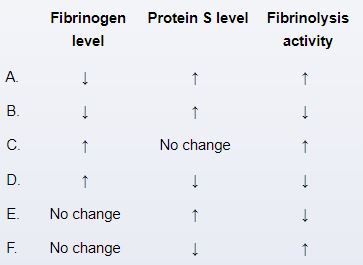
(Multiple Choice)
4.8/5 (97)
(97) A 50-year-old is being evaluated in the office due to renal stones. He states that his bowel habits change and feels constipated over the last month. He has no prior medical conditions and takes no medication. He has no family history of inherited disease. His physical examination is normal. Lab tests show normal creatine level with elevated calcium serum level 11.5 mg/dl. Further investigation reveal a PTH hormone 99 pg/ml (normal: 10-65) and phosphors inorganic level is 1.9 mg/dl Which of the following is the most likely mechanism causing this patient's low serum phosphate? 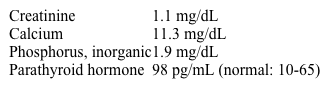
(Multiple Choice)
4.8/5 (60)
(60) A newborn by normal vaginal delivery is brought for routine screening. you found an increase in TSH and low thyroxine T4 serum level. Apgar scores were 8 and 9 at 1 and 5 minutes, respectively. His mother has no medical conditions. Physical examination reveals normal thyroid gland in the normal position. Neck ultrasound confirms the normal size of the thyroid. Which of the following is the most likely cause of this patient's findings?
(Multiple Choice)
4.8/5 (76)
(76) A young girl is brought to the ER due to abdominal pain and confusion. She has a history of diabetes type I and takes insulin regularly but she has missed to take his regimen dose last two days due to poor appetite after upper respiratory tract infection. Her breath odor is fruity. What the changes pattern will be in the urine chemistry? 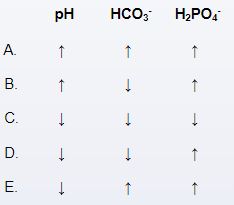
(Multiple Choice)
4.9/5 (68)
(68) A 74-year-old woman is brought to the emergency department due to chest pain. The patient reports that she went to bed feeling well and woke up in the middle of the night with severe, crushing chest pain that radiated to her left arm. She has had similar episodes over the past year that typically occur after a mild work and spontaneously resolve after several minutes. The patient has a history of occasional migraine that responds to acetaminophen. She does not use tobacco, alcohol, or illicit drugs. Blood pressure is 150/100 mm Hg, pulse is 110/min, and respirations are 14/min. On physical examination, the patient appears distressed and is diaphoretic. ECG reveals ST-segment elevations in leads I, aVL, and V4-V6. The patient is given nitroglycerin, which improves her symptoms. Coronary angiography reveals a ruptured atherosclerotic plaque, with a thrombus in the left circumflex artery that causes near-total occlusion. Which of the following substances was most likely secreted by these endothelial cells to help decrease thrombus propagation by inhibiting platelet aggregation?
(Multiple Choice)
4.7/5 (90)
(90) Ion movements across the cell membrane are recorded coupled with changes in membrane potential in an isolated heart muscle cell (see graph below). . 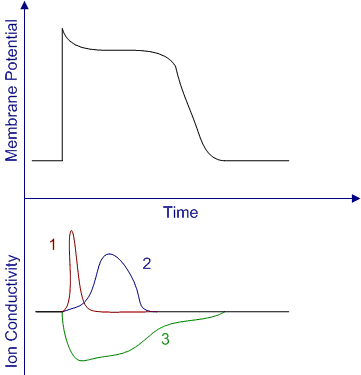 Which of the following ion sequences corresponds to regions 1-2-3 on the graph, respectively?
 (Multiple Choice)
5.0/5 (74)
(74) A 38-year-old male is seen in the office due to increase in the scrotum size. He has a history of bilateral cryptorchidism in childhood and underwent orchiopexy at age 15 months. he has no prior medical health diseasesPhysical examination shows enlargement of both testicles. Scrotal ultrasound reveals bilateral testicular masses consistent with testicular germ cell tumor. CT scans of the chest, abdomen, and pelvis do not reveal any lymph node metastasis. The patient undergoes bilateral orchiectomy. Which of the following long-term physiologic changes are most likely to occur as a result of treatment in this patient?
(Multiple Choice)
4.7/5 (85)
(85) An endocrainologist is trying to study the pathophysiology of insulin production. If he detects a mutation in the insulin gene. And this results in a single amino acid substitution in the proinsulin molecule. The endocrainologist concluds that the amino acid substitution affects a segment of proinsulin removed during post-translational processing of the protein. The polypeptide segment containing the mutation is most likely to undergo which of the following processes within pancreatic beta cells?
(Multiple Choice)
4.9/5 (83)
(83) A 44-year-old man arrives at the emergency department complaining of sudden shortness of breath that began a few hours ago. He suffered a crush injury last week when a motorcycle ran over his left foot, and he has been immobilized due to pain since then. The patient consumes alcohol on occasion but does not use tobacco or illegal drugs. The temperature is 36.1 degrees Celsius (97 degrees Fahrenheit), the blood pressure is 118/76 mm Hg, the pulse is 102/min, and the respirations are 28 per minute. The BMI is 37 kg/m22. Physical examination reveals that the heart rhythm is regular, with normal S1 and S2 waves. Auscultation of the lungs reveals that they are clear on both sides. When compared to last week, the dorsum of his left foot has resolving ecchymoses and swelling. he right calf is swollen and tender. Which of the following arterial blood gas values are most likely to be present in this patient? 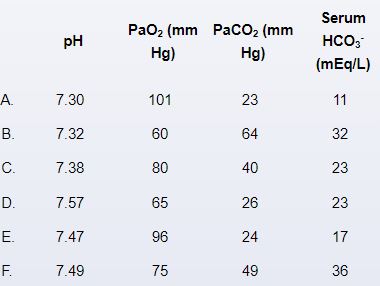
(Multiple Choice)
4.7/5 (70)
(70) A 28-year-old woman, gravida 1 para 0, at 16 weeks gestation comes to the office for a prenatal visit. The patient feels well and has no concerns. Medical history is significant for recurrent urinary tract infections. Her only medication is a prenatal multivitamin. Blood pressure is 116/68 mm Hg and pulse is 80/min. Physical examination shows no abnormalities and fetal heart tones are normal. Urine dipstick reveals no blood or leukocyte esterase but is positive for protein. Laboratory testing shows the following: 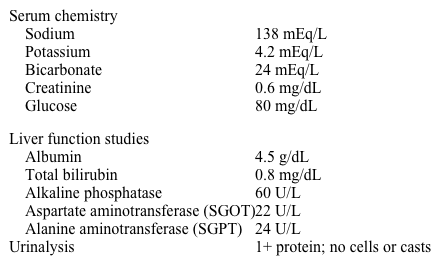 A 24-hour urinary protein excretion is 200 mg. Which of the following processes is most likely contributing to this patient's urinary findings?
 (Multiple Choice)
4.9/5 (73)
(73) A 64-year-old guy arrives to the clinic after finding that his blood pressure is excessive at the dentist's office. The patient has always been "fit as a bull" and is a veteran of battle. He's had a number of minor surgeries for wounds from the conflict. He claims to have used alcohol and smoke for many years, but not just now. He mentions chest discomfort with effort after thorough inquiry. Both the blood pressure and the pulse are 155/90 mm Hg. Physical examination findings include a systolic bruit over the left carotid artery and a reduced pulse amplitude over the right femoral artery. The serum creatinine level is 1.1 mg/dL, and the resting ECG is unremarkable. Protein levels in urine are negative. Treatment for hypertension is initiated with ramipril. On a follow-up visit 3 weeks later, blood pressure is 142/85 mm Hg but serum creatinine has increased to 2 mg/dL. This laboratory finding is best explained by an effect of the drug on which of the following structures (as indicated in the image)? 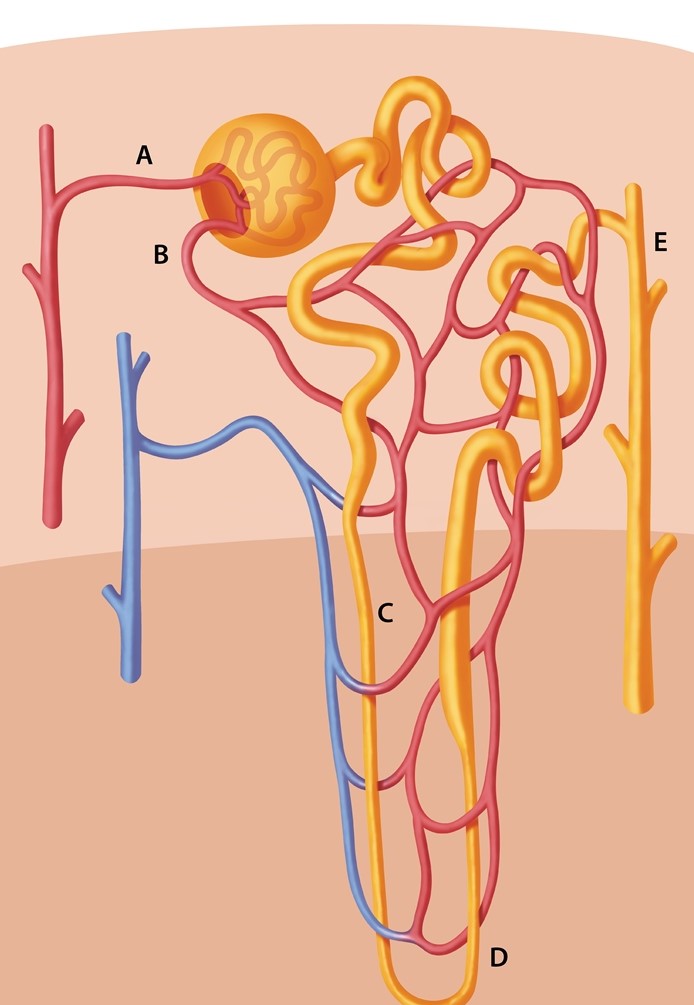
(Multiple Choice)
4.8/5 (93)
(93) As mean arterial blood pressure gradually rises, researchers are studying how coronary blood flow adapts (see graph below). 11ec160b 3c91 c4a0 9249 c159e35b6e4e MD0001 00 The slope's essentially horizontal section denotes a location where variations in blood pressure have little effect on coronary blood flow. The primary factor controlling coronary blood flow inside this zone of autoregulation is the myocardium's metabolic needs. Which of the following endogenous factors is most responsible for controlling coronary blood flow within this range?
(Multiple Choice)
4.8/5 (83)
(83) A 64-year-old man is examined because his dyspnea becomes worse with exercise. He's smoked 40 packs in the past 40 years. On percussion, the lungs are hyperresonant, and on auscultation, there is generalized wheezing. On a chest x-ray, the diaphragm is flattened, the mediastinum is thin, and the peripheral lung region has fewer bronchovascular signs. Which of the following trends for lung volume in this patient is more likely? (Each bar represents total lung capacity with different volumes as marked.) 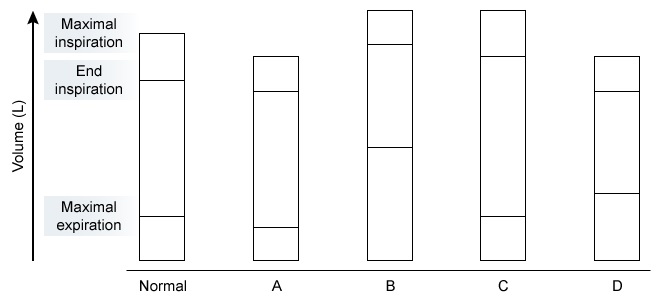
(Multiple Choice)
4.9/5 (76)
(76) A physiologist is trying to study the cardiac action potential. He takes the reading from 4 different points within normal cardiac tissue. The results, expressed in terms of speed of conduction (meters per second), are as follows:Point 1 - 0.05 m/sec Point 2 - 0.3 m/sec
Point 3 - 1.1 m/sec
Point 4 - 2.2 m/secFrom the following list of locations, which most likely corresponds to the order of points 1-2-3-4 (AV = atrioventricular)?
(Multiple Choice)
5.0/5 (80)
(80) A new novel drug X has been discovered recently, and it is under experiment. This drug is eliminated primarily by the kidney. A healthy volunteer of body weight 60 kg (132.3 lb) is recruited, and his glomerular filtration rate is 100 mL/min. In this volunteer, plasma concentration of the drug, immediately after intravenous administration, is 0.5 mg/mL. Urinary excretion rate of the drug is found to be 75 mg/min. When another medication, drug Y, is coadministered, urinary excretion rate of the drug X is 50 mg/min. Which of the following effects of drug Y on the pharmacokinetics of drug X best explains the findings in this study?
(Multiple Choice)
4.8/5 (70)
(70) A 42-year-old man with swollen legs shows up at the office. Along with a 7 kg (15.4 lb) weight gain, he has also had progressive abdominal distension and eye yellowing during the past three weeks. The patient has previously been taken to the hospital for intoxication and seizures and consumes at least 8 beers every day. He denies using drugs intravenously or smoking. Vital indicators are in the expected range. There are palmar erythema, spider angiomas, and scleral icterus. A normal heartbeat and rhythm can be heard during cardiac auscultation, and there is no jugular venous distension. Breathing noises are typical. A fluid wave can be easily triggered due to the abdomen's widespread enlargement. There is bilateral lower extremity pinning edema. Which of the following pathophysiologic changes is most likely present in this patient? 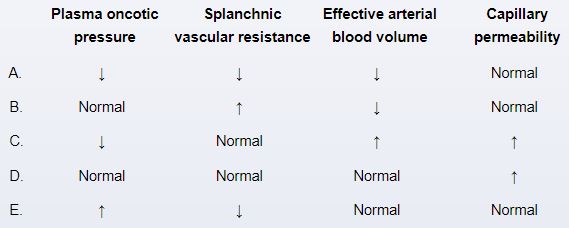
(Multiple Choice)
4.8/5 (67)
(67) A physiologist is conducting an experiment to monitor gastric function before, during and after a meal which shows an initial rise, peak and then decline in gastric acid production . Which of the following helps most to down-regulate gastric secretion after a meal?
(Multiple Choice)
4.8/5 (92)
(92) During a hysterectomy of 56 year old women, a severe bleeding occurred and Blood pressure is 80/40 mm Hg and pulse is 110/min. Immediate resuscitation efforts are initiated, during which she receives transfusion of several units of packed red blood cells. The patient has no significant medical history and takes no medications. After surgery , the patient reports a tingling sensation in his fingers and toes. Serum ionized calcium level is 4.2 mg/dL (normal: 4.8-5.5). Which of the following is the most likely cause of this patient's current symptoms?
(Multiple Choice)
4.9/5 (91)
(91) 
Filters
- Essay(0)
- Multiple Choice(0)
- Short Answer(0)
- True False(0)
- Matching(0)