



 Chat with AI
Exam 12: Physiology

Exam 1: Anatomy265 Questions
Exam 2: Behavioral Sciences178 Questions
Exam 3: Biochemistry102 Questions
Exam 4: Embryology59 Questions
Exam 5: Epidemiology, Biostatistics, and Medical Informatics94 Questions
Exam 6: Genetics88 Questions
Exam 7: Histology46 Questions
Exam 8: Immunology147 Questions
Exam 9: Microbiology and Virology330 Questions
Exam 10: Pathology817 Questions
Exam 11: Pharmacology and Toxicology509 Questions
Exam 12: Physiology339 Questions
Exam 13: Psychiatry and Psychotherapy23 Questions
Select questions type


A retired Athlete man is being evaluated for annual medical evaluation. He had played soccer for 10 years. He has no prior medical diseases and takes no medications. He still continues to practice aerobic exercise regularly. The patient does not use tobacco, alcohol, or illicit drugs. Blood pressure is 110/60 mm Hg and pulse is 63/min. Physical examination shows no abnormalities. Compared to a person of similar age and sex with sedentary lifestyle, which of the following cardiac changes are most likely present in this patient? 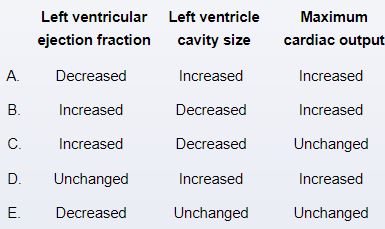
(Multiple Choice)
4.8/5  (86)
(86) A physiologist is studying the effect of various manipulations on kidney blood flow and glomerular filtration. Which of the following is most likely to both decrease renal plasma flow and increase the filtration fraction?
(Multiple Choice)
4.8/5 (81)
(81) A 43-year-old lady arrives to the office feeling more and more worn out and gaining weight while eating less. I haven't been feeling like myself lately, she says. The patient requests to be sent to a dermatologist since her formerly "lovely" skin has started to dry up. She believes that a dermatologist can also assist with her hair loss issue. High serum TSH, low triiodothyronine (T3), and low thyroxine (T4) levels are found by laboratory analysis. The patient requests to take this drug since a member of her family who suffers from fatigue found that their energy level improved after using liothyronine (T3) supplements. Which of the following changes in the patient's hormone levels would be most probable as a result of this therapy's administration? 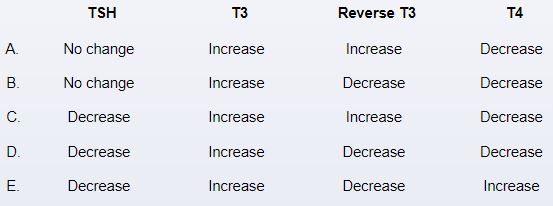
(Multiple Choice)
4.8/5 (72)
(72) A 75 year woman comes to the office have a concern of dental caries, she states that has a dry mouth and difficulty chewing food. She has no joint pain or eye dryness. On examination, there is decreased saliva production but no tenderness or swelling of the salivary glands. Extensive dental caries are present. Which of the following age-related changes is most likely responsible for this patient's symptoms?
(Multiple Choice)
4.7/5 (66)
(66) Due to dyspnea, a 34-year-old male is assessed. Complete pulmonary function tests and measures of lung capacity are performed on the patient. In the image below, his pulmonary volume curve (blue line) is contrasted with a typical person's curve (black line): 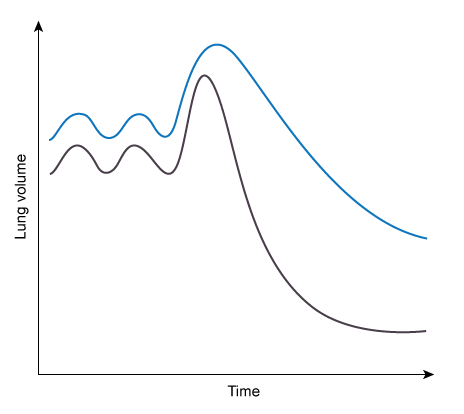 Which of the following measures is increased in this patient?
 (Multiple Choice)
4.9/5 (84)
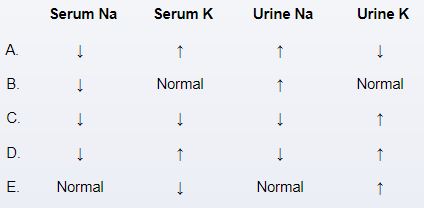
(84) A 45-year-old man is brought to the hospital due to progressive weakness and fatigue. Medical history includes type 2 diabetes mellitus and obesity. Laboratory results are as follows: 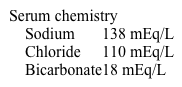 Which of the following is the most likely diagnosis?
 (Multiple Choice)
4.9/5 (67)
(67) A 35-year-old man comes to the office due to recent erectile dysfunction. He has no medical conditions and takes no medications. He states that he has a loss of libido and chronic headaches for 3 months. He does not use tobacco, alcohol, or illicit drugs. Vital signs are normal. The examination is notable for peripheral vision loss, bilateral gynecomastia, and soft testes without masses. Laboratory evaluation shows normal serum prolactin, normal B-hCG, low serum LH, and low serum testosterone. Which of the following is the most likely mechanism for this patient's gynecomastia?
(Multiple Choice)
4.7/5 (95)
(95) Which of the following body muscle consist of high myoglobin-rich, and glycogen-poor fibers with many mitochondria?
(Multiple Choice)
4.9/5 (68)
(68) A 26-year-old women comes to the offfice due to worsening fatigue and weight loss. She has a history of primary hypothyroidism and she takes levothyroxine. Physical examination is normal. Blood pressure is 115/75 mmHg supine and 92/61 mmHg on standing. Laboratory tesets show mild anemia with increase eosinophil count and serum glucose is 60 mg/dl. Which of the following additional changes is most likely in this patient?
(Multiple Choice)
4.9/5 (70)
(70) In a research, electrophysiologists expose cardiac cells to various substances and record how the membrane potential of the cells changes. Below is a trace from one of the tests. 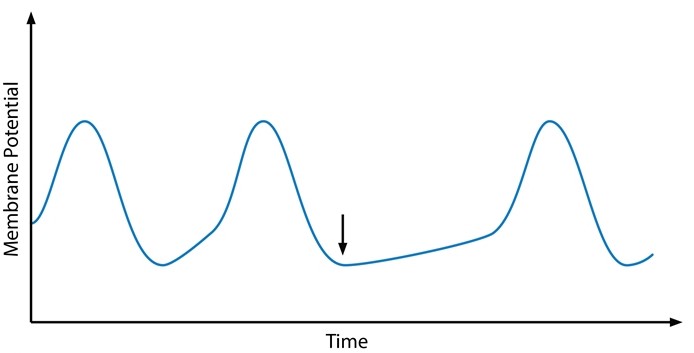 Which of the following substances was most likely applied to the cells at the point indicated by the arrow?
 (Multiple Choice)
4.9/5 (78)
(78) A 1-hour-old boy is admitted to the neonatal intensive care unit for respiratory failure. The infant was born to a 27-year-old mother, gravida 4 para 2, at 29 weeks gestation via cesarean delivery due to maternal preeclampsia with severe features. Amniotic fluid was clear. Apgar scores were 7 and 8 at 1 and 5 minutes, respectively. Birth weight is 1,120 g (2 lb 8 oz). Temperature is 36.9 C (98.4 F), pulse is 170/min, and respirations are 56/min. Pulse oximetry is 82% on room air. There are intercostal and subcostal retractions. Cardiac examination shows tachycardia without murmurs. The lungs have decreased breath sounds bilaterally. The abdomen is soft without organomegaly. Surfactant is ordered, and the team prepares for intubation. Prior to these clinical interventions, which of the following best describes the condition of this patient's lungs compared to a normal neonate? 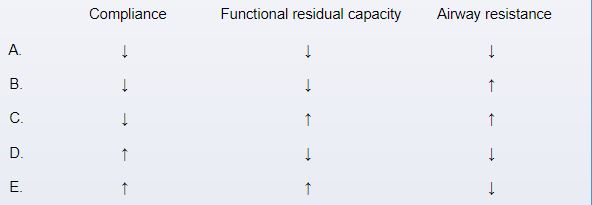
(Multiple Choice)
4.8/5 (76)
(76) A pregnant woman in 2nd trimester comes to the office due to a change in her bowel habits. her bowel habit is every 3 days and her stools have become increasingly hard and pellet-like. her bowel movement were normal till 4 weeks ago. She also has mild crampy abdominal pain and bloating, both of which improve after defecation. Medical history and family history are both unremarkable. This is the patient's first pregnancy and has so far been uncomplicated. On physical examination, the abdomen appears gravid but nontender. Which of the following best explains this patient's symptoms?
(Multiple Choice)
4.9/5 (86)
(86) A 55-year-old man is given general anesthesia for an elective procedure. His left ventricular pressure-volume loop has switched from a solid line to a dashed line after two hours of surgery, as seen in the figure below ( the loop is unchanged in areas where there is no dashed line): 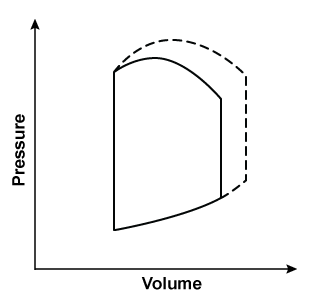 Which of the following is most likely responsible for this patient's hemodynamic change?
 (Multiple Choice)
4.8/5 (85)
(85) A researcher is studying the electrolytes changes during cardiac muscle contraction and relaxation. He also monitors the intracellular calcium regulation. Microelectrodes placed into cardiac muscle cells detect a rapid decrease in cytoplasmic calcium level immediately preceding relaxation. Which of the following proteins is most likely responsible for the observed change in electrolyte levels?
(Multiple Choice)
4.9/5 (76)
(76) A research hospital's nephrologists are looking into the physiologic changes that occur in diabetes insipidus. The group creates a technique that allows tubular urine sampling in experimental animals with human-like physiology. Following hypophysectomy, tubular fluid samples are collected from multiple sites throughout the nephron. Fluid from which of the following sampling sites is most likely to have the highest osmolarity in the absence of antidiuretic hormone? 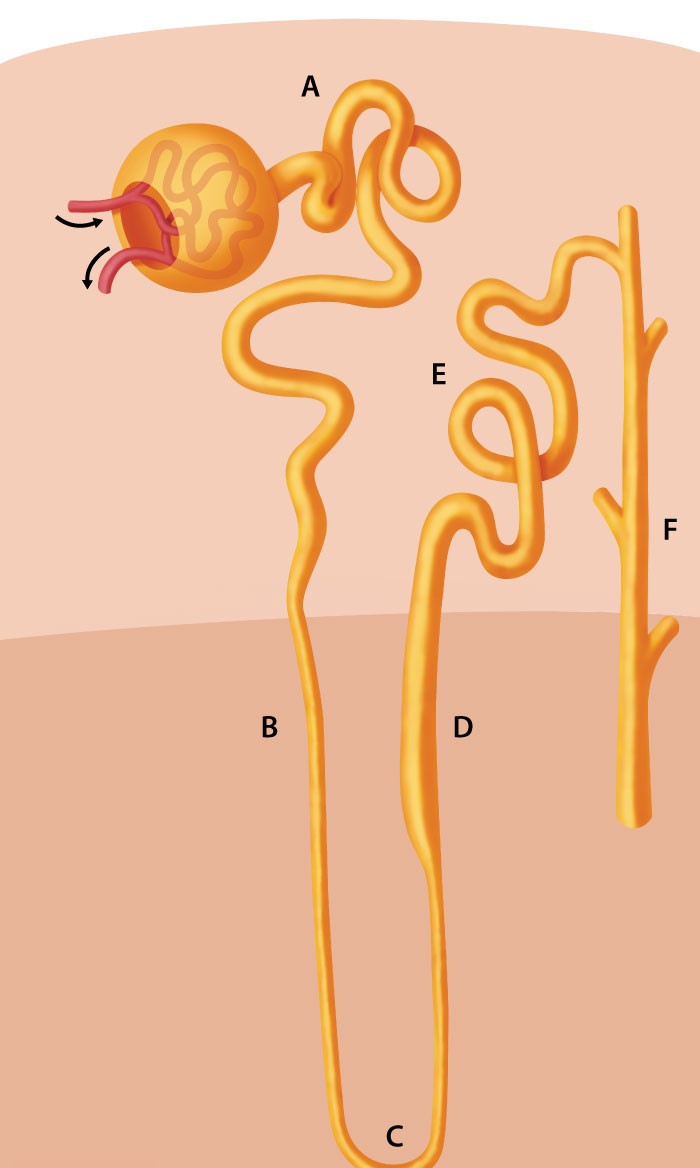
(Multiple Choice)
4.9/5 (58)
(58) A 45-year-old lady takes part in a research on cardiovascular health. Her ECG is monitored continuously for 24 hours using a wearable gadget. Her ECG revealed a few occurrences of the following pattern: 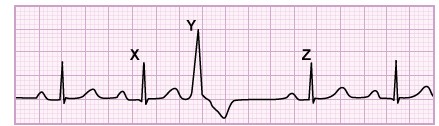 Which of the following best represents the relative left ventricular end-diastolic volumes just prior to the heart beats represented by the letters?
 (Multiple Choice)
4.9/5 (72)
(72) A 35-year-old woman, gravida 2 para 1, at 13 weeks gestation comes to the office for follow-up. During the first trimester, the patient had mild nausea, which has now resolved, and the patient feels well. Which of the following renal changes are expected in this patient during her pregnancy? 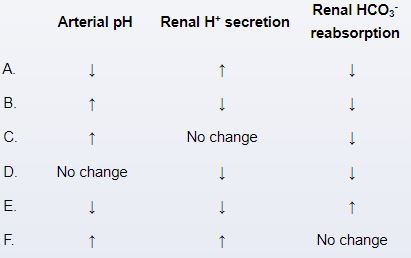
(Multiple Choice)
4.8/5 (85)
(85) An 80-year-old man is being evaluated for follow up health maintinance. he states that he feels shortness of breath after walking a short distant and should stop to catch up the breath. The patient has long-standing hypertension and iritable bowel syndrome but has not always been adherent to his medical regimen. he was smoking 30 packs per year and stopped 15 years ago after his friend died with a myocardial infarction. Blood pressure is 160/74 mm Hg and pulse is 86/min and regular. An S4 is heard on cardiac auscultation. The lungs are clear. Echocardiogram reveals left atrial enlargement, moderate concentric left ventricular hypertrophy, and a left ventricular ejection fraction of 67%. Which of the following changes are most likely to be seen in this patient? 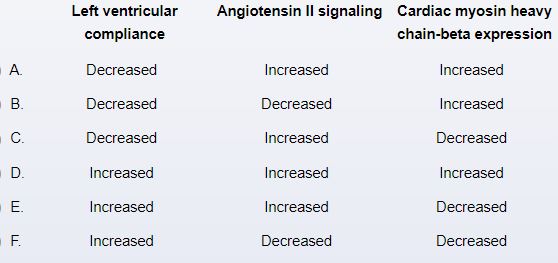
(Multiple Choice)
4.8/5 (82)
(82) A 54-year-old man comes to the office due to shortness of breath that has slowly worsened over the last 6 months. He also has a persistent, nonproductive cough. The patient does not use alcohol, tobacco, or illicit drugs. Temperature is 36.8 C (98 F), blood pressure is 132/78 mm Hg, pulse is 74/min, and respirations are 16/min. Physical examination reveals fine crackles bilaterally on pulmonary auscultation and drumstick-shaped fingers. Chest x-ray reveals diffuse reticular opacities. Pulmonary function testing shows decreased FVC, increased FEV1/FVC ratio, and expiratory flow rates that are higher than normal when corrected for lung volume. This patient's supernormal expiratory flow rates are best explained by an increase in which of the following parameters?
(Multiple Choice)
4.9/5 (69)
(69) A 55-year-old guy suddenly collapses at home 20 minutes earlier and is sent to the hospital right away. After complaining of chest pain, the patient attempted to sit down before passing out on the ground. For type 2 diabetes mellitus and hypertension, the medical past matters. Blood pressure is 80/50 mm Hg, the temperature is 36.7 C (98.1 F), and respirations are 22 per minute. The patient exhibits obvious respiratory discomfort upon assessment. There are crackles on either side. There is audible S3. ST-segment elevation is seen on the ECG in leads V2 to V6. Which of the following hemodynamic alterations in this patient is most likely present? 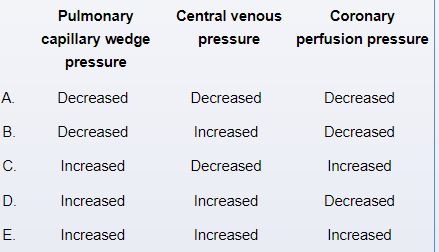
(Multiple Choice)
4.8/5 (95)
(95) 
Filters
- Essay(0)
- Multiple Choice(0)
- Short Answer(0)
- True False(0)
- Matching(0)