



 Chat with AI
Exam 12: Physiology

Exam 1: Anatomy265 Questions
Exam 2: Behavioral Sciences178 Questions
Exam 3: Biochemistry102 Questions
Exam 4: Embryology59 Questions
Exam 5: Epidemiology, Biostatistics, and Medical Informatics94 Questions
Exam 6: Genetics88 Questions
Exam 7: Histology46 Questions
Exam 8: Immunology147 Questions
Exam 9: Microbiology and Virology330 Questions
Exam 10: Pathology817 Questions
Exam 11: Pharmacology and Toxicology509 Questions
Exam 12: Physiology339 Questions
Exam 13: Psychiatry and Psychotherapy23 Questions
Select questions type


A 75-year-old woman comes to the office due to recurrent swallowing aspiration. She has a history of stroke with impairment of speech, voice and swallowing. Modified barium swallow study reveals aspiration of liquids without nasal regurgitation. Aspiration is ameliorated when the patient flexes his neck to put his chin to his chest during swallowing. This maneuver is most likely augmenting which of the following airway-protective mechanisms?
(Multiple Choice)
4.8/5  (80)
(80) A 35-year-old man who passed out in his garage is taken to the emergency room. He recently acquired a vintage 1960s convertible, which he was restoring when he passed out. The garage door was partially open when the patient was inside. After two hours of working on the automobile with the engine running, he passed out. The patient does not use any drugs and has no known medical conditions. He doesn't consume any alcohol, tobacco, or illegal substances. What combination of results from an arterial blood sample collected when the patient lost consciousness best reflects the rest of the options? 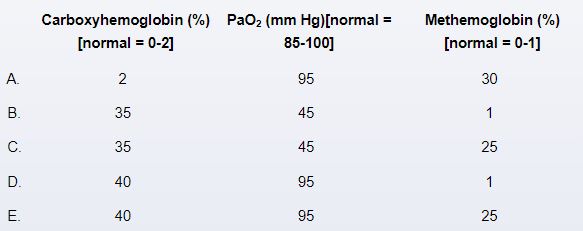
(Multiple Choice)
4.8/5 (77)
(77) A 5-year-old boy is brought to the hospital after several episodes of vomiting. The boy's mother reports that he was well with no compliant and playing at a local park prior to the onset of illness. While cleaning him after the first episode of emesis, she found several small brown mushrooms clenched in his hands and brought samples with her. The boy is otherwise healthy and takes no medications. He is intubated due to somnolence and admitted to the intensive care unit. Analysis of the mushroom samples determines that the main poison stimulates muscarinic receptors. Which of the following is the most direct effect of this poison?
(Multiple Choice)
4.9/5 (85)
(85) A 30-year-old woman comes to the office because of increase urination. She has also dry mouth and excessive thirst despite drinking several gallons of water daily. She has no significant medical conditions and takes no medications. Her blood glucose level is 80 mg/dL. A standard water deprivation test is performed. The results of urine osmolality during 4 hours of dehydration are presented in the table below. The patient's plasma osmolality after 3 hours of water deprivation was found to be 298 mOsm/L, and vasopressin was then administered subcutaneously. Which of the following is the most likely diagnosis in this patient?
(Multiple Choice)
4.9/5 (72)
(72) A 26-year-old male presents to the emergency room complaining of right-sided scrotal soreness that has been becoming worse over the past 10 hours. The patient has a unilateral orchiectomy after clinical and radiological examinations reveal testicular torsion with substantial ischemia damage. He returns to the office for follow-up three months later. The patient is otherwise in good condition and does not take any drugs, but she is concerned about the possibility of infertility and sexual dysfunction. Which of the following sets of results in this case are most likely to be revealed by further testing? 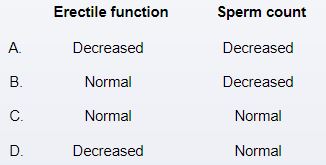
(Multiple Choice)
4.9/5 (74)
(74) A 70-year-old woman has participated in a long-term aging study for the past 30 years. Her medical history is significant for osteoporosis, and the steady loss of vertebral body height has led to a mild case of kyphosis. She has no extra medical conditions and is otherwise healthy and active. She doesn't smoke. Which of the following modifications to her physiology test from years ago is more compatible with natural aging? 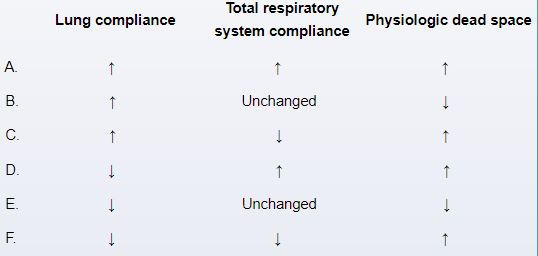
(Multiple Choice)
4.9/5 (94)
(94) A woman in her 26s visits the doctor for follow-up regarding erratic menstruation cycles (paragraph 0). Every 15-90 days, she has a period, which lasts 2-14 days and can include anything from spotting to quarter-sized clots. The patient and her husband have been trying to get pregnant, but because of the patient's irregular menstrual cycles, it has been challenging to time sexual activity. She has been working out and reducing weight; as a result, her BMI has decreased to 32 kg/m2. A normal adnexa, tiny, mobile uterus, and external genitalia are seen upon gynecologic examination. A sample of the endometrium displays coiled glands producing mucus rich in carbohydrates, an edematous stroma, and twisted spiral arteries. Where on the following graph was the endometrial sample most likely taken? 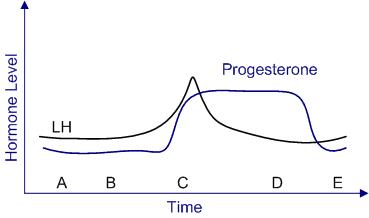
(Multiple Choice)
4.9/5 (84)
(84) A researcher is trying to use a gonadotropin-releasing hormone (GnRH) infusion to treat a disease . If this infusion is controlled by a computerized pump to deliver a predetermined dose of GnRH every 90 minutes. LH and FSH are monitored in the initial phase of treatment. which disease dose the researcher treats in the experiment?
(Multiple Choice)
4.8/5 (69)
(69) A 5-week-old infant is brought by his mother due to weight loss concern. She states that the infant has difficulty breathing and profuse sweating with feeds. The patient was born at 38 weeks gestation via spontaneous vaginal delivery. Weight is at the 5th percentile. On cardiac examination shows a holosystolic murmur at the left lower sternal border; a palpable thrill is present at the left sternal border. Compared to a healthy infant, this patient likely has which of the following intracardiac pressure changes? 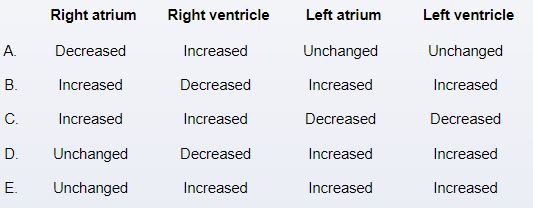
(Multiple Choice)
4.8/5 (80)
(80) A 70-year-old male with a chronic kidney disease due to diabetic nephropathy comes for follow up. The patient states that he cannot do his daily routine due to progressive weakness and fatigue for several months. He has hypertension and is compliant with his medication otherwise normal. His laboratory tests revealed that he has anemia. He started on an oral supplement with recombinant glycoprotein hormone . and repeat laboratory testing several weeks later shows an improvement in hemoglobin level. The effects of the hormone prescribed for this patient are most likely mediated by which of the following pathways?
(Multiple Choice)
4.8/5 (90)
(90) A 68-year-old woman is brought to the emergency department due to worsening fever, cough, and confusion. The patient has had a "cold and congestion" since last week, which initially improved, but she began feeling worse again 3 days ago. Her daughter reports that the patient has also been eating poorly. Other medical conditions include chronic obstructive pulmonary disease and chronic kidney disease. Temperature is 39.4 C (102.9 F), blood pressure is 74/46 mm Hg, pulse is 128/min, and respirations are 30/min. Oxygen saturation is 94% on 2 L/min. On physical examination, the patient is lethargic with dry mucous membranes and flat neck veins. Lung examination reveals dullness to percussion and crackles at the right base. Chest x-ray shows a right lower lobe consolidation. Intravenous access is established. Intravenous administration of which of the following is the most appropriate next step in management of this patient?
(Multiple Choice)
4.8/5 (75)
(75) Fifty obese adults without diabetes mellitus are enrolled in a 10-week weight loss program. The program includes a low-calorie diet and moderate-intensity exercise for at least 150 minutes per week. The study subjects who are adherent to the regimen lose an average of 7 kg (15.5 lb) at the end of 10 weeks. Venous blood samples to study biochemical changes induced by weight loss are taken at the start of the trial and at the 10-week follow-up visit. Which of the following hormonal changes are likely to occur during the course of the study? 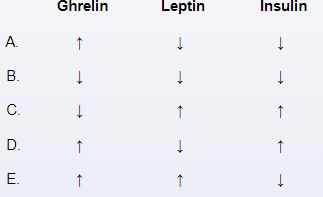
(Multiple Choice)
4.7/5 (89)
(89) An 18-year- old girl is brought to the ER after a motor vehicle collision. She has a traumatic brain injury. In ER, the patient is comatose with no response or movement and GCS is 3. Her blood pressure is 108/68
And pulse is 114/min . Pupils are miotic and reactive to light . and there is an ecchymosis behind the ears. an intubation is done . On noncontrast CT scan shows bifrontal contusions and basilar skull fracture . On the next morning, a repeat head CT scan demonstrates diffuse cerebral edema.why should you adjust ventilatory respiratory rate to keep PaCO2 level around 26-30 mmHg. ?
(Multiple Choice)
4.8/5 (100)
(100) The cardiac output and venous return curves of a healthy person are shown below with solid lines. 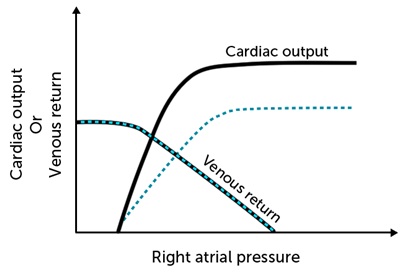 Which of the following is the most likely cause of the change depicted by the dashed lines?
 (Multiple Choice)
4.8/5 (76)
(76) A young man has one testis in the scroutm which is discoverd during routine health examination. Further evaluation reveals an elevated serum FSH level and a normal serum LH level. Production of which of the following substances is likely to be impaired in this patient?
(Multiple Choice)
4.7/5 (77)
(77) A 34-year-old man goes to Peru to take part in an adventure to climb a mountain. He doesn't take any medications and has never had a medical issue. The patient does not consume alcohol, tobacco, or illegal substances. He spends his journey in a mountainous high-altitude camp that is more than 4,000 meters (13,000 feet) above sea level. The patient is given bloodwork by the camp doctor after two days there while inhaling ambient air. Which set of arterial blood gas readings from the list below is most likely to be observed in this patient? 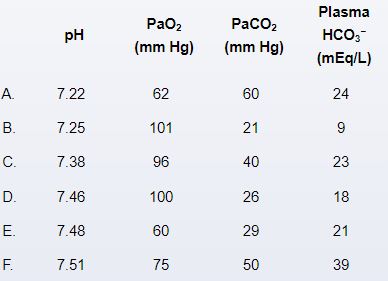
(Multiple Choice)
4.8/5 (83)
(83) A 36-year-old woman comes to the physician because of a 4-day history of fever, malaise, chills, and a cough productive of moderate amounts of yellow-colored sputum. An x-ray of the chest shows an infiltrate at the right middle lobe. Her temperature is 38.8°C (101.8°F), pulse is 92/min, respirations are 20/min, and blood pressure is 128/74 mm Hg. Pulse oximetry on room air shows an oxygen saturation of 91%. The patient is treated with appropriate antibiotics. Two days later, the patient feels well overall and her pulse oximetry is improved to 97% on room air. Examination reveals unchanged crackles and egophony from her previous visit. Which of the following processes best explains this patient's improved oxygenation?
(Multiple Choice)
4.9/5 (76)
(76) Renal physiologists are investigating how hydration status affects human urine concentration and dilution mechanisms. To accomplish this, they developed a technique in experimental animals that allows tubular fluid sampling in various parts of the nephron. After 12 hours of water deprivation, a healthy animal produces a tubular fluid sample with an osmolarity of 110 mOsm/L. If the physiology of this animal is similar to that of humans, which of the following sites along the nephron was most likely sampled? 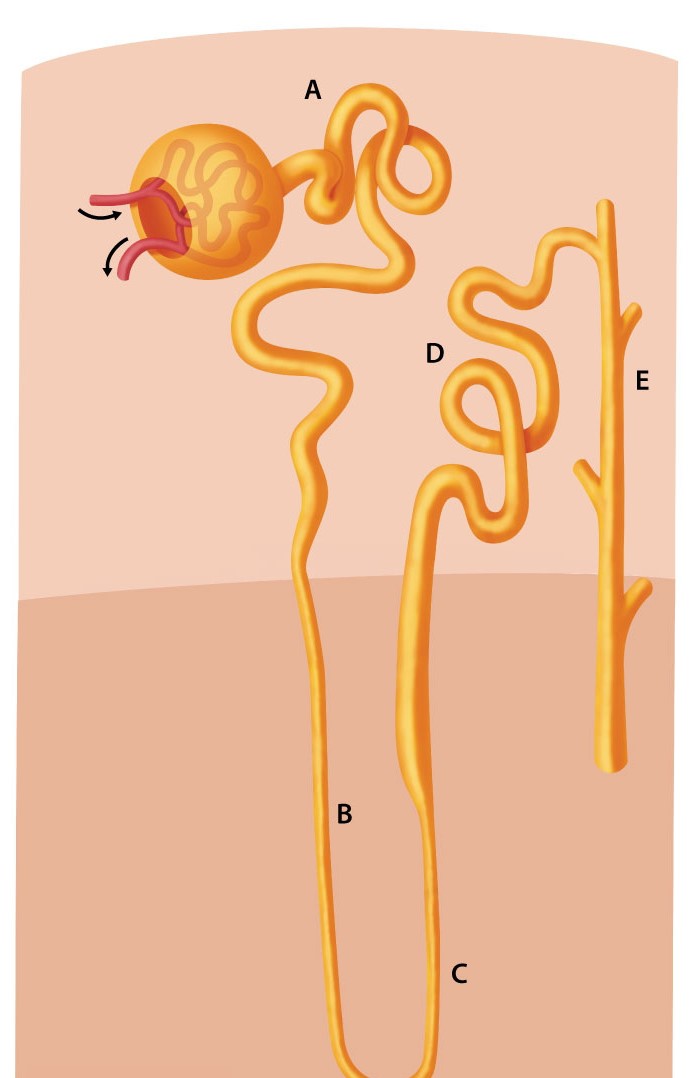
(Multiple Choice)
4.9/5 (77)
(77) A 50 year-old male is being evaluated due to exertional dyspnea. He is a known case of chronic kidney failure which receives hemodialysis 3 times weekly. Chest x-ray reveals cardiomegaly and pulmonary congestion. Further evaluation determines that hir symptoms are likely due to persistence of the arteriovenous fistula that is used for hemodialysis. Which of the following physiologic changes are most likely present in this patient due to the fistula? 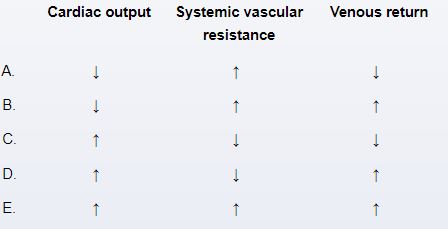
(Multiple Choice)
4.9/5 (80)
(80) 
Filters
- Essay(0)
- Multiple Choice(0)
- Short Answer(0)
- True False(0)
- Matching(0)