



 Chat with AI
Exam 12: Physiology

Exam 1: Anatomy265 Questions
Exam 2: Behavioral Sciences178 Questions
Exam 3: Biochemistry102 Questions
Exam 4: Embryology59 Questions
Exam 5: Epidemiology, Biostatistics, and Medical Informatics94 Questions
Exam 6: Genetics88 Questions
Exam 7: Histology46 Questions
Exam 8: Immunology147 Questions
Exam 9: Microbiology and Virology330 Questions
Exam 10: Pathology817 Questions
Exam 11: Pharmacology and Toxicology509 Questions
Exam 12: Physiology339 Questions
Exam 13: Psychiatry and Psychotherapy23 Questions
Select questions type


A researcher is studying the morphological changes in the aging heart in healthy patients. if a patient with 20 year participant in this study and the researcher found that the patient's left ventricular ejection fraction has remained stable throughout the 20 years. Which of the following changes is most likely responsible for the preserved left ventricular ejection fraction in this patient?
(Multiple Choice)
4.9/5  (85)
(85) A52-year-old man is brought to the emergency department due to sudden left chest pain accompined with nausea and vomiting. the pain started 20 minutes ago during outside working. He has a history of hypertension and dyslipidemia. He has no family histroy of heart diseases. An ECG reveales normal finding and cardiac markers are normal. The physician scheduled an exercise stress test. If this patient underwent to this test, which of the following parameters is likely to be the most similar between the systemic and pulmonary circulation?
(Multiple Choice)
5.0/5 (85)
(85) A 21-year-old male is brought to the ER due to worsening neck stiffness and pain for the past 2 hours. He states that his neck is locked to the left and he cannot move it. He is alert and oriented . His temperature is 37.1 C, pulse is 89/ min, respiration 17/min , and blood pressure is 125/75 mm Hg. he has a history of schizophrenia and recently his doctor has added risperidon to his drug regimen. On examination, his neck is rigid and fixed in flexion and rotated to the left. The persistent myocyte stimulation causes a substance to be released from the sarcoplasmic reticulum. This substance most likely binds to which of the following proteins to cause this patient's symptoms? 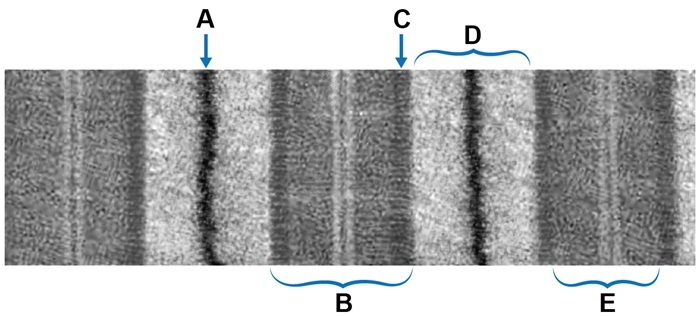
(Multiple Choice)
4.8/5 (63)
(63) During normal routine of newborn screening, there are a low thyroxin level with normal TSH. The patient was born by cesarean section due to breach presentation. During the pregnancy, the mother took acetaminophen intermittently for low back pain. Examination of the newborn shows no abnormal findings. Which of the following is the most likely cause of the patient's abnormal thyroid function tests?
(Multiple Choice)
4.8/5 (93)
(93) A 65-year-old women comes to the office due to acute back pain after left heavy box. The patient has also had weakness and weight loss for the past 2 months. Blood pressure is 155/705 mm Hg and pulse is 110/min. Examination shows sweaty palms and a fine hand tremor. Laboratory evaluation reveals normal hemoglobin, serum calcium, serum creatinine, and 25-hydroxyvitamin D levels. Serum thyrotropin (TSH) is undetectable. X-ray reveals a compression fracture of the T7 vertebra with diffuse demineralization of the bones. Which of the following is most likely responsible for the bone abnormalities in this patient?
(Multiple Choice)
4.9/5 (80)
(80) A 30-year-old man is brought to the ER because he lost his consciousness. An IV fluid, thiamin and dextrose are given to him. Vital sings and physical examinations are normal. He has a long-term type I diabetes and states that he has a recurrent hypoglycemic episode. He previously had difficulty controlling his high blood glucose levels, but over the past several weeks his blood glucose has intermittently dropped to <50 mg/dL with accompanying symptoms of tremulousness and headache. He has same diet and activity level as before. On further history, the patient has chronic kidney disease from diabetic nephropathy. His estimated glomerular filtration rate has declined to 20 mL/min in recent months, and he is under consideration for initiation of hemodialysis. Which of the following is most likely contributing to this patient's current glycemic disturbances?
(Multiple Choice)
4.8/5 (71)
(71) 25-year-old woman is brought to the emergency department due to progressive lethargy. For the last 3 weeks, she has also had loss of appetite, constipation, muscle weakness, and increased thirst and urination. The patient's medical history is unremarkable. She takes no prescription medications but has been taking large doses of vitamin D supplements in the belief that they are beneficial for her health. The patient does not use tobacco, alcohol, or illicit drugs. On physical examination, she is stuporous and has dry mucous membranes. The metabolic abnormality most likely responsible for this patient's clinical findings can also occur in which of the following conditions?
(Multiple Choice)
4.8/5 (72)
(72) A 50 year-old male is being evaluated due to exertional dyspnea. He is a known case of chronic kidney failure which receives hemodialysis 3 times weekly. Chest x-ray reveals cardiomegaly and pulmonary congestion. Further evaluation determines that hir symptoms are likely due to persistence of the arteriovenous fistula that is used for hemodialysis. Which of the following physiologic changes are most likely present in this patient due to the fistula? 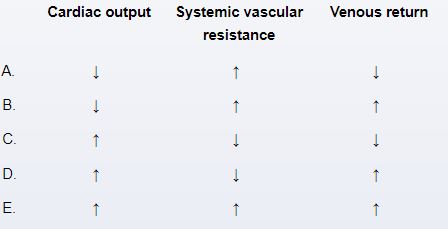
(Multiple Choice)
4.9/5 (89)
(89) An eldery male patient is brought by his son due to progressive fatigue the patient has long-standing hypertension and type II diabetes mellitus on his medication. lab test as the following : Hemoglobin 9.4 g/dl. MCV 90, serum creatinine 3.2 mg/dl, serum ferritin 350 ng/ml
If this patient start on appropriate treatment which of the following changes is most likely to occur in this patient erythroid cells?
(Multiple Choice)
4.9/5 (79)
(79) Due to difficulty breathing and sweating with feeds, a 10-day-old boy born at home is brought to the emergency department. He was born via spontaneous vaginal delivery at 38 weeks gestation. The patient has been breastfeeding for 5-10 minutes per side every 2 hours. His mother notices that he sweats while feeding and that his lips turn blue. Weight is in the fifth percentile, and length is in the fifty-fifth percentile. The patient is not currently cyanotic, according to the examination. A III/VI systolic crescendo-decrescendo murmur can be heard along the left upper sternum. The x-ray of the chest is shown below. : 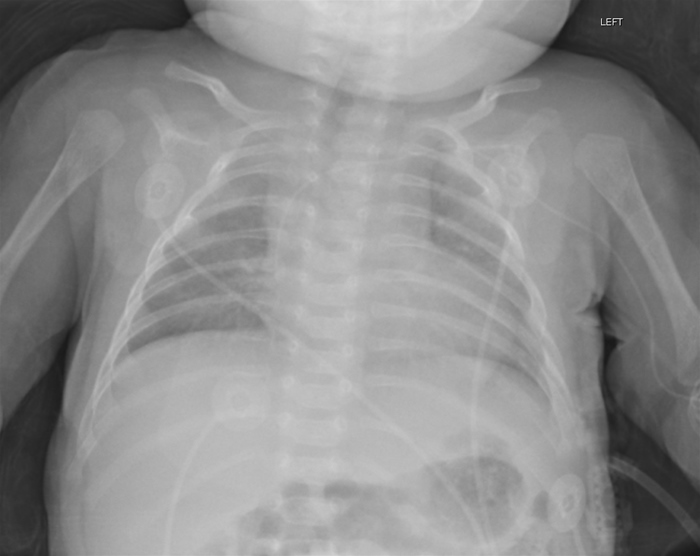 Which of the following most likely represents the pressure changes that take place in this patient during feedings?
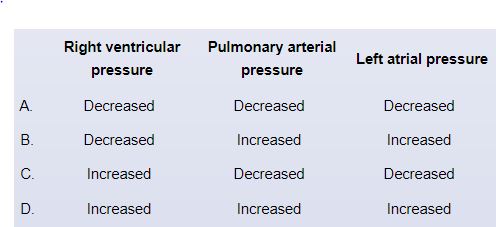
Which of the following most likely represents the pressure changes that take place in this patient during feedings? (Multiple Choice)
5.0/5 (71)
(71) A 30-year-old woman comes to the physician for the evaluation of irregular menses. She has menses 4- 5 times a year. Over the past 3 years. She failed to become pregnant despite having sexual intercourse with her husband 3 times a week. She has no prior medical diseases. She is 170 cm tall and weight 90 kg BMI 31 kg/m2. Physical examination shows coarse hair on her chin and abdomen. The patient is initially prescribed clomiphene therapy but fails to conceive. She then receives ovulation induction therapy with a short course of menotropins followed by a single injection of human chorionic gonadotropin (hCG). The use of hCG therapy primarily mimics which of the following physiologic events?
(Multiple Choice)
4.7/5 (96)
(96) A 32-year-old woman is brought to the emergency department after being stuck in a malfunctioning elevator for 45 minutes. The patient says she felt extremely anxious in the closed space of the elevator and experienced dizziness, shortness of breath, generalized weakness, and blurred vision. She has no other medical conditions and takes no medications. She does not use tobacco, alcohol, or illicit drugs. Which of the following is the most likely cause of this patient's symptoms?
(Multiple Choice)
4.8/5 (89)
(89) A 35-year-old woman is brought to the hospital after she collapsedhe completed marathon running. The patient has no chest pain, palpitations, or shortness of breath. She has never had a similar episode. There is no family history of sudden death. The patient has a history of fibromyalgia and takes amitriptyline. The patient does not use alcohol or illicit drugs. Temperature is 37 C (98.6 F), blood pressure is 98/56 mm Hg, pulse is100/min, and respirations are 21/min. The skin is warm and red. If this patient's medication contributed to her current condition, which of the following mechanisms is most likely responsible?
(Multiple Choice)
4.9/5 (81)
(81) A 23-year-old man arrives at the clinic with a painful, growing lesion on his chest. Six months ago, the patient suffered a laceration injury to the chest. On examination, the image below shows a pink, firm plaque. 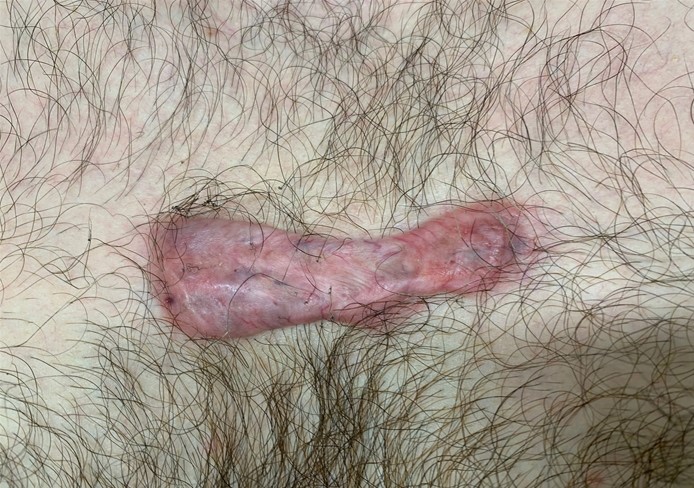 Which of the following is most likely responsible for this patient's lesion?
 (Multiple Choice)
4.8/5 (73)
(73) In the clinic, a 50-year-old man with a tenuous history of alcoholism is examined for recurrent diarrhea and weight loss. For the past two years, the patient has experienced everyday loose stools and bloating. His feces are described as oily and foul-smelling. Despite normal abdominal imaging, pancreatic insufficiency is suspected. As hormone A is administered intravenously, the patient is put through a test in which the bicarbonate content in duodenal aspirates is assessed. The graph below shows the data plotted. 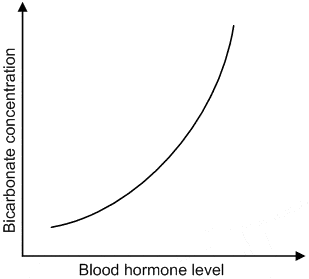 Hormone A is most likely produced by which of the following cell types?
 (Multiple Choice)
4.9/5 (79)
(79) A 21-year-old man arrives at the office with recurrent heart palpitations that begin and end abruptly. Following an initial workup, the physician suspects that this patient's heart has an abnormal conduction pathway that bypasses the atrioventricular node. Which part of the patient's ECG is most likely to be affected during normal sinus rhythm, assuming the diagnosis is correct? 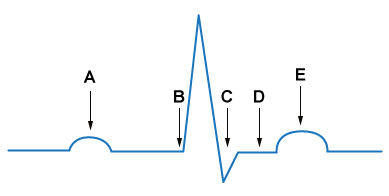
(Multiple Choice)
4.8/5 (75)
(75) A professional athlete, 28, takes part in a sports physiology study. She runs at a gradually increasing speed on a treadmill. Her pulse is 90 percent of her maximum heart rate based on her age after 15 minutes, and several physiologic parameters are measured. Which of the following changes have most likely occurred compared to at rest? 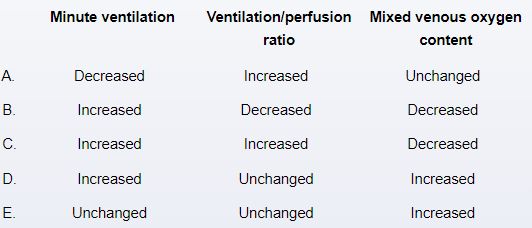
(Multiple Choice)
4.8/5 (83)
(83) A 34-year-old missionary in southern Asia is traveling to a remote village and becomes stranded when his bus breaks down. He has no access to water for 36 hours, during which his urine osmolality reaches 1100 mOsm/L. Urine concentration depends primarily on the serum level of vasopressin, which is regulated by the neurohypophysis in response to plasma osmolality and blood volume. Which of the following nephron segments responds to vasopressin by increasing absorption of a specific solute that is important for generating a high medullary concentration gradient?
(Multiple Choice)
4.8/5 (77)
(77) A newborn by normal vaginal delivery is brought for routine screening. you found an increase in TSH and low thyroxine T4. Apgar scores were 8 and 9 at 1 and 5 minutes, respectively. Physical examination reveals a normal size of the thyroid gland in the normal position. Neck ultrasound confirms an ectopic thyroid tissue beloww tounge . Which of the following is the most likely cause of this patient's otherwise normal physical examination despite abnormal thyroid laboratory findings?
(Multiple Choice)
4.9/5 (80)
(80) A 35-year-old Caucasian primigravida is found to have gallstones at 38 weeks of an uncomplicated pregnancy. Ultrasonography performed one year ago failed to demonstrate any abnormalities. Which of the following pathogenetic components most likely contributed to this patient's condition?
(Multiple Choice)
4.8/5 (84)
(84) 
Filters
- Essay(0)
- Multiple Choice(0)
- Short Answer(0)
- True False(0)
- Matching(0)