



 Chat with AI
Exam 12: Physiology

Exam 1: Anatomy265 Questions
Exam 2: Behavioral Sciences178 Questions
Exam 3: Biochemistry102 Questions
Exam 4: Embryology59 Questions
Exam 5: Epidemiology, Biostatistics, and Medical Informatics94 Questions
Exam 6: Genetics88 Questions
Exam 7: Histology46 Questions
Exam 8: Immunology147 Questions
Exam 9: Microbiology and Virology330 Questions
Exam 10: Pathology817 Questions
Exam 11: Pharmacology and Toxicology509 Questions
Exam 12: Physiology339 Questions
Exam 13: Psychiatry and Psychotherapy23 Questions
Select questions type


A 14-year- old boy football player visits your office for an annual health maintinance visit. He is doing well with no prior medical disease. he added that he wasn't able to play for the end of the game because he was feeling fatigued. he increased his endurance training seassion. which of the following is responsible for increase skeletal muscle group after a prolonged time of training?
(Multiple Choice)
4.8/5  (77)
(77) A 60-year-old man is brought to the ER due to shortenss of breath after an exertional exercise. He has no associated cough or wheezing. he has a history of hypertension and diabetes mellitus and takes his medication regularly. His father died due to myocardial infarction. ECG, chest x-ray, exercise stress test, and echocardiogram are obtained to evaluate his symptoms. He subsequently undergoes right and left cardiac catheterization, and the results are as follows: Arteial blood oxygen content 20 mL O2/ 100 mL blood
Pulmonary artery diastolic pressure 12 mmHg
Left ventricular diastolic pressure 10 mmHg
Mean right arterial pressure 4 mmHg
Venous blood oxygen content 15 mL O2/ 100 mL blood
What additional information is necessary to calculate cardiac output in this patient?
(Multiple Choice)
4.8/5 (65)
(65) A 24-year-old woman, gravida 1 para 0, at 28 weeks gestation comes to the office for a routine prenatal visit. She feels well and has had no vaginal bleeding, contractions, or leakage of fluid. Fetal movement is normal. The patient has no chronic medical conditions and her pregnancy has been uncomplicated. She previously had heavy menstrual periods that were managed with oral contraceptives. Blood pressure is 126/84 mm Hg and pulse is 78/min. Fundal height and fetal heart tones are normal. Today's third-trimester complete blood count is as follows: 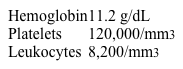 Coagulation studies and peripheral smear are within normal limits. The patient's first-trimester platelet count was 160,000/mm3. Urine dipstick today is negative for protein. Which of the following is the most likely cause of this patient's thrombocytopenia?
 (Multiple Choice)
4.9/5 (93)
(93) A 60-year-old man comes to his physician because of worsening exertional dyspnea for the past 2 months. He also occasionally has a dry cough. He has not had fever, chills, or night sweats. The patient does not use alcohol or illicit drugs and he has smoked one pack of cigarettes daily for the past 30 years. He is 183 cm (6 ft 0 in) tall and weighs 66 kg (145 lbs); BMI is 20 kg/m2. His temperature is 37°C (98.6°F), pulse is 94/min, respirations are 21/min, and blood pressure is 136/88 mm Hg. Lung auscultation reveals a prolonged expiratory phase and end-expiratory wheezing. This patient's pulmonary function testing will most likely show which of the following patterns of findings? 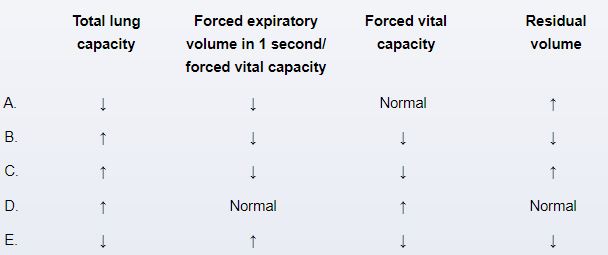
(Multiple Choice)
4.9/5 (87)
(87) A 43-year-old guy is examined for sporadic heart palpitations brought on by stress. The patient recalls a quick onset of lightheadedness and shortness of breath, as well as a hammering sensation in the chest. He's never had syncope. The patient's family history is ordinary, and they have no history of cardiac disease. Following a preliminary examination, he receives verapamil treatment and reports a significant decrease in the frequency of palpitation events. The electrical activity of a particular class of cardiac cells in the patient's heart is depicted in the trace below. 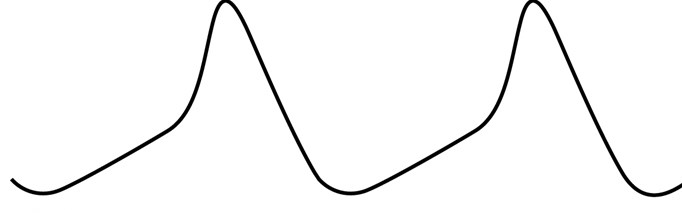 Which of the following effects would verapamil administration most likely have on these cells?
 (Multiple Choice)
4.9/5 (88)
(88) A 50-year-old man comes to the physician because of a history of gradually worsening shortness of breath. He has a history of emphysema secondary to alpha-1 antitrypsin deficiency and uses inhaled bronchodilators and glucocorticoids. His pulse is 72/min, blood pressure is 135/75 mm Hg, and respirations are 20/min. The patient does not use tobacco, alcohol, or illicit drugs. Examination shows an increased anteroposterior diameter of the chest. Diminished breath sounds are heard on auscultation of the chest. Which of the following sets of arterial blood gas findings on room air is most likely to be seen in this patient? 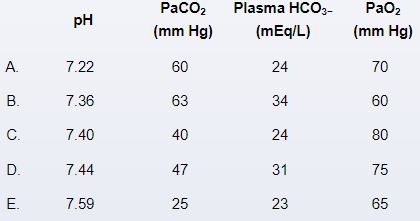
(Multiple Choice)
4.8/5 (76)
(76) A 52-year-old man arrives at the office after experiencing progressive fatigue and exertional dyspnea for two weeks. The patient is a postal delivery worker who says he gets out of breath after a few blocks. He has not experienced any chest pain or palpitations. The patient does not smoke, drink alcohol, or use illegal drugs. Cardiac auscultation reveals a murmur, which can be heard best when the patient sits up and leans forward. He brings the report from a recent cardiac catheterization to the office (graph shown below). This patient's murmur would most likely be loudest at which of the following time points on the graph? 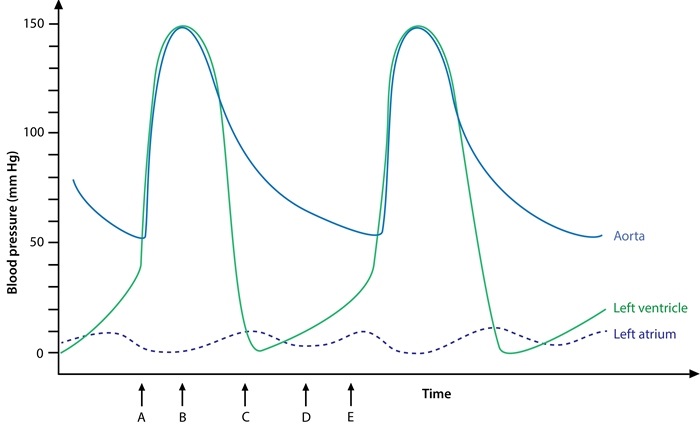
(Multiple Choice)
4.8/5 (97)
(97) A 24-year-old healthy college student enrolls in a study to investigate the factors that influence blood oxygen content. The experiment is carried out at sea level, on room air with no additional oxygen. A method is developed to accurately measure the partial pressure of oxygen in the blood as it flows through the circulation. Blood is drawn from the vena cavae, alveolar capillaries, and aorta. All data are plotted, and the resulting curve is depicted in the graph below. 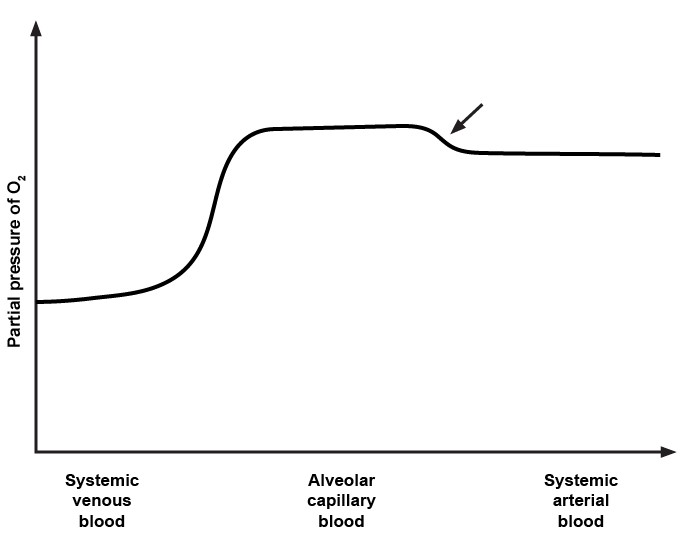 Which of the following factors most likely explains the change in partial pressure indicated by the arrow?
 (Multiple Choice)
4.9/5 (90)
(90) An old man visits an ophthalmology clinic for a routine eye examination because he has had mild myopia for many years. He has no prior medical and surgical history and he states that he feels well and does not need to wear an eyeglass anymore . His visual acuity at 20 feet is 20/30 in both eyes without wearing his glasses. the change in his visual improvement has the same etiology in which of the following conditions?
(Multiple Choice)
4.9/5 (84)
(84) A 6-year-old Caucasian boy is brought to the office by his mother due to recurrent episodes of sinusitis. He also has a chronic cough that never seems to go away. The mother says that his previous pediatrician performed a "sweat test" to help determine the cause of his frequent infections, but results were normal. DNA testing was inconclusive. Despite these results, the new physician suspects that the patient has an inherited disorder and orders nasal transepithelial potential difference measurements. In this test, an isotonic solution of sodium chloride is applied to the nasal mucosal surface, and the electrical potential overlying the mucosa is compared with that of the interstitial fluid. The results show a transepithelial potential difference that is more negative than normal. This patient's nasal mucosa is most likely to demonstrate which of the following physiologic changes?
(Multiple Choice)
4.8/5 (96)
(96) A 21-year-old male is brought to the ER due to worsening neck stiffness and pain for the past 2 hours. He states that his neck is locked to the left and he cannot move it. He is alert and oriented . His temperature is 37.1 C, pulse is 89/ min, respiration 17/min , and blood pressure is 125/75 mm Hg. he has a history of schizophrenia and recently his doctor has added risperidon to his drug regimen. On examination, his neck is rigid and fixed in flexion and rotated to the left. The persistent myocyte stimulation causes a substance to be released from the sarcoplasmic reticulum. This substance most likely binds to which of the following proteins to cause this patient's symptoms? 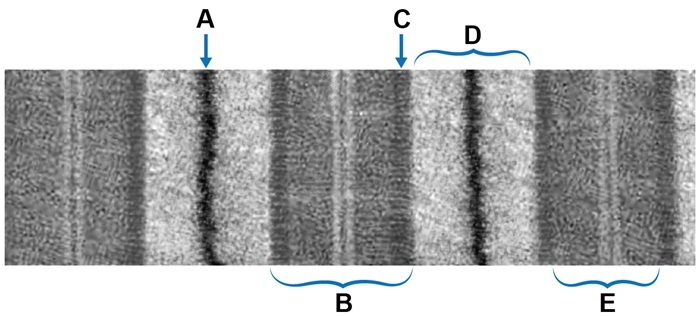
(Multiple Choice)
4.8/5 (73)
(73) A 1-month-old preterm African American is brought to the emergency department due to lethargy for a day. He is exclusively breastfed. He was in the NICU due to cyanosis but discharged after he became well. The boy is at the 60th percentile for weight and the 70th percentile for height. Head circumference is at the 99th percentile. Physical examination shows a large, bulging anterior fontanel. The eyes appear driven downward and the patient is not able to track upward. No scalp swelling is present. Intracranial hemorrhage is confirmed on head CT scan. Which of the following is the most likely cause of this infant's condition?
(Multiple Choice)
4.9/5 (83)
(83) A 60-year-old man is brought to the emergency department due to progressive dyspnea and cough. He has an upper respiratory tract infection 5 days ago and has a histroy of heart failure. On physical examination, jugular venous pressure is elevated, breath sounds are decreased at the right lung base with dullness to percussion, and 2+ bilateral lower extremity pitting edema is present. Chest x-ray shows cephalization of the blood vessels, Kerley B lines, and a right pleural effusion. Thoracentesis is performed for pleural fluid analysis. In comparison to plasma fluid, which of the following pleural fluid findings is most likely to be observed?
(Multiple Choice)
4.9/5 (84)
(84) A 60-year-old man comes to the office due to difficulty to hear TV sound. He states that his wife has noticed recently that he doesn't hear her till she shouts at him. He has no medical conditions and takes no medication. During the neurologic examination, the physician assesses his hearing using a vibrating tuning fork. The handle of the tuning fork is placed on his left mastoid process until the sound is no longer audible. The tines are then quickly placed near the patient's left auditory meatus, and he reports hearing no sound. When the handle of the vibrating fork is placed on the middle of his forehead, he hears the vibration more strongly in his left ear than his right. This patient is most likely experiencing which of the following types of hearing loss?
(Multiple Choice)
4.8/5 (67)
(67) A 32-year-old woman comes to the office due to recent fatigue and weight gain. She has no medical histrory and takes no medication. Blood pressure is 115/65 mm Hg and pulse is 85/min. On physical examination, there is a diffuse neck swelling with no palpable nodules, she says her neck has gradually gotten larger, and she does not like how it appears in the mirror. Serum TSH and free thyroxine levels are normal. She has a sister with vitiligo. There is no history of head and neck irradiation. Antibodies against thyroid peroxidase are present in high titers. The antigenic target of these antibodies is involved in which of the following processes?
(Multiple Choice)
5.0/5 (82)
(82) A 55-year-old man is brought to the emergency department by a friend because of progressive confusion over the past two weeks. He is unable to provide any history. His vital signs are within normal limits. He appears lethargic and is only oriented to person. Oral mucosa is moist. There is no jugular venous distention. A basic metabolic panel shows a serum sodium concentration of 115 mEq/L but is otherwise normal.A chest x-ray reveals a hilar mass with adenopathy on the left side. Which of the following additional laboratory abnormalities are most likely to be present in this patient? 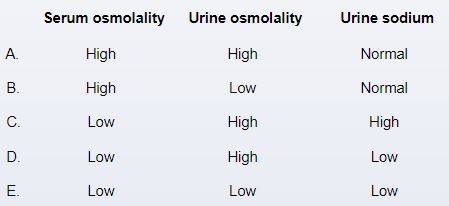
(Multiple Choice)
4.8/5 (90)
(90) A 52-YEAR-OLD woman comes to the office due to recent retrosternal chest pain. She has diabetes mellitus type II and hypertension which are both controlled by medications. She has no family history of cardiovascular diseases. The patient is scheduled to do exercise treadmill stress test. She couldn't walk for more than 7 minutes because of feeling fatigue and she doesn't have any chest pain. Heart rate ranges from 73/min at rest to 132/min at peak and mean blood pressure ranges from 90 mm Hg at rest to 115 mm Hg at peak. Which of the following parameters was most likely decreased during peak stress compared to the resting state in this patient?
(Multiple Choice)
5.0/5 (74)
(74) A 62-year-old man who lives below sea level plans to visit the Colorado mountains. After 8 days of hiking to reach the base of camp he looks fatigued and dyspneic otherwise. He has a history of coronary artery disease . The patient is a lifetime nonsmoker and has no history of lung disease. Physical examination shows mild hypoxemia, clear lungs, an S4, and no extremity edema. Which of the following respiratory changes most likely contributed to this patient's presentation?
(Multiple Choice)
4.9/5 (82)
(82) A 78-year-old man is brought to the emergency department because of difficulty speaking. The symptoms began abruptly one hour ago while he was having breakfast with his wife. He has hypertension, type 2 diabetes mellitus, and coronary artery disease. Current medications include pravastatin, lisinopril, metformin, and aspirin. His temperature is 37°C (98.6°F), pulse is 76/min, and blood pressure is 165/90 mm Hg. He is right-handed. The patient speaks in short, simple sentences, and has difficulty repeating sequences of words. He can follow simple instructions. Right facial droop is present. CT scan of the brain reveals early infarction in theleft middle cerebral artery territory with no acute hemorrhage. Several hours later, he becomes progressively obtunded with elevated intracranial pressure. A repeat CT scan reveals edema in the region of acute infarction causing mass effect. Which of the following is the primary contributor to the pathogenesis of this patient's raised intracranial pressure?
(Multiple Choice)
4.8/5 (85)
(85) A 44-year-old man is brought to the ER due to retrosternal chest pain The patient describe the pain which develops with exertion and sometimes occur when resting. ECG shows no finding with normal cardiac markers. He does not use alcohol, tobacco, or illicit drugs The patient's father died with myocardial infarction. His temperature is 37.2 C blood pressure is 120/75 mm Hg, pulse is 78/min, and respirations are 14/min. Physical examination shows no abnormalities. Coronary angiography shows no significant obstructive lesions. Acetylcholine infusion during the procedure results in dilation of epicardial coronary vessels. A reaction involving which of the following amino acids is most likely responsible for the observed dilation?
(Multiple Choice)
4.7/5 (73)
(73) 
Filters
- Essay(0)
- Multiple Choice(0)
- Short Answer(0)
- True False(0)
- Matching(0)