



 Chat with AI
Exam 13: Physiology

Exam 1: Anatomy291 Questions
Exam 2: Behavioral science240 Questions
Exam 3: Biochemistry156 Questions
Exam 4: Biostatistics117 Questions
Exam 5: Embryology52 Questions
Exam 6: Genetics103 Questions
Exam 7: Histology24 Questions
Exam 8: Immunology129 Questions
Exam 9: Microbiology336 Questions
Exam 10: Pathology816 Questions
Exam 11: Pathophysiology464 Questions
Exam 12: Pharmacology538 Questions
Exam 13: Physiology272 Questions
Select questions type


A 63-year-old man comes to the emergency department due to dyspnea. Over the past several days, the patient has experienced progressively worsening shortness of breath while walking his dog around the block. In addition, he could not breathe while lying in bed last night and fell asleep only after moving to a recliner. The patient had an acute myocardial infarction 2 years ago and has been nonadherent with his medications and follow-up appointments. Temperature is 36.7 C (98 F), blood pressure is 122/74 mm Hg, pulse is 94/min, and respirations are 22/min. Physical examination shows bibasilar lung crackles, jugular venous distension, and bilateral pitting edema in the lower extremities. Chest x-ray reveals cardiomegaly and pulmonary venous congestion. Which of the following factors is most likely contributing to this patient's symptoms?
(Multiple Choice)
4.8/5  (80)
(80) A 34-year-old man with type 1 diabetes mellitus comes to the office due to achy pain in the shoulders, elbows, and thighs over the past several months. The patient was diagnosed with diabetes 15 years ago and has had difficulty adequately controlling it. He currently takes multiple daily injections of insulin. Vital signs are within normal limits. Physical examination shows mild pedal edema. Serum creatinine is 2.2 mg/dL, up from 1.6 mg/dL six months ago. Additional laboratory results show low serum calcium and elevated parathyroid hormone levels. Inhibition of which of the following enzymatic steps is most likely responsible for this patient's current symptoms? 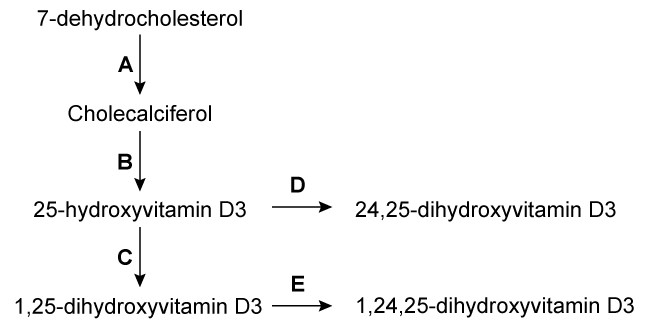
(Multiple Choice)
4.8/5 (84)
(84) Experimental gastric function monitoring in healthy subjects before, during and after a meal shows an initial rise, peak, and then decline in gastric acid production. Which of the following helps most to down-regulate gastric secretion after a meal?
(Multiple Choice)
4.8/5 (71)
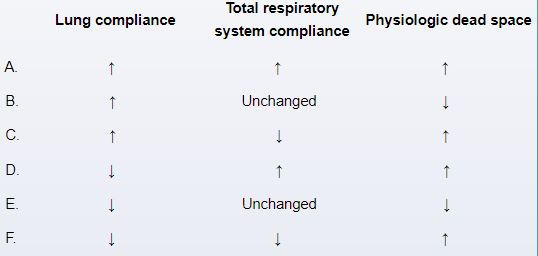
(71) A 70-year-old woman has been enrolled in a longitudinal research study on aging for the last 30 years. Medical history is significant for osteoporosis; she has developed moderate kyphosis due to gradual loss of vertebral body height. She is otherwise active and healthy with no additional medical issues. She has never smoked. Compared to her physiology testing done years ago, which of the following changes is most consistent with normal aging?
(Multiple Choice)
4.7/5 (70)
(70) The combined compliance of the lung and chest wall of a healthy individual is measured and plotted as shown below. It is noted that the intrapleural pressure at the end of maximal inspiration is -8 cm H20 (marked x). 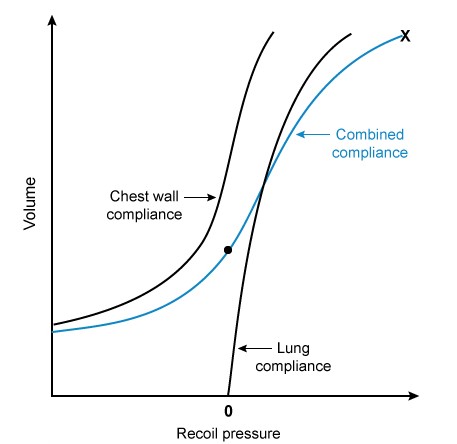 Which of the following is the best estimate of the intrapleural pressure at the point marked by the black dot?
 (Multiple Choice)
4.8/5 (54)
(54) A 72-year-old man is hospitalized for cough, purulent sputum, and shortness of breath. His medical conditions include type 2 diabetes and hypertension. A chest x-ray reveals right lower lobe pneumonia, and treatment is started with supplemental oxygen and antibiotics. While hospitalized, the patient develops persistent sinus tachycardia. Thyroid function tests ordered during the subsequent work up reveal:  Which of the following is the primary contributor to the decreased total T3 level in this patient?
 (Multiple Choice)
4.9/5 (74)
(74) A 19-year-old man is brought to the emergency department after sustaining a traumatic brain injury during a motor vehicle collision. On arrival, the patient is comatose and has a Glasgow Coma Scale score of 3. His blood pressure is 110/70 mm Hg, and pulse is 114/min. Pupils are miotic, equal, and reactive to light. Ecchymosis is present behind the ear, but the remainder of the trauma survey is unremarkable. Rapid-sequence intubation is performed, and the patient is mechanically ventilated. A noncontrast head CT scan demonstrates bifrontal contusions and a basilar skull fracture. One day later, a repeat head CT scan reveals diffuse cerebral edema. The ventilator respiratory rate is adjusted to achieve a PaCO2 level of 26-30 mm Hg. Which of the following is the most likely effect of this intervention?
(Multiple Choice)
5.0/5 (67)
(67) A 45-year-old man with a history of chronic alcohol use disorder is brought to the emergency room due to altered mental status. The patient appears malnourished. He is given thiamine, folic acid, a multivitamin, and dextrose-containing intravenous fluids. However, the patient develops marked muscle weakness a few hours later. Laboratory studies reveal a serum phosphate concentration of 0.5 mg/dL (normal: 2.5-4.5). Which of the following is the most likely cause of this patient's low serum phosphate level?
(Multiple Choice)
4.7/5 (77)
(77) Neurophysiologists are studying recordings of the membrane potential from a giant squid axon. A portion of their recordings is shown on the slide below. 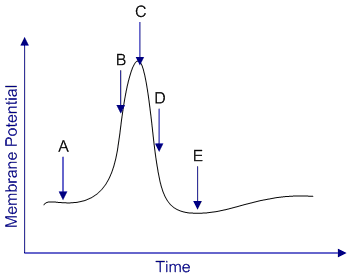 The membrane is most permeable to potassium ions at which of the following points?
 (Multiple Choice)
4.7/5 (77)
(77) A 28-year-old professional endurance athlete comes to the office after his team physician detected a heart murmur. The patient has no symptoms and has no exercise limitations. Medical history is nonsignificant. Blood pressure is 110/66 mm Hg and pulse is 54/min. Physical examination shows a soft systolic murmur best heard at the left second intercostal space in the supine position. The murmur disappears when the patient is upright but reappears after brief exercise. Which of the following cardiovascular adaptations best explains this patient's finding?
(Multiple Choice)
4.9/5 (85)
(85) A 44-year-old woman comes to the office for follow-up. The patient sustained a complete C7 spinal cord injury a year ago after falling off a cliff while hiking. She is able to move her shoulders and upper arms but has paraplegia and uses a wheelchair. The patient has a suprapubic catheter due to neurogenic bladder. She has no other medical conditions. She is a lifelong nonsmoker. Which of the following changes in respiratory parameters are most likely present in this patient?
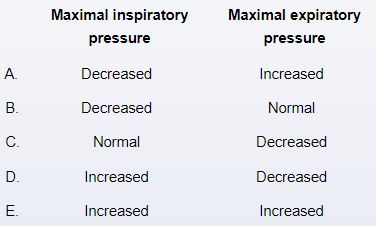
(Multiple Choice)
4.9/5 (71)
(71) A 49-year-old man comes to the office due to "aching bones." He has a 2-month history of insidious-onset pain that is most pronounced in the back, pelvis, and lower extremities. The pain is dull and increases after weight-bearing activities. The patient has no prior medical conditions and takes no medications. He emigrated from Central Africa 5 years ago and works overnight shifts as a cab driver. Vital signs are within normal limits. Physical examination shows normal muscle strength in the upper and lower extremities bilaterally. A thorough laboratory evaluation establishes the diagnosis. After discussing the likely cause of his condition, the patient starts spending more time outdoors in the sun. Which of the following enzymatic steps will most likely be affected by this change in activity? 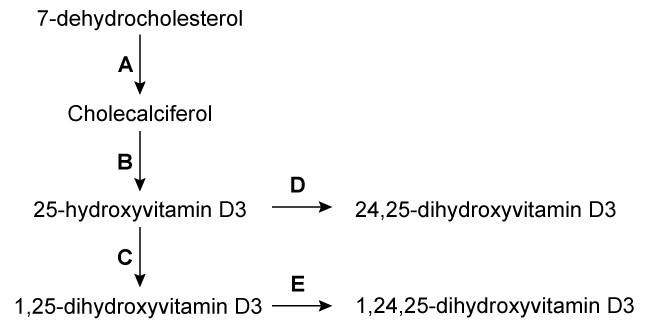
(Multiple Choice)
4.8/5 (82)
(82) 
Filters
- Essay(0)
- Multiple Choice(0)
- Short Answer(0)
- True False(0)
- Matching(0)