



 Chat with AI
Exam 13: Physiology

Exam 1: Anatomy291 Questions
Exam 2: Behavioral science240 Questions
Exam 3: Biochemistry156 Questions
Exam 4: Biostatistics117 Questions
Exam 5: Embryology52 Questions
Exam 6: Genetics103 Questions
Exam 7: Histology24 Questions
Exam 8: Immunology129 Questions
Exam 9: Microbiology336 Questions
Exam 10: Pathology816 Questions
Exam 11: Pathophysiology464 Questions
Exam 12: Pharmacology538 Questions
Exam 13: Physiology272 Questions
Select questions type


A 68-year-old woman is brought to the emergency department due to worsening fever, cough, and confusion. The patient has had a "cold and congestion" since last week, which initially improved, but she began feeling worse again 3 days ago. Her daughter reports that the patient has also been eating poorly. Other medical conditions include chronic obstructive pulmonary disease and chronic kidney disease. Temperature is 39.4 C (102.9 F), blood pressure is 74/46 mm Hg, pulse is 128/min, and respirations are 30/min. Oxygen saturation is 94% on 2 L/min. On physical examination, the patient is lethargic with dry mucous membranes and flat neck veins. Lung examination reveals dullness to percussion and crackles at the right base. Chest x-ray shows a right lower lobe consolidation. Intravenous access is established. Intravenous administration of which of the following is the most appropriate next step in management of this patient?
(Multiple Choice)
4.7/5  (96)
(96) A 64-year-old man comes to the hospital due to generalized weakness and fatigue for the past several weeks. He has a history of uncontrolled hypertension and nonadherence to medical therapy. Blood pressure is 160/100 mm Hg, pulse is 90/min, and respirations are 22/min. Oxygen saturation is 95% on room air. Physical examination shows elevated jugular venous pressure, bilateral crackles, and 3+ pitting edema in both legs. Laboratory results are as follows: 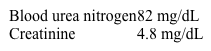 Which of the following additional findings are most likely present in this patient?
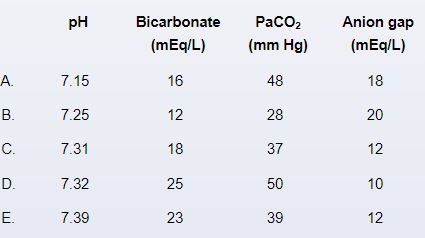
Which of the following additional findings are most likely present in this patient?
(Multiple Choice)
4.8/5 (88)
(88) A 3-week-old boy is evaluated in the neonatal intensive care unit due to apnea. The patient was born at 27 weeks gestation and had a birth weight of 1 kg (2 lb 2 oz). For the past 2 weeks, he has been stable on minimal respiratory support via nasal cannula but has had intermittent episodes of no respiratory effort for up to 30 seconds at a time. These episodes are associated with bradycardia and desaturation. The patient recovers spontaneously or with brief stimulation from the nurse. He is well appearing between episodes. Examination of the lungs reveals bilateral, clear breath sounds with easy work of breathing. Ultrasound of the head is normal. Arterial blood gas values are normal. This patient's clinical findings are most likely caused by an abnormality in which of the following areas?
(Multiple Choice)
4.9/5 (75)
(75) A 43-year-old woman comes to the office due to increasing fatigue and weight gain despite decreased food intake. She states, "I have not been feeling like myself lately." The patient asks to be referred to a dermatologist as she has always had "nice" skin that has now become dry. Her hair has been thinning and she hopes that a dermatologist can help with that too. Laboratory evaluation shows high serum TSH, low triiodothyronine (T3), and low thyroxine (T4) levels. The patient has a family member with fatigue whose energy level increased after liothyronine (T3) supplementation, and she asks to try this medication. Administering this therapy would most likely result in which of the following hormone level changes in this patient?
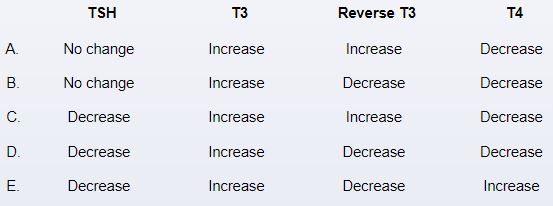
(Multiple Choice)
5.0/5 (79)
(79) A 34-year-old man is evaluated due to dyspnea. The patient undergoes complete pulmonary function testing as well as lung volume measurements. His pulmonary volume curve (blue line) is compared with a normal individual's curve (black line) in the illustration below: 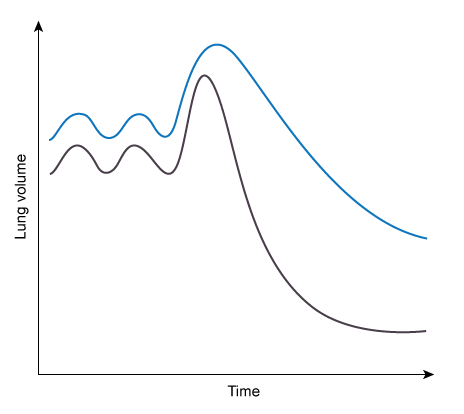 Which of the following measures is increased in this patient?
 (Multiple Choice)
4.8/5 (73)
(73) A 32-year-old woman, gravida 2 para 1, at 30 weeks gestation comes to the office for a routine prenatal visit. The patient's pregnancy has been uncomplicated, and she has had no vaginal bleeding or contractions. She has continued to jog daily throughout the pregnancy but is becoming more fatigued by the end of her workouts. The patient has no chronic medical conditions, and her only medication is a daily prenatal vitamin. She does not use tobacco, alcohol, or illicit drugs. Blood pressure is 110/70 mm Hg, pulse is 76/min, and respirations are 20/min. Fetal heart tones are normal. Physical examination is unremarkable. Compared to a nonpregnant state, this patient most likely has which of the following hematologic changes?
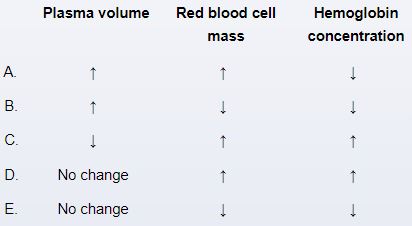
(Multiple Choice)
4.8/5 (81)
(81) A 1-month-old, full-term African-American boy is brought to the office for a routine check-up. He is exclusively breastfed. The boy does not have any medical problems, and his hospital stay after birth was unremarkable. His mother consumes a well-balanced diet, takes no medications, and does not drink alcohol. The boy is at the 50th percentile for weight and the 60th percentile for height. His physical examination is normal. At this time, supplementation with which of the following should be recommended for this infant?
(Multiple Choice)
4.8/5 (73)
(73) A 67-year-old man comes to the office due to increased fatigue and weight gain over the past 6 months. He has hypertension controlled with a calcium channel blocker. Two years ago, the patient's physical examination was unremarkable, and his blood tests, including a lipid panel, were normal. Blood pressure is 135/98 mm Hg, and pulse is 62/min. BMI is 28 kg/m2. On physical examination, the thyroid appears to be mildly enlarged and is irregular and firm in consistency. Laboratory studies reveal elevated TSH, low free thyroxine (T4), high total and LDL cholesterol, and mildly elevated triglyceride levels. Which of the following is the most likely underlying mechanism for the elevated cholesterol in this patient?
(Multiple Choice)
4.8/5 (81)
(81) A 66-year-old man comes to the office for a follow-up appointment. The patient has a history of heart failure with reduced ejection fraction and has had persistent dyspnea despite taking the maximal dosage of his heart failure medications. He has had no lightheadedness or chest pain. Blood pressure is 133/72 mm Hg and pulse is 76/min. Physical examination shows normal lung sounds and no lower extremity edema. His medical treatment is modified with the addition of a combination pill that inhibits neprilysin and blocks angiotensin II receptors. Which of the following is the most likely effect of this medication?
(Multiple Choice)
4.8/5 (78)
(78) A 39-year-old man comes to the office due to increasing fatigue for the past 2 weeks. The patient reports no prior medical conditions, although he recently had a self-limiting upper respiratory illness. He does not use tobacco, alcohol, or illicit drugs and has not traveled recently. Temperature is 37.2 C (99 F), blood pressure is 116/66 mm Hg, pulse is 100/min, and respirations are 20/min. Physical examination reveals lung crackles. Echocardiography shows no valvular abnormalities and the following parameters:  Based on the observed findings, which of the following is most accurate about this patient?
 (Multiple Choice)
4.9/5 (72)
(72) A 65-year-old homeless man is brought to the hospital after he is found wandering the streets during a cold winter day. The patient appears confused and has slurred speech. He has no chronic medical conditions and takes no medications. On examination, his temperature is 32 C (89.6 F). Cardiopulmonary examination is normal. No focal neurologic deficits are present. Toxicology screen is negative for any substances. Which of the following physiologic adaptations is most likely occurring in this patient to help maintain homeostasis?
(Multiple Choice)
4.8/5 (90)
(90) A 45-year-old hospitalized man is evaluated for shortness of breath and hypoxemia. The patient was admitted 3 days ago after a motor vehicle collision. At that time, evaluation revealed a femur fracture but no other injuries, and the patient underwent open reduction and internal fixation of the fracture. This morning, he suddenly began experiencing shortness of breath and sharp chest pain. The patient has no significant medical history and has been receiving morphine for pain control. He has smoked a pack of cigarettes daily for 15 years and drinks alcohol occasionally. Temperature is 36.1 C (97 F), blood pressure is 120/70 mm Hg, and pulse is 98/min. BMI is 42 kg/m2. Chest x-ray is unremarkable, and arterial blood gas analysis on room air shows a pH of 7.51, PaCO2 of 30 mm Hg, and PaO2 of 65 mm Hg. Which of the following is the primary cause of hypoxemia in this patient?
(Multiple Choice)
4.8/5 (87)
(87) A 62-year-old man comes to the office for evaluation of abdominal swelling. Over the last few weeks his abdomen has become more distended with associated mild discomfort and decreased appetite. Past medical history includes multiple admissions for alcohol-induced pancreatitis. The patient currently drinks 1 pint of liquor daily and does not use tobacco or illicit drugs. Physical examination reveals mildly icteric sclera and multiple spider angiomas on the upper chest. The abdomen is distended and there is dullness to percussion that changes location when the patient lays on either side. Serum sodium is 130 mEq/dL and creatinine is 1.1 mg/dL. Which of the following would most likely be seen in this patient?
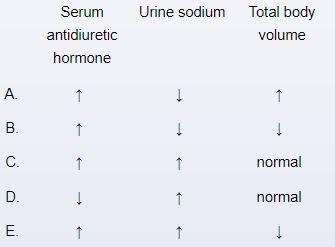
(Multiple Choice)
5.0/5 (77)
(77) A 43-year-old woman with borderline personality disorder is brought to the emergency department after taking an undetermined number of pills. She is lethargic but arousable. She refuses to answer questions. Blood pressure is 110/60 mm Hg and heart rate is 120/min and regular. Laboratory results are as follows: 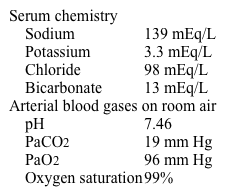 Which of the following best describes this patient's acid-base disturbance?
 (Multiple Choice)
4.8/5 (75)
(75) A 64-year-old man comes to the office due to worsening dyspnea on exertion for the past 3 months. The patient has had a nonproductive cough but no chest pain, fever, or chills. He was diagnosed with hypertension several years ago but takes no medications. Blood pressure is 160/96 mm Hg, pulse is 92/min, and respirations are 18/min. Physical examination shows bilateral inspiratory crackles as well as dullness to percussion and decreased breath sounds at the right lung base. Chest x-ray reveals a right-sided pleural effusion. Which of the following pleuropulmonary changes are most likely present in this patient?
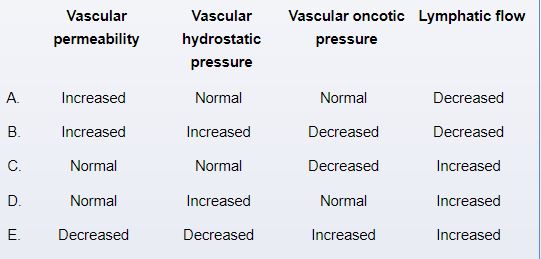
(Multiple Choice)
4.7/5 (73)
(73) A 34-year-old woman comes to the office due to exertional dyspnea. The patient has a history of IgA nephropathy; she received hemodialysis for 2 years before undergoing kidney transplantation last month. Chest x-ray reveals cardiomegaly and pulmonary congestion. Further evaluation determines that her symptoms are likely due to persistence of the arteriovenous fistula that was used for hemodialysis. Which of the following physiologic changes are most likely present in this patient due to the fistula?
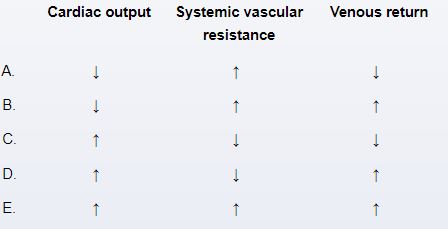
(Multiple Choice)
4.8/5 (84)
(84) A 65-year-old man with type 2 diabetes mellitus comes to the physician for a routine follow-up appointment. He was started on oral hypoglycemic medications 12 years ago but was recently switched to long-acting insulin due to inadequate blood sugar control. His last serum creatinine level was 2.1 mg/dL. The patient is concerned about his elevated creatinine level and how it relates to his kidney function. Which of the following graphs most accurately represents the relationship between serum creatinine and glomerular filtration rate?
(Multiple Choice)
4.9/5 (83)
(83) A 35-year-old man is seen in the office due to heaviness in his lower abdomen. He has a history of bilateral cryptorchidism in childhood and underwent orchiopexy at age 14 months. The patient is otherwise healthy and takes no medications. Physical examination shows enlargement of both testicles. Scrotal ultrasound reveals bilateral testicular masses consistent with testicular germ cell tumor. CT scans of the chest, abdomen, and pelvis do not reveal any lymph node metastasis. The patient undergoes bilateral orchiectomy. Which of the following long-term physiologic changes are most likely to occur as a result of treatment in this patient?
(Multiple Choice)
4.8/5 (76)
(76) A 32-year-old woman comes to the office with worsening shortness of breath. She has the following arterial blood results: 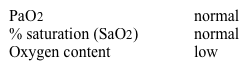 Which of the following is the most likely cause of these results?
 (Multiple Choice)
4.8/5 (83)
(83) A 41-year-old woman with a long history of heavy menstrual bleeding comes to the office for follow-up. Two weeks ago, the patient was diagnosed with iron deficiency anemia and was started on oral ferrous sulfate. Today, vital signs and physical examination are unremarkable. Laboratory evaluation shows an appropriate response to the medication with an increase in reticulocyte production. She is instructed to continue iron supplementation. The woman is concerned about iron buildup and damage to vital organs if she continues to take the medication. She is reassured that iron homeostasis is closely regulated; as the body's iron stores increase, a hormone is released and functions in reducing the amount of dietary iron absorbed from the intestines. Which of the following cells is most likely responsible for secreting this hormone?
(Multiple Choice)
4.8/5 (85)
(85) 
Filters
- Essay(0)
- Multiple Choice(0)
- Short Answer(0)
- True False(0)
- Matching(0)