



 Chat with AI
Exam 1: Behavioral Sciences

Exam 1: Behavioral Sciences343 Questions
Exam 2: Biochemistry307 Questions
Exam 3: Biology319 Questions
Exam 4: Critical Analysis & Reasoning Skills358 Questions
Exam 5: General Chemistry317 Questions
Exam 6: Organic Chemistry191 Questions
Exam 7: Physics200 Questions
Select questions type


According to world systems theory, which of the following best illustrates global trends in exporting goods (black bars) and exporting resources (white bars)?
(Multiple Choice)
4.7/5  (80)
(80) Passage
Research suggests that cognitive changes occur with age. Though dementia is common, occurring in about 14% of individuals age 71 and older and in almost 34% of individuals 90 and older, a majority of older adults exhibit some degree of "normal" cognitive decline. The following studies were conducted on 605 older adults (mean age = 78.2) who did not show any signs of dementia and 590 younger adult participants (mean age = 28.8).Cognition studiesParticipants were asked to solve five puzzles designed to test their ability to apply new information, reason inductively and deductively, and use logic. Participants were also asked to complete a 20-item vocabulary and grammar test. The older adults performed significantly worse than the younger adults on the puzzles, but there was no significant difference between the groups on the vocabulary/grammar test.Focus studiesWhen asked to read a short story and then answer a series of questions assessing comprehension (focused condition), older adults performed equally well as the younger adults. However, when asked to read a similar story while wearing headphones playing another story that was to be ignored (distraction condition), older adults performed worse than younger adults when answering questions assessing comprehension of the story they read.Memory studiesWhen asked to memorize 30 neutral items (eg, a key, a pencil, a book), the images of which were presented serially, younger adults performed significantly better when asked to list the items immediately after seeing them and when asked to list the items after performing a distraction task. In a second trial, both groups were serially presented with 30 pictures of faces showing positive, negative, or neutral expressions. The groups were later asked to identify these faces among a set of 100. Results are shown in Figure 1.
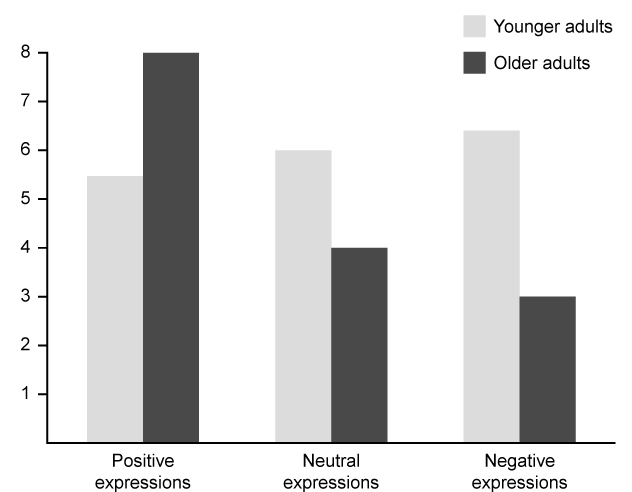 Figure 1 Average number of correctly identified faces for older and younger adult groups
-Aging is associated with significant memory decline for all of the following types of memory EXCEPT:
Figure 1 Average number of correctly identified faces for older and younger adult groups
-Aging is associated with significant memory decline for all of the following types of memory EXCEPT: (Multiple Choice)
5.0/5 (79)
(79) Passage
Physical modifications important for consolidating memory are particularly apparent in the hippocampus, especially a pathway called the Schaffer Collateral, which contains CA1 (cornu Ammonis) neurons that have been implicated in learning and memory. To study learning and memory in live mice, scientists use a stimulating electrode to generate brief electrical pulses on the dendrites of CA1 neurons in the Schaffer Collateral pathway and use a recording electrode to measure the excitatory postsynaptic potentials (EPSPs) in the CA1 postsynaptic neurons.In Study 1, researchers used brief low-frequency stimulations (1-5 stimuli per second) to establish a baseline response in the CA1 postsynaptic neurons. Then, the same dendrites were given a high-frequency stimulation (50-100 stimuli per second), referred to as a tetanus. The researchers discovered that the high-frequency tetanus induced an increase in the response in postsynaptic CA1 neurons that was long-lasting. For the control, the researchers established a baseline in a second set of CA1 neurons in the same region but did not give a high-frequency tetanus (Figure 1).
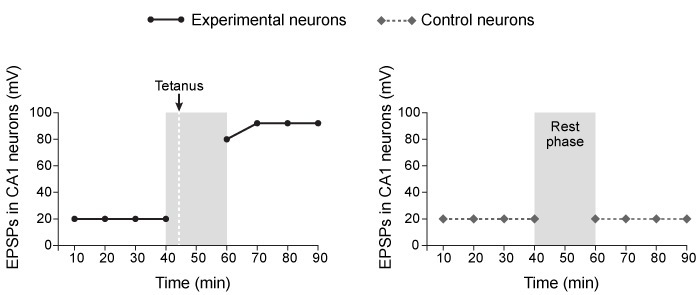 Figure 1 CA1 neuron response after a brief tetanus (experimental) or no tetanus (control)In a second behavioral study, mice were housed in either a standard cage (control) or a cage with an enhanced learning environment, including toys and access to a running wheel (experimental condition). For the first 12 days, both groups of mice received injections of a dye that is incorporated into newly synthesized DNA, thereby providing a biomarker of neurogenesis.Following 30 days in their respective environments, all mice were tested each day for one week in the Morris Water Maze, a test that measures spatial learning and memory consolidation. Results showed that mice in the experimental condition demonstrated greater improvement on Morris Water Maze performance compared to controls. When hippocampi were examined, the results revealed that mice in the experimental condition had a greater number of dye-labeled cells than did the controls.
W. C. Abraham, B. Logan, J. M. Greenwood, and M. Dragunow ©2002 The Society of Neuroscience, and H. van Praag, B. R. Christie, T. J. Sejnowski, and F. H. Gage ©1999 National Academy of Sciences.
-The results of Study 2 suggest that:enhanced environments increase cell proliferation in the hippocampus.cell proliferation increases performance on the Morris Water Maze.swimming in the Morris Water Maze increases cell proliferation in the hippocampus.
Figure 1 CA1 neuron response after a brief tetanus (experimental) or no tetanus (control)In a second behavioral study, mice were housed in either a standard cage (control) or a cage with an enhanced learning environment, including toys and access to a running wheel (experimental condition). For the first 12 days, both groups of mice received injections of a dye that is incorporated into newly synthesized DNA, thereby providing a biomarker of neurogenesis.Following 30 days in their respective environments, all mice were tested each day for one week in the Morris Water Maze, a test that measures spatial learning and memory consolidation. Results showed that mice in the experimental condition demonstrated greater improvement on Morris Water Maze performance compared to controls. When hippocampi were examined, the results revealed that mice in the experimental condition had a greater number of dye-labeled cells than did the controls.
W. C. Abraham, B. Logan, J. M. Greenwood, and M. Dragunow ©2002 The Society of Neuroscience, and H. van Praag, B. R. Christie, T. J. Sejnowski, and F. H. Gage ©1999 National Academy of Sciences.
-The results of Study 2 suggest that:enhanced environments increase cell proliferation in the hippocampus.cell proliferation increases performance on the Morris Water Maze.swimming in the Morris Water Maze increases cell proliferation in the hippocampus. (Multiple Choice)
4.8/5 (74)
(74) Passage
During the 19th century, the industrial revolution led to advances in health care in the United States that resulted in declines in the death rate followed by population growth. Around 1860, the U.S. birth rate also began to steadily decline until reaching its current plateau of about two births per woman during her lifetime. Since 1860, the U.S. birth rate has significantly increased during only one period: the post-World War II era known as the baby boom."Baby boomers," the generation of Americans born roughly between 1946 and 1964, are living longer than any prior generation, and their aging has evolving social and historical significance. By 2030, it is estimated that there will be about 61 million baby boomers in their eighties. In 1950, there were approximately seven times more producers (people age 15-64) than elderly (people age 65 and over); by 2030 there are projected to be less than three times more producers than elderly. Providing medical and social care to this aging cohort will have a major negative impact on the American economy due to the costs associated with health care and basic social services.Also impacting the U.S. population distribution is the fact that younger Americans (referred to as "millennials," born roughly between 1982 and 2004) are delaying marriage and children more so than any preceding generation, resulting in declining U.S. fertility rates. Figure 1 compares the U.S. population pyramid in 2000 to a projected population pyramid in 2030.
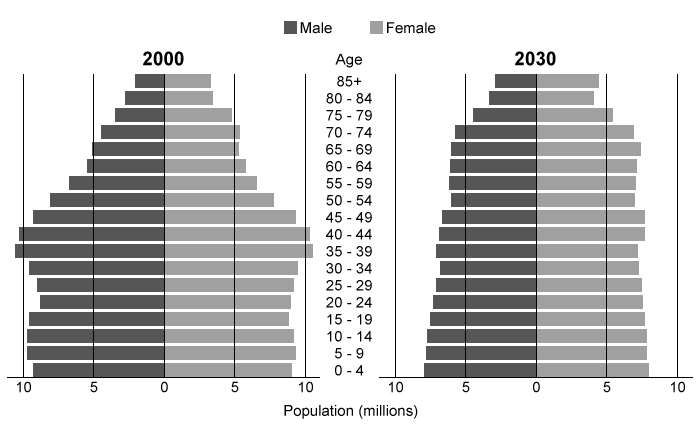 Figure 1 United States population pyramid from 2000 and a projected population pyramid for 2030
-What model is being described in the first paragraph?
Figure 1 United States population pyramid from 2000 and a projected population pyramid for 2030
-What model is being described in the first paragraph? (Multiple Choice)
4.8/5 (77)
(77) Passage
Although the terms sex, sex category, and gender are commonly used interchangeably by most people, sociologists distinguish between them. Sex refers to the biological distinction between bodies (eg, male, female). Sex category (eg, male, female) is based on the visible secondary sex characteristics people use to attribute sex to others. Gender (eg, masculine, feminine) specifically refers to the behaviors and behavioral expectations people attribute to others on the basis of the individual's perceived sex category. Sex category and gender have recently been conceptualized as continua, with male and female as the extremes for sex category perception and masculine and feminine as the extremes for gender. Despite this, sex category and gender are usually perceived by humans categorically instead of continuously.Researchers conducted a study to assess how sex category interpretation is related to implicit bias and cortical activity. For the first phase, researchers tested sex category interpretation using 12 highly realistic computer-generated "facial morphs" varying along a continuum of apparent sex category from extremely male (1) to extremely female (12). The sexually dimorphic content of the faces was manipulated, but all other aspects were unchanged. For example, eyes and noses remained constant, but brow lines and eyebrows were thickened for male faces. Participants viewed the 12 faces in random order, rating each face on a scale of 1 (extremely male) to 10 (extremely female). Despite the uniform increments in the sexually dimorphic content of the facial morphs, responses demonstrated dichotomous sex category classification, as expected.For the second phase, which assessed the relationship between sex category interpretation and implicit bias, participants completed an implicit association test (IAT), in which they were shown the facial morphs with a pair of word attributes, one positive and one negative (eg, hard-working, lazy), and were asked to quickly pick the word they most associated with the face. Participants demonstrated shorter response times for facial morphs at the end points of the sex category continuum.For the third phase, researchers assessed the relationship between face-sensitive regions in the occipitotemporal cortex, particularly the fusiform face area (FFA), and sex category interpretation. Participants were injected with a glucose analog containing a radioactive tracer an hour before brain activity was measured while participants viewed the facial morphs. Results suggest that FFA activity was strongest when the faces were at the end points of the sex category continuum, regardless of whether a face was perceived as male or female.
-This study assesses how individuals interpret which of the following?
(Multiple Choice)
4.8/5 (89)
(89) Passage
Jake and his classmate Michael both grew up in a high-crime public housing project in a poverty-stricken neighborhood in a large urban area. Both children lived in single-parent households and had almost no relationship with their fathers. They performed poorly in school and frequently got in trouble with authority figures. Neither completed high school and both had been arrested by the time they turned 18.At this point their trajectories begin to diverge. By age 27, Jake had been in and out of prison three times, had fathered four children by four different women, and was abusing drugs and alcohol daily. On the other hand, Michael had earned a general equivalency diploma, was a general manager at a factory, was married with a biological son and adopted daughter, and owned a home in the suburbs.Jake and Michael both participated in a study about resilience-the ability to prevail in the face of threats to adequate psychosocial development. This study recruited 81 adult men who as children had lived in the same public housing project between 1976 and 1980. The investigators categorized participants into one of two groups based on their adult outcomes-low resilience and high resilience. All the men reported family difficulties while growing up in crime and poverty. The low-resilience men (n = 69) were significantly more likely to report drug and alcohol use and current or prior imprisonment, whereas the high-resilience men (n = 12) were all employed, and most were married homeowners.The study's primary finding was that high-resilience men received more social support outside their immediate families while growing up than did low-resilience men. Results also suggested that high-resilience men tended to have calmer, more optimistic dispositions, whereas low-resilience men were more anxious, disagreeable, and pessimistic.
-Which of the following supports the study's primary finding in explaining why Michael has experienced fewer health problems than Jake?
(Multiple Choice)
4.9/5 (84)
(84) Passage
Epidemiologists now consider obesity to be a global pandemic, occurring largely as a result of the spread of technology and culture worldwide. Obesity has been linked to many serious health conditions, and as the obesity rate rises, the overall poorer health of the population impairs the functioning and stability of society. Although experts disagree about whether obesity itself should be viewed as a disease to be treated with medical interventions, there is widespread consensus that obesity prevention is critical. Research has shown that across one's life span, multiple biological, psychological, and social influences contribute to obesity; understanding the influence of these factors is essential to the development of effective obesity prevention programs.Study 1 was conducted using nearly 6,000 residents from a mid-sized city to investigate how obesity rates change over time in informal social groups. During recruitment wave A, researchers asked an initial group of individuals to complete a two-minute health questionnaire; those who completed the questionnaire were then asked to participate in the research study. During recruitment wave B, additional participants were recruited using a snowball sampling technique: participants who enrolled during wave A provided contact information of friends and family members who were then asked to participate. Researchers finalized the sample such that each participant had at least one family member, one close friend, and one acquaintance also in the study. Every year for 20 years, researchers measured each participant's height and weight to calculate body mass index (BMI) and conducted an extensive interview with each participant to assess the type, strength, and geographic distance of their social ties with other participants. Researchers found that the type and strength of social ties appeared to be more strongly linked to BMI than geographic closeness between social ties.Study 1 was criticized for not addressing larger contextual variables related to obesity, such as the availability of unhealthy food within a community. Therefore, Study 2 randomly selected a subset of 500 cases from the Study 1 database and, using participants' addresses, researchers mapped and counted the number of retail food chains (ie, "fast food" restaurants selling low-quality, calorie-dense food) located within a 1-mile radius of participants' homes and compared this to BMI at the end of the 20-year study. Results showed a significant relationship between higher BMI and more neighborhood retail food chains.
J. A. Levine ©2011 American Diabetes Association; Christakis, N. A. and Fowler, J. H. ©2007 Massachusetts Medical Society
-The finding in Study 2 of an association between BMI and number of neighborhood retail food chains demonstrates which type of correlation, and the study represents which sociological approach, respectively?
(Multiple Choice)
4.8/5 (68)
(68) Passage
For decades psychologists have known that people tend to execute tasks differently when alone compared to when in the presence of other people.In Study 1, researchers analyzed records of bicycle racers' times both during competitions and when racing alone against the clock. They found that the fastest times were recorded during competitions, particularly larger races with over 100 cyclists. This finding was initially attributed to the competitive nature of the races, but later studies suggest performance improves when in the presence of other people, even outside of competition.In Study 2, researchers conducted an experiment based on the idea that the mere presence of others impacts performance. This study involved a simple task (ie, getting dressed), which was performed either alone or with an audience. This task was chosen because it was familiar and routine, without clear standards of good or bad performance. Furthermore, the participants had no idea that this task was of interest to the experimenters.Forty-five male undergraduate students were recruited for Study 2. The researchers informed the participants that they were required to remove their socks and shoes and replace them with unfamiliar ones and then put on a lab coat, surgical mask, and protective eye glasses (hard task). After a 10-minute wait, the participants were informed that the study was called off because the remaining participants failed to arrive and they could put back on their familiar clothes (easy task).All participants in Study 2 were randomly assigned to one of three experimental conditions. In the audience condition, each participant performed both tasks in a room with an attentive confederate watching. In the incidental audience condition, a confederate sat facing away from each participant while the participant performed both tasks. The third group of participants performed both tasks alone (control condition). Participants' behavior was observed and timed by an inconspicuous researcher. It was found that, compared to controls, participants performed more quickly under both experimental conditions when putting back on their familiar clothing, and performed more slowly when dressing in unfamiliar clothing.
Adapted from H. Markus ©1977 Elsevier B.V.
-A researcher in Study 1 believes the results are due to deindividuation. Is this conclusion justified?
(Multiple Choice)
4.8/5 (78)
(78) Passage
Lucid dreaming occurs when a person becomes consciously aware of a dream and uses executive decision-making skills to critically analyze the dream environment. Lucid dreamers are thus able to control certain aspects of their dreams, an ability that may occur intentionally, through practice, or unintentionally, usually after having noticed something bizarre or unrealistic in the dream. A lucid dreamer might choose to experience the sensation of flying, explore a custom-designed landscape, carry out a predetermined task, or practice a skill. Estimates suggest that about half the population has had a lucid dream, and about 10%-20% of people are considered frequent lucid dreamers experiencing such dreams regularly (at least once a month).In one study, researchers asked participants to perform a difficult visuomotor task that involved throwing an object through a small moving target. Participants were organized into three groups, one group of frequent lucid dreamers and two groups of nonlucid dreamers. All three groups attempted the visuomotor task at midday in the research lab, before (pretest) and after (posttest) a single night's sleep at home. Lucid dreamers were asked to only practice the visuomotor task overnight during their lucid dream ("lucid practice" group). One group of nonlucid dreamers practiced the task in the lab, right after the pretest ("waking practice" group), and another group of nonlucid dreamers performed the pretest and posttest without practicing between the tests ("no practice" group). The average improvement of hits (the number of times each participant successfully threw the object through the target) from pretest to posttest for each group is shown in Figure 1.
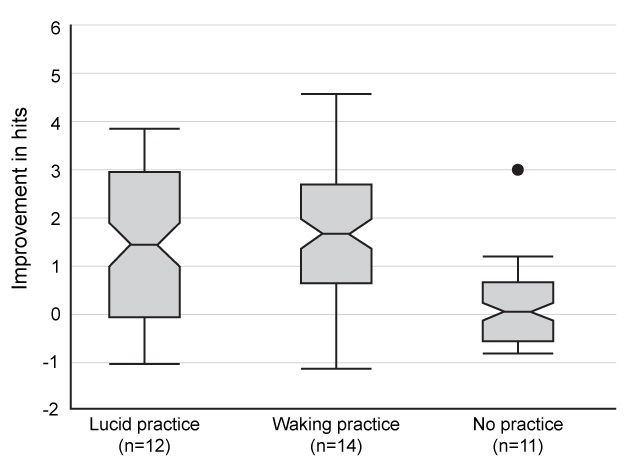 Figure 1 Median improvement in total hits for each group (Note: The notches represent the 95% confidence interval for the median.)The researchers proposed that a follow-up study be devised and conducted to control for any potential variability in each participant's sleep at home. The researchers suggested using the same study procedure except participants would sleep overnight for five consecutive nights in a sleep lab, where the timing and duration of sleep would be standardized. In order to eliminate any potential "first-night effects" (an initial reduction in sleep quality when sleeping in an unfamiliar environment), researchers proposed that pretest and posttest measures each be taken before and after the third, fourth, and fifth night's sleep.
-If the researchers wanted to examine the role of sleep in memory consolidation, which of the following groups, if added to the current study design, would best accomplish this goal?
Figure 1 Median improvement in total hits for each group (Note: The notches represent the 95% confidence interval for the median.)The researchers proposed that a follow-up study be devised and conducted to control for any potential variability in each participant's sleep at home. The researchers suggested using the same study procedure except participants would sleep overnight for five consecutive nights in a sleep lab, where the timing and duration of sleep would be standardized. In order to eliminate any potential "first-night effects" (an initial reduction in sleep quality when sleeping in an unfamiliar environment), researchers proposed that pretest and posttest measures each be taken before and after the third, fourth, and fifth night's sleep.
-If the researchers wanted to examine the role of sleep in memory consolidation, which of the following groups, if added to the current study design, would best accomplish this goal? (Multiple Choice)
4.8/5 (75)
(75) Passage
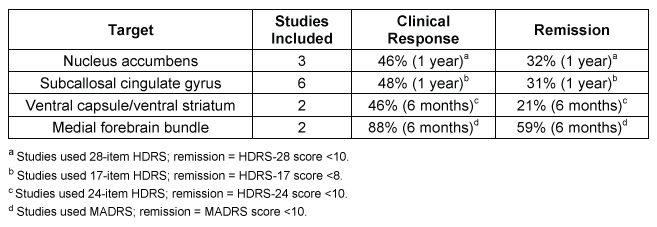
Major depression is a mood disorder that affects nearly 7% of the American population and is the most common cause of disability worldwide. Standard treatment typically involves antidepressant medication alone, although a combination of antidepressant medication and psychological treatment, such as psychotherapy or cognitive-behavioral therapy, is often more effective. However, because depression has genetic, environmental, and psychological contributing factors, treatment can be challenging. Approximately 10% of those suffering from depression have treatment-resistant depression (TRD) that does not respond to standard treatment.A number of treatment options for those with TRD target the functioning of the nervous system. Deep-brain stimulation (DBS), which is used to treat Parkinson disease, has also been investigated as a treatment for TRD. DBS involves implanting a device in the brain that sends electrical impulses to a specific area. Although the mechanism by which DBS alleviates depressive symptoms is unclear, neurostimulation provided by DBS is thought to disrupt dysfunctional patterns of electrical activity in local areas and connected brain regions.A meta-analysis reviewed the data from several studies that used different brain regions as DBS targets in the treatment of TRD. Table 1 shows the percentage of TRD patients who underwent DBS and showed clinical responsiveness and remission of depression. Clinical response was defined as a 50% reduction in scores on a measure of depression. Various scales were used in the studies, including different versions of the Hamilton Depression Rating Scale (HDRS) and Montgomery-Asberg Depression Rating Scale (MADRS). Remission of depression was defined as a score that fell below a predetermined threshold.Table 1 Percentage of TRD Patients Who Showed Clinical Response and Remission With DBS Treatment
 -Which of the following is an inherent limitation in assessing the efficacy of DBS for controlling depression symptoms?
 (Multiple Choice)
5.0/5 (76)
(76) Passage
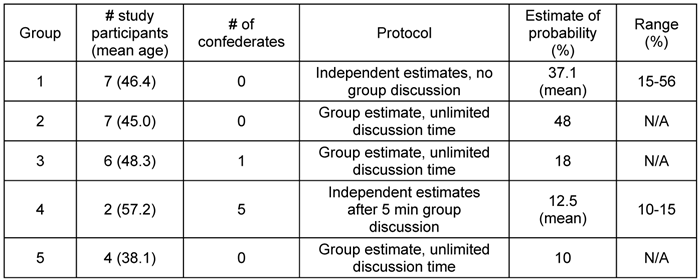
Twenty-two adults (mean age 49.5) were recruited to participate in a study they were told was to assess beliefs about cancer risk. All participants were in good health; neither they nor any first-degree relatives had been diagnosed with cancer.In the first phase of the study, participants viewed a brief video about the epidemiology and prevalence of cancer in the United States, and then were randomly assigned to one of four groups and asked to estimate the probability that they would develop cancer in their lifetimes. Group 1 consisted of seven study participants who each arrived at their estimates independently and without discussion. Group 2 consisted of seven study participants who were asked to agree on a group estimate after discussion (with unlimited time). Group 3 contained seven members who were also asked to arrive at a consensus estimate after discussion (with unlimited time): Six were study participants and the seventh was a confederate who suggested a very low estimate. Group 4 likewise contained seven members: Two were study participants and the other five were confederates who each suggested low estimates. Group 4 members were limited to 5 minutes of discussion and then asked to arrive at individual estimates.For the second phase of the study, four members of Group 1 who arrived at independent estimates of 20% or lower were put into a new group (Group 5), then were given unlimited time to discuss their initial estimates and arrive at a group estimate (Table 1).Table 1 Group Composition, Protocol, and Estimate of Developing Cancer in One's Lifetime
 S. E. Asch ©1956 American Psychological Association.
-If this study is repeated using the same procedure with a different set of subjects and produces similar results, this suggests that the study is:
S. E. Asch ©1956 American Psychological Association.
-If this study is repeated using the same procedure with a different set of subjects and produces similar results, this suggests that the study is: (Multiple Choice)
4.8/5 (74)
(74) Passage
Until the middle of the twentieth century, most researchers believed that infants possess only the most rudimentary ways of perceiving the world. Then, in the 1950s, innovative investigative strategies allowed researchers to better assess the complexity of infants' perceptual abilities.Studies on the visual perception of infants used gaze time as an indicator of interest or preference. In Study 1, 36 babies age 2 weeks to 4 months were shown 6 pictures of identical size simultaneously, such as pictures of a bull's-eye, a bird, three squares of different colors, and a human face. Researchers recorded the time the infants spent looking at each picture and calculated the mean gaze time for each picture. It was found that the babies gazed far longer at the human face than at any other picture.Studies on the auditory perception of infants also employed gaze time as an indicator of preference. In Study 2, researchers exposed infants age 1-4 months to four types of auditory stimuli. The first type was human speech consisting of a series of randomly selected short words, each stated in a neutral tone, followed by a second of silence. The other stimuli included environmental sounds (eg, forest noises); neutral, human, noncommunicative sounds (eg, sneezing, coughing, throat clearing); and monkey vocalizations. A red light was shown on a computer monitor to attract the babies' attention. Once their gaze was fixed on the monitor, they were shown a picture of a checkerboard along with the auditory stimulus for up to 40 seconds. The time the infants gazed at the monitor was recorded. Results indicated that babies preferred human speech to any other sound.
Adapted from S. Shultz and A. Vouloumanos ©2010 Taylor & Francis Group, and R. L. Fantz ©1961 Scientific American.
-Based on Study 1, which of the following best explains how babies are able to perceive both the form and location of the pictures simultaneously?
(Multiple Choice)
4.8/5 (86)
(86) Passage
Korsakoff syndrome (KS) is caused by a thiamin (vitamin B1) deficiency that often results from chronic alcohol consumption. If KS is diagnosed during its earliest stages, its course may be reversed with thiamin supplements; otherwise, it progresses into a permanent type of dementia that includes severe cognitive dysfunction and memory loss. Alzheimer disease (AD) is associated with a different type of dementia that worsens over time, eventually causing memory loss, cognitive dysfunction, and severe brain atrophy.In one study, KS and AD subjects were assessed using the Corsi block-tapping task, which measures nonverbal memory. The experiment consisted of 10 KS subjects, 10 AD subjects, and 10 healthy control subjects. The control group was matched by age, gender, and premorbid IQ (intelligence quotient preceding the occurrence of symptoms) to the KS and AD groups.
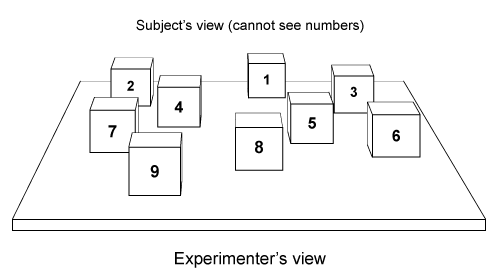 Figure 1 Corsi block-tapping taskThe Corsi block-tapping task consists of nine wooden blocks placed randomly on a board (Figure 1). To assess subjects' nonverbal memory, the experimenter touched four numbered blocks (numbers were visible only to the experimenter) in a specific pattern. Each subject was then asked to touch the same four blocks in the same sequence, either immediately or after a delay of 5-25 seconds. Subjects were required to perform a distractor task during the delay period. For the distractor task, subjects were asked to watch and reproduce a finger-tapping sequence first demonstrated by the experimenter. Experimenters would touch a finger on their right hand to a finger on their left hand according to a specific sequence (eg, index finger to ring finger, then pinky finger to middle finger) and the subjects would try to do the same.Results indicated that compared to controls, subjects with AD and KS were significantly impaired on the delayed memory task, although all subjects showed a significantly greater number of errors with increases in the delay interval.
-Matching the healthy control group in terms of age, gender, and premorbid IQ was meant to account for all of the following, EXCEPT for the:
Figure 1 Corsi block-tapping taskThe Corsi block-tapping task consists of nine wooden blocks placed randomly on a board (Figure 1). To assess subjects' nonverbal memory, the experimenter touched four numbered blocks (numbers were visible only to the experimenter) in a specific pattern. Each subject was then asked to touch the same four blocks in the same sequence, either immediately or after a delay of 5-25 seconds. Subjects were required to perform a distractor task during the delay period. For the distractor task, subjects were asked to watch and reproduce a finger-tapping sequence first demonstrated by the experimenter. Experimenters would touch a finger on their right hand to a finger on their left hand according to a specific sequence (eg, index finger to ring finger, then pinky finger to middle finger) and the subjects would try to do the same.Results indicated that compared to controls, subjects with AD and KS were significantly impaired on the delayed memory task, although all subjects showed a significantly greater number of errors with increases in the delay interval.
-Matching the healthy control group in terms of age, gender, and premorbid IQ was meant to account for all of the following, EXCEPT for the: (Multiple Choice)
4.8/5 (84)
(84) A pharmaceutical company is testing how much sugar should be added to a pediatric oral liquid suspension to make the medication more palatable. Researchers determine that adding 0.2 g of sugar to 20 mL of oral suspension Z results in children detecting a just noticeable difference in taste. Based on Weber's law, should the addition of 0.2 g of sugar to 50 mL of oral suspension Z be detectable 50% of the time?
(Multiple Choice)
4.8/5 (76)
(76) Passage
The term "health disparities" describes a systematic incidence of poorer health outcomes for groups that have traditionally experienced social disadvantage (eg, racial and ethnic minorities, lower-income individuals, women) as compared to more advantaged groups (eg, whites, higher-income individuals, men). These health disparities are driven by unequal access to health care services and health insurance due to prejudice and discrimination on the part of health care providers and the overall system, and extensive research has focused on these issues.Recent research suggests that another factor might explain health disparities: stereotype threat on the part of the patient. Stereotype threat can be evoked by verbal or nonverbal cues from health care professionals, such as a physician's use of confusing medical jargon (the standardized language medical personnel use to communicate among themselves) or a nurse's body language while discussing the risks of obesity and alcohol use. Once triggered, stereotype threat may result in behaviors that compromise one's own health. For example, a patient may withhold information or feel compelled to describe health-related behaviors in a positive light. Similarly, if the interaction arouses anxiety, a patient may be less likely to remember the physician's instructions or might dismiss a physician's advice as biased.Stereotype threat can be reduced through training programs that improve employees' communication skills. Some hospitals in large urban areas have implemented the use of cultural liaisons, individuals who are able to bridge the gap between a minority patient's cultural beliefs and Western medicine. Cultural liaisons are often present during the nonsensitive portions of the doctor's appointment, and studies suggest they may help to reduce stereotype threat in patients.
Adapted from J. Aronson, D. Burgess, S. M. Phelan, and L. Juarez (C)2013 American Public Health Association
-Based on the description of medical jargon in the second paragraph, medical personnel can best be described as which of the following?
(Multiple Choice)
4.7/5 (84)
(84) Passage
The diagnosis of a child with a serious disability significantly impacts the child's parents. While positive psychological outcomes are sometimes possible, evidenced by research showing that for some parents a child's disability is eventually viewed as a chance for personal growth, research also indicates that many parents of children with disabilities are at greater risk for poor physical and mental health outcomes. Coping with a child's initial symptoms, providing ongoing care, and dealing with prejudice from others present significant stressors for parents. This stress may also disrupt marriages; results of a meta-analysis showed a modest, increased risk for divorce in parents of children with disabilities. Another line of research has identified significantly higher rates of anxiety and/or depression in parents of children with disabilities. The fact that parental distress often results in poorer outcomes for their children points to a need for evidence-based interventions for parents of children with disabilities.In Study 1, researchers compared the effectiveness of two interventions in reducing depressive symptoms in parents of children with cognitive disabilities. Researchers recruited 30 parents of children with intellectual disorders from the contact list of an affluent community wellness center and randomly assigned them to a meditation (M) group or a humanistic psychotherapy (HP) group. Both groups were led by peer mentors trained in specific interventions who taught and demonstrated the techniques to the participants during the weekly sessions. Participants completed self-report measures of depressive symptoms at baseline (pre-test), 4 weeks into the intervention (midpoint), at the end of the 8-week program (post-test 1), and 4 weeks after the program ended (post-test 2). The findings are shown in Figure 1.
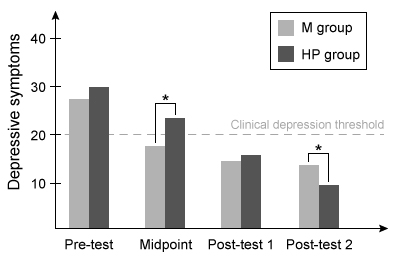 Figure 1 Depressive symptoms at pre-test, midpoint, post-test 1, and post-test 2 (Note: * indicates p < .05.)In Study 2, researchers examined the impact of coping strategies on distress in 80 parents of children with muscular dystrophy. Participants were asked to think of a recent stressful, threatening event and report whether they had classified their future expectancy for the event as "changeable" (situation is able to be modified) or "unchangeable" (situation is not able to be modified). They were then asked whether they attempted to cope with the event primarily by regulating their emotions (emotion-focused) or by modifying aspects of the situation (problem-focused), such as seeking help from others. Lastly, they were surveyed about their level of distress after they tried to cope with the stressor. Figure 2 illustrates the findings.
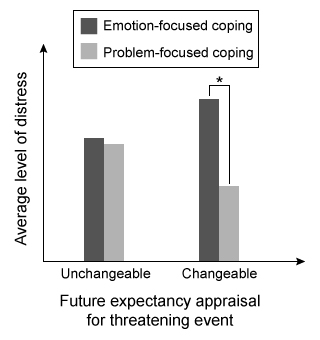 Figure 2 Average level of distress by coping strategy (emotion-focused vs. problem-focused) and future expectancy appraisal for the threatening event (Note: * indicates p < .05.)
-Which statement most accurately applies the general adaptation syndrome to the stress associated with parenting children with disabilities (first paragraph)?
Figure 1 Depressive symptoms at pre-test, midpoint, post-test 1, and post-test 2 (Note: * indicates p < .05.)In Study 2, researchers examined the impact of coping strategies on distress in 80 parents of children with muscular dystrophy. Participants were asked to think of a recent stressful, threatening event and report whether they had classified their future expectancy for the event as "changeable" (situation is able to be modified) or "unchangeable" (situation is not able to be modified). They were then asked whether they attempted to cope with the event primarily by regulating their emotions (emotion-focused) or by modifying aspects of the situation (problem-focused), such as seeking help from others. Lastly, they were surveyed about their level of distress after they tried to cope with the stressor. Figure 2 illustrates the findings.
Figure 2 Average level of distress by coping strategy (emotion-focused vs. problem-focused) and future expectancy appraisal for the threatening event (Note: * indicates p < .05.)
-Which statement most accurately applies the general adaptation syndrome to the stress associated with parenting children with disabilities (first paragraph)? (Multiple Choice)
4.7/5 (79)
(79) Passage
Prominent theories of emotion have long held that alterations in one's internal physiological state are necessary for the experience of emotion. Interoception involves both the unconscious and conscious perception of one's internal physiological state. The insula (or insular cortex), located deep within the lateral fissure on both sides of the brain, appears to be largely responsible for interoception. Studies suggest that the posterior insula (PI) is involved with processing homeostatic afferent information such as pain, temperature, hunger, thirst, and the impulse to breathe. In contrast, the anterior insula (AI) appears to process information regarding emotional awareness, the conscious experience of emotion.A recent study evaluated AI activity using functional magnetic resonance imaging (fMRI). Using fMRI, the participants' brain activity was monitored during two different tasks: an emotion-eliciting task and an interoceptive task.Task 1Participants watched 10 short videos of people recalling personal events that were either negative (eg, surviving a mass shooting attack) or positive (eg, seeing a loved one after a year apart). After each video, participants rated their reactions on a Likert scale from 1 (no emotional reaction) to 10 (extreme emotional reaction).Task 2Participants were instructed to monitor their own heart rate and press a button each time they felt their heartbeat. Participants' heart rates were externally monitored to gauge the accuracy of their responses.ResultsNeuroimaging results suggested that both tasks elicited activity in the AI. Furthermore, there was a high degree of overlap in the activity of the right AI and surrounding limbic and paralimbic brain regions at both the individual and group levels.
J. Zaki, J. I. Davis, and K. N. Ochsner ©2012 by Elsevier, B. V., and A. D. Craig ©2003 by Elsevier, B. V.
-The assertion at the beginning of the first paragraph is referring to which of the following theories of emotion?James-LangeSchachter-SingerCannon-Bard
(Multiple Choice)
4.9/5 (81)
(81) The interactionist theory of language development suggests that:
(Multiple Choice)
4.8/5 (88)
(88) Passage
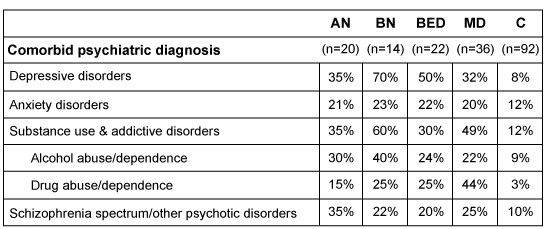
A common misconception in medicine is that eating disorders present similarly in males and females. Research suggests that this is untrue: males meeting diagnostic criteria for eating disorders are more likely than females to have another psychiatric illness, demonstrate a later age of onset, and engage in excessive exercise. They are less likely to engage in purging behaviors, be diagnosed by clinicians, or seek treatment. When males do enter treatment, they are generally further along in the course of the illness.The classification of eating disorders in males according to the Diagnostic and Statistical Manual of Mental Disorders, Fifth Edition (DSM-5) has recently been debated. Research suggests that one very common manifestation of eating disorder etiology in males, called muscle dysmorphia (MD), includes an obsession with a larger and more muscular body, which contrasts with the thin, idealized body for females with eating disorders. Characterized as a subset of body dysmorphic disorder, MD is more recently conceptualized as part of a spectrum of eating disorders; however, it is still classified under the obsessive-compulsive and related disorders umbrella in the DSM-5.One study applied the latest DSM-5 diagnostic criteria for anorexia nervosa (AN), bulimia nervosa (BN), binge eating disorder (BED), and MD to the medical records of male veterans treated in Veterans Administration (VA) hospitals across the United States from 2000 to 2015. The study (Table 1) found a significant increase in psychiatric comorbidity compared to controls (C).Table 1 Prevalence of Psychiatric Disorders for Eating Disorder and MD Cases and Controls in a National Sample of Male Veterans Treated at VA Hospitals from 2000 to 2015
 -Which is least applicable to a diagnosis of MD?
 (Multiple Choice)
4.9/5 (74)
(74) Passage
Lucid dreaming occurs when a person becomes consciously aware of a dream and uses executive decision-making skills to critically analyze the dream environment. Lucid dreamers are thus able to control certain aspects of their dreams, an ability that may occur intentionally, through practice, or unintentionally, usually after having noticed something bizarre or unrealistic in the dream. A lucid dreamer might choose to experience the sensation of flying, explore a custom-designed landscape, carry out a predetermined task, or practice a skill. Estimates suggest that about half the population has had a lucid dream, and about 10%-20% of people are considered frequent lucid dreamers experiencing such dreams regularly (at least once a month).In one study, researchers asked participants to perform a difficult visuomotor task that involved throwing an object through a small moving target. Participants were organized into three groups, one group of frequent lucid dreamers and two groups of nonlucid dreamers. All three groups attempted the visuomotor task at midday in the research lab, before (pretest) and after (posttest) a single night's sleep at home. Lucid dreamers were asked to only practice the visuomotor task overnight during their lucid dream ("lucid practice" group). One group of nonlucid dreamers practiced the task in the lab, right after the pretest ("waking practice" group), and another group of nonlucid dreamers performed the pretest and posttest without practicing between the tests ("no practice" group). The average improvement of hits (the number of times each participant successfully threw the object through the target) from pretest to posttest for each group is shown in Figure 1.
Figure 1 Median improvement in total hits for each group (Note: The notches represent the 95% confidence interval for the median.)The researchers proposed that a follow-up study be devised and conducted to control for any potential variability in each participant's sleep at home. The researchers suggested using the same study procedure except participants would sleep overnight for five consecutive nights in a sleep lab, where the timing and duration of sleep would be standardized. In order to eliminate any potential "first-night effects" (an initial reduction in sleep quality when sleeping in an unfamiliar environment), researchers proposed that pretest and posttest measures each be taken before and after the third, fourth, and fifth night's sleep.
-Which of the following conclusions is most supported by Figure 1?
Figure 1 Median improvement in total hits for each group (Note: The notches represent the 95% confidence interval for the median.)The researchers proposed that a follow-up study be devised and conducted to control for any potential variability in each participant's sleep at home. The researchers suggested using the same study procedure except participants would sleep overnight for five consecutive nights in a sleep lab, where the timing and duration of sleep would be standardized. In order to eliminate any potential "first-night effects" (an initial reduction in sleep quality when sleeping in an unfamiliar environment), researchers proposed that pretest and posttest measures each be taken before and after the third, fourth, and fifth night's sleep.
-Which of the following conclusions is most supported by Figure 1? (Multiple Choice)
4.7/5 (84)
(84) 
Filters
- Essay(0)
- Multiple Choice(0)
- Short Answer(0)
- True False(0)
- Matching(0)