



 Chat with AI
Exam 1: Behavioral Sciences

Exam 1: Behavioral Sciences343 Questions
Exam 2: Biochemistry307 Questions
Exam 3: Biology319 Questions
Exam 4: Critical Analysis & Reasoning Skills358 Questions
Exam 5: General Chemistry317 Questions
Exam 6: Organic Chemistry191 Questions
Exam 7: Physics200 Questions
Select questions type


Passage
Of the biological factors impacting color perception in humans, one of the easiest to study is the number and type of color-sensitive photoreceptors. The human retina typically contains three types of cone photoreceptors, which contain opsin proteins that are sensitive to short (blue), medium (green), and long (red) wavelengths of light (Figure 1A).The genes that encode for medium and long wavelength-sensitive opsin proteins are located on the X chromosome. Mutations in these genes often produce a variant cone type that responds to wavelengths overlapping the response range of one of the normal cone types, so color perception is unaltered (Figure 1B). However, in a small percentage of women, the variant cone type appears to be sensitive to a range of wavelengths that differs from that of normal cone types (Figure 1C). It is hypothesized that these "tetrachromatic" women may be able to distinguish more colors than can the normal trichromatic population.
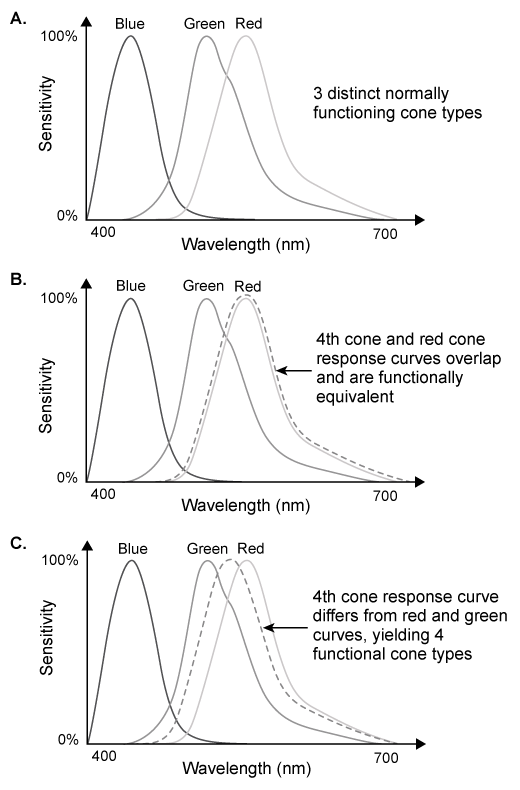 Figure 1 Response curves for (A) three cone types (trichromat, normal color perception); (B) four cone types (likely normal color perception); and (C) four cone types (tetrachromat, hypothesized enhanced color perception)A researcher conducted a series of tasks to assess the extent to which color perception of tetrachromatic subjects differs from that of trichromatic controls. Three women known to possess four retinal cone classes were recruited for the study. One of the women had experienced a small lesion to her right primary visual cortex the year prior. In addition, two women with normal trichromatic vision were recruited as controls (Table 1).Table 1 Characteristics of Subjects
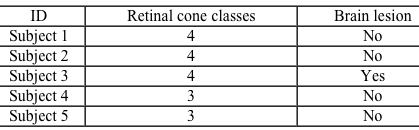 In Task 1, participants identified the colors of objects that were stationary (artificial condition) and in motion (natural condition). Under both conditions, the researcher systematically varied where the objects were presented in the subjects' visual field. Task 2 was a standardized, computer-administered color-discrimination task. Task 3 was an extensive interview that assessed the subjects' subjective experience of color.Subject 1 was able to identify more colors than the controls under all experimental conditions, and Subject 2 and Subject 3 performed marginally better than controls in some of the experimental conditions. Notably, only Subject 1 was able to verbalize her thoughts about her atypical color perception during Task 3, where she described seeing nuances in colors using words she had learned from her mother, who was also a tetrachromat and an artist. The researcher concluded that language likely plays a significant role in color perception: Without a vocabulary for the full variety of colors tetrachromats can perceive, they are limited in their perception despite their biological trait.
S. S. Deeb ©2005 John Wiley & Sons; K. A. Jameson, A. D. Winkler, and K. Goldfarb ©2016 IS&T International Symposium on Electronic Imaging.
-The study described in the passage would best be categorized as which of the following?
Figure 1 Response curves for (A) three cone types (trichromat, normal color perception); (B) four cone types (likely normal color perception); and (C) four cone types (tetrachromat, hypothesized enhanced color perception)A researcher conducted a series of tasks to assess the extent to which color perception of tetrachromatic subjects differs from that of trichromatic controls. Three women known to possess four retinal cone classes were recruited for the study. One of the women had experienced a small lesion to her right primary visual cortex the year prior. In addition, two women with normal trichromatic vision were recruited as controls (Table 1).Table 1 Characteristics of Subjects
In Task 1, participants identified the colors of objects that were stationary (artificial condition) and in motion (natural condition). Under both conditions, the researcher systematically varied where the objects were presented in the subjects' visual field. Task 2 was a standardized, computer-administered color-discrimination task. Task 3 was an extensive interview that assessed the subjects' subjective experience of color.Subject 1 was able to identify more colors than the controls under all experimental conditions, and Subject 2 and Subject 3 performed marginally better than controls in some of the experimental conditions. Notably, only Subject 1 was able to verbalize her thoughts about her atypical color perception during Task 3, where she described seeing nuances in colors using words she had learned from her mother, who was also a tetrachromat and an artist. The researcher concluded that language likely plays a significant role in color perception: Without a vocabulary for the full variety of colors tetrachromats can perceive, they are limited in their perception despite their biological trait.
S. S. Deeb ©2005 John Wiley & Sons; K. A. Jameson, A. D. Winkler, and K. Goldfarb ©2016 IS&T International Symposium on Electronic Imaging.
-The study described in the passage would best be categorized as which of the following? (Multiple Choice)
4.8/5  (106)
(106) Passage
Suicide is one of the leading causes of death in the United States. Suicide risk is associated with a variety of factors. Personal factors include childhood abuse, certain personality traits (eg, impulsiveness, aggression), and history of mental illness. Over 90% of people who attempt suicide meet diagnostic criteria for at least one psychological disorder, and suicide risk increases as the number of co-occurring disorders increases. Diagnosis severity also matters: studies suggest that individuals are at greatest risk of attempting suicide while inpatient at or newly discharged from a psychiatric hospital.Social factors also play a role in suicide. Sociologist Émile Durkheim argued that embeddedness in society is a key feature in determining the likelihood of an individual committing suicide. Specifically, the more people that depend on an individual financially, emotionally, or physically, the less likely that individual is to commit suicide. Studies suggest that suicide is also linked to religious affiliation and income level. Religious groups that place more value on community events, church attendance, and collective solidarity tend to have lower rates of suicide among members, whereas more affluent individuals are more likely to commit suicide.Economic trends have also been linked to suicide. One study retrospectively analyzed the relationship between the U.S. economy and suicide rates. It found that the overall suicide rate tends to rise during economic recessions and drop during economic expansions (Figure 1).
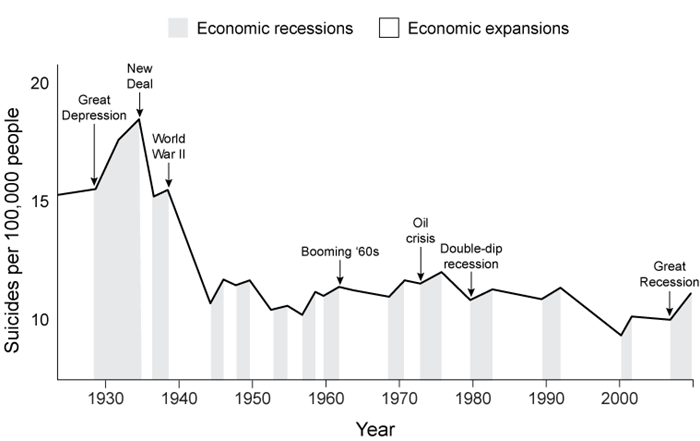 Figure 1 U.S. suicide rates compared to economic trendsFurther analysis of suicide data suggests that for every individual who successfully commits suicide, approximately 25 individuals are unsuccessful in such attempts, costing the United States billions of dollars annually in both lost wages and treatment expense. Although white, middle-aged men are the most likely cohort to successfully commit suicide, women attempt suicide three times more often than men.
-Sociologists often consider suicide a deviant behavior because suicide:
Figure 1 U.S. suicide rates compared to economic trendsFurther analysis of suicide data suggests that for every individual who successfully commits suicide, approximately 25 individuals are unsuccessful in such attempts, costing the United States billions of dollars annually in both lost wages and treatment expense. Although white, middle-aged men are the most likely cohort to successfully commit suicide, women attempt suicide three times more often than men.
-Sociologists often consider suicide a deviant behavior because suicide: (Multiple Choice)
4.8/5 (80)
(80) An older individual learns about the potential side effects of a drug she is currently taking from a pharmaceutical advertisement she sees on television. When she recalls the information later, she remembers hearing about those potential side effects from her physician, not the advertisement. This scenario illustrates which of the following?
(Multiple Choice)
4.8/5 (71)
(71) Passage
During the 1800s, the United States (U.S.) transitioned from a farming society to an industrialized society, which resulted in occupations becoming more specialized and socially labeled as "masculine" or "feminine." Today, the U.S. is experiencing an equally dramatic transition into what is referred to as a knowledge economy, marked by a decline in manufacturing and manual labor occupations, often referred to as "blue-collar" professions (which are dominated by males), and a rise in information, technology, and service sector jobs. Sociologists argue that this has led to shifting roles and expectations for both males and females in the U.S. workforce.As demand for blue-collar occupations has declined in recent decades, demand for "pink-collar" (feminine-typed) occupations has increased, particularly in health care (eg, registered nurses, health aides), but males appear to avoid pink-collar occupations for various reasons. Research indicates that socially defined gender roles may dissuade males from even considering pink-collar professions due to a perception that one's job will conflict with one's male status. Male students-in-training for pink-collar professions (eg, nursing) have a higher rate of attrition than their female classmates, which may be partly due to the unintended messages conveyed by the informal curriculum: that male students do not belong in these professions (eg, a lack of male role models, female-only images in textbooks). Of the males who enter pink-collar professions, many find that they are more quickly promoted into managerial roles (believed to be more appropriately masculine) than their equally qualified female counterparts, a phenomenon known as the glass escalator.Data show that females continue to be underrepresented in many high-paying fields, which are predominantly masculine-typed industries such as aeronautics, engineering, medical surgery, business (executive-level), and computer science/technology. Data also show that within all job categories, even those considered feminine-typed, females are still paid less than their male peers, a phenomenon sociologists call the gender pay (or wage) gap (Figure 1). The gender pay gap persists even when differences in hours worked, job choice, education, and other qualifications are taken into account. Research suggests that mothers earn less than men and women who are not mothers, a phenomenon termed the "motherhood penalty" by sociologists.
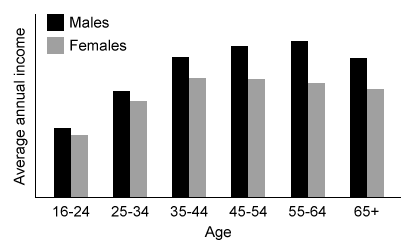 Figure 1 Gender pay gap by age
P. F. Drucker ©1994 The Atlantic Monthly; B. R. MacWilliams, B. Schmidt, and M. R. Bleich ©2013 Wolters Kluwer Health, Inc.
-Does the gender pay gap depicted in Figure 1 illustrate intersectionality?
Figure 1 Gender pay gap by age
P. F. Drucker ©1994 The Atlantic Monthly; B. R. MacWilliams, B. Schmidt, and M. R. Bleich ©2013 Wolters Kluwer Health, Inc.
-Does the gender pay gap depicted in Figure 1 illustrate intersectionality? (Multiple Choice)
4.9/5 (82)
(82) Passage
Language is a skill acquired during early childhood that continues to develop for many years. Communication using language involves multiple complex processes, including listening, speaking, comprehension, and cognition. Receptive language ("language input") involves language comprehension, while expressive language ("language output") involves the ability to produce intelligible language. In normally developing children, receptive language emerges first, followed by expressive language.To examine how age plays a role in the activation of the neurological networks involved in processing more complex language, researchers used functional magnetic resonance imaging (fMRI) to analyze how the use of receptive language generates metabolic activity in the brains of children. A total of 672 participants were divided into three groups by age: Age 4-6 (n = 219), age 7-9 (n = 224), and age 10-12 (n = 229).Participants in each group were asked to listen to pre-recorded stories while undergoing fMRI of the brain to determine if an age-related difference could be found in activated brain tissue volume during the listening task. The recorded fMRI-monitored listening portion of the experiment lasted approximately 5 minutes. Immediately following this listening exercise, fMRI monitoring was discontinued and the children were administered tests to determine comprehension of the material. None of the children had been informed that they would be taking a comprehension test prior to its actual administration.
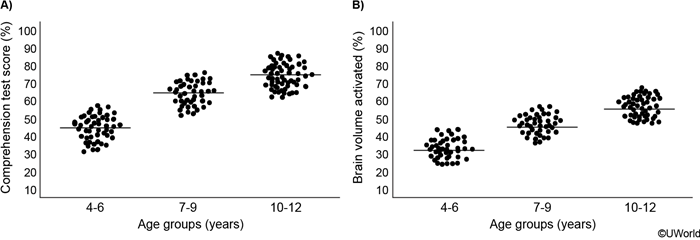 Figure 1 fMRI listening task analyzed per age group: (A) comprehension test scores, and (B) brain volume activated (Note: Solid lines represent the mean in each group.)
M. M. Berl, E. S. Duke, J. Mayo, L. R. Rosenberger, E. N. Moore, J. VanMeter, N. Bernstein Ratner, C. J. Vaidya, and W. D. Gaillard ©2010 by Elsevier, Inc.
-Which of the following explanations for the results shown in Figure 1A most aligns with the learning theory of language development?
Figure 1 fMRI listening task analyzed per age group: (A) comprehension test scores, and (B) brain volume activated (Note: Solid lines represent the mean in each group.)
M. M. Berl, E. S. Duke, J. Mayo, L. R. Rosenberger, E. N. Moore, J. VanMeter, N. Bernstein Ratner, C. J. Vaidya, and W. D. Gaillard ©2010 by Elsevier, Inc.
-Which of the following explanations for the results shown in Figure 1A most aligns with the learning theory of language development? (Multiple Choice)
4.9/5 (81)
(81) Passage
Almost 70% of Americans today are either overweight or obese, but only 34% think they weigh too much. This is in contrast to 1990, when 54% of Americans were overweight or obese and 46% reported being at least somewhat overweight. In other words, the gap between what we weigh and what we think we weigh is getting bigger.Epidemiologists argue that this discrepancy can be partly explained by the widespread resetting of norms regarding "normal weight" and "obesity." As close friends, coworkers, and family members gain weight, one's concept of what a body of acceptable weight looks like becomes modified. What was once considered overweight is now considered the norm, if only because it is so common (Figure 1).
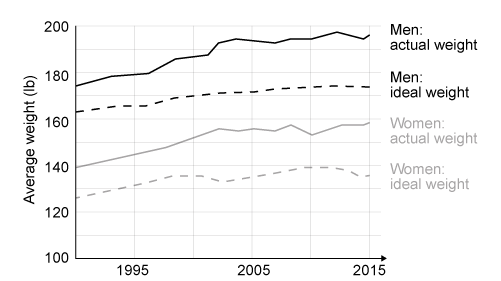 Figure 1 Actual vs. ideal weight (in pounds) for Americans, 1990-2015This sheds new light on recent efforts to stop the obesity epidemic in America. Experts have long contended that awareness efforts don't work because overweight individuals are already aware that they are overweight and that obesity causes health problems. These latest data suggest that many overweight Americans don't even realize that they are overweight. Epidemiologists are now suggesting that a more successful strategy to get Americans to lose weight might be to first succeed at convincing them that being overweight is not normal.
-According to the last paragraph, the challenge faced by epidemiologists is:
Figure 1 Actual vs. ideal weight (in pounds) for Americans, 1990-2015This sheds new light on recent efforts to stop the obesity epidemic in America. Experts have long contended that awareness efforts don't work because overweight individuals are already aware that they are overweight and that obesity causes health problems. These latest data suggest that many overweight Americans don't even realize that they are overweight. Epidemiologists are now suggesting that a more successful strategy to get Americans to lose weight might be to first succeed at convincing them that being overweight is not normal.
-According to the last paragraph, the challenge faced by epidemiologists is: (Multiple Choice)
4.8/5 (83)
(83) Passage
During the 19th century, the industrial revolution led to advances in health care in the United States that resulted in declines in the death rate followed by population growth. Around 1860, the U.S. birth rate also began to steadily decline until reaching its current plateau of about two births per woman during her lifetime. Since 1860, the U.S. birth rate has significantly increased during only one period: the post-World War II era known as the baby boom."Baby boomers," the generation of Americans born roughly between 1946 and 1964, are living longer than any prior generation, and their aging has evolving social and historical significance. By 2030, it is estimated that there will be about 61 million baby boomers in their eighties. In 1950, there were approximately seven times more producers (people age 15-64) than elderly (people age 65 and over); by 2030 there are projected to be less than three times more producers than elderly. Providing medical and social care to this aging cohort will have a major negative impact on the American economy due to the costs associated with health care and basic social services.Also impacting the U.S. population distribution is the fact that younger Americans (referred to as "millennials," born roughly between 1982 and 2004) are delaying marriage and children more so than any preceding generation, resulting in declining U.S. fertility rates. Figure 1 compares the U.S. population pyramid in 2000 to a projected population pyramid in 2030.
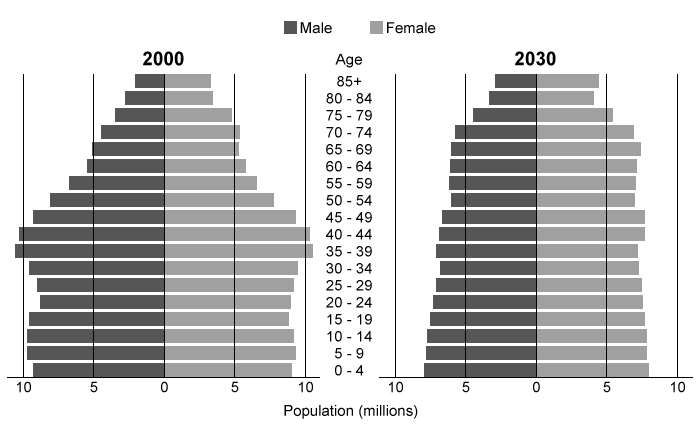 Figure 1 United States population pyramid from 2000 and a projected population pyramid for 2030
-The description of baby boomers in the second paragraph best aligns with which sociological approach to aging?
Figure 1 United States population pyramid from 2000 and a projected population pyramid for 2030
-The description of baby boomers in the second paragraph best aligns with which sociological approach to aging? (Multiple Choice)
4.8/5 (82)
(82) A study found that over time, compared to white immigrants, immigrants of color experience poorer health overall. The researchers hypothesized that these immigrants, while living in the United States, are confronted with implicit and explicit negative messages about their outsider status as both a racial "minority" and as "immigrants," which have a cumulative impact on health. This hypothesis is most related to which pair of factors?
(Multiple Choice)
4.8/5 (72)
(72) Passage
Physical modifications important for consolidating memory are particularly apparent in the hippocampus, especially a pathway called the Schaffer Collateral, which contains CA1 (cornu Ammonis) neurons that have been implicated in learning and memory. To study learning and memory in live mice, scientists use a stimulating electrode to generate brief electrical pulses on the dendrites of CA1 neurons in the Schaffer Collateral pathway and use a recording electrode to measure the excitatory postsynaptic potentials (EPSPs) in the CA1 postsynaptic neurons.In Study 1, researchers used brief low-frequency stimulations (1-5 stimuli per second) to establish a baseline response in the CA1 postsynaptic neurons. Then, the same dendrites were given a high-frequency stimulation (50-100 stimuli per second), referred to as a tetanus. The researchers discovered that the high-frequency tetanus induced an increase in the response in postsynaptic CA1 neurons that was long-lasting. For the control, the researchers established a baseline in a second set of CA1 neurons in the same region but did not give a high-frequency tetanus (Figure 1).
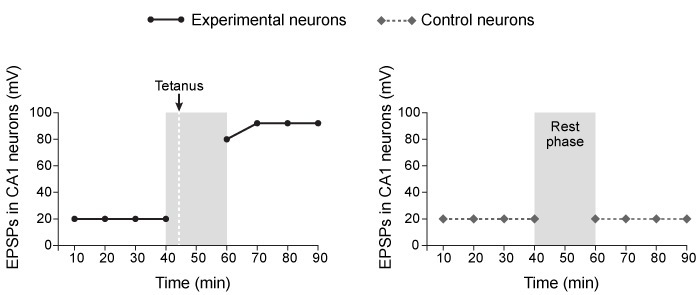 Figure 1 CA1 neuron response after a brief tetanus (experimental) or no tetanus (control)In a second behavioral study, mice were housed in either a standard cage (control) or a cage with an enhanced learning environment, including toys and access to a running wheel (experimental condition). For the first 12 days, both groups of mice received injections of a dye that is incorporated into newly synthesized DNA, thereby providing a biomarker of neurogenesis.Following 30 days in their respective environments, all mice were tested each day for one week in the Morris Water Maze, a test that measures spatial learning and memory consolidation. Results showed that mice in the experimental condition demonstrated greater improvement on Morris Water Maze performance compared to controls. When hippocampi were examined, the results revealed that mice in the experimental condition had a greater number of dye-labeled cells than did the controls.
W. C. Abraham, B. Logan, J. M. Greenwood, and M. Dragunow ©2002 The Society of Neuroscience, and H. van Praag, B. R. Christie, T. J. Sejnowski, and F. H. Gage ©1999 National Academy of Sciences.
-Which of the following conclusions regarding the neuroplasticity of CA1 neurons in the experimental condition is best supported?
Figure 1 CA1 neuron response after a brief tetanus (experimental) or no tetanus (control)In a second behavioral study, mice were housed in either a standard cage (control) or a cage with an enhanced learning environment, including toys and access to a running wheel (experimental condition). For the first 12 days, both groups of mice received injections of a dye that is incorporated into newly synthesized DNA, thereby providing a biomarker of neurogenesis.Following 30 days in their respective environments, all mice were tested each day for one week in the Morris Water Maze, a test that measures spatial learning and memory consolidation. Results showed that mice in the experimental condition demonstrated greater improvement on Morris Water Maze performance compared to controls. When hippocampi were examined, the results revealed that mice in the experimental condition had a greater number of dye-labeled cells than did the controls.
W. C. Abraham, B. Logan, J. M. Greenwood, and M. Dragunow ©2002 The Society of Neuroscience, and H. van Praag, B. R. Christie, T. J. Sejnowski, and F. H. Gage ©1999 National Academy of Sciences.
-Which of the following conclusions regarding the neuroplasticity of CA1 neurons in the experimental condition is best supported? (Multiple Choice)
4.9/5 (82)
(82) At an inpatient psychiatric hospital, patients are encouraged to engage in certain behaviors through reinforcement. Each time a patient engages in a desired behavior, they are given a secondary reinforcer, which can be exchanged for more attractive rewards. This scenario illustrates which of the following?
(Multiple Choice)
4.8/5 (81)
(81) Passage
Until recently, deviance has generally been conceptualized as negative. Positive deviance (PD) is used to describe the atypical behaviors exhibited by some individuals that result in superior outcomes when compared with others in the group. Despite having similar access to limited resources, some people adopt novel strategies to problem-solve much better than their peers. For example, rural Vietnamese villages in the 1990s had child malnutrition rates approaching 70%. Despite this, certain villagers were able to nourish their children by developing innovative strategies that defied social norms. These villagers fed their children plant parts not traditionally consumed (such as the leaves of the sweet potato plant) and fed them three or four times a day (instead of the customary two meals a day). In other words, despite a lack of conventionally accepted means, these villagers engaged in alternative behaviors, or PD, to meet the societal goal of providing adequate nourishment to their children.Research into PD has focused on using these innovative individuals to catalyze change in their communities. A pilot study attempting to spread the techniques of these initial PD villagers within their own community was successful: Childhood malnutrition dropped by over 80% in two years. However, the community-based approach to changing health behaviors appears to be crucial: When an international aid organization attempted to implement a larger program based on these same practices, villagers resisted the imposed changes and it was unsuccessful.Another study assessed how PD can improve outcomes in health care settings. Patients with difficult-to-manage chronic diseases often hold deeply entrenched beliefs about how to handle their illnesses and ignore alternative strategies. PD patients, referred to as "bright spotters" in the study, are an exception. They have successfully managed to control their complex illnesses using innovative approaches such as diet modifications and unique coping mechanisms. Similar to the pilot study with Vietnamese villagers, preliminary results suggest that peer-led group activities may best allow bright spotters to teach fellow patients how to effectively manage their illnesses.
-PD is an example of which type of capital that can be possessed by an individual?
(Multiple Choice)
4.9/5 (70)
(70) Passage
Poverty may be the most foundational risk factor for poor health outcomes. Although poverty thresholds are calculated in a variety of ways, many international organizations define poverty thresholds as 50% of the median household income in a given country. Since the United States Census Bureau first began publishing an official U.S. poverty estimate in the 1960s, the percentage of the population living in poverty has fluctuated between roughly 10% and 15%. Extensive research shows a correlation between social stratification and health outcomes, with better outcomes corresponding to higher strata.Concentration of PovertyAccording to U.S. Census Bureau data, roughly 1 in 7 Americans is living in poverty, with almost 14 million residing in "high-poverty" neighborhoods (40% or more of residents below the federally defined poverty threshold), nearly double the amount since 1990. High-poverty neighborhoods also tend to have the highest rates of violent crime, so living in these neighborhoods poses both immediate (eg, physical assault) and long-term health threats, as living in an unsafe neighborhood acts as a chronic environmental stressor.Poverty and IsolationPoverty also prevents or limits access to many productive social activities, such as working, buying goods and services, community and political involvement, and engagement with social networks. The most impoverished members of society are often marginalized and may engage with mainstream society very little, if at all.Transmission of PovertyPoverty is transmitted across generations; numerous studies have found that individuals born into poverty are more likely to raise their own children in poverty. A longitudinal study of 100 households concluded that transmission of poverty occurs because lower-income parents lack economic resources, social connections, and knowledge about the education system, not because they differ from higher-income parents in wanting to help their children succeed. Experts also suggest that the education system perpetuates income disparities; schools in high-income neighborhoods have the most funding, best teachers, and highest graduation rates, whereas schools in low-income neighborhoods face numerous obstacles to obtaining supplies, retaining qualified teachers, and preventing student attrition.
T. Chin & M. Phillips, "Social Reproduction and Child-rearing Practices:Social Class, Children's Agency, and the Summer Activity Gap." ©2004 SAGE Publications
-The third paragraph most directly describes the relationship between poverty and:
(Multiple Choice)
4.8/5 (79)
(79) Passage
Jake and his classmate Michael both grew up in a high-crime public housing project in a poverty-stricken neighborhood in a large urban area. Both children lived in single-parent households and had almost no relationship with their fathers. They performed poorly in school and frequently got in trouble with authority figures. Neither completed high school and both had been arrested by the time they turned 18.At this point their trajectories begin to diverge. By age 27, Jake had been in and out of prison three times, had fathered four children by four different women, and was abusing drugs and alcohol daily. On the other hand, Michael had earned a general equivalency diploma, was a general manager at a factory, was married with a biological son and adopted daughter, and owned a home in the suburbs.Jake and Michael both participated in a study about resilience-the ability to prevail in the face of threats to adequate psychosocial development. This study recruited 81 adult men who as children had lived in the same public housing project between 1976 and 1980. The investigators categorized participants into one of two groups based on their adult outcomes-low resilience and high resilience. All the men reported family difficulties while growing up in crime and poverty. The low-resilience men (n = 69) were significantly more likely to report drug and alcohol use and current or prior imprisonment, whereas the high-resilience men (n = 12) were all employed, and most were married homeowners.The study's primary finding was that high-resilience men received more social support outside their immediate families while growing up than did low-resilience men. Results also suggested that high-resilience men tended to have calmer, more optimistic dispositions, whereas low-resilience men were more anxious, disagreeable, and pessimistic.
-The type of environment in which Jake and Michael grew up is most directly defined by:
(Multiple Choice)
4.7/5 (84)
(84) Passage
For decades psychologists have known that people tend to execute tasks differently when alone compared to when in the presence of other people.In Study 1, researchers analyzed records of bicycle racers' times both during competitions and when racing alone against the clock. They found that the fastest times were recorded during competitions, particularly larger races with over 100 cyclists. This finding was initially attributed to the competitive nature of the races, but later studies suggest performance improves when in the presence of other people, even outside of competition.In Study 2, researchers conducted an experiment based on the idea that the mere presence of others impacts performance. This study involved a simple task (ie, getting dressed), which was performed either alone or with an audience. This task was chosen because it was familiar and routine, without clear standards of good or bad performance. Furthermore, the participants had no idea that this task was of interest to the experimenters.Forty-five male undergraduate students were recruited for Study 2. The researchers informed the participants that they were required to remove their socks and shoes and replace them with unfamiliar ones and then put on a lab coat, surgical mask, and protective eye glasses (hard task). After a 10-minute wait, the participants were informed that the study was called off because the remaining participants failed to arrive and they could put back on their familiar clothes (easy task).All participants in Study 2 were randomly assigned to one of three experimental conditions. In the audience condition, each participant performed both tasks in a room with an attentive confederate watching. In the incidental audience condition, a confederate sat facing away from each participant while the participant performed both tasks. The third group of participants performed both tasks alone (control condition). Participants' behavior was observed and timed by an inconspicuous researcher. It was found that, compared to controls, participants performed more quickly under both experimental conditions when putting back on their familiar clothing, and performed more slowly when dressing in unfamiliar clothing.
Adapted from H. Markus ©1977 Elsevier B.V.
-Both studies rely on which type of behavioral attribution?
(Multiple Choice)
4.9/5 (79)
(79) Passage
Across the lifespan, mental and physical health depends on adequate sleep. Extensive research suggests that sleep needs and characteristics change throughout an individual's life (Figure 1).
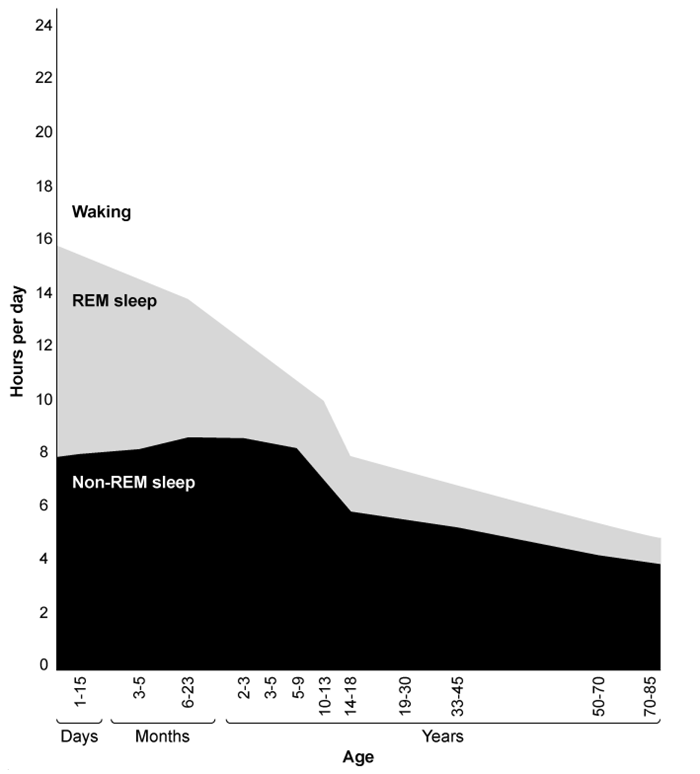 Figure 1 Average hours of rapid eye movement (REM) and non-REM sleep for different age groups across the lifespanChronic sleep deprivation acts as a physiological stressor and can have a multitude of short- and long-term negative health consequences. Studies show that over 30% of adults get less than the recommended minimum of 7 hours of sleep per night, putting them at greater risk for metabolic disorders (eg, obesity, diabetes), cardiovascular disease (eg, high blood pressure, stroke), and emotional disorders (eg, anxiety, depression). Sleep deprivation is also associated with impaired cognitive functioning, decreased work performance, and an increased risk of accidents.However, the guideline that adults sleep at least 7 hours per night does not account for the considerable variation in individual sleep needs. Research suggests that some individuals, known as "long sleepers," require an average daily sleep duration of more than 9 hours, while "short sleepers" require an average daily sleep duration of less than 6 hours. One study found that biological night duration (established by one's circadian pacemaker or "master clock") appears to be a few hours shorter for short sleepers as compared to long sleepers. Other studies suggest that short sleepers regularly sleep less than 7 hours without any apparent negative consequences due to one or more genetic mutations, such as a mutation on the DEC2 gene (also known as BHLHE41), which codes for a transcription factor involved in regulating circadian rhythms.
-What type of study design is most appropriate to investigate whether the number of hours slept per night predicts the number of health care provider visits for those with and without the DEC2 gene mutation?
Figure 1 Average hours of rapid eye movement (REM) and non-REM sleep for different age groups across the lifespanChronic sleep deprivation acts as a physiological stressor and can have a multitude of short- and long-term negative health consequences. Studies show that over 30% of adults get less than the recommended minimum of 7 hours of sleep per night, putting them at greater risk for metabolic disorders (eg, obesity, diabetes), cardiovascular disease (eg, high blood pressure, stroke), and emotional disorders (eg, anxiety, depression). Sleep deprivation is also associated with impaired cognitive functioning, decreased work performance, and an increased risk of accidents.However, the guideline that adults sleep at least 7 hours per night does not account for the considerable variation in individual sleep needs. Research suggests that some individuals, known as "long sleepers," require an average daily sleep duration of more than 9 hours, while "short sleepers" require an average daily sleep duration of less than 6 hours. One study found that biological night duration (established by one's circadian pacemaker or "master clock") appears to be a few hours shorter for short sleepers as compared to long sleepers. Other studies suggest that short sleepers regularly sleep less than 7 hours without any apparent negative consequences due to one or more genetic mutations, such as a mutation on the DEC2 gene (also known as BHLHE41), which codes for a transcription factor involved in regulating circadian rhythms.
-What type of study design is most appropriate to investigate whether the number of hours slept per night predicts the number of health care provider visits for those with and without the DEC2 gene mutation? (Multiple Choice)
4.9/5 (82)
(82) Passage
Poverty may be the most foundational risk factor for poor health outcomes. Although poverty thresholds are calculated in a variety of ways, many international organizations define poverty thresholds as 50% of the median household income in a given country. Since the United States Census Bureau first began publishing an official U.S. poverty estimate in the 1960s, the percentage of the population living in poverty has fluctuated between roughly 10% and 15%. Extensive research shows a correlation between social stratification and health outcomes, with better outcomes corresponding to higher strata.Concentration of PovertyAccording to U.S. Census Bureau data, roughly 1 in 7 Americans is living in poverty, with almost 14 million residing in "high-poverty" neighborhoods (40% or more of residents below the federally defined poverty threshold), nearly double the amount since 1990. High-poverty neighborhoods also tend to have the highest rates of violent crime, so living in these neighborhoods poses both immediate (eg, physical assault) and long-term health threats, as living in an unsafe neighborhood acts as a chronic environmental stressor.Poverty and IsolationPoverty also prevents or limits access to many productive social activities, such as working, buying goods and services, community and political involvement, and engagement with social networks. The most impoverished members of society are often marginalized and may engage with mainstream society very little, if at all.Transmission of PovertyPoverty is transmitted across generations; numerous studies have found that individuals born into poverty are more likely to raise their own children in poverty. A longitudinal study of 100 households concluded that transmission of poverty occurs because lower-income parents lack economic resources, social connections, and knowledge about the education system, not because they differ from higher-income parents in wanting to help their children succeed. Experts also suggest that the education system perpetuates income disparities; schools in high-income neighborhoods have the most funding, best teachers, and highest graduation rates, whereas schools in low-income neighborhoods face numerous obstacles to obtaining supplies, retaining qualified teachers, and preventing student attrition.
T. Chin & M. Phillips, "Social Reproduction and Child-rearing Practices:Social Class, Children's Agency, and the Summer Activity Gap." ©2004 SAGE Publications
-The conclusion drawn from the longitudinal study described in the final paragraph would be best supported by a follow-up study that found a:
(Multiple Choice)
4.9/5 (71)
(71) Passage
Human emotions play an important role in individual and group behaviors, influencing both prosocial and antisocial exchanges. Complex and personal, emotions are difficult to study. Although physiological indicators of emotion, such as pulse or skin conductance, are easy to measure, the subjective experience of emotion is much harder to assess.Further complicating the issue, there is no universally accepted theory regarding the role of physiological processes in the experience of emotion. Common sense would suggest that emotion is experienced first, followed by physiological and behavioral events: we feel scared and then break into a cold sweat. However, one of the earliest modern theories of emotion proposed just the opposite-emotion occurs after a physiological response, not before: we break into a cold sweat and then feel scared.Males and females also appear to experience emotion differently; however, it is unclear whether this is the result of nature or nurture. Studies using functional magnetic resonance imaging (fMRI) suggest a biological difference. Data suggest that compared to females, males demonstrated greater activation of the amygdala while viewing images meant to induce fear, anger, or sexual arousal, but when asked to suppress negative emotions, females demonstrated greater activation of the prefrontal cortex than males. Research also suggests that females may demonstrate more empathy; when watching another person experience an emotion (eg, pain), females show more neural activation of the same areas that are active during the personal experience of that emotion.Social factors also appear to play an important role in gender differences. One study, which assessed how boys and girls express emotion from infancy to adolescence, concluded that gender differences appear to emerge around age 2-4 and become more pronounced with age. The researchers hypothesized that children learn gendered behavior regarding emotion through social learning. Cultural differences in the expression of emotion lend support to this argument: several studies suggest that, in general, men are expected to express less emotion than women, with the exception of anger.
T. Singer and C. Lamm ©2009 by New York Academy of Sciences, and T. M. Chaplin and A. Aldao ©2012 by American Psychological Association, and S. R. Wester, D. L. Vogel, P. K. Pressly, and M. Heesacker ©2002 by American Psychological Association
-Which of the following theories is most consistent with the theory described in the second paragraph?
(Multiple Choice)
4.7/5 (73)
(73) To investigate attributions related to exercise, an experimenter interviewed primary care physicians (PCPs) about their own exercise habits and their patients' reported exercise habits. The experimenter found that PCPs were more likely to attribute their own lack of exercise to factors such as being too busy, but were more likely to attribute their patients' lack of exercise to factors such as laziness. These results best illustrate the:
(Multiple Choice)
4.9/5 (91)
(91) An employee complies with a supervisor's request to engage in behavior that the employee knows is unethical. Does this scenario illustrate obedience?
(Multiple Choice)
4.9/5 (83)
(83) Passage
People tend to believe that they are less vulnerable to negative outcomes or events than others. This is known as the self-positivity bias, a specific type of attributional bias in social psychology. Health psychologists suggest that the self-positivity bias may prevent people from being persuaded to take precautionary measures against certain health risks because behavior change is predicated on the perceived risk of contracting the disease in question. If a persuasive message cannot overcome the self-positivity bias, then behavior change is unlikely.In Study 1, researchers hypothesized that when told that an infectious disease can be contracted by engaging in likely or common behavior, people will experience less self-positivity bias than when told the disease can be contracted through unlikely or uncommon behavior. Ninety participants were randomly assigned to a likely/common group, an unlikely/uncommon group, and a control group. All participants read the same paragraph about the health consequences of viral meningitis and how it is contracted. For the likely/common group, the paragraph included, "Viral meningitis is caused by enteroviruses (common virus causing 'stomach flulike' symptoms) and can be contracted through close contact (touching, kissing) with an infected person." For the unlikely/uncommon group, the paragraph included, "Viral meningitis is caused by lymphocytic choriomeningitis virus and can be contracted through coming into contact with the blood, feces, urine, or saliva of an infected mouse." All participants were asked to estimate the likelihood of contracting the disease themselves and the likelihood for the average person (Table 1).Table 1 Mean Estimated Probability of Contracting Viral Meningitis, by Group
 In Study 2, 120 participants read a newspaper article about hepatitis C and were then randomly assigned to one of four experimental conditions, each receiving additional information about either two or eight relatively uncommon behaviors (eg, getting a tattoo, sharing a needle) or relatively common behaviors (eg, sharing a toothbrush, not bandaging a cut) that could spread the disease. Participants rated their concern for contracting hepatitis C on a scale of 1 (not at all concerned) to 7 (most concerned) (Table 2).Table 2 Mean Concern of Contracting Hepatitis C Score, by Group and Condition
 -The results in Table 1 can also be explained by which of the following?
In Study 2, 120 participants read a newspaper article about hepatitis C and were then randomly assigned to one of four experimental conditions, each receiving additional information about either two or eight relatively uncommon behaviors (eg, getting a tattoo, sharing a needle) or relatively common behaviors (eg, sharing a toothbrush, not bandaging a cut) that could spread the disease. Participants rated their concern for contracting hepatitis C on a scale of 1 (not at all concerned) to 7 (most concerned) (Table 2).Table 2 Mean Concern of Contracting Hepatitis C Score, by Group and Condition
-The results in Table 1 can also be explained by which of the following? (Multiple Choice)
4.8/5 (82)
(82) 
Filters
- Essay(0)
- Multiple Choice(0)
- Short Answer(0)
- True False(0)
- Matching(0)