



 Chat with AI
Exam 1: Behavioral Sciences

Exam 1: Behavioral Sciences343 Questions
Exam 2: Biochemistry307 Questions
Exam 3: Biology319 Questions
Exam 4: Critical Analysis & Reasoning Skills358 Questions
Exam 5: General Chemistry317 Questions
Exam 6: Organic Chemistry191 Questions
Exam 7: Physics200 Questions
Select questions type


Which of the following is the LEAST concerned with the role of nonverbal communication in influencing the social behavior of individuals?
(Multiple Choice)
4.8/5  (73)
(73) Passage
Until recently, deviance has generally been conceptualized as negative. Positive deviance (PD) is used to describe the atypical behaviors exhibited by some individuals that result in superior outcomes when compared with others in the group. Despite having similar access to limited resources, some people adopt novel strategies to problem-solve much better than their peers. For example, rural Vietnamese villages in the 1990s had child malnutrition rates approaching 70%. Despite this, certain villagers were able to nourish their children by developing innovative strategies that defied social norms. These villagers fed their children plant parts not traditionally consumed (such as the leaves of the sweet potato plant) and fed them three or four times a day (instead of the customary two meals a day). In other words, despite a lack of conventionally accepted means, these villagers engaged in alternative behaviors, or PD, to meet the societal goal of providing adequate nourishment to their children.Research into PD has focused on using these innovative individuals to catalyze change in their communities. A pilot study attempting to spread the techniques of these initial PD villagers within their own community was successful: Childhood malnutrition dropped by over 80% in two years. However, the community-based approach to changing health behaviors appears to be crucial: When an international aid organization attempted to implement a larger program based on these same practices, villagers resisted the imposed changes and it was unsuccessful.Another study assessed how PD can improve outcomes in health care settings. Patients with difficult-to-manage chronic diseases often hold deeply entrenched beliefs about how to handle their illnesses and ignore alternative strategies. PD patients, referred to as "bright spotters" in the study, are an exception. They have successfully managed to control their complex illnesses using innovative approaches such as diet modifications and unique coping mechanisms. Similar to the pilot study with Vietnamese villagers, preliminary results suggest that peer-led group activities may best allow bright spotters to teach fellow patients how to effectively manage their illnesses.
-The first paragraph describes how certain villagers engaged in initial acts of positive deviance (PD) to nourish their children. This description of PD engaged in by these villagers is most applicable to which of the following?
(Multiple Choice)
4.8/5 (63)
(63) Passage
Twenty-two adults (mean age 49.5) were recruited to participate in a study they were told was to assess beliefs about cancer risk. All participants were in good health; neither they nor any first-degree relatives had been diagnosed with cancer.In the first phase of the study, participants viewed a brief video about the epidemiology and prevalence of cancer in the United States, and then were randomly assigned to one of four groups and asked to estimate the probability that they would develop cancer in their lifetimes. Group 1 consisted of seven study participants who each arrived at their estimates independently and without discussion. Group 2 consisted of seven study participants who were asked to agree on a group estimate after discussion (with unlimited time). Group 3 contained seven members who were also asked to arrive at a consensus estimate after discussion (with unlimited time): Six were study participants and the seventh was a confederate who suggested a very low estimate. Group 4 likewise contained seven members: Two were study participants and the other five were confederates who each suggested low estimates. Group 4 members were limited to 5 minutes of discussion and then asked to arrive at individual estimates.For the second phase of the study, four members of Group 1 who arrived at independent estimates of 20% or lower were put into a new group (Group 5), then were given unlimited time to discuss their initial estimates and arrive at a group estimate (Table 1).Table 1 Group Composition, Protocol, and Estimate of Developing Cancer in One's Lifetime
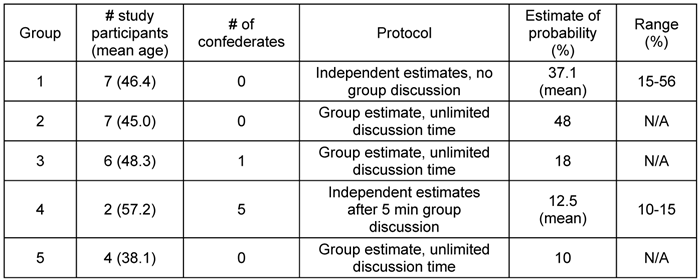 S. E. Asch ©1956 American Psychological Association.
-Normative social influence is most likely to arise in the group:
S. E. Asch ©1956 American Psychological Association.
-Normative social influence is most likely to arise in the group: (Multiple Choice)
4.7/5 (87)
(87) Passage
Major depression is a mood disorder that affects nearly 7% of the American population and is the most common cause of disability worldwide. Standard treatment typically involves antidepressant medication alone, although a combination of antidepressant medication and psychological treatment, such as psychotherapy or cognitive-behavioral therapy, is often more effective. However, because depression has genetic, environmental, and psychological contributing factors, treatment can be challenging. Approximately 10% of those suffering from depression have treatment-resistant depression (TRD) that does not respond to standard treatment.A number of treatment options for those with TRD target the functioning of the nervous system. Deep-brain stimulation (DBS), which is used to treat Parkinson disease, has also been investigated as a treatment for TRD. DBS involves implanting a device in the brain that sends electrical impulses to a specific area. Although the mechanism by which DBS alleviates depressive symptoms is unclear, neurostimulation provided by DBS is thought to disrupt dysfunctional patterns of electrical activity in local areas and connected brain regions.A meta-analysis reviewed the data from several studies that used different brain regions as DBS targets in the treatment of TRD. Table 1 shows the percentage of TRD patients who underwent DBS and showed clinical responsiveness and remission of depression. Clinical response was defined as a 50% reduction in scores on a measure of depression. Various scales were used in the studies, including different versions of the Hamilton Depression Rating Scale (HDRS) and Montgomery-Asberg Depression Rating Scale (MADRS). Remission of depression was defined as a score that fell below a predetermined threshold.Table 1 Percentage of TRD Patients Who Showed Clinical Response and Remission With DBS Treatment
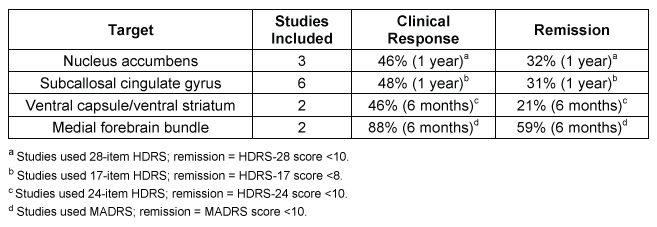 -Stimulation of the nucleus accumbens would be expected to alleviate which of the following symptoms of depression?
 (Multiple Choice)
4.9/5 (73)
(73) Passage
Before memories have been consolidated they are considered "labile," or unstable and easily altered. Sleep is theorized to be essential to the process of memory consolidation, though the mechanisms for this are still under investigation. Rapid eye movement (REM) sleep has long been assumed to be the sleep stage most important for overall memory consolidation, but recent research suggests that different types of memory may be consolidated during different sleep stages. Procedural memories appear to be primarily consolidated during REM sleep while declarative memories appear to be primarily consolidated during slow-wave sleep (SWS). Sleep duration, sleep regularity, and timing of sleep all contribute to the proportions of REM and SWS, so these factors also play an important role in memory consolidation processes.An experiment was performed at a large state university to investigate the relationship between sleep and learning in college students. Researchers screened potential participants with a sleep habits questionnaire. Those who reported having a regular sleep schedule were included in the study (N = 100) and given a vocabulary knowledge pretest. Participants were then randomly assigned to 1 of 4 experimental groups, each containing 25 students. During the learning phase (L), each student was asked to memorize a set of 10 common toy objects (eg, car, ball, stuffed animal, blocks) and 10 vocabulary definitions that the student had labeled as "unknown" during the pretest. Images of the toy objects were presented in a sequence, one at a time, for 5 seconds each; the 10 vocabulary definitions were listed on a sheet that students were allowed to study for 10 minutes. During the testing phase (T), students were asked to recall the objects in any order and define the vocabulary words (Figure 1).
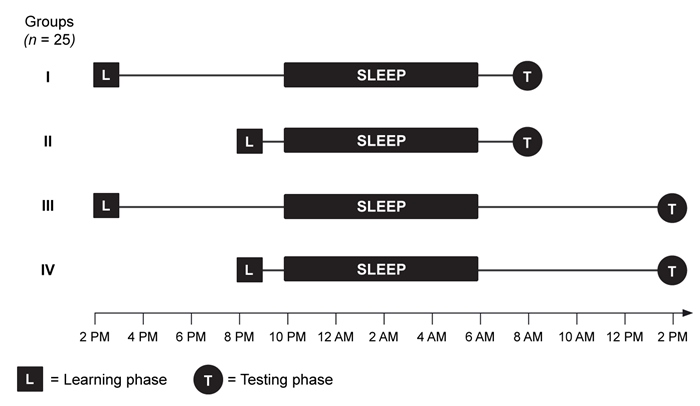 Figure 1 Experimental design for each of the 4 groupsResults were reported as the average recall accuracy for the objects and vocabulary definitions, by group (Table 1). Participants were then given a survey about the techniques they used when attempting to remember the toy objects and vocabulary definitions. Some students reported associating the definitions and objects with one another. For instance, one student reported that she related the words "plucky" (meaning brave) and "tocsin" (meaning an alarm) to an image of a toy fire truck, making it easier to recall the toy object and both associated vocabulary definitions.Table 1 Average Recall Accuracy, per Group
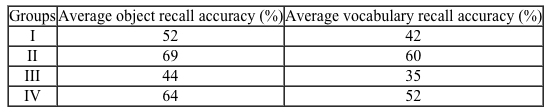 -If the students who related the toy objects and definitions to each other had higher-than-average recall scores, to which of the following might this be attributed?I. Spreading activationII. Semantic networksIII. Source monitoring
Figure 1 Experimental design for each of the 4 groupsResults were reported as the average recall accuracy for the objects and vocabulary definitions, by group (Table 1). Participants were then given a survey about the techniques they used when attempting to remember the toy objects and vocabulary definitions. Some students reported associating the definitions and objects with one another. For instance, one student reported that she related the words "plucky" (meaning brave) and "tocsin" (meaning an alarm) to an image of a toy fire truck, making it easier to recall the toy object and both associated vocabulary definitions.Table 1 Average Recall Accuracy, per Group
-If the students who related the toy objects and definitions to each other had higher-than-average recall scores, to which of the following might this be attributed?I. Spreading activationII. Semantic networksIII. Source monitoring (Multiple Choice)
4.8/5 (82)
(82) Passage
The highly addictive nature of cigarettes can be partly explained by how nicotine, the primary addictive ingredient, is administered. The fastest route of administration for most drugs is through inhalation; cigarette smoking results in the transmission of nicotine to the brain in about 15 seconds. In the brain, nicotine activates the nicotinic acetylcholine receptors, which stimulate the brain's reward pathway and produce mild feelings of euphoria. Those who quit smoking often relapse due to stress, weight gain, and withdrawal symptoms such as cravings and irritability. Of those who attempt to quit without formal treatment, only 3%-5% remain abstinent after a year.Research suggests that mindfulness meditation-based programs can be an effective strategy to quit smoking. Mindfulness is an aspect of meditation that involves cultivating a nonjudgmental awareness of the thoughts, emotions, and sensations arising in the present moment.For one study, researchers randomly assigned 88 smokers to either Mindfulness Training (MT) or the Freedom From Smoking (FFS) intervention developed by the American Lung Association. Both groups participated in 90-minute group training sessions twice a week for four weeks. The FFS intervention educated participants on the negative health consequences of smoking, coping strategies for cravings, and the development of healthy lifestyle habits. The MT intervention taught mindfulness meditation techniques as a way of gaining awareness and acceptance of the cognitive, emotional, and physical components of cravings. The number of cigarettes smoked per day and self-reported abstinence, as verified by exhaled carbon monoxide, were measured at the end of treatment and at a 17-week follow-up for participants in each group (Figure 1).
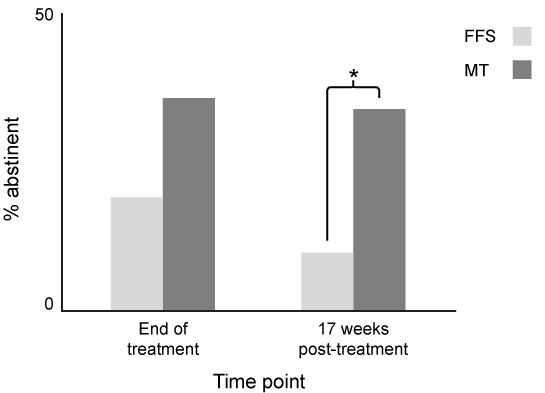 Figure 1 Percentage of participants in each group abstinent at the end of treatment and at 17-week follow-up (* indicates p < 0.05)
-Self-administration of nicotine in animal models is most likely suppressed by means of:
Figure 1 Percentage of participants in each group abstinent at the end of treatment and at 17-week follow-up (* indicates p < 0.05)
-Self-administration of nicotine in animal models is most likely suppressed by means of: (Multiple Choice)
4.7/5 (88)
(88) Which of the following best illustrates a normative organization?
(Multiple Choice)
4.9/5 (65)
(65) Passage
The highly addictive nature of cigarettes can be partly explained by how nicotine, the primary addictive ingredient, is administered. The fastest route of administration for most drugs is through inhalation; cigarette smoking results in the transmission of nicotine to the brain in about 15 seconds. In the brain, nicotine activates the nicotinic acetylcholine receptors, which stimulate the brain's reward pathway and produce mild feelings of euphoria. Those who quit smoking often relapse due to stress, weight gain, and withdrawal symptoms such as cravings and irritability. Of those who attempt to quit without formal treatment, only 3%-5% remain abstinent after a year.Research suggests that mindfulness meditation-based programs can be an effective strategy to quit smoking. Mindfulness is an aspect of meditation that involves cultivating a nonjudgmental awareness of the thoughts, emotions, and sensations arising in the present moment.For one study, researchers randomly assigned 88 smokers to either Mindfulness Training (MT) or the Freedom From Smoking (FFS) intervention developed by the American Lung Association. Both groups participated in 90-minute group training sessions twice a week for four weeks. The FFS intervention educated participants on the negative health consequences of smoking, coping strategies for cravings, and the development of healthy lifestyle habits. The MT intervention taught mindfulness meditation techniques as a way of gaining awareness and acceptance of the cognitive, emotional, and physical components of cravings. The number of cigarettes smoked per day and self-reported abstinence, as verified by exhaled carbon monoxide, were measured at the end of treatment and at a 17-week follow-up for participants in each group (Figure 1).
Figure 1 Percentage of participants in each group abstinent at the end of treatment and at 17-week follow-up (* indicates p < 0.05)
-Assuming that stress is a major contributing factor to smoking relapse rates, the benefit of meditation in smoking abstinence is best predicted by:
Figure 1 Percentage of participants in each group abstinent at the end of treatment and at 17-week follow-up (* indicates p < 0.05)
-Assuming that stress is a major contributing factor to smoking relapse rates, the benefit of meditation in smoking abstinence is best predicted by: (Multiple Choice)
4.9/5 (79)
(79) Passage
People tend to believe that they are less vulnerable to negative outcomes or events than others. This is known as the self-positivity bias, a specific type of attributional bias in social psychology. Health psychologists suggest that the self-positivity bias may prevent people from being persuaded to take precautionary measures against certain health risks because behavior change is predicated on the perceived risk of contracting the disease in question. If a persuasive message cannot overcome the self-positivity bias, then behavior change is unlikely.In Study 1, researchers hypothesized that when told that an infectious disease can be contracted by engaging in likely or common behavior, people will experience less self-positivity bias than when told the disease can be contracted through unlikely or uncommon behavior. Ninety participants were randomly assigned to a likely/common group, an unlikely/uncommon group, and a control group. All participants read the same paragraph about the health consequences of viral meningitis and how it is contracted. For the likely/common group, the paragraph included, "Viral meningitis is caused by enteroviruses (common virus causing 'stomach flulike' symptoms) and can be contracted through close contact (touching, kissing) with an infected person." For the unlikely/uncommon group, the paragraph included, "Viral meningitis is caused by lymphocytic choriomeningitis virus and can be contracted through coming into contact with the blood, feces, urine, or saliva of an infected mouse." All participants were asked to estimate the likelihood of contracting the disease themselves and the likelihood for the average person (Table 1).Table 1 Mean Estimated Probability of Contracting Viral Meningitis, by Group
 In Study 2, 120 participants read a newspaper article about hepatitis C and were then randomly assigned to one of four experimental conditions, each receiving additional information about either two or eight relatively uncommon behaviors (eg, getting a tattoo, sharing a needle) or relatively common behaviors (eg, sharing a toothbrush, not bandaging a cut) that could spread the disease. Participants rated their concern for contracting hepatitis C on a scale of 1 (not at all concerned) to 7 (most concerned) (Table 2).Table 2 Mean Concern of Contracting Hepatitis C Score, by Group and Condition
 -Which of the following cognitive biases is most analogous to the self-positivity bias?
In Study 2, 120 participants read a newspaper article about hepatitis C and were then randomly assigned to one of four experimental conditions, each receiving additional information about either two or eight relatively uncommon behaviors (eg, getting a tattoo, sharing a needle) or relatively common behaviors (eg, sharing a toothbrush, not bandaging a cut) that could spread the disease. Participants rated their concern for contracting hepatitis C on a scale of 1 (not at all concerned) to 7 (most concerned) (Table 2).Table 2 Mean Concern of Contracting Hepatitis C Score, by Group and Condition
-Which of the following cognitive biases is most analogous to the self-positivity bias? (Multiple Choice)
4.8/5 (74)
(74) Passage
Lucid dreaming occurs when a person becomes consciously aware of a dream and uses executive decision-making skills to critically analyze the dream environment. Lucid dreamers are thus able to control certain aspects of their dreams, an ability that may occur intentionally, through practice, or unintentionally, usually after having noticed something bizarre or unrealistic in the dream. A lucid dreamer might choose to experience the sensation of flying, explore a custom-designed landscape, carry out a predetermined task, or practice a skill. Estimates suggest that about half the population has had a lucid dream, and about 10%-20% of people are considered frequent lucid dreamers experiencing such dreams regularly (at least once a month).In one study, researchers asked participants to perform a difficult visuomotor task that involved throwing an object through a small moving target. Participants were organized into three groups, one group of frequent lucid dreamers and two groups of nonlucid dreamers. All three groups attempted the visuomotor task at midday in the research lab, before (pretest) and after (posttest) a single night's sleep at home. Lucid dreamers were asked to only practice the visuomotor task overnight during their lucid dream ("lucid practice" group). One group of nonlucid dreamers practiced the task in the lab, right after the pretest ("waking practice" group), and another group of nonlucid dreamers performed the pretest and posttest without practicing between the tests ("no practice" group). The average improvement of hits (the number of times each participant successfully threw the object through the target) from pretest to posttest for each group is shown in Figure 1.
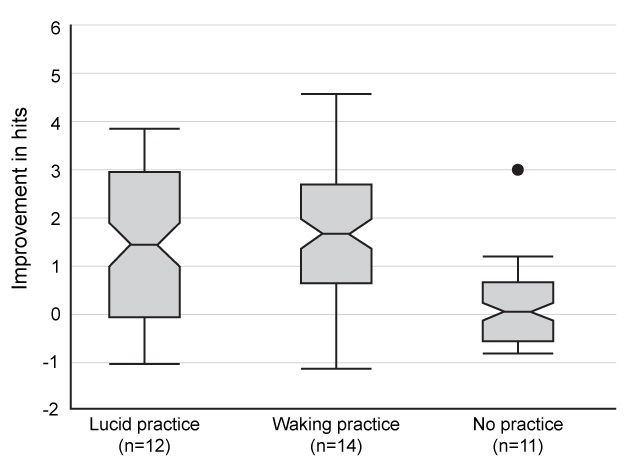 Figure 1 Median improvement in total hits for each group (Note: The notches represent the 95% confidence interval for the median.)The researchers proposed that a follow-up study be devised and conducted to control for any potential variability in each participant's sleep at home. The researchers suggested using the same study procedure except participants would sleep overnight for five consecutive nights in a sleep lab, where the timing and duration of sleep would be standardized. In order to eliminate any potential "first-night effects" (an initial reduction in sleep quality when sleeping in an unfamiliar environment), researchers proposed that pretest and posttest measures each be taken before and after the third, fourth, and fifth night's sleep.
-If a lucid dreamer falls asleep at 10:00 PM and wakes up at 6:00 AM, during what period of sleep would this person have the greatest chance of lucid dreaming?
Figure 1 Median improvement in total hits for each group (Note: The notches represent the 95% confidence interval for the median.)The researchers proposed that a follow-up study be devised and conducted to control for any potential variability in each participant's sleep at home. The researchers suggested using the same study procedure except participants would sleep overnight for five consecutive nights in a sleep lab, where the timing and duration of sleep would be standardized. In order to eliminate any potential "first-night effects" (an initial reduction in sleep quality when sleeping in an unfamiliar environment), researchers proposed that pretest and posttest measures each be taken before and after the third, fourth, and fifth night's sleep.
-If a lucid dreamer falls asleep at 10:00 PM and wakes up at 6:00 AM, during what period of sleep would this person have the greatest chance of lucid dreaming? (Multiple Choice)
4.8/5 (81)
(81) Passage
Suicide is one of the leading causes of death in the United States. Suicide risk is associated with a variety of factors. Personal factors include childhood abuse, certain personality traits (eg, impulsiveness, aggression), and history of mental illness. Over 90% of people who attempt suicide meet diagnostic criteria for at least one psychological disorder, and suicide risk increases as the number of co-occurring disorders increases. Diagnosis severity also matters: studies suggest that individuals are at greatest risk of attempting suicide while inpatient at or newly discharged from a psychiatric hospital.Social factors also play a role in suicide. Sociologist Émile Durkheim argued that embeddedness in society is a key feature in determining the likelihood of an individual committing suicide. Specifically, the more people that depend on an individual financially, emotionally, or physically, the less likely that individual is to commit suicide. Studies suggest that suicide is also linked to religious affiliation and income level. Religious groups that place more value on community events, church attendance, and collective solidarity tend to have lower rates of suicide among members, whereas more affluent individuals are more likely to commit suicide.Economic trends have also been linked to suicide. One study retrospectively analyzed the relationship between the U.S. economy and suicide rates. It found that the overall suicide rate tends to rise during economic recessions and drop during economic expansions (Figure 1).
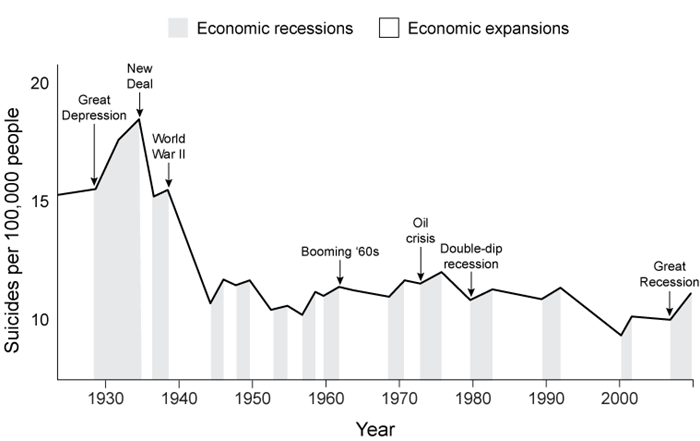 Figure 1 U.S. suicide rates compared to economic trendsFurther analysis of suicide data suggests that for every individual who successfully commits suicide, approximately 25 individuals are unsuccessful in such attempts, costing the United States billions of dollars annually in both lost wages and treatment expense. Although white, middle-aged men are the most likely cohort to successfully commit suicide, women attempt suicide three times more often than men.
-Durkheim is most often associated with which sociological theory?
Figure 1 U.S. suicide rates compared to economic trendsFurther analysis of suicide data suggests that for every individual who successfully commits suicide, approximately 25 individuals are unsuccessful in such attempts, costing the United States billions of dollars annually in both lost wages and treatment expense. Although white, middle-aged men are the most likely cohort to successfully commit suicide, women attempt suicide three times more often than men.
-Durkheim is most often associated with which sociological theory? (Multiple Choice)
4.9/5 (82)
(82) Passage
Twenty-two adults (mean age 49.5) were recruited to participate in a study they were told was to assess beliefs about cancer risk. All participants were in good health; neither they nor any first-degree relatives had been diagnosed with cancer.In the first phase of the study, participants viewed a brief video about the epidemiology and prevalence of cancer in the United States, and then were randomly assigned to one of four groups and asked to estimate the probability that they would develop cancer in their lifetimes. Group 1 consisted of seven study participants who each arrived at their estimates independently and without discussion. Group 2 consisted of seven study participants who were asked to agree on a group estimate after discussion (with unlimited time). Group 3 contained seven members who were also asked to arrive at a consensus estimate after discussion (with unlimited time): Six were study participants and the seventh was a confederate who suggested a very low estimate. Group 4 likewise contained seven members: Two were study participants and the other five were confederates who each suggested low estimates. Group 4 members were limited to 5 minutes of discussion and then asked to arrive at individual estimates.For the second phase of the study, four members of Group 1 who arrived at independent estimates of 20% or lower were put into a new group (Group 5), then were given unlimited time to discuss their initial estimates and arrive at a group estimate (Table 1).Table 1 Group Composition, Protocol, and Estimate of Developing Cancer in One's Lifetime
S. E. Asch ©1956 American Psychological Association.
-What does the Group 5 estimate most demonstrate?
S. E. Asch ©1956 American Psychological Association.
-What does the Group 5 estimate most demonstrate? (Multiple Choice)
4.9/5 (91)
(91) Some experts suggest that the benefits of teamwork may be outweighed by an average loss of productivity per team member. This productivity loss can best be explained by which of the following group processes?
(Multiple Choice)
4.7/5 (76)
(76) Passage
Trait theorists believe that all people have certain traits, or characteristic ways of thinking and behaving, that largely account for personality. Psychobehavioral researchers conducted a pair of studies to determine whether individuals could intentionally alter one of their respective personality traits.In Study 1, participants were asked to select one personality trait they wished to increase from among the following: openness to experience, conscientiousness, extraversion, agreeableness, or emotional stability. Participants first completed a short survey that measured baseline personality trait expression scores (pretest). Participants in the experimental group (n = 125) then developed their own intervention plan intended to increase the selected personality trait whereas the control group (n = 125) did not implement any changes to daily activities. At the end of the study, all participants completed the same self-report survey to reassess their personality trait expression scores (posttest). Results were calculated by subtracting pretest from posttest scores for each person (change score), and then comparing the mean change scores for the experimental and control groups. Results showed significantly greater change scores for experimental group participants who elected to increase their emotional stability, relative to control subjects who selected this trait. The change scores did not differ significantly between the experimental and control groups that selected any of the other four traits (ie, openness to experience, conscientiousness, extraversion, or agreeableness).In Study 2, the same basic methodology was used on a new cohort with several adjustments to the Study 1 design. Instead of asking participants in the experimental condition to formulate their own intervention plans, licensed therapists trained participants in practices to redirect thought processes, emotional responses, and behaviors associated with the selected personality trait. The experimental group participants carried out these practices for the course of the study whereas the control group participants implemented no changes. In contrast to the self-reports used in Study 1, personality trait expression scores (both pre and post) were determined by assessments made by researchers. Results from Study 2 showed significantly greater increases in all five personality trait expression scores for experimental versus control participants.
-When comparing the research designs used for Study 1 and Study 2, which of the following statements is NOT true?
(Multiple Choice)
4.9/5 (88)
(88) Passage
Of the biological factors impacting color perception in humans, one of the easiest to study is the number and type of color-sensitive photoreceptors. The human retina typically contains three types of cone photoreceptors, which contain opsin proteins that are sensitive to short (blue), medium (green), and long (red) wavelengths of light (Figure 1A).The genes that encode for medium and long wavelength-sensitive opsin proteins are located on the X chromosome. Mutations in these genes often produce a variant cone type that responds to wavelengths overlapping the response range of one of the normal cone types, so color perception is unaltered (Figure 1B). However, in a small percentage of women, the variant cone type appears to be sensitive to a range of wavelengths that differs from that of normal cone types (Figure 1C). It is hypothesized that these "tetrachromatic" women may be able to distinguish more colors than can the normal trichromatic population.
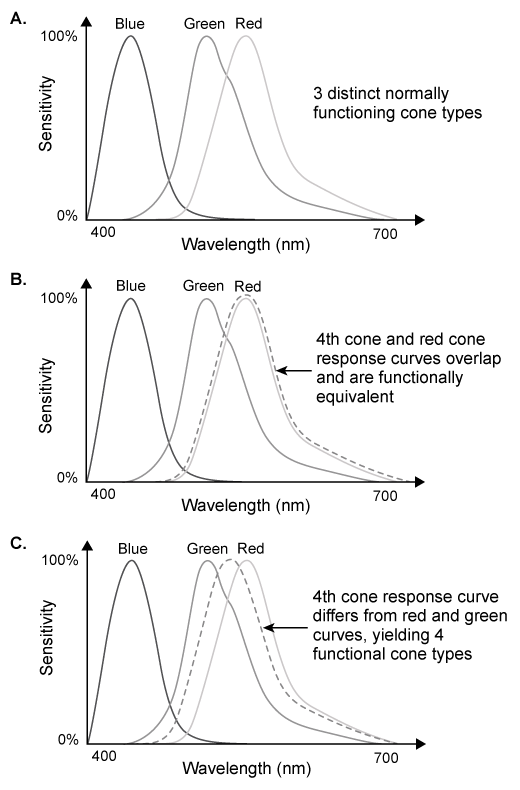 Figure 1 Response curves for (A) three cone types (trichromat, normal color perception); (B) four cone types (likely normal color perception); and (C) four cone types (tetrachromat, hypothesized enhanced color perception)A researcher conducted a series of tasks to assess the extent to which color perception of tetrachromatic subjects differs from that of trichromatic controls. Three women known to possess four retinal cone classes were recruited for the study. One of the women had experienced a small lesion to her right primary visual cortex the year prior. In addition, two women with normal trichromatic vision were recruited as controls (Table 1).Table 1 Characteristics of Subjects
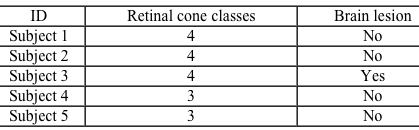 In Task 1, participants identified the colors of objects that were stationary (artificial condition) and in motion (natural condition). Under both conditions, the researcher systematically varied where the objects were presented in the subjects' visual field. Task 2 was a standardized, computer-administered color-discrimination task. Task 3 was an extensive interview that assessed the subjects' subjective experience of color.Subject 1 was able to identify more colors than the controls under all experimental conditions, and Subject 2 and Subject 3 performed marginally better than controls in some of the experimental conditions. Notably, only Subject 1 was able to verbalize her thoughts about her atypical color perception during Task 3, where she described seeing nuances in colors using words she had learned from her mother, who was also a tetrachromat and an artist. The researcher concluded that language likely plays a significant role in color perception: Without a vocabulary for the full variety of colors tetrachromats can perceive, they are limited in their perception despite their biological trait.
S. S. Deeb ©2005 John Wiley & Sons; K. A. Jameson, A. D. Winkler, and K. Goldfarb ©2016 IS&T International Symposium on Electronic Imaging.
-The researcher's conclusion is best aligned with the:
Figure 1 Response curves for (A) three cone types (trichromat, normal color perception); (B) four cone types (likely normal color perception); and (C) four cone types (tetrachromat, hypothesized enhanced color perception)A researcher conducted a series of tasks to assess the extent to which color perception of tetrachromatic subjects differs from that of trichromatic controls. Three women known to possess four retinal cone classes were recruited for the study. One of the women had experienced a small lesion to her right primary visual cortex the year prior. In addition, two women with normal trichromatic vision were recruited as controls (Table 1).Table 1 Characteristics of Subjects
In Task 1, participants identified the colors of objects that were stationary (artificial condition) and in motion (natural condition). Under both conditions, the researcher systematically varied where the objects were presented in the subjects' visual field. Task 2 was a standardized, computer-administered color-discrimination task. Task 3 was an extensive interview that assessed the subjects' subjective experience of color.Subject 1 was able to identify more colors than the controls under all experimental conditions, and Subject 2 and Subject 3 performed marginally better than controls in some of the experimental conditions. Notably, only Subject 1 was able to verbalize her thoughts about her atypical color perception during Task 3, where she described seeing nuances in colors using words she had learned from her mother, who was also a tetrachromat and an artist. The researcher concluded that language likely plays a significant role in color perception: Without a vocabulary for the full variety of colors tetrachromats can perceive, they are limited in their perception despite their biological trait.
S. S. Deeb ©2005 John Wiley & Sons; K. A. Jameson, A. D. Winkler, and K. Goldfarb ©2016 IS&T International Symposium on Electronic Imaging.
-The researcher's conclusion is best aligned with the: (Multiple Choice)
4.8/5 (102)
(102) Passage
Prominent theories of emotion have long held that alterations in one's internal physiological state are necessary for the experience of emotion. Interoception involves both the unconscious and conscious perception of one's internal physiological state. The insula (or insular cortex), located deep within the lateral fissure on both sides of the brain, appears to be largely responsible for interoception. Studies suggest that the posterior insula (PI) is involved with processing homeostatic afferent information such as pain, temperature, hunger, thirst, and the impulse to breathe. In contrast, the anterior insula (AI) appears to process information regarding emotional awareness, the conscious experience of emotion.A recent study evaluated AI activity using functional magnetic resonance imaging (fMRI). Using fMRI, the participants' brain activity was monitored during two different tasks: an emotion-eliciting task and an interoceptive task.Task 1Participants watched 10 short videos of people recalling personal events that were either negative (eg, surviving a mass shooting attack) or positive (eg, seeing a loved one after a year apart). After each video, participants rated their reactions on a Likert scale from 1 (no emotional reaction) to 10 (extreme emotional reaction).Task 2Participants were instructed to monitor their own heart rate and press a button each time they felt their heartbeat. Participants' heart rates were externally monitored to gauge the accuracy of their responses.ResultsNeuroimaging results suggested that both tasks elicited activity in the AI. Furthermore, there was a high degree of overlap in the activity of the right AI and surrounding limbic and paralimbic brain regions at both the individual and group levels.
J. Zaki, J. I. Davis, and K. N. Ochsner ©2012 by Elsevier, B. V., and A. D. Craig ©2003 by Elsevier, B. V.
-To test the hypothesis that emotions play an adaptive role in society, researchers added a Task 3 to assess social success (higher scores = more social success). This hypothesis would be best supported by:
(Multiple Choice)
4.8/5 (72)
(72) Passage
On the way home from a routine visit to the pediatrician, Sarah stops with her infant son at the local convenience store. As she is waiting in line, a man squeezes in closely behind them and sneezes. As Sarah walks home, she finds that her heart is racing, she feels nauseous, and she is terrified that her child will become severely ill.Soon after, she becomes obsessed with disease and contamination. She begins to take extensive measures to "decontaminate" herself and her home, including washing her hands dozens of times daily. These cleaning rituals have the immediate effect of lessening Sarah's anxiety, so she soon spends most of her day performing them. She seeks treatment from a therapist, who instructs her to gradually expose herself to "contamination" but refrain from her cleaning rituals. The therapist also teaches Sarah how to recognize and modify her maladaptive thoughts about illness prevention. Within several weeks, Sarah finds that she can manage her thoughts about disease and contamination without resorting to ritualistic cleaning.A researcher hypothesized that individuals with obsessive-compulsive disorder (OCD), such as Sarah, would show a more generalized fear response to safe stimuli compared to controls. Generalized conditioned fear responses occur when individuals react with fear to stimuli that resemble the original conditioned stimulus (eg, someone injured in an accident with a red truck fears all red vehicles). The researcher conditioned 100 individuals (50 with OCD and 50 controls) to associate a shock with a visual stimulus. In phase 1, participants viewed a computer screen that alternated between images of a small ring (1 cm) and a large ring (20 cm). The small ring and large ring were displayed for 1 second each, with a blank screen in between for 5 seconds. A mild electric shock was paired with the large ring, and no shock was paired with the small ring. This was repeated for 10 trials. In phase 2, shocks were discontinued, and three intermediate-sized rings were added to the series and presented in increasing size (ie, 1 cm, 5 cm, 10 cm, 15 cm, 20 cm) while the participants' startle response to each ring was measured. This was repeated for 10 trials.
ncbi.nlm.nih.gov/pmc/articles/PMC3932061/
-Before Sarah sought therapy, her cleaning rituals acted as:
(Multiple Choice)
4.9/5 (76)
(76) Passage
Until the middle of the twentieth century, most researchers believed that infants possess only the most rudimentary ways of perceiving the world. Then, in the 1950s, innovative investigative strategies allowed researchers to better assess the complexity of infants' perceptual abilities.Studies on the visual perception of infants used gaze time as an indicator of interest or preference. In Study 1, 36 babies age 2 weeks to 4 months were shown 6 pictures of identical size simultaneously, such as pictures of a bull's-eye, a bird, three squares of different colors, and a human face. Researchers recorded the time the infants spent looking at each picture and calculated the mean gaze time for each picture. It was found that the babies gazed far longer at the human face than at any other picture.Studies on the auditory perception of infants also employed gaze time as an indicator of preference. In Study 2, researchers exposed infants age 1-4 months to four types of auditory stimuli. The first type was human speech consisting of a series of randomly selected short words, each stated in a neutral tone, followed by a second of silence. The other stimuli included environmental sounds (eg, forest noises); neutral, human, noncommunicative sounds (eg, sneezing, coughing, throat clearing); and monkey vocalizations. A red light was shown on a computer monitor to attract the babies' attention. Once their gaze was fixed on the monitor, they were shown a picture of a checkerboard along with the auditory stimulus for up to 40 seconds. The time the infants gazed at the monitor was recorded. Results indicated that babies preferred human speech to any other sound.
Adapted from S. Shultz and A. Vouloumanos ©2010 Taylor & Francis Group, and R. L. Fantz ©1961 Scientific American.
-If the researchers also used a functional neuroimaging technique to measure brain activity during the two experiments, which parts of the brain would be of greatest interest?
(Multiple Choice)
4.7/5 (80)
(80) Passage
Language is a skill acquired during early childhood that continues to develop for many years. Communication using language involves multiple complex processes, including listening, speaking, comprehension, and cognition. Receptive language ("language input") involves language comprehension, while expressive language ("language output") involves the ability to produce intelligible language. In normally developing children, receptive language emerges first, followed by expressive language.To examine how age plays a role in the activation of the neurological networks involved in processing more complex language, researchers used functional magnetic resonance imaging (fMRI) to analyze how the use of receptive language generates metabolic activity in the brains of children. A total of 672 participants were divided into three groups by age: Age 4-6 (n = 219), age 7-9 (n = 224), and age 10-12 (n = 229).Participants in each group were asked to listen to pre-recorded stories while undergoing fMRI of the brain to determine if an age-related difference could be found in activated brain tissue volume during the listening task. The recorded fMRI-monitored listening portion of the experiment lasted approximately 5 minutes. Immediately following this listening exercise, fMRI monitoring was discontinued and the children were administered tests to determine comprehension of the material. None of the children had been informed that they would be taking a comprehension test prior to its actual administration.
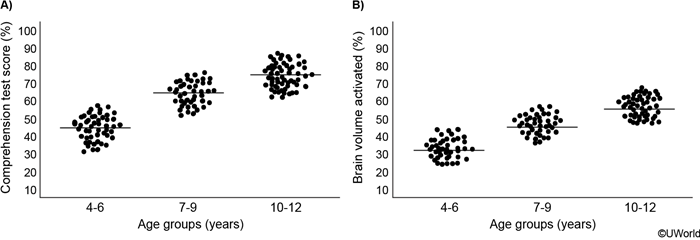 Figure 1 fMRI listening task analyzed per age group: (A) comprehension test scores, and (B) brain volume activated (Note: Solid lines represent the mean in each group.)
M. M. Berl, E. S. Duke, J. Mayo, L. R. Rosenberger, E. N. Moore, J. VanMeter, N. Bernstein Ratner, C. J. Vaidya, and W. D. Gaillard ©2010 by Elsevier, Inc.
-Which of the following brain regions should demonstrate the greatest degree of activation on fMRI during the task described in this study?
Figure 1 fMRI listening task analyzed per age group: (A) comprehension test scores, and (B) brain volume activated (Note: Solid lines represent the mean in each group.)
M. M. Berl, E. S. Duke, J. Mayo, L. R. Rosenberger, E. N. Moore, J. VanMeter, N. Bernstein Ratner, C. J. Vaidya, and W. D. Gaillard ©2010 by Elsevier, Inc.
-Which of the following brain regions should demonstrate the greatest degree of activation on fMRI during the task described in this study? (Multiple Choice)
4.8/5 (75)
(75) Passage
Across the lifespan, mental and physical health depends on adequate sleep. Extensive research suggests that sleep needs and characteristics change throughout an individual's life (Figure 1).
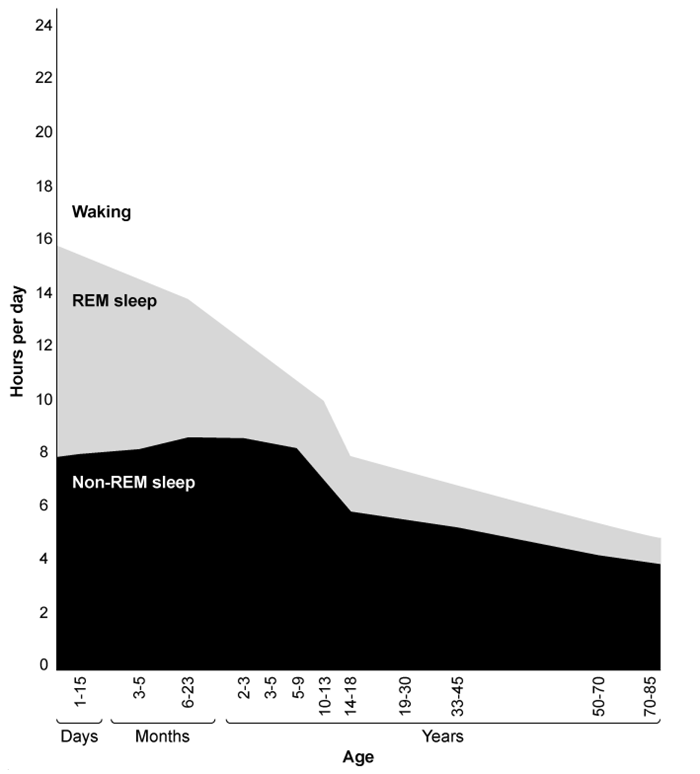 Figure 1 Average hours of rapid eye movement (REM) and non-REM sleep for different age groups across the lifespanChronic sleep deprivation acts as a physiological stressor and can have a multitude of short- and long-term negative health consequences. Studies show that over 30% of adults get less than the recommended minimum of 7 hours of sleep per night, putting them at greater risk for metabolic disorders (eg, obesity, diabetes), cardiovascular disease (eg, high blood pressure, stroke), and emotional disorders (eg, anxiety, depression). Sleep deprivation is also associated with impaired cognitive functioning, decreased work performance, and an increased risk of accidents.However, the guideline that adults sleep at least 7 hours per night does not account for the considerable variation in individual sleep needs. Research suggests that some individuals, known as "long sleepers," require an average daily sleep duration of more than 9 hours, while "short sleepers" require an average daily sleep duration of less than 6 hours. One study found that biological night duration (established by one's circadian pacemaker or "master clock") appears to be a few hours shorter for short sleepers as compared to long sleepers. Other studies suggest that short sleepers regularly sleep less than 7 hours without any apparent negative consequences due to one or more genetic mutations, such as a mutation on the DEC2 gene (also known as BHLHE41), which codes for a transcription factor involved in regulating circadian rhythms.
-According to Figure 1, the time in one's life when sleep contains the largest proportion of REM sleep best corresponds to which of the following?
Figure 1 Average hours of rapid eye movement (REM) and non-REM sleep for different age groups across the lifespanChronic sleep deprivation acts as a physiological stressor and can have a multitude of short- and long-term negative health consequences. Studies show that over 30% of adults get less than the recommended minimum of 7 hours of sleep per night, putting them at greater risk for metabolic disorders (eg, obesity, diabetes), cardiovascular disease (eg, high blood pressure, stroke), and emotional disorders (eg, anxiety, depression). Sleep deprivation is also associated with impaired cognitive functioning, decreased work performance, and an increased risk of accidents.However, the guideline that adults sleep at least 7 hours per night does not account for the considerable variation in individual sleep needs. Research suggests that some individuals, known as "long sleepers," require an average daily sleep duration of more than 9 hours, while "short sleepers" require an average daily sleep duration of less than 6 hours. One study found that biological night duration (established by one's circadian pacemaker or "master clock") appears to be a few hours shorter for short sleepers as compared to long sleepers. Other studies suggest that short sleepers regularly sleep less than 7 hours without any apparent negative consequences due to one or more genetic mutations, such as a mutation on the DEC2 gene (also known as BHLHE41), which codes for a transcription factor involved in regulating circadian rhythms.
-According to Figure 1, the time in one's life when sleep contains the largest proportion of REM sleep best corresponds to which of the following? (Multiple Choice)
4.8/5 (75)
(75) 
Filters
- Essay(0)
- Multiple Choice(0)
- Short Answer(0)
- True False(0)
- Matching(0)