



 Chat with AI
Exam 1: Behavioral Sciences

Exam 1: Behavioral Sciences343 Questions
Exam 2: Biochemistry307 Questions
Exam 3: Biology319 Questions
Exam 4: Critical Analysis & Reasoning Skills358 Questions
Exam 5: General Chemistry317 Questions
Exam 6: Organic Chemistry191 Questions
Exam 7: Physics200 Questions
Select questions type


Passage
Bipolar disorder (BD), often characterized by periods of depression and mania, although it is possible to experience mania only, is frequently misdiagnosed. Some studies suggest that as many as half of all individuals diagnosed with BD actually do not have the disorder. One possible reason is the similarity in symptoms shared by both mania and borderline personality disorder. Another potential reason involves recent efforts by pharmaceutical companies to increase awareness of BD symptoms. As one physician stated:"In the past ten years, we've been bombarded with ads, 'These are the symptoms of BD-they're easily missed-and here is a new drug to treat it.' I think that when you're constantly being reminded not to overlook something, you start looking for it everywhere, even when it's not there."Other studies report that BD is underdiagnosed, with almost 70% of patients receiving an initial misdiagnosis and almost 35% remaining misdiagnosed for 10 years or more. This can be partially explained by the fact that people often seek treatment for their depressive symptoms but rarely for their manic symptoms. In fact, some individuals may not initially realize that their manic episodes are problematic. Patients may describe these episodes as positive experiences, particularly when compared with depressive episodes:Patient 1: "During my depression, I'm so tired I stay in bed for days. I feel totally useless. But when I'm manic, I am so alive. I feel like I'm on top of the world-I'm the life of the party, and my mind is running a million miles a minute. I'm so productive, I don't need much sleep, and I can just go, go, go. It actually took me a long time to realize that this wasn't normal, this awesome energy was way beyond how people normally feel."Patient 2: "My mania actually came on over a long period during grad school and I just kept feeling better and better. It was like I was getting sharper and smarter, and I was doing more research and coming up with all of these brilliant ideas. I felt totally on top of my game."Because mania is often unrecognized and unreported, recent efforts have been made to encourage a more proactive approach to the self-identification of manic symptoms. Proper diagnosis is critical for effective life-long treatment and management of BD, as reflected by this patient's experience:Patient 3: "It was almost 10 years before I could acknowledge that my high-stress lifestyle was triggering my mania and that I needed to make some big changes-and that I needed to stay on my medication, even when I felt much better. That was really hard for me to get, but I get it now-I have this for life, and I have to treat it every day. Once I finally got that, I started to be able to accept this as a part of who I am."
T. Singh and M. Rajput ©2006 Matrix Medical Communications, and J. A. Scott and F. Sohrabi ©2015 Everyday Health Media.
-Based on the information in the passage and sick role theory, which statement best describes a potential explanation for the underdiagnosis of BD? Underdiagnosis of BD is the result of:
(Multiple Choice)
4.9/5  (76)
(76) Passage
The diagnosis of a child with a serious disability significantly impacts the child's parents. While positive psychological outcomes are sometimes possible, evidenced by research showing that for some parents a child's disability is eventually viewed as a chance for personal growth, research also indicates that many parents of children with disabilities are at greater risk for poor physical and mental health outcomes. Coping with a child's initial symptoms, providing ongoing care, and dealing with prejudice from others present significant stressors for parents. This stress may also disrupt marriages; results of a meta-analysis showed a modest, increased risk for divorce in parents of children with disabilities. Another line of research has identified significantly higher rates of anxiety and/or depression in parents of children with disabilities. The fact that parental distress often results in poorer outcomes for their children points to a need for evidence-based interventions for parents of children with disabilities.In Study 1, researchers compared the effectiveness of two interventions in reducing depressive symptoms in parents of children with cognitive disabilities. Researchers recruited 30 parents of children with intellectual disorders from the contact list of an affluent community wellness center and randomly assigned them to a meditation (M) group or a humanistic psychotherapy (HP) group. Both groups were led by peer mentors trained in specific interventions who taught and demonstrated the techniques to the participants during the weekly sessions. Participants completed self-report measures of depressive symptoms at baseline (pre-test), 4 weeks into the intervention (midpoint), at the end of the 8-week program (post-test 1), and 4 weeks after the program ended (post-test 2). The findings are shown in Figure 1.
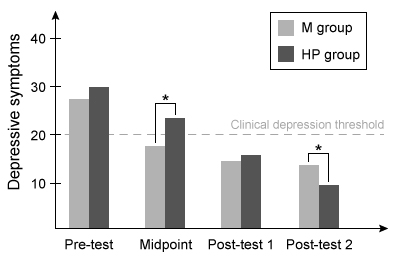 Figure 1 Depressive symptoms at pre-test, midpoint, post-test 1, and post-test 2 (Note: * indicates p < .05.)In Study 2, researchers examined the impact of coping strategies on distress in 80 parents of children with muscular dystrophy. Participants were asked to think of a recent stressful, threatening event and report whether they had classified their future expectancy for the event as "changeable" (situation is able to be modified) or "unchangeable" (situation is not able to be modified). They were then asked whether they attempted to cope with the event primarily by regulating their emotions (emotion-focused) or by modifying aspects of the situation (problem-focused), such as seeking help from others. Lastly, they were surveyed about their level of distress after they tried to cope with the stressor. Figure 2 illustrates the findings.
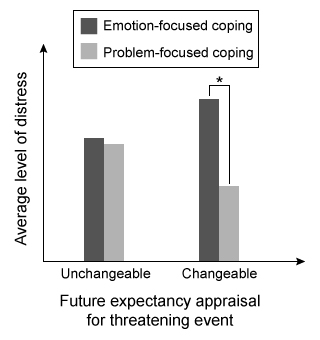 Figure 2 Average level of distress by coping strategy (emotion-focused vs. problem-focused) and future expectancy appraisal for the threatening event (Note: * indicates p < .05.)
-Which of the following provides a potential explanation for the increased risk for divorce (first paragraph) that is based on the concept of role conflict? Parents of children with disabilities:
Figure 1 Depressive symptoms at pre-test, midpoint, post-test 1, and post-test 2 (Note: * indicates p < .05.)In Study 2, researchers examined the impact of coping strategies on distress in 80 parents of children with muscular dystrophy. Participants were asked to think of a recent stressful, threatening event and report whether they had classified their future expectancy for the event as "changeable" (situation is able to be modified) or "unchangeable" (situation is not able to be modified). They were then asked whether they attempted to cope with the event primarily by regulating their emotions (emotion-focused) or by modifying aspects of the situation (problem-focused), such as seeking help from others. Lastly, they were surveyed about their level of distress after they tried to cope with the stressor. Figure 2 illustrates the findings.
Figure 2 Average level of distress by coping strategy (emotion-focused vs. problem-focused) and future expectancy appraisal for the threatening event (Note: * indicates p < .05.)
-Which of the following provides a potential explanation for the increased risk for divorce (first paragraph) that is based on the concept of role conflict? Parents of children with disabilities: (Multiple Choice)
4.7/5 (86)
(86) Passage
Human emotions play an important role in individual and group behaviors, influencing both prosocial and antisocial exchanges. Complex and personal, emotions are difficult to study. Although physiological indicators of emotion, such as pulse or skin conductance, are easy to measure, the subjective experience of emotion is much harder to assess.Further complicating the issue, there is no universally accepted theory regarding the role of physiological processes in the experience of emotion. Common sense would suggest that emotion is experienced first, followed by physiological and behavioral events: we feel scared and then break into a cold sweat. However, one of the earliest modern theories of emotion proposed just the opposite-emotion occurs after a physiological response, not before: we break into a cold sweat and then feel scared.Males and females also appear to experience emotion differently; however, it is unclear whether this is the result of nature or nurture. Studies using functional magnetic resonance imaging (fMRI) suggest a biological difference. Data suggest that compared to females, males demonstrated greater activation of the amygdala while viewing images meant to induce fear, anger, or sexual arousal, but when asked to suppress negative emotions, females demonstrated greater activation of the prefrontal cortex than males. Research also suggests that females may demonstrate more empathy; when watching another person experience an emotion (eg, pain), females show more neural activation of the same areas that are active during the personal experience of that emotion.Social factors also appear to play an important role in gender differences. One study, which assessed how boys and girls express emotion from infancy to adolescence, concluded that gender differences appear to emerge around age 2-4 and become more pronounced with age. The researchers hypothesized that children learn gendered behavior regarding emotion through social learning. Cultural differences in the expression of emotion lend support to this argument: several studies suggest that, in general, men are expected to express less emotion than women, with the exception of anger.
T. Singer and C. Lamm ©2009 by New York Academy of Sciences, and T. M. Chaplin and A. Aldao ©2012 by American Psychological Association, and S. R. Wester, D. L. Vogel, P. K. Pressly, and M. Heesacker ©2002 by American Psychological Association
-Which interpretation of the information in the passage is LEAST consistent with feminist theory?
(Multiple Choice)
4.9/5 (89)
(89) In an experiment, researchers find that certain neurons in the visual cortex preferentially fire in response to a bar of light that is oriented at a specific angle, and that different neurons similarly respond to bars of light oriented at different angles. This finding provides the strongest evidence for:
(Multiple Choice)
4.7/5 (70)
(70) Passage
Researchers conducted a pair of studies to explore how rewards influence motivation and weight loss for those who are overweight or obese.For Study 1, 20 overweight and 20 average-weight adults were invited to play a computer game consisting of a simple matching task in which participants earned a reward for getting multiple correct responses. Participants were allowed to select their own reward: Either $1.00 or a 200-calorie vending machine snack (valued at $1.00), such as a candy bar or bag of chips. For the first trial, participants were rewarded on an average of three correct responses (AVG3). Participants were then asked to choose between the food and monetary rewards. When a food reward was selected, the average number of correct responses required to earn the next reward doubled, but when a monetary reward was selected, the average number of correct responses required to earn the next reward remained the same (Figure 1). Results indicated that although there was no significant difference between the groups with regard to baseline self-reporting of hunger prior to the start of the computer tasks, overweight participants were five times more likely to choose the food rewards than average-weight participants.
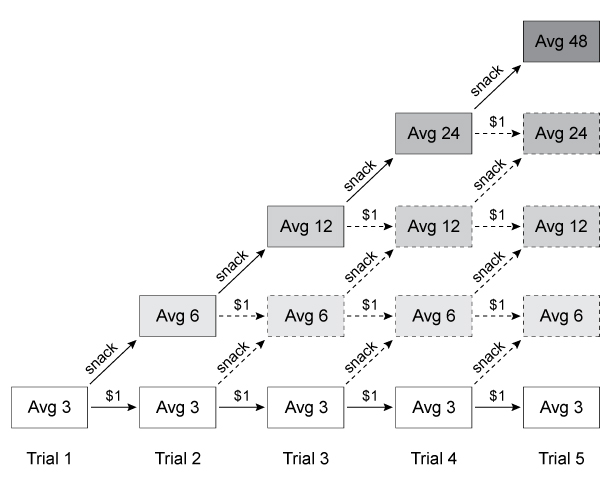 Figure 1 Study 1 reward scheduleFor Study 2, obese participants were recruited for a 16-week weight-loss study and randomly assigned to one of two groups: A control group (n = 32) or an experimental group (n = 35). Control participants engaged in weekly weigh-ins only. Experimental participants engaged in weekly weigh-ins but also earned or lost money (put into an account and paid at the end of the study) based on their weigh-in goal, calculated each week based on current body mass index (BMI), age, and sex. Those who reached their weekly weight goal earned $10; for each additional pound lost, participants earned another $10, up to $50/week. Participants in the experimental group who did not meet or exceed their weekly weight goal had $20 deducted from their accounts. No significant differences were found in baseline variables for either group; however, members of the control group lost an average of 5.9 pounds, whereas members of the experimental group lost an average of 18.1 pounds.
B. E. Saelens and L. H. Epstein ©1996 Elsevier B.V.
-Which of the following behavioral patterns is most expected of participants in the Study 2 experimental group? Participants are most diligent with dieting and exercise:
Figure 1 Study 1 reward scheduleFor Study 2, obese participants were recruited for a 16-week weight-loss study and randomly assigned to one of two groups: A control group (n = 32) or an experimental group (n = 35). Control participants engaged in weekly weigh-ins only. Experimental participants engaged in weekly weigh-ins but also earned or lost money (put into an account and paid at the end of the study) based on their weigh-in goal, calculated each week based on current body mass index (BMI), age, and sex. Those who reached their weekly weight goal earned $10; for each additional pound lost, participants earned another $10, up to $50/week. Participants in the experimental group who did not meet or exceed their weekly weight goal had $20 deducted from their accounts. No significant differences were found in baseline variables for either group; however, members of the control group lost an average of 5.9 pounds, whereas members of the experimental group lost an average of 18.1 pounds.
B. E. Saelens and L. H. Epstein ©1996 Elsevier B.V.
-Which of the following behavioral patterns is most expected of participants in the Study 2 experimental group? Participants are most diligent with dieting and exercise: (Multiple Choice)
4.9/5 (70)
(70) Passage
Post-traumatic stress disorder (PTSD) and generalized anxiety disorder (GAD) both involve an exaggerated response to everyday stressors and a heightened state of anxiety or arousal that can impede concentration and daily functioning. Both can be effectively treated with medication, including anxiolytics and antidepressants, and with therapy, the most effective of which is cognitive-behavioral therapy (CBT). Psychologists believe that the unpredictable nature of stressors plays a key role in the development and persistence of both disorders. However, the response to predictable threats is believed to be normal.A study was conducted to investigate how individuals diagnosed with PTSD or GAD respond to predictable and unpredictable threats. Twenty patients with PTSD, 20 patients with GAD, and 50 control participants took part in the study. The groups did not differ significantly with respect to age or gender. The study involved two conditions, each three minutes in duration. During the first (predictable) condition, participants were shown a cue (red box) at random times while gazing through a viewing apparatus. The cue signaled the imminent presentation of various loud noises such as thunder or screaming, meant to induce fear. During the second (unpredictable) condition, the loud noise was presented randomly with no warning.The magnitude of the participants' startle response was measured by an eye blink reflex recorded with electrodes placed under the eyes (measured in microvolts [Table 1]).Table 1 Mean Startle Response in Microvolts by Group and Condition
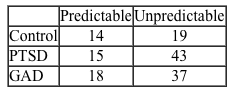 After the study, participants were asked to rate their subjective fear on a scale of 0 (no fear) to 10 (most fear). The controls reported the least fear under both conditions. PTSD participants expressed greater fear than GAD participants during the unpredictable condition, but GAD participants reported greater fear than PTSD participants during the predictable condition.
C. Grillon, D. S. Pine, S. Lissek, S. Rabin, and M. Vythilingam ©2009 by Society of Biological Psychiatry.
-If this study also included a functional neuroimaging procedure, then (compared to controls) patients with PTSD would be most likely to exhibit alterations in which of the following?Prefrontal cortexHippocampusAmygdala
After the study, participants were asked to rate their subjective fear on a scale of 0 (no fear) to 10 (most fear). The controls reported the least fear under both conditions. PTSD participants expressed greater fear than GAD participants during the unpredictable condition, but GAD participants reported greater fear than PTSD participants during the predictable condition.
C. Grillon, D. S. Pine, S. Lissek, S. Rabin, and M. Vythilingam ©2009 by Society of Biological Psychiatry.
-If this study also included a functional neuroimaging procedure, then (compared to controls) patients with PTSD would be most likely to exhibit alterations in which of the following?Prefrontal cortexHippocampusAmygdala (Multiple Choice)
4.8/5 (88)
(88) Passage
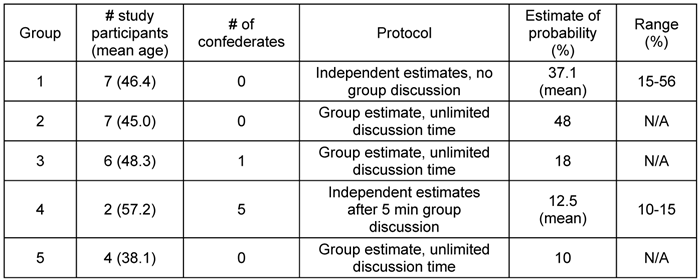
Twenty-two adults (mean age 49.5) were recruited to participate in a study they were told was to assess beliefs about cancer risk. All participants were in good health; neither they nor any first-degree relatives had been diagnosed with cancer.In the first phase of the study, participants viewed a brief video about the epidemiology and prevalence of cancer in the United States, and then were randomly assigned to one of four groups and asked to estimate the probability that they would develop cancer in their lifetimes. Group 1 consisted of seven study participants who each arrived at their estimates independently and without discussion. Group 2 consisted of seven study participants who were asked to agree on a group estimate after discussion (with unlimited time). Group 3 contained seven members who were also asked to arrive at a consensus estimate after discussion (with unlimited time): Six were study participants and the seventh was a confederate who suggested a very low estimate. Group 4 likewise contained seven members: Two were study participants and the other five were confederates who each suggested low estimates. Group 4 members were limited to 5 minutes of discussion and then asked to arrive at individual estimates.For the second phase of the study, four members of Group 1 who arrived at independent estimates of 20% or lower were put into a new group (Group 5), then were given unlimited time to discuss their initial estimates and arrive at a group estimate (Table 1).Table 1 Group Composition, Protocol, and Estimate of Developing Cancer in One's Lifetime
 S. E. Asch ©1956 American Psychological Association.
-To prevent groupthink in Groups 2, 3, and 4, experimenters could:
S. E. Asch ©1956 American Psychological Association.
-To prevent groupthink in Groups 2, 3, and 4, experimenters could: (Multiple Choice)
4.8/5 (79)
(79) Passage
Bipolar disorder (BD), often characterized by periods of depression and mania, although it is possible to experience mania only, is frequently misdiagnosed. Some studies suggest that as many as half of all individuals diagnosed with BD actually do not have the disorder. One possible reason is the similarity in symptoms shared by both mania and borderline personality disorder. Another potential reason involves recent efforts by pharmaceutical companies to increase awareness of BD symptoms. As one physician stated:"In the past ten years, we've been bombarded with ads, 'These are the symptoms of BD-they're easily missed-and here is a new drug to treat it.' I think that when you're constantly being reminded not to overlook something, you start looking for it everywhere, even when it's not there."Other studies report that BD is underdiagnosed, with almost 70% of patients receiving an initial misdiagnosis and almost 35% remaining misdiagnosed for 10 years or more. This can be partially explained by the fact that people often seek treatment for their depressive symptoms but rarely for their manic symptoms. In fact, some individuals may not initially realize that their manic episodes are problematic. Patients may describe these episodes as positive experiences, particularly when compared with depressive episodes:Patient 1: "During my depression, I'm so tired I stay in bed for days. I feel totally useless. But when I'm manic, I am so alive. I feel like I'm on top of the world-I'm the life of the party, and my mind is running a million miles a minute. I'm so productive, I don't need much sleep, and I can just go, go, go. It actually took me a long time to realize that this wasn't normal, this awesome energy was way beyond how people normally feel."Patient 2: "My mania actually came on over a long period during grad school and I just kept feeling better and better. It was like I was getting sharper and smarter, and I was doing more research and coming up with all of these brilliant ideas. I felt totally on top of my game."Because mania is often unrecognized and unreported, recent efforts have been made to encourage a more proactive approach to the self-identification of manic symptoms. Proper diagnosis is critical for effective life-long treatment and management of BD, as reflected by this patient's experience:Patient 3: "It was almost 10 years before I could acknowledge that my high-stress lifestyle was triggering my mania and that I needed to make some big changes-and that I needed to stay on my medication, even when I felt much better. That was really hard for me to get, but I get it now-I have this for life, and I have to treat it every day. Once I finally got that, I started to be able to accept this as a part of who I am."
T. Singh and M. Rajput ©2006 Matrix Medical Communications, and J. A. Scott and F. Sohrabi ©2015 Everyday Health Media.
-Which of the following symptoms, if present, would help a clinician diagnose bipolar disorder rather than borderline personality disorder?
(Multiple Choice)
5.0/5 (86)
(86) Passage
In 2010, the United States (U.S.) had an incarcerated population of about 1.6 million, up from about 300,000 in 1980. Some experts suggest that the exponential rise in the inmate population has been largely due to the "war on drugs," initiated in the 1980s, which led to more aggressive laws against drug use and distribution. Increases in arrests and imprisonment, however, have not affected all segments of the U.S. population equally. Although the total population was about 50% male in 2010, the prison population was about 93% male and reflective of additional racial and ethnic disparities (Figure 1).
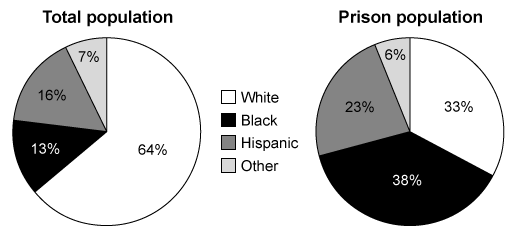 Figure 1 Total population and prison population by race and ethnicity in the United States in 2010Research suggests that black and white people use drugs at similar rates, but black people are more likely to end up in the criminal justice system for drug use. This overrepresentation of black people in the prison population can be partly explained by discrimination at the individual and institutional levels. For example, if police departments focus their resources in predominantly black neighborhoods based on the assumption that black individuals are more likely to commit a crime, then police officers (who may similarly believe black people commit more crimes than white people) are more likely to witness black people committing crimes, thereby confirming the belief. Discrimination operates at every level of the criminal justice system: Black people are more likely than white people to be arrested, prosecuted, and convicted for drug use and receive, on average, longer sentences.High rates of recidivism also perpetuate the demographic disparity of the prison population. It is estimated that about 75% of released prisoners will be rearrested within five years. Experts suggest that, once convicted of a felony, individuals find that their status as a former felon (or "ex-convict") dominates all their other statuses, making it difficult to reintegrate into society. The social stigma of criminality makes it hard for ex-convicts to secure employment, which often leads to further crime. Ex-convicts are also more closely monitored by police and far more likely to be arrested and convicted for minor offenses.
-Which of the following hypothetical data would provide support for the type of institutional discrimination described in the passage?
Figure 1 Total population and prison population by race and ethnicity in the United States in 2010Research suggests that black and white people use drugs at similar rates, but black people are more likely to end up in the criminal justice system for drug use. This overrepresentation of black people in the prison population can be partly explained by discrimination at the individual and institutional levels. For example, if police departments focus their resources in predominantly black neighborhoods based on the assumption that black individuals are more likely to commit a crime, then police officers (who may similarly believe black people commit more crimes than white people) are more likely to witness black people committing crimes, thereby confirming the belief. Discrimination operates at every level of the criminal justice system: Black people are more likely than white people to be arrested, prosecuted, and convicted for drug use and receive, on average, longer sentences.High rates of recidivism also perpetuate the demographic disparity of the prison population. It is estimated that about 75% of released prisoners will be rearrested within five years. Experts suggest that, once convicted of a felony, individuals find that their status as a former felon (or "ex-convict") dominates all their other statuses, making it difficult to reintegrate into society. The social stigma of criminality makes it hard for ex-convicts to secure employment, which often leads to further crime. Ex-convicts are also more closely monitored by police and far more likely to be arrested and convicted for minor offenses.
-Which of the following hypothetical data would provide support for the type of institutional discrimination described in the passage? (Multiple Choice)
4.9/5 (86)
(86) Which of the following scenarios best illustrates the psychoanalytic concept of regression?
(Multiple Choice)
4.8/5 (90)
(90) Passage
Korsakoff syndrome (KS) is caused by a thiamin (vitamin B1) deficiency that often results from chronic alcohol consumption. If KS is diagnosed during its earliest stages, its course may be reversed with thiamin supplements; otherwise, it progresses into a permanent type of dementia that includes severe cognitive dysfunction and memory loss. Alzheimer disease (AD) is associated with a different type of dementia that worsens over time, eventually causing memory loss, cognitive dysfunction, and severe brain atrophy.In one study, KS and AD subjects were assessed using the Corsi block-tapping task, which measures nonverbal memory. The experiment consisted of 10 KS subjects, 10 AD subjects, and 10 healthy control subjects. The control group was matched by age, gender, and premorbid IQ (intelligence quotient preceding the occurrence of symptoms) to the KS and AD groups.
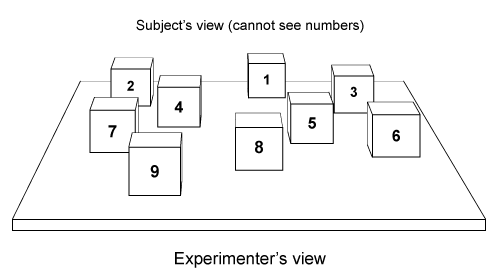 Figure 1 Corsi block-tapping taskThe Corsi block-tapping task consists of nine wooden blocks placed randomly on a board (Figure 1). To assess subjects' nonverbal memory, the experimenter touched four numbered blocks (numbers were visible only to the experimenter) in a specific pattern. Each subject was then asked to touch the same four blocks in the same sequence, either immediately or after a delay of 5-25 seconds. Subjects were required to perform a distractor task during the delay period. For the distractor task, subjects were asked to watch and reproduce a finger-tapping sequence first demonstrated by the experimenter. Experimenters would touch a finger on their right hand to a finger on their left hand according to a specific sequence (eg, index finger to ring finger, then pinky finger to middle finger) and the subjects would try to do the same.Results indicated that compared to controls, subjects with AD and KS were significantly impaired on the delayed memory task, although all subjects showed a significantly greater number of errors with increases in the delay interval.
-Which of the following best summarizes a difference between Korsakoff Syndrome (KS) and Alzheimer Disease (AD)?
Figure 1 Corsi block-tapping taskThe Corsi block-tapping task consists of nine wooden blocks placed randomly on a board (Figure 1). To assess subjects' nonverbal memory, the experimenter touched four numbered blocks (numbers were visible only to the experimenter) in a specific pattern. Each subject was then asked to touch the same four blocks in the same sequence, either immediately or after a delay of 5-25 seconds. Subjects were required to perform a distractor task during the delay period. For the distractor task, subjects were asked to watch and reproduce a finger-tapping sequence first demonstrated by the experimenter. Experimenters would touch a finger on their right hand to a finger on their left hand according to a specific sequence (eg, index finger to ring finger, then pinky finger to middle finger) and the subjects would try to do the same.Results indicated that compared to controls, subjects with AD and KS were significantly impaired on the delayed memory task, although all subjects showed a significantly greater number of errors with increases in the delay interval.
-Which of the following best summarizes a difference between Korsakoff Syndrome (KS) and Alzheimer Disease (AD)? (Multiple Choice)
4.9/5 (81)
(81) Passage
Until the middle of the twentieth century, most researchers believed that infants possess only the most rudimentary ways of perceiving the world. Then, in the 1950s, innovative investigative strategies allowed researchers to better assess the complexity of infants' perceptual abilities.Studies on the visual perception of infants used gaze time as an indicator of interest or preference. In Study 1, 36 babies age 2 weeks to 4 months were shown 6 pictures of identical size simultaneously, such as pictures of a bull's-eye, a bird, three squares of different colors, and a human face. Researchers recorded the time the infants spent looking at each picture and calculated the mean gaze time for each picture. It was found that the babies gazed far longer at the human face than at any other picture.Studies on the auditory perception of infants also employed gaze time as an indicator of preference. In Study 2, researchers exposed infants age 1-4 months to four types of auditory stimuli. The first type was human speech consisting of a series of randomly selected short words, each stated in a neutral tone, followed by a second of silence. The other stimuli included environmental sounds (eg, forest noises); neutral, human, noncommunicative sounds (eg, sneezing, coughing, throat clearing); and monkey vocalizations. A red light was shown on a computer monitor to attract the babies' attention. Once their gaze was fixed on the monitor, they were shown a picture of a checkerboard along with the auditory stimulus for up to 40 seconds. The time the infants gazed at the monitor was recorded. Results indicated that babies preferred human speech to any other sound.
Adapted from S. Shultz and A. Vouloumanos ©2010 Taylor & Francis Group, and R. L. Fantz ©1961 Scientific American.
-Place theory is most appropriate for explaining how infants:
(Multiple Choice)
4.8/5 (82)
(82) The following graph, depicting the foreign-born (immigrant) population in the United States (US) from 1850 to 2010, best supports which of the following conclusions? 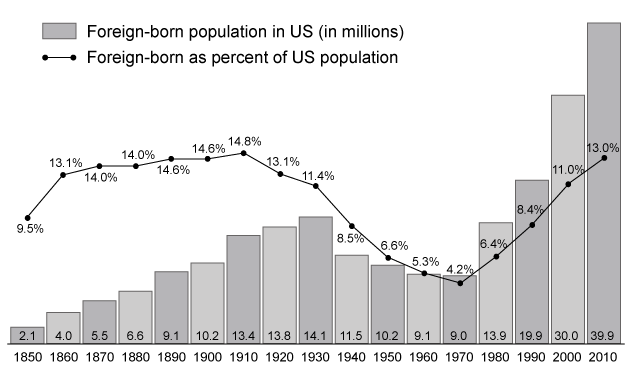
(Multiple Choice)
4.7/5 (80)
(80) Passage
Patients undergoing chemotherapy frequently experience a number of side effects in response to the cytotoxic drugs administered during treatment, including nausea and/or vomiting (N/V), hair loss, fatigue, cognitive dysfunction, anemia, and others. However, there is ample evidence that learning and cognition may play a role in the development of some of these side effects. For example, 20%-30% of patients undergoing chemotherapy continue to experience N/V merely in the setting and presence of chemotherapy equipment even after taking antiemetic medication.Three studies were conducted to better understand the acquisition of a learned, anticipatory nausea (AN) response. Studies 1 and 2 used the classical conditioning principle of overshadowing, in which a powerful stimulus is presented alongside a less salient stimulus during the acquisition phase. This results in a stronger relationship between the salient stimulus and the response, as compared with the less salient stimulus and response.In Study 1, nausea was induced in 50 healthy volunteers through motion sickness in a rotating chair. Subjects were divided into two groups and drank specific beverages prior to the rotation: One group received a different novel-tasting beverage (eg, elderberry, sloe) each day, and the other group drank only water. Nausea-related symptoms were recorded before and after the rotation. Results showed that subjects who drank the novel-tasting beverages reported less AN than those who drank water.Study 2 tested the protocol from Study 1 in cancer patients undergoing chemotherapy. Immediately prior to chemotherapy infusion, one group received a different novel-tasting beverage each day and the other group drank only water. Results again demonstrated that subjects in the group with different novel-tasting beverages experienced less AN than those who drank water.Study 3 researchers investigated whether patients' pretreatment expectations of developing nausea or medication-induced post-chemotherapy nausea (PN) were a better predictor of subsequent AN. Before their first round of chemotherapy (session #1), subjects were surveyed about their degree of certainty of developing nausea. PN was measured after session #1, and then AN was measured before session #3 (Figure 1).
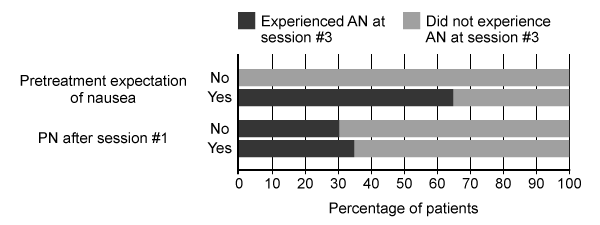 Figure 1 AN before session #3
J. T. Hickok, J. A. Roscoe, and G. R. Morrow ©2001 Elsevier; U. Stockhorst, P. Enck, and S. Klosterhalfen ©2007 Baishideng Publishing Group.
-If the survey from Study 3 that assessed the patients' level of AN was determined to be reliable, which of the following statements is true?
Figure 1 AN before session #3
J. T. Hickok, J. A. Roscoe, and G. R. Morrow ©2001 Elsevier; U. Stockhorst, P. Enck, and S. Klosterhalfen ©2007 Baishideng Publishing Group.
-If the survey from Study 3 that assessed the patients' level of AN was determined to be reliable, which of the following statements is true? (Multiple Choice)
4.8/5 (86)
(86) In a surgical residency program that does not allow maternity leave, a female resident becomes pregnant and takes three weeks off to have her baby. A male resident misses a similar amount of time due to an accident. Later, only the female resident is required to make up the time missed. Is this an example of institutional discrimination?
(Multiple Choice)
4.8/5 (82)
(82) The graph below represents the relationship between the dose of a new drug and the severity of Parkinson-like motor symptoms, a suspected side effect. This drug is most likely a: 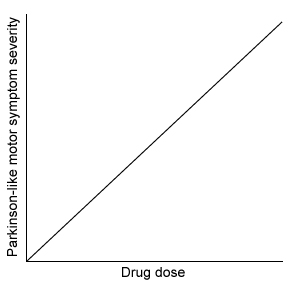
(Multiple Choice)
4.9/5 (75)
(75) Passage
The last several decades have seen a significant increase in immigration to the United States. Today, more than 20% of American children age 17 and younger have at least one foreign-born parent, and about 30% of these children are themselves foreign-born.Immigrant youths in the United States tend to adapt extremely well to their new surroundings. Researchers report that immigrant students often perform in school as well or better than their US-born classmates. Studies assessing psychological adjustment reveal similar findings: Foreign-born students are less likely to abuse alcohol or break the law, and they demonstrate relatively higher levels of self-esteem than their US-born peers.The following quotations are responses from overachieving immigrant middle school students when asked by interviewers to explain their success:Student 1, eighth-grade valedictorian: "When my mother first came to the United States from China, she spent all her time working, trying to earn a living to support her three children. I know how much she has sacrificed, and I am so grateful that I am willing to do just about anything for her."Student 2, a straight-A student: "[In my neighborhood] everyone knows everyone. They all know what I am up to, so I want to make a good impression and have them think highly of me. I also want to represent my community well to others."Even though immigrant families are often more prosperous in the United States than they were in their home countries, they still often struggle financially, typically due to parental language barriers. The impressive adaptations of immigrant students occur despite impoverished circumstances; their parents tend to emphasize the importance of education as a means to attaining prosperity, reminding their children that they immigrated to provide their children with access to better education than was available in their homeland. Immigrant children tend to internalize their parents' attitude toward educational achievement.Members of ethnic minorities in the United States also stress loyalty to family and community over self, so children feel a strong sense of gratitude and allegiance to their parents. Immigrant parents with successful children have usually formed close relationships with members of their ethnic community; members of ethnic enclaves tend to demonstrate consensus on values and exert an unusually high level of control over the children's behavior through regular monitoring.
L. E. Berk. Child Development © 2006 Pearson
-Which concept best explains why it CANNOT be concluded that American students are underperforming academically compared to students in other countries, based on the passage's comparison between immigrant children and their US-born classmates?
(Multiple Choice)
4.9/5 (85)
(85) Passage
Psychophysiology examines the relationship between the properties of a physical stimulus (eg, amplitude of sound waves) and how we perceive that stimulus (eg, loudness). However, this relationship is often accompanied by a degree of uncertainty as the stimulus of interest, or signal, can be confounded by various sources of noise. Noise can be either external (arising from the environment) or internal (arising from physiological sources).To investigate the effect of distraction on auditory perception, researchers tested the ability of subjects to detect auditory tones presented during a visual-memory task. The study included 90 participants age 18-65, and each participant completed 10 trials. Trials consisted of five 800-Hz tones presented randomly while participants viewed a set of 15 sequential pictures of common objects on a computer screen. The objects fell into one of three categories: animals, vehicles, or things that make noise. Half the participants were asked to memorize as many objects as they could (objects group), and half were asked to remember only the categories of objects they saw (categories group). Tones were presented bilaterally within a range of 0-20 dB. Participants noted when they detected a tone during the trial by pressing a button. Results of the study are shown in Figure 1.
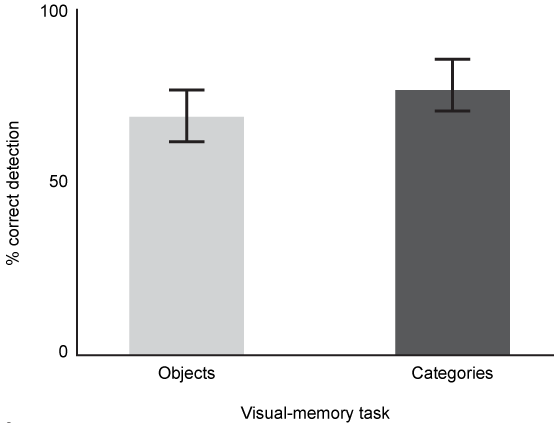 Figure 1 Mean percentage of tones correctly identified in each visual-memory task group (Note: Error bars indicate 95% confidence intervals.)
W. Yost ©2007 Academic Press.
-Which of the following conclusions can be drawn from the study as it is described in the passage?
Figure 1 Mean percentage of tones correctly identified in each visual-memory task group (Note: Error bars indicate 95% confidence intervals.)
W. Yost ©2007 Academic Press.
-Which of the following conclusions can be drawn from the study as it is described in the passage? (Multiple Choice)
4.8/5 (71)
(71) Passage
Almost 70% of Americans today are either overweight or obese, but only 34% think they weigh too much. This is in contrast to 1990, when 54% of Americans were overweight or obese and 46% reported being at least somewhat overweight. In other words, the gap between what we weigh and what we think we weigh is getting bigger.Epidemiologists argue that this discrepancy can be partly explained by the widespread resetting of norms regarding "normal weight" and "obesity." As close friends, coworkers, and family members gain weight, one's concept of what a body of acceptable weight looks like becomes modified. What was once considered overweight is now considered the norm, if only because it is so common (Figure 1).
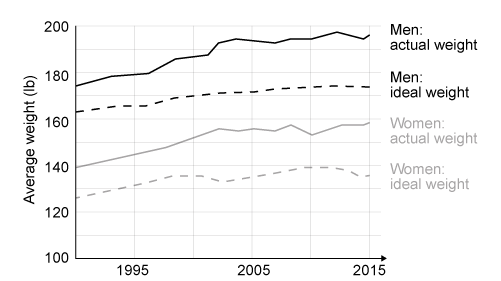 Figure 1 Actual vs. ideal weight (in pounds) for Americans, 1990-2015This sheds new light on recent efforts to stop the obesity epidemic in America. Experts have long contended that awareness efforts don't work because overweight individuals are already aware that they are overweight and that obesity causes health problems. These latest data suggest that many overweight Americans don't even realize that they are overweight. Epidemiologists are now suggesting that a more successful strategy to get Americans to lose weight might be to first succeed at convincing them that being overweight is not normal.
-Based on the information in the final paragraph, a successful strategy for promoting weight loss would be to counteract which cognitive bias?
Figure 1 Actual vs. ideal weight (in pounds) for Americans, 1990-2015This sheds new light on recent efforts to stop the obesity epidemic in America. Experts have long contended that awareness efforts don't work because overweight individuals are already aware that they are overweight and that obesity causes health problems. These latest data suggest that many overweight Americans don't even realize that they are overweight. Epidemiologists are now suggesting that a more successful strategy to get Americans to lose weight might be to first succeed at convincing them that being overweight is not normal.
-Based on the information in the final paragraph, a successful strategy for promoting weight loss would be to counteract which cognitive bias? (Multiple Choice)
4.9/5 (97)
(97) Passage
Of the biological factors impacting color perception in humans, one of the easiest to study is the number and type of color-sensitive photoreceptors. The human retina typically contains three types of cone photoreceptors, which contain opsin proteins that are sensitive to short (blue), medium (green), and long (red) wavelengths of light (Figure 1A).The genes that encode for medium and long wavelength-sensitive opsin proteins are located on the X chromosome. Mutations in these genes often produce a variant cone type that responds to wavelengths overlapping the response range of one of the normal cone types, so color perception is unaltered (Figure 1B). However, in a small percentage of women, the variant cone type appears to be sensitive to a range of wavelengths that differs from that of normal cone types (Figure 1C). It is hypothesized that these "tetrachromatic" women may be able to distinguish more colors than can the normal trichromatic population.
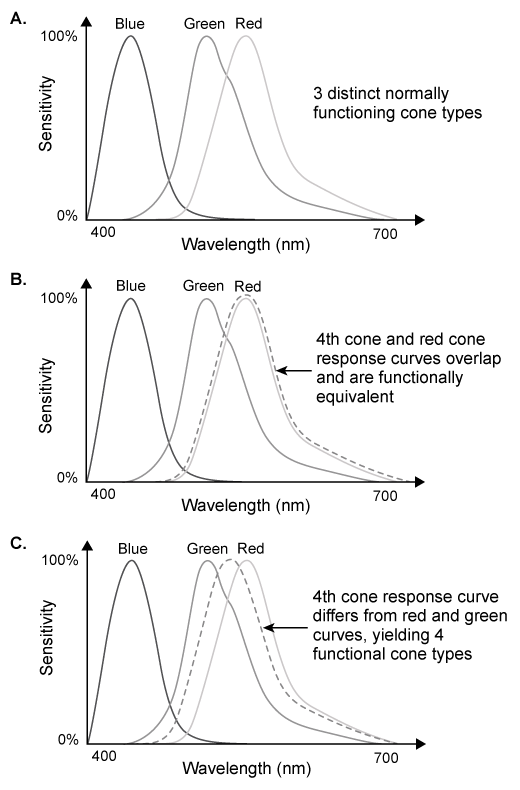 Figure 1 Response curves for (A) three cone types (trichromat, normal color perception); (B) four cone types (likely normal color perception); and (C) four cone types (tetrachromat, hypothesized enhanced color perception)A researcher conducted a series of tasks to assess the extent to which color perception of tetrachromatic subjects differs from that of trichromatic controls. Three women known to possess four retinal cone classes were recruited for the study. One of the women had experienced a small lesion to her right primary visual cortex the year prior. In addition, two women with normal trichromatic vision were recruited as controls (Table 1).Table 1 Characteristics of Subjects
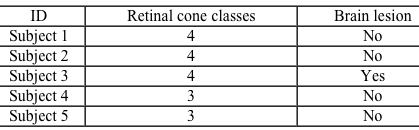 In Task 1, participants identified the colors of objects that were stationary (artificial condition) and in motion (natural condition). Under both conditions, the researcher systematically varied where the objects were presented in the subjects' visual field. Task 2 was a standardized, computer-administered color-discrimination task. Task 3 was an extensive interview that assessed the subjects' subjective experience of color.Subject 1 was able to identify more colors than the controls under all experimental conditions, and Subject 2 and Subject 3 performed marginally better than controls in some of the experimental conditions. Notably, only Subject 1 was able to verbalize her thoughts about her atypical color perception during Task 3, where she described seeing nuances in colors using words she had learned from her mother, who was also a tetrachromat and an artist. The researcher concluded that language likely plays a significant role in color perception: Without a vocabulary for the full variety of colors tetrachromats can perceive, they are limited in their perception despite their biological trait.
S. S. Deeb ©2005 John Wiley & Sons; K. A. Jameson, A. D. Winkler, and K. Goldfarb ©2016 IS&T International Symposium on Electronic Imaging.
-Subject 3 would NOT be able to perceive visual stimuli presented:
Figure 1 Response curves for (A) three cone types (trichromat, normal color perception); (B) four cone types (likely normal color perception); and (C) four cone types (tetrachromat, hypothesized enhanced color perception)A researcher conducted a series of tasks to assess the extent to which color perception of tetrachromatic subjects differs from that of trichromatic controls. Three women known to possess four retinal cone classes were recruited for the study. One of the women had experienced a small lesion to her right primary visual cortex the year prior. In addition, two women with normal trichromatic vision were recruited as controls (Table 1).Table 1 Characteristics of Subjects
In Task 1, participants identified the colors of objects that were stationary (artificial condition) and in motion (natural condition). Under both conditions, the researcher systematically varied where the objects were presented in the subjects' visual field. Task 2 was a standardized, computer-administered color-discrimination task. Task 3 was an extensive interview that assessed the subjects' subjective experience of color.Subject 1 was able to identify more colors than the controls under all experimental conditions, and Subject 2 and Subject 3 performed marginally better than controls in some of the experimental conditions. Notably, only Subject 1 was able to verbalize her thoughts about her atypical color perception during Task 3, where she described seeing nuances in colors using words she had learned from her mother, who was also a tetrachromat and an artist. The researcher concluded that language likely plays a significant role in color perception: Without a vocabulary for the full variety of colors tetrachromats can perceive, they are limited in their perception despite their biological trait.
S. S. Deeb ©2005 John Wiley & Sons; K. A. Jameson, A. D. Winkler, and K. Goldfarb ©2016 IS&T International Symposium on Electronic Imaging.
-Subject 3 would NOT be able to perceive visual stimuli presented: (Multiple Choice)
4.8/5 (93)
(93) 
Filters
- Essay(0)
- Multiple Choice(0)
- Short Answer(0)
- True False(0)
- Matching(0)