



 Chat with AI
Exam 1: Behavioral Sciences

Exam 1: Behavioral Sciences343 Questions
Exam 2: Biochemistry307 Questions
Exam 3: Biology319 Questions
Exam 4: Critical Analysis & Reasoning Skills358 Questions
Exam 5: General Chemistry317 Questions
Exam 6: Organic Chemistry191 Questions
Exam 7: Physics200 Questions
Select questions type


Passage
Studies suggest that health outcomes for preventable diseases are impacted by delayed treatment and lack of compliance. People often postpone seeking medical care because they fear hearing bad news from their physician. Paradoxically, when they finally do see a doctor, they may find out that their disease is indeed serious, but only because treatment was so delayed.Refusal to comply with a physician's instructions is another major issue. Although there are many reasons for this, one possible explanation is that patients are responding with psychological reactance. Reactance theory suggests that when an individual perceives that free choice is threatened or limited, he or she may respond by wanting to perform the threatened behavior even more, as if to preserve original freedoms. For example, if a physician tells a patient to quit smoking, the smoker might respond by smoking even more in an effort to preserve the freedom to smoke.Researchers hypothesize that psychological reactance may be reduced or avoided when physicians communicate with their patients through a process known as deliberation. In the following example, the physician has already explained to the patient that her weight could be having a negative impact on her diabetes. The physician, using deliberation, then initiates a dialogue about how the patient would like to address the situation:Physician: "You are already taking pretty strong medications, so your options are either to change your eating habits or increase your level of exercise. It's your choice."Patient: "I think I could exercise more by joining a gym. I could stop eating dessert, but I would hate to give up chocolate."Physician: "Okay. Let's negotiate. Why don't you try going to the gym and giving up sweets-except chocolate-for the next month. Then come back to see me, and we'll see where we are."
Adapted from S. Bigi ©2016 Frontiers.
-If the patient has not lost any weight after a month, which of the following most reflects self-serving bias?
(Multiple Choice)
5.0/5  (72)
(72) Passage
Before memories have been consolidated they are considered "labile," or unstable and easily altered. Sleep is theorized to be essential to the process of memory consolidation, though the mechanisms for this are still under investigation. Rapid eye movement (REM) sleep has long been assumed to be the sleep stage most important for overall memory consolidation, but recent research suggests that different types of memory may be consolidated during different sleep stages. Procedural memories appear to be primarily consolidated during REM sleep while declarative memories appear to be primarily consolidated during slow-wave sleep (SWS). Sleep duration, sleep regularity, and timing of sleep all contribute to the proportions of REM and SWS, so these factors also play an important role in memory consolidation processes.An experiment was performed at a large state university to investigate the relationship between sleep and learning in college students. Researchers screened potential participants with a sleep habits questionnaire. Those who reported having a regular sleep schedule were included in the study (N = 100) and given a vocabulary knowledge pretest. Participants were then randomly assigned to 1 of 4 experimental groups, each containing 25 students. During the learning phase (L), each student was asked to memorize a set of 10 common toy objects (eg, car, ball, stuffed animal, blocks) and 10 vocabulary definitions that the student had labeled as "unknown" during the pretest. Images of the toy objects were presented in a sequence, one at a time, for 5 seconds each; the 10 vocabulary definitions were listed on a sheet that students were allowed to study for 10 minutes. During the testing phase (T), students were asked to recall the objects in any order and define the vocabulary words (Figure 1).
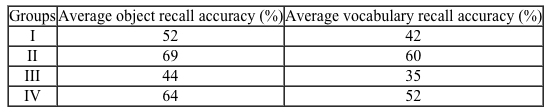
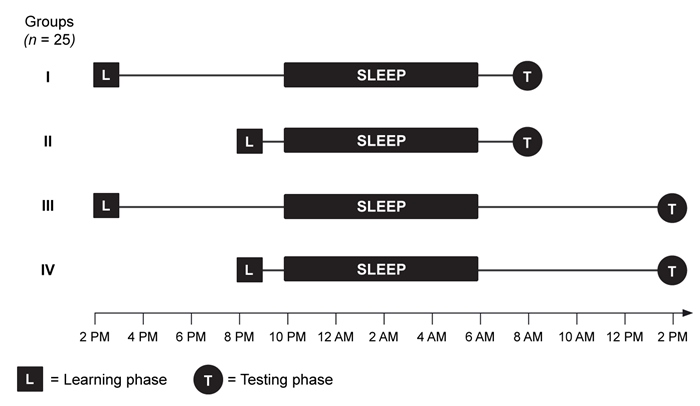 Figure 1 Experimental design for each of the 4 groupsResults were reported as the average recall accuracy for the objects and vocabulary definitions, by group (Table 1). Participants were then given a survey about the techniques they used when attempting to remember the toy objects and vocabulary definitions. Some students reported associating the definitions and objects with one another. For instance, one student reported that she related the words "plucky" (meaning brave) and "tocsin" (meaning an alarm) to an image of a toy fire truck, making it easier to recall the toy object and both associated vocabulary definitions.Table 1 Average Recall Accuracy, per Group
 -The recall of which of the following should be most subject to serial position effects?
Figure 1 Experimental design for each of the 4 groupsResults were reported as the average recall accuracy for the objects and vocabulary definitions, by group (Table 1). Participants were then given a survey about the techniques they used when attempting to remember the toy objects and vocabulary definitions. Some students reported associating the definitions and objects with one another. For instance, one student reported that she related the words "plucky" (meaning brave) and "tocsin" (meaning an alarm) to an image of a toy fire truck, making it easier to recall the toy object and both associated vocabulary definitions.Table 1 Average Recall Accuracy, per Group
-The recall of which of the following should be most subject to serial position effects? (Multiple Choice)
4.9/5 (80)
(80) In a two-part procedure for teaching children with diabetes to self-inject insulin, a child is first shown a video of same-aged peers self-injecting insulin and is then given a sticker for each attempt to self-inject. This procedure utilizes:
(Multiple Choice)
4.9/5 (72)
(72) Passage
Religion establishes the beliefs and rituals surrounding the sacred and provides meaning and significance to individuals' lives. The tenets of any given religion can have a far-reaching impact on the individuals within its faith community. For example, certain religions promote faith-based lifestyle directives (FBLDs), which urge believers to follow specific guidelines regarding their own behavior (eg, restrictions on diet and substance use) and their treatment of others (eg, mission work). Because these practices typically reflect the religious group's values, FBLDs are often an important expression of faith for the deeply religious.One religious group with health-related FBLDs is the Seventh Day Adventist Church, which formed in the 1860s after early leaders broke away from established Protestant churches. Since its formal establishment, Seventh Day Adventist Church membership has grown from 3,500 to over 20 million worldwide. The Seventh Day Adventist Church advocates conservative religious teachings and a holistic approach to health and wellness; members are encouraged to pursue vegetarianism, exercise regularly, and avoid alcohol and tobacco.Although FBLDs impact believers' personal choices and behaviors, they are also often meant to have an impact on others through the creation of social institutions such as schools and hospitals. For example, early Adventist leaders developed a health care system to serve the needs of the larger community, and members of the modern Adventist Church have continued to try to reduce health disparities worldwide by creating hospitals, clinics, and universities that provide health care and education services to underserved and developing communities.Researchers from a variety of fields have examined health-related religious values and FBLDs. Epidemiological research has shown that believers from different religions who follow certain FBLDs (eg, abstaining from smoking and alcohol) experience lower rates of chronic illnesses (eg, heart disease and many types of cancer) than the general population. Sociologists have suggested that as a society increasingly relies on medical professionals, rather than clergy, as legitimate sources of guidance on lifestyle behaviors, membership in religious groups with values that are compatible with medicalization will continue to rise. Some hypothesize that this phenomenon accounts for the seemingly contradictory increase in membership in certain conservative religious groups with strict FBLDs, despite mainstream society becoming less religious.
-The sects and churches with FBLDs described in the passage are most likely to be categorized as:
(Multiple Choice)
4.9/5 (74)
(74) Passage
People tend to believe that they are less vulnerable to negative outcomes or events than others. This is known as the self-positivity bias, a specific type of attributional bias in social psychology. Health psychologists suggest that the self-positivity bias may prevent people from being persuaded to take precautionary measures against certain health risks because behavior change is predicated on the perceived risk of contracting the disease in question. If a persuasive message cannot overcome the self-positivity bias, then behavior change is unlikely.In Study 1, researchers hypothesized that when told that an infectious disease can be contracted by engaging in likely or common behavior, people will experience less self-positivity bias than when told the disease can be contracted through unlikely or uncommon behavior. Ninety participants were randomly assigned to a likely/common group, an unlikely/uncommon group, and a control group. All participants read the same paragraph about the health consequences of viral meningitis and how it is contracted. For the likely/common group, the paragraph included, "Viral meningitis is caused by enteroviruses (common virus causing 'stomach flulike' symptoms) and can be contracted through close contact (touching, kissing) with an infected person." For the unlikely/uncommon group, the paragraph included, "Viral meningitis is caused by lymphocytic choriomeningitis virus and can be contracted through coming into contact with the blood, feces, urine, or saliva of an infected mouse." All participants were asked to estimate the likelihood of contracting the disease themselves and the likelihood for the average person (Table 1).Table 1 Mean Estimated Probability of Contracting Viral Meningitis, by Group
 In Study 2, 120 participants read a newspaper article about hepatitis C and were then randomly assigned to one of four experimental conditions, each receiving additional information about either two or eight relatively uncommon behaviors (eg, getting a tattoo, sharing a needle) or relatively common behaviors (eg, sharing a toothbrush, not bandaging a cut) that could spread the disease. Participants rated their concern for contracting hepatitis C on a scale of 1 (not at all concerned) to 7 (most concerned) (Table 2).Table 2 Mean Concern of Contracting Hepatitis C Score, by Group and Condition
 -The foot-in-the-door phenomenon predicts that:
In Study 2, 120 participants read a newspaper article about hepatitis C and were then randomly assigned to one of four experimental conditions, each receiving additional information about either two or eight relatively uncommon behaviors (eg, getting a tattoo, sharing a needle) or relatively common behaviors (eg, sharing a toothbrush, not bandaging a cut) that could spread the disease. Participants rated their concern for contracting hepatitis C on a scale of 1 (not at all concerned) to 7 (most concerned) (Table 2).Table 2 Mean Concern of Contracting Hepatitis C Score, by Group and Condition
-The foot-in-the-door phenomenon predicts that: (Multiple Choice)
4.8/5 (85)
(85) Passage
Across the lifespan, mental and physical health depends on adequate sleep. Extensive research suggests that sleep needs and characteristics change throughout an individual's life (Figure 1).
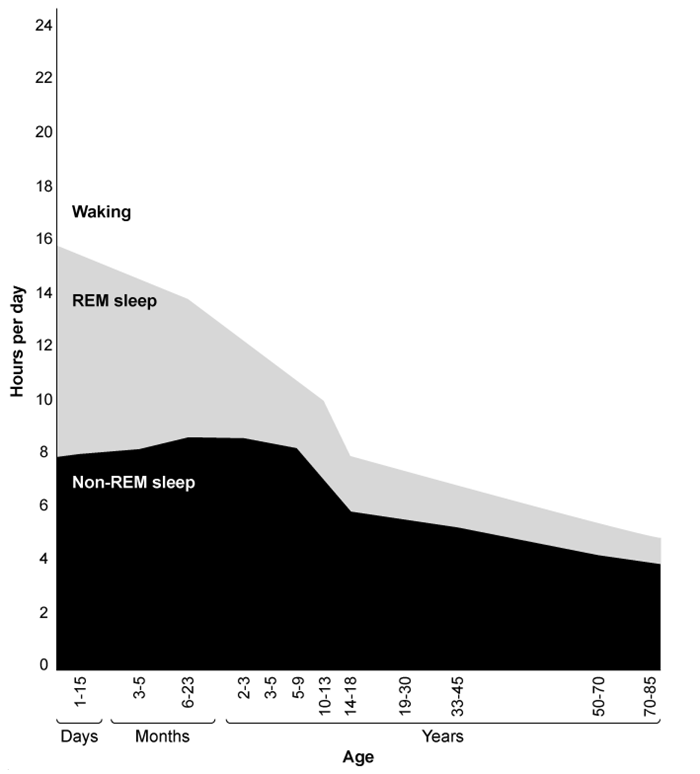 Figure 1 Average hours of rapid eye movement (REM) and non-REM sleep for different age groups across the lifespanChronic sleep deprivation acts as a physiological stressor and can have a multitude of short- and long-term negative health consequences. Studies show that over 30% of adults get less than the recommended minimum of 7 hours of sleep per night, putting them at greater risk for metabolic disorders (eg, obesity, diabetes), cardiovascular disease (eg, high blood pressure, stroke), and emotional disorders (eg, anxiety, depression). Sleep deprivation is also associated with impaired cognitive functioning, decreased work performance, and an increased risk of accidents.However, the guideline that adults sleep at least 7 hours per night does not account for the considerable variation in individual sleep needs. Research suggests that some individuals, known as "long sleepers," require an average daily sleep duration of more than 9 hours, while "short sleepers" require an average daily sleep duration of less than 6 hours. One study found that biological night duration (established by one's circadian pacemaker or "master clock") appears to be a few hours shorter for short sleepers as compared to long sleepers. Other studies suggest that short sleepers regularly sleep less than 7 hours without any apparent negative consequences due to one or more genetic mutations, such as a mutation on the DEC2 gene (also known as BHLHE41), which codes for a transcription factor involved in regulating circadian rhythms.
-Chronic sleep deprivation is expected to have which of the following effects on the body?
Figure 1 Average hours of rapid eye movement (REM) and non-REM sleep for different age groups across the lifespanChronic sleep deprivation acts as a physiological stressor and can have a multitude of short- and long-term negative health consequences. Studies show that over 30% of adults get less than the recommended minimum of 7 hours of sleep per night, putting them at greater risk for metabolic disorders (eg, obesity, diabetes), cardiovascular disease (eg, high blood pressure, stroke), and emotional disorders (eg, anxiety, depression). Sleep deprivation is also associated with impaired cognitive functioning, decreased work performance, and an increased risk of accidents.However, the guideline that adults sleep at least 7 hours per night does not account for the considerable variation in individual sleep needs. Research suggests that some individuals, known as "long sleepers," require an average daily sleep duration of more than 9 hours, while "short sleepers" require an average daily sleep duration of less than 6 hours. One study found that biological night duration (established by one's circadian pacemaker or "master clock") appears to be a few hours shorter for short sleepers as compared to long sleepers. Other studies suggest that short sleepers regularly sleep less than 7 hours without any apparent negative consequences due to one or more genetic mutations, such as a mutation on the DEC2 gene (also known as BHLHE41), which codes for a transcription factor involved in regulating circadian rhythms.
-Chronic sleep deprivation is expected to have which of the following effects on the body? (Multiple Choice)
4.8/5 (82)
(82) Passage
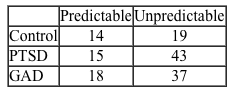
Post-traumatic stress disorder (PTSD) and generalized anxiety disorder (GAD) both involve an exaggerated response to everyday stressors and a heightened state of anxiety or arousal that can impede concentration and daily functioning. Both can be effectively treated with medication, including anxiolytics and antidepressants, and with therapy, the most effective of which is cognitive-behavioral therapy (CBT). Psychologists believe that the unpredictable nature of stressors plays a key role in the development and persistence of both disorders. However, the response to predictable threats is believed to be normal.A study was conducted to investigate how individuals diagnosed with PTSD or GAD respond to predictable and unpredictable threats. Twenty patients with PTSD, 20 patients with GAD, and 50 control participants took part in the study. The groups did not differ significantly with respect to age or gender. The study involved two conditions, each three minutes in duration. During the first (predictable) condition, participants were shown a cue (red box) at random times while gazing through a viewing apparatus. The cue signaled the imminent presentation of various loud noises such as thunder or screaming, meant to induce fear. During the second (unpredictable) condition, the loud noise was presented randomly with no warning.The magnitude of the participants' startle response was measured by an eye blink reflex recorded with electrodes placed under the eyes (measured in microvolts [Table 1]).Table 1 Mean Startle Response in Microvolts by Group and Condition
 After the study, participants were asked to rate their subjective fear on a scale of 0 (no fear) to 10 (most fear). The controls reported the least fear under both conditions. PTSD participants expressed greater fear than GAD participants during the unpredictable condition, but GAD participants reported greater fear than PTSD participants during the predictable condition.
C. Grillon, D. S. Pine, S. Lissek, S. Rabin, and M. Vythilingam ©2009 by Society of Biological Psychiatry.
-During the first condition, the cue is most likely to become:
After the study, participants were asked to rate their subjective fear on a scale of 0 (no fear) to 10 (most fear). The controls reported the least fear under both conditions. PTSD participants expressed greater fear than GAD participants during the unpredictable condition, but GAD participants reported greater fear than PTSD participants during the predictable condition.
C. Grillon, D. S. Pine, S. Lissek, S. Rabin, and M. Vythilingam ©2009 by Society of Biological Psychiatry.
-During the first condition, the cue is most likely to become: (Multiple Choice)
4.9/5 (87)
(87) Passage
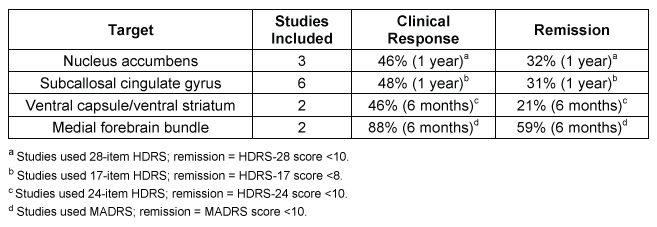
Major depression is a mood disorder that affects nearly 7% of the American population and is the most common cause of disability worldwide. Standard treatment typically involves antidepressant medication alone, although a combination of antidepressant medication and psychological treatment, such as psychotherapy or cognitive-behavioral therapy, is often more effective. However, because depression has genetic, environmental, and psychological contributing factors, treatment can be challenging. Approximately 10% of those suffering from depression have treatment-resistant depression (TRD) that does not respond to standard treatment.A number of treatment options for those with TRD target the functioning of the nervous system. Deep-brain stimulation (DBS), which is used to treat Parkinson disease, has also been investigated as a treatment for TRD. DBS involves implanting a device in the brain that sends electrical impulses to a specific area. Although the mechanism by which DBS alleviates depressive symptoms is unclear, neurostimulation provided by DBS is thought to disrupt dysfunctional patterns of electrical activity in local areas and connected brain regions.A meta-analysis reviewed the data from several studies that used different brain regions as DBS targets in the treatment of TRD. Table 1 shows the percentage of TRD patients who underwent DBS and showed clinical responsiveness and remission of depression. Clinical response was defined as a 50% reduction in scores on a measure of depression. Various scales were used in the studies, including different versions of the Hamilton Depression Rating Scale (HDRS) and Montgomery-Asberg Depression Rating Scale (MADRS). Remission of depression was defined as a score that fell below a predetermined threshold.Table 1 Percentage of TRD Patients Who Showed Clinical Response and Remission With DBS Treatment
 -Which of the following brain regions is likely the most effective DBS target for a Parkinson disease patient?
 (Multiple Choice)
4.7/5 (76)
(76) Passage
Text messaging while driving increases the risk of a motor vehicle accident more than twenty-fold. The number of deadly highway accidents has spiked after decades of decline, mainly because of texting while driving. Despite this, nearly 40% of American drivers report having texted while driving and 20% of drivers report doing so regularly. Motor vehicle traffic accidents are the leading cause of death among Americans age 16 to 25.Researchers conducted a study to investigate the extent to which driving is impaired by prolonged gazes away from the highway (as a correlate to texting while driving) for males with and without attention-deficit hyperactivity disorder (ADHD). Eighty 16-year-old males with a valid driver's license were recruited for the study; half had ADHD (26 diagnosed as mild, 14 diagnosed as moderate) and half did not. Each participant was asked to complete six driving tasks (eg, avoiding an object on the road, merging, making unexpected stops) using a highly realistic driving simulator that projects computer-generated, two-dimensional, 360º visuals, requiring the use of side and rearview mirrors. The baseline condition included no distraction. In the first distraction condition, participants drove while conducting a hands-free phone conversation, and in the second distraction condition they were texting while driving. Two dependent variables were assessed: (1) percentage of driving time with eyes diverted from the road, and (2) number of glances away from the road lasting longer than two seconds.Under both distraction conditions, participants with ADHD (compared to those without ADHD) demonstrated a significantly higher percentage of driving time with eyes diverted from the road, as well as a significantly higher number of prolonged glances away from the road. In addition, unsteady lane position while driving was correlated with both ADHD and texting. The researchers concluded that impairments in driving performance were due to the extreme cognitive workload of competing tasks and visual inattention.
-Researchers designed the two distraction conditions to require multitasking and predicted that the hands-free conversation condition would be less distracting than the texting condition because of:
(Multiple Choice)
4.8/5 (87)
(87) Passage
Major depression is a mood disorder that affects nearly 7% of the American population and is the most common cause of disability worldwide. Standard treatment typically involves antidepressant medication alone, although a combination of antidepressant medication and psychological treatment, such as psychotherapy or cognitive-behavioral therapy, is often more effective. However, because depression has genetic, environmental, and psychological contributing factors, treatment can be challenging. Approximately 10% of those suffering from depression have treatment-resistant depression (TRD) that does not respond to standard treatment.A number of treatment options for those with TRD target the functioning of the nervous system. Deep-brain stimulation (DBS), which is used to treat Parkinson disease, has also been investigated as a treatment for TRD. DBS involves implanting a device in the brain that sends electrical impulses to a specific area. Although the mechanism by which DBS alleviates depressive symptoms is unclear, neurostimulation provided by DBS is thought to disrupt dysfunctional patterns of electrical activity in local areas and connected brain regions.A meta-analysis reviewed the data from several studies that used different brain regions as DBS targets in the treatment of TRD. Table 1 shows the percentage of TRD patients who underwent DBS and showed clinical responsiveness and remission of depression. Clinical response was defined as a 50% reduction in scores on a measure of depression. Various scales were used in the studies, including different versions of the Hamilton Depression Rating Scale (HDRS) and Montgomery-Asberg Depression Rating Scale (MADRS). Remission of depression was defined as a score that fell below a predetermined threshold.Table 1 Percentage of TRD Patients Who Showed Clinical Response and Remission With DBS Treatment
-Which of the following conclusions is best supported by Table 1?
-Which of the following conclusions is best supported by Table 1? (Multiple Choice)
4.7/5 (85)
(85) Passage
Text messaging while driving increases the risk of a motor vehicle accident more than twenty-fold. The number of deadly highway accidents has spiked after decades of decline, mainly because of texting while driving. Despite this, nearly 40% of American drivers report having texted while driving and 20% of drivers report doing so regularly. Motor vehicle traffic accidents are the leading cause of death among Americans age 16 to 25.Researchers conducted a study to investigate the extent to which driving is impaired by prolonged gazes away from the highway (as a correlate to texting while driving) for males with and without attention-deficit hyperactivity disorder (ADHD). Eighty 16-year-old males with a valid driver's license were recruited for the study; half had ADHD (26 diagnosed as mild, 14 diagnosed as moderate) and half did not. Each participant was asked to complete six driving tasks (eg, avoiding an object on the road, merging, making unexpected stops) using a highly realistic driving simulator that projects computer-generated, two-dimensional, 360º visuals, requiring the use of side and rearview mirrors. The baseline condition included no distraction. In the first distraction condition, participants drove while conducting a hands-free phone conversation, and in the second distraction condition they were texting while driving. Two dependent variables were assessed: (1) percentage of driving time with eyes diverted from the road, and (2) number of glances away from the road lasting longer than two seconds.Under both distraction conditions, participants with ADHD (compared to those without ADHD) demonstrated a significantly higher percentage of driving time with eyes diverted from the road, as well as a significantly higher number of prolonged glances away from the road. In addition, unsteady lane position while driving was correlated with both ADHD and texting. The researchers concluded that impairments in driving performance were due to the extreme cognitive workload of competing tasks and visual inattention.
-Which aspect of working memory appears to be overloaded, according to the results of this study?
(Multiple Choice)
4.8/5 (68)
(68) Passage
Korsakoff syndrome (KS) is caused by a thiamin (vitamin B1) deficiency that often results from chronic alcohol consumption. If KS is diagnosed during its earliest stages, its course may be reversed with thiamin supplements; otherwise, it progresses into a permanent type of dementia that includes severe cognitive dysfunction and memory loss. Alzheimer disease (AD) is associated with a different type of dementia that worsens over time, eventually causing memory loss, cognitive dysfunction, and severe brain atrophy.In one study, KS and AD subjects were assessed using the Corsi block-tapping task, which measures nonverbal memory. The experiment consisted of 10 KS subjects, 10 AD subjects, and 10 healthy control subjects. The control group was matched by age, gender, and premorbid IQ (intelligence quotient preceding the occurrence of symptoms) to the KS and AD groups.
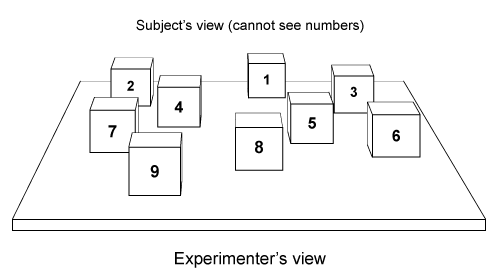 Figure 1 Corsi block-tapping taskThe Corsi block-tapping task consists of nine wooden blocks placed randomly on a board (Figure 1). To assess subjects' nonverbal memory, the experimenter touched four numbered blocks (numbers were visible only to the experimenter) in a specific pattern. Each subject was then asked to touch the same four blocks in the same sequence, either immediately or after a delay of 5-25 seconds. Subjects were required to perform a distractor task during the delay period. For the distractor task, subjects were asked to watch and reproduce a finger-tapping sequence first demonstrated by the experimenter. Experimenters would touch a finger on their right hand to a finger on their left hand according to a specific sequence (eg, index finger to ring finger, then pinky finger to middle finger) and the subjects would try to do the same.Results indicated that compared to controls, subjects with AD and KS were significantly impaired on the delayed memory task, although all subjects showed a significantly greater number of errors with increases in the delay interval.
-The distractor and Corsi block-tapping tasks are designed to assess which of the following?
Figure 1 Corsi block-tapping taskThe Corsi block-tapping task consists of nine wooden blocks placed randomly on a board (Figure 1). To assess subjects' nonverbal memory, the experimenter touched four numbered blocks (numbers were visible only to the experimenter) in a specific pattern. Each subject was then asked to touch the same four blocks in the same sequence, either immediately or after a delay of 5-25 seconds. Subjects were required to perform a distractor task during the delay period. For the distractor task, subjects were asked to watch and reproduce a finger-tapping sequence first demonstrated by the experimenter. Experimenters would touch a finger on their right hand to a finger on their left hand according to a specific sequence (eg, index finger to ring finger, then pinky finger to middle finger) and the subjects would try to do the same.Results indicated that compared to controls, subjects with AD and KS were significantly impaired on the delayed memory task, although all subjects showed a significantly greater number of errors with increases in the delay interval.
-The distractor and Corsi block-tapping tasks are designed to assess which of the following? (Multiple Choice)
4.9/5 (84)
(84) Passage
Until recently, deviance has generally been conceptualized as negative. Positive deviance (PD) is used to describe the atypical behaviors exhibited by some individuals that result in superior outcomes when compared with others in the group. Despite having similar access to limited resources, some people adopt novel strategies to problem-solve much better than their peers. For example, rural Vietnamese villages in the 1990s had child malnutrition rates approaching 70%. Despite this, certain villagers were able to nourish their children by developing innovative strategies that defied social norms. These villagers fed their children plant parts not traditionally consumed (such as the leaves of the sweet potato plant) and fed them three or four times a day (instead of the customary two meals a day). In other words, despite a lack of conventionally accepted means, these villagers engaged in alternative behaviors, or PD, to meet the societal goal of providing adequate nourishment to their children.Research into PD has focused on using these innovative individuals to catalyze change in their communities. A pilot study attempting to spread the techniques of these initial PD villagers within their own community was successful: Childhood malnutrition dropped by over 80% in two years. However, the community-based approach to changing health behaviors appears to be crucial: When an international aid organization attempted to implement a larger program based on these same practices, villagers resisted the imposed changes and it was unsuccessful.Another study assessed how PD can improve outcomes in health care settings. Patients with difficult-to-manage chronic diseases often hold deeply entrenched beliefs about how to handle their illnesses and ignore alternative strategies. PD patients, referred to as "bright spotters" in the study, are an exception. They have successfully managed to control their complex illnesses using innovative approaches such as diet modifications and unique coping mechanisms. Similar to the pilot study with Vietnamese villagers, preliminary results suggest that peer-led group activities may best allow bright spotters to teach fellow patients how to effectively manage their illnesses.
-The innovative strategies employed by PD villagers and bright spotters suggest an ability to overcome all of the following, EXCEPT:
(Multiple Choice)
4.7/5 (75)
(75) Passage
People tend to believe that they are less vulnerable to negative outcomes or events than others. This is known as the self-positivity bias, a specific type of attributional bias in social psychology. Health psychologists suggest that the self-positivity bias may prevent people from being persuaded to take precautionary measures against certain health risks because behavior change is predicated on the perceived risk of contracting the disease in question. If a persuasive message cannot overcome the self-positivity bias, then behavior change is unlikely.In Study 1, researchers hypothesized that when told that an infectious disease can be contracted by engaging in likely or common behavior, people will experience less self-positivity bias than when told the disease can be contracted through unlikely or uncommon behavior. Ninety participants were randomly assigned to a likely/common group, an unlikely/uncommon group, and a control group. All participants read the same paragraph about the health consequences of viral meningitis and how it is contracted. For the likely/common group, the paragraph included, "Viral meningitis is caused by enteroviruses (common virus causing 'stomach flulike' symptoms) and can be contracted through close contact (touching, kissing) with an infected person." For the unlikely/uncommon group, the paragraph included, "Viral meningitis is caused by lymphocytic choriomeningitis virus and can be contracted through coming into contact with the blood, feces, urine, or saliva of an infected mouse." All participants were asked to estimate the likelihood of contracting the disease themselves and the likelihood for the average person (Table 1).Table 1 Mean Estimated Probability of Contracting Viral Meningitis, by Group
In Study 2, 120 participants read a newspaper article about hepatitis C and were then randomly assigned to one of four experimental conditions, each receiving additional information about either two or eight relatively uncommon behaviors (eg, getting a tattoo, sharing a needle) or relatively common behaviors (eg, sharing a toothbrush, not bandaging a cut) that could spread the disease. Participants rated their concern for contracting hepatitis C on a scale of 1 (not at all concerned) to 7 (most concerned) (Table 2).Table 2 Mean Concern of Contracting Hepatitis C Score, by Group and Condition
-According to the elaboration likelihood model, which of the following should generate the most concern about the risks of contracting hepatitis C in the two-uncommon-behaviors group from Study 2? A television commercial showing:
In Study 2, 120 participants read a newspaper article about hepatitis C and were then randomly assigned to one of four experimental conditions, each receiving additional information about either two or eight relatively uncommon behaviors (eg, getting a tattoo, sharing a needle) or relatively common behaviors (eg, sharing a toothbrush, not bandaging a cut) that could spread the disease. Participants rated their concern for contracting hepatitis C on a scale of 1 (not at all concerned) to 7 (most concerned) (Table 2).Table 2 Mean Concern of Contracting Hepatitis C Score, by Group and Condition
-According to the elaboration likelihood model, which of the following should generate the most concern about the risks of contracting hepatitis C in the two-uncommon-behaviors group from Study 2? A television commercial showing: (Multiple Choice)
4.9/5 (64)
(64) Passage
The diagnosis of a child with a serious disability significantly impacts the child's parents. While positive psychological outcomes are sometimes possible, evidenced by research showing that for some parents a child's disability is eventually viewed as a chance for personal growth, research also indicates that many parents of children with disabilities are at greater risk for poor physical and mental health outcomes. Coping with a child's initial symptoms, providing ongoing care, and dealing with prejudice from others present significant stressors for parents. This stress may also disrupt marriages; results of a meta-analysis showed a modest, increased risk for divorce in parents of children with disabilities. Another line of research has identified significantly higher rates of anxiety and/or depression in parents of children with disabilities. The fact that parental distress often results in poorer outcomes for their children points to a need for evidence-based interventions for parents of children with disabilities.In Study 1, researchers compared the effectiveness of two interventions in reducing depressive symptoms in parents of children with cognitive disabilities. Researchers recruited 30 parents of children with intellectual disorders from the contact list of an affluent community wellness center and randomly assigned them to a meditation (M) group or a humanistic psychotherapy (HP) group. Both groups were led by peer mentors trained in specific interventions who taught and demonstrated the techniques to the participants during the weekly sessions. Participants completed self-report measures of depressive symptoms at baseline (pre-test), 4 weeks into the intervention (midpoint), at the end of the 8-week program (post-test 1), and 4 weeks after the program ended (post-test 2). The findings are shown in Figure 1.
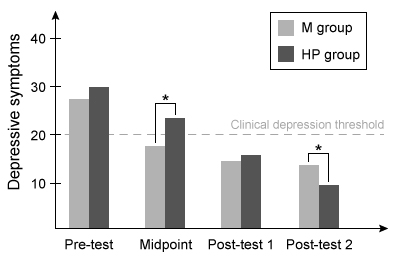 Figure 1 Depressive symptoms at pre-test, midpoint, post-test 1, and post-test 2 (Note: * indicates p < .05.)In Study 2, researchers examined the impact of coping strategies on distress in 80 parents of children with muscular dystrophy. Participants were asked to think of a recent stressful, threatening event and report whether they had classified their future expectancy for the event as "changeable" (situation is able to be modified) or "unchangeable" (situation is not able to be modified). They were then asked whether they attempted to cope with the event primarily by regulating their emotions (emotion-focused) or by modifying aspects of the situation (problem-focused), such as seeking help from others. Lastly, they were surveyed about their level of distress after they tried to cope with the stressor. Figure 2 illustrates the findings.
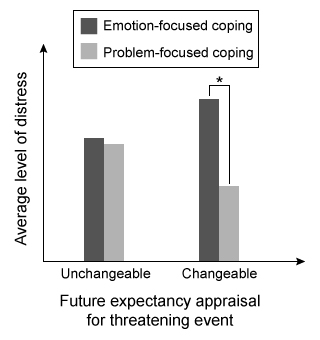 Figure 2 Average level of distress by coping strategy (emotion-focused vs. problem-focused) and future expectancy appraisal for the threatening event (Note: * indicates p < .05.)
-Which statement is best supported by Figure 1?
Figure 1 Depressive symptoms at pre-test, midpoint, post-test 1, and post-test 2 (Note: * indicates p < .05.)In Study 2, researchers examined the impact of coping strategies on distress in 80 parents of children with muscular dystrophy. Participants were asked to think of a recent stressful, threatening event and report whether they had classified their future expectancy for the event as "changeable" (situation is able to be modified) or "unchangeable" (situation is not able to be modified). They were then asked whether they attempted to cope with the event primarily by regulating their emotions (emotion-focused) or by modifying aspects of the situation (problem-focused), such as seeking help from others. Lastly, they were surveyed about their level of distress after they tried to cope with the stressor. Figure 2 illustrates the findings.
Figure 2 Average level of distress by coping strategy (emotion-focused vs. problem-focused) and future expectancy appraisal for the threatening event (Note: * indicates p < .05.)
-Which statement is best supported by Figure 1? (Multiple Choice)
5.0/5 (86)
(86) Passage
In 2010, the United States (U.S.) had an incarcerated population of about 1.6 million, up from about 300,000 in 1980. Some experts suggest that the exponential rise in the inmate population has been largely due to the "war on drugs," initiated in the 1980s, which led to more aggressive laws against drug use and distribution. Increases in arrests and imprisonment, however, have not affected all segments of the U.S. population equally. Although the total population was about 50% male in 2010, the prison population was about 93% male and reflective of additional racial and ethnic disparities (Figure 1).
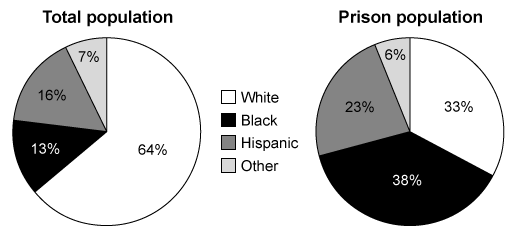 Figure 1 Total population and prison population by race and ethnicity in the United States in 2010Research suggests that black and white people use drugs at similar rates, but black people are more likely to end up in the criminal justice system for drug use. This overrepresentation of black people in the prison population can be partly explained by discrimination at the individual and institutional levels. For example, if police departments focus their resources in predominantly black neighborhoods based on the assumption that black individuals are more likely to commit a crime, then police officers (who may similarly believe black people commit more crimes than white people) are more likely to witness black people committing crimes, thereby confirming the belief. Discrimination operates at every level of the criminal justice system: Black people are more likely than white people to be arrested, prosecuted, and convicted for drug use and receive, on average, longer sentences.High rates of recidivism also perpetuate the demographic disparity of the prison population. It is estimated that about 75% of released prisoners will be rearrested within five years. Experts suggest that, once convicted of a felony, individuals find that their status as a former felon (or "ex-convict") dominates all their other statuses, making it difficult to reintegrate into society. The social stigma of criminality makes it hard for ex-convicts to secure employment, which often leads to further crime. Ex-convicts are also more closely monitored by police and far more likely to be arrested and convicted for minor offenses.
-According to the experts cited in the third paragraph, "ex-convict" is best described as what type of status?
Figure 1 Total population and prison population by race and ethnicity in the United States in 2010Research suggests that black and white people use drugs at similar rates, but black people are more likely to end up in the criminal justice system for drug use. This overrepresentation of black people in the prison population can be partly explained by discrimination at the individual and institutional levels. For example, if police departments focus their resources in predominantly black neighborhoods based on the assumption that black individuals are more likely to commit a crime, then police officers (who may similarly believe black people commit more crimes than white people) are more likely to witness black people committing crimes, thereby confirming the belief. Discrimination operates at every level of the criminal justice system: Black people are more likely than white people to be arrested, prosecuted, and convicted for drug use and receive, on average, longer sentences.High rates of recidivism also perpetuate the demographic disparity of the prison population. It is estimated that about 75% of released prisoners will be rearrested within five years. Experts suggest that, once convicted of a felony, individuals find that their status as a former felon (or "ex-convict") dominates all their other statuses, making it difficult to reintegrate into society. The social stigma of criminality makes it hard for ex-convicts to secure employment, which often leads to further crime. Ex-convicts are also more closely monitored by police and far more likely to be arrested and convicted for minor offenses.
-According to the experts cited in the third paragraph, "ex-convict" is best described as what type of status? (Multiple Choice)
4.9/5 (89)
(89) Passage
Trait theorists believe that all people have certain traits, or characteristic ways of thinking and behaving, that largely account for personality. Psychobehavioral researchers conducted a pair of studies to determine whether individuals could intentionally alter one of their respective personality traits.In Study 1, participants were asked to select one personality trait they wished to increase from among the following: openness to experience, conscientiousness, extraversion, agreeableness, or emotional stability. Participants first completed a short survey that measured baseline personality trait expression scores (pretest). Participants in the experimental group (n = 125) then developed their own intervention plan intended to increase the selected personality trait whereas the control group (n = 125) did not implement any changes to daily activities. At the end of the study, all participants completed the same self-report survey to reassess their personality trait expression scores (posttest). Results were calculated by subtracting pretest from posttest scores for each person (change score), and then comparing the mean change scores for the experimental and control groups. Results showed significantly greater change scores for experimental group participants who elected to increase their emotional stability, relative to control subjects who selected this trait. The change scores did not differ significantly between the experimental and control groups that selected any of the other four traits (ie, openness to experience, conscientiousness, extraversion, or agreeableness).In Study 2, the same basic methodology was used on a new cohort with several adjustments to the Study 1 design. Instead of asking participants in the experimental condition to formulate their own intervention plans, licensed therapists trained participants in practices to redirect thought processes, emotional responses, and behaviors associated with the selected personality trait. The experimental group participants carried out these practices for the course of the study whereas the control group participants implemented no changes. In contrast to the self-reports used in Study 1, personality trait expression scores (both pre and post) were determined by assessments made by researchers. Results from Study 2 showed significantly greater increases in all five personality trait expression scores for experimental versus control participants.
-A cognitive-behavioral therapist in Study 2 uses principles of classical and operant conditioning to treat a participant with extreme introversion and social anxiety. The methodologies employed by the therapist would LEAST likely include:
(Multiple Choice)
4.8/5 (73)
(73) Passage
People tend to believe that they are less vulnerable to negative outcomes or events than others. This is known as the self-positivity bias, a specific type of attributional bias in social psychology. Health psychologists suggest that the self-positivity bias may prevent people from being persuaded to take precautionary measures against certain health risks because behavior change is predicated on the perceived risk of contracting the disease in question. If a persuasive message cannot overcome the self-positivity bias, then behavior change is unlikely.In Study 1, researchers hypothesized that when told that an infectious disease can be contracted by engaging in likely or common behavior, people will experience less self-positivity bias than when told the disease can be contracted through unlikely or uncommon behavior. Ninety participants were randomly assigned to a likely/common group, an unlikely/uncommon group, and a control group. All participants read the same paragraph about the health consequences of viral meningitis and how it is contracted. For the likely/common group, the paragraph included, "Viral meningitis is caused by enteroviruses (common virus causing 'stomach flulike' symptoms) and can be contracted through close contact (touching, kissing) with an infected person." For the unlikely/uncommon group, the paragraph included, "Viral meningitis is caused by lymphocytic choriomeningitis virus and can be contracted through coming into contact with the blood, feces, urine, or saliva of an infected mouse." All participants were asked to estimate the likelihood of contracting the disease themselves and the likelihood for the average person (Table 1).Table 1 Mean Estimated Probability of Contracting Viral Meningitis, by Group
In Study 2, 120 participants read a newspaper article about hepatitis C and were then randomly assigned to one of four experimental conditions, each receiving additional information about either two or eight relatively uncommon behaviors (eg, getting a tattoo, sharing a needle) or relatively common behaviors (eg, sharing a toothbrush, not bandaging a cut) that could spread the disease. Participants rated their concern for contracting hepatitis C on a scale of 1 (not at all concerned) to 7 (most concerned) (Table 2).Table 2 Mean Concern of Contracting Hepatitis C Score, by Group and Condition
-Suppose the researchers in Study 2 conducted a follow-up experiment in which they asked all 120 participants to play the role of a health educator by presenting a 15-minute lecture on the risks of contracting hepatitis C to a group of high school students. This would most likely cause:
In Study 2, 120 participants read a newspaper article about hepatitis C and were then randomly assigned to one of four experimental conditions, each receiving additional information about either two or eight relatively uncommon behaviors (eg, getting a tattoo, sharing a needle) or relatively common behaviors (eg, sharing a toothbrush, not bandaging a cut) that could spread the disease. Participants rated their concern for contracting hepatitis C on a scale of 1 (not at all concerned) to 7 (most concerned) (Table 2).Table 2 Mean Concern of Contracting Hepatitis C Score, by Group and Condition
-Suppose the researchers in Study 2 conducted a follow-up experiment in which they asked all 120 participants to play the role of a health educator by presenting a 15-minute lecture on the risks of contracting hepatitis C to a group of high school students. This would most likely cause: (Multiple Choice)
4.9/5 (71)
(71) Passage
Of the biological factors impacting color perception in humans, one of the easiest to study is the number and type of color-sensitive photoreceptors. The human retina typically contains three types of cone photoreceptors, which contain opsin proteins that are sensitive to short (blue), medium (green), and long (red) wavelengths of light (Figure 1A).The genes that encode for medium and long wavelength-sensitive opsin proteins are located on the X chromosome. Mutations in these genes often produce a variant cone type that responds to wavelengths overlapping the response range of one of the normal cone types, so color perception is unaltered (Figure 1B). However, in a small percentage of women, the variant cone type appears to be sensitive to a range of wavelengths that differs from that of normal cone types (Figure 1C). It is hypothesized that these "tetrachromatic" women may be able to distinguish more colors than can the normal trichromatic population.
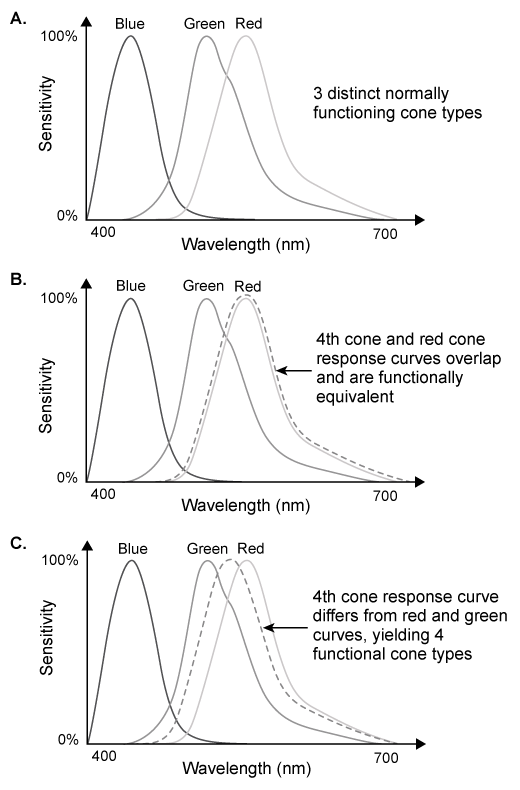 Figure 1 Response curves for (A) three cone types (trichromat, normal color perception); (B) four cone types (likely normal color perception); and (C) four cone types (tetrachromat, hypothesized enhanced color perception)A researcher conducted a series of tasks to assess the extent to which color perception of tetrachromatic subjects differs from that of trichromatic controls. Three women known to possess four retinal cone classes were recruited for the study. One of the women had experienced a small lesion to her right primary visual cortex the year prior. In addition, two women with normal trichromatic vision were recruited as controls (Table 1).Table 1 Characteristics of Subjects
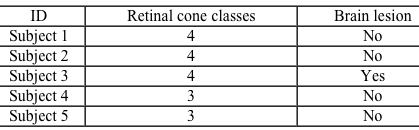 In Task 1, participants identified the colors of objects that were stationary (artificial condition) and in motion (natural condition). Under both conditions, the researcher systematically varied where the objects were presented in the subjects' visual field. Task 2 was a standardized, computer-administered color-discrimination task. Task 3 was an extensive interview that assessed the subjects' subjective experience of color.Subject 1 was able to identify more colors than the controls under all experimental conditions, and Subject 2 and Subject 3 performed marginally better than controls in some of the experimental conditions. Notably, only Subject 1 was able to verbalize her thoughts about her atypical color perception during Task 3, where she described seeing nuances in colors using words she had learned from her mother, who was also a tetrachromat and an artist. The researcher concluded that language likely plays a significant role in color perception: Without a vocabulary for the full variety of colors tetrachromats can perceive, they are limited in their perception despite their biological trait.
S. S. Deeb ©2005 John Wiley & Sons; K. A. Jameson, A. D. Winkler, and K. Goldfarb ©2016 IS&T International Symposium on Electronic Imaging.
-All subjects performed better in Task 1 when the objects were presented near the center of the visual field as opposed to the periphery because:
Figure 1 Response curves for (A) three cone types (trichromat, normal color perception); (B) four cone types (likely normal color perception); and (C) four cone types (tetrachromat, hypothesized enhanced color perception)A researcher conducted a series of tasks to assess the extent to which color perception of tetrachromatic subjects differs from that of trichromatic controls. Three women known to possess four retinal cone classes were recruited for the study. One of the women had experienced a small lesion to her right primary visual cortex the year prior. In addition, two women with normal trichromatic vision were recruited as controls (Table 1).Table 1 Characteristics of Subjects
In Task 1, participants identified the colors of objects that were stationary (artificial condition) and in motion (natural condition). Under both conditions, the researcher systematically varied where the objects were presented in the subjects' visual field. Task 2 was a standardized, computer-administered color-discrimination task. Task 3 was an extensive interview that assessed the subjects' subjective experience of color.Subject 1 was able to identify more colors than the controls under all experimental conditions, and Subject 2 and Subject 3 performed marginally better than controls in some of the experimental conditions. Notably, only Subject 1 was able to verbalize her thoughts about her atypical color perception during Task 3, where she described seeing nuances in colors using words she had learned from her mother, who was also a tetrachromat and an artist. The researcher concluded that language likely plays a significant role in color perception: Without a vocabulary for the full variety of colors tetrachromats can perceive, they are limited in their perception despite their biological trait.
S. S. Deeb ©2005 John Wiley & Sons; K. A. Jameson, A. D. Winkler, and K. Goldfarb ©2016 IS&T International Symposium on Electronic Imaging.
-All subjects performed better in Task 1 when the objects were presented near the center of the visual field as opposed to the periphery because: (Multiple Choice)
5.0/5 (92)
(92) Passage
Prominent theories of emotion have long held that alterations in one's internal physiological state are necessary for the experience of emotion. Interoception involves both the unconscious and conscious perception of one's internal physiological state. The insula (or insular cortex), located deep within the lateral fissure on both sides of the brain, appears to be largely responsible for interoception. Studies suggest that the posterior insula (PI) is involved with processing homeostatic afferent information such as pain, temperature, hunger, thirst, and the impulse to breathe. In contrast, the anterior insula (AI) appears to process information regarding emotional awareness, the conscious experience of emotion.A recent study evaluated AI activity using functional magnetic resonance imaging (fMRI). Using fMRI, the participants' brain activity was monitored during two different tasks: an emotion-eliciting task and an interoceptive task.Task 1Participants watched 10 short videos of people recalling personal events that were either negative (eg, surviving a mass shooting attack) or positive (eg, seeing a loved one after a year apart). After each video, participants rated their reactions on a Likert scale from 1 (no emotional reaction) to 10 (extreme emotional reaction).Task 2Participants were instructed to monitor their own heart rate and press a button each time they felt their heartbeat. Participants' heart rates were externally monitored to gauge the accuracy of their responses.ResultsNeuroimaging results suggested that both tasks elicited activity in the AI. Furthermore, there was a high degree of overlap in the activity of the right AI and surrounding limbic and paralimbic brain regions at both the individual and group levels.
J. Zaki, J. I. Davis, and K. N. Ochsner ©2012 by Elsevier, B. V., and A. D. Craig ©2003 by Elsevier, B. V.
-The results of the study suggest which of the following brain regions was also activated?
(Multiple Choice)
4.7/5 (64)
(64) 
Filters
- Essay(0)
- Multiple Choice(0)
- Short Answer(0)
- True False(0)
- Matching(0)