



 Chat with AI
Exam 1: Behavioral Sciences

Exam 1: Behavioral Sciences343 Questions
Exam 2: Biochemistry307 Questions
Exam 3: Biology319 Questions
Exam 4: Critical Analysis & Reasoning Skills358 Questions
Exam 5: General Chemistry317 Questions
Exam 6: Organic Chemistry191 Questions
Exam 7: Physics200 Questions
Select questions type


Passage
Bipolar disorder (BD), often characterized by periods of depression and mania, although it is possible to experience mania only, is frequently misdiagnosed. Some studies suggest that as many as half of all individuals diagnosed with BD actually do not have the disorder. One possible reason is the similarity in symptoms shared by both mania and borderline personality disorder. Another potential reason involves recent efforts by pharmaceutical companies to increase awareness of BD symptoms. As one physician stated:"In the past ten years, we've been bombarded with ads, 'These are the symptoms of BD-they're easily missed-and here is a new drug to treat it.' I think that when you're constantly being reminded not to overlook something, you start looking for it everywhere, even when it's not there."Other studies report that BD is underdiagnosed, with almost 70% of patients receiving an initial misdiagnosis and almost 35% remaining misdiagnosed for 10 years or more. This can be partially explained by the fact that people often seek treatment for their depressive symptoms but rarely for their manic symptoms. In fact, some individuals may not initially realize that their manic episodes are problematic. Patients may describe these episodes as positive experiences, particularly when compared with depressive episodes:Patient 1: "During my depression, I'm so tired I stay in bed for days. I feel totally useless. But when I'm manic, I am so alive. I feel like I'm on top of the world-I'm the life of the party, and my mind is running a million miles a minute. I'm so productive, I don't need much sleep, and I can just go, go, go. It actually took me a long time to realize that this wasn't normal, this awesome energy was way beyond how people normally feel."Patient 2: "My mania actually came on over a long period during grad school and I just kept feeling better and better. It was like I was getting sharper and smarter, and I was doing more research and coming up with all of these brilliant ideas. I felt totally on top of my game."Because mania is often unrecognized and unreported, recent efforts have been made to encourage a more proactive approach to the self-identification of manic symptoms. Proper diagnosis is critical for effective life-long treatment and management of BD, as reflected by this patient's experience:Patient 3: "It was almost 10 years before I could acknowledge that my high-stress lifestyle was triggering my mania and that I needed to make some big changes-and that I needed to stay on my medication, even when I felt much better. That was really hard for me to get, but I get it now-I have this for life, and I have to treat it every day. Once I finally got that, I started to be able to accept this as a part of who I am."
T. Singh and M. Rajput ©2006 Matrix Medical Communications, and J. A. Scott and F. Sohrabi ©2015 Everyday Health Media.
-Does the quote from Patient 3 reflect the sociological concept of the illness experience?

Free
(Multiple Choice)
4.9/5  (86)
(86) Correct Answer: Verified
C
During a visual field test, patients are instructed to look straight ahead at a fixed point as objects are flashed in their peripheral field of vision. A patient with normal vision should have:
Free
(Multiple Choice)
4.8/5 (81)
(81) Correct Answer:Verified
VerifiedA
A group of five health care professionals is presented with a complex system-based problem in a large hospital and asked to generate multiple possible solutions. Research on group processes suggests that:
Free
(Multiple Choice)
4.9/5 (65)
(65) Correct Answer:Verified
VerifiedC
Passage
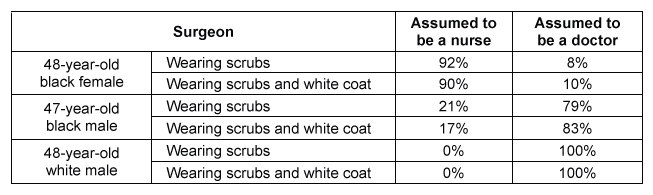
Numerous studies suggest that physicians make both conscious and unconscious assumptions about their patients, and these assumptions often impact patient care and outcomes. However, little research has focused on the assumptions patients make about their physicians.Researchers designed an observational study to investigate assumptions made by patients in health care settings. For this study, three different surgeons were asked to interact with pre-surgery patients whom they had never met using a standardized script. Each surgeon participated in 30 total interactions over the course of two weeks. The purpose of the study was to assess how the patient's assumptions regarding the surgeon's status were impacted by the surgeon's race, gender, and attire.According to the script, the surgeon did not introduce him- or herself upon entering the room. All three surgeons were in their late 40s; one surgeon was a black woman, one was a black man, and one was a white man. The surgeons wore either surgical scrubs alone or a white coat over their surgical scrubs. Researchers analyzed how patients addressed or referred to the surgeon to assess assumptions about the surgeon's role as a doctor or a nurse. The results are presented in Table 1.Table 1 Percentage of Patients Who Assumed the Surgeon Was a Doctor or a Nurse
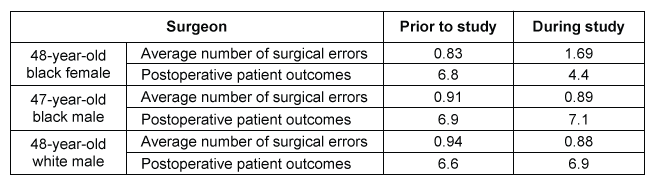
 The researchers also retrospectively analyzed minor (non-life-threatening) surgical errors and postoperative patient outcomes for one month prior to the study and during the study timeframe for each surgeon. The number of minor errors was averaged per surgery, and postoperative patient outcomes were quantified using a multifactor (eg, pain, infection, bleeding, other complications) assessment scale of 1 (worst outcome) to 12 (best outcome).Table 2 Average Number of Minor Surgical Errors (Per Surgery) and Aggregated Postoperative Patient Outcome Scores
 -The study described in the passage is most directly evaluating which of the following sociological theories?
The researchers also retrospectively analyzed minor (non-life-threatening) surgical errors and postoperative patient outcomes for one month prior to the study and during the study timeframe for each surgeon. The number of minor errors was averaged per surgery, and postoperative patient outcomes were quantified using a multifactor (eg, pain, infection, bleeding, other complications) assessment scale of 1 (worst outcome) to 12 (best outcome).Table 2 Average Number of Minor Surgical Errors (Per Surgery) and Aggregated Postoperative Patient Outcome Scores
-The study described in the passage is most directly evaluating which of the following sociological theories? (Multiple Choice)
4.8/5 (79)
(79) Passage
Prominent theories of emotion have long held that alterations in one's internal physiological state are necessary for the experience of emotion. Interoception involves both the unconscious and conscious perception of one's internal physiological state. The insula (or insular cortex), located deep within the lateral fissure on both sides of the brain, appears to be largely responsible for interoception. Studies suggest that the posterior insula (PI) is involved with processing homeostatic afferent information such as pain, temperature, hunger, thirst, and the impulse to breathe. In contrast, the anterior insula (AI) appears to process information regarding emotional awareness, the conscious experience of emotion.A recent study evaluated AI activity using functional magnetic resonance imaging (fMRI). Using fMRI, the participants' brain activity was monitored during two different tasks: an emotion-eliciting task and an interoceptive task.Task 1Participants watched 10 short videos of people recalling personal events that were either negative (eg, surviving a mass shooting attack) or positive (eg, seeing a loved one after a year apart). After each video, participants rated their reactions on a Likert scale from 1 (no emotional reaction) to 10 (extreme emotional reaction).Task 2Participants were instructed to monitor their own heart rate and press a button each time they felt their heartbeat. Participants' heart rates were externally monitored to gauge the accuracy of their responses.ResultsNeuroimaging results suggested that both tasks elicited activity in the AI. Furthermore, there was a high degree of overlap in the activity of the right AI and surrounding limbic and paralimbic brain regions at both the individual and group levels.
J. Zaki, J. I. Davis, and K. N. Ochsner ©2012 by Elsevier, B. V., and A. D. Craig ©2003 by Elsevier, B. V.
-Which of the following accurately pairs a component of emotion with the study procedure designed to evoke that component?
(Multiple Choice)
4.9/5 (91)
(91) Passage
Health psychologists interested in studying the influence of positive and negative thinking on weight loss conducted a study on 120 obese adults attempting to lose weight. Participants indicated on a scale of 1 to 7 how successful they thought they would be at losing weight (1 = "not successful" and 7 = "very successful") and how much control they believed they had over their success (1 = "no control" and 7 = "complete control"), recorded as expectation of success scores and control of success scores, respectively.Participants were then randomly divided into three groups and asked to complete a 15-minute guided mental exercise twice a day for three weeks. Participants in the fantasy/reality contrast condition were instructed to reflect on two positive aspects of a fantasized weight loss, such as attaining better health and more energy, and two negative aspects of reality that impede weight loss, such as lack of discipline and desire to eat unhealthy foods. Participants in the positive fantasy condition were asked to reflect on four positive aspects of weight loss, and participants in the negative reality condition were asked to reflect on four factors that impede weight loss.At the end of this three-week period, participants began a three-month diet and exercise regimen involving caloric restriction to 1,500 calories per day as well as regular participation in aerobic exercise and weight training. Researchers recorded weekly weights of participants and surveyed participants regarding adherence to proactive weight loss strategies. The results are shown by group in Figures 1 and 2.
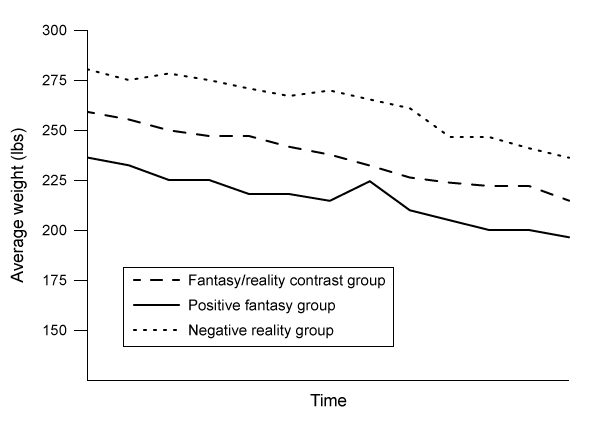 Figure 1 Average weight recorded for each group during three-month follow-up
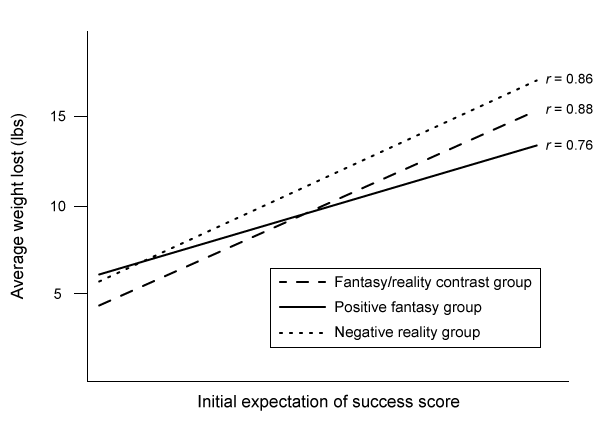 Figure 2 Initial expectation of success score versus average weight loss
-If the study researchers concluded that their hypothesis was correct, which of the following was most likely their hypothesis?
Figure 1 Average weight recorded for each group during three-month follow-up
Figure 2 Initial expectation of success score versus average weight loss
-If the study researchers concluded that their hypothesis was correct, which of the following was most likely their hypothesis? (Multiple Choice)
4.9/5 (79)
(79) Passage
Health psychologists interested in studying the influence of positive and negative thinking on weight loss conducted a study on 120 obese adults attempting to lose weight. Participants indicated on a scale of 1 to 7 how successful they thought they would be at losing weight (1 = "not successful" and 7 = "very successful") and how much control they believed they had over their success (1 = "no control" and 7 = "complete control"), recorded as expectation of success scores and control of success scores, respectively.Participants were then randomly divided into three groups and asked to complete a 15-minute guided mental exercise twice a day for three weeks. Participants in the fantasy/reality contrast condition were instructed to reflect on two positive aspects of a fantasized weight loss, such as attaining better health and more energy, and two negative aspects of reality that impede weight loss, such as lack of discipline and desire to eat unhealthy foods. Participants in the positive fantasy condition were asked to reflect on four positive aspects of weight loss, and participants in the negative reality condition were asked to reflect on four factors that impede weight loss.At the end of this three-week period, participants began a three-month diet and exercise regimen involving caloric restriction to 1,500 calories per day as well as regular participation in aerobic exercise and weight training. Researchers recorded weekly weights of participants and surveyed participants regarding adherence to proactive weight loss strategies. The results are shown by group in Figures 1 and 2.
Figure 1 Average weight recorded for each group during three-month follow-up
Figure 2 Initial expectation of success score versus average weight loss
-The study design described in the passage is most aligned with which theory of motivation?
Figure 1 Average weight recorded for each group during three-month follow-up
Figure 2 Initial expectation of success score versus average weight loss
-The study design described in the passage is most aligned with which theory of motivation? (Multiple Choice)
4.8/5 (88)
(88) Passage
Suicide is one of the leading causes of death in the United States. Suicide risk is associated with a variety of factors. Personal factors include childhood abuse, certain personality traits (eg, impulsiveness, aggression), and history of mental illness. Over 90% of people who attempt suicide meet diagnostic criteria for at least one psychological disorder, and suicide risk increases as the number of co-occurring disorders increases. Diagnosis severity also matters: studies suggest that individuals are at greatest risk of attempting suicide while inpatient at or newly discharged from a psychiatric hospital.Social factors also play a role in suicide. Sociologist Émile Durkheim argued that embeddedness in society is a key feature in determining the likelihood of an individual committing suicide. Specifically, the more people that depend on an individual financially, emotionally, or physically, the less likely that individual is to commit suicide. Studies suggest that suicide is also linked to religious affiliation and income level. Religious groups that place more value on community events, church attendance, and collective solidarity tend to have lower rates of suicide among members, whereas more affluent individuals are more likely to commit suicide.Economic trends have also been linked to suicide. One study retrospectively analyzed the relationship between the U.S. economy and suicide rates. It found that the overall suicide rate tends to rise during economic recessions and drop during economic expansions (Figure 1).
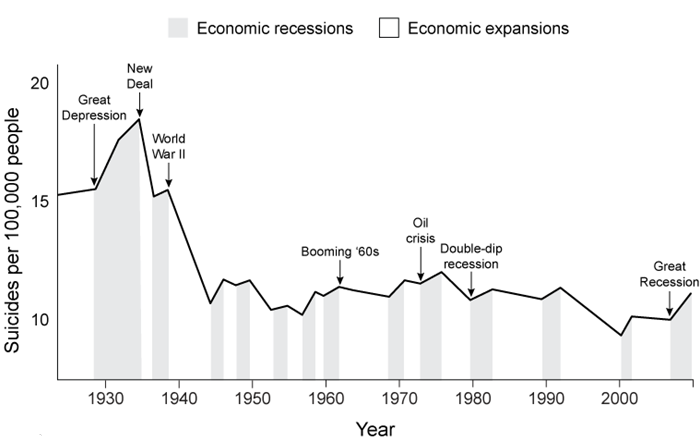 Figure 1 U.S. suicide rates compared to economic trendsFurther analysis of suicide data suggests that for every individual who successfully commits suicide, approximately 25 individuals are unsuccessful in such attempts, costing the United States billions of dollars annually in both lost wages and treatment expense. Although white, middle-aged men are the most likely cohort to successfully commit suicide, women attempt suicide three times more often than men.
-Which of the following is NOT supported by the passage?
Figure 1 U.S. suicide rates compared to economic trendsFurther analysis of suicide data suggests that for every individual who successfully commits suicide, approximately 25 individuals are unsuccessful in such attempts, costing the United States billions of dollars annually in both lost wages and treatment expense. Although white, middle-aged men are the most likely cohort to successfully commit suicide, women attempt suicide three times more often than men.
-Which of the following is NOT supported by the passage? (Multiple Choice)
5.0/5 (82)
(82) Which of the following is LEAST likely to occur when the administration and delivery of health care is organized as a bureaucracy?
(Multiple Choice)
4.8/5 (88)
(88) Research has shown that when individuals consume the same food stimulus, they reach satiety faster compared to when they consume varied food stimuli. This finding suggests that satiety, which involves a reduction in both physiological and behavioral responses to food stimuli, may be partly due to:
(Multiple Choice)
4.8/5 (76)
(76) Which of the following scenarios best illustrates role exit?
(Multiple Choice)
4.9/5 (73)
(73) To test whether an upgrade to the physical environment of a medical clinic would impact patient perceptions of medical staff, researchers surveyed patients immediately before and six months after a medical practice moved from a small office with outdated furnishings to a large, newly remodeled office. Patient perceptions of medical staff were significantly improved at the new location. Given this study design, which statement is supported?
(Multiple Choice)
4.8/5 (73)
(73) Passage
Korsakoff syndrome (KS) is caused by a thiamin (vitamin B1) deficiency that often results from chronic alcohol consumption. If KS is diagnosed during its earliest stages, its course may be reversed with thiamin supplements; otherwise, it progresses into a permanent type of dementia that includes severe cognitive dysfunction and memory loss. Alzheimer disease (AD) is associated with a different type of dementia that worsens over time, eventually causing memory loss, cognitive dysfunction, and severe brain atrophy.In one study, KS and AD subjects were assessed using the Corsi block-tapping task, which measures nonverbal memory. The experiment consisted of 10 KS subjects, 10 AD subjects, and 10 healthy control subjects. The control group was matched by age, gender, and premorbid IQ (intelligence quotient preceding the occurrence of symptoms) to the KS and AD groups.
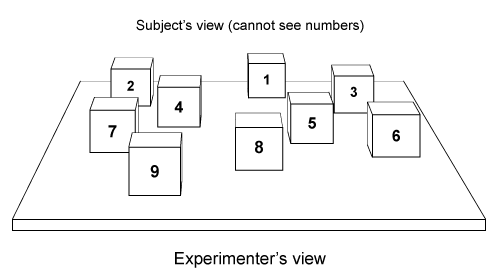 Figure 1 Corsi block-tapping taskThe Corsi block-tapping task consists of nine wooden blocks placed randomly on a board (Figure 1). To assess subjects' nonverbal memory, the experimenter touched four numbered blocks (numbers were visible only to the experimenter) in a specific pattern. Each subject was then asked to touch the same four blocks in the same sequence, either immediately or after a delay of 5-25 seconds. Subjects were required to perform a distractor task during the delay period. For the distractor task, subjects were asked to watch and reproduce a finger-tapping sequence first demonstrated by the experimenter. Experimenters would touch a finger on their right hand to a finger on their left hand according to a specific sequence (eg, index finger to ring finger, then pinky finger to middle finger) and the subjects would try to do the same.Results indicated that compared to controls, subjects with AD and KS were significantly impaired on the delayed memory task, although all subjects showed a significantly greater number of errors with increases in the delay interval.
-Performance of which of the following study tasks utilizes the mirror neuron system?Immediate recall taskDelayed recall taskDistractor task
Figure 1 Corsi block-tapping taskThe Corsi block-tapping task consists of nine wooden blocks placed randomly on a board (Figure 1). To assess subjects' nonverbal memory, the experimenter touched four numbered blocks (numbers were visible only to the experimenter) in a specific pattern. Each subject was then asked to touch the same four blocks in the same sequence, either immediately or after a delay of 5-25 seconds. Subjects were required to perform a distractor task during the delay period. For the distractor task, subjects were asked to watch and reproduce a finger-tapping sequence first demonstrated by the experimenter. Experimenters would touch a finger on their right hand to a finger on their left hand according to a specific sequence (eg, index finger to ring finger, then pinky finger to middle finger) and the subjects would try to do the same.Results indicated that compared to controls, subjects with AD and KS were significantly impaired on the delayed memory task, although all subjects showed a significantly greater number of errors with increases in the delay interval.
-Performance of which of the following study tasks utilizes the mirror neuron system?Immediate recall taskDelayed recall taskDistractor task (Multiple Choice)
4.9/5 (91)
(91) Passage
Patients undergoing chemotherapy frequently experience a number of side effects in response to the cytotoxic drugs administered during treatment, including nausea and/or vomiting (N/V), hair loss, fatigue, cognitive dysfunction, anemia, and others. However, there is ample evidence that learning and cognition may play a role in the development of some of these side effects. For example, 20%-30% of patients undergoing chemotherapy continue to experience N/V merely in the setting and presence of chemotherapy equipment even after taking antiemetic medication.Three studies were conducted to better understand the acquisition of a learned, anticipatory nausea (AN) response. Studies 1 and 2 used the classical conditioning principle of overshadowing, in which a powerful stimulus is presented alongside a less salient stimulus during the acquisition phase. This results in a stronger relationship between the salient stimulus and the response, as compared with the less salient stimulus and response.In Study 1, nausea was induced in 50 healthy volunteers through motion sickness in a rotating chair. Subjects were divided into two groups and drank specific beverages prior to the rotation: One group received a different novel-tasting beverage (eg, elderberry, sloe) each day, and the other group drank only water. Nausea-related symptoms were recorded before and after the rotation. Results showed that subjects who drank the novel-tasting beverages reported less AN than those who drank water.Study 2 tested the protocol from Study 1 in cancer patients undergoing chemotherapy. Immediately prior to chemotherapy infusion, one group received a different novel-tasting beverage each day and the other group drank only water. Results again demonstrated that subjects in the group with different novel-tasting beverages experienced less AN than those who drank water.Study 3 researchers investigated whether patients' pretreatment expectations of developing nausea or medication-induced post-chemotherapy nausea (PN) were a better predictor of subsequent AN. Before their first round of chemotherapy (session #1), subjects were surveyed about their degree of certainty of developing nausea. PN was measured after session #1, and then AN was measured before session #3 (Figure 1).
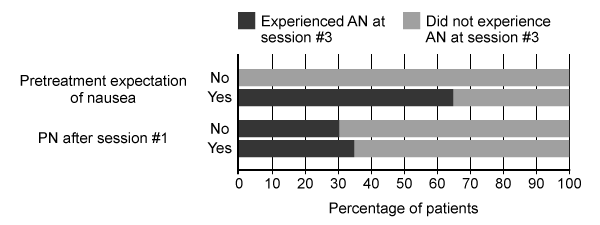 Figure 1 AN before session #3
J. T. Hickok, J. A. Roscoe, and G. R. Morrow ©2001 Elsevier; U. Stockhorst, P. Enck, and S. Klosterhalfen ©2007 Baishideng Publishing Group.
-Which of the following is NOT accurate regarding antiemetic medications, which are administered to patients undergoing chemotherapy to treat or prevent N/V?
Figure 1 AN before session #3
J. T. Hickok, J. A. Roscoe, and G. R. Morrow ©2001 Elsevier; U. Stockhorst, P. Enck, and S. Klosterhalfen ©2007 Baishideng Publishing Group.
-Which of the following is NOT accurate regarding antiemetic medications, which are administered to patients undergoing chemotherapy to treat or prevent N/V? (Multiple Choice)
4.9/5 (70)
(70) Passage
Visual perception involves the organization and interpretation of information obtained from visible light. Visual perception relies on monocular and binocular cues, as well as perceptual organization principles that allow humans to interpret limited or partial information more holistically. These sorts of mental shortcuts are based on prior experiences and knowledge, and are especially useful when lighting or perspective is limited. For example, the ambiguous image in Figure 1 is often perceived as a cup.
 Figure 1 Ambiguous imagePerceptual organization principles allow our brains to quickly and efficiently make assumptions about visual inputs, but these principles can also give rise to perceptual illusions. For example, the Ames room is constructed to exploit monocular depth cues in such a way that the person standing on one side of the room appears to impossibly dwarf the person on the other side of the room (Figure 2).
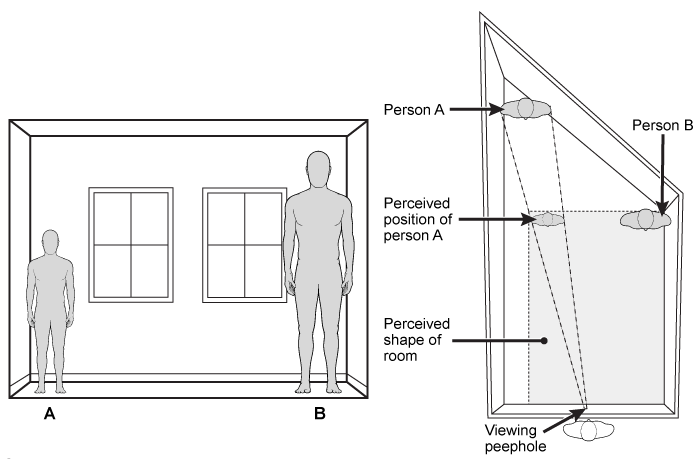 Figure 2 Ames room illusion (two people standing in a specially constructed Ames room, viewed through a monocular peephole)Human senses were adapted for use on land, which can lead to potentially deadly perceptual distortions while flying or underwater diving. Pilots are prone to such perceptual distortions when landing on unfamiliar runways. During their training, pilots develop a mental image of how a typical runway appears as they descend and land. Later, they compare this prototypical shape to the runway they see before them to make adjustments in the slope of their descent. However, if a runway differs from what the pilot is used to (eg, in width or slope), it will differ from the pilot's mental image for a typical runway at that same altitude. For example, an unusually wide runway will appear to be closer than it actually is, and a narrow runway will seem to be further away. This can cause the pilot to approach at a dangerously steep or shallow slope.Pilots and divers can also suffer from spatial disorientation due to variations in sensory stimuli that are not typically encountered on land. For example, gravity is not experienced in the body the same way underwater as on land, and visual cues are often limited in deep dives. In these murky conditions, divers can easily lose track of the surface of the water, leading to extreme spatial disorientation and panic.
-How does stereopsis contribute to the processing of two-dimensional retinal images into objects having three-dimensional depth?
Figure 1 Ambiguous imagePerceptual organization principles allow our brains to quickly and efficiently make assumptions about visual inputs, but these principles can also give rise to perceptual illusions. For example, the Ames room is constructed to exploit monocular depth cues in such a way that the person standing on one side of the room appears to impossibly dwarf the person on the other side of the room (Figure 2).
Figure 2 Ames room illusion (two people standing in a specially constructed Ames room, viewed through a monocular peephole)Human senses were adapted for use on land, which can lead to potentially deadly perceptual distortions while flying or underwater diving. Pilots are prone to such perceptual distortions when landing on unfamiliar runways. During their training, pilots develop a mental image of how a typical runway appears as they descend and land. Later, they compare this prototypical shape to the runway they see before them to make adjustments in the slope of their descent. However, if a runway differs from what the pilot is used to (eg, in width or slope), it will differ from the pilot's mental image for a typical runway at that same altitude. For example, an unusually wide runway will appear to be closer than it actually is, and a narrow runway will seem to be further away. This can cause the pilot to approach at a dangerously steep or shallow slope.Pilots and divers can also suffer from spatial disorientation due to variations in sensory stimuli that are not typically encountered on land. For example, gravity is not experienced in the body the same way underwater as on land, and visual cues are often limited in deep dives. In these murky conditions, divers can easily lose track of the surface of the water, leading to extreme spatial disorientation and panic.
-How does stereopsis contribute to the processing of two-dimensional retinal images into objects having three-dimensional depth? (Multiple Choice)
4.9/5 (75)
(75) Passage
Religion establishes the beliefs and rituals surrounding the sacred and provides meaning and significance to individuals' lives. The tenets of any given religion can have a far-reaching impact on the individuals within its faith community. For example, certain religions promote faith-based lifestyle directives (FBLDs), which urge believers to follow specific guidelines regarding their own behavior (eg, restrictions on diet and substance use) and their treatment of others (eg, mission work). Because these practices typically reflect the religious group's values, FBLDs are often an important expression of faith for the deeply religious.One religious group with health-related FBLDs is the Seventh Day Adventist Church, which formed in the 1860s after early leaders broke away from established Protestant churches. Since its formal establishment, Seventh Day Adventist Church membership has grown from 3,500 to over 20 million worldwide. The Seventh Day Adventist Church advocates conservative religious teachings and a holistic approach to health and wellness; members are encouraged to pursue vegetarianism, exercise regularly, and avoid alcohol and tobacco.Although FBLDs impact believers' personal choices and behaviors, they are also often meant to have an impact on others through the creation of social institutions such as schools and hospitals. For example, early Adventist leaders developed a health care system to serve the needs of the larger community, and members of the modern Adventist Church have continued to try to reduce health disparities worldwide by creating hospitals, clinics, and universities that provide health care and education services to underserved and developing communities.Researchers from a variety of fields have examined health-related religious values and FBLDs. Epidemiological research has shown that believers from different religions who follow certain FBLDs (eg, abstaining from smoking and alcohol) experience lower rates of chronic illnesses (eg, heart disease and many types of cancer) than the general population. Sociologists have suggested that as a society increasingly relies on medical professionals, rather than clergy, as legitimate sources of guidance on lifestyle behaviors, membership in religious groups with values that are compatible with medicalization will continue to rise. Some hypothesize that this phenomenon accounts for the seemingly contradictory increase in membership in certain conservative religious groups with strict FBLDs, despite mainstream society becoming less religious.
-Based on information in the passage, which of the following best represents a latent function of FBLDs?
(Multiple Choice)
4.9/5 (79)
(79) Passage
Language is a skill acquired during early childhood that continues to develop for many years. Communication using language involves multiple complex processes, including listening, speaking, comprehension, and cognition. Receptive language ("language input") involves language comprehension, while expressive language ("language output") involves the ability to produce intelligible language. In normally developing children, receptive language emerges first, followed by expressive language.To examine how age plays a role in the activation of the neurological networks involved in processing more complex language, researchers used functional magnetic resonance imaging (fMRI) to analyze how the use of receptive language generates metabolic activity in the brains of children. A total of 672 participants were divided into three groups by age: Age 4-6 (n = 219), age 7-9 (n = 224), and age 10-12 (n = 229).Participants in each group were asked to listen to pre-recorded stories while undergoing fMRI of the brain to determine if an age-related difference could be found in activated brain tissue volume during the listening task. The recorded fMRI-monitored listening portion of the experiment lasted approximately 5 minutes. Immediately following this listening exercise, fMRI monitoring was discontinued and the children were administered tests to determine comprehension of the material. None of the children had been informed that they would be taking a comprehension test prior to its actual administration.
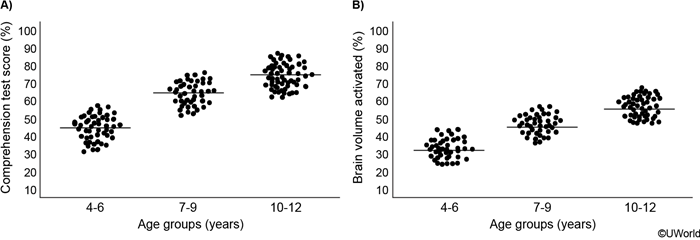 Figure 1 fMRI listening task analyzed per age group: (A) comprehension test scores, and (B) brain volume activated (Note: Solid lines represent the mean in each group.)
M. M. Berl, E. S. Duke, J. Mayo, L. R. Rosenberger, E. N. Moore, J. VanMeter, N. Bernstein Ratner, C. J. Vaidya, and W. D. Gaillard ©2010 by Elsevier, Inc.
-A proponent of the universalism perspective would state that the results in Figure 1B support the belief that:
Figure 1 fMRI listening task analyzed per age group: (A) comprehension test scores, and (B) brain volume activated (Note: Solid lines represent the mean in each group.)
M. M. Berl, E. S. Duke, J. Mayo, L. R. Rosenberger, E. N. Moore, J. VanMeter, N. Bernstein Ratner, C. J. Vaidya, and W. D. Gaillard ©2010 by Elsevier, Inc.
-A proponent of the universalism perspective would state that the results in Figure 1B support the belief that: (Multiple Choice)
4.7/5 (75)
(75) Passage
Visual perception involves the organization and interpretation of information obtained from visible light. Visual perception relies on monocular and binocular cues, as well as perceptual organization principles that allow humans to interpret limited or partial information more holistically. These sorts of mental shortcuts are based on prior experiences and knowledge, and are especially useful when lighting or perspective is limited. For example, the ambiguous image in Figure 1 is often perceived as a cup.
Figure 1 Ambiguous imagePerceptual organization principles allow our brains to quickly and efficiently make assumptions about visual inputs, but these principles can also give rise to perceptual illusions. For example, the Ames room is constructed to exploit monocular depth cues in such a way that the person standing on one side of the room appears to impossibly dwarf the person on the other side of the room (Figure 2).
Figure 2 Ames room illusion (two people standing in a specially constructed Ames room, viewed through a monocular peephole)Human senses were adapted for use on land, which can lead to potentially deadly perceptual distortions while flying or underwater diving. Pilots are prone to such perceptual distortions when landing on unfamiliar runways. During their training, pilots develop a mental image of how a typical runway appears as they descend and land. Later, they compare this prototypical shape to the runway they see before them to make adjustments in the slope of their descent. However, if a runway differs from what the pilot is used to (eg, in width or slope), it will differ from the pilot's mental image for a typical runway at that same altitude. For example, an unusually wide runway will appear to be closer than it actually is, and a narrow runway will seem to be further away. This can cause the pilot to approach at a dangerously steep or shallow slope.Pilots and divers can also suffer from spatial disorientation due to variations in sensory stimuli that are not typically encountered on land. For example, gravity is not experienced in the body the same way underwater as on land, and visual cues are often limited in deep dives. In these murky conditions, divers can easily lose track of the surface of the water, leading to extreme spatial disorientation and panic.
-Pilots who experienced perceptual distortions while landing on an unusually wide runway were most likely affected by which type of monocular depth cue?
Figure 1 Ambiguous imagePerceptual organization principles allow our brains to quickly and efficiently make assumptions about visual inputs, but these principles can also give rise to perceptual illusions. For example, the Ames room is constructed to exploit monocular depth cues in such a way that the person standing on one side of the room appears to impossibly dwarf the person on the other side of the room (Figure 2).
Figure 2 Ames room illusion (two people standing in a specially constructed Ames room, viewed through a monocular peephole)Human senses were adapted for use on land, which can lead to potentially deadly perceptual distortions while flying or underwater diving. Pilots are prone to such perceptual distortions when landing on unfamiliar runways. During their training, pilots develop a mental image of how a typical runway appears as they descend and land. Later, they compare this prototypical shape to the runway they see before them to make adjustments in the slope of their descent. However, if a runway differs from what the pilot is used to (eg, in width or slope), it will differ from the pilot's mental image for a typical runway at that same altitude. For example, an unusually wide runway will appear to be closer than it actually is, and a narrow runway will seem to be further away. This can cause the pilot to approach at a dangerously steep or shallow slope.Pilots and divers can also suffer from spatial disorientation due to variations in sensory stimuli that are not typically encountered on land. For example, gravity is not experienced in the body the same way underwater as on land, and visual cues are often limited in deep dives. In these murky conditions, divers can easily lose track of the surface of the water, leading to extreme spatial disorientation and panic.
-Pilots who experienced perceptual distortions while landing on an unusually wide runway were most likely affected by which type of monocular depth cue? (Multiple Choice)
4.9/5 (86)
(86) Passage
Although the terms sex, sex category, and gender are commonly used interchangeably by most people, sociologists distinguish between them. Sex refers to the biological distinction between bodies (eg, male, female). Sex category (eg, male, female) is based on the visible secondary sex characteristics people use to attribute sex to others. Gender (eg, masculine, feminine) specifically refers to the behaviors and behavioral expectations people attribute to others on the basis of the individual's perceived sex category. Sex category and gender have recently been conceptualized as continua, with male and female as the extremes for sex category perception and masculine and feminine as the extremes for gender. Despite this, sex category and gender are usually perceived by humans categorically instead of continuously.Researchers conducted a study to assess how sex category interpretation is related to implicit bias and cortical activity. For the first phase, researchers tested sex category interpretation using 12 highly realistic computer-generated "facial morphs" varying along a continuum of apparent sex category from extremely male (1) to extremely female (12). The sexually dimorphic content of the faces was manipulated, but all other aspects were unchanged. For example, eyes and noses remained constant, but brow lines and eyebrows were thickened for male faces. Participants viewed the 12 faces in random order, rating each face on a scale of 1 (extremely male) to 10 (extremely female). Despite the uniform increments in the sexually dimorphic content of the facial morphs, responses demonstrated dichotomous sex category classification, as expected.For the second phase, which assessed the relationship between sex category interpretation and implicit bias, participants completed an implicit association test (IAT), in which they were shown the facial morphs with a pair of word attributes, one positive and one negative (eg, hard-working, lazy), and were asked to quickly pick the word they most associated with the face. Participants demonstrated shorter response times for facial morphs at the end points of the sex category continuum.For the third phase, researchers assessed the relationship between face-sensitive regions in the occipitotemporal cortex, particularly the fusiform face area (FFA), and sex category interpretation. Participants were injected with a glucose analog containing a radioactive tracer an hour before brain activity was measured while participants viewed the facial morphs. Results suggest that FFA activity was strongest when the faces were at the end points of the sex category continuum, regardless of whether a face was perceived as male or female.
-Which of the following statements is true? The principles of:
(Multiple Choice)
4.8/5 (87)
(87) When first memorizing neuroanatomical structures and their functions, a student associates the amygdala, which starts with the letters A-M-Y and is involved in processing emotions, with her "emotional" friend named Amy. This scenario illustrates:
(Multiple Choice)
4.9/5 (78)
(78) 
Filters
- Essay(0)
- Multiple Choice(0)
- Short Answer(0)
- True False(0)
- Matching(0)