



 Chat with AI
Exam 1: Behavioral Sciences

Exam 1: Behavioral Sciences343 Questions
Exam 2: Biochemistry307 Questions
Exam 3: Biology319 Questions
Exam 4: Critical Analysis & Reasoning Skills358 Questions
Exam 5: General Chemistry317 Questions
Exam 6: Organic Chemistry191 Questions
Exam 7: Physics200 Questions
Select questions type


Passage
Physical modifications important for consolidating memory are particularly apparent in the hippocampus, especially a pathway called the Schaffer Collateral, which contains CA1 (cornu Ammonis) neurons that have been implicated in learning and memory. To study learning and memory in live mice, scientists use a stimulating electrode to generate brief electrical pulses on the dendrites of CA1 neurons in the Schaffer Collateral pathway and use a recording electrode to measure the excitatory postsynaptic potentials (EPSPs) in the CA1 postsynaptic neurons.In Study 1, researchers used brief low-frequency stimulations (1-5 stimuli per second) to establish a baseline response in the CA1 postsynaptic neurons. Then, the same dendrites were given a high-frequency stimulation (50-100 stimuli per second), referred to as a tetanus. The researchers discovered that the high-frequency tetanus induced an increase in the response in postsynaptic CA1 neurons that was long-lasting. For the control, the researchers established a baseline in a second set of CA1 neurons in the same region but did not give a high-frequency tetanus (Figure 1).
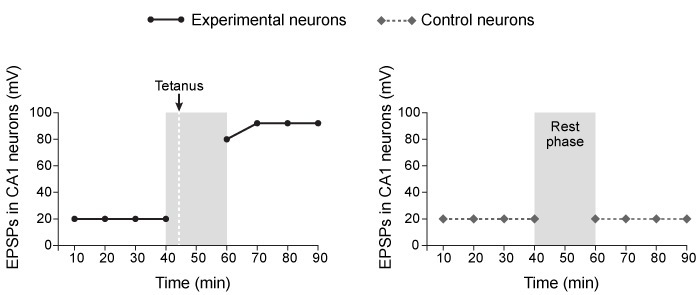 Figure 1 CA1 neuron response after a brief tetanus (experimental) or no tetanus (control)In a second behavioral study, mice were housed in either a standard cage (control) or a cage with an enhanced learning environment, including toys and access to a running wheel (experimental condition). For the first 12 days, both groups of mice received injections of a dye that is incorporated into newly synthesized DNA, thereby providing a biomarker of neurogenesis.Following 30 days in their respective environments, all mice were tested each day for one week in the Morris Water Maze, a test that measures spatial learning and memory consolidation. Results showed that mice in the experimental condition demonstrated greater improvement on Morris Water Maze performance compared to controls. When hippocampi were examined, the results revealed that mice in the experimental condition had a greater number of dye-labeled cells than did the controls.
W. C. Abraham, B. Logan, J. M. Greenwood, and M. Dragunow ©2002 The Society of Neuroscience, and H. van Praag, B. R. Christie, T. J. Sejnowski, and F. H. Gage ©1999 National Academy of Sciences.
-In Study 2, what type of human memory is most analogous to the type of memory assessed in mice?
Figure 1 CA1 neuron response after a brief tetanus (experimental) or no tetanus (control)In a second behavioral study, mice were housed in either a standard cage (control) or a cage with an enhanced learning environment, including toys and access to a running wheel (experimental condition). For the first 12 days, both groups of mice received injections of a dye that is incorporated into newly synthesized DNA, thereby providing a biomarker of neurogenesis.Following 30 days in their respective environments, all mice were tested each day for one week in the Morris Water Maze, a test that measures spatial learning and memory consolidation. Results showed that mice in the experimental condition demonstrated greater improvement on Morris Water Maze performance compared to controls. When hippocampi were examined, the results revealed that mice in the experimental condition had a greater number of dye-labeled cells than did the controls.
W. C. Abraham, B. Logan, J. M. Greenwood, and M. Dragunow ©2002 The Society of Neuroscience, and H. van Praag, B. R. Christie, T. J. Sejnowski, and F. H. Gage ©1999 National Academy of Sciences.
-In Study 2, what type of human memory is most analogous to the type of memory assessed in mice? (Multiple Choice)
4.8/5  (95)
(95) Passage
The last several decades have seen a significant increase in immigration to the United States. Today, more than 20% of American children age 17 and younger have at least one foreign-born parent, and about 30% of these children are themselves foreign-born.Immigrant youths in the United States tend to adapt extremely well to their new surroundings. Researchers report that immigrant students often perform in school as well or better than their US-born classmates. Studies assessing psychological adjustment reveal similar findings: Foreign-born students are less likely to abuse alcohol or break the law, and they demonstrate relatively higher levels of self-esteem than their US-born peers.The following quotations are responses from overachieving immigrant middle school students when asked by interviewers to explain their success:Student 1, eighth-grade valedictorian: "When my mother first came to the United States from China, she spent all her time working, trying to earn a living to support her three children. I know how much she has sacrificed, and I am so grateful that I am willing to do just about anything for her."Student 2, a straight-A student: "[In my neighborhood] everyone knows everyone. They all know what I am up to, so I want to make a good impression and have them think highly of me. I also want to represent my community well to others."Even though immigrant families are often more prosperous in the United States than they were in their home countries, they still often struggle financially, typically due to parental language barriers. The impressive adaptations of immigrant students occur despite impoverished circumstances; their parents tend to emphasize the importance of education as a means to attaining prosperity, reminding their children that they immigrated to provide their children with access to better education than was available in their homeland. Immigrant children tend to internalize their parents' attitude toward educational achievement.Members of ethnic minorities in the United States also stress loyalty to family and community over self, so children feel a strong sense of gratitude and allegiance to their parents. Immigrant parents with successful children have usually formed close relationships with members of their ethnic community; members of ethnic enclaves tend to demonstrate consensus on values and exert an unusually high level of control over the children's behavior through regular monitoring.
L. E. Berk. Child Development © 2006 Pearson
-The findings on immigrant youths' overall adjustment to their new surroundings (Paragraph 2) best reflects immigrant youths':
(Multiple Choice)
4.9/5 (78)
(78) Passage
Before memories have been consolidated they are considered "labile," or unstable and easily altered. Sleep is theorized to be essential to the process of memory consolidation, though the mechanisms for this are still under investigation. Rapid eye movement (REM) sleep has long been assumed to be the sleep stage most important for overall memory consolidation, but recent research suggests that different types of memory may be consolidated during different sleep stages. Procedural memories appear to be primarily consolidated during REM sleep while declarative memories appear to be primarily consolidated during slow-wave sleep (SWS). Sleep duration, sleep regularity, and timing of sleep all contribute to the proportions of REM and SWS, so these factors also play an important role in memory consolidation processes.An experiment was performed at a large state university to investigate the relationship between sleep and learning in college students. Researchers screened potential participants with a sleep habits questionnaire. Those who reported having a regular sleep schedule were included in the study (N = 100) and given a vocabulary knowledge pretest. Participants were then randomly assigned to 1 of 4 experimental groups, each containing 25 students. During the learning phase (L), each student was asked to memorize a set of 10 common toy objects (eg, car, ball, stuffed animal, blocks) and 10 vocabulary definitions that the student had labeled as "unknown" during the pretest. Images of the toy objects were presented in a sequence, one at a time, for 5 seconds each; the 10 vocabulary definitions were listed on a sheet that students were allowed to study for 10 minutes. During the testing phase (T), students were asked to recall the objects in any order and define the vocabulary words (Figure 1).
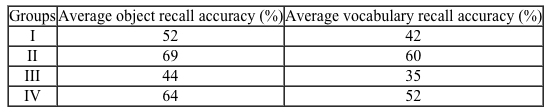
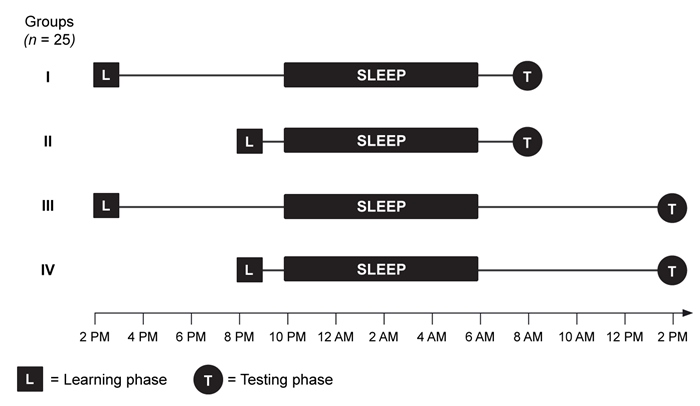 Figure 1 Experimental design for each of the 4 groupsResults were reported as the average recall accuracy for the objects and vocabulary definitions, by group (Table 1). Participants were then given a survey about the techniques they used when attempting to remember the toy objects and vocabulary definitions. Some students reported associating the definitions and objects with one another. For instance, one student reported that she related the words "plucky" (meaning brave) and "tocsin" (meaning an alarm) to an image of a toy fire truck, making it easier to recall the toy object and both associated vocabulary definitions.Table 1 Average Recall Accuracy, per Group
 -Which of the following, had it occurred, would be the best example of the social desirability bias in this study?
Figure 1 Experimental design for each of the 4 groupsResults were reported as the average recall accuracy for the objects and vocabulary definitions, by group (Table 1). Participants were then given a survey about the techniques they used when attempting to remember the toy objects and vocabulary definitions. Some students reported associating the definitions and objects with one another. For instance, one student reported that she related the words "plucky" (meaning brave) and "tocsin" (meaning an alarm) to an image of a toy fire truck, making it easier to recall the toy object and both associated vocabulary definitions.Table 1 Average Recall Accuracy, per Group
-Which of the following, had it occurred, would be the best example of the social desirability bias in this study? (Multiple Choice)
4.8/5 (92)
(92) Passage
Researchers conducted a pair of studies to explore how rewards influence motivation and weight loss for those who are overweight or obese.For Study 1, 20 overweight and 20 average-weight adults were invited to play a computer game consisting of a simple matching task in which participants earned a reward for getting multiple correct responses. Participants were allowed to select their own reward: Either $1.00 or a 200-calorie vending machine snack (valued at $1.00), such as a candy bar or bag of chips. For the first trial, participants were rewarded on an average of three correct responses (AVG3). Participants were then asked to choose between the food and monetary rewards. When a food reward was selected, the average number of correct responses required to earn the next reward doubled, but when a monetary reward was selected, the average number of correct responses required to earn the next reward remained the same (Figure 1). Results indicated that although there was no significant difference between the groups with regard to baseline self-reporting of hunger prior to the start of the computer tasks, overweight participants were five times more likely to choose the food rewards than average-weight participants.
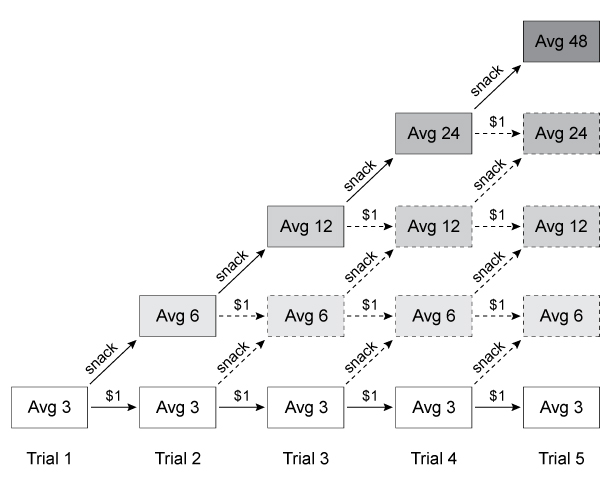 Figure 1 Study 1 reward scheduleFor Study 2, obese participants were recruited for a 16-week weight-loss study and randomly assigned to one of two groups: A control group (n = 32) or an experimental group (n = 35). Control participants engaged in weekly weigh-ins only. Experimental participants engaged in weekly weigh-ins but also earned or lost money (put into an account and paid at the end of the study) based on their weigh-in goal, calculated each week based on current body mass index (BMI), age, and sex. Those who reached their weekly weight goal earned $10; for each additional pound lost, participants earned another $10, up to $50/week. Participants in the experimental group who did not meet or exceed their weekly weight goal had $20 deducted from their accounts. No significant differences were found in baseline variables for either group; however, members of the control group lost an average of 5.9 pounds, whereas members of the experimental group lost an average of 18.1 pounds.
B. E. Saelens and L. H. Epstein ©1996 Elsevier B.V.
-Which of the following most accurately reflects the reinforcement schedules used by Study 1 and the experimental group in Study 2, respectively?
Figure 1 Study 1 reward scheduleFor Study 2, obese participants were recruited for a 16-week weight-loss study and randomly assigned to one of two groups: A control group (n = 32) or an experimental group (n = 35). Control participants engaged in weekly weigh-ins only. Experimental participants engaged in weekly weigh-ins but also earned or lost money (put into an account and paid at the end of the study) based on their weigh-in goal, calculated each week based on current body mass index (BMI), age, and sex. Those who reached their weekly weight goal earned $10; for each additional pound lost, participants earned another $10, up to $50/week. Participants in the experimental group who did not meet or exceed their weekly weight goal had $20 deducted from their accounts. No significant differences were found in baseline variables for either group; however, members of the control group lost an average of 5.9 pounds, whereas members of the experimental group lost an average of 18.1 pounds.
B. E. Saelens and L. H. Epstein ©1996 Elsevier B.V.
-Which of the following most accurately reflects the reinforcement schedules used by Study 1 and the experimental group in Study 2, respectively? (Multiple Choice)
4.8/5 (92)
(92) Passage
For decades psychologists have known that people tend to execute tasks differently when alone compared to when in the presence of other people.In Study 1, researchers analyzed records of bicycle racers' times both during competitions and when racing alone against the clock. They found that the fastest times were recorded during competitions, particularly larger races with over 100 cyclists. This finding was initially attributed to the competitive nature of the races, but later studies suggest performance improves when in the presence of other people, even outside of competition.In Study 2, researchers conducted an experiment based on the idea that the mere presence of others impacts performance. This study involved a simple task (ie, getting dressed), which was performed either alone or with an audience. This task was chosen because it was familiar and routine, without clear standards of good or bad performance. Furthermore, the participants had no idea that this task was of interest to the experimenters.Forty-five male undergraduate students were recruited for Study 2. The researchers informed the participants that they were required to remove their socks and shoes and replace them with unfamiliar ones and then put on a lab coat, surgical mask, and protective eye glasses (hard task). After a 10-minute wait, the participants were informed that the study was called off because the remaining participants failed to arrive and they could put back on their familiar clothes (easy task).All participants in Study 2 were randomly assigned to one of three experimental conditions. In the audience condition, each participant performed both tasks in a room with an attentive confederate watching. In the incidental audience condition, a confederate sat facing away from each participant while the participant performed both tasks. The third group of participants performed both tasks alone (control condition). Participants' behavior was observed and timed by an inconspicuous researcher. It was found that, compared to controls, participants performed more quickly under both experimental conditions when putting back on their familiar clothing, and performed more slowly when dressing in unfamiliar clothing.
Adapted from H. Markus ©1977 Elsevier B.V.
-Suppose the researchers in Study 1 wanted to analyze if the bystander effect occurs during bicycle races when racers get injured in accidents. To do this, which of the following data would they need?
(Multiple Choice)
4.9/5 (83)
(83) Passage
The term "health disparities" describes a systematic incidence of poorer health outcomes for groups that have traditionally experienced social disadvantage (eg, racial and ethnic minorities, lower-income individuals, women) as compared to more advantaged groups (eg, whites, higher-income individuals, men). These health disparities are driven by unequal access to health care services and health insurance due to prejudice and discrimination on the part of health care providers and the overall system, and extensive research has focused on these issues.Recent research suggests that another factor might explain health disparities: stereotype threat on the part of the patient. Stereotype threat can be evoked by verbal or nonverbal cues from health care professionals, such as a physician's use of confusing medical jargon (the standardized language medical personnel use to communicate among themselves) or a nurse's body language while discussing the risks of obesity and alcohol use. Once triggered, stereotype threat may result in behaviors that compromise one's own health. For example, a patient may withhold information or feel compelled to describe health-related behaviors in a positive light. Similarly, if the interaction arouses anxiety, a patient may be less likely to remember the physician's instructions or might dismiss a physician's advice as biased.Stereotype threat can be reduced through training programs that improve employees' communication skills. Some hospitals in large urban areas have implemented the use of cultural liaisons, individuals who are able to bridge the gap between a minority patient's cultural beliefs and Western medicine. Cultural liaisons are often present during the nonsensitive portions of the doctor's appointment, and studies suggest they may help to reduce stereotype threat in patients.
Adapted from J. Aronson, D. Burgess, S. M. Phelan, and L. Juarez (C)2013 American Public Health Association
-Based on the first paragraph, which of the following best defines institutional discrimination?
(Multiple Choice)
4.9/5 (83)
(83) Which of the following observations disconfirms the hypothesis that REM sleep is critical for memory consolidation?
(Multiple Choice)
4.9/5 (74)
(74) Passage
A common misconception in medicine is that eating disorders present similarly in males and females. Research suggests that this is untrue: males meeting diagnostic criteria for eating disorders are more likely than females to have another psychiatric illness, demonstrate a later age of onset, and engage in excessive exercise. They are less likely to engage in purging behaviors, be diagnosed by clinicians, or seek treatment. When males do enter treatment, they are generally further along in the course of the illness.The classification of eating disorders in males according to the Diagnostic and Statistical Manual of Mental Disorders, Fifth Edition (DSM-5) has recently been debated. Research suggests that one very common manifestation of eating disorder etiology in males, called muscle dysmorphia (MD), includes an obsession with a larger and more muscular body, which contrasts with the thin, idealized body for females with eating disorders. Characterized as a subset of body dysmorphic disorder, MD is more recently conceptualized as part of a spectrum of eating disorders; however, it is still classified under the obsessive-compulsive and related disorders umbrella in the DSM-5.One study applied the latest DSM-5 diagnostic criteria for anorexia nervosa (AN), bulimia nervosa (BN), binge eating disorder (BED), and MD to the medical records of male veterans treated in Veterans Administration (VA) hospitals across the United States from 2000 to 2015. The study (Table 1) found a significant increase in psychiatric comorbidity compared to controls (C).Table 1 Prevalence of Psychiatric Disorders for Eating Disorder and MD Cases and Controls in a National Sample of Male Veterans Treated at VA Hospitals from 2000 to 2015
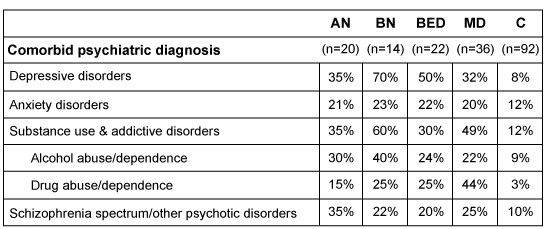 -The most appropriate control subjects for the study described in the final paragraph would be:
 (Multiple Choice)
5.0/5 (80)
(80) Passage
Research suggests that individuals with depression experience dysfunctions in their autobiographical memory. For example, negative autobiographical memories are more easily recalled than positive memories, and memories encoded while experiencing a positive mood are more difficult to access while depressed. In individuals with depression, rumination (repetitive negative thoughts) can also impede autobiographical memory retrieval.Studies have demonstrated that the Method of Loci (MoL), a mnemonic strategy that pairs items to be remembered with well-known visuospatial locations (loci), effectively improves retention and recall over time. Given this previous research, experimenters hypothesized that training individuals with depression in the MoL technique would improve sustained retrieval of their positive autobiographical memories. For this study, 125 individuals between ages 25 and 45 with a current diagnosis of depression were recruited (individuals with co-occurring psychological diagnoses were excluded). Phase 1 screened participants for normal memory function. Participants were given a list of 25 three-letter nonsense words to memorize (eg, LAR, PAS, FUV), and recall was tested immediately (no delay), and again after 20 minutes, one hour, nine hours, 24 hours, 48 hours, and 72 hours. Those participants who demonstrated normal memory function (n = 122) were then randomly assigned to the MoL group (n = 61) or the control group (n = 61) for the next phase.During phase 2, the MoL group was trained to associate features of a positive autobiographical memory (eg, a marriage proposal) with a well-known route (eg, the route from home to work). All salient details of the positive memory were mentally associated with loci. For example, one participant paired the restaurant table where he proposed to his wife with a fire hydrant he passes on his way to work. The control group was not trained using any specific technique. Both groups mentally rehearsed their chosen memory every day for one week. After one week, both groups performed equally well at recalling their selected positive memory. However, when a surprise recollection memory test was performed a month later, the MoL group performed at levels comparable to their first recollection test, while the control group exhibited significantly reduced recollection.
T. Dalgleish, L. Navrady, E. Bird, E. Hill, B. D. Dunn, and A.M. Golden ©2013 Association for Psychological Science; T. Dalgleish and A. Werner-Seidler ©2014 Elsevier
-Which of the following is the most likely reason the researchers limited the age range of the participants included in this study? Compared to younger adults, older adults experience:
(Multiple Choice)
4.7/5 (84)
(84) Passage
Psychotic disorders are characterized by a loss of contact with reality. The most common psychotic disorder is schizophrenia, which has a typical onset of psychotic symptoms in early adulthood. Schizophrenia displays considerable inter-individual variation throughout the course of the disorder; many factors appear to influence its progression. Comorbid (co-occurring) conditions, common in schizophrenia, may lead to poorer prognoses. For example, research suggests that fewer depressive symptoms are moderately associated with higher rates of medication compliance, whereas more depressive symptoms are associated with increased future relapses. The early detection of psychosis also appears to have a significant impact on long-term outcomes in schizophrenia. A first psychotic episode that goes untreated for a longer period is associated with more future hospitalizations and a diminished response to future therapeutic interventions.Researchers conducted a study to determine which was better at predicting the development of psychosis, a major component of schizophrenia, in high-risk young adults: the presence of certain speech pattern features or a standard clinical symptom inventory. The participant sample was restricted to 50 younger adults (age 18-30) who either met criteria for prodromal syndrome (preclinical signs of psychosis) or had a first-degree relative with schizophrenia.Every three months for three years, participants were interviewed and given the Symptoms of Psychosis Inventory (SPI), a standardized clinical assessment designed to measure psychosis and related symptoms. The SPI contains two subscales based on the major symptoms of schizophrenia: the Positive Symptom Scale (PSS) and the Negative Symptom Scale (NSS), which are summed to provide a total SPI score. Transcribed interview data were analyzed with software designed to assess the following speech pattern features: semantic coherence (the relatedness of phrases to one another), the number of determiners (eg, "that," "which," "what") used in a phrase (determiner density), and phrase length.Experienced clinicians diagnosed 11 participants with active psychosis by the end of the study. A computer program generated two models that predicted the development of active psychosis based on the data collected. One model based the prediction solely on a combination of the three speech pattern features ("Speech Model") and the other model based the prediction solely on SPI symptoms data ("SPI Model") (Table 1).Table 1 Comparison of Predictive Models
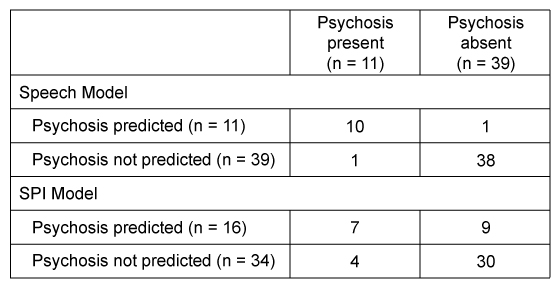 -Which conclusion is best supported by the data in Table 1?
 (Multiple Choice)
4.9/5 (80)
(80) Passage
Trait theorists believe that all people have certain traits, or characteristic ways of thinking and behaving, that largely account for personality. Psychobehavioral researchers conducted a pair of studies to determine whether individuals could intentionally alter one of their respective personality traits.In Study 1, participants were asked to select one personality trait they wished to increase from among the following: openness to experience, conscientiousness, extraversion, agreeableness, or emotional stability. Participants first completed a short survey that measured baseline personality trait expression scores (pretest). Participants in the experimental group (n = 125) then developed their own intervention plan intended to increase the selected personality trait whereas the control group (n = 125) did not implement any changes to daily activities. At the end of the study, all participants completed the same self-report survey to reassess their personality trait expression scores (posttest). Results were calculated by subtracting pretest from posttest scores for each person (change score), and then comparing the mean change scores for the experimental and control groups. Results showed significantly greater change scores for experimental group participants who elected to increase their emotional stability, relative to control subjects who selected this trait. The change scores did not differ significantly between the experimental and control groups that selected any of the other four traits (ie, openness to experience, conscientiousness, extraversion, or agreeableness).In Study 2, the same basic methodology was used on a new cohort with several adjustments to the Study 1 design. Instead of asking participants in the experimental condition to formulate their own intervention plans, licensed therapists trained participants in practices to redirect thought processes, emotional responses, and behaviors associated with the selected personality trait. The experimental group participants carried out these practices for the course of the study whereas the control group participants implemented no changes. In contrast to the self-reports used in Study 1, personality trait expression scores (both pre and post) were determined by assessments made by researchers. Results from Study 2 showed significantly greater increases in all five personality trait expression scores for experimental versus control participants.
-If the amount of change for the control and experimental groups did not actually differ, which of the following measurement errors would most likely result in a false positive (finding that the experimental group increased more than the control group)?
(Multiple Choice)
4.9/5 (78)
(78) Passage
Research suggests that individuals with depression experience dysfunctions in their autobiographical memory. For example, negative autobiographical memories are more easily recalled than positive memories, and memories encoded while experiencing a positive mood are more difficult to access while depressed. In individuals with depression, rumination (repetitive negative thoughts) can also impede autobiographical memory retrieval.Studies have demonstrated that the Method of Loci (MoL), a mnemonic strategy that pairs items to be remembered with well-known visuospatial locations (loci), effectively improves retention and recall over time. Given this previous research, experimenters hypothesized that training individuals with depression in the MoL technique would improve sustained retrieval of their positive autobiographical memories. For this study, 125 individuals between ages 25 and 45 with a current diagnosis of depression were recruited (individuals with co-occurring psychological diagnoses were excluded). Phase 1 screened participants for normal memory function. Participants were given a list of 25 three-letter nonsense words to memorize (eg, LAR, PAS, FUV), and recall was tested immediately (no delay), and again after 20 minutes, one hour, nine hours, 24 hours, 48 hours, and 72 hours. Those participants who demonstrated normal memory function (n = 122) were then randomly assigned to the MoL group (n = 61) or the control group (n = 61) for the next phase.During phase 2, the MoL group was trained to associate features of a positive autobiographical memory (eg, a marriage proposal) with a well-known route (eg, the route from home to work). All salient details of the positive memory were mentally associated with loci. For example, one participant paired the restaurant table where he proposed to his wife with a fire hydrant he passes on his way to work. The control group was not trained using any specific technique. Both groups mentally rehearsed their chosen memory every day for one week. After one week, both groups performed equally well at recalling their selected positive memory. However, when a surprise recollection memory test was performed a month later, the MoL group performed at levels comparable to their first recollection test, while the control group exhibited significantly reduced recollection.
T. Dalgleish, L. Navrady, E. Bird, E. Hill, B. D. Dunn, and A.M. Golden ©2013 Association for Psychological Science; T. Dalgleish and A. Werner-Seidler ©2014 Elsevier
-This study assessed which of the following independent variables?
(Multiple Choice)
4.8/5 (86)
(86) Passage
Health psychologists interested in studying the influence of positive and negative thinking on weight loss conducted a study on 120 obese adults attempting to lose weight. Participants indicated on a scale of 1 to 7 how successful they thought they would be at losing weight (1 = "not successful" and 7 = "very successful") and how much control they believed they had over their success (1 = "no control" and 7 = "complete control"), recorded as expectation of success scores and control of success scores, respectively.Participants were then randomly divided into three groups and asked to complete a 15-minute guided mental exercise twice a day for three weeks. Participants in the fantasy/reality contrast condition were instructed to reflect on two positive aspects of a fantasized weight loss, such as attaining better health and more energy, and two negative aspects of reality that impede weight loss, such as lack of discipline and desire to eat unhealthy foods. Participants in the positive fantasy condition were asked to reflect on four positive aspects of weight loss, and participants in the negative reality condition were asked to reflect on four factors that impede weight loss.At the end of this three-week period, participants began a three-month diet and exercise regimen involving caloric restriction to 1,500 calories per day as well as regular participation in aerobic exercise and weight training. Researchers recorded weekly weights of participants and surveyed participants regarding adherence to proactive weight loss strategies. The results are shown by group in Figures 1 and 2.
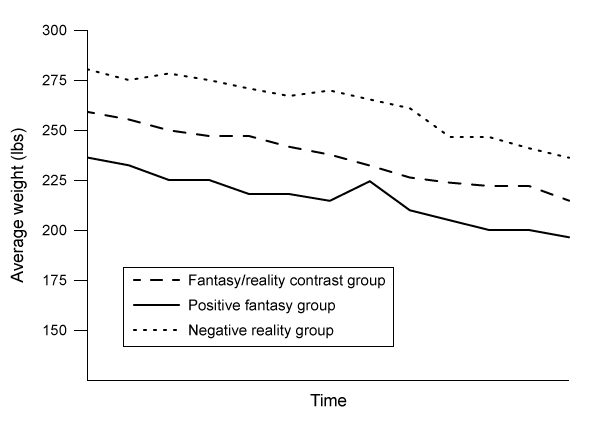 Figure 1 Average weight recorded for each group during three-month follow-up
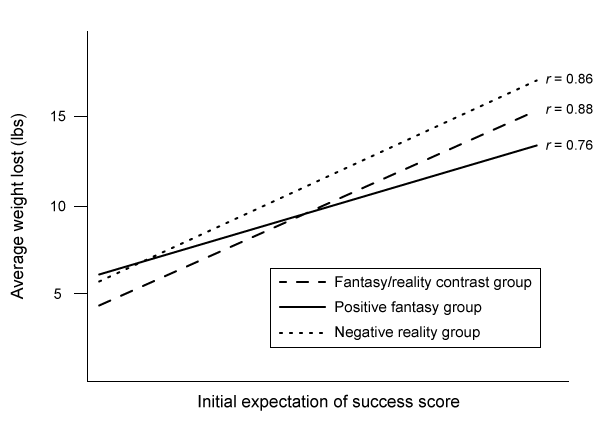 Figure 2 Initial expectation of success score versus average weight loss
-Which of the following proactive weight loss strategies is most consistent with drive-reduction theory?
Figure 1 Average weight recorded for each group during three-month follow-up
Figure 2 Initial expectation of success score versus average weight loss
-Which of the following proactive weight loss strategies is most consistent with drive-reduction theory? (Multiple Choice)
4.9/5 (85)
(85) Researchers asked 100 Americans to describe their recollections of the September 11, 2001, terrorist attacks at two time points: 2 days and 10 years after the attacks. Comparing the descriptions for each individual, researchers are LEAST likely to find that:
(Multiple Choice)
4.8/5 (81)
(81) Passage
Researchers conducted a pair of studies to explore how rewards influence motivation and weight loss for those who are overweight or obese.For Study 1, 20 overweight and 20 average-weight adults were invited to play a computer game consisting of a simple matching task in which participants earned a reward for getting multiple correct responses. Participants were allowed to select their own reward: Either $1.00 or a 200-calorie vending machine snack (valued at $1.00), such as a candy bar or bag of chips. For the first trial, participants were rewarded on an average of three correct responses (AVG3). Participants were then asked to choose between the food and monetary rewards. When a food reward was selected, the average number of correct responses required to earn the next reward doubled, but when a monetary reward was selected, the average number of correct responses required to earn the next reward remained the same (Figure 1). Results indicated that although there was no significant difference between the groups with regard to baseline self-reporting of hunger prior to the start of the computer tasks, overweight participants were five times more likely to choose the food rewards than average-weight participants.
Figure 1 Study 1 reward scheduleFor Study 2, obese participants were recruited for a 16-week weight-loss study and randomly assigned to one of two groups: A control group (n = 32) or an experimental group (n = 35). Control participants engaged in weekly weigh-ins only. Experimental participants engaged in weekly weigh-ins but also earned or lost money (put into an account and paid at the end of the study) based on their weigh-in goal, calculated each week based on current body mass index (BMI), age, and sex. Those who reached their weekly weight goal earned $10; for each additional pound lost, participants earned another $10, up to $50/week. Participants in the experimental group who did not meet or exceed their weekly weight goal had $20 deducted from their accounts. No significant differences were found in baseline variables for either group; however, members of the control group lost an average of 5.9 pounds, whereas members of the experimental group lost an average of 18.1 pounds.
B. E. Saelens and L. H. Epstein ©1996 Elsevier B.V.
-The participants' motivational state:
Figure 1 Study 1 reward scheduleFor Study 2, obese participants were recruited for a 16-week weight-loss study and randomly assigned to one of two groups: A control group (n = 32) or an experimental group (n = 35). Control participants engaged in weekly weigh-ins only. Experimental participants engaged in weekly weigh-ins but also earned or lost money (put into an account and paid at the end of the study) based on their weigh-in goal, calculated each week based on current body mass index (BMI), age, and sex. Those who reached their weekly weight goal earned $10; for each additional pound lost, participants earned another $10, up to $50/week. Participants in the experimental group who did not meet or exceed their weekly weight goal had $20 deducted from their accounts. No significant differences were found in baseline variables for either group; however, members of the control group lost an average of 5.9 pounds, whereas members of the experimental group lost an average of 18.1 pounds.
B. E. Saelens and L. H. Epstein ©1996 Elsevier B.V.
-The participants' motivational state: (Multiple Choice)
4.9/5 (80)
(80) Passage
Lucid dreaming occurs when a person becomes consciously aware of a dream and uses executive decision-making skills to critically analyze the dream environment. Lucid dreamers are thus able to control certain aspects of their dreams, an ability that may occur intentionally, through practice, or unintentionally, usually after having noticed something bizarre or unrealistic in the dream. A lucid dreamer might choose to experience the sensation of flying, explore a custom-designed landscape, carry out a predetermined task, or practice a skill. Estimates suggest that about half the population has had a lucid dream, and about 10%-20% of people are considered frequent lucid dreamers experiencing such dreams regularly (at least once a month).In one study, researchers asked participants to perform a difficult visuomotor task that involved throwing an object through a small moving target. Participants were organized into three groups, one group of frequent lucid dreamers and two groups of nonlucid dreamers. All three groups attempted the visuomotor task at midday in the research lab, before (pretest) and after (posttest) a single night's sleep at home. Lucid dreamers were asked to only practice the visuomotor task overnight during their lucid dream ("lucid practice" group). One group of nonlucid dreamers practiced the task in the lab, right after the pretest ("waking practice" group), and another group of nonlucid dreamers performed the pretest and posttest without practicing between the tests ("no practice" group). The average improvement of hits (the number of times each participant successfully threw the object through the target) from pretest to posttest for each group is shown in Figure 1.
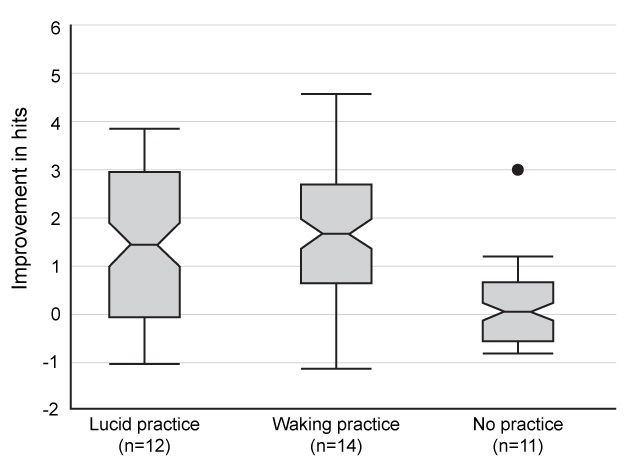 Figure 1 Median improvement in total hits for each group (Note: The notches represent the 95% confidence interval for the median.)The researchers proposed that a follow-up study be devised and conducted to control for any potential variability in each participant's sleep at home. The researchers suggested using the same study procedure except participants would sleep overnight for five consecutive nights in a sleep lab, where the timing and duration of sleep would be standardized. In order to eliminate any potential "first-night effects" (an initial reduction in sleep quality when sleeping in an unfamiliar environment), researchers proposed that pretest and posttest measures each be taken before and after the third, fourth, and fifth night's sleep.
-If a neuroimaging study compared normal dreaming with lucid dreaming, in what brain region would more activity be expected during lucid dreaming?
Figure 1 Median improvement in total hits for each group (Note: The notches represent the 95% confidence interval for the median.)The researchers proposed that a follow-up study be devised and conducted to control for any potential variability in each participant's sleep at home. The researchers suggested using the same study procedure except participants would sleep overnight for five consecutive nights in a sleep lab, where the timing and duration of sleep would be standardized. In order to eliminate any potential "first-night effects" (an initial reduction in sleep quality when sleeping in an unfamiliar environment), researchers proposed that pretest and posttest measures each be taken before and after the third, fourth, and fifth night's sleep.
-If a neuroimaging study compared normal dreaming with lucid dreaming, in what brain region would more activity be expected during lucid dreaming? (Multiple Choice)
4.9/5 (73)
(73) Experts recently classified severe premenstrual symptoms with marked mood changes that interfere with daily functioning as an official psychiatric diagnosis. This example reflects which perspective on health and illness?
(Multiple Choice)
4.9/5 (81)
(81) Passage
Text messaging while driving increases the risk of a motor vehicle accident more than twenty-fold. The number of deadly highway accidents has spiked after decades of decline, mainly because of texting while driving. Despite this, nearly 40% of American drivers report having texted while driving and 20% of drivers report doing so regularly. Motor vehicle traffic accidents are the leading cause of death among Americans age 16 to 25.Researchers conducted a study to investigate the extent to which driving is impaired by prolonged gazes away from the highway (as a correlate to texting while driving) for males with and without attention-deficit hyperactivity disorder (ADHD). Eighty 16-year-old males with a valid driver's license were recruited for the study; half had ADHD (26 diagnosed as mild, 14 diagnosed as moderate) and half did not. Each participant was asked to complete six driving tasks (eg, avoiding an object on the road, merging, making unexpected stops) using a highly realistic driving simulator that projects computer-generated, two-dimensional, 360º visuals, requiring the use of side and rearview mirrors. The baseline condition included no distraction. In the first distraction condition, participants drove while conducting a hands-free phone conversation, and in the second distraction condition they were texting while driving. Two dependent variables were assessed: (1) percentage of driving time with eyes diverted from the road, and (2) number of glances away from the road lasting longer than two seconds.Under both distraction conditions, participants with ADHD (compared to those without ADHD) demonstrated a significantly higher percentage of driving time with eyes diverted from the road, as well as a significantly higher number of prolonged glances away from the road. In addition, unsteady lane position while driving was correlated with both ADHD and texting. The researchers concluded that impairments in driving performance were due to the extreme cognitive workload of competing tasks and visual inattention.
-A proponent of the biological perspective would suggest that distracted driving should decrease with age as:
(Multiple Choice)
4.7/5 (77)
(77) Passage
During the 1800s, the United States (U.S.) transitioned from a farming society to an industrialized society, which resulted in occupations becoming more specialized and socially labeled as "masculine" or "feminine." Today, the U.S. is experiencing an equally dramatic transition into what is referred to as a knowledge economy, marked by a decline in manufacturing and manual labor occupations, often referred to as "blue-collar" professions (which are dominated by males), and a rise in information, technology, and service sector jobs. Sociologists argue that this has led to shifting roles and expectations for both males and females in the U.S. workforce.As demand for blue-collar occupations has declined in recent decades, demand for "pink-collar" (feminine-typed) occupations has increased, particularly in health care (eg, registered nurses, health aides), but males appear to avoid pink-collar occupations for various reasons. Research indicates that socially defined gender roles may dissuade males from even considering pink-collar professions due to a perception that one's job will conflict with one's male status. Male students-in-training for pink-collar professions (eg, nursing) have a higher rate of attrition than their female classmates, which may be partly due to the unintended messages conveyed by the informal curriculum: that male students do not belong in these professions (eg, a lack of male role models, female-only images in textbooks). Of the males who enter pink-collar professions, many find that they are more quickly promoted into managerial roles (believed to be more appropriately masculine) than their equally qualified female counterparts, a phenomenon known as the glass escalator.Data show that females continue to be underrepresented in many high-paying fields, which are predominantly masculine-typed industries such as aeronautics, engineering, medical surgery, business (executive-level), and computer science/technology. Data also show that within all job categories, even those considered feminine-typed, females are still paid less than their male peers, a phenomenon sociologists call the gender pay (or wage) gap (Figure 1). The gender pay gap persists even when differences in hours worked, job choice, education, and other qualifications are taken into account. Research suggests that mothers earn less than men and women who are not mothers, a phenomenon termed the "motherhood penalty" by sociologists.
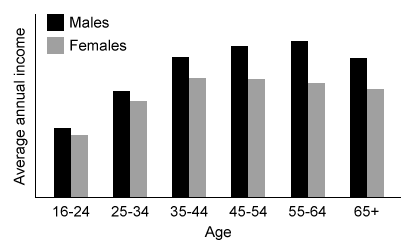 Figure 1 Gender pay gap by age
P. F. Drucker ©1994 The Atlantic Monthly; B. R. MacWilliams, B. Schmidt, and M. R. Bleich ©2013 Wolters Kluwer Health, Inc.
-Based on the second paragraph of the passage, occupational sex/gender segregation in the U.S. is perpetuated as a result of all of the following EXCEPT:
Figure 1 Gender pay gap by age
P. F. Drucker ©1994 The Atlantic Monthly; B. R. MacWilliams, B. Schmidt, and M. R. Bleich ©2013 Wolters Kluwer Health, Inc.
-Based on the second paragraph of the passage, occupational sex/gender segregation in the U.S. is perpetuated as a result of all of the following EXCEPT: (Multiple Choice)
4.8/5 (74)
(74) Passage
Text messaging while driving increases the risk of a motor vehicle accident more than twenty-fold. The number of deadly highway accidents has spiked after decades of decline, mainly because of texting while driving. Despite this, nearly 40% of American drivers report having texted while driving and 20% of drivers report doing so regularly. Motor vehicle traffic accidents are the leading cause of death among Americans age 16 to 25.Researchers conducted a study to investigate the extent to which driving is impaired by prolonged gazes away from the highway (as a correlate to texting while driving) for males with and without attention-deficit hyperactivity disorder (ADHD). Eighty 16-year-old males with a valid driver's license were recruited for the study; half had ADHD (26 diagnosed as mild, 14 diagnosed as moderate) and half did not. Each participant was asked to complete six driving tasks (eg, avoiding an object on the road, merging, making unexpected stops) using a highly realistic driving simulator that projects computer-generated, two-dimensional, 360º visuals, requiring the use of side and rearview mirrors. The baseline condition included no distraction. In the first distraction condition, participants drove while conducting a hands-free phone conversation, and in the second distraction condition they were texting while driving. Two dependent variables were assessed: (1) percentage of driving time with eyes diverted from the road, and (2) number of glances away from the road lasting longer than two seconds.Under both distraction conditions, participants with ADHD (compared to those without ADHD) demonstrated a significantly higher percentage of driving time with eyes diverted from the road, as well as a significantly higher number of prolonged glances away from the road. In addition, unsteady lane position while driving was correlated with both ADHD and texting. The researchers concluded that impairments in driving performance were due to the extreme cognitive workload of competing tasks and visual inattention.
-Which of the following processes assists in the perception of depth and motion required during the driving simulation?
(Multiple Choice)
4.9/5 (78)
(78) 
Filters
- Essay(0)
- Multiple Choice(0)
- Short Answer(0)
- True False(0)
- Matching(0)