



 Chat with AI
Exam 1: Behavioral Sciences

Exam 1: Behavioral Sciences343 Questions
Exam 2: Biochemistry307 Questions
Exam 3: Biology319 Questions
Exam 4: Critical Analysis & Reasoning Skills358 Questions
Exam 5: General Chemistry317 Questions
Exam 6: Organic Chemistry191 Questions
Exam 7: Physics200 Questions
Select questions type


Passage
Epidemiologists now consider obesity to be a global pandemic, occurring largely as a result of the spread of technology and culture worldwide. Obesity has been linked to many serious health conditions, and as the obesity rate rises, the overall poorer health of the population impairs the functioning and stability of society. Although experts disagree about whether obesity itself should be viewed as a disease to be treated with medical interventions, there is widespread consensus that obesity prevention is critical. Research has shown that across one's life span, multiple biological, psychological, and social influences contribute to obesity; understanding the influence of these factors is essential to the development of effective obesity prevention programs.Study 1 was conducted using nearly 6,000 residents from a mid-sized city to investigate how obesity rates change over time in informal social groups. During recruitment wave A, researchers asked an initial group of individuals to complete a two-minute health questionnaire; those who completed the questionnaire were then asked to participate in the research study. During recruitment wave B, additional participants were recruited using a snowball sampling technique: participants who enrolled during wave A provided contact information of friends and family members who were then asked to participate. Researchers finalized the sample such that each participant had at least one family member, one close friend, and one acquaintance also in the study. Every year for 20 years, researchers measured each participant's height and weight to calculate body mass index (BMI) and conducted an extensive interview with each participant to assess the type, strength, and geographic distance of their social ties with other participants. Researchers found that the type and strength of social ties appeared to be more strongly linked to BMI than geographic closeness between social ties.Study 1 was criticized for not addressing larger contextual variables related to obesity, such as the availability of unhealthy food within a community. Therefore, Study 2 randomly selected a subset of 500 cases from the Study 1 database and, using participants' addresses, researchers mapped and counted the number of retail food chains (ie, "fast food" restaurants selling low-quality, calorie-dense food) located within a 1-mile radius of participants' homes and compared this to BMI at the end of the 20-year study. Results showed a significant relationship between higher BMI and more neighborhood retail food chains.
J. A. Levine ©2011 American Diabetes Association; Christakis, N. A. and Fowler, J. H. ©2007 Massachusetts Medical Society
-Study 1 assessed how obesity rates changed over time in:
(Multiple Choice)
4.8/5  (74)
(74) Passage
Poverty may be the most foundational risk factor for poor health outcomes. Although poverty thresholds are calculated in a variety of ways, many international organizations define poverty thresholds as 50% of the median household income in a given country. Since the United States Census Bureau first began publishing an official U.S. poverty estimate in the 1960s, the percentage of the population living in poverty has fluctuated between roughly 10% and 15%. Extensive research shows a correlation between social stratification and health outcomes, with better outcomes corresponding to higher strata.Concentration of PovertyAccording to U.S. Census Bureau data, roughly 1 in 7 Americans is living in poverty, with almost 14 million residing in "high-poverty" neighborhoods (40% or more of residents below the federally defined poverty threshold), nearly double the amount since 1990. High-poverty neighborhoods also tend to have the highest rates of violent crime, so living in these neighborhoods poses both immediate (eg, physical assault) and long-term health threats, as living in an unsafe neighborhood acts as a chronic environmental stressor.Poverty and IsolationPoverty also prevents or limits access to many productive social activities, such as working, buying goods and services, community and political involvement, and engagement with social networks. The most impoverished members of society are often marginalized and may engage with mainstream society very little, if at all.Transmission of PovertyPoverty is transmitted across generations; numerous studies have found that individuals born into poverty are more likely to raise their own children in poverty. A longitudinal study of 100 households concluded that transmission of poverty occurs because lower-income parents lack economic resources, social connections, and knowledge about the education system, not because they differ from higher-income parents in wanting to help their children succeed. Experts also suggest that the education system perpetuates income disparities; schools in high-income neighborhoods have the most funding, best teachers, and highest graduation rates, whereas schools in low-income neighborhoods face numerous obstacles to obtaining supplies, retaining qualified teachers, and preventing student attrition.
T. Chin & M. Phillips, "Social Reproduction and Child-rearing Practices:Social Class, Children's Agency, and the Summer Activity Gap." ©2004 SAGE Publications
-Does the passage provide a threshold for absolute poverty?
(Multiple Choice)
4.8/5 (91)
(91) Which of the following drugs has an effect on the central nervous system similar to that of alcohol?
(Multiple Choice)
4.8/5 (85)
(85) Passage
Visual perception involves the organization and interpretation of information obtained from visible light. Visual perception relies on monocular and binocular cues, as well as perceptual organization principles that allow humans to interpret limited or partial information more holistically. These sorts of mental shortcuts are based on prior experiences and knowledge, and are especially useful when lighting or perspective is limited. For example, the ambiguous image in Figure 1 is often perceived as a cup.
 Figure 1 Ambiguous imagePerceptual organization principles allow our brains to quickly and efficiently make assumptions about visual inputs, but these principles can also give rise to perceptual illusions. For example, the Ames room is constructed to exploit monocular depth cues in such a way that the person standing on one side of the room appears to impossibly dwarf the person on the other side of the room (Figure 2).
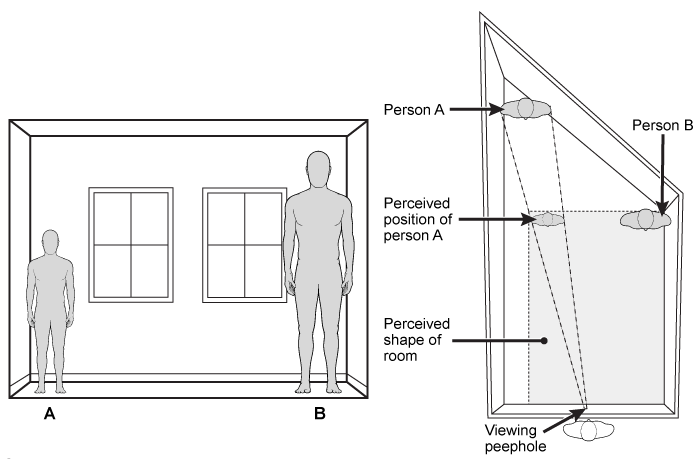 Figure 2 Ames room illusion (two people standing in a specially constructed Ames room, viewed through a monocular peephole)Human senses were adapted for use on land, which can lead to potentially deadly perceptual distortions while flying or underwater diving. Pilots are prone to such perceptual distortions when landing on unfamiliar runways. During their training, pilots develop a mental image of how a typical runway appears as they descend and land. Later, they compare this prototypical shape to the runway they see before them to make adjustments in the slope of their descent. However, if a runway differs from what the pilot is used to (eg, in width or slope), it will differ from the pilot's mental image for a typical runway at that same altitude. For example, an unusually wide runway will appear to be closer than it actually is, and a narrow runway will seem to be further away. This can cause the pilot to approach at a dangerously steep or shallow slope.Pilots and divers can also suffer from spatial disorientation due to variations in sensory stimuli that are not typically encountered on land. For example, gravity is not experienced in the body the same way underwater as on land, and visual cues are often limited in deep dives. In these murky conditions, divers can easily lose track of the surface of the water, leading to extreme spatial disorientation and panic.
-
 If you fixate on the black plus sign in the middle of this image without moving your eyes, the grey circle around the plus sign eventually disappears. Known as the Troxler effect, this occurs because of:
Figure 1 Ambiguous imagePerceptual organization principles allow our brains to quickly and efficiently make assumptions about visual inputs, but these principles can also give rise to perceptual illusions. For example, the Ames room is constructed to exploit monocular depth cues in such a way that the person standing on one side of the room appears to impossibly dwarf the person on the other side of the room (Figure 2).
Figure 2 Ames room illusion (two people standing in a specially constructed Ames room, viewed through a monocular peephole)Human senses were adapted for use on land, which can lead to potentially deadly perceptual distortions while flying or underwater diving. Pilots are prone to such perceptual distortions when landing on unfamiliar runways. During their training, pilots develop a mental image of how a typical runway appears as they descend and land. Later, they compare this prototypical shape to the runway they see before them to make adjustments in the slope of their descent. However, if a runway differs from what the pilot is used to (eg, in width or slope), it will differ from the pilot's mental image for a typical runway at that same altitude. For example, an unusually wide runway will appear to be closer than it actually is, and a narrow runway will seem to be further away. This can cause the pilot to approach at a dangerously steep or shallow slope.Pilots and divers can also suffer from spatial disorientation due to variations in sensory stimuli that are not typically encountered on land. For example, gravity is not experienced in the body the same way underwater as on land, and visual cues are often limited in deep dives. In these murky conditions, divers can easily lose track of the surface of the water, leading to extreme spatial disorientation and panic.
- If you fixate on the black plus sign in the middle of this image without moving your eyes, the grey circle around the plus sign eventually disappears. Known as the Troxler effect, this occurs because of: (Multiple Choice)
4.9/5 (83)
(83) Passage
In 2010, the United States (U.S.) had an incarcerated population of about 1.6 million, up from about 300,000 in 1980. Some experts suggest that the exponential rise in the inmate population has been largely due to the "war on drugs," initiated in the 1980s, which led to more aggressive laws against drug use and distribution. Increases in arrests and imprisonment, however, have not affected all segments of the U.S. population equally. Although the total population was about 50% male in 2010, the prison population was about 93% male and reflective of additional racial and ethnic disparities (Figure 1).
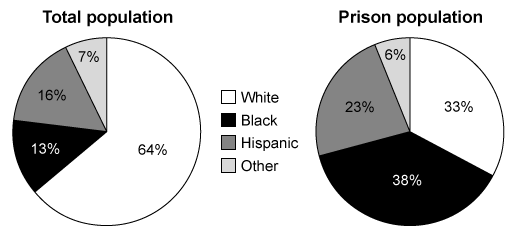 Figure 1 Total population and prison population by race and ethnicity in the United States in 2010Research suggests that black and white people use drugs at similar rates, but black people are more likely to end up in the criminal justice system for drug use. This overrepresentation of black people in the prison population can be partly explained by discrimination at the individual and institutional levels. For example, if police departments focus their resources in predominantly black neighborhoods based on the assumption that black individuals are more likely to commit a crime, then police officers (who may similarly believe black people commit more crimes than white people) are more likely to witness black people committing crimes, thereby confirming the belief. Discrimination operates at every level of the criminal justice system: Black people are more likely than white people to be arrested, prosecuted, and convicted for drug use and receive, on average, longer sentences.High rates of recidivism also perpetuate the demographic disparity of the prison population. It is estimated that about 75% of released prisoners will be rearrested within five years. Experts suggest that, once convicted of a felony, individuals find that their status as a former felon (or "ex-convict") dominates all their other statuses, making it difficult to reintegrate into society. The social stigma of criminality makes it hard for ex-convicts to secure employment, which often leads to further crime. Ex-convicts are also more closely monitored by police and far more likely to be arrested and convicted for minor offenses.
-Which of the following helps explain the demographic disparities of the prison population described in the passage?
Figure 1 Total population and prison population by race and ethnicity in the United States in 2010Research suggests that black and white people use drugs at similar rates, but black people are more likely to end up in the criminal justice system for drug use. This overrepresentation of black people in the prison population can be partly explained by discrimination at the individual and institutional levels. For example, if police departments focus their resources in predominantly black neighborhoods based on the assumption that black individuals are more likely to commit a crime, then police officers (who may similarly believe black people commit more crimes than white people) are more likely to witness black people committing crimes, thereby confirming the belief. Discrimination operates at every level of the criminal justice system: Black people are more likely than white people to be arrested, prosecuted, and convicted for drug use and receive, on average, longer sentences.High rates of recidivism also perpetuate the demographic disparity of the prison population. It is estimated that about 75% of released prisoners will be rearrested within five years. Experts suggest that, once convicted of a felony, individuals find that their status as a former felon (or "ex-convict") dominates all their other statuses, making it difficult to reintegrate into society. The social stigma of criminality makes it hard for ex-convicts to secure employment, which often leads to further crime. Ex-convicts are also more closely monitored by police and far more likely to be arrested and convicted for minor offenses.
-Which of the following helps explain the demographic disparities of the prison population described in the passage? (Multiple Choice)
4.8/5 (84)
(84) Passage
For decades psychologists have known that people tend to execute tasks differently when alone compared to when in the presence of other people.In Study 1, researchers analyzed records of bicycle racers' times both during competitions and when racing alone against the clock. They found that the fastest times were recorded during competitions, particularly larger races with over 100 cyclists. This finding was initially attributed to the competitive nature of the races, but later studies suggest performance improves when in the presence of other people, even outside of competition.In Study 2, researchers conducted an experiment based on the idea that the mere presence of others impacts performance. This study involved a simple task (ie, getting dressed), which was performed either alone or with an audience. This task was chosen because it was familiar and routine, without clear standards of good or bad performance. Furthermore, the participants had no idea that this task was of interest to the experimenters.Forty-five male undergraduate students were recruited for Study 2. The researchers informed the participants that they were required to remove their socks and shoes and replace them with unfamiliar ones and then put on a lab coat, surgical mask, and protective eye glasses (hard task). After a 10-minute wait, the participants were informed that the study was called off because the remaining participants failed to arrive and they could put back on their familiar clothes (easy task).All participants in Study 2 were randomly assigned to one of three experimental conditions. In the audience condition, each participant performed both tasks in a room with an attentive confederate watching. In the incidental audience condition, a confederate sat facing away from each participant while the participant performed both tasks. The third group of participants performed both tasks alone (control condition). Participants' behavior was observed and timed by an inconspicuous researcher. It was found that, compared to controls, participants performed more quickly under both experimental conditions when putting back on their familiar clothing, and performed more slowly when dressing in unfamiliar clothing.
Adapted from H. Markus ©1977 Elsevier B.V.
-The researchers in Study 2 repeated the experiment, but also measured each participant's heart rate before and during the tasks. Which of the following is true regarding this new design?
(Multiple Choice)
4.9/5 (84)
(84) Passage
Visual perception involves the organization and interpretation of information obtained from visible light. Visual perception relies on monocular and binocular cues, as well as perceptual organization principles that allow humans to interpret limited or partial information more holistically. These sorts of mental shortcuts are based on prior experiences and knowledge, and are especially useful when lighting or perspective is limited. For example, the ambiguous image in Figure 1 is often perceived as a cup.
Figure 1 Ambiguous imagePerceptual organization principles allow our brains to quickly and efficiently make assumptions about visual inputs, but these principles can also give rise to perceptual illusions. For example, the Ames room is constructed to exploit monocular depth cues in such a way that the person standing on one side of the room appears to impossibly dwarf the person on the other side of the room (Figure 2).
Figure 2 Ames room illusion (two people standing in a specially constructed Ames room, viewed through a monocular peephole)Human senses were adapted for use on land, which can lead to potentially deadly perceptual distortions while flying or underwater diving. Pilots are prone to such perceptual distortions when landing on unfamiliar runways. During their training, pilots develop a mental image of how a typical runway appears as they descend and land. Later, they compare this prototypical shape to the runway they see before them to make adjustments in the slope of their descent. However, if a runway differs from what the pilot is used to (eg, in width or slope), it will differ from the pilot's mental image for a typical runway at that same altitude. For example, an unusually wide runway will appear to be closer than it actually is, and a narrow runway will seem to be further away. This can cause the pilot to approach at a dangerously steep or shallow slope.Pilots and divers can also suffer from spatial disorientation due to variations in sensory stimuli that are not typically encountered on land. For example, gravity is not experienced in the body the same way underwater as on land, and visual cues are often limited in deep dives. In these murky conditions, divers can easily lose track of the surface of the water, leading to extreme spatial disorientation and panic.
-The perception of a cup in Figure 1 is best attributed to which Gestalt principle of perceptual organization?
Figure 1 Ambiguous imagePerceptual organization principles allow our brains to quickly and efficiently make assumptions about visual inputs, but these principles can also give rise to perceptual illusions. For example, the Ames room is constructed to exploit monocular depth cues in such a way that the person standing on one side of the room appears to impossibly dwarf the person on the other side of the room (Figure 2).
Figure 2 Ames room illusion (two people standing in a specially constructed Ames room, viewed through a monocular peephole)Human senses were adapted for use on land, which can lead to potentially deadly perceptual distortions while flying or underwater diving. Pilots are prone to such perceptual distortions when landing on unfamiliar runways. During their training, pilots develop a mental image of how a typical runway appears as they descend and land. Later, they compare this prototypical shape to the runway they see before them to make adjustments in the slope of their descent. However, if a runway differs from what the pilot is used to (eg, in width or slope), it will differ from the pilot's mental image for a typical runway at that same altitude. For example, an unusually wide runway will appear to be closer than it actually is, and a narrow runway will seem to be further away. This can cause the pilot to approach at a dangerously steep or shallow slope.Pilots and divers can also suffer from spatial disorientation due to variations in sensory stimuli that are not typically encountered on land. For example, gravity is not experienced in the body the same way underwater as on land, and visual cues are often limited in deep dives. In these murky conditions, divers can easily lose track of the surface of the water, leading to extreme spatial disorientation and panic.
-The perception of a cup in Figure 1 is best attributed to which Gestalt principle of perceptual organization? (Multiple Choice)
4.8/5 (82)
(82) Passage
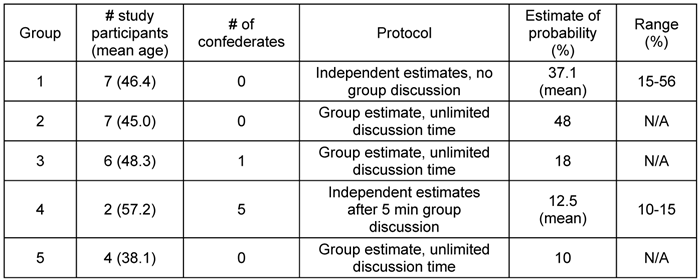
Twenty-two adults (mean age 49.5) were recruited to participate in a study they were told was to assess beliefs about cancer risk. All participants were in good health; neither they nor any first-degree relatives had been diagnosed with cancer.In the first phase of the study, participants viewed a brief video about the epidemiology and prevalence of cancer in the United States, and then were randomly assigned to one of four groups and asked to estimate the probability that they would develop cancer in their lifetimes. Group 1 consisted of seven study participants who each arrived at their estimates independently and without discussion. Group 2 consisted of seven study participants who were asked to agree on a group estimate after discussion (with unlimited time). Group 3 contained seven members who were also asked to arrive at a consensus estimate after discussion (with unlimited time): Six were study participants and the seventh was a confederate who suggested a very low estimate. Group 4 likewise contained seven members: Two were study participants and the other five were confederates who each suggested low estimates. Group 4 members were limited to 5 minutes of discussion and then asked to arrive at individual estimates.For the second phase of the study, four members of Group 1 who arrived at independent estimates of 20% or lower were put into a new group (Group 5), then were given unlimited time to discuss their initial estimates and arrive at a group estimate (Table 1).Table 1 Group Composition, Protocol, and Estimate of Developing Cancer in One's Lifetime
 S. E. Asch ©1956 American Psychological Association.
-Social loafing would be best demonstrated by members of:
S. E. Asch ©1956 American Psychological Association.
-Social loafing would be best demonstrated by members of: (Multiple Choice)
4.9/5 (72)
(72) Passage
Poverty may be the most foundational risk factor for poor health outcomes. Although poverty thresholds are calculated in a variety of ways, many international organizations define poverty thresholds as 50% of the median household income in a given country. Since the United States Census Bureau first began publishing an official U.S. poverty estimate in the 1960s, the percentage of the population living in poverty has fluctuated between roughly 10% and 15%. Extensive research shows a correlation between social stratification and health outcomes, with better outcomes corresponding to higher strata.Concentration of PovertyAccording to U.S. Census Bureau data, roughly 1 in 7 Americans is living in poverty, with almost 14 million residing in "high-poverty" neighborhoods (40% or more of residents below the federally defined poverty threshold), nearly double the amount since 1990. High-poverty neighborhoods also tend to have the highest rates of violent crime, so living in these neighborhoods poses both immediate (eg, physical assault) and long-term health threats, as living in an unsafe neighborhood acts as a chronic environmental stressor.Poverty and IsolationPoverty also prevents or limits access to many productive social activities, such as working, buying goods and services, community and political involvement, and engagement with social networks. The most impoverished members of society are often marginalized and may engage with mainstream society very little, if at all.Transmission of PovertyPoverty is transmitted across generations; numerous studies have found that individuals born into poverty are more likely to raise their own children in poverty. A longitudinal study of 100 households concluded that transmission of poverty occurs because lower-income parents lack economic resources, social connections, and knowledge about the education system, not because they differ from higher-income parents in wanting to help their children succeed. Experts also suggest that the education system perpetuates income disparities; schools in high-income neighborhoods have the most funding, best teachers, and highest graduation rates, whereas schools in low-income neighborhoods face numerous obstacles to obtaining supplies, retaining qualified teachers, and preventing student attrition.
T. Chin & M. Phillips, "Social Reproduction and Child-rearing Practices:Social Class, Children's Agency, and the Summer Activity Gap." ©2004 SAGE Publications
-Which of the following statements is a situational attribution that is consistent with the information in the passage?
(Multiple Choice)
4.7/5 (80)
(80) Compared to women's social networks, men's social networks tend to be larger, have more weak ties, and provide more information about work-related topics; therefore, men's social networks most likely confer:
(Multiple Choice)
4.7/5 (73)
(73) Passage
Until the middle of the twentieth century, most researchers believed that infants possess only the most rudimentary ways of perceiving the world. Then, in the 1950s, innovative investigative strategies allowed researchers to better assess the complexity of infants' perceptual abilities.Studies on the visual perception of infants used gaze time as an indicator of interest or preference. In Study 1, 36 babies age 2 weeks to 4 months were shown 6 pictures of identical size simultaneously, such as pictures of a bull's-eye, a bird, three squares of different colors, and a human face. Researchers recorded the time the infants spent looking at each picture and calculated the mean gaze time for each picture. It was found that the babies gazed far longer at the human face than at any other picture.Studies on the auditory perception of infants also employed gaze time as an indicator of preference. In Study 2, researchers exposed infants age 1-4 months to four types of auditory stimuli. The first type was human speech consisting of a series of randomly selected short words, each stated in a neutral tone, followed by a second of silence. The other stimuli included environmental sounds (eg, forest noises); neutral, human, noncommunicative sounds (eg, sneezing, coughing, throat clearing); and monkey vocalizations. A red light was shown on a computer monitor to attract the babies' attention. Once their gaze was fixed on the monitor, they were shown a picture of a checkerboard along with the auditory stimulus for up to 40 seconds. The time the infants gazed at the monitor was recorded. Results indicated that babies preferred human speech to any other sound.
Adapted from S. Shultz and A. Vouloumanos ©2010 Taylor & Francis Group, and R. L. Fantz ©1961 Scientific American.
-The participants in both studies were in which of Piaget stages of cognitive development?
(Multiple Choice)
4.9/5 (84)
(84) Passage
Epidemiologists now consider obesity to be a global pandemic, occurring largely as a result of the spread of technology and culture worldwide. Obesity has been linked to many serious health conditions, and as the obesity rate rises, the overall poorer health of the population impairs the functioning and stability of society. Although experts disagree about whether obesity itself should be viewed as a disease to be treated with medical interventions, there is widespread consensus that obesity prevention is critical. Research has shown that across one's life span, multiple biological, psychological, and social influences contribute to obesity; understanding the influence of these factors is essential to the development of effective obesity prevention programs.Study 1 was conducted using nearly 6,000 residents from a mid-sized city to investigate how obesity rates change over time in informal social groups. During recruitment wave A, researchers asked an initial group of individuals to complete a two-minute health questionnaire; those who completed the questionnaire were then asked to participate in the research study. During recruitment wave B, additional participants were recruited using a snowball sampling technique: participants who enrolled during wave A provided contact information of friends and family members who were then asked to participate. Researchers finalized the sample such that each participant had at least one family member, one close friend, and one acquaintance also in the study. Every year for 20 years, researchers measured each participant's height and weight to calculate body mass index (BMI) and conducted an extensive interview with each participant to assess the type, strength, and geographic distance of their social ties with other participants. Researchers found that the type and strength of social ties appeared to be more strongly linked to BMI than geographic closeness between social ties.Study 1 was criticized for not addressing larger contextual variables related to obesity, such as the availability of unhealthy food within a community. Therefore, Study 2 randomly selected a subset of 500 cases from the Study 1 database and, using participants' addresses, researchers mapped and counted the number of retail food chains (ie, "fast food" restaurants selling low-quality, calorie-dense food) located within a 1-mile radius of participants' homes and compared this to BMI at the end of the 20-year study. Results showed a significant relationship between higher BMI and more neighborhood retail food chains.
J. A. Levine ©2011 American Diabetes Association; Christakis, N. A. and Fowler, J. H. ©2007 Massachusetts Medical Society
-Which interpretation of the global obesity pandemic (Paragraph 1) is most consistent with the structural functionalist perspective? Obesity:
(Multiple Choice)
4.8/5 (77)
(77) Passage
Poverty may be the most foundational risk factor for poor health outcomes. Although poverty thresholds are calculated in a variety of ways, many international organizations define poverty thresholds as 50% of the median household income in a given country. Since the United States Census Bureau first began publishing an official U.S. poverty estimate in the 1960s, the percentage of the population living in poverty has fluctuated between roughly 10% and 15%. Extensive research shows a correlation between social stratification and health outcomes, with better outcomes corresponding to higher strata.Concentration of PovertyAccording to U.S. Census Bureau data, roughly 1 in 7 Americans is living in poverty, with almost 14 million residing in "high-poverty" neighborhoods (40% or more of residents below the federally defined poverty threshold), nearly double the amount since 1990. High-poverty neighborhoods also tend to have the highest rates of violent crime, so living in these neighborhoods poses both immediate (eg, physical assault) and long-term health threats, as living in an unsafe neighborhood acts as a chronic environmental stressor.Poverty and IsolationPoverty also prevents or limits access to many productive social activities, such as working, buying goods and services, community and political involvement, and engagement with social networks. The most impoverished members of society are often marginalized and may engage with mainstream society very little, if at all.Transmission of PovertyPoverty is transmitted across generations; numerous studies have found that individuals born into poverty are more likely to raise their own children in poverty. A longitudinal study of 100 households concluded that transmission of poverty occurs because lower-income parents lack economic resources, social connections, and knowledge about the education system, not because they differ from higher-income parents in wanting to help their children succeed. Experts also suggest that the education system perpetuates income disparities; schools in high-income neighborhoods have the most funding, best teachers, and highest graduation rates, whereas schools in low-income neighborhoods face numerous obstacles to obtaining supplies, retaining qualified teachers, and preventing student attrition.
T. Chin & M. Phillips, "Social Reproduction and Child-rearing Practices:Social Class, Children's Agency, and the Summer Activity Gap." ©2004 SAGE Publications
-To produce an aggregate measure of social stratification (Paragraph 1), a researcher would be most likely to assess which of the following factors?
(Multiple Choice)
4.9/5 (85)
(85) Passage
Patients undergoing chemotherapy frequently experience a number of side effects in response to the cytotoxic drugs administered during treatment, including nausea and/or vomiting (N/V), hair loss, fatigue, cognitive dysfunction, anemia, and others. However, there is ample evidence that learning and cognition may play a role in the development of some of these side effects. For example, 20%-30% of patients undergoing chemotherapy continue to experience N/V merely in the setting and presence of chemotherapy equipment even after taking antiemetic medication.Three studies were conducted to better understand the acquisition of a learned, anticipatory nausea (AN) response. Studies 1 and 2 used the classical conditioning principle of overshadowing, in which a powerful stimulus is presented alongside a less salient stimulus during the acquisition phase. This results in a stronger relationship between the salient stimulus and the response, as compared with the less salient stimulus and response.In Study 1, nausea was induced in 50 healthy volunteers through motion sickness in a rotating chair. Subjects were divided into two groups and drank specific beverages prior to the rotation: One group received a different novel-tasting beverage (eg, elderberry, sloe) each day, and the other group drank only water. Nausea-related symptoms were recorded before and after the rotation. Results showed that subjects who drank the novel-tasting beverages reported less AN than those who drank water.Study 2 tested the protocol from Study 1 in cancer patients undergoing chemotherapy. Immediately prior to chemotherapy infusion, one group received a different novel-tasting beverage each day and the other group drank only water. Results again demonstrated that subjects in the group with different novel-tasting beverages experienced less AN than those who drank water.Study 3 researchers investigated whether patients' pretreatment expectations of developing nausea or medication-induced post-chemotherapy nausea (PN) were a better predictor of subsequent AN. Before their first round of chemotherapy (session #1), subjects were surveyed about their degree of certainty of developing nausea. PN was measured after session #1, and then AN was measured before session #3 (Figure 1).
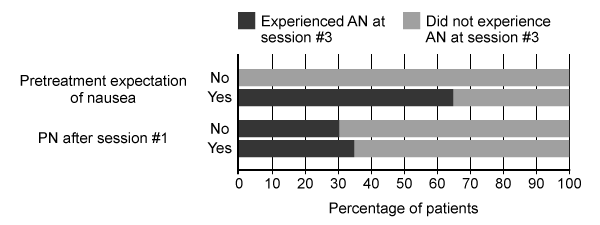 Figure 1 AN before session #3
J. T. Hickok, J. A. Roscoe, and G. R. Morrow ©2001 Elsevier; U. Stockhorst, P. Enck, and S. Klosterhalfen ©2007 Baishideng Publishing Group.
-Based on the passage, the control subjects in Study 2 could also develop which additional conditioned response?
Figure 1 AN before session #3
J. T. Hickok, J. A. Roscoe, and G. R. Morrow ©2001 Elsevier; U. Stockhorst, P. Enck, and S. Klosterhalfen ©2007 Baishideng Publishing Group.
-Based on the passage, the control subjects in Study 2 could also develop which additional conditioned response? (Multiple Choice)
5.0/5 (78)
(78) Passage
Research suggests that individuals with depression experience dysfunctions in their autobiographical memory. For example, negative autobiographical memories are more easily recalled than positive memories, and memories encoded while experiencing a positive mood are more difficult to access while depressed. In individuals with depression, rumination (repetitive negative thoughts) can also impede autobiographical memory retrieval.Studies have demonstrated that the Method of Loci (MoL), a mnemonic strategy that pairs items to be remembered with well-known visuospatial locations (loci), effectively improves retention and recall over time. Given this previous research, experimenters hypothesized that training individuals with depression in the MoL technique would improve sustained retrieval of their positive autobiographical memories. For this study, 125 individuals between ages 25 and 45 with a current diagnosis of depression were recruited (individuals with co-occurring psychological diagnoses were excluded). Phase 1 screened participants for normal memory function. Participants were given a list of 25 three-letter nonsense words to memorize (eg, LAR, PAS, FUV), and recall was tested immediately (no delay), and again after 20 minutes, one hour, nine hours, 24 hours, 48 hours, and 72 hours. Those participants who demonstrated normal memory function (n = 122) were then randomly assigned to the MoL group (n = 61) or the control group (n = 61) for the next phase.During phase 2, the MoL group was trained to associate features of a positive autobiographical memory (eg, a marriage proposal) with a well-known route (eg, the route from home to work). All salient details of the positive memory were mentally associated with loci. For example, one participant paired the restaurant table where he proposed to his wife with a fire hydrant he passes on his way to work. The control group was not trained using any specific technique. Both groups mentally rehearsed their chosen memory every day for one week. After one week, both groups performed equally well at recalling their selected positive memory. However, when a surprise recollection memory test was performed a month later, the MoL group performed at levels comparable to their first recollection test, while the control group exhibited significantly reduced recollection.
T. Dalgleish, L. Navrady, E. Bird, E. Hill, B. D. Dunn, and A.M. Golden ©2013 Association for Psychological Science; T. Dalgleish and A. Werner-Seidler ©2014 Elsevier
-Based on the study design, which of the following symptoms should NOT be present in any of the participants in this study?
(Multiple Choice)
4.8/5 (77)
(77) Passage
Post-traumatic stress disorder (PTSD) and generalized anxiety disorder (GAD) both involve an exaggerated response to everyday stressors and a heightened state of anxiety or arousal that can impede concentration and daily functioning. Both can be effectively treated with medication, including anxiolytics and antidepressants, and with therapy, the most effective of which is cognitive-behavioral therapy (CBT). Psychologists believe that the unpredictable nature of stressors plays a key role in the development and persistence of both disorders. However, the response to predictable threats is believed to be normal.A study was conducted to investigate how individuals diagnosed with PTSD or GAD respond to predictable and unpredictable threats. Twenty patients with PTSD, 20 patients with GAD, and 50 control participants took part in the study. The groups did not differ significantly with respect to age or gender. The study involved two conditions, each three minutes in duration. During the first (predictable) condition, participants were shown a cue (red box) at random times while gazing through a viewing apparatus. The cue signaled the imminent presentation of various loud noises such as thunder or screaming, meant to induce fear. During the second (unpredictable) condition, the loud noise was presented randomly with no warning.The magnitude of the participants' startle response was measured by an eye blink reflex recorded with electrodes placed under the eyes (measured in microvolts [Table 1]).Table 1 Mean Startle Response in Microvolts by Group and Condition
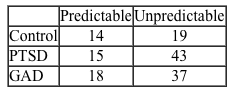 After the study, participants were asked to rate their subjective fear on a scale of 0 (no fear) to 10 (most fear). The controls reported the least fear under both conditions. PTSD participants expressed greater fear than GAD participants during the unpredictable condition, but GAD participants reported greater fear than PTSD participants during the predictable condition.
C. Grillon, D. S. Pine, S. Lissek, S. Rabin, and M. Vythilingam ©2009 by Society of Biological Psychiatry.
-Cognitive-behavioral therapy (CBT) would be most likely to address PTSD symptoms through:
After the study, participants were asked to rate their subjective fear on a scale of 0 (no fear) to 10 (most fear). The controls reported the least fear under both conditions. PTSD participants expressed greater fear than GAD participants during the unpredictable condition, but GAD participants reported greater fear than PTSD participants during the predictable condition.
C. Grillon, D. S. Pine, S. Lissek, S. Rabin, and M. Vythilingam ©2009 by Society of Biological Psychiatry.
-Cognitive-behavioral therapy (CBT) would be most likely to address PTSD symptoms through: (Multiple Choice)
4.7/5 (88)
(88) Passage
The term "health disparities" describes a systematic incidence of poorer health outcomes for groups that have traditionally experienced social disadvantage (eg, racial and ethnic minorities, lower-income individuals, women) as compared to more advantaged groups (eg, whites, higher-income individuals, men). These health disparities are driven by unequal access to health care services and health insurance due to prejudice and discrimination on the part of health care providers and the overall system, and extensive research has focused on these issues.Recent research suggests that another factor might explain health disparities: stereotype threat on the part of the patient. Stereotype threat can be evoked by verbal or nonverbal cues from health care professionals, such as a physician's use of confusing medical jargon (the standardized language medical personnel use to communicate among themselves) or a nurse's body language while discussing the risks of obesity and alcohol use. Once triggered, stereotype threat may result in behaviors that compromise one's own health. For example, a patient may withhold information or feel compelled to describe health-related behaviors in a positive light. Similarly, if the interaction arouses anxiety, a patient may be less likely to remember the physician's instructions or might dismiss a physician's advice as biased.Stereotype threat can be reduced through training programs that improve employees' communication skills. Some hospitals in large urban areas have implemented the use of cultural liaisons, individuals who are able to bridge the gap between a minority patient's cultural beliefs and Western medicine. Cultural liaisons are often present during the nonsensitive portions of the doctor's appointment, and studies suggest they may help to reduce stereotype threat in patients.
Adapted from J. Aronson, D. Burgess, S. M. Phelan, and L. Juarez (C)2013 American Public Health Association
-Which of the following scenarios is most consistent with the description of prejudice in the first paragraph? A physician:
(Multiple Choice)
4.8/5 (82)
(82) Passage
Lucid dreaming occurs when a person becomes consciously aware of a dream and uses executive decision-making skills to critically analyze the dream environment. Lucid dreamers are thus able to control certain aspects of their dreams, an ability that may occur intentionally, through practice, or unintentionally, usually after having noticed something bizarre or unrealistic in the dream. A lucid dreamer might choose to experience the sensation of flying, explore a custom-designed landscape, carry out a predetermined task, or practice a skill. Estimates suggest that about half the population has had a lucid dream, and about 10%-20% of people are considered frequent lucid dreamers experiencing such dreams regularly (at least once a month).In one study, researchers asked participants to perform a difficult visuomotor task that involved throwing an object through a small moving target. Participants were organized into three groups, one group of frequent lucid dreamers and two groups of nonlucid dreamers. All three groups attempted the visuomotor task at midday in the research lab, before (pretest) and after (posttest) a single night's sleep at home. Lucid dreamers were asked to only practice the visuomotor task overnight during their lucid dream ("lucid practice" group). One group of nonlucid dreamers practiced the task in the lab, right after the pretest ("waking practice" group), and another group of nonlucid dreamers performed the pretest and posttest without practicing between the tests ("no practice" group). The average improvement of hits (the number of times each participant successfully threw the object through the target) from pretest to posttest for each group is shown in Figure 1.
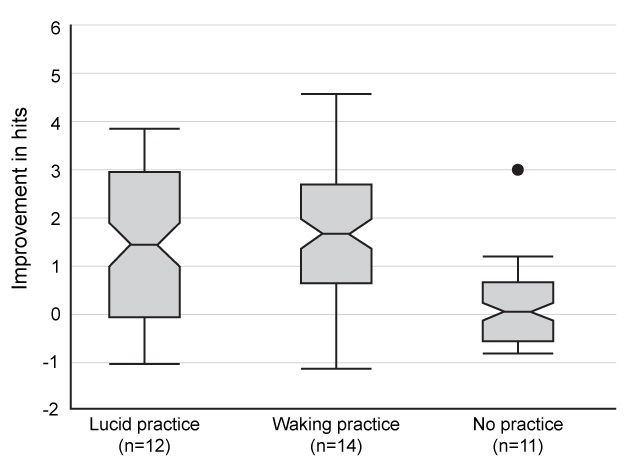 Figure 1 Median improvement in total hits for each group (Note: The notches represent the 95% confidence interval for the median.)The researchers proposed that a follow-up study be devised and conducted to control for any potential variability in each participant's sleep at home. The researchers suggested using the same study procedure except participants would sleep overnight for five consecutive nights in a sleep lab, where the timing and duration of sleep would be standardized. In order to eliminate any potential "first-night effects" (an initial reduction in sleep quality when sleeping in an unfamiliar environment), researchers proposed that pretest and posttest measures each be taken before and after the third, fourth, and fifth night's sleep.
-A mechanism for researchers to monitor a dream state would be provided by tracking which of the following?
Figure 1 Median improvement in total hits for each group (Note: The notches represent the 95% confidence interval for the median.)The researchers proposed that a follow-up study be devised and conducted to control for any potential variability in each participant's sleep at home. The researchers suggested using the same study procedure except participants would sleep overnight for five consecutive nights in a sleep lab, where the timing and duration of sleep would be standardized. In order to eliminate any potential "first-night effects" (an initial reduction in sleep quality when sleeping in an unfamiliar environment), researchers proposed that pretest and posttest measures each be taken before and after the third, fourth, and fifth night's sleep.
-A mechanism for researchers to monitor a dream state would be provided by tracking which of the following? (Multiple Choice)
4.8/5 (81)
(81) A medical resident emulates the behaviors and mannerisms of the attending physicians. She also volunteers for multiple committees in an attempt to impress these physicians. Which aspects of social interaction are represented in this scenario?
(Multiple Choice)
5.0/5 (82)
(82) Passage
During the 19th century, the industrial revolution led to advances in health care in the United States that resulted in declines in the death rate followed by population growth. Around 1860, the U.S. birth rate also began to steadily decline until reaching its current plateau of about two births per woman during her lifetime. Since 1860, the U.S. birth rate has significantly increased during only one period: the post-World War II era known as the baby boom."Baby boomers," the generation of Americans born roughly between 1946 and 1964, are living longer than any prior generation, and their aging has evolving social and historical significance. By 2030, it is estimated that there will be about 61 million baby boomers in their eighties. In 1950, there were approximately seven times more producers (people age 15-64) than elderly (people age 65 and over); by 2030 there are projected to be less than three times more producers than elderly. Providing medical and social care to this aging cohort will have a major negative impact on the American economy due to the costs associated with health care and basic social services.Also impacting the U.S. population distribution is the fact that younger Americans (referred to as "millennials," born roughly between 1982 and 2004) are delaying marriage and children more so than any preceding generation, resulting in declining U.S. fertility rates. Figure 1 compares the U.S. population pyramid in 2000 to a projected population pyramid in 2030.
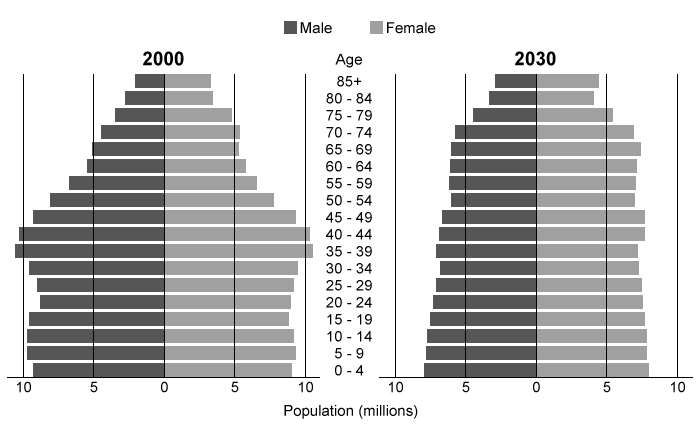 Figure 1 United States population pyramid from 2000 and a projected population pyramid for 2030
-The passage provides specific data for which of the following in the United States?
Figure 1 United States population pyramid from 2000 and a projected population pyramid for 2030
-The passage provides specific data for which of the following in the United States? (Multiple Choice)
4.9/5 (74)
(74) 
Filters
- Essay(0)
- Multiple Choice(0)
- Short Answer(0)
- True False(0)
- Matching(0)