



 Chat with AI
Exam 1: Behavioral Sciences

Exam 1: Behavioral Sciences343 Questions
Exam 2: Biochemistry307 Questions
Exam 3: Biology319 Questions
Exam 4: Critical Analysis & Reasoning Skills358 Questions
Exam 5: General Chemistry317 Questions
Exam 6: Organic Chemistry191 Questions
Exam 7: Physics200 Questions
Select questions type


Passage
Of the biological factors impacting color perception in humans, one of the easiest to study is the number and type of color-sensitive photoreceptors. The human retina typically contains three types of cone photoreceptors, which contain opsin proteins that are sensitive to short (blue), medium (green), and long (red) wavelengths of light (Figure 1A).The genes that encode for medium and long wavelength-sensitive opsin proteins are located on the X chromosome. Mutations in these genes often produce a variant cone type that responds to wavelengths overlapping the response range of one of the normal cone types, so color perception is unaltered (Figure 1B). However, in a small percentage of women, the variant cone type appears to be sensitive to a range of wavelengths that differs from that of normal cone types (Figure 1C). It is hypothesized that these "tetrachromatic" women may be able to distinguish more colors than can the normal trichromatic population.
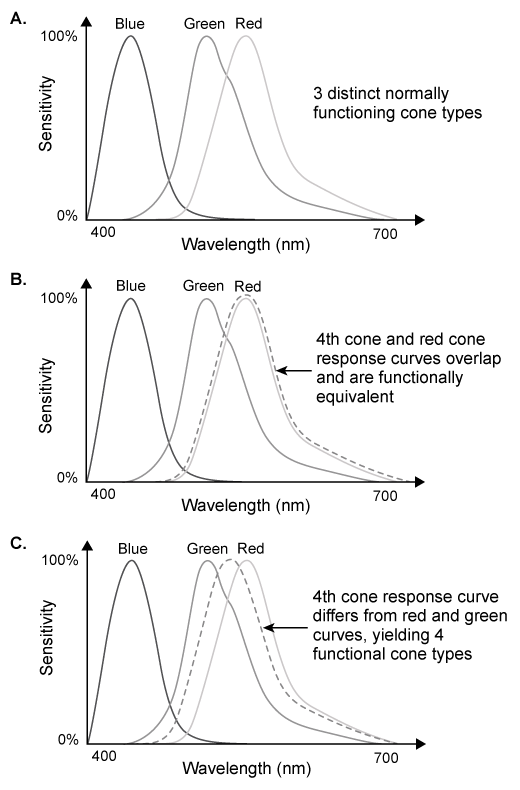 Figure 1 Response curves for (A) three cone types (trichromat, normal color perception); (B) four cone types (likely normal color perception); and (C) four cone types (tetrachromat, hypothesized enhanced color perception)A researcher conducted a series of tasks to assess the extent to which color perception of tetrachromatic subjects differs from that of trichromatic controls. Three women known to possess four retinal cone classes were recruited for the study. One of the women had experienced a small lesion to her right primary visual cortex the year prior. In addition, two women with normal trichromatic vision were recruited as controls (Table 1).Table 1 Characteristics of Subjects
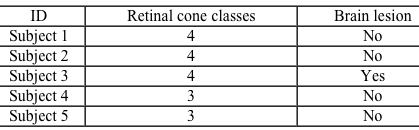 In Task 1, participants identified the colors of objects that were stationary (artificial condition) and in motion (natural condition). Under both conditions, the researcher systematically varied where the objects were presented in the subjects' visual field. Task 2 was a standardized, computer-administered color-discrimination task. Task 3 was an extensive interview that assessed the subjects' subjective experience of color.Subject 1 was able to identify more colors than the controls under all experimental conditions, and Subject 2 and Subject 3 performed marginally better than controls in some of the experimental conditions. Notably, only Subject 1 was able to verbalize her thoughts about her atypical color perception during Task 3, where she described seeing nuances in colors using words she had learned from her mother, who was also a tetrachromat and an artist. The researcher concluded that language likely plays a significant role in color perception: Without a vocabulary for the full variety of colors tetrachromats can perceive, they are limited in their perception despite their biological trait.
S. S. Deeb ©2005 John Wiley & Sons; K. A. Jameson, A. D. Winkler, and K. Goldfarb ©2016 IS&T International Symposium on Electronic Imaging.
-During Task 1, the researcher found that subjects' response time was slower and color identification accuracy was worse during the natural condition. Which of the following best accounts for this finding?
Figure 1 Response curves for (A) three cone types (trichromat, normal color perception); (B) four cone types (likely normal color perception); and (C) four cone types (tetrachromat, hypothesized enhanced color perception)A researcher conducted a series of tasks to assess the extent to which color perception of tetrachromatic subjects differs from that of trichromatic controls. Three women known to possess four retinal cone classes were recruited for the study. One of the women had experienced a small lesion to her right primary visual cortex the year prior. In addition, two women with normal trichromatic vision were recruited as controls (Table 1).Table 1 Characteristics of Subjects
In Task 1, participants identified the colors of objects that were stationary (artificial condition) and in motion (natural condition). Under both conditions, the researcher systematically varied where the objects were presented in the subjects' visual field. Task 2 was a standardized, computer-administered color-discrimination task. Task 3 was an extensive interview that assessed the subjects' subjective experience of color.Subject 1 was able to identify more colors than the controls under all experimental conditions, and Subject 2 and Subject 3 performed marginally better than controls in some of the experimental conditions. Notably, only Subject 1 was able to verbalize her thoughts about her atypical color perception during Task 3, where she described seeing nuances in colors using words she had learned from her mother, who was also a tetrachromat and an artist. The researcher concluded that language likely plays a significant role in color perception: Without a vocabulary for the full variety of colors tetrachromats can perceive, they are limited in their perception despite their biological trait.
S. S. Deeb ©2005 John Wiley & Sons; K. A. Jameson, A. D. Winkler, and K. Goldfarb ©2016 IS&T International Symposium on Electronic Imaging.
-During Task 1, the researcher found that subjects' response time was slower and color identification accuracy was worse during the natural condition. Which of the following best accounts for this finding? (Multiple Choice)
4.9/5  (90)
(90) Passage
Post-traumatic stress disorder (PTSD) and generalized anxiety disorder (GAD) both involve an exaggerated response to everyday stressors and a heightened state of anxiety or arousal that can impede concentration and daily functioning. Both can be effectively treated with medication, including anxiolytics and antidepressants, and with therapy, the most effective of which is cognitive-behavioral therapy (CBT). Psychologists believe that the unpredictable nature of stressors plays a key role in the development and persistence of both disorders. However, the response to predictable threats is believed to be normal.A study was conducted to investigate how individuals diagnosed with PTSD or GAD respond to predictable and unpredictable threats. Twenty patients with PTSD, 20 patients with GAD, and 50 control participants took part in the study. The groups did not differ significantly with respect to age or gender. The study involved two conditions, each three minutes in duration. During the first (predictable) condition, participants were shown a cue (red box) at random times while gazing through a viewing apparatus. The cue signaled the imminent presentation of various loud noises such as thunder or screaming, meant to induce fear. During the second (unpredictable) condition, the loud noise was presented randomly with no warning.The magnitude of the participants' startle response was measured by an eye blink reflex recorded with electrodes placed under the eyes (measured in microvolts [Table 1]).Table 1 Mean Startle Response in Microvolts by Group and Condition
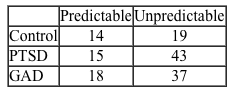 After the study, participants were asked to rate their subjective fear on a scale of 0 (no fear) to 10 (most fear). The controls reported the least fear under both conditions. PTSD participants expressed greater fear than GAD participants during the unpredictable condition, but GAD participants reported greater fear than PTSD participants during the predictable condition.
C. Grillon, D. S. Pine, S. Lissek, S. Rabin, and M. Vythilingam ©2009 by Society of Biological Psychiatry.
-Which of the following examples is correctly paired with the type of stressor it most exemplifies?
After the study, participants were asked to rate their subjective fear on a scale of 0 (no fear) to 10 (most fear). The controls reported the least fear under both conditions. PTSD participants expressed greater fear than GAD participants during the unpredictable condition, but GAD participants reported greater fear than PTSD participants during the predictable condition.
C. Grillon, D. S. Pine, S. Lissek, S. Rabin, and M. Vythilingam ©2009 by Society of Biological Psychiatry.
-Which of the following examples is correctly paired with the type of stressor it most exemplifies? (Multiple Choice)
4.8/5 (68)
(68) Which statement is NOT accurate regarding human social behavior?
(Multiple Choice)
4.8/5 (81)
(81) Passage
People tend to believe that they are less vulnerable to negative outcomes or events than others. This is known as the self-positivity bias, a specific type of attributional bias in social psychology. Health psychologists suggest that the self-positivity bias may prevent people from being persuaded to take precautionary measures against certain health risks because behavior change is predicated on the perceived risk of contracting the disease in question. If a persuasive message cannot overcome the self-positivity bias, then behavior change is unlikely.In Study 1, researchers hypothesized that when told that an infectious disease can be contracted by engaging in likely or common behavior, people will experience less self-positivity bias than when told the disease can be contracted through unlikely or uncommon behavior. Ninety participants were randomly assigned to a likely/common group, an unlikely/uncommon group, and a control group. All participants read the same paragraph about the health consequences of viral meningitis and how it is contracted. For the likely/common group, the paragraph included, "Viral meningitis is caused by enteroviruses (common virus causing 'stomach flulike' symptoms) and can be contracted through close contact (touching, kissing) with an infected person." For the unlikely/uncommon group, the paragraph included, "Viral meningitis is caused by lymphocytic choriomeningitis virus and can be contracted through coming into contact with the blood, feces, urine, or saliva of an infected mouse." All participants were asked to estimate the likelihood of contracting the disease themselves and the likelihood for the average person (Table 1).Table 1 Mean Estimated Probability of Contracting Viral Meningitis, by Group
 In Study 2, 120 participants read a newspaper article about hepatitis C and were then randomly assigned to one of four experimental conditions, each receiving additional information about either two or eight relatively uncommon behaviors (eg, getting a tattoo, sharing a needle) or relatively common behaviors (eg, sharing a toothbrush, not bandaging a cut) that could spread the disease. Participants rated their concern for contracting hepatitis C on a scale of 1 (not at all concerned) to 7 (most concerned) (Table 2).Table 2 Mean Concern of Contracting Hepatitis C Score, by Group and Condition
 -A proponent of social cognitive theory would suggest that the self-positivity bias is unlikely to influence an individual:
In Study 2, 120 participants read a newspaper article about hepatitis C and were then randomly assigned to one of four experimental conditions, each receiving additional information about either two or eight relatively uncommon behaviors (eg, getting a tattoo, sharing a needle) or relatively common behaviors (eg, sharing a toothbrush, not bandaging a cut) that could spread the disease. Participants rated their concern for contracting hepatitis C on a scale of 1 (not at all concerned) to 7 (most concerned) (Table 2).Table 2 Mean Concern of Contracting Hepatitis C Score, by Group and Condition
-A proponent of social cognitive theory would suggest that the self-positivity bias is unlikely to influence an individual: (Multiple Choice)
4.7/5 (84)
(84) Passage
Human emotions play an important role in individual and group behaviors, influencing both prosocial and antisocial exchanges. Complex and personal, emotions are difficult to study. Although physiological indicators of emotion, such as pulse or skin conductance, are easy to measure, the subjective experience of emotion is much harder to assess.Further complicating the issue, there is no universally accepted theory regarding the role of physiological processes in the experience of emotion. Common sense would suggest that emotion is experienced first, followed by physiological and behavioral events: we feel scared and then break into a cold sweat. However, one of the earliest modern theories of emotion proposed just the opposite-emotion occurs after a physiological response, not before: we break into a cold sweat and then feel scared.Males and females also appear to experience emotion differently; however, it is unclear whether this is the result of nature or nurture. Studies using functional magnetic resonance imaging (fMRI) suggest a biological difference. Data suggest that compared to females, males demonstrated greater activation of the amygdala while viewing images meant to induce fear, anger, or sexual arousal, but when asked to suppress negative emotions, females demonstrated greater activation of the prefrontal cortex than males. Research also suggests that females may demonstrate more empathy; when watching another person experience an emotion (eg, pain), females show more neural activation of the same areas that are active during the personal experience of that emotion.Social factors also appear to play an important role in gender differences. One study, which assessed how boys and girls express emotion from infancy to adolescence, concluded that gender differences appear to emerge around age 2-4 and become more pronounced with age. The researchers hypothesized that children learn gendered behavior regarding emotion through social learning. Cultural differences in the expression of emotion lend support to this argument: several studies suggest that, in general, men are expected to express less emotion than women, with the exception of anger.
T. Singer and C. Lamm ©2009 by New York Academy of Sciences, and T. M. Chaplin and A. Aldao ©2012 by American Psychological Association, and S. R. Wester, D. L. Vogel, P. K. Pressly, and M. Heesacker ©2002 by American Psychological Association
-Which of the following conclusions is most supported by information in the third paragraph?
(Multiple Choice)
4.9/5 (100)
(100) Passage
Studies suggest that health outcomes for preventable diseases are impacted by delayed treatment and lack of compliance. People often postpone seeking medical care because they fear hearing bad news from their physician. Paradoxically, when they finally do see a doctor, they may find out that their disease is indeed serious, but only because treatment was so delayed.Refusal to comply with a physician's instructions is another major issue. Although there are many reasons for this, one possible explanation is that patients are responding with psychological reactance. Reactance theory suggests that when an individual perceives that free choice is threatened or limited, he or she may respond by wanting to perform the threatened behavior even more, as if to preserve original freedoms. For example, if a physician tells a patient to quit smoking, the smoker might respond by smoking even more in an effort to preserve the freedom to smoke.Researchers hypothesize that psychological reactance may be reduced or avoided when physicians communicate with their patients through a process known as deliberation. In the following example, the physician has already explained to the patient that her weight could be having a negative impact on her diabetes. The physician, using deliberation, then initiates a dialogue about how the patient would like to address the situation:Physician: "You are already taking pretty strong medications, so your options are either to change your eating habits or increase your level of exercise. It's your choice."Patient: "I think I could exercise more by joining a gym. I could stop eating dessert, but I would hate to give up chocolate."Physician: "Okay. Let's negotiate. Why don't you try going to the gym and giving up sweets-except chocolate-for the next month. Then come back to see me, and we'll see where we are."
Adapted from S. Bigi ©2016 Frontiers.
-Which problem-solving process is best reflected in the exchange between the patient and doctor at the end of the passage?
(Multiple Choice)
4.8/5 (72)
(72) Passage
During the 1800s, the United States (U.S.) transitioned from a farming society to an industrialized society, which resulted in occupations becoming more specialized and socially labeled as "masculine" or "feminine." Today, the U.S. is experiencing an equally dramatic transition into what is referred to as a knowledge economy, marked by a decline in manufacturing and manual labor occupations, often referred to as "blue-collar" professions (which are dominated by males), and a rise in information, technology, and service sector jobs. Sociologists argue that this has led to shifting roles and expectations for both males and females in the U.S. workforce.As demand for blue-collar occupations has declined in recent decades, demand for "pink-collar" (feminine-typed) occupations has increased, particularly in health care (eg, registered nurses, health aides), but males appear to avoid pink-collar occupations for various reasons. Research indicates that socially defined gender roles may dissuade males from even considering pink-collar professions due to a perception that one's job will conflict with one's male status. Male students-in-training for pink-collar professions (eg, nursing) have a higher rate of attrition than their female classmates, which may be partly due to the unintended messages conveyed by the informal curriculum: that male students do not belong in these professions (eg, a lack of male role models, female-only images in textbooks). Of the males who enter pink-collar professions, many find that they are more quickly promoted into managerial roles (believed to be more appropriately masculine) than their equally qualified female counterparts, a phenomenon known as the glass escalator.Data show that females continue to be underrepresented in many high-paying fields, which are predominantly masculine-typed industries such as aeronautics, engineering, medical surgery, business (executive-level), and computer science/technology. Data also show that within all job categories, even those considered feminine-typed, females are still paid less than their male peers, a phenomenon sociologists call the gender pay (or wage) gap (Figure 1). The gender pay gap persists even when differences in hours worked, job choice, education, and other qualifications are taken into account. Research suggests that mothers earn less than men and women who are not mothers, a phenomenon termed the "motherhood penalty" by sociologists.
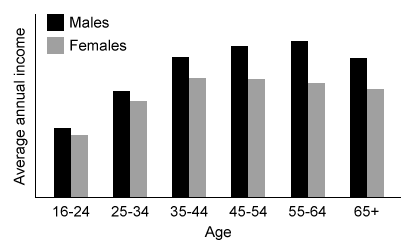 Figure 1 Gender pay gap by age
P. F. Drucker ©1994 The Atlantic Monthly; B. R. MacWilliams, B. Schmidt, and M. R. Bleich ©2013 Wolters Kluwer Health, Inc.
-The unintended consequences of the two major U.S. economic transitions described in the passage are most closely aligned with which sociological framework?
Figure 1 Gender pay gap by age
P. F. Drucker ©1994 The Atlantic Monthly; B. R. MacWilliams, B. Schmidt, and M. R. Bleich ©2013 Wolters Kluwer Health, Inc.
-The unintended consequences of the two major U.S. economic transitions described in the passage are most closely aligned with which sociological framework? (Multiple Choice)
4.9/5 (78)
(78) Passage
Across the lifespan, mental and physical health depends on adequate sleep. Extensive research suggests that sleep needs and characteristics change throughout an individual's life (Figure 1).
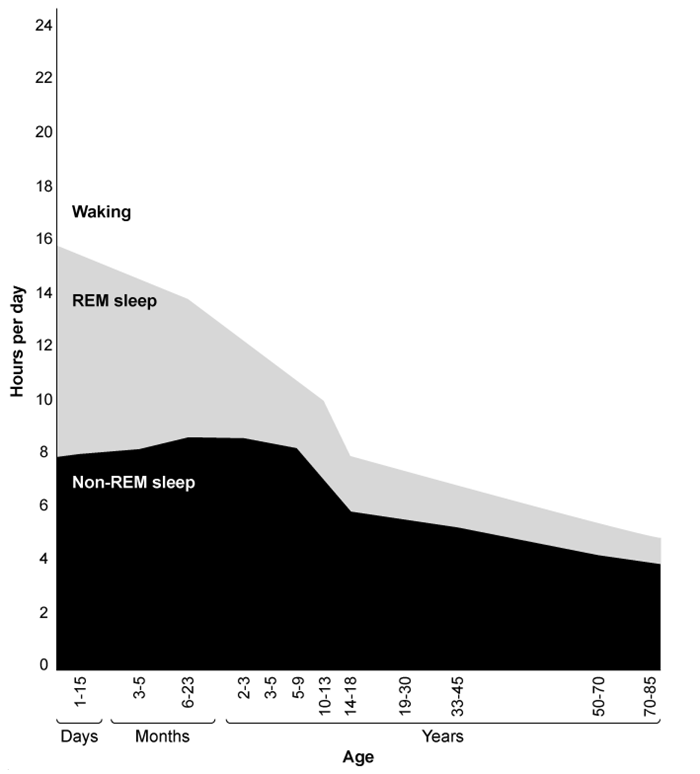 Figure 1 Average hours of rapid eye movement (REM) and non-REM sleep for different age groups across the lifespanChronic sleep deprivation acts as a physiological stressor and can have a multitude of short- and long-term negative health consequences. Studies show that over 30% of adults get less than the recommended minimum of 7 hours of sleep per night, putting them at greater risk for metabolic disorders (eg, obesity, diabetes), cardiovascular disease (eg, high blood pressure, stroke), and emotional disorders (eg, anxiety, depression). Sleep deprivation is also associated with impaired cognitive functioning, decreased work performance, and an increased risk of accidents.However, the guideline that adults sleep at least 7 hours per night does not account for the considerable variation in individual sleep needs. Research suggests that some individuals, known as "long sleepers," require an average daily sleep duration of more than 9 hours, while "short sleepers" require an average daily sleep duration of less than 6 hours. One study found that biological night duration (established by one's circadian pacemaker or "master clock") appears to be a few hours shorter for short sleepers as compared to long sleepers. Other studies suggest that short sleepers regularly sleep less than 7 hours without any apparent negative consequences due to one or more genetic mutations, such as a mutation on the DEC2 gene (also known as BHLHE41), which codes for a transcription factor involved in regulating circadian rhythms.
-For the study comparing long sleepers to short sleepers described in the final paragraph, researchers were LEAST likely to have measured which of the following biomarkers?
Figure 1 Average hours of rapid eye movement (REM) and non-REM sleep for different age groups across the lifespanChronic sleep deprivation acts as a physiological stressor and can have a multitude of short- and long-term negative health consequences. Studies show that over 30% of adults get less than the recommended minimum of 7 hours of sleep per night, putting them at greater risk for metabolic disorders (eg, obesity, diabetes), cardiovascular disease (eg, high blood pressure, stroke), and emotional disorders (eg, anxiety, depression). Sleep deprivation is also associated with impaired cognitive functioning, decreased work performance, and an increased risk of accidents.However, the guideline that adults sleep at least 7 hours per night does not account for the considerable variation in individual sleep needs. Research suggests that some individuals, known as "long sleepers," require an average daily sleep duration of more than 9 hours, while "short sleepers" require an average daily sleep duration of less than 6 hours. One study found that biological night duration (established by one's circadian pacemaker or "master clock") appears to be a few hours shorter for short sleepers as compared to long sleepers. Other studies suggest that short sleepers regularly sleep less than 7 hours without any apparent negative consequences due to one or more genetic mutations, such as a mutation on the DEC2 gene (also known as BHLHE41), which codes for a transcription factor involved in regulating circadian rhythms.
-For the study comparing long sleepers to short sleepers described in the final paragraph, researchers were LEAST likely to have measured which of the following biomarkers? (Multiple Choice)
4.9/5 (71)
(71) If neuroimaging studies show that auditory hallucinations are associated with increased activity in the speech production area of the brain, then PET scans of patients experiencing auditory hallucinations most likely demonstrate:
(Multiple Choice)
4.9/5 (83)
(83) Female S. beldingi ground squirrels tend to remain near their birthplace and kin for life. S. beldingi females are also more likely than males to give alarm calls when they spot a predator, even though this behavior draws the predator's attention to the individual who produced the alarm. Which concept is LEAST relevant to this phenomenon?
(Multiple Choice)
4.7/5 (81)
(81) Passage
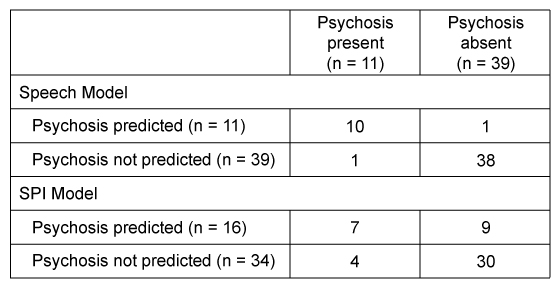
Psychotic disorders are characterized by a loss of contact with reality. The most common psychotic disorder is schizophrenia, which has a typical onset of psychotic symptoms in early adulthood. Schizophrenia displays considerable inter-individual variation throughout the course of the disorder; many factors appear to influence its progression. Comorbid (co-occurring) conditions, common in schizophrenia, may lead to poorer prognoses. For example, research suggests that fewer depressive symptoms are moderately associated with higher rates of medication compliance, whereas more depressive symptoms are associated with increased future relapses. The early detection of psychosis also appears to have a significant impact on long-term outcomes in schizophrenia. A first psychotic episode that goes untreated for a longer period is associated with more future hospitalizations and a diminished response to future therapeutic interventions.Researchers conducted a study to determine which was better at predicting the development of psychosis, a major component of schizophrenia, in high-risk young adults: the presence of certain speech pattern features or a standard clinical symptom inventory. The participant sample was restricted to 50 younger adults (age 18-30) who either met criteria for prodromal syndrome (preclinical signs of psychosis) or had a first-degree relative with schizophrenia.Every three months for three years, participants were interviewed and given the Symptoms of Psychosis Inventory (SPI), a standardized clinical assessment designed to measure psychosis and related symptoms. The SPI contains two subscales based on the major symptoms of schizophrenia: the Positive Symptom Scale (PSS) and the Negative Symptom Scale (NSS), which are summed to provide a total SPI score. Transcribed interview data were analyzed with software designed to assess the following speech pattern features: semantic coherence (the relatedness of phrases to one another), the number of determiners (eg, "that," "which," "what") used in a phrase (determiner density), and phrase length.Experienced clinicians diagnosed 11 participants with active psychosis by the end of the study. A computer program generated two models that predicted the development of active psychosis based on the data collected. One model based the prediction solely on a combination of the three speech pattern features ("Speech Model") and the other model based the prediction solely on SPI symptoms data ("SPI Model") (Table 1).Table 1 Comparison of Predictive Models
 -Researchers did not recruit individuals in the age range that corresponds to the generativity vs. stagnation conflict in Erikson's theory of psychosocial development. Which statement provides the most likely explanation for the researchers' decision?
 (Multiple Choice)
5.0/5 (84)
(84) Which of the following is true, according to the Mead theory of identity development?
(Multiple Choice)
4.9/5 (91)
(91) Passage
Language is a skill acquired during early childhood that continues to develop for many years. Communication using language involves multiple complex processes, including listening, speaking, comprehension, and cognition. Receptive language ("language input") involves language comprehension, while expressive language ("language output") involves the ability to produce intelligible language. In normally developing children, receptive language emerges first, followed by expressive language.To examine how age plays a role in the activation of the neurological networks involved in processing more complex language, researchers used functional magnetic resonance imaging (fMRI) to analyze how the use of receptive language generates metabolic activity in the brains of children. A total of 672 participants were divided into three groups by age: Age 4-6 (n = 219), age 7-9 (n = 224), and age 10-12 (n = 229).Participants in each group were asked to listen to pre-recorded stories while undergoing fMRI of the brain to determine if an age-related difference could be found in activated brain tissue volume during the listening task. The recorded fMRI-monitored listening portion of the experiment lasted approximately 5 minutes. Immediately following this listening exercise, fMRI monitoring was discontinued and the children were administered tests to determine comprehension of the material. None of the children had been informed that they would be taking a comprehension test prior to its actual administration.
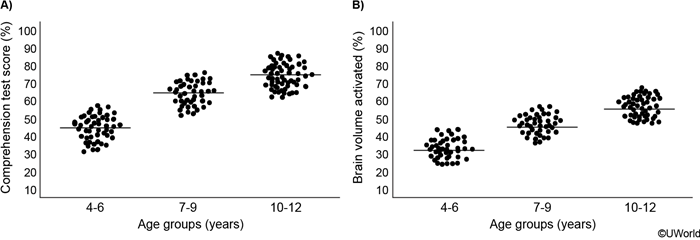 Figure 1 fMRI listening task analyzed per age group: (A) comprehension test scores, and (B) brain volume activated (Note: Solid lines represent the mean in each group.)
M. M. Berl, E. S. Duke, J. Mayo, L. R. Rosenberger, E. N. Moore, J. VanMeter, N. Bernstein Ratner, C. J. Vaidya, and W. D. Gaillard ©2010 by Elsevier, Inc.
-The observed correlations presented in Figure 1 suggest all of the following EXCEPT:
Figure 1 fMRI listening task analyzed per age group: (A) comprehension test scores, and (B) brain volume activated (Note: Solid lines represent the mean in each group.)
M. M. Berl, E. S. Duke, J. Mayo, L. R. Rosenberger, E. N. Moore, J. VanMeter, N. Bernstein Ratner, C. J. Vaidya, and W. D. Gaillard ©2010 by Elsevier, Inc.
-The observed correlations presented in Figure 1 suggest all of the following EXCEPT: (Multiple Choice)
4.9/5 (75)
(75) Which statement best identifies the promotion of false consciousness in popular media? A magazine article about heart disease in women that emphasizes the role of:
(Multiple Choice)
4.8/5 (81)
(81) A sociologist is interested in investigating leukemia diagnoses in children. Which of the following research topics is most consistent with the sociological paradigm of symbolic interactionism? A study investigating how:
(Multiple Choice)
4.8/5 (71)
(71) A patient repeatedly presents to his primary care physician with extreme distress about his mild health symptoms, including headaches and fatigue. Although the physician reassures him that these are not symptoms of a severe illness, the patient fears the worst and continues to devote significant time to worrying about his health. Which diagnosis is most likely for this patient?
(Multiple Choice)
4.9/5 (89)
(89) Passage
Researchers conducted a pair of studies to explore how rewards influence motivation and weight loss for those who are overweight or obese.For Study 1, 20 overweight and 20 average-weight adults were invited to play a computer game consisting of a simple matching task in which participants earned a reward for getting multiple correct responses. Participants were allowed to select their own reward: Either $1.00 or a 200-calorie vending machine snack (valued at $1.00), such as a candy bar or bag of chips. For the first trial, participants were rewarded on an average of three correct responses (AVG3). Participants were then asked to choose between the food and monetary rewards. When a food reward was selected, the average number of correct responses required to earn the next reward doubled, but when a monetary reward was selected, the average number of correct responses required to earn the next reward remained the same (Figure 1). Results indicated that although there was no significant difference between the groups with regard to baseline self-reporting of hunger prior to the start of the computer tasks, overweight participants were five times more likely to choose the food rewards than average-weight participants.
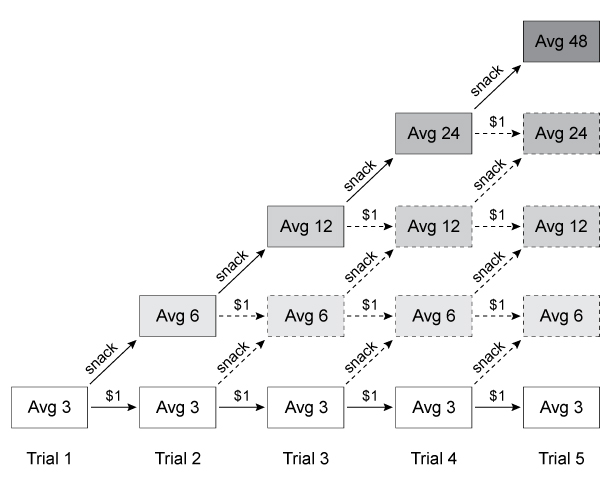 Figure 1 Study 1 reward scheduleFor Study 2, obese participants were recruited for a 16-week weight-loss study and randomly assigned to one of two groups: A control group (n = 32) or an experimental group (n = 35). Control participants engaged in weekly weigh-ins only. Experimental participants engaged in weekly weigh-ins but also earned or lost money (put into an account and paid at the end of the study) based on their weigh-in goal, calculated each week based on current body mass index (BMI), age, and sex. Those who reached their weekly weight goal earned $10; for each additional pound lost, participants earned another $10, up to $50/week. Participants in the experimental group who did not meet or exceed their weekly weight goal had $20 deducted from their accounts. No significant differences were found in baseline variables for either group; however, members of the control group lost an average of 5.9 pounds, whereas members of the experimental group lost an average of 18.1 pounds.
B. E. Saelens and L. H. Epstein ©1996 Elsevier B.V.
-Both studies use which of the following?
Figure 1 Study 1 reward scheduleFor Study 2, obese participants were recruited for a 16-week weight-loss study and randomly assigned to one of two groups: A control group (n = 32) or an experimental group (n = 35). Control participants engaged in weekly weigh-ins only. Experimental participants engaged in weekly weigh-ins but also earned or lost money (put into an account and paid at the end of the study) based on their weigh-in goal, calculated each week based on current body mass index (BMI), age, and sex. Those who reached their weekly weight goal earned $10; for each additional pound lost, participants earned another $10, up to $50/week. Participants in the experimental group who did not meet or exceed their weekly weight goal had $20 deducted from their accounts. No significant differences were found in baseline variables for either group; however, members of the control group lost an average of 5.9 pounds, whereas members of the experimental group lost an average of 18.1 pounds.
B. E. Saelens and L. H. Epstein ©1996 Elsevier B.V.
-Both studies use which of the following? (Multiple Choice)
5.0/5 (76)
(76) Passage
Human emotions play an important role in individual and group behaviors, influencing both prosocial and antisocial exchanges. Complex and personal, emotions are difficult to study. Although physiological indicators of emotion, such as pulse or skin conductance, are easy to measure, the subjective experience of emotion is much harder to assess.Further complicating the issue, there is no universally accepted theory regarding the role of physiological processes in the experience of emotion. Common sense would suggest that emotion is experienced first, followed by physiological and behavioral events: we feel scared and then break into a cold sweat. However, one of the earliest modern theories of emotion proposed just the opposite-emotion occurs after a physiological response, not before: we break into a cold sweat and then feel scared.Males and females also appear to experience emotion differently; however, it is unclear whether this is the result of nature or nurture. Studies using functional magnetic resonance imaging (fMRI) suggest a biological difference. Data suggest that compared to females, males demonstrated greater activation of the amygdala while viewing images meant to induce fear, anger, or sexual arousal, but when asked to suppress negative emotions, females demonstrated greater activation of the prefrontal cortex than males. Research also suggests that females may demonstrate more empathy; when watching another person experience an emotion (eg, pain), females show more neural activation of the same areas that are active during the personal experience of that emotion.Social factors also appear to play an important role in gender differences. One study, which assessed how boys and girls express emotion from infancy to adolescence, concluded that gender differences appear to emerge around age 2-4 and become more pronounced with age. The researchers hypothesized that children learn gendered behavior regarding emotion through social learning. Cultural differences in the expression of emotion lend support to this argument: several studies suggest that, in general, men are expected to express less emotion than women, with the exception of anger.
T. Singer and C. Lamm ©2009 by New York Academy of Sciences, and T. M. Chaplin and A. Aldao ©2012 by American Psychological Association, and S. R. Wester, D. L. Vogel, P. K. Pressly, and M. Heesacker ©2002 by American Psychological Association
-This passage considers how gender differences in emotion may result from all of the following, EXCEPT:
(Multiple Choice)
4.9/5 (86)
(86) Passage
Post-traumatic stress disorder (PTSD) and generalized anxiety disorder (GAD) both involve an exaggerated response to everyday stressors and a heightened state of anxiety or arousal that can impede concentration and daily functioning. Both can be effectively treated with medication, including anxiolytics and antidepressants, and with therapy, the most effective of which is cognitive-behavioral therapy (CBT). Psychologists believe that the unpredictable nature of stressors plays a key role in the development and persistence of both disorders. However, the response to predictable threats is believed to be normal.A study was conducted to investigate how individuals diagnosed with PTSD or GAD respond to predictable and unpredictable threats. Twenty patients with PTSD, 20 patients with GAD, and 50 control participants took part in the study. The groups did not differ significantly with respect to age or gender. The study involved two conditions, each three minutes in duration. During the first (predictable) condition, participants were shown a cue (red box) at random times while gazing through a viewing apparatus. The cue signaled the imminent presentation of various loud noises such as thunder or screaming, meant to induce fear. During the second (unpredictable) condition, the loud noise was presented randomly with no warning.The magnitude of the participants' startle response was measured by an eye blink reflex recorded with electrodes placed under the eyes (measured in microvolts [Table 1]).Table 1 Mean Startle Response in Microvolts by Group and Condition
After the study, participants were asked to rate their subjective fear on a scale of 0 (no fear) to 10 (most fear). The controls reported the least fear under both conditions. PTSD participants expressed greater fear than GAD participants during the unpredictable condition, but GAD participants reported greater fear than PTSD participants during the predictable condition.
C. Grillon, D. S. Pine, S. Lissek, S. Rabin, and M. Vythilingam ©2009 by Society of Biological Psychiatry.
-What is the main difference between GAD and PTSD?
After the study, participants were asked to rate their subjective fear on a scale of 0 (no fear) to 10 (most fear). The controls reported the least fear under both conditions. PTSD participants expressed greater fear than GAD participants during the unpredictable condition, but GAD participants reported greater fear than PTSD participants during the predictable condition.
C. Grillon, D. S. Pine, S. Lissek, S. Rabin, and M. Vythilingam ©2009 by Society of Biological Psychiatry.
-What is the main difference between GAD and PTSD? (Multiple Choice)
4.8/5 (93)
(93) Passage
Bipolar disorder (BD), often characterized by periods of depression and mania, although it is possible to experience mania only, is frequently misdiagnosed. Some studies suggest that as many as half of all individuals diagnosed with BD actually do not have the disorder. One possible reason is the similarity in symptoms shared by both mania and borderline personality disorder. Another potential reason involves recent efforts by pharmaceutical companies to increase awareness of BD symptoms. As one physician stated:"In the past ten years, we've been bombarded with ads, 'These are the symptoms of BD-they're easily missed-and here is a new drug to treat it.' I think that when you're constantly being reminded not to overlook something, you start looking for it everywhere, even when it's not there."Other studies report that BD is underdiagnosed, with almost 70% of patients receiving an initial misdiagnosis and almost 35% remaining misdiagnosed for 10 years or more. This can be partially explained by the fact that people often seek treatment for their depressive symptoms but rarely for their manic symptoms. In fact, some individuals may not initially realize that their manic episodes are problematic. Patients may describe these episodes as positive experiences, particularly when compared with depressive episodes:Patient 1: "During my depression, I'm so tired I stay in bed for days. I feel totally useless. But when I'm manic, I am so alive. I feel like I'm on top of the world-I'm the life of the party, and my mind is running a million miles a minute. I'm so productive, I don't need much sleep, and I can just go, go, go. It actually took me a long time to realize that this wasn't normal, this awesome energy was way beyond how people normally feel."Patient 2: "My mania actually came on over a long period during grad school and I just kept feeling better and better. It was like I was getting sharper and smarter, and I was doing more research and coming up with all of these brilliant ideas. I felt totally on top of my game."Because mania is often unrecognized and unreported, recent efforts have been made to encourage a more proactive approach to the self-identification of manic symptoms. Proper diagnosis is critical for effective life-long treatment and management of BD, as reflected by this patient's experience:Patient 3: "It was almost 10 years before I could acknowledge that my high-stress lifestyle was triggering my mania and that I needed to make some big changes-and that I needed to stay on my medication, even when I felt much better. That was really hard for me to get, but I get it now-I have this for life, and I have to treat it every day. Once I finally got that, I started to be able to accept this as a part of who I am."
T. Singh and M. Rajput ©2006 Matrix Medical Communications, and J. A. Scott and F. Sohrabi ©2015 Everyday Health Media.
-The biomedical approach to mental illness is best demonstrated by:
(Multiple Choice)
4.9/5 (67)
(67) 
Filters
- Essay(0)
- Multiple Choice(0)
- Short Answer(0)
- True False(0)
- Matching(0)