Multiple Choice
Passage
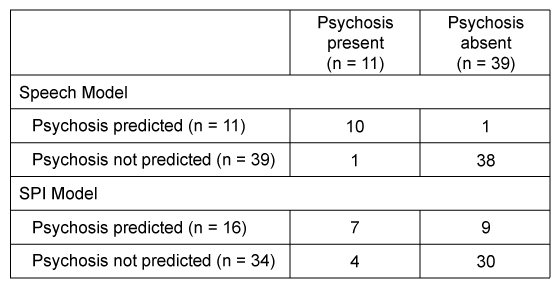
Psychotic disorders are characterized by a loss of contact with reality. The most common psychotic disorder is schizophrenia, which has a typical onset of psychotic symptoms in early adulthood. Schizophrenia displays considerable inter-individual variation throughout the course of the disorder; many factors appear to influence its progression. Comorbid (co-occurring) conditions, common in schizophrenia, may lead to poorer prognoses. For example, research suggests that fewer depressive symptoms are moderately associated with higher rates of medication compliance, whereas more depressive symptoms are associated with increased future relapses. The early detection of psychosis also appears to have a significant impact on long-term outcomes in schizophrenia. A first psychotic episode that goes untreated for a longer period is associated with more future hospitalizations and a diminished response to future therapeutic interventions.Researchers conducted a study to determine which was better at predicting the development of psychosis, a major component of schizophrenia, in high-risk young adults: the presence of certain speech pattern features or a standard clinical symptom inventory. The participant sample was restricted to 50 younger adults (age 18-30) who either met criteria for prodromal syndrome (preclinical signs of psychosis) or had a first-degree relative with schizophrenia.Every three months for three years, participants were interviewed and given the Symptoms of Psychosis Inventory (SPI) , a standardized clinical assessment designed to measure psychosis and related symptoms. The SPI contains two subscales based on the major symptoms of schizophrenia: the Positive Symptom Scale (PSS) and the Negative Symptom Scale (NSS) , which are summed to provide a total SPI score. Transcribed interview data were analyzed with software designed to assess the following speech pattern features: semantic coherence (the relatedness of phrases to one another) , the number of determiners (eg, "that," "which," "what") used in a phrase (determiner density) , and phrase length.Experienced clinicians diagnosed 11 participants with active psychosis by the end of the study. A computer program generated two models that predicted the development of active psychosis based on the data collected. One model based the prediction solely on a combination of the three speech pattern features ("Speech Model") and the other model based the prediction solely on SPI symptoms data ("SPI Model") (Table 1) .Table 1 Comparison of Predictive Models
-Researchers did not recruit individuals in the age range that corresponds to the generativity vs. stagnation conflict in Erikson's theory of psychosocial development. Which statement provides the most likely explanation for the researchers' decision?
A) The elderly have an increased risk of comorbid diagnoses, such as dementia, which complicate psychiatric diagnoses.
B) Individuals in this age range would be older than the typical age of first active symptom onset in schizophrenia.
C) Language and cognition typically merge in this age range, which could present a confounding variable.
D) Interindividual variability in the progression of schizophrenia would limit the generalizability of the findings.
Correct Answer:

Verified
Correct Answer:
Verified
Q326: Passage<br>Studies suggest that health outcomes for preventable
Q327: Passage<br>During the 1800s, the United States (U.S.)
Q328: Passage<br>Across the lifespan, mental and physical health
Q329: If neuroimaging studies show that auditory hallucinations
Q330: Female S. beldingi ground squirrels tend to
Q332: Which of the following is true, according
Q333: Passage<br>Language is a skill acquired during early
Q334: Which statement best identifies the promotion of
Q335: A sociologist is interested in investigating leukemia
Q336: A patient repeatedly presents to his primary