



 Chat with AI
Exam 1: Behavioral Sciences

Exam 1: Behavioral Sciences343 Questions
Exam 2: Biochemistry307 Questions
Exam 3: Biology319 Questions
Exam 4: Critical Analysis & Reasoning Skills358 Questions
Exam 5: General Chemistry317 Questions
Exam 6: Organic Chemistry191 Questions
Exam 7: Physics200 Questions
Select questions type


Passage
Psychophysiology examines the relationship between the properties of a physical stimulus (eg, amplitude of sound waves) and how we perceive that stimulus (eg, loudness). However, this relationship is often accompanied by a degree of uncertainty as the stimulus of interest, or signal, can be confounded by various sources of noise. Noise can be either external (arising from the environment) or internal (arising from physiological sources).To investigate the effect of distraction on auditory perception, researchers tested the ability of subjects to detect auditory tones presented during a visual-memory task. The study included 90 participants age 18-65, and each participant completed 10 trials. Trials consisted of five 800-Hz tones presented randomly while participants viewed a set of 15 sequential pictures of common objects on a computer screen. The objects fell into one of three categories: animals, vehicles, or things that make noise. Half the participants were asked to memorize as many objects as they could (objects group), and half were asked to remember only the categories of objects they saw (categories group). Tones were presented bilaterally within a range of 0-20 dB. Participants noted when they detected a tone during the trial by pressing a button. Results of the study are shown in Figure 1.
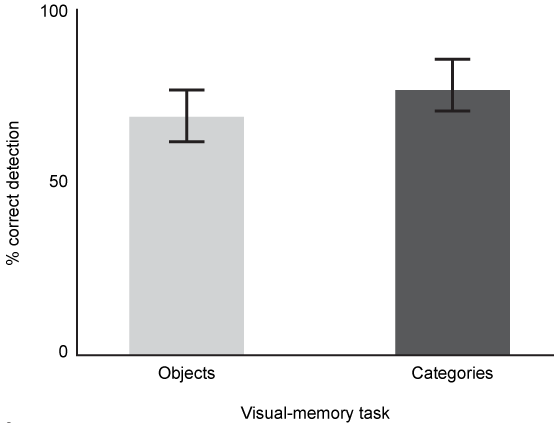 Figure 1 Mean percentage of tones correctly identified in each visual-memory task group (Note: Error bars indicate 95% confidence intervals.)
W. Yost ©2007 Academic Press.
-Which psychophysiology concept determines how high the volume of the tone must be for participants to detect it roughly half the time?
Figure 1 Mean percentage of tones correctly identified in each visual-memory task group (Note: Error bars indicate 95% confidence intervals.)
W. Yost ©2007 Academic Press.
-Which psychophysiology concept determines how high the volume of the tone must be for participants to detect it roughly half the time? (Multiple Choice)
4.9/5  (84)
(84) Passage
Studies suggest that health outcomes for preventable diseases are impacted by delayed treatment and lack of compliance. People often postpone seeking medical care because they fear hearing bad news from their physician. Paradoxically, when they finally do see a doctor, they may find out that their disease is indeed serious, but only because treatment was so delayed.Refusal to comply with a physician's instructions is another major issue. Although there are many reasons for this, one possible explanation is that patients are responding with psychological reactance. Reactance theory suggests that when an individual perceives that free choice is threatened or limited, he or she may respond by wanting to perform the threatened behavior even more, as if to preserve original freedoms. For example, if a physician tells a patient to quit smoking, the smoker might respond by smoking even more in an effort to preserve the freedom to smoke.Researchers hypothesize that psychological reactance may be reduced or avoided when physicians communicate with their patients through a process known as deliberation. In the following example, the physician has already explained to the patient that her weight could be having a negative impact on her diabetes. The physician, using deliberation, then initiates a dialogue about how the patient would like to address the situation:Physician: "You are already taking pretty strong medications, so your options are either to change your eating habits or increase your level of exercise. It's your choice."Patient: "I think I could exercise more by joining a gym. I could stop eating dessert, but I would hate to give up chocolate."Physician: "Okay. Let's negotiate. Why don't you try going to the gym and giving up sweets-except chocolate-for the next month. Then come back to see me, and we'll see where we are."
Adapted from S. Bigi ©2016 Frontiers.
-Which psychological concept is most analogous to the scenario described in the first paragraph?
(Multiple Choice)
4.8/5 (69)
(69) Passage
Both institutional and interpersonal factors contribute to persistent disparities in health outcomes for minorities in the U.S. In Study 1, researchers sought to categorize the major factors contributing to the disparity by surveying 2,000 African American and 3,000 Hispanic residents in a major metropolitan city. Of those surveyed, 64% met federal guidelines for living at or below the poverty threshold even though 90% of those surveyed were employed. When asked, "What prevents you from going to the doctor?" the most common responses were financial considerations (92%), inability to get time off from work for appointments (85%), lack of transportation (52%), difficulty communicating with the health care provider (51%), and fear/distrust of the health care system (48%).Interpersonally, patients tend to fare better when their physician is of their same racial or ethnic background. Study 2 observed all Hispanic patients (n = 110) who visited a clinic in an urban lower-income community over one week. Patients met with either a Hispanic physician (n = 43) or a white, non-Hispanic physician (n = 67). The Hispanic physician saw the patients who visited the clinic on Monday or Tuesday, and the white, non-Hispanic physician saw the patients who visited the clinic on Wednesday, Thursday, or Friday. Both physicians were men who spoke Spanish fluently, had been working at the clinic for 8-10 years, and were unaware of the study's purpose beforehand. This study collected data on the duration of the face-to-face appointment time with the physician, medication adherence one month after the appointment, and the number of symptoms disclosed to the physician by the patient. Ninety-eight of the patients were already on medication or were prescribed new medication at the time of their appointment, and patients were contacted one month later for assessment of adherence. The results of this study are shown in Figure 1.
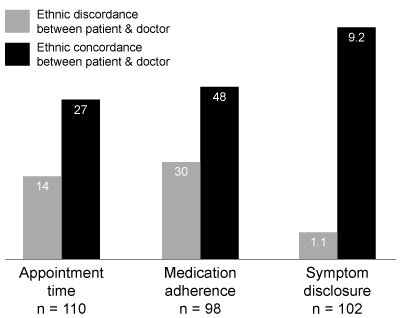 Figure 1 Average appointment time (minutes), medication adherence (percent), and number of symptoms disclosed according to patient-physician ethnic discordance vs. concordance
Adapted from W. Yost, (C)2007 Academic Press.
-Which of the following sociological processes best accounts for the persistent disparities in health outcomes for the subjects in Study 1 and Study 2?
Figure 1 Average appointment time (minutes), medication adherence (percent), and number of symptoms disclosed according to patient-physician ethnic discordance vs. concordance
Adapted from W. Yost, (C)2007 Academic Press.
-Which of the following sociological processes best accounts for the persistent disparities in health outcomes for the subjects in Study 1 and Study 2? (Multiple Choice)
4.8/5 (68)
(68) Passage
Health psychologists interested in studying the influence of positive and negative thinking on weight loss conducted a study on 120 obese adults attempting to lose weight. Participants indicated on a scale of 1 to 7 how successful they thought they would be at losing weight (1 = "not successful" and 7 = "very successful") and how much control they believed they had over their success (1 = "no control" and 7 = "complete control"), recorded as expectation of success scores and control of success scores, respectively.Participants were then randomly divided into three groups and asked to complete a 15-minute guided mental exercise twice a day for three weeks. Participants in the fantasy/reality contrast condition were instructed to reflect on two positive aspects of a fantasized weight loss, such as attaining better health and more energy, and two negative aspects of reality that impede weight loss, such as lack of discipline and desire to eat unhealthy foods. Participants in the positive fantasy condition were asked to reflect on four positive aspects of weight loss, and participants in the negative reality condition were asked to reflect on four factors that impede weight loss.At the end of this three-week period, participants began a three-month diet and exercise regimen involving caloric restriction to 1,500 calories per day as well as regular participation in aerobic exercise and weight training. Researchers recorded weekly weights of participants and surveyed participants regarding adherence to proactive weight loss strategies. The results are shown by group in Figures 1 and 2.
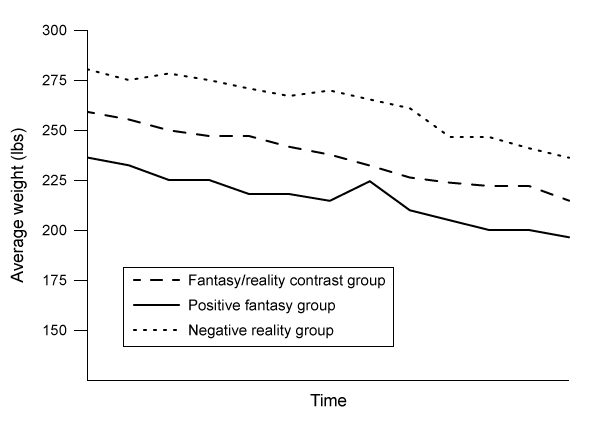 Figure 1 Average weight recorded for each group during three-month follow-up
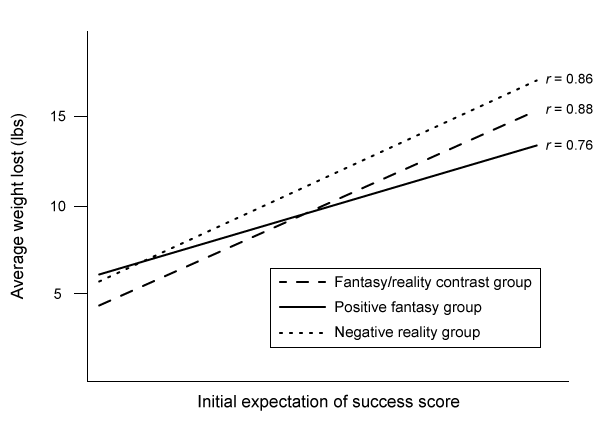 Figure 2 Initial expectation of success score versus average weight loss
-According to the Maslow hierarchy of needs:
Figure 1 Average weight recorded for each group during three-month follow-up
Figure 2 Initial expectation of success score versus average weight loss
-According to the Maslow hierarchy of needs: (Multiple Choice)
4.7/5 (95)
(95) Passage
Research suggests that individuals with depression experience dysfunctions in their autobiographical memory. For example, negative autobiographical memories are more easily recalled than positive memories, and memories encoded while experiencing a positive mood are more difficult to access while depressed. In individuals with depression, rumination (repetitive negative thoughts) can also impede autobiographical memory retrieval.Studies have demonstrated that the Method of Loci (MoL), a mnemonic strategy that pairs items to be remembered with well-known visuospatial locations (loci), effectively improves retention and recall over time. Given this previous research, experimenters hypothesized that training individuals with depression in the MoL technique would improve sustained retrieval of their positive autobiographical memories. For this study, 125 individuals between ages 25 and 45 with a current diagnosis of depression were recruited (individuals with co-occurring psychological diagnoses were excluded). Phase 1 screened participants for normal memory function. Participants were given a list of 25 three-letter nonsense words to memorize (eg, LAR, PAS, FUV), and recall was tested immediately (no delay), and again after 20 minutes, one hour, nine hours, 24 hours, 48 hours, and 72 hours. Those participants who demonstrated normal memory function (n = 122) were then randomly assigned to the MoL group (n = 61) or the control group (n = 61) for the next phase.During phase 2, the MoL group was trained to associate features of a positive autobiographical memory (eg, a marriage proposal) with a well-known route (eg, the route from home to work). All salient details of the positive memory were mentally associated with loci. For example, one participant paired the restaurant table where he proposed to his wife with a fire hydrant he passes on his way to work. The control group was not trained using any specific technique. Both groups mentally rehearsed their chosen memory every day for one week. After one week, both groups performed equally well at recalling their selected positive memory. However, when a surprise recollection memory test was performed a month later, the MoL group performed at levels comparable to their first recollection test, while the control group exhibited significantly reduced recollection.
T. Dalgleish, L. Navrady, E. Bird, E. Hill, B. D. Dunn, and A.M. Golden ©2013 Association for Psychological Science; T. Dalgleish and A. Werner-Seidler ©2014 Elsevier
-This study found that the method of loci (MoL) technique improved:
(Multiple Choice)
4.9/5 (86)
(86) Passage
Physical modifications important for consolidating memory are particularly apparent in the hippocampus, especially a pathway called the Schaffer Collateral, which contains CA1 (cornu Ammonis) neurons that have been implicated in learning and memory. To study learning and memory in live mice, scientists use a stimulating electrode to generate brief electrical pulses on the dendrites of CA1 neurons in the Schaffer Collateral pathway and use a recording electrode to measure the excitatory postsynaptic potentials (EPSPs) in the CA1 postsynaptic neurons.In Study 1, researchers used brief low-frequency stimulations (1-5 stimuli per second) to establish a baseline response in the CA1 postsynaptic neurons. Then, the same dendrites were given a high-frequency stimulation (50-100 stimuli per second), referred to as a tetanus. The researchers discovered that the high-frequency tetanus induced an increase in the response in postsynaptic CA1 neurons that was long-lasting. For the control, the researchers established a baseline in a second set of CA1 neurons in the same region but did not give a high-frequency tetanus (Figure 1).
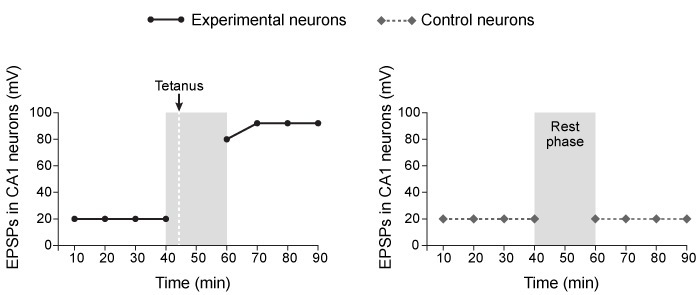 Figure 1 CA1 neuron response after a brief tetanus (experimental) or no tetanus (control)In a second behavioral study, mice were housed in either a standard cage (control) or a cage with an enhanced learning environment, including toys and access to a running wheel (experimental condition). For the first 12 days, both groups of mice received injections of a dye that is incorporated into newly synthesized DNA, thereby providing a biomarker of neurogenesis.Following 30 days in their respective environments, all mice were tested each day for one week in the Morris Water Maze, a test that measures spatial learning and memory consolidation. Results showed that mice in the experimental condition demonstrated greater improvement on Morris Water Maze performance compared to controls. When hippocampi were examined, the results revealed that mice in the experimental condition had a greater number of dye-labeled cells than did the controls.
W. C. Abraham, B. Logan, J. M. Greenwood, and M. Dragunow ©2002 The Society of Neuroscience, and H. van Praag, B. R. Christie, T. J. Sejnowski, and F. H. Gage ©1999 National Academy of Sciences.
-The phenomenon induced by high-frequency stimulation (Figure 1) is referred to as:
Figure 1 CA1 neuron response after a brief tetanus (experimental) or no tetanus (control)In a second behavioral study, mice were housed in either a standard cage (control) or a cage with an enhanced learning environment, including toys and access to a running wheel (experimental condition). For the first 12 days, both groups of mice received injections of a dye that is incorporated into newly synthesized DNA, thereby providing a biomarker of neurogenesis.Following 30 days in their respective environments, all mice were tested each day for one week in the Morris Water Maze, a test that measures spatial learning and memory consolidation. Results showed that mice in the experimental condition demonstrated greater improvement on Morris Water Maze performance compared to controls. When hippocampi were examined, the results revealed that mice in the experimental condition had a greater number of dye-labeled cells than did the controls.
W. C. Abraham, B. Logan, J. M. Greenwood, and M. Dragunow ©2002 The Society of Neuroscience, and H. van Praag, B. R. Christie, T. J. Sejnowski, and F. H. Gage ©1999 National Academy of Sciences.
-The phenomenon induced by high-frequency stimulation (Figure 1) is referred to as: (Multiple Choice)
4.8/5 (78)
(78) Passage
During the 19th century, the industrial revolution led to advances in health care in the United States that resulted in declines in the death rate followed by population growth. Around 1860, the U.S. birth rate also began to steadily decline until reaching its current plateau of about two births per woman during her lifetime. Since 1860, the U.S. birth rate has significantly increased during only one period: the post-World War II era known as the baby boom."Baby boomers," the generation of Americans born roughly between 1946 and 1964, are living longer than any prior generation, and their aging has evolving social and historical significance. By 2030, it is estimated that there will be about 61 million baby boomers in their eighties. In 1950, there were approximately seven times more producers (people age 15-64) than elderly (people age 65 and over); by 2030 there are projected to be less than three times more producers than elderly. Providing medical and social care to this aging cohort will have a major negative impact on the American economy due to the costs associated with health care and basic social services.Also impacting the U.S. population distribution is the fact that younger Americans (referred to as "millennials," born roughly between 1982 and 2004) are delaying marriage and children more so than any preceding generation, resulting in declining U.S. fertility rates. Figure 1 compares the U.S. population pyramid in 2000 to a projected population pyramid in 2030.
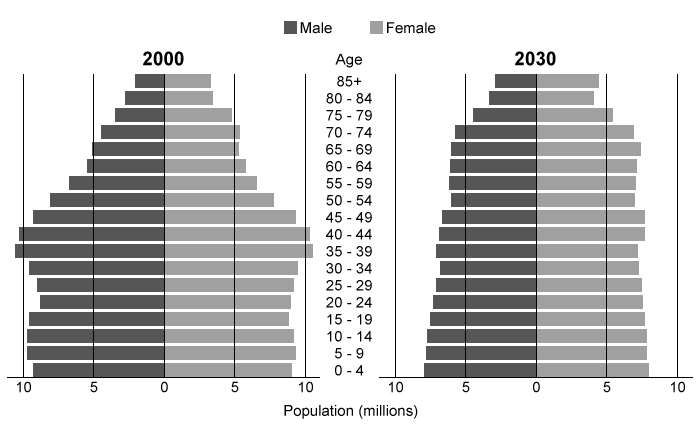 Figure 1 United States population pyramid from 2000 and a projected population pyramid for 2030
-Based on the information in the passage, a conflict theorist would suggest that the social significance of aging in America is best demonstrated by:
Figure 1 United States population pyramid from 2000 and a projected population pyramid for 2030
-Based on the information in the passage, a conflict theorist would suggest that the social significance of aging in America is best demonstrated by: (Multiple Choice)
4.8/5 (77)
(77) Passage
Almost 70% of Americans today are either overweight or obese, but only 34% think they weigh too much. This is in contrast to 1990, when 54% of Americans were overweight or obese and 46% reported being at least somewhat overweight. In other words, the gap between what we weigh and what we think we weigh is getting bigger.Epidemiologists argue that this discrepancy can be partly explained by the widespread resetting of norms regarding "normal weight" and "obesity." As close friends, coworkers, and family members gain weight, one's concept of what a body of acceptable weight looks like becomes modified. What was once considered overweight is now considered the norm, if only because it is so common (Figure 1).
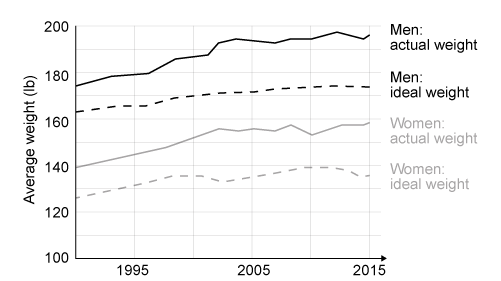 Figure 1 Actual vs. ideal weight (in pounds) for Americans, 1990-2015This sheds new light on recent efforts to stop the obesity epidemic in America. Experts have long contended that awareness efforts don't work because overweight individuals are already aware that they are overweight and that obesity causes health problems. These latest data suggest that many overweight Americans don't even realize that they are overweight. Epidemiologists are now suggesting that a more successful strategy to get Americans to lose weight might be to first succeed at convincing them that being overweight is not normal.
-Which statement about obesity is most consistent with the epidemiologists' argument in the second paragraph?
Figure 1 Actual vs. ideal weight (in pounds) for Americans, 1990-2015This sheds new light on recent efforts to stop the obesity epidemic in America. Experts have long contended that awareness efforts don't work because overweight individuals are already aware that they are overweight and that obesity causes health problems. These latest data suggest that many overweight Americans don't even realize that they are overweight. Epidemiologists are now suggesting that a more successful strategy to get Americans to lose weight might be to first succeed at convincing them that being overweight is not normal.
-Which statement about obesity is most consistent with the epidemiologists' argument in the second paragraph? (Multiple Choice)
4.9/5 (94)
(94) Passage
Visual perception involves the organization and interpretation of information obtained from visible light. Visual perception relies on monocular and binocular cues, as well as perceptual organization principles that allow humans to interpret limited or partial information more holistically. These sorts of mental shortcuts are based on prior experiences and knowledge, and are especially useful when lighting or perspective is limited. For example, the ambiguous image in Figure 1 is often perceived as a cup.
 Figure 1 Ambiguous imagePerceptual organization principles allow our brains to quickly and efficiently make assumptions about visual inputs, but these principles can also give rise to perceptual illusions. For example, the Ames room is constructed to exploit monocular depth cues in such a way that the person standing on one side of the room appears to impossibly dwarf the person on the other side of the room (Figure 2).
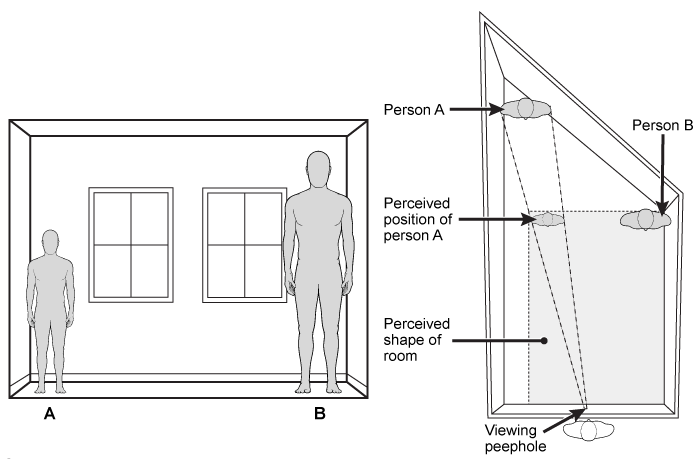 Figure 2 Ames room illusion (two people standing in a specially constructed Ames room, viewed through a monocular peephole)Human senses were adapted for use on land, which can lead to potentially deadly perceptual distortions while flying or underwater diving. Pilots are prone to such perceptual distortions when landing on unfamiliar runways. During their training, pilots develop a mental image of how a typical runway appears as they descend and land. Later, they compare this prototypical shape to the runway they see before them to make adjustments in the slope of their descent. However, if a runway differs from what the pilot is used to (eg, in width or slope), it will differ from the pilot's mental image for a typical runway at that same altitude. For example, an unusually wide runway will appear to be closer than it actually is, and a narrow runway will seem to be further away. This can cause the pilot to approach at a dangerously steep or shallow slope.Pilots and divers can also suffer from spatial disorientation due to variations in sensory stimuli that are not typically encountered on land. For example, gravity is not experienced in the body the same way underwater as on land, and visual cues are often limited in deep dives. In these murky conditions, divers can easily lose track of the surface of the water, leading to extreme spatial disorientation and panic.
-Spatial disorientation experienced by pilots and divers would be LEAST affected by information processed by the:
Figure 1 Ambiguous imagePerceptual organization principles allow our brains to quickly and efficiently make assumptions about visual inputs, but these principles can also give rise to perceptual illusions. For example, the Ames room is constructed to exploit monocular depth cues in such a way that the person standing on one side of the room appears to impossibly dwarf the person on the other side of the room (Figure 2).
Figure 2 Ames room illusion (two people standing in a specially constructed Ames room, viewed through a monocular peephole)Human senses were adapted for use on land, which can lead to potentially deadly perceptual distortions while flying or underwater diving. Pilots are prone to such perceptual distortions when landing on unfamiliar runways. During their training, pilots develop a mental image of how a typical runway appears as they descend and land. Later, they compare this prototypical shape to the runway they see before them to make adjustments in the slope of their descent. However, if a runway differs from what the pilot is used to (eg, in width or slope), it will differ from the pilot's mental image for a typical runway at that same altitude. For example, an unusually wide runway will appear to be closer than it actually is, and a narrow runway will seem to be further away. This can cause the pilot to approach at a dangerously steep or shallow slope.Pilots and divers can also suffer from spatial disorientation due to variations in sensory stimuli that are not typically encountered on land. For example, gravity is not experienced in the body the same way underwater as on land, and visual cues are often limited in deep dives. In these murky conditions, divers can easily lose track of the surface of the water, leading to extreme spatial disorientation and panic.
-Spatial disorientation experienced by pilots and divers would be LEAST affected by information processed by the: (Multiple Choice)
4.9/5 (93)
(93) Passage
Jake and his classmate Michael both grew up in a high-crime public housing project in a poverty-stricken neighborhood in a large urban area. Both children lived in single-parent households and had almost no relationship with their fathers. They performed poorly in school and frequently got in trouble with authority figures. Neither completed high school and both had been arrested by the time they turned 18.At this point their trajectories begin to diverge. By age 27, Jake had been in and out of prison three times, had fathered four children by four different women, and was abusing drugs and alcohol daily. On the other hand, Michael had earned a general equivalency diploma, was a general manager at a factory, was married with a biological son and adopted daughter, and owned a home in the suburbs.Jake and Michael both participated in a study about resilience-the ability to prevail in the face of threats to adequate psychosocial development. This study recruited 81 adult men who as children had lived in the same public housing project between 1976 and 1980. The investigators categorized participants into one of two groups based on their adult outcomes-low resilience and high resilience. All the men reported family difficulties while growing up in crime and poverty. The low-resilience men (n = 69) were significantly more likely to report drug and alcohol use and current or prior imprisonment, whereas the high-resilience men (n = 12) were all employed, and most were married homeowners.The study's primary finding was that high-resilience men received more social support outside their immediate families while growing up than did low-resilience men. Results also suggested that high-resilience men tended to have calmer, more optimistic dispositions, whereas low-resilience men were more anxious, disagreeable, and pessimistic.
-When asked why he was successful while his classmate Jake was not, Michael replied, "Jake was just a bad person, whereas I took advantage of my opportunities." This reasoning is LEAST consistent with which concept?
(Multiple Choice)
4.8/5 (87)
(87) Passage
The term "health disparities" describes a systematic incidence of poorer health outcomes for groups that have traditionally experienced social disadvantage (eg, racial and ethnic minorities, lower-income individuals, women) as compared to more advantaged groups (eg, whites, higher-income individuals, men). These health disparities are driven by unequal access to health care services and health insurance due to prejudice and discrimination on the part of health care providers and the overall system, and extensive research has focused on these issues.Recent research suggests that another factor might explain health disparities: stereotype threat on the part of the patient. Stereotype threat can be evoked by verbal or nonverbal cues from health care professionals, such as a physician's use of confusing medical jargon (the standardized language medical personnel use to communicate among themselves) or a nurse's body language while discussing the risks of obesity and alcohol use. Once triggered, stereotype threat may result in behaviors that compromise one's own health. For example, a patient may withhold information or feel compelled to describe health-related behaviors in a positive light. Similarly, if the interaction arouses anxiety, a patient may be less likely to remember the physician's instructions or might dismiss a physician's advice as biased.Stereotype threat can be reduced through training programs that improve employees' communication skills. Some hospitals in large urban areas have implemented the use of cultural liaisons, individuals who are able to bridge the gap between a minority patient's cultural beliefs and Western medicine. Cultural liaisons are often present during the nonsensitive portions of the doctor's appointment, and studies suggest they may help to reduce stereotype threat in patients.
Adapted from J. Aronson, D. Burgess, S. M. Phelan, and L. Juarez (C)2013 American Public Health Association
-Which of the following would most directly test the hypothesis that cognition plays a role in physicians' prejudice?
(Multiple Choice)
4.9/5 (70)
(70) Passage
Although the terms sex, sex category, and gender are commonly used interchangeably by most people, sociologists distinguish between them. Sex refers to the biological distinction between bodies (eg, male, female). Sex category (eg, male, female) is based on the visible secondary sex characteristics people use to attribute sex to others. Gender (eg, masculine, feminine) specifically refers to the behaviors and behavioral expectations people attribute to others on the basis of the individual's perceived sex category. Sex category and gender have recently been conceptualized as continua, with male and female as the extremes for sex category perception and masculine and feminine as the extremes for gender. Despite this, sex category and gender are usually perceived by humans categorically instead of continuously.Researchers conducted a study to assess how sex category interpretation is related to implicit bias and cortical activity. For the first phase, researchers tested sex category interpretation using 12 highly realistic computer-generated "facial morphs" varying along a continuum of apparent sex category from extremely male (1) to extremely female (12). The sexually dimorphic content of the faces was manipulated, but all other aspects were unchanged. For example, eyes and noses remained constant, but brow lines and eyebrows were thickened for male faces. Participants viewed the 12 faces in random order, rating each face on a scale of 1 (extremely male) to 10 (extremely female). Despite the uniform increments in the sexually dimorphic content of the facial morphs, responses demonstrated dichotomous sex category classification, as expected.For the second phase, which assessed the relationship between sex category interpretation and implicit bias, participants completed an implicit association test (IAT), in which they were shown the facial morphs with a pair of word attributes, one positive and one negative (eg, hard-working, lazy), and were asked to quickly pick the word they most associated with the face. Participants demonstrated shorter response times for facial morphs at the end points of the sex category continuum.For the third phase, researchers assessed the relationship between face-sensitive regions in the occipitotemporal cortex, particularly the fusiform face area (FFA), and sex category interpretation. Participants were injected with a glucose analog containing a radioactive tracer an hour before brain activity was measured while participants viewed the facial morphs. Results suggest that FFA activity was strongest when the faces were at the end points of the sex category continuum, regardless of whether a face was perceived as male or female.
-Which neuroimaging technique was most likely used in phase 3?
(Multiple Choice)
4.8/5 (61)
(61) Passage
Human emotions play an important role in individual and group behaviors, influencing both prosocial and antisocial exchanges. Complex and personal, emotions are difficult to study. Although physiological indicators of emotion, such as pulse or skin conductance, are easy to measure, the subjective experience of emotion is much harder to assess.Further complicating the issue, there is no universally accepted theory regarding the role of physiological processes in the experience of emotion. Common sense would suggest that emotion is experienced first, followed by physiological and behavioral events: we feel scared and then break into a cold sweat. However, one of the earliest modern theories of emotion proposed just the opposite-emotion occurs after a physiological response, not before: we break into a cold sweat and then feel scared.Males and females also appear to experience emotion differently; however, it is unclear whether this is the result of nature or nurture. Studies using functional magnetic resonance imaging (fMRI) suggest a biological difference. Data suggest that compared to females, males demonstrated greater activation of the amygdala while viewing images meant to induce fear, anger, or sexual arousal, but when asked to suppress negative emotions, females demonstrated greater activation of the prefrontal cortex than males. Research also suggests that females may demonstrate more empathy; when watching another person experience an emotion (eg, pain), females show more neural activation of the same areas that are active during the personal experience of that emotion.Social factors also appear to play an important role in gender differences. One study, which assessed how boys and girls express emotion from infancy to adolescence, concluded that gender differences appear to emerge around age 2-4 and become more pronounced with age. The researchers hypothesized that children learn gendered behavior regarding emotion through social learning. Cultural differences in the expression of emotion lend support to this argument: several studies suggest that, in general, men are expected to express less emotion than women, with the exception of anger.
T. Singer and C. Lamm ©2009 by New York Academy of Sciences, and T. M. Chaplin and A. Aldao ©2012 by American Psychological Association, and S. R. Wester, D. L. Vogel, P. K. Pressly, and M. Heesacker ©2002 by American Psychological Association
-According to the early theory of emotion described in the second paragraph, which of the following brain structures is most critical to the experience of emotion?
(Multiple Choice)
5.0/5 (69)
(69) Passage
In 2010, the United States (U.S.) had an incarcerated population of about 1.6 million, up from about 300,000 in 1980. Some experts suggest that the exponential rise in the inmate population has been largely due to the "war on drugs," initiated in the 1980s, which led to more aggressive laws against drug use and distribution. Increases in arrests and imprisonment, however, have not affected all segments of the U.S. population equally. Although the total population was about 50% male in 2010, the prison population was about 93% male and reflective of additional racial and ethnic disparities (Figure 1).
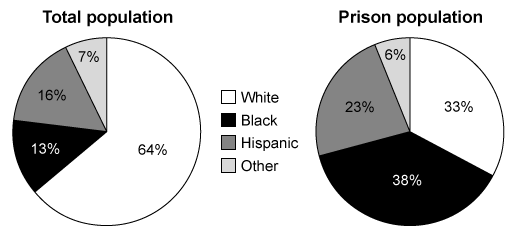 Figure 1 Total population and prison population by race and ethnicity in the United States in 2010Research suggests that black and white people use drugs at similar rates, but black people are more likely to end up in the criminal justice system for drug use. This overrepresentation of black people in the prison population can be partly explained by discrimination at the individual and institutional levels. For example, if police departments focus their resources in predominantly black neighborhoods based on the assumption that black individuals are more likely to commit a crime, then police officers (who may similarly believe black people commit more crimes than white people) are more likely to witness black people committing crimes, thereby confirming the belief. Discrimination operates at every level of the criminal justice system: Black people are more likely than white people to be arrested, prosecuted, and convicted for drug use and receive, on average, longer sentences.High rates of recidivism also perpetuate the demographic disparity of the prison population. It is estimated that about 75% of released prisoners will be rearrested within five years. Experts suggest that, once convicted of a felony, individuals find that their status as a former felon (or "ex-convict") dominates all their other statuses, making it difficult to reintegrate into society. The social stigma of criminality makes it hard for ex-convicts to secure employment, which often leads to further crime. Ex-convicts are also more closely monitored by police and far more likely to be arrested and convicted for minor offenses.
-According to the passage, the "war on drugs" made drug use and distribution:
Figure 1 Total population and prison population by race and ethnicity in the United States in 2010Research suggests that black and white people use drugs at similar rates, but black people are more likely to end up in the criminal justice system for drug use. This overrepresentation of black people in the prison population can be partly explained by discrimination at the individual and institutional levels. For example, if police departments focus their resources in predominantly black neighborhoods based on the assumption that black individuals are more likely to commit a crime, then police officers (who may similarly believe black people commit more crimes than white people) are more likely to witness black people committing crimes, thereby confirming the belief. Discrimination operates at every level of the criminal justice system: Black people are more likely than white people to be arrested, prosecuted, and convicted for drug use and receive, on average, longer sentences.High rates of recidivism also perpetuate the demographic disparity of the prison population. It is estimated that about 75% of released prisoners will be rearrested within five years. Experts suggest that, once convicted of a felony, individuals find that their status as a former felon (or "ex-convict") dominates all their other statuses, making it difficult to reintegrate into society. The social stigma of criminality makes it hard for ex-convicts to secure employment, which often leads to further crime. Ex-convicts are also more closely monitored by police and far more likely to be arrested and convicted for minor offenses.
-According to the passage, the "war on drugs" made drug use and distribution: (Multiple Choice)
4.9/5 (79)
(79) Passage
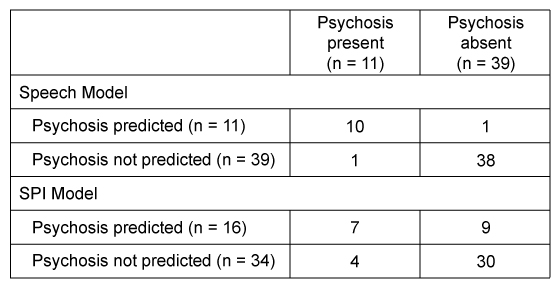
Psychotic disorders are characterized by a loss of contact with reality. The most common psychotic disorder is schizophrenia, which has a typical onset of psychotic symptoms in early adulthood. Schizophrenia displays considerable inter-individual variation throughout the course of the disorder; many factors appear to influence its progression. Comorbid (co-occurring) conditions, common in schizophrenia, may lead to poorer prognoses. For example, research suggests that fewer depressive symptoms are moderately associated with higher rates of medication compliance, whereas more depressive symptoms are associated with increased future relapses. The early detection of psychosis also appears to have a significant impact on long-term outcomes in schizophrenia. A first psychotic episode that goes untreated for a longer period is associated with more future hospitalizations and a diminished response to future therapeutic interventions.Researchers conducted a study to determine which was better at predicting the development of psychosis, a major component of schizophrenia, in high-risk young adults: the presence of certain speech pattern features or a standard clinical symptom inventory. The participant sample was restricted to 50 younger adults (age 18-30) who either met criteria for prodromal syndrome (preclinical signs of psychosis) or had a first-degree relative with schizophrenia.Every three months for three years, participants were interviewed and given the Symptoms of Psychosis Inventory (SPI), a standardized clinical assessment designed to measure psychosis and related symptoms. The SPI contains two subscales based on the major symptoms of schizophrenia: the Positive Symptom Scale (PSS) and the Negative Symptom Scale (NSS), which are summed to provide a total SPI score. Transcribed interview data were analyzed with software designed to assess the following speech pattern features: semantic coherence (the relatedness of phrases to one another), the number of determiners (eg, "that," "which," "what") used in a phrase (determiner density), and phrase length.Experienced clinicians diagnosed 11 participants with active psychosis by the end of the study. A computer program generated two models that predicted the development of active psychosis based on the data collected. One model based the prediction solely on a combination of the three speech pattern features ("Speech Model") and the other model based the prediction solely on SPI symptoms data ("SPI Model") (Table 1).Table 1 Comparison of Predictive Models
 -Which of the following r values for the correlation between depressive symptoms and medication adherence in individuals with schizophrenia best supports the research presented in the first paragraph?
 (Multiple Choice)
4.8/5 (67)
(67) Passage
During the 1800s, the United States (U.S.) transitioned from a farming society to an industrialized society, which resulted in occupations becoming more specialized and socially labeled as "masculine" or "feminine." Today, the U.S. is experiencing an equally dramatic transition into what is referred to as a knowledge economy, marked by a decline in manufacturing and manual labor occupations, often referred to as "blue-collar" professions (which are dominated by males), and a rise in information, technology, and service sector jobs. Sociologists argue that this has led to shifting roles and expectations for both males and females in the U.S. workforce.As demand for blue-collar occupations has declined in recent decades, demand for "pink-collar" (feminine-typed) occupations has increased, particularly in health care (eg, registered nurses, health aides), but males appear to avoid pink-collar occupations for various reasons. Research indicates that socially defined gender roles may dissuade males from even considering pink-collar professions due to a perception that one's job will conflict with one's male status. Male students-in-training for pink-collar professions (eg, nursing) have a higher rate of attrition than their female classmates, which may be partly due to the unintended messages conveyed by the informal curriculum: that male students do not belong in these professions (eg, a lack of male role models, female-only images in textbooks). Of the males who enter pink-collar professions, many find that they are more quickly promoted into managerial roles (believed to be more appropriately masculine) than their equally qualified female counterparts, a phenomenon known as the glass escalator.Data show that females continue to be underrepresented in many high-paying fields, which are predominantly masculine-typed industries such as aeronautics, engineering, medical surgery, business (executive-level), and computer science/technology. Data also show that within all job categories, even those considered feminine-typed, females are still paid less than their male peers, a phenomenon sociologists call the gender pay (or wage) gap (Figure 1). The gender pay gap persists even when differences in hours worked, job choice, education, and other qualifications are taken into account. Research suggests that mothers earn less than men and women who are not mothers, a phenomenon termed the "motherhood penalty" by sociologists.
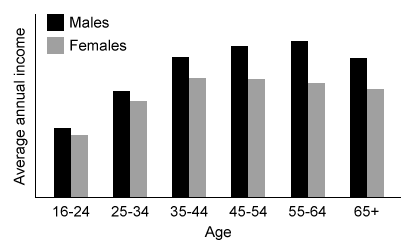 Figure 1 Gender pay gap by age
P. F. Drucker ©1994 The Atlantic Monthly; B. R. MacWilliams, B. Schmidt, and M. R. Bleich ©2013 Wolters Kluwer Health, Inc.
-According to the first paragraph of the passage, industrialization resulted in which of the following sociological processes?
Figure 1 Gender pay gap by age
P. F. Drucker ©1994 The Atlantic Monthly; B. R. MacWilliams, B. Schmidt, and M. R. Bleich ©2013 Wolters Kluwer Health, Inc.
-According to the first paragraph of the passage, industrialization resulted in which of the following sociological processes? (Multiple Choice)
4.8/5 (77)
(77) Passage
Almost 70% of Americans today are either overweight or obese, but only 34% think they weigh too much. This is in contrast to 1990, when 54% of Americans were overweight or obese and 46% reported being at least somewhat overweight. In other words, the gap between what we weigh and what we think we weigh is getting bigger.Epidemiologists argue that this discrepancy can be partly explained by the widespread resetting of norms regarding "normal weight" and "obesity." As close friends, coworkers, and family members gain weight, one's concept of what a body of acceptable weight looks like becomes modified. What was once considered overweight is now considered the norm, if only because it is so common (Figure 1).
Figure 1 Actual vs. ideal weight (in pounds) for Americans, 1990-2015This sheds new light on recent efforts to stop the obesity epidemic in America. Experts have long contended that awareness efforts don't work because overweight individuals are already aware that they are overweight and that obesity causes health problems. These latest data suggest that many overweight Americans don't even realize that they are overweight. Epidemiologists are now suggesting that a more successful strategy to get Americans to lose weight might be to first succeed at convincing them that being overweight is not normal.
-How has the evolution of human culture most likely contributed to the current obesity epidemic?
Figure 1 Actual vs. ideal weight (in pounds) for Americans, 1990-2015This sheds new light on recent efforts to stop the obesity epidemic in America. Experts have long contended that awareness efforts don't work because overweight individuals are already aware that they are overweight and that obesity causes health problems. These latest data suggest that many overweight Americans don't even realize that they are overweight. Epidemiologists are now suggesting that a more successful strategy to get Americans to lose weight might be to first succeed at convincing them that being overweight is not normal.
-How has the evolution of human culture most likely contributed to the current obesity epidemic? (Multiple Choice)
4.9/5 (77)
(77) A woman who wants a baby but is opposed to using medical intervention to become pregnant is informed by her doctor that she will never conceive without medical intervention. Cognitive dissonance theory predicts that this woman is most likely to do all of the following, EXCEPT:
(Multiple Choice)
4.9/5 (80)
(80) Passage
Jake and his classmate Michael both grew up in a high-crime public housing project in a poverty-stricken neighborhood in a large urban area. Both children lived in single-parent households and had almost no relationship with their fathers. They performed poorly in school and frequently got in trouble with authority figures. Neither completed high school and both had been arrested by the time they turned 18.At this point their trajectories begin to diverge. By age 27, Jake had been in and out of prison three times, had fathered four children by four different women, and was abusing drugs and alcohol daily. On the other hand, Michael had earned a general equivalency diploma, was a general manager at a factory, was married with a biological son and adopted daughter, and owned a home in the suburbs.Jake and Michael both participated in a study about resilience-the ability to prevail in the face of threats to adequate psychosocial development. This study recruited 81 adult men who as children had lived in the same public housing project between 1976 and 1980. The investigators categorized participants into one of two groups based on their adult outcomes-low resilience and high resilience. All the men reported family difficulties while growing up in crime and poverty. The low-resilience men (n = 69) were significantly more likely to report drug and alcohol use and current or prior imprisonment, whereas the high-resilience men (n = 12) were all employed, and most were married homeowners.The study's primary finding was that high-resilience men received more social support outside their immediate families while growing up than did low-resilience men. Results also suggested that high-resilience men tended to have calmer, more optimistic dispositions, whereas low-resilience men were more anxious, disagreeable, and pessimistic.
-Based on the stories of Jake and Michael, the investigators might conclude that resilience is:
(Multiple Choice)
5.0/5 (72)
(72) Passage
On the way home from a routine visit to the pediatrician, Sarah stops with her infant son at the local convenience store. As she is waiting in line, a man squeezes in closely behind them and sneezes. As Sarah walks home, she finds that her heart is racing, she feels nauseous, and she is terrified that her child will become severely ill.Soon after, she becomes obsessed with disease and contamination. She begins to take extensive measures to "decontaminate" herself and her home, including washing her hands dozens of times daily. These cleaning rituals have the immediate effect of lessening Sarah's anxiety, so she soon spends most of her day performing them. She seeks treatment from a therapist, who instructs her to gradually expose herself to "contamination" but refrain from her cleaning rituals. The therapist also teaches Sarah how to recognize and modify her maladaptive thoughts about illness prevention. Within several weeks, Sarah finds that she can manage her thoughts about disease and contamination without resorting to ritualistic cleaning.A researcher hypothesized that individuals with obsessive-compulsive disorder (OCD), such as Sarah, would show a more generalized fear response to safe stimuli compared to controls. Generalized conditioned fear responses occur when individuals react with fear to stimuli that resemble the original conditioned stimulus (eg, someone injured in an accident with a red truck fears all red vehicles). The researcher conditioned 100 individuals (50 with OCD and 50 controls) to associate a shock with a visual stimulus. In phase 1, participants viewed a computer screen that alternated between images of a small ring (1 cm) and a large ring (20 cm). The small ring and large ring were displayed for 1 second each, with a blank screen in between for 5 seconds. A mild electric shock was paired with the large ring, and no shock was paired with the small ring. This was repeated for 10 trials. In phase 2, shocks were discontinued, and three intermediate-sized rings were added to the series and presented in increasing size (ie, 1 cm, 5 cm, 10 cm, 15 cm, 20 cm) while the participants' startle response to each ring was measured. This was repeated for 10 trials.
ncbi.nlm.nih.gov/pmc/articles/PMC3932061/
-The therapeutic techniques described in the second paragraph are most closely related to which approach?
(Multiple Choice)
5.0/5 (71)
(71) 
Filters
- Essay(0)
- Multiple Choice(0)
- Short Answer(0)
- True False(0)
- Matching(0)