



 Chat with AI
Exam 1: Behavioral Sciences

Exam 1: Behavioral Sciences343 Questions
Exam 2: Biochemistry307 Questions
Exam 3: Biology319 Questions
Exam 4: Critical Analysis & Reasoning Skills358 Questions
Exam 5: General Chemistry317 Questions
Exam 6: Organic Chemistry191 Questions
Exam 7: Physics200 Questions
Select questions type


Passage
Before memories have been consolidated they are considered "labile," or unstable and easily altered. Sleep is theorized to be essential to the process of memory consolidation, though the mechanisms for this are still under investigation. Rapid eye movement (REM) sleep has long been assumed to be the sleep stage most important for overall memory consolidation, but recent research suggests that different types of memory may be consolidated during different sleep stages. Procedural memories appear to be primarily consolidated during REM sleep while declarative memories appear to be primarily consolidated during slow-wave sleep (SWS). Sleep duration, sleep regularity, and timing of sleep all contribute to the proportions of REM and SWS, so these factors also play an important role in memory consolidation processes.An experiment was performed at a large state university to investigate the relationship between sleep and learning in college students. Researchers screened potential participants with a sleep habits questionnaire. Those who reported having a regular sleep schedule were included in the study (N = 100) and given a vocabulary knowledge pretest. Participants were then randomly assigned to 1 of 4 experimental groups, each containing 25 students. During the learning phase (L), each student was asked to memorize a set of 10 common toy objects (eg, car, ball, stuffed animal, blocks) and 10 vocabulary definitions that the student had labeled as "unknown" during the pretest. Images of the toy objects were presented in a sequence, one at a time, for 5 seconds each; the 10 vocabulary definitions were listed on a sheet that students were allowed to study for 10 minutes. During the testing phase (T), students were asked to recall the objects in any order and define the vocabulary words (Figure 1).
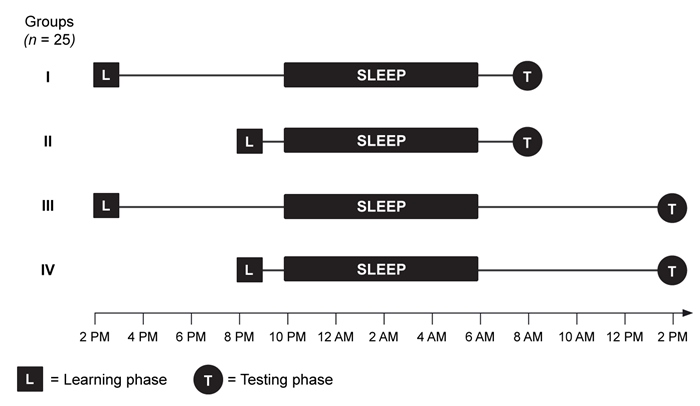 Figure 1 Experimental design for each of the 4 groupsResults were reported as the average recall accuracy for the objects and vocabulary definitions, by group (Table 1). Participants were then given a survey about the techniques they used when attempting to remember the toy objects and vocabulary definitions. Some students reported associating the definitions and objects with one another. For instance, one student reported that she related the words "plucky" (meaning brave) and "tocsin" (meaning an alarm) to an image of a toy fire truck, making it easier to recall the toy object and both associated vocabulary definitions.Table 1 Average Recall Accuracy, per Group
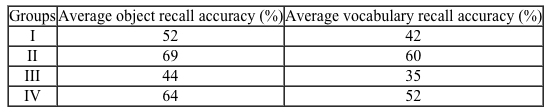 -Which conclusion is LEAST supported by the data in Table 1?
Figure 1 Experimental design for each of the 4 groupsResults were reported as the average recall accuracy for the objects and vocabulary definitions, by group (Table 1). Participants were then given a survey about the techniques they used when attempting to remember the toy objects and vocabulary definitions. Some students reported associating the definitions and objects with one another. For instance, one student reported that she related the words "plucky" (meaning brave) and "tocsin" (meaning an alarm) to an image of a toy fire truck, making it easier to recall the toy object and both associated vocabulary definitions.Table 1 Average Recall Accuracy, per Group
-Which conclusion is LEAST supported by the data in Table 1? (Multiple Choice)
4.8/5  (88)
(88) Passage
Health psychologists interested in studying the influence of positive and negative thinking on weight loss conducted a study on 120 obese adults attempting to lose weight. Participants indicated on a scale of 1 to 7 how successful they thought they would be at losing weight (1 = "not successful" and 7 = "very successful") and how much control they believed they had over their success (1 = "no control" and 7 = "complete control"), recorded as expectation of success scores and control of success scores, respectively.Participants were then randomly divided into three groups and asked to complete a 15-minute guided mental exercise twice a day for three weeks. Participants in the fantasy/reality contrast condition were instructed to reflect on two positive aspects of a fantasized weight loss, such as attaining better health and more energy, and two negative aspects of reality that impede weight loss, such as lack of discipline and desire to eat unhealthy foods. Participants in the positive fantasy condition were asked to reflect on four positive aspects of weight loss, and participants in the negative reality condition were asked to reflect on four factors that impede weight loss.At the end of this three-week period, participants began a three-month diet and exercise regimen involving caloric restriction to 1,500 calories per day as well as regular participation in aerobic exercise and weight training. Researchers recorded weekly weights of participants and surveyed participants regarding adherence to proactive weight loss strategies. The results are shown by group in Figures 1 and 2.
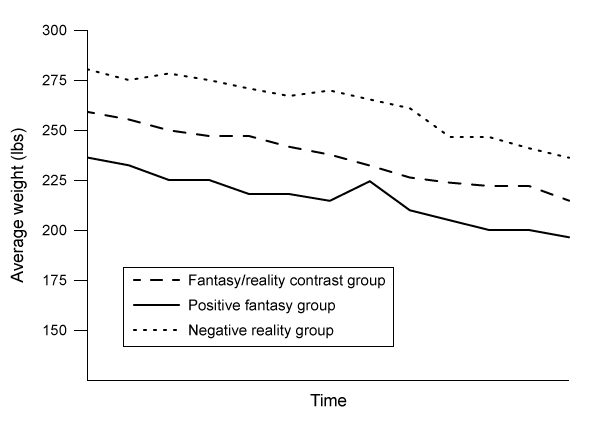 Figure 1 Average weight recorded for each group during three-month follow-up
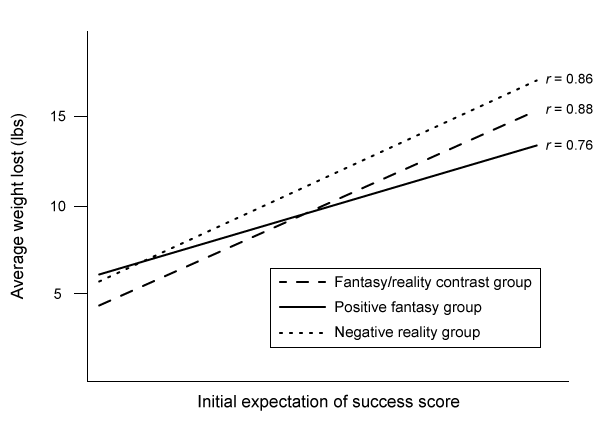 Figure 2 Initial expectation of success score versus average weight loss
-Which of the following study procedures described in the passage is most likely measuring or attempting to evoke the affective component of attitude?
Figure 1 Average weight recorded for each group during three-month follow-up
Figure 2 Initial expectation of success score versus average weight loss
-Which of the following study procedures described in the passage is most likely measuring or attempting to evoke the affective component of attitude? (Multiple Choice)
4.8/5 (74)
(74) A researcher recruited 20 individuals with complete spinal cord injuries at cervical vertebrae C3 or C4 (participants had no sensory or motor function below the site of injury) and 20 matched controls. Participants were presented with images designed to evoke positive, negative, or no emotion. If the results indicate no significant difference between participants with spinal cord injuries and control participants in the emotional response to the images, this finding would:
(Multiple Choice)
4.8/5 (90)
(90) Passage
For decades psychologists have known that people tend to execute tasks differently when alone compared to when in the presence of other people.In Study 1, researchers analyzed records of bicycle racers' times both during competitions and when racing alone against the clock. They found that the fastest times were recorded during competitions, particularly larger races with over 100 cyclists. This finding was initially attributed to the competitive nature of the races, but later studies suggest performance improves when in the presence of other people, even outside of competition.In Study 2, researchers conducted an experiment based on the idea that the mere presence of others impacts performance. This study involved a simple task (ie, getting dressed), which was performed either alone or with an audience. This task was chosen because it was familiar and routine, without clear standards of good or bad performance. Furthermore, the participants had no idea that this task was of interest to the experimenters.Forty-five male undergraduate students were recruited for Study 2. The researchers informed the participants that they were required to remove their socks and shoes and replace them with unfamiliar ones and then put on a lab coat, surgical mask, and protective eye glasses (hard task). After a 10-minute wait, the participants were informed that the study was called off because the remaining participants failed to arrive and they could put back on their familiar clothes (easy task).All participants in Study 2 were randomly assigned to one of three experimental conditions. In the audience condition, each participant performed both tasks in a room with an attentive confederate watching. In the incidental audience condition, a confederate sat facing away from each participant while the participant performed both tasks. The third group of participants performed both tasks alone (control condition). Participants' behavior was observed and timed by an inconspicuous researcher. It was found that, compared to controls, participants performed more quickly under both experimental conditions when putting back on their familiar clothing, and performed more slowly when dressing in unfamiliar clothing.
Adapted from H. Markus ©1977 Elsevier B.V.
-Which of the following most accurately characterizes the two studies? Study 1 is interested in the impact of an audience on:
(Multiple Choice)
4.8/5 (74)
(74) Passage
Human emotions play an important role in individual and group behaviors, influencing both prosocial and antisocial exchanges. Complex and personal, emotions are difficult to study. Although physiological indicators of emotion, such as pulse or skin conductance, are easy to measure, the subjective experience of emotion is much harder to assess.Further complicating the issue, there is no universally accepted theory regarding the role of physiological processes in the experience of emotion. Common sense would suggest that emotion is experienced first, followed by physiological and behavioral events: we feel scared and then break into a cold sweat. However, one of the earliest modern theories of emotion proposed just the opposite-emotion occurs after a physiological response, not before: we break into a cold sweat and then feel scared.Males and females also appear to experience emotion differently; however, it is unclear whether this is the result of nature or nurture. Studies using functional magnetic resonance imaging (fMRI) suggest a biological difference. Data suggest that compared to females, males demonstrated greater activation of the amygdala while viewing images meant to induce fear, anger, or sexual arousal, but when asked to suppress negative emotions, females demonstrated greater activation of the prefrontal cortex than males. Research also suggests that females may demonstrate more empathy; when watching another person experience an emotion (eg, pain), females show more neural activation of the same areas that are active during the personal experience of that emotion.Social factors also appear to play an important role in gender differences. One study, which assessed how boys and girls express emotion from infancy to adolescence, concluded that gender differences appear to emerge around age 2-4 and become more pronounced with age. The researchers hypothesized that children learn gendered behavior regarding emotion through social learning. Cultural differences in the expression of emotion lend support to this argument: several studies suggest that, in general, men are expected to express less emotion than women, with the exception of anger.
T. Singer and C. Lamm ©2009 by New York Academy of Sciences, and T. M. Chaplin and A. Aldao ©2012 by American Psychological Association, and S. R. Wester, D. L. Vogel, P. K. Pressly, and M. Heesacker ©2002 by American Psychological Association
-Unlike the descriptions of emotional processing in the second paragraph, the Cannon-Bard theory suggests that:
(Multiple Choice)
4.8/5 (72)
(72) Passage
Physical modifications important for consolidating memory are particularly apparent in the hippocampus, especially a pathway called the Schaffer Collateral, which contains CA1 (cornu Ammonis) neurons that have been implicated in learning and memory. To study learning and memory in live mice, scientists use a stimulating electrode to generate brief electrical pulses on the dendrites of CA1 neurons in the Schaffer Collateral pathway and use a recording electrode to measure the excitatory postsynaptic potentials (EPSPs) in the CA1 postsynaptic neurons.In Study 1, researchers used brief low-frequency stimulations (1-5 stimuli per second) to establish a baseline response in the CA1 postsynaptic neurons. Then, the same dendrites were given a high-frequency stimulation (50-100 stimuli per second), referred to as a tetanus. The researchers discovered that the high-frequency tetanus induced an increase in the response in postsynaptic CA1 neurons that was long-lasting. For the control, the researchers established a baseline in a second set of CA1 neurons in the same region but did not give a high-frequency tetanus (Figure 1).
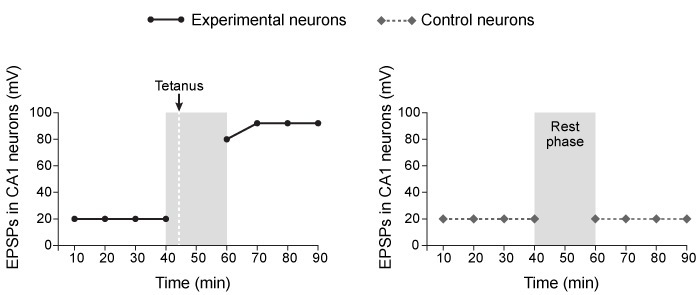 Figure 1 CA1 neuron response after a brief tetanus (experimental) or no tetanus (control)In a second behavioral study, mice were housed in either a standard cage (control) or a cage with an enhanced learning environment, including toys and access to a running wheel (experimental condition). For the first 12 days, both groups of mice received injections of a dye that is incorporated into newly synthesized DNA, thereby providing a biomarker of neurogenesis.Following 30 days in their respective environments, all mice were tested each day for one week in the Morris Water Maze, a test that measures spatial learning and memory consolidation. Results showed that mice in the experimental condition demonstrated greater improvement on Morris Water Maze performance compared to controls. When hippocampi were examined, the results revealed that mice in the experimental condition had a greater number of dye-labeled cells than did the controls.
W. C. Abraham, B. Logan, J. M. Greenwood, and M. Dragunow ©2002 The Society of Neuroscience, and H. van Praag, B. R. Christie, T. J. Sejnowski, and F. H. Gage ©1999 National Academy of Sciences.
-Which of the following correctly pairs a brain area vital for learning in the Morris Water Maze with its appropriate function?
Figure 1 CA1 neuron response after a brief tetanus (experimental) or no tetanus (control)In a second behavioral study, mice were housed in either a standard cage (control) or a cage with an enhanced learning environment, including toys and access to a running wheel (experimental condition). For the first 12 days, both groups of mice received injections of a dye that is incorporated into newly synthesized DNA, thereby providing a biomarker of neurogenesis.Following 30 days in their respective environments, all mice were tested each day for one week in the Morris Water Maze, a test that measures spatial learning and memory consolidation. Results showed that mice in the experimental condition demonstrated greater improvement on Morris Water Maze performance compared to controls. When hippocampi were examined, the results revealed that mice in the experimental condition had a greater number of dye-labeled cells than did the controls.
W. C. Abraham, B. Logan, J. M. Greenwood, and M. Dragunow ©2002 The Society of Neuroscience, and H. van Praag, B. R. Christie, T. J. Sejnowski, and F. H. Gage ©1999 National Academy of Sciences.
-Which of the following correctly pairs a brain area vital for learning in the Morris Water Maze with its appropriate function? (Multiple Choice)
4.8/5 (63)
(63) Passage
Religion establishes the beliefs and rituals surrounding the sacred and provides meaning and significance to individuals' lives. The tenets of any given religion can have a far-reaching impact on the individuals within its faith community. For example, certain religions promote faith-based lifestyle directives (FBLDs), which urge believers to follow specific guidelines regarding their own behavior (eg, restrictions on diet and substance use) and their treatment of others (eg, mission work). Because these practices typically reflect the religious group's values, FBLDs are often an important expression of faith for the deeply religious.One religious group with health-related FBLDs is the Seventh Day Adventist Church, which formed in the 1860s after early leaders broke away from established Protestant churches. Since its formal establishment, Seventh Day Adventist Church membership has grown from 3,500 to over 20 million worldwide. The Seventh Day Adventist Church advocates conservative religious teachings and a holistic approach to health and wellness; members are encouraged to pursue vegetarianism, exercise regularly, and avoid alcohol and tobacco.Although FBLDs impact believers' personal choices and behaviors, they are also often meant to have an impact on others through the creation of social institutions such as schools and hospitals. For example, early Adventist leaders developed a health care system to serve the needs of the larger community, and members of the modern Adventist Church have continued to try to reduce health disparities worldwide by creating hospitals, clinics, and universities that provide health care and education services to underserved and developing communities.Researchers from a variety of fields have examined health-related religious values and FBLDs. Epidemiological research has shown that believers from different religions who follow certain FBLDs (eg, abstaining from smoking and alcohol) experience lower rates of chronic illnesses (eg, heart disease and many types of cancer) than the general population. Sociologists have suggested that as a society increasingly relies on medical professionals, rather than clergy, as legitimate sources of guidance on lifestyle behaviors, membership in religious groups with values that are compatible with medicalization will continue to rise. Some hypothesize that this phenomenon accounts for the seemingly contradictory increase in membership in certain conservative religious groups with strict FBLDs, despite mainstream society becoming less religious.
-Based on the passage, which statement is most consistent with a symbolic interactionist perspective?
(Multiple Choice)
4.9/5 (89)
(89) Researchers have identified a set of factors associated with an increased risk of developing chronic obstructive pulmonary disease, including low birth weight, respiratory infections before age 2, low socioeconomic status in childhood, adolescent smoking, and occupational exposure to airborne irritants as an adult. This finding best reflects:
(Multiple Choice)
4.9/5 (72)
(72) Passage
In 2010, the United States (U.S.) had an incarcerated population of about 1.6 million, up from about 300,000 in 1980. Some experts suggest that the exponential rise in the inmate population has been largely due to the "war on drugs," initiated in the 1980s, which led to more aggressive laws against drug use and distribution. Increases in arrests and imprisonment, however, have not affected all segments of the U.S. population equally. Although the total population was about 50% male in 2010, the prison population was about 93% male and reflective of additional racial and ethnic disparities (Figure 1).
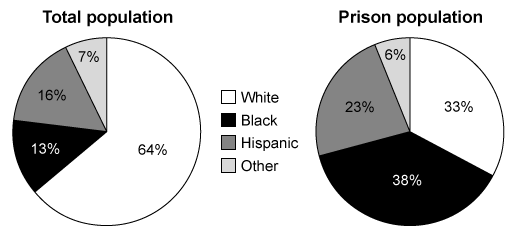 Figure 1 Total population and prison population by race and ethnicity in the United States in 2010Research suggests that black and white people use drugs at similar rates, but black people are more likely to end up in the criminal justice system for drug use. This overrepresentation of black people in the prison population can be partly explained by discrimination at the individual and institutional levels. For example, if police departments focus their resources in predominantly black neighborhoods based on the assumption that black individuals are more likely to commit a crime, then police officers (who may similarly believe black people commit more crimes than white people) are more likely to witness black people committing crimes, thereby confirming the belief. Discrimination operates at every level of the criminal justice system: Black people are more likely than white people to be arrested, prosecuted, and convicted for drug use and receive, on average, longer sentences.High rates of recidivism also perpetuate the demographic disparity of the prison population. It is estimated that about 75% of released prisoners will be rearrested within five years. Experts suggest that, once convicted of a felony, individuals find that their status as a former felon (or "ex-convict") dominates all their other statuses, making it difficult to reintegrate into society. The social stigma of criminality makes it hard for ex-convicts to secure employment, which often leads to further crime. Ex-convicts are also more closely monitored by police and far more likely to be arrested and convicted for minor offenses.
-As described in the second paragraph, disparities in prison demographics may be explained by all of the following, EXCEPT:
Figure 1 Total population and prison population by race and ethnicity in the United States in 2010Research suggests that black and white people use drugs at similar rates, but black people are more likely to end up in the criminal justice system for drug use. This overrepresentation of black people in the prison population can be partly explained by discrimination at the individual and institutional levels. For example, if police departments focus their resources in predominantly black neighborhoods based on the assumption that black individuals are more likely to commit a crime, then police officers (who may similarly believe black people commit more crimes than white people) are more likely to witness black people committing crimes, thereby confirming the belief. Discrimination operates at every level of the criminal justice system: Black people are more likely than white people to be arrested, prosecuted, and convicted for drug use and receive, on average, longer sentences.High rates of recidivism also perpetuate the demographic disparity of the prison population. It is estimated that about 75% of released prisoners will be rearrested within five years. Experts suggest that, once convicted of a felony, individuals find that their status as a former felon (or "ex-convict") dominates all their other statuses, making it difficult to reintegrate into society. The social stigma of criminality makes it hard for ex-convicts to secure employment, which often leads to further crime. Ex-convicts are also more closely monitored by police and far more likely to be arrested and convicted for minor offenses.
-As described in the second paragraph, disparities in prison demographics may be explained by all of the following, EXCEPT: (Multiple Choice)
4.9/5 (86)
(86) Passage
Prominent theories of emotion have long held that alterations in one's internal physiological state are necessary for the experience of emotion. Interoception involves both the unconscious and conscious perception of one's internal physiological state. The insula (or insular cortex), located deep within the lateral fissure on both sides of the brain, appears to be largely responsible for interoception. Studies suggest that the posterior insula (PI) is involved with processing homeostatic afferent information such as pain, temperature, hunger, thirst, and the impulse to breathe. In contrast, the anterior insula (AI) appears to process information regarding emotional awareness, the conscious experience of emotion.A recent study evaluated AI activity using functional magnetic resonance imaging (fMRI). Using fMRI, the participants' brain activity was monitored during two different tasks: an emotion-eliciting task and an interoceptive task.Task 1Participants watched 10 short videos of people recalling personal events that were either negative (eg, surviving a mass shooting attack) or positive (eg, seeing a loved one after a year apart). After each video, participants rated their reactions on a Likert scale from 1 (no emotional reaction) to 10 (extreme emotional reaction).Task 2Participants were instructed to monitor their own heart rate and press a button each time they felt their heartbeat. Participants' heart rates were externally monitored to gauge the accuracy of their responses.ResultsNeuroimaging results suggested that both tasks elicited activity in the AI. Furthermore, there was a high degree of overlap in the activity of the right AI and surrounding limbic and paralimbic brain regions at both the individual and group levels.
J. Zaki, J. I. Davis, and K. N. Ochsner ©2012 by Elsevier, B. V., and A. D. Craig ©2003 by Elsevier, B. V.
-The neuroimaging tool used for this study works by measuring which of the following?
(Multiple Choice)
4.9/5 (88)
(88) Passage
The diagnosis of a child with a serious disability significantly impacts the child's parents. While positive psychological outcomes are sometimes possible, evidenced by research showing that for some parents a child's disability is eventually viewed as a chance for personal growth, research also indicates that many parents of children with disabilities are at greater risk for poor physical and mental health outcomes. Coping with a child's initial symptoms, providing ongoing care, and dealing with prejudice from others present significant stressors for parents. This stress may also disrupt marriages; results of a meta-analysis showed a modest, increased risk for divorce in parents of children with disabilities. Another line of research has identified significantly higher rates of anxiety and/or depression in parents of children with disabilities. The fact that parental distress often results in poorer outcomes for their children points to a need for evidence-based interventions for parents of children with disabilities.In Study 1, researchers compared the effectiveness of two interventions in reducing depressive symptoms in parents of children with cognitive disabilities. Researchers recruited 30 parents of children with intellectual disorders from the contact list of an affluent community wellness center and randomly assigned them to a meditation (M) group or a humanistic psychotherapy (HP) group. Both groups were led by peer mentors trained in specific interventions who taught and demonstrated the techniques to the participants during the weekly sessions. Participants completed self-report measures of depressive symptoms at baseline (pre-test), 4 weeks into the intervention (midpoint), at the end of the 8-week program (post-test 1), and 4 weeks after the program ended (post-test 2). The findings are shown in Figure 1.
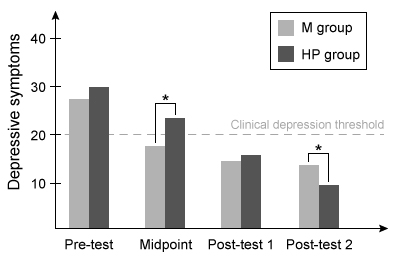 Figure 1 Depressive symptoms at pre-test, midpoint, post-test 1, and post-test 2 (Note: * indicates p < .05.)In Study 2, researchers examined the impact of coping strategies on distress in 80 parents of children with muscular dystrophy. Participants were asked to think of a recent stressful, threatening event and report whether they had classified their future expectancy for the event as "changeable" (situation is able to be modified) or "unchangeable" (situation is not able to be modified). They were then asked whether they attempted to cope with the event primarily by regulating their emotions (emotion-focused) or by modifying aspects of the situation (problem-focused), such as seeking help from others. Lastly, they were surveyed about their level of distress after they tried to cope with the stressor. Figure 2 illustrates the findings.
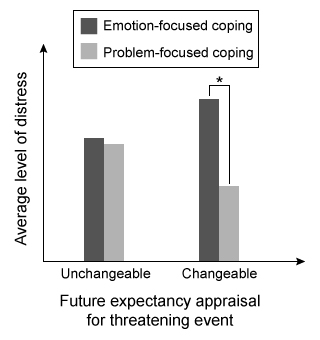 Figure 2 Average level of distress by coping strategy (emotion-focused vs. problem-focused) and future expectancy appraisal for the threatening event (Note: * indicates p < .05.)
-The HP group peer mentor would have been most likely to have participants focus on:
Figure 1 Depressive symptoms at pre-test, midpoint, post-test 1, and post-test 2 (Note: * indicates p < .05.)In Study 2, researchers examined the impact of coping strategies on distress in 80 parents of children with muscular dystrophy. Participants were asked to think of a recent stressful, threatening event and report whether they had classified their future expectancy for the event as "changeable" (situation is able to be modified) or "unchangeable" (situation is not able to be modified). They were then asked whether they attempted to cope with the event primarily by regulating their emotions (emotion-focused) or by modifying aspects of the situation (problem-focused), such as seeking help from others. Lastly, they were surveyed about their level of distress after they tried to cope with the stressor. Figure 2 illustrates the findings.
Figure 2 Average level of distress by coping strategy (emotion-focused vs. problem-focused) and future expectancy appraisal for the threatening event (Note: * indicates p < .05.)
-The HP group peer mentor would have been most likely to have participants focus on: (Multiple Choice)
4.9/5 (85)
(85) Passage
Researchers conducted a pair of studies to explore how rewards influence motivation and weight loss for those who are overweight or obese.For Study 1, 20 overweight and 20 average-weight adults were invited to play a computer game consisting of a simple matching task in which participants earned a reward for getting multiple correct responses. Participants were allowed to select their own reward: Either $1.00 or a 200-calorie vending machine snack (valued at $1.00), such as a candy bar or bag of chips. For the first trial, participants were rewarded on an average of three correct responses (AVG3). Participants were then asked to choose between the food and monetary rewards. When a food reward was selected, the average number of correct responses required to earn the next reward doubled, but when a monetary reward was selected, the average number of correct responses required to earn the next reward remained the same (Figure 1). Results indicated that although there was no significant difference between the groups with regard to baseline self-reporting of hunger prior to the start of the computer tasks, overweight participants were five times more likely to choose the food rewards than average-weight participants.
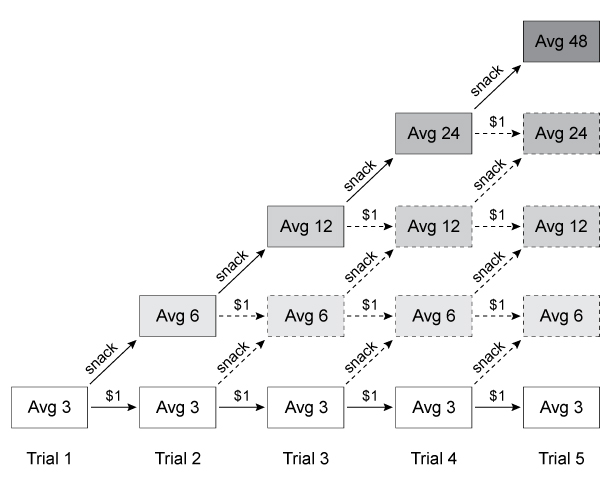 Figure 1 Study 1 reward scheduleFor Study 2, obese participants were recruited for a 16-week weight-loss study and randomly assigned to one of two groups: A control group (n = 32) or an experimental group (n = 35). Control participants engaged in weekly weigh-ins only. Experimental participants engaged in weekly weigh-ins but also earned or lost money (put into an account and paid at the end of the study) based on their weigh-in goal, calculated each week based on current body mass index (BMI), age, and sex. Those who reached their weekly weight goal earned $10; for each additional pound lost, participants earned another $10, up to $50/week. Participants in the experimental group who did not meet or exceed their weekly weight goal had $20 deducted from their accounts. No significant differences were found in baseline variables for either group; however, members of the control group lost an average of 5.9 pounds, whereas members of the experimental group lost an average of 18.1 pounds.
B. E. Saelens and L. H. Epstein ©1996 Elsevier B.V.
-The experimental group in Study 2 was subjected to:
Figure 1 Study 1 reward scheduleFor Study 2, obese participants were recruited for a 16-week weight-loss study and randomly assigned to one of two groups: A control group (n = 32) or an experimental group (n = 35). Control participants engaged in weekly weigh-ins only. Experimental participants engaged in weekly weigh-ins but also earned or lost money (put into an account and paid at the end of the study) based on their weigh-in goal, calculated each week based on current body mass index (BMI), age, and sex. Those who reached their weekly weight goal earned $10; for each additional pound lost, participants earned another $10, up to $50/week. Participants in the experimental group who did not meet or exceed their weekly weight goal had $20 deducted from their accounts. No significant differences were found in baseline variables for either group; however, members of the control group lost an average of 5.9 pounds, whereas members of the experimental group lost an average of 18.1 pounds.
B. E. Saelens and L. H. Epstein ©1996 Elsevier B.V.
-The experimental group in Study 2 was subjected to: (Multiple Choice)
4.8/5 (88)
(88) Passage
Bipolar disorder (BD), often characterized by periods of depression and mania, although it is possible to experience mania only, is frequently misdiagnosed. Some studies suggest that as many as half of all individuals diagnosed with BD actually do not have the disorder. One possible reason is the similarity in symptoms shared by both mania and borderline personality disorder. Another potential reason involves recent efforts by pharmaceutical companies to increase awareness of BD symptoms. As one physician stated:"In the past ten years, we've been bombarded with ads, 'These are the symptoms of BD-they're easily missed-and here is a new drug to treat it.' I think that when you're constantly being reminded not to overlook something, you start looking for it everywhere, even when it's not there."Other studies report that BD is underdiagnosed, with almost 70% of patients receiving an initial misdiagnosis and almost 35% remaining misdiagnosed for 10 years or more. This can be partially explained by the fact that people often seek treatment for their depressive symptoms but rarely for their manic symptoms. In fact, some individuals may not initially realize that their manic episodes are problematic. Patients may describe these episodes as positive experiences, particularly when compared with depressive episodes:Patient 1: "During my depression, I'm so tired I stay in bed for days. I feel totally useless. But when I'm manic, I am so alive. I feel like I'm on top of the world-I'm the life of the party, and my mind is running a million miles a minute. I'm so productive, I don't need much sleep, and I can just go, go, go. It actually took me a long time to realize that this wasn't normal, this awesome energy was way beyond how people normally feel."Patient 2: "My mania actually came on over a long period during grad school and I just kept feeling better and better. It was like I was getting sharper and smarter, and I was doing more research and coming up with all of these brilliant ideas. I felt totally on top of my game."Because mania is often unrecognized and unreported, recent efforts have been made to encourage a more proactive approach to the self-identification of manic symptoms. Proper diagnosis is critical for effective life-long treatment and management of BD, as reflected by this patient's experience:Patient 3: "It was almost 10 years before I could acknowledge that my high-stress lifestyle was triggering my mania and that I needed to make some big changes-and that I needed to stay on my medication, even when I felt much better. That was really hard for me to get, but I get it now-I have this for life, and I have to treat it every day. Once I finally got that, I started to be able to accept this as a part of who I am."
T. Singh and M. Rajput ©2006 Matrix Medical Communications, and J. A. Scott and F. Sohrabi ©2015 Everyday Health Media.
-What does the physician's quote in the passage best exemplify?
(Multiple Choice)
4.8/5 (76)
(76) Passage
Until the middle of the twentieth century, most researchers believed that infants possess only the most rudimentary ways of perceiving the world. Then, in the 1950s, innovative investigative strategies allowed researchers to better assess the complexity of infants' perceptual abilities.Studies on the visual perception of infants used gaze time as an indicator of interest or preference. In Study 1, 36 babies age 2 weeks to 4 months were shown 6 pictures of identical size simultaneously, such as pictures of a bull's-eye, a bird, three squares of different colors, and a human face. Researchers recorded the time the infants spent looking at each picture and calculated the mean gaze time for each picture. It was found that the babies gazed far longer at the human face than at any other picture.Studies on the auditory perception of infants also employed gaze time as an indicator of preference. In Study 2, researchers exposed infants age 1-4 months to four types of auditory stimuli. The first type was human speech consisting of a series of randomly selected short words, each stated in a neutral tone, followed by a second of silence. The other stimuli included environmental sounds (eg, forest noises); neutral, human, noncommunicative sounds (eg, sneezing, coughing, throat clearing); and monkey vocalizations. A red light was shown on a computer monitor to attract the babies' attention. Once their gaze was fixed on the monitor, they were shown a picture of a checkerboard along with the auditory stimulus for up to 40 seconds. The time the infants gazed at the monitor was recorded. Results indicated that babies preferred human speech to any other sound.
Adapted from S. Shultz and A. Vouloumanos ©2010 Taylor & Francis Group, and R. L. Fantz ©1961 Scientific American.
-Infants with a genetic defect in which of the following receptor types should be excluded from Study 2?MechanoreceptorsPhotoreceptorsChemoreceptors
(Multiple Choice)
4.7/5 (78)
(78) A researcher hypothesizes that there is a positive correlation between symptom severity of post-traumatic stress disorder (PTSD) and external locus of control. Which hypothetical finding would support this hypothesis?
(Multiple Choice)
4.9/5 (70)
(70) Passage
Before memories have been consolidated they are considered "labile," or unstable and easily altered. Sleep is theorized to be essential to the process of memory consolidation, though the mechanisms for this are still under investigation. Rapid eye movement (REM) sleep has long been assumed to be the sleep stage most important for overall memory consolidation, but recent research suggests that different types of memory may be consolidated during different sleep stages. Procedural memories appear to be primarily consolidated during REM sleep while declarative memories appear to be primarily consolidated during slow-wave sleep (SWS). Sleep duration, sleep regularity, and timing of sleep all contribute to the proportions of REM and SWS, so these factors also play an important role in memory consolidation processes.An experiment was performed at a large state university to investigate the relationship between sleep and learning in college students. Researchers screened potential participants with a sleep habits questionnaire. Those who reported having a regular sleep schedule were included in the study (N = 100) and given a vocabulary knowledge pretest. Participants were then randomly assigned to 1 of 4 experimental groups, each containing 25 students. During the learning phase (L), each student was asked to memorize a set of 10 common toy objects (eg, car, ball, stuffed animal, blocks) and 10 vocabulary definitions that the student had labeled as "unknown" during the pretest. Images of the toy objects were presented in a sequence, one at a time, for 5 seconds each; the 10 vocabulary definitions were listed on a sheet that students were allowed to study for 10 minutes. During the testing phase (T), students were asked to recall the objects in any order and define the vocabulary words (Figure 1).
Figure 1 Experimental design for each of the 4 groupsResults were reported as the average recall accuracy for the objects and vocabulary definitions, by group (Table 1). Participants were then given a survey about the techniques they used when attempting to remember the toy objects and vocabulary definitions. Some students reported associating the definitions and objects with one another. For instance, one student reported that she related the words "plucky" (meaning brave) and "tocsin" (meaning an alarm) to an image of a toy fire truck, making it easier to recall the toy object and both associated vocabulary definitions.Table 1 Average Recall Accuracy, per Group
-According to the first paragraph, which of the following electroencephalogram patterns should predominate during the sleep stage associated with the consolidation of the type of memory assessed in this study?
Figure 1 Experimental design for each of the 4 groupsResults were reported as the average recall accuracy for the objects and vocabulary definitions, by group (Table 1). Participants were then given a survey about the techniques they used when attempting to remember the toy objects and vocabulary definitions. Some students reported associating the definitions and objects with one another. For instance, one student reported that she related the words "plucky" (meaning brave) and "tocsin" (meaning an alarm) to an image of a toy fire truck, making it easier to recall the toy object and both associated vocabulary definitions.Table 1 Average Recall Accuracy, per Group
-According to the first paragraph, which of the following electroencephalogram patterns should predominate during the sleep stage associated with the consolidation of the type of memory assessed in this study? (Multiple Choice)
4.7/5 (75)
(75) A researcher conducts a study on visual perception. When viewing a photograph of hospital physicians, participants tend to perceive the physicians as groups based on their attire, such as "blue scrubs" for one group and "white lab coats" for another. This finding is best attributed to which Gestalt principle?
(Multiple Choice)
4.9/5 (73)
(73) Passage
Visual perception involves the organization and interpretation of information obtained from visible light. Visual perception relies on monocular and binocular cues, as well as perceptual organization principles that allow humans to interpret limited or partial information more holistically. These sorts of mental shortcuts are based on prior experiences and knowledge, and are especially useful when lighting or perspective is limited. For example, the ambiguous image in Figure 1 is often perceived as a cup.
 Figure 1 Ambiguous imagePerceptual organization principles allow our brains to quickly and efficiently make assumptions about visual inputs, but these principles can also give rise to perceptual illusions. For example, the Ames room is constructed to exploit monocular depth cues in such a way that the person standing on one side of the room appears to impossibly dwarf the person on the other side of the room (Figure 2).
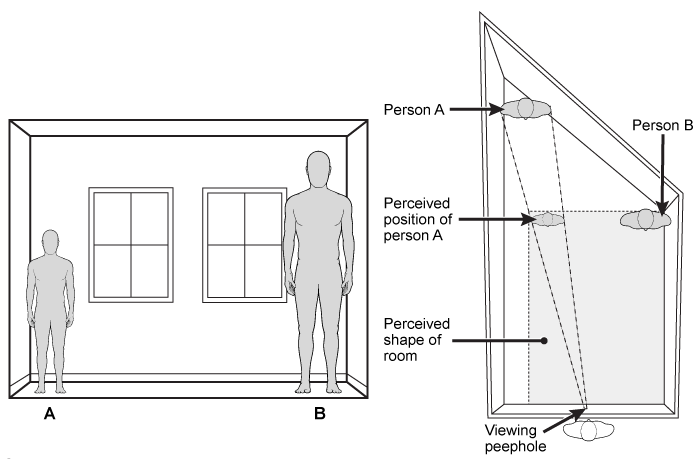 Figure 2 Ames room illusion (two people standing in a specially constructed Ames room, viewed through a monocular peephole)Human senses were adapted for use on land, which can lead to potentially deadly perceptual distortions while flying or underwater diving. Pilots are prone to such perceptual distortions when landing on unfamiliar runways. During their training, pilots develop a mental image of how a typical runway appears as they descend and land. Later, they compare this prototypical shape to the runway they see before them to make adjustments in the slope of their descent. However, if a runway differs from what the pilot is used to (eg, in width or slope), it will differ from the pilot's mental image for a typical runway at that same altitude. For example, an unusually wide runway will appear to be closer than it actually is, and a narrow runway will seem to be further away. This can cause the pilot to approach at a dangerously steep or shallow slope.Pilots and divers can also suffer from spatial disorientation due to variations in sensory stimuli that are not typically encountered on land. For example, gravity is not experienced in the body the same way underwater as on land, and visual cues are often limited in deep dives. In these murky conditions, divers can easily lose track of the surface of the water, leading to extreme spatial disorientation and panic.
-Which of the following predictions is best supported by information presented in the passage?
Figure 1 Ambiguous imagePerceptual organization principles allow our brains to quickly and efficiently make assumptions about visual inputs, but these principles can also give rise to perceptual illusions. For example, the Ames room is constructed to exploit monocular depth cues in such a way that the person standing on one side of the room appears to impossibly dwarf the person on the other side of the room (Figure 2).
Figure 2 Ames room illusion (two people standing in a specially constructed Ames room, viewed through a monocular peephole)Human senses were adapted for use on land, which can lead to potentially deadly perceptual distortions while flying or underwater diving. Pilots are prone to such perceptual distortions when landing on unfamiliar runways. During their training, pilots develop a mental image of how a typical runway appears as they descend and land. Later, they compare this prototypical shape to the runway they see before them to make adjustments in the slope of their descent. However, if a runway differs from what the pilot is used to (eg, in width or slope), it will differ from the pilot's mental image for a typical runway at that same altitude. For example, an unusually wide runway will appear to be closer than it actually is, and a narrow runway will seem to be further away. This can cause the pilot to approach at a dangerously steep or shallow slope.Pilots and divers can also suffer from spatial disorientation due to variations in sensory stimuli that are not typically encountered on land. For example, gravity is not experienced in the body the same way underwater as on land, and visual cues are often limited in deep dives. In these murky conditions, divers can easily lose track of the surface of the water, leading to extreme spatial disorientation and panic.
-Which of the following predictions is best supported by information presented in the passage? (Multiple Choice)
4.7/5 (86)
(86) Passage
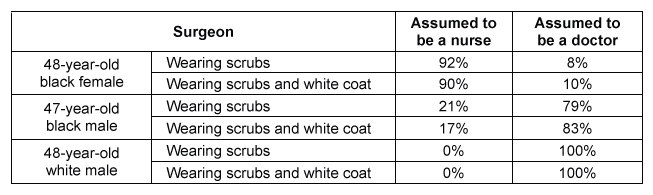
Numerous studies suggest that physicians make both conscious and unconscious assumptions about their patients, and these assumptions often impact patient care and outcomes. However, little research has focused on the assumptions patients make about their physicians.Researchers designed an observational study to investigate assumptions made by patients in health care settings. For this study, three different surgeons were asked to interact with pre-surgery patients whom they had never met using a standardized script. Each surgeon participated in 30 total interactions over the course of two weeks. The purpose of the study was to assess how the patient's assumptions regarding the surgeon's status were impacted by the surgeon's race, gender, and attire.According to the script, the surgeon did not introduce him- or herself upon entering the room. All three surgeons were in their late 40s; one surgeon was a black woman, one was a black man, and one was a white man. The surgeons wore either surgical scrubs alone or a white coat over their surgical scrubs. Researchers analyzed how patients addressed or referred to the surgeon to assess assumptions about the surgeon's role as a doctor or a nurse. The results are presented in Table 1.Table 1 Percentage of Patients Who Assumed the Surgeon Was a Doctor or a Nurse
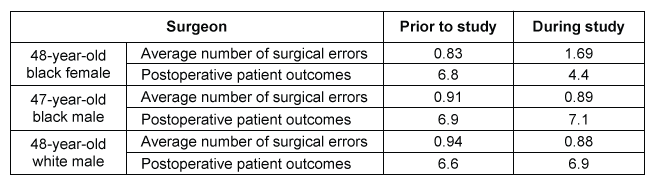
 The researchers also retrospectively analyzed minor (non-life-threatening) surgical errors and postoperative patient outcomes for one month prior to the study and during the study timeframe for each surgeon. The number of minor errors was averaged per surgery, and postoperative patient outcomes were quantified using a multifactor (eg, pain, infection, bleeding, other complications) assessment scale of 1 (worst outcome) to 12 (best outcome).Table 2 Average Number of Minor Surgical Errors (Per Surgery) and Aggregated Postoperative Patient Outcome Scores
 -For the 48-year-old black female surgeon, which of the following are correctly paired?
The researchers also retrospectively analyzed minor (non-life-threatening) surgical errors and postoperative patient outcomes for one month prior to the study and during the study timeframe for each surgeon. The number of minor errors was averaged per surgery, and postoperative patient outcomes were quantified using a multifactor (eg, pain, infection, bleeding, other complications) assessment scale of 1 (worst outcome) to 12 (best outcome).Table 2 Average Number of Minor Surgical Errors (Per Surgery) and Aggregated Postoperative Patient Outcome Scores
-For the 48-year-old black female surgeon, which of the following are correctly paired? (Multiple Choice)
4.8/5 (67)
(67) Passage
Researchers conducted a pair of studies to explore how rewards influence motivation and weight loss for those who are overweight or obese.For Study 1, 20 overweight and 20 average-weight adults were invited to play a computer game consisting of a simple matching task in which participants earned a reward for getting multiple correct responses. Participants were allowed to select their own reward: Either $1.00 or a 200-calorie vending machine snack (valued at $1.00), such as a candy bar or bag of chips. For the first trial, participants were rewarded on an average of three correct responses (AVG3). Participants were then asked to choose between the food and monetary rewards. When a food reward was selected, the average number of correct responses required to earn the next reward doubled, but when a monetary reward was selected, the average number of correct responses required to earn the next reward remained the same (Figure 1). Results indicated that although there was no significant difference between the groups with regard to baseline self-reporting of hunger prior to the start of the computer tasks, overweight participants were five times more likely to choose the food rewards than average-weight participants.
Figure 1 Study 1 reward scheduleFor Study 2, obese participants were recruited for a 16-week weight-loss study and randomly assigned to one of two groups: A control group (n = 32) or an experimental group (n = 35). Control participants engaged in weekly weigh-ins only. Experimental participants engaged in weekly weigh-ins but also earned or lost money (put into an account and paid at the end of the study) based on their weigh-in goal, calculated each week based on current body mass index (BMI), age, and sex. Those who reached their weekly weight goal earned $10; for each additional pound lost, participants earned another $10, up to $50/week. Participants in the experimental group who did not meet or exceed their weekly weight goal had $20 deducted from their accounts. No significant differences were found in baseline variables for either group; however, members of the control group lost an average of 5.9 pounds, whereas members of the experimental group lost an average of 18.1 pounds.
B. E. Saelens and L. H. Epstein ©1996 Elsevier B.V.
-Suppose one of the participants in Study 1 earned several candy bars and became very ill after consuming them. This participant would most likely:
Figure 1 Study 1 reward scheduleFor Study 2, obese participants were recruited for a 16-week weight-loss study and randomly assigned to one of two groups: A control group (n = 32) or an experimental group (n = 35). Control participants engaged in weekly weigh-ins only. Experimental participants engaged in weekly weigh-ins but also earned or lost money (put into an account and paid at the end of the study) based on their weigh-in goal, calculated each week based on current body mass index (BMI), age, and sex. Those who reached their weekly weight goal earned $10; for each additional pound lost, participants earned another $10, up to $50/week. Participants in the experimental group who did not meet or exceed their weekly weight goal had $20 deducted from their accounts. No significant differences were found in baseline variables for either group; however, members of the control group lost an average of 5.9 pounds, whereas members of the experimental group lost an average of 18.1 pounds.
B. E. Saelens and L. H. Epstein ©1996 Elsevier B.V.
-Suppose one of the participants in Study 1 earned several candy bars and became very ill after consuming them. This participant would most likely: (Multiple Choice)
4.9/5 (91)
(91) 
Filters
- Essay(0)
- Multiple Choice(0)
- Short Answer(0)
- True False(0)
- Matching(0)