



 Chat with AI
Exam 1: Behavioral Sciences

Exam 1: Behavioral Sciences343 Questions
Exam 2: Biochemistry307 Questions
Exam 3: Biology319 Questions
Exam 4: Critical Analysis & Reasoning Skills358 Questions
Exam 5: General Chemistry317 Questions
Exam 6: Organic Chemistry191 Questions
Exam 7: Physics200 Questions
Select questions type


Passage
Text messaging while driving increases the risk of a motor vehicle accident more than twenty-fold. The number of deadly highway accidents has spiked after decades of decline, mainly because of texting while driving. Despite this, nearly 40% of American drivers report having texted while driving and 20% of drivers report doing so regularly. Motor vehicle traffic accidents are the leading cause of death among Americans age 16 to 25.Researchers conducted a study to investigate the extent to which driving is impaired by prolonged gazes away from the highway (as a correlate to texting while driving) for males with and without attention-deficit hyperactivity disorder (ADHD). Eighty 16-year-old males with a valid driver's license were recruited for the study; half had ADHD (26 diagnosed as mild, 14 diagnosed as moderate) and half did not. Each participant was asked to complete six driving tasks (eg, avoiding an object on the road, merging, making unexpected stops) using a highly realistic driving simulator that projects computer-generated, two-dimensional, 360º visuals, requiring the use of side and rearview mirrors. The baseline condition included no distraction. In the first distraction condition, participants drove while conducting a hands-free phone conversation, and in the second distraction condition they were texting while driving. Two dependent variables were assessed: (1) percentage of driving time with eyes diverted from the road, and (2) number of glances away from the road lasting longer than two seconds.Under both distraction conditions, participants with ADHD (compared to those without ADHD) demonstrated a significantly higher percentage of driving time with eyes diverted from the road, as well as a significantly higher number of prolonged glances away from the road. In addition, unsteady lane position while driving was correlated with both ADHD and texting. The researchers concluded that impairments in driving performance were due to the extreme cognitive workload of competing tasks and visual inattention.
-Which type of memory is LEAST likely to be engaged during the driving simulation?
(Multiple Choice)
4.8/5  (80)
(80) Passage
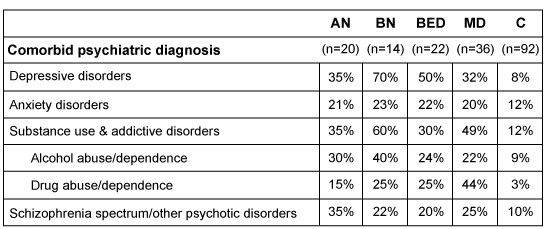
A common misconception in medicine is that eating disorders present similarly in males and females. Research suggests that this is untrue: males meeting diagnostic criteria for eating disorders are more likely than females to have another psychiatric illness, demonstrate a later age of onset, and engage in excessive exercise. They are less likely to engage in purging behaviors, be diagnosed by clinicians, or seek treatment. When males do enter treatment, they are generally further along in the course of the illness.The classification of eating disorders in males according to the Diagnostic and Statistical Manual of Mental Disorders, Fifth Edition (DSM-5) has recently been debated. Research suggests that one very common manifestation of eating disorder etiology in males, called muscle dysmorphia (MD), includes an obsession with a larger and more muscular body, which contrasts with the thin, idealized body for females with eating disorders. Characterized as a subset of body dysmorphic disorder, MD is more recently conceptualized as part of a spectrum of eating disorders; however, it is still classified under the obsessive-compulsive and related disorders umbrella in the DSM-5.One study applied the latest DSM-5 diagnostic criteria for anorexia nervosa (AN), bulimia nervosa (BN), binge eating disorder (BED), and MD to the medical records of male veterans treated in Veterans Administration (VA) hospitals across the United States from 2000 to 2015. The study (Table 1) found a significant increase in psychiatric comorbidity compared to controls (C).Table 1 Prevalence of Psychiatric Disorders for Eating Disorder and MD Cases and Controls in a National Sample of Male Veterans Treated at VA Hospitals from 2000 to 2015
 -A proponent of the biopsychosocial approach to mental illness would likely consider which of the following as factors contributing to the development of an eating disorder?Images seen on television and social mediaVariations in hormones such as leptin and cortisolCo-occurring mental illnesses
 (Multiple Choice)
4.9/5 (79)
(79) Passage
Epidemiologists now consider obesity to be a global pandemic, occurring largely as a result of the spread of technology and culture worldwide. Obesity has been linked to many serious health conditions, and as the obesity rate rises, the overall poorer health of the population impairs the functioning and stability of society. Although experts disagree about whether obesity itself should be viewed as a disease to be treated with medical interventions, there is widespread consensus that obesity prevention is critical. Research has shown that across one's life span, multiple biological, psychological, and social influences contribute to obesity; understanding the influence of these factors is essential to the development of effective obesity prevention programs.Study 1 was conducted using nearly 6,000 residents from a mid-sized city to investigate how obesity rates change over time in informal social groups. During recruitment wave A, researchers asked an initial group of individuals to complete a two-minute health questionnaire; those who completed the questionnaire were then asked to participate in the research study. During recruitment wave B, additional participants were recruited using a snowball sampling technique: participants who enrolled during wave A provided contact information of friends and family members who were then asked to participate. Researchers finalized the sample such that each participant had at least one family member, one close friend, and one acquaintance also in the study. Every year for 20 years, researchers measured each participant's height and weight to calculate body mass index (BMI) and conducted an extensive interview with each participant to assess the type, strength, and geographic distance of their social ties with other participants. Researchers found that the type and strength of social ties appeared to be more strongly linked to BMI than geographic closeness between social ties.Study 1 was criticized for not addressing larger contextual variables related to obesity, such as the availability of unhealthy food within a community. Therefore, Study 2 randomly selected a subset of 500 cases from the Study 1 database and, using participants' addresses, researchers mapped and counted the number of retail food chains (ie, "fast food" restaurants selling low-quality, calorie-dense food) located within a 1-mile radius of participants' homes and compared this to BMI at the end of the 20-year study. Results showed a significant relationship between higher BMI and more neighborhood retail food chains.
J. A. Levine ©2011 American Diabetes Association; Christakis, N. A. and Fowler, J. H. ©2007 Massachusetts Medical Society
-According to the first paragraph, experts disagree about whether:
(Multiple Choice)
4.7/5 (83)
(83) Passage
Both institutional and interpersonal factors contribute to persistent disparities in health outcomes for minorities in the U.S. In Study 1, researchers sought to categorize the major factors contributing to the disparity by surveying 2,000 African American and 3,000 Hispanic residents in a major metropolitan city. Of those surveyed, 64% met federal guidelines for living at or below the poverty threshold even though 90% of those surveyed were employed. When asked, "What prevents you from going to the doctor?" the most common responses were financial considerations (92%), inability to get time off from work for appointments (85%), lack of transportation (52%), difficulty communicating with the health care provider (51%), and fear/distrust of the health care system (48%).Interpersonally, patients tend to fare better when their physician is of their same racial or ethnic background. Study 2 observed all Hispanic patients (n = 110) who visited a clinic in an urban lower-income community over one week. Patients met with either a Hispanic physician (n = 43) or a white, non-Hispanic physician (n = 67). The Hispanic physician saw the patients who visited the clinic on Monday or Tuesday, and the white, non-Hispanic physician saw the patients who visited the clinic on Wednesday, Thursday, or Friday. Both physicians were men who spoke Spanish fluently, had been working at the clinic for 8-10 years, and were unaware of the study's purpose beforehand. This study collected data on the duration of the face-to-face appointment time with the physician, medication adherence one month after the appointment, and the number of symptoms disclosed to the physician by the patient. Ninety-eight of the patients were already on medication or were prescribed new medication at the time of their appointment, and patients were contacted one month later for assessment of adherence. The results of this study are shown in Figure 1.
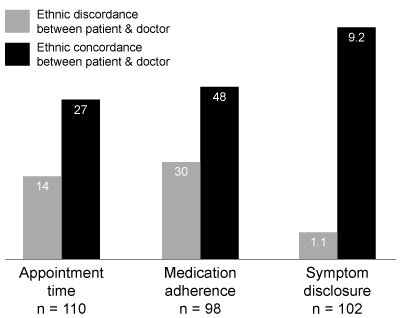 Figure 1 Average appointment time (minutes), medication adherence (percent), and number of symptoms disclosed according to patient-physician ethnic discordance vs. concordance
Adapted from W. Yost, (C)2007 Academic Press.
-Most of the participants in Study 1 live in lower-income neighborhoods. Which of the following is NOT a factor in the physical environment that helps explain disparities in health outcomes for these individuals?
Figure 1 Average appointment time (minutes), medication adherence (percent), and number of symptoms disclosed according to patient-physician ethnic discordance vs. concordance
Adapted from W. Yost, (C)2007 Academic Press.
-Most of the participants in Study 1 live in lower-income neighborhoods. Which of the following is NOT a factor in the physical environment that helps explain disparities in health outcomes for these individuals? (Multiple Choice)
4.9/5 (84)
(84) Which of the following scenarios best represents intragenerational vertical mobility?
(Multiple Choice)
4.8/5 (94)
(94) Passage
Suicide is one of the leading causes of death in the United States. Suicide risk is associated with a variety of factors. Personal factors include childhood abuse, certain personality traits (eg, impulsiveness, aggression), and history of mental illness. Over 90% of people who attempt suicide meet diagnostic criteria for at least one psychological disorder, and suicide risk increases as the number of co-occurring disorders increases. Diagnosis severity also matters: studies suggest that individuals are at greatest risk of attempting suicide while inpatient at or newly discharged from a psychiatric hospital.Social factors also play a role in suicide. Sociologist Émile Durkheim argued that embeddedness in society is a key feature in determining the likelihood of an individual committing suicide. Specifically, the more people that depend on an individual financially, emotionally, or physically, the less likely that individual is to commit suicide. Studies suggest that suicide is also linked to religious affiliation and income level. Religious groups that place more value on community events, church attendance, and collective solidarity tend to have lower rates of suicide among members, whereas more affluent individuals are more likely to commit suicide.Economic trends have also been linked to suicide. One study retrospectively analyzed the relationship between the U.S. economy and suicide rates. It found that the overall suicide rate tends to rise during economic recessions and drop during economic expansions (Figure 1).
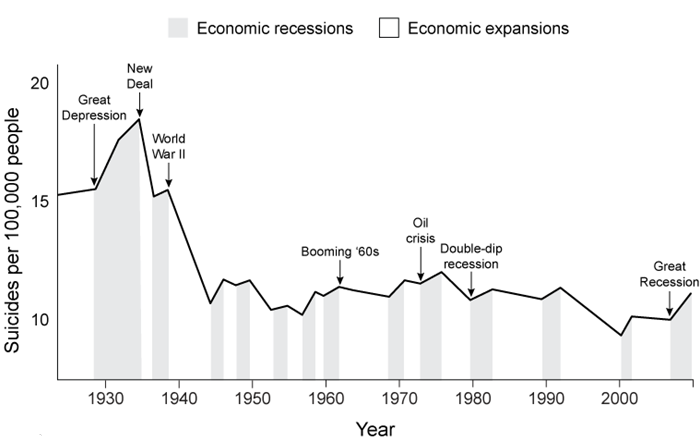 Figure 1 U.S. suicide rates compared to economic trendsFurther analysis of suicide data suggests that for every individual who successfully commits suicide, approximately 25 individuals are unsuccessful in such attempts, costing the United States billions of dollars annually in both lost wages and treatment expense. Although white, middle-aged men are the most likely cohort to successfully commit suicide, women attempt suicide three times more often than men.
-Durkheim describes a type of suicide committed by individuals who feel disconnected from society for not providing them a moral compass. What is the societal condition that occurs when a society does not provide enough moral guidance to individuals?
Figure 1 U.S. suicide rates compared to economic trendsFurther analysis of suicide data suggests that for every individual who successfully commits suicide, approximately 25 individuals are unsuccessful in such attempts, costing the United States billions of dollars annually in both lost wages and treatment expense. Although white, middle-aged men are the most likely cohort to successfully commit suicide, women attempt suicide three times more often than men.
-Durkheim describes a type of suicide committed by individuals who feel disconnected from society for not providing them a moral compass. What is the societal condition that occurs when a society does not provide enough moral guidance to individuals? (Multiple Choice)
4.9/5 (76)
(76) A 34-year-old patient describes a history of conflict-ridden interpersonal relationships. This pattern has been present since late adolescence, occurs across all settings, and has resulted in a history of sporadic employment and tumultuous romantic relationships. The symptoms are not due to a medical condition or the use of a substance. Which psychological diagnosis is most likely in this patient?
(Multiple Choice)
4.9/5 (72)
(72) Passage
During the 1800s, the United States (U.S.) transitioned from a farming society to an industrialized society, which resulted in occupations becoming more specialized and socially labeled as "masculine" or "feminine." Today, the U.S. is experiencing an equally dramatic transition into what is referred to as a knowledge economy, marked by a decline in manufacturing and manual labor occupations, often referred to as "blue-collar" professions (which are dominated by males), and a rise in information, technology, and service sector jobs. Sociologists argue that this has led to shifting roles and expectations for both males and females in the U.S. workforce.As demand for blue-collar occupations has declined in recent decades, demand for "pink-collar" (feminine-typed) occupations has increased, particularly in health care (eg, registered nurses, health aides), but males appear to avoid pink-collar occupations for various reasons. Research indicates that socially defined gender roles may dissuade males from even considering pink-collar professions due to a perception that one's job will conflict with one's male status. Male students-in-training for pink-collar professions (eg, nursing) have a higher rate of attrition than their female classmates, which may be partly due to the unintended messages conveyed by the informal curriculum: that male students do not belong in these professions (eg, a lack of male role models, female-only images in textbooks). Of the males who enter pink-collar professions, many find that they are more quickly promoted into managerial roles (believed to be more appropriately masculine) than their equally qualified female counterparts, a phenomenon known as the glass escalator.Data show that females continue to be underrepresented in many high-paying fields, which are predominantly masculine-typed industries such as aeronautics, engineering, medical surgery, business (executive-level), and computer science/technology. Data also show that within all job categories, even those considered feminine-typed, females are still paid less than their male peers, a phenomenon sociologists call the gender pay (or wage) gap (Figure 1). The gender pay gap persists even when differences in hours worked, job choice, education, and other qualifications are taken into account. Research suggests that mothers earn less than men and women who are not mothers, a phenomenon termed the "motherhood penalty" by sociologists.
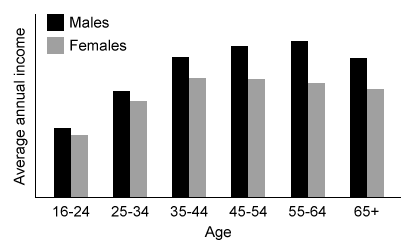 Figure 1 Gender pay gap by age
P. F. Drucker ©1994 The Atlantic Monthly; B. R. MacWilliams, B. Schmidt, and M. R. Bleich ©2013 Wolters Kluwer Health, Inc.
-Which hypothesis regarding pay inequalities and fertility patterns is best supported by information in the passage regarding females in the U.S. workplace? If the age-specific fertility rate for females age 25-29 increases:
Figure 1 Gender pay gap by age
P. F. Drucker ©1994 The Atlantic Monthly; B. R. MacWilliams, B. Schmidt, and M. R. Bleich ©2013 Wolters Kluwer Health, Inc.
-Which hypothesis regarding pay inequalities and fertility patterns is best supported by information in the passage regarding females in the U.S. workplace? If the age-specific fertility rate for females age 25-29 increases: (Multiple Choice)
4.9/5 (77)
(77) Passage
Research suggests that individuals with depression experience dysfunctions in their autobiographical memory. For example, negative autobiographical memories are more easily recalled than positive memories, and memories encoded while experiencing a positive mood are more difficult to access while depressed. In individuals with depression, rumination (repetitive negative thoughts) can also impede autobiographical memory retrieval.Studies have demonstrated that the Method of Loci (MoL), a mnemonic strategy that pairs items to be remembered with well-known visuospatial locations (loci), effectively improves retention and recall over time. Given this previous research, experimenters hypothesized that training individuals with depression in the MoL technique would improve sustained retrieval of their positive autobiographical memories. For this study, 125 individuals between ages 25 and 45 with a current diagnosis of depression were recruited (individuals with co-occurring psychological diagnoses were excluded). Phase 1 screened participants for normal memory function. Participants were given a list of 25 three-letter nonsense words to memorize (eg, LAR, PAS, FUV), and recall was tested immediately (no delay), and again after 20 minutes, one hour, nine hours, 24 hours, 48 hours, and 72 hours. Those participants who demonstrated normal memory function (n = 122) were then randomly assigned to the MoL group (n = 61) or the control group (n = 61) for the next phase.During phase 2, the MoL group was trained to associate features of a positive autobiographical memory (eg, a marriage proposal) with a well-known route (eg, the route from home to work). All salient details of the positive memory were mentally associated with loci. For example, one participant paired the restaurant table where he proposed to his wife with a fire hydrant he passes on his way to work. The control group was not trained using any specific technique. Both groups mentally rehearsed their chosen memory every day for one week. After one week, both groups performed equally well at recalling their selected positive memory. However, when a surprise recollection memory test was performed a month later, the MoL group performed at levels comparable to their first recollection test, while the control group exhibited significantly reduced recollection.
T. Dalgleish, L. Navrady, E. Bird, E. Hill, B. D. Dunn, and A.M. Golden ©2013 Association for Psychological Science; T. Dalgleish and A. Werner-Seidler ©2014 Elsevier
-Which of the following best explains the memory dysfunction described in the first paragraph? For individuals with depression, retrieval of memories encoded while experiencing a positive mood appears to be impeded by:
(Multiple Choice)
4.7/5 (88)
(88) Passage
The diagnosis of a child with a serious disability significantly impacts the child's parents. While positive psychological outcomes are sometimes possible, evidenced by research showing that for some parents a child's disability is eventually viewed as a chance for personal growth, research also indicates that many parents of children with disabilities are at greater risk for poor physical and mental health outcomes. Coping with a child's initial symptoms, providing ongoing care, and dealing with prejudice from others present significant stressors for parents. This stress may also disrupt marriages; results of a meta-analysis showed a modest, increased risk for divorce in parents of children with disabilities. Another line of research has identified significantly higher rates of anxiety and/or depression in parents of children with disabilities. The fact that parental distress often results in poorer outcomes for their children points to a need for evidence-based interventions for parents of children with disabilities.In Study 1, researchers compared the effectiveness of two interventions in reducing depressive symptoms in parents of children with cognitive disabilities. Researchers recruited 30 parents of children with intellectual disorders from the contact list of an affluent community wellness center and randomly assigned them to a meditation (M) group or a humanistic psychotherapy (HP) group. Both groups were led by peer mentors trained in specific interventions who taught and demonstrated the techniques to the participants during the weekly sessions. Participants completed self-report measures of depressive symptoms at baseline (pre-test), 4 weeks into the intervention (midpoint), at the end of the 8-week program (post-test 1), and 4 weeks after the program ended (post-test 2). The findings are shown in Figure 1.
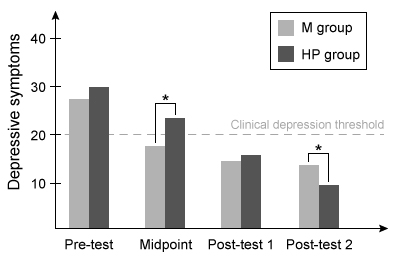 Figure 1 Depressive symptoms at pre-test, midpoint, post-test 1, and post-test 2 (Note: * indicates p < .05.)In Study 2, researchers examined the impact of coping strategies on distress in 80 parents of children with muscular dystrophy. Participants were asked to think of a recent stressful, threatening event and report whether they had classified their future expectancy for the event as "changeable" (situation is able to be modified) or "unchangeable" (situation is not able to be modified). They were then asked whether they attempted to cope with the event primarily by regulating their emotions (emotion-focused) or by modifying aspects of the situation (problem-focused), such as seeking help from others. Lastly, they were surveyed about their level of distress after they tried to cope with the stressor. Figure 2 illustrates the findings.
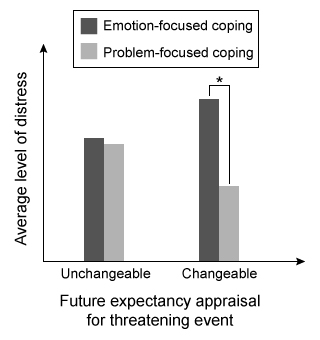 Figure 2 Average level of distress by coping strategy (emotion-focused vs. problem-focused) and future expectancy appraisal for the threatening event (Note: * indicates p < .05.)
-A researcher criticizes Study 1, claiming that nonrepresentative sampling led to results that may not apply to many families of children with disabilities. This criticism is most concerned with:
Figure 1 Depressive symptoms at pre-test, midpoint, post-test 1, and post-test 2 (Note: * indicates p < .05.)In Study 2, researchers examined the impact of coping strategies on distress in 80 parents of children with muscular dystrophy. Participants were asked to think of a recent stressful, threatening event and report whether they had classified their future expectancy for the event as "changeable" (situation is able to be modified) or "unchangeable" (situation is not able to be modified). They were then asked whether they attempted to cope with the event primarily by regulating their emotions (emotion-focused) or by modifying aspects of the situation (problem-focused), such as seeking help from others. Lastly, they were surveyed about their level of distress after they tried to cope with the stressor. Figure 2 illustrates the findings.
Figure 2 Average level of distress by coping strategy (emotion-focused vs. problem-focused) and future expectancy appraisal for the threatening event (Note: * indicates p < .05.)
-A researcher criticizes Study 1, claiming that nonrepresentative sampling led to results that may not apply to many families of children with disabilities. This criticism is most concerned with: (Multiple Choice)
4.9/5 (66)
(66) Passage
Research suggests that cognitive changes occur with age. Though dementia is common, occurring in about 14% of individuals age 71 and older and in almost 34% of individuals 90 and older, a majority of older adults exhibit some degree of "normal" cognitive decline. The following studies were conducted on 605 older adults (mean age = 78.2) who did not show any signs of dementia and 590 younger adult participants (mean age = 28.8).Cognition studiesParticipants were asked to solve five puzzles designed to test their ability to apply new information, reason inductively and deductively, and use logic. Participants were also asked to complete a 20-item vocabulary and grammar test. The older adults performed significantly worse than the younger adults on the puzzles, but there was no significant difference between the groups on the vocabulary/grammar test.Focus studiesWhen asked to read a short story and then answer a series of questions assessing comprehension (focused condition), older adults performed equally well as the younger adults. However, when asked to read a similar story while wearing headphones playing another story that was to be ignored (distraction condition), older adults performed worse than younger adults when answering questions assessing comprehension of the story they read.Memory studiesWhen asked to memorize 30 neutral items (eg, a key, a pencil, a book), the images of which were presented serially, younger adults performed significantly better when asked to list the items immediately after seeing them and when asked to list the items after performing a distraction task. In a second trial, both groups were serially presented with 30 pictures of faces showing positive, negative, or neutral expressions. The groups were later asked to identify these faces among a set of 100. Results are shown in Figure 1.
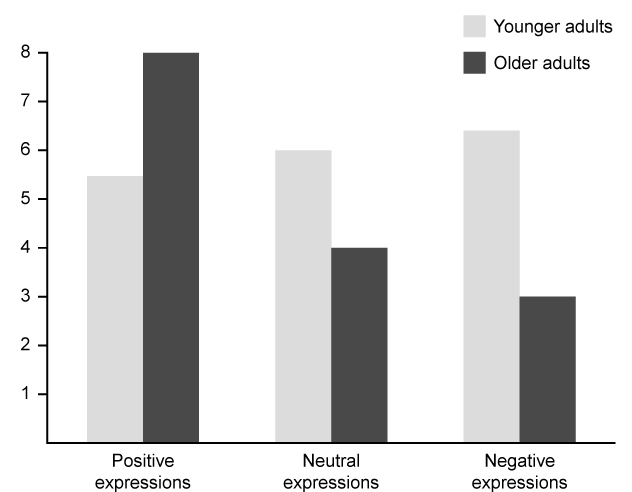 Figure 1 Average number of correctly identified faces for older and younger adult groups
-Which conclusion is best supported by the results of the memory studies?
Figure 1 Average number of correctly identified faces for older and younger adult groups
-Which conclusion is best supported by the results of the memory studies? (Multiple Choice)
4.8/5 (75)
(75) Passage
Research suggests that cognitive changes occur with age. Though dementia is common, occurring in about 14% of individuals age 71 and older and in almost 34% of individuals 90 and older, a majority of older adults exhibit some degree of "normal" cognitive decline. The following studies were conducted on 605 older adults (mean age = 78.2) who did not show any signs of dementia and 590 younger adult participants (mean age = 28.8).Cognition studiesParticipants were asked to solve five puzzles designed to test their ability to apply new information, reason inductively and deductively, and use logic. Participants were also asked to complete a 20-item vocabulary and grammar test. The older adults performed significantly worse than the younger adults on the puzzles, but there was no significant difference between the groups on the vocabulary/grammar test.Focus studiesWhen asked to read a short story and then answer a series of questions assessing comprehension (focused condition), older adults performed equally well as the younger adults. However, when asked to read a similar story while wearing headphones playing another story that was to be ignored (distraction condition), older adults performed worse than younger adults when answering questions assessing comprehension of the story they read.Memory studiesWhen asked to memorize 30 neutral items (eg, a key, a pencil, a book), the images of which were presented serially, younger adults performed significantly better when asked to list the items immediately after seeing them and when asked to list the items after performing a distraction task. In a second trial, both groups were serially presented with 30 pictures of faces showing positive, negative, or neutral expressions. The groups were later asked to identify these faces among a set of 100. Results are shown in Figure 1.
Figure 1 Average number of correctly identified faces for older and younger adult groups
-If the researchers in the third study wanted to test the influence of aging on context-dependent memory effects, they could:
Figure 1 Average number of correctly identified faces for older and younger adult groups
-If the researchers in the third study wanted to test the influence of aging on context-dependent memory effects, they could: (Multiple Choice)
4.8/5 (81)
(81) Passage
In 2010, the United States (U.S.) had an incarcerated population of about 1.6 million, up from about 300,000 in 1980. Some experts suggest that the exponential rise in the inmate population has been largely due to the "war on drugs," initiated in the 1980s, which led to more aggressive laws against drug use and distribution. Increases in arrests and imprisonment, however, have not affected all segments of the U.S. population equally. Although the total population was about 50% male in 2010, the prison population was about 93% male and reflective of additional racial and ethnic disparities (Figure 1).
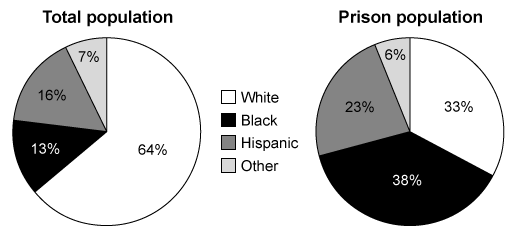 Figure 1 Total population and prison population by race and ethnicity in the United States in 2010Research suggests that black and white people use drugs at similar rates, but black people are more likely to end up in the criminal justice system for drug use. This overrepresentation of black people in the prison population can be partly explained by discrimination at the individual and institutional levels. For example, if police departments focus their resources in predominantly black neighborhoods based on the assumption that black individuals are more likely to commit a crime, then police officers (who may similarly believe black people commit more crimes than white people) are more likely to witness black people committing crimes, thereby confirming the belief. Discrimination operates at every level of the criminal justice system: Black people are more likely than white people to be arrested, prosecuted, and convicted for drug use and receive, on average, longer sentences.High rates of recidivism also perpetuate the demographic disparity of the prison population. It is estimated that about 75% of released prisoners will be rearrested within five years. Experts suggest that, once convicted of a felony, individuals find that their status as a former felon (or "ex-convict") dominates all their other statuses, making it difficult to reintegrate into society. The social stigma of criminality makes it hard for ex-convicts to secure employment, which often leads to further crime. Ex-convicts are also more closely monitored by police and far more likely to be arrested and convicted for minor offenses.
-Recidivism as discussed in the final paragraph can best be explained by which of the following theories?
Figure 1 Total population and prison population by race and ethnicity in the United States in 2010Research suggests that black and white people use drugs at similar rates, but black people are more likely to end up in the criminal justice system for drug use. This overrepresentation of black people in the prison population can be partly explained by discrimination at the individual and institutional levels. For example, if police departments focus their resources in predominantly black neighborhoods based on the assumption that black individuals are more likely to commit a crime, then police officers (who may similarly believe black people commit more crimes than white people) are more likely to witness black people committing crimes, thereby confirming the belief. Discrimination operates at every level of the criminal justice system: Black people are more likely than white people to be arrested, prosecuted, and convicted for drug use and receive, on average, longer sentences.High rates of recidivism also perpetuate the demographic disparity of the prison population. It is estimated that about 75% of released prisoners will be rearrested within five years. Experts suggest that, once convicted of a felony, individuals find that their status as a former felon (or "ex-convict") dominates all their other statuses, making it difficult to reintegrate into society. The social stigma of criminality makes it hard for ex-convicts to secure employment, which often leads to further crime. Ex-convicts are also more closely monitored by police and far more likely to be arrested and convicted for minor offenses.
-Recidivism as discussed in the final paragraph can best be explained by which of the following theories? (Multiple Choice)
4.8/5 (63)
(63) Passage
For decades psychologists have known that people tend to execute tasks differently when alone compared to when in the presence of other people.In Study 1, researchers analyzed records of bicycle racers' times both during competitions and when racing alone against the clock. They found that the fastest times were recorded during competitions, particularly larger races with over 100 cyclists. This finding was initially attributed to the competitive nature of the races, but later studies suggest performance improves when in the presence of other people, even outside of competition.In Study 2, researchers conducted an experiment based on the idea that the mere presence of others impacts performance. This study involved a simple task (ie, getting dressed), which was performed either alone or with an audience. This task was chosen because it was familiar and routine, without clear standards of good or bad performance. Furthermore, the participants had no idea that this task was of interest to the experimenters.Forty-five male undergraduate students were recruited for Study 2. The researchers informed the participants that they were required to remove their socks and shoes and replace them with unfamiliar ones and then put on a lab coat, surgical mask, and protective eye glasses (hard task). After a 10-minute wait, the participants were informed that the study was called off because the remaining participants failed to arrive and they could put back on their familiar clothes (easy task).All participants in Study 2 were randomly assigned to one of three experimental conditions. In the audience condition, each participant performed both tasks in a room with an attentive confederate watching. In the incidental audience condition, a confederate sat facing away from each participant while the participant performed both tasks. The third group of participants performed both tasks alone (control condition). Participants' behavior was observed and timed by an inconspicuous researcher. It was found that, compared to controls, participants performed more quickly under both experimental conditions when putting back on their familiar clothing, and performed more slowly when dressing in unfamiliar clothing.
Adapted from H. Markus ©1977 Elsevier B.V.
-Which of the following best explains the role of social facilitation in accounting for the results of Study 2?
(Multiple Choice)
4.9/5 (65)
(65) Neighborhoods A and B are next to each other in a large urban area. If Neighborhood A is more gentrified than Neighborhood B, which of the following is most likely?
(Multiple Choice)
4.8/5 (67)
(67) Which of the following symptoms is LEAST characteristic of a dissociative disorder?
(Multiple Choice)
4.8/5 (63)
(63) Passage
Lucid dreaming occurs when a person becomes consciously aware of a dream and uses executive decision-making skills to critically analyze the dream environment. Lucid dreamers are thus able to control certain aspects of their dreams, an ability that may occur intentionally, through practice, or unintentionally, usually after having noticed something bizarre or unrealistic in the dream. A lucid dreamer might choose to experience the sensation of flying, explore a custom-designed landscape, carry out a predetermined task, or practice a skill. Estimates suggest that about half the population has had a lucid dream, and about 10%-20% of people are considered frequent lucid dreamers experiencing such dreams regularly (at least once a month).In one study, researchers asked participants to perform a difficult visuomotor task that involved throwing an object through a small moving target. Participants were organized into three groups, one group of frequent lucid dreamers and two groups of nonlucid dreamers. All three groups attempted the visuomotor task at midday in the research lab, before (pretest) and after (posttest) a single night's sleep at home. Lucid dreamers were asked to only practice the visuomotor task overnight during their lucid dream ("lucid practice" group). One group of nonlucid dreamers practiced the task in the lab, right after the pretest ("waking practice" group), and another group of nonlucid dreamers performed the pretest and posttest without practicing between the tests ("no practice" group). The average improvement of hits (the number of times each participant successfully threw the object through the target) from pretest to posttest for each group is shown in Figure 1.
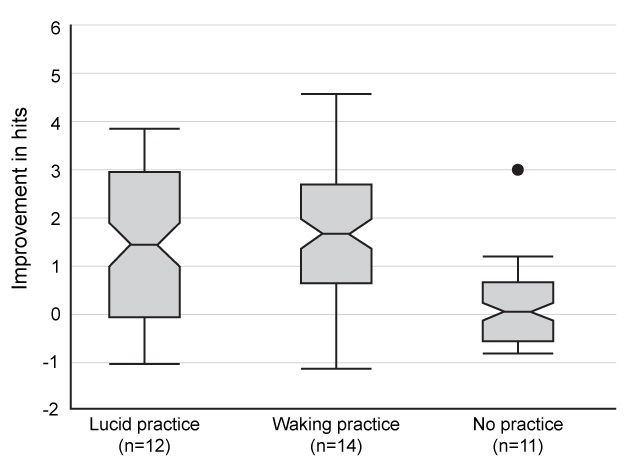 Figure 1 Median improvement in total hits for each group (Note: The notches represent the 95% confidence interval for the median.)The researchers proposed that a follow-up study be devised and conducted to control for any potential variability in each participant's sleep at home. The researchers suggested using the same study procedure except participants would sleep overnight for five consecutive nights in a sleep lab, where the timing and duration of sleep would be standardized. In order to eliminate any potential "first-night effects" (an initial reduction in sleep quality when sleeping in an unfamiliar environment), researchers proposed that pretest and posttest measures each be taken before and after the third, fourth, and fifth night's sleep.
-Compared with the study described in the second paragraph, the proposed follow-up study should demonstrate:
Figure 1 Median improvement in total hits for each group (Note: The notches represent the 95% confidence interval for the median.)The researchers proposed that a follow-up study be devised and conducted to control for any potential variability in each participant's sleep at home. The researchers suggested using the same study procedure except participants would sleep overnight for five consecutive nights in a sleep lab, where the timing and duration of sleep would be standardized. In order to eliminate any potential "first-night effects" (an initial reduction in sleep quality when sleeping in an unfamiliar environment), researchers proposed that pretest and posttest measures each be taken before and after the third, fourth, and fifth night's sleep.
-Compared with the study described in the second paragraph, the proposed follow-up study should demonstrate: (Multiple Choice)
5.0/5 (78)
(78) Passage
Research suggests that individuals with depression experience dysfunctions in their autobiographical memory. For example, negative autobiographical memories are more easily recalled than positive memories, and memories encoded while experiencing a positive mood are more difficult to access while depressed. In individuals with depression, rumination (repetitive negative thoughts) can also impede autobiographical memory retrieval.Studies have demonstrated that the Method of Loci (MoL), a mnemonic strategy that pairs items to be remembered with well-known visuospatial locations (loci), effectively improves retention and recall over time. Given this previous research, experimenters hypothesized that training individuals with depression in the MoL technique would improve sustained retrieval of their positive autobiographical memories. For this study, 125 individuals between ages 25 and 45 with a current diagnosis of depression were recruited (individuals with co-occurring psychological diagnoses were excluded). Phase 1 screened participants for normal memory function. Participants were given a list of 25 three-letter nonsense words to memorize (eg, LAR, PAS, FUV), and recall was tested immediately (no delay), and again after 20 minutes, one hour, nine hours, 24 hours, 48 hours, and 72 hours. Those participants who demonstrated normal memory function (n = 122) were then randomly assigned to the MoL group (n = 61) or the control group (n = 61) for the next phase.During phase 2, the MoL group was trained to associate features of a positive autobiographical memory (eg, a marriage proposal) with a well-known route (eg, the route from home to work). All salient details of the positive memory were mentally associated with loci. For example, one participant paired the restaurant table where he proposed to his wife with a fire hydrant he passes on his way to work. The control group was not trained using any specific technique. Both groups mentally rehearsed their chosen memory every day for one week. After one week, both groups performed equally well at recalling their selected positive memory. However, when a surprise recollection memory test was performed a month later, the MoL group performed at levels comparable to their first recollection test, while the control group exhibited significantly reduced recollection.
T. Dalgleish, L. Navrady, E. Bird, E. Hill, B. D. Dunn, and A.M. Golden ©2013 Association for Psychological Science; T. Dalgleish and A. Werner-Seidler ©2014 Elsevier
-Which of the following hypothetical Phase 1 results best illustrates normal memory decay?
(Multiple Choice)
4.8/5 (89)
(89) Passage
Almost 70% of Americans today are either overweight or obese, but only 34% think they weigh too much. This is in contrast to 1990, when 54% of Americans were overweight or obese and 46% reported being at least somewhat overweight. In other words, the gap between what we weigh and what we think we weigh is getting bigger.Epidemiologists argue that this discrepancy can be partly explained by the widespread resetting of norms regarding "normal weight" and "obesity." As close friends, coworkers, and family members gain weight, one's concept of what a body of acceptable weight looks like becomes modified. What was once considered overweight is now considered the norm, if only because it is so common (Figure 1).
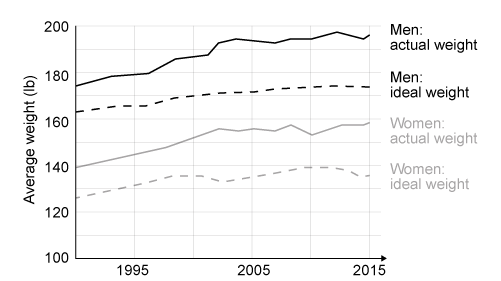 Figure 1 Actual vs. ideal weight (in pounds) for Americans, 1990-2015This sheds new light on recent efforts to stop the obesity epidemic in America. Experts have long contended that awareness efforts don't work because overweight individuals are already aware that they are overweight and that obesity causes health problems. These latest data suggest that many overweight Americans don't even realize that they are overweight. Epidemiologists are now suggesting that a more successful strategy to get Americans to lose weight might be to first succeed at convincing them that being overweight is not normal.
-Which of the following conclusions is supported by Figure 1?
Figure 1 Actual vs. ideal weight (in pounds) for Americans, 1990-2015This sheds new light on recent efforts to stop the obesity epidemic in America. Experts have long contended that awareness efforts don't work because overweight individuals are already aware that they are overweight and that obesity causes health problems. These latest data suggest that many overweight Americans don't even realize that they are overweight. Epidemiologists are now suggesting that a more successful strategy to get Americans to lose weight might be to first succeed at convincing them that being overweight is not normal.
-Which of the following conclusions is supported by Figure 1? (Multiple Choice)
4.7/5 (81)
(81) Passage
Korsakoff syndrome (KS) is caused by a thiamin (vitamin B1) deficiency that often results from chronic alcohol consumption. If KS is diagnosed during its earliest stages, its course may be reversed with thiamin supplements; otherwise, it progresses into a permanent type of dementia that includes severe cognitive dysfunction and memory loss. Alzheimer disease (AD) is associated with a different type of dementia that worsens over time, eventually causing memory loss, cognitive dysfunction, and severe brain atrophy.In one study, KS and AD subjects were assessed using the Corsi block-tapping task, which measures nonverbal memory. The experiment consisted of 10 KS subjects, 10 AD subjects, and 10 healthy control subjects. The control group was matched by age, gender, and premorbid IQ (intelligence quotient preceding the occurrence of symptoms) to the KS and AD groups.
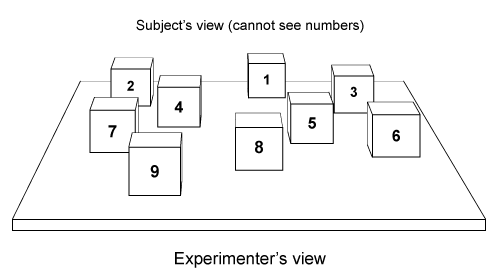 Figure 1 Corsi block-tapping taskThe Corsi block-tapping task consists of nine wooden blocks placed randomly on a board (Figure 1). To assess subjects' nonverbal memory, the experimenter touched four numbered blocks (numbers were visible only to the experimenter) in a specific pattern. Each subject was then asked to touch the same four blocks in the same sequence, either immediately or after a delay of 5-25 seconds. Subjects were required to perform a distractor task during the delay period. For the distractor task, subjects were asked to watch and reproduce a finger-tapping sequence first demonstrated by the experimenter. Experimenters would touch a finger on their right hand to a finger on their left hand according to a specific sequence (eg, index finger to ring finger, then pinky finger to middle finger) and the subjects would try to do the same.Results indicated that compared to controls, subjects with AD and KS were significantly impaired on the delayed memory task, although all subjects showed a significantly greater number of errors with increases in the delay interval.
-Based on study results and the legend below, which of the following graphs best displays the mean and 95% confidence intervals for accuracy scores for each group?
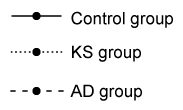
Figure 1 Corsi block-tapping taskThe Corsi block-tapping task consists of nine wooden blocks placed randomly on a board (Figure 1). To assess subjects' nonverbal memory, the experimenter touched four numbered blocks (numbers were visible only to the experimenter) in a specific pattern. Each subject was then asked to touch the same four blocks in the same sequence, either immediately or after a delay of 5-25 seconds. Subjects were required to perform a distractor task during the delay period. For the distractor task, subjects were asked to watch and reproduce a finger-tapping sequence first demonstrated by the experimenter. Experimenters would touch a finger on their right hand to a finger on their left hand according to a specific sequence (eg, index finger to ring finger, then pinky finger to middle finger) and the subjects would try to do the same.Results indicated that compared to controls, subjects with AD and KS were significantly impaired on the delayed memory task, although all subjects showed a significantly greater number of errors with increases in the delay interval.
-Based on study results and the legend below, which of the following graphs best displays the mean and 95% confidence intervals for accuracy scores for each group? (Multiple Choice)
4.8/5 (76)
(76) 
Filters
- Essay(0)
- Multiple Choice(0)
- Short Answer(0)
- True False(0)
- Matching(0)