Multiple Choice
Passage
Research suggests that cognitive changes occur with age. Though dementia is common, occurring in about 14% of individuals age 71 and older and in almost 34% of individuals 90 and older, a majority of older adults exhibit some degree of "normal" cognitive decline. The following studies were conducted on 605 older adults (mean age = 78.2) who did not show any signs of dementia and 590 younger adult participants (mean age = 28.8) .Cognition studiesParticipants were asked to solve five puzzles designed to test their ability to apply new information, reason inductively and deductively, and use logic. Participants were also asked to complete a 20-item vocabulary and grammar test. The older adults performed significantly worse than the younger adults on the puzzles, but there was no significant difference between the groups on the vocabulary/grammar test.Focus studiesWhen asked to read a short story and then answer a series of questions assessing comprehension (focused condition) , older adults performed equally well as the younger adults. However, when asked to read a similar story while wearing headphones playing another story that was to be ignored (distraction condition) , older adults performed worse than younger adults when answering questions assessing comprehension of the story they read.Memory studiesWhen asked to memorize 30 neutral items (eg, a key, a pencil, a book) , the images of which were presented serially, younger adults performed significantly better when asked to list the items immediately after seeing them and when asked to list the items after performing a distraction task. In a second trial, both groups were serially presented with 30 pictures of faces showing positive, negative, or neutral expressions. The groups were later asked to identify these faces among a set of 100. Results are shown in Figure 1.
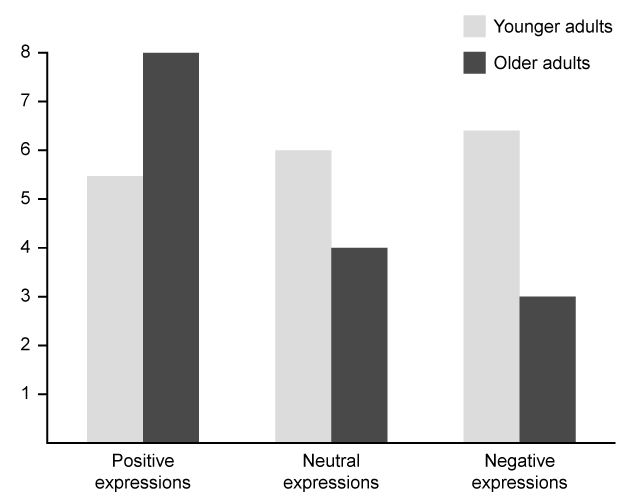 Figure 1 Average number of correctly identified faces for older and younger adult groups
-If the researchers in the third study wanted to test the influence of aging on context-dependent memory effects, they could:
A) show the faces to the older adult participants in one room, then move half of these participants to a new room to identify faces.
B) show the faces to all participants in one room, then move half of the participants in each group to a new room to identify faces.
C) provide background information about the faces to half of the older adult participants while faces are being memorized.
D) provide background information about the faces to half of participants in each age group while faces are being memorized.
Correct Answer:

Verified
Correct Answer:
Verified
Q207: A 34-year-old patient describes a history of
Q208: Passage<br>During the 1800s, the United States (U.S.)
Q209: Passage<br>Research suggests that individuals with depression experience
Q210: Passage<br>The diagnosis of a child with a
Q211: Passage<br>Research suggests that cognitive changes occur with
Q213: Passage<br>In 2010, the United States (U.S.) had
Q214: Passage<br>For decades psychologists have known that people
Q215: Neighborhoods A and B are next to
Q216: Which of the following symptoms is LEAST
Q217: Passage<br>Lucid dreaming occurs when a person becomes