Multiple Choice
Passage
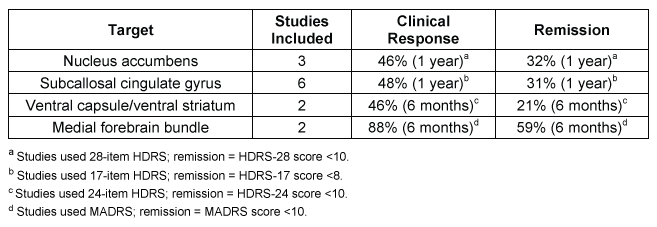
Major depression is a mood disorder that affects nearly 7% of the American population and is the most common cause of disability worldwide. Standard treatment typically involves antidepressant medication alone, although a combination of antidepressant medication and psychological treatment, such as psychotherapy or cognitive-behavioral therapy, is often more effective. However, because depression has genetic, environmental, and psychological contributing factors, treatment can be challenging. Approximately 10% of those suffering from depression have treatment-resistant depression (TRD) that does not respond to standard treatment.A number of treatment options for those with TRD target the functioning of the nervous system. Deep-brain stimulation (DBS) , which is used to treat Parkinson disease, has also been investigated as a treatment for TRD. DBS involves implanting a device in the brain that sends electrical impulses to a specific area. Although the mechanism by which DBS alleviates depressive symptoms is unclear, neurostimulation provided by DBS is thought to disrupt dysfunctional patterns of electrical activity in local areas and connected brain regions.A meta-analysis reviewed the data from several studies that used different brain regions as DBS targets in the treatment of TRD. Table 1 shows the percentage of TRD patients who underwent DBS and showed clinical responsiveness and remission of depression. Clinical response was defined as a 50% reduction in scores on a measure of depression. Various scales were used in the studies, including different versions of the Hamilton Depression Rating Scale (HDRS) and Montgomery-Asberg Depression Rating Scale (MADRS) . Remission of depression was defined as a score that fell below a predetermined threshold.Table 1 Percentage of TRD Patients Who Showed Clinical Response and Remission With DBS Treatment
-Stimulation of the nucleus accumbens would be expected to alleviate which of the following symptoms of depression?
A) Anhedonia
B) Difficulty concentrating
C) Fatigue
D) Insomnia
Correct Answer:

Verified
Correct Answer:
Verified
Q179: An employee complies with a supervisor's request
Q180: Passage<br>People tend to believe that they are
Q181: Which of the following is the LEAST
Q182: Passage<br>Until recently, deviance has generally been conceptualized
Q183: Passage<br>Twenty-two adults (mean age 49.5) were recruited
Q185: Passage<br>Before memories have been consolidated they are
Q186: Passage<br>The highly addictive nature of cigarettes can
Q187: Which of the following best illustrates a
Q188: Passage<br>The highly addictive nature of cigarettes can
Q189: Passage<br>People tend to believe that they are