



 Chat with AI
Exam 1: Biology and the Tree of Life

Exam 1: Biology and the Tree of Life40 Questions
Exam 2: Water and Carbon: the Chemical Basis of Life50 Questions
Exam 3: Protein Structure and Function47 Questions
Exam 4: Nucleic Acids and the Rna World33 Questions
Exam 5: An Introduction to Carbohydrates30 Questions
Exam 6: Lipids, membranes, and the First Cells47 Questions
Exam 7: Inside the Cell28 Questions
Exam 8: Cell-Cell Interactions27 Questions
Exam 9: Cellular Respiration and Fermentation27 Questions
Exam 10: Photosynthesis32 Questions
Exam 11: The Cell Cycle31 Questions
Exam 12: Meiosis34 Questions
Exam 13: Mendel and the Gene32 Questions
Exam 14: Dna and the Gene: Synthesis and Repair37 Questions
Exam 15: How Genes Work34 Questions
Exam 16: Transcription and Translation38 Questions
Exam 17: Control of Gene Expression in Bacteria31 Questions
Exam 18: Control of Gene Expression in Eukaryotes37 Questions
Exam 19: Analyzing and Engineering Genes40 Questions
Exam 20: Genomics38 Questions
Exam 21: Principles of Development25 Questions
Exam 22: An Introduction to Animal Development22 Questions
Exam 23: An Introduction to Plant Development21 Questions
Exam 24: Evolution by Natural Selection32 Questions
Exam 25: Evolutionary Processes32 Questions
Exam 26: Speciation33 Questions
Exam 27: Phylogenies and the History of Life38 Questions
Exam 28: Bacteria and Archaea38 Questions
Exam 29: Protists34 Questions
Exam 30: Green Plants49 Questions
Exam 31: Fungi37 Questions
Exam 32: An Introduction to Animals38 Questions
Exam 33: Protostome Animals38 Questions
Exam 34: Deuterostome Animals46 Questions
Exam 35: Viruses31 Questions
Exam 36: Plant Form and Function39 Questions
Exam 37: Water and Sugar Transport in Plants42 Questions
Exam 38: Plant Nutrition36 Questions
Exam 39: Plant Sensory Systems, signals, and Responses66 Questions
Exam 40: Plant Reproduction41 Questions
Exam 41: Animal Form and Function29 Questions
Exam 42: Water and Electrolyte Balance in Animals38 Questions
Exam 43: Animal Nutrition37 Questions
Exam 44: Gas Exchange and Circulation37 Questions
Exam 45: Electrical Signals in Animals33 Questions
Exam 46: Animal Sensory Systems and Movement36 Questions
Exam 47: Chemical Signals in Animals33 Questions
Exam 48: Animal Reproduction34 Questions
Exam 49: The Immune System in Animals32 Questions
Exam 50: An Introduction to Ecology38 Questions
Exam 51: Behavioral Ecology37 Questions
Exam 52: Population Ecology46 Questions
Exam 53: Community Ecology39 Questions
Exam 54: Ecosystems41 Questions
Exam 55: Biodiversity and Conservation Biology39 Questions
Select questions type


Agrobacterium is a type of bacteria that infects plants and causes them to form tumors.You determine that tumor formation requires a huge amount of the plant's energy for tissue formation.How might this change the number of offspring a plant produces,and what is the most likely explanation for this change?
(Multiple Choice)
4.8/5  (79)
(79) Use the following information when answering the corresponding question(s).
In 1668 Francesco Redi did a series of experiments on spontaneous generation.He began by putting similar pieces of meat into eight identical jars.Four jars were left open to the air,and four were sealed.He then did the same experiment with one variation: Instead of sealing four of the jars completely,he covered them with gauze (the gauze will exclude the flies while allowing the meat to be exposed to air).In both experiments,he monitored the jars and recorded whether or not maggots (young flies)appeared in the meat.
-Refer to the paragraph on Redi's experiments.In both experiments,flies appeared in all of the open jars and only in the open jars.Which one of the following statements is correct?
(Multiple Choice)
4.7/5 (72)
(72) For many years,no one bothered to test the food-competition hypothesis for why giraffes have long necks.Why?
(Multiple Choice)
4.7/5 (81)
(81) One aspect of Darwin's theory of natural selection is that adaptations not useful to fitness are lost faster if they have a greater cost.With this in mind,which of the following explanation is most likely true?
(Multiple Choice)
4.9/5 (66)
(66) 
Recall the giraffe experiment that suggested longer necks gave a reproductive advantage to males.Which of the following could counteract or negate this advantage?
(Multiple Choice)
4.9/5 (85)
(85) Use the following information when answering the corresponding question(s).
In 1668 Francesco Redi did a series of experiments on spontaneous generation.He began by putting similar pieces of meat into eight identical jars.Four jars were left open to the air,and four were sealed.He then did the same experiment with one variation: Instead of sealing four of the jars completely,he covered them with gauze (the gauze will exclude the flies while allowing the meat to be exposed to air).In both experiments,he monitored the jars and recorded whether or not maggots (young flies)appeared in the meat.
-Refer to the paragraph on Redi's experiments.What hypothesis was being tested in the initial experiment with open versus sealed jars?
(Multiple Choice)
4.9/5 (77)
(77) Recall Pasteur's experiment on spontaneous generation.If he had just warmed the nutrient-rich broth,rather than boiled it,what would have been the likely outcome of his experiment?
(Multiple Choice)
4.9/5 (81)
(81) Over the past several decades,natural selection has caused populations of Staphylococcus aureus (an infectious wound bacterium)to evolve resistance to most antibiotics.If antibiotic use were stopped,what would you predict would happen to these S.aureus populations?
(Multiple Choice)
4.8/5 (78)
(78) The cow Bos primigenius (which is bred for meat and milk)has a smaller brain and larger eyes than closely related wild species of ungulates.These traits most likely arose by _____.
(Multiple Choice)
4.8/5 (68)
(68) A friend of yours calls to say that his car would not start this morning.He asks for your help.You say that you think the battery must be dead,and that if so,then jump-starting the car from a good battery will solve the problem.In doing so,you are _____.
(Multiple Choice)
4.7/5 (76)
(76) Algae in the genus Caulerpa typically grow to a length of over half a meter and have structures similar to stems,leaves,and roots.Reproduction occurs when adults produce sperm and eggs that fuse to form offspring.Each adult Caulerpa consists of just a single cell,however.Which of the following statements is true?
(Multiple Choice)
4.9/5 (83)
(83) Why did the five-kingdom system of classification fall out of favor?
(Multiple Choice)
4.7/5 (85)
(85) Recall the experiment on ant navigation.What parameters would have to be held constant for the test group of 75 ants in order to run a controlled experiment?
(Multiple Choice)
4.8/5 (79)
(79) Louis Pasteur's experiment had a good design because _____.
(Multiple Choice)
4.7/5 (88)
(88) Which of the following would not be a good reason for studying rRNA to understand the major branches in the evolutionary history of life?
(Multiple Choice)
4.7/5 (80)
(80) Your colleague proposes to test the mechanism of ant navigation by placing a food source 7 m from the nest.She will then pick up the ants from the nest and move them 4 meters from the nest (3 m from the food source).Based on the previous data,when do you expect the ants to start searching for their nest on their return trip?
(Multiple Choice)
4.7/5 (68)
(68) Both tuna (fish)and dolphins (mammals)have a streamlined body shape and large tail fins that they use to move through the water.Many other anatomical and molecular data indicate,however,that tuna and dolphins are not closely related from an evolutionary perspective.The latter data suggest that _____.
(Multiple Choice)
4.8/5 (81)
(81) Current understanding of the evolutionary relationships among organisms _____.
(Multiple Choice)
5.0/5 (68)
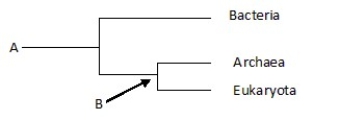
(68) 
Filters
- Essay(0)
- Multiple Choice(0)
- Short Answer(0)
- True False(0)
- Matching(0)