



 Chat with AI
Exam 50: Behavioural Ecology

Exam 1: Biology and the Tree of Life35 Questions
Exam 2: Water and Carbon: the Chemical Basis of Life53 Questions
Exam 3: Protein Structure and Function40 Questions
Exam 4: Nucleic Acids and the Rna World40 Questions
Exam 5: An Introduction to Carbohydrates42 Questions
Exam 6: Lipids, Membranes, and the First Cells53 Questions
Exam 7: Inside the Cell41 Questions
Exam 8: Energy and Enzymes59 Questions
Exam 9: Cellular Respiration and Fermentation43 Questions
Exam 10: Photosynthesis41 Questions
Exam 11: Cellcell Interactions38 Questions
Exam 12: The Cell Cycle39 Questions
Exam 13: Meiosis40 Questions
Exam 14: Mendel and the Gene47 Questions
Exam 15: Dna and the Gene: Synthesis and Repair39 Questions
Exam 16: How Genes Work39 Questions
Exam 17: Transcription, Rna Processing, and Translation37 Questions
Exam 18: Control of Gene Expression in Bacteria38 Questions
Exam 19: Control of Gene Expression in Eukaryotes40 Questions
Exam 20: The Molecular Revolution: Biotechnology and Beyond39 Questions
Exam 21: Gene Structure and Development39 Questions
Exam 22: Evolution by Natural Selection42 Questions
Exam 23: Evolutionary Processes48 Questions
Exam 24: Speciation40 Questions
Exam 25: Phylogenies and the History of Life37 Questions
Exam 26: Bacteria and Archaea38 Questions
Exam 27: Protists36 Questions
Exam 28: Green Algae and Land Plants54 Questions
Exam 29: Fungi40 Questions
Exam 30: An Introduction to Animals42 Questions
Exam 31: Protostome Animals38 Questions
Exam 32: Deuterostome Animals43 Questions
Exam 33: Viruses35 Questions
Exam 34: Plant Form and Function39 Questions
Exam 35: Water and Sugar Transport in Plants42 Questions
Exam 36: Plant Nutrition37 Questions
Exam 37: Plant Sensory Systems, Signals, and Responses64 Questions
Exam 38: Plant Reproduction and Development44 Questions
Exam 39: Animal Form and Function37 Questions
Exam 40: Water and Electrolyte Balance in Animals41 Questions
Exam 41: Animal Nutrition43 Questions
Exam 42: Gas Exchange and Circulation46 Questions
Exam 43: Animal Nervous Systems40 Questions
Exam 44: Animal Sensory Systems43 Questions
Exam 45: Animal Movement42 Questions
Exam 46: Chemical Signals in Animals38 Questions
Exam 47: Animal Reproduction and Development39 Questions
Exam 48: The Immune System in Animals38 Questions
Exam 49: An Introduction to Ecology40 Questions
Exam 50: Behavioural Ecology39 Questions
Exam 51: Population Ecology49 Questions
Exam 52: Community Ecology38 Questions
Exam 53: Ecosystems and Global Ecology41 Questions
Exam 54: Biodiversity and Conservation Biology38 Questions
Select questions type


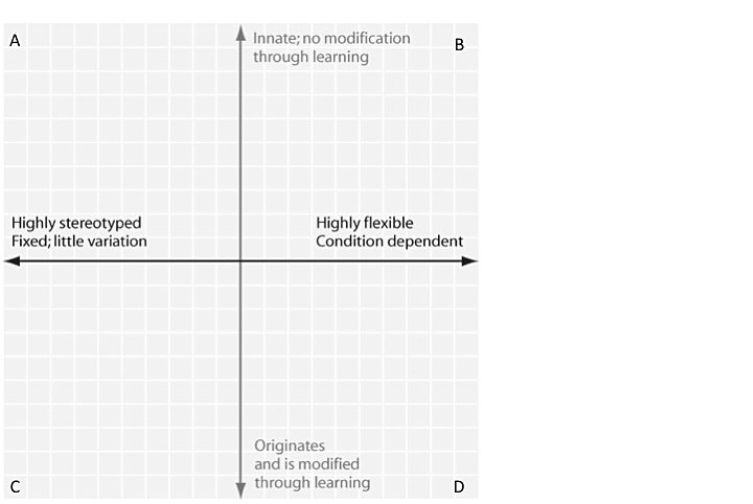 Figure 50.1
-In Figure 50.1, in which quadrant would the egg- rolling behaviour of a goose be plotted?
Figure 50.1
-In Figure 50.1, in which quadrant would the egg- rolling behaviour of a goose be plotted? (Multiple Choice)
4.9/5  (68)
(68) A lizard's bobbing dewlap a colourful flap of skin hanging from an Anolis lizard's throat) is an example of a
(Multiple Choice)
4.7/5 (63)
(63) In red- winged blackbirds, which of the following stimuli elicited the greatest territorial defence response?
(Multiple Choice)
4.7/5 (92)
(92) You see young spiders hatch from eggs, and, within 5 hours, they are dispersing far from their parents and forming webs. What can you hypothesize about their behaviour?
(Multiple Choice)
4.9/5 (85)
(85) 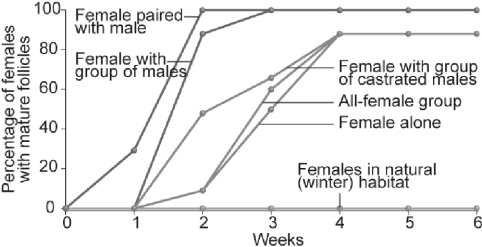 Figure 50.2
-In the figure above, do the data support the hypothesis that females need spring- like light conditions to produce mature follicles?
Figure 50.2
-In the figure above, do the data support the hypothesis that females need spring- like light conditions to produce mature follicles? (Multiple Choice)
5.0/5 (88)
(88) In the case of the redback spider, would males be better off, in terms of fitness, looking for another female to mate with instead of provoking his mate to eat him?
(Multiple Choice)
4.9/5 (75)
(75) You have captured a number of rats from a wild population and quickly surmise with tests that they are very good at avoiding food with poisons. What would best explain this observation?
(Multiple Choice)
4.9/5 (97)
(97) Which of the following statements about imprinting is FALSE?
(Multiple Choice)
4.8/5 (86)
(86) Based on your knowledge of cost- benefit analysis, why would you expect some white- fronted bee- eaters to fly very far away from the nests to forage when there are food sources nearby?
(Multiple Choice)
4.8/5 (65)
(65) How would self- sacrifice of male redback spiders be an adaptive behaviour?
(Multiple Choice)
4.9/5 (90)
(90) You observe that by flashing a small light in a particular sequence, you can attract male fireflies of a certain species. You begin to think how this signal may be used against these males. Which of the hypotheses seems to be the most logical?
(Multiple Choice)
4.8/5 (87)
(87) How do altruistic behaviours arise through natural selection?
(Multiple Choice)
4.8/5 (75)
(75) Any process in which a signal from one individual modifies the behaviour of a recipient individual is termed
(Multiple Choice)
4.8/5 (71)
(71) A cage containing male mosquitoes has a small earphone placed on top, through which the sound of a female mosquito is played. All the males immediately fly to the earphone and go through all the steps of copulation. What is the best explanation for this behaviour?
(Multiple Choice)
4.9/5 (72)
(72) 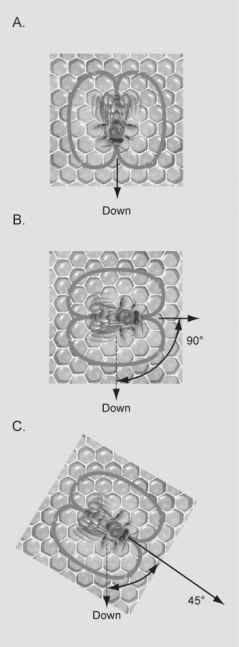 Figure 50.4
-In the diagrams shown in the figure above, which dance is indicating that the food is the farthest from the hive?
Figure 50.4
-In the diagrams shown in the figure above, which dance is indicating that the food is the farthest from the hive? (Multiple Choice)
4.9/5 (77)
(77) If phototaxis is orientation toward light, what would be the proper term to describe ants following a trail of their own pheromones?
(Multiple Choice)
5.0/5 (69)
(69) (a)
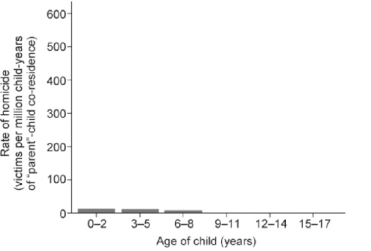 (b)
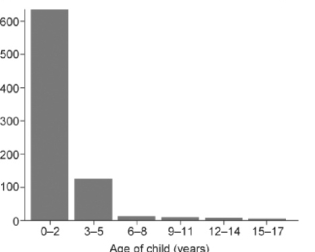 Figure 50.5
-In the figure above, which is the most logical conclusion from the data?
(b)
Figure 50.5
-In the figure above, which is the most logical conclusion from the data? (Multiple Choice)
4.7/5 (87)
(87) 
Filters
- Essay(0)
- Multiple Choice(0)
- Short Answer(0)
- True False(0)
- Matching(0)