



 Chat with AI
Exam 50: Behavioural Ecology

Exam 1: Biology and the Tree of Life35 Questions
Exam 2: Water and Carbon: the Chemical Basis of Life53 Questions
Exam 3: Protein Structure and Function40 Questions
Exam 4: Nucleic Acids and the Rna World40 Questions
Exam 5: An Introduction to Carbohydrates42 Questions
Exam 6: Lipids, Membranes, and the First Cells53 Questions
Exam 7: Inside the Cell41 Questions
Exam 8: Energy and Enzymes59 Questions
Exam 9: Cellular Respiration and Fermentation43 Questions
Exam 10: Photosynthesis41 Questions
Exam 11: Cellcell Interactions38 Questions
Exam 12: The Cell Cycle39 Questions
Exam 13: Meiosis40 Questions
Exam 14: Mendel and the Gene47 Questions
Exam 15: Dna and the Gene: Synthesis and Repair39 Questions
Exam 16: How Genes Work39 Questions
Exam 17: Transcription, Rna Processing, and Translation37 Questions
Exam 18: Control of Gene Expression in Bacteria38 Questions
Exam 19: Control of Gene Expression in Eukaryotes40 Questions
Exam 20: The Molecular Revolution: Biotechnology and Beyond39 Questions
Exam 21: Gene Structure and Development39 Questions
Exam 22: Evolution by Natural Selection42 Questions
Exam 23: Evolutionary Processes48 Questions
Exam 24: Speciation40 Questions
Exam 25: Phylogenies and the History of Life37 Questions
Exam 26: Bacteria and Archaea38 Questions
Exam 27: Protists36 Questions
Exam 28: Green Algae and Land Plants54 Questions
Exam 29: Fungi40 Questions
Exam 30: An Introduction to Animals42 Questions
Exam 31: Protostome Animals38 Questions
Exam 32: Deuterostome Animals43 Questions
Exam 33: Viruses35 Questions
Exam 34: Plant Form and Function39 Questions
Exam 35: Water and Sugar Transport in Plants42 Questions
Exam 36: Plant Nutrition37 Questions
Exam 37: Plant Sensory Systems, Signals, and Responses64 Questions
Exam 38: Plant Reproduction and Development44 Questions
Exam 39: Animal Form and Function37 Questions
Exam 40: Water and Electrolyte Balance in Animals41 Questions
Exam 41: Animal Nutrition43 Questions
Exam 42: Gas Exchange and Circulation46 Questions
Exam 43: Animal Nervous Systems40 Questions
Exam 44: Animal Sensory Systems43 Questions
Exam 45: Animal Movement42 Questions
Exam 46: Chemical Signals in Animals38 Questions
Exam 47: Animal Reproduction and Development39 Questions
Exam 48: The Immune System in Animals38 Questions
Exam 49: An Introduction to Ecology40 Questions
Exam 50: Behavioural Ecology39 Questions
Exam 51: Population Ecology49 Questions
Exam 52: Community Ecology38 Questions
Exam 53: Ecosystems and Global Ecology41 Questions
Exam 54: Biodiversity and Conservation Biology38 Questions
Select questions type


Homing pigeons' ability to always return to their home, no matter where they are released, is an excellent example of

Free
(Multiple Choice)
4.8/5  (93)
(93) Correct Answer: Verified
B
You observe scrub jays hiding food and notice that one particular individual only pretends to hide food. Your experiments associate the presence of other siblings with the frequency of pretending to cache food. A colleague shows you animals of the same species that do not perform this pretend caching. How does this information affect your conclusions about this behaviour?
Free
(Multiple Choice)
4.9/5 (68)
(68) Correct Answer:Verified
VerifiedC
In testing a hypothesis that "territorial defence in European robins is a fixed action pattern that is released by the sight of orange feathers," researchers found that robins defended their territory by attacking anything that was of similar size and had an orange patch. How would you show that it was indeed colour that initiated the defence responses?
Free
(Multiple Choice)
4.8/5 (79)
(79) Correct Answer:Verified
VerifiedA
A pied kingfisher in its first year of life helps in the feeding of three full siblings that would not have survived without the helper's efforts. What is its indirect fitness in its first year?
(Multiple Choice)
4.8/5 (66)
(66) What was the main reason the honeybees would switch from the "round dance" to the "waggle dance"?
(Multiple Choice)
4.9/5 (84)
(84) How would you classify the genetic basis for most behavioural traits in the animal kingdom?
(Multiple Choice)
4.8/5 (75)
(75) Which would be the best way to obtain evidence of a bird's cognitive abilities?
(Multiple Choice)
4.7/5 (86)
(86) You observe scrub jays hiding food and notice that one particular individual only pretends to hide food. What kind of experiment could you perform to test whether this was random or in response to another signal?
(Multiple Choice)
4.8/5 (74)
(74) With regard to understanding the evolution of cooperation, what is the principal prediction that can be made from the expression Br > C?
(Multiple Choice)
4.8/5 (82)
(82) How could you test whether male dewlaps a colourful flap of skin hanging from an anole lizard's throat) were an important cue for female egg production?
(Multiple Choice)
4.8/5 (74)
(74) Lobsters can navigate back home at night using Earth's magnetic field. Is this statement a proximate cause or an ultimate cause?
(Multiple Choice)
4.7/5 (79)
(79) You observe a species of bird that, upon hatching, has contact with its parents only while being fed. You also never hear the parents sing during the feeding process. What would you propose about song learning in this species of bird?
(Multiple Choice)
4.7/5 (77)
(77) (a)
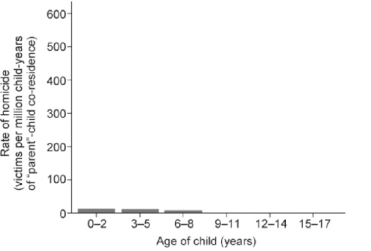 (b)
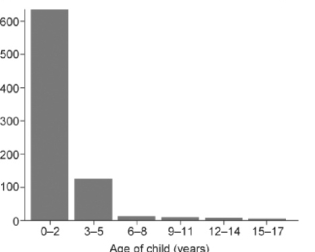 Figure 50.5
-Which of the following has greatest coefficient of relatedness?
(b)
Figure 50.5
-Which of the following has greatest coefficient of relatedness? (Multiple Choice)
4.8/5 (84)
(84) The recognition and manipulation of facts about the world is termed
(Multiple Choice)
4.8/5 (84)
(84) 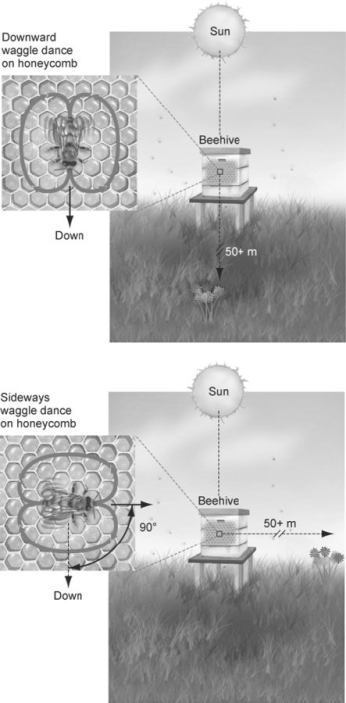 Figure 50.3
-What does the figure above show about the nature of the "waggle dance"?
Figure 50.3
-What does the figure above show about the nature of the "waggle dance"? (Multiple Choice)
5.0/5 (80)
(80) In house sparrows Passer domesticus), it is generally found that both males and females care for the eggs and young. However, some male house sparrows do not provide parental care. In addition, it is known that young that receive parental care from both the male and female are more likely to survive to fledging leaving the nest). Which of the following activities by males that do not provide parental care would represent the most beneficial trade- off for the reduced survival of their offspring?
(Multiple Choice)
4.9/5 (75)
(75) Which one of the following examples best illustrates classical conditioning?
(Multiple Choice)
4.8/5 (84)
(84) 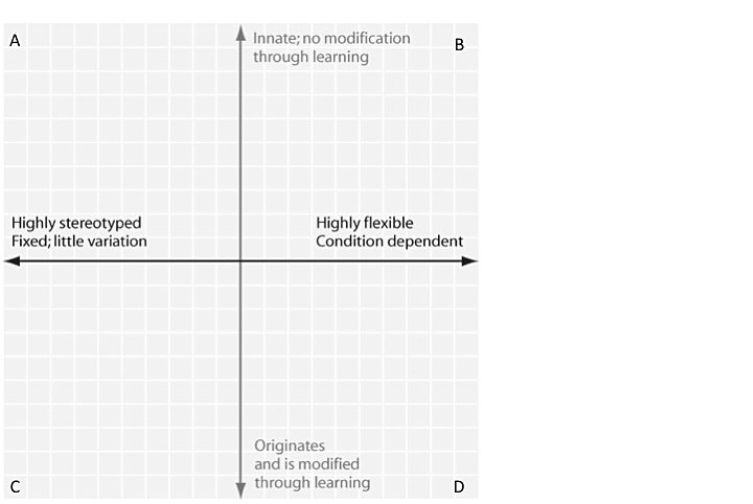 Figure 50.1
-In which quadrant of the figure above would bird migration be plotted?
Figure 50.1
-In which quadrant of the figure above would bird migration be plotted? (Multiple Choice)
4.9/5 (74)
(74) 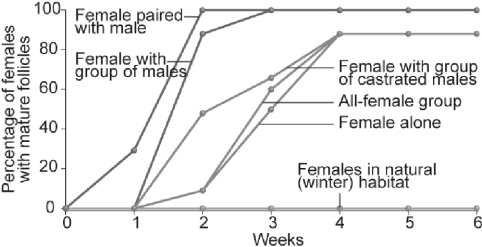 Figure 50.2
-Which of the following conclusions is most logical based on the data above?
Figure 50.2
-Which of the following conclusions is most logical based on the data above? (Multiple Choice)
4.9/5 (72)
(72) It is rather easy to understand why relatives help each other in the animal kingdom-they share some of the same genes, and some self- sacrificing behaviour will help the greater sum of their genes. What would be a reason for self- sacrificing behaviour to have evolved in animals that are unrelated?
(Multiple Choice)
4.9/5 (88)
(88) 
Filters
- Essay(0)
- Multiple Choice(0)
- Short Answer(0)
- True False(0)
- Matching(0)