



 Chat with AI
Exam 52: Community Ecology

Exam 1: Biology and the Tree of Life35 Questions
Exam 2: Water and Carbon: the Chemical Basis of Life53 Questions
Exam 3: Protein Structure and Function40 Questions
Exam 4: Nucleic Acids and the Rna World40 Questions
Exam 5: An Introduction to Carbohydrates42 Questions
Exam 6: Lipids, Membranes, and the First Cells53 Questions
Exam 7: Inside the Cell41 Questions
Exam 8: Energy and Enzymes59 Questions
Exam 9: Cellular Respiration and Fermentation43 Questions
Exam 10: Photosynthesis41 Questions
Exam 11: Cellcell Interactions38 Questions
Exam 12: The Cell Cycle39 Questions
Exam 13: Meiosis40 Questions
Exam 14: Mendel and the Gene47 Questions
Exam 15: Dna and the Gene: Synthesis and Repair39 Questions
Exam 16: How Genes Work39 Questions
Exam 17: Transcription, Rna Processing, and Translation37 Questions
Exam 18: Control of Gene Expression in Bacteria38 Questions
Exam 19: Control of Gene Expression in Eukaryotes40 Questions
Exam 20: The Molecular Revolution: Biotechnology and Beyond39 Questions
Exam 21: Gene Structure and Development39 Questions
Exam 22: Evolution by Natural Selection42 Questions
Exam 23: Evolutionary Processes48 Questions
Exam 24: Speciation40 Questions
Exam 25: Phylogenies and the History of Life37 Questions
Exam 26: Bacteria and Archaea38 Questions
Exam 27: Protists36 Questions
Exam 28: Green Algae and Land Plants54 Questions
Exam 29: Fungi40 Questions
Exam 30: An Introduction to Animals42 Questions
Exam 31: Protostome Animals38 Questions
Exam 32: Deuterostome Animals43 Questions
Exam 33: Viruses35 Questions
Exam 34: Plant Form and Function39 Questions
Exam 35: Water and Sugar Transport in Plants42 Questions
Exam 36: Plant Nutrition37 Questions
Exam 37: Plant Sensory Systems, Signals, and Responses64 Questions
Exam 38: Plant Reproduction and Development44 Questions
Exam 39: Animal Form and Function37 Questions
Exam 40: Water and Electrolyte Balance in Animals41 Questions
Exam 41: Animal Nutrition43 Questions
Exam 42: Gas Exchange and Circulation46 Questions
Exam 43: Animal Nervous Systems40 Questions
Exam 44: Animal Sensory Systems43 Questions
Exam 45: Animal Movement42 Questions
Exam 46: Chemical Signals in Animals38 Questions
Exam 47: Animal Reproduction and Development39 Questions
Exam 48: The Immune System in Animals38 Questions
Exam 49: An Introduction to Ecology40 Questions
Exam 50: Behavioural Ecology39 Questions
Exam 51: Population Ecology49 Questions
Exam 52: Community Ecology38 Questions
Exam 53: Ecosystems and Global Ecology41 Questions
Exam 54: Biodiversity and Conservation Biology38 Questions
Select questions type


 Figure 52.11
-According to Figure 52.11, a species has the highest chance of extinction when
Figure 52.11
-According to Figure 52.11, a species has the highest chance of extinction when
Free
(Multiple Choice)
4.9/5  (86)
(86) Correct Answer: Verified
D
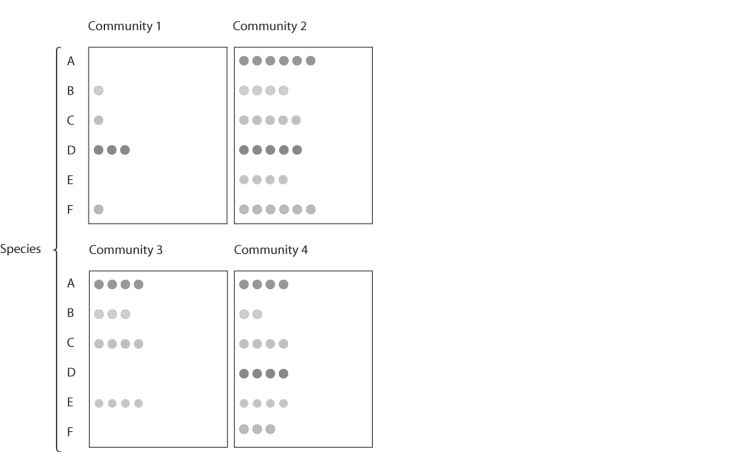 Figure 52.9
-In the figure above, which community has the highest species diversity?
Figure 52.9
-In the figure above, which community has the highest species diversity?Free
(Multiple Choice)
4.9/5 (79)
(79) Correct Answer:Verified
VerifiedB
Some birds follow moving swarms of army ants in the tropics. As the ants march along the forest floor hunting insects and small vertebrates, birds follow and pick off any insects or small vertebrates that fly or jump out of the way of the ants. This is an example of what kind of species interaction?
Free
(Multiple Choice)
4.9/5 (80)
(80) Correct Answer:Verified
VerifiedB
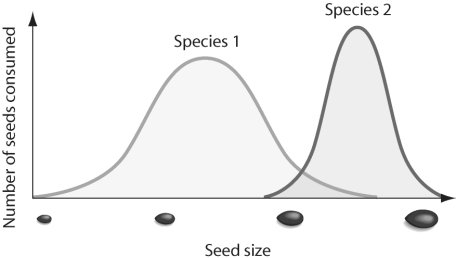 Figure 52.1
-In looking at the figure above, what conclusions can be drawn?
Figure 52.1
-In looking at the figure above, what conclusions can be drawn? (Multiple Choice)
4.8/5 (89)
(89) 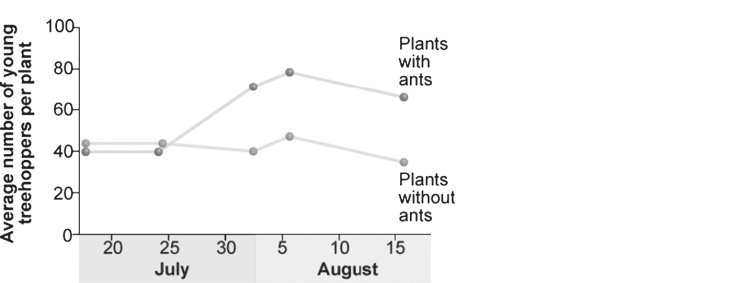 Figure 52.6
-Treehoppers a type of insect) produce honeydew, which ants use for food. Treehoppers have a major predator, the jumping spider. Researchers hypothesized that the ants would protect the treehoppers from the spiders. In an experiment, researchers followed study plots with ants removed from the system and compared them to a control plot. In the figure above, what can you conclude?
Figure 52.6
-Treehoppers a type of insect) produce honeydew, which ants use for food. Treehoppers have a major predator, the jumping spider. Researchers hypothesized that the ants would protect the treehoppers from the spiders. In an experiment, researchers followed study plots with ants removed from the system and compared them to a control plot. In the figure above, what can you conclude? (Multiple Choice)
4.9/5 (73)
(73) 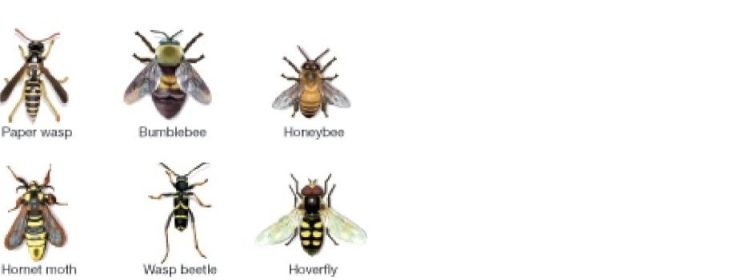 Figure 52.5
-In the figure above, the labelled groups, which group is displaying Batesian mimicry?
Figure 52.5
-In the figure above, the labelled groups, which group is displaying Batesian mimicry? (Multiple Choice)
4.9/5 (74)
(74) A measure of how much a community is affected by a disturbance is termed
(Multiple Choice)
4.9/5 (85)
(85) What is the main difference between asymmetric competition and symmetric competition?
(Multiple Choice)
4.9/5 (82)
(82) Figure 52.5
-In the figure above, which of the following statements is true?
Figure 52.5
-In the figure above, which of the following statements is true? (Multiple Choice)
4.8/5 (63)
(63) In the hypothesis that C. stellatus a species of barnacle) is competitively excluded from the lower intertidal zone by B. balanoides another species of barnacle), what could be concluded about the two species?
(Multiple Choice)
4.7/5 (84)
(84) During a one year study, researchers found no difference in treehopper populations in any of their control and experimental groups. What could they measure during the second year to gain information about why this might have occurred?
(Multiple Choice)
4.9/5 (77)
(77) 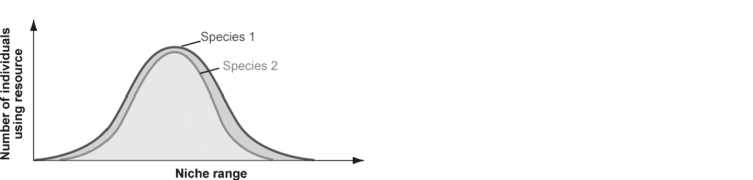 Figure 52.3
-In the figure above, which species is the stronger competitor?
Figure 52.3
-In the figure above, which species is the stronger competitor? (Multiple Choice)
4.7/5 (68)
(68) 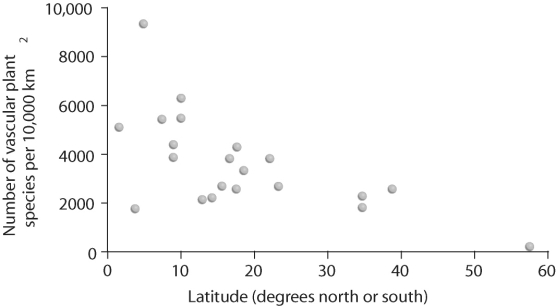 Figure 52.10
-In figure above, what can be stated about species diversity and latitude?
Figure 52.10
-In figure above, what can be stated about species diversity and latitude? (Multiple Choice)
4.7/5 (86)
(86) Which one of the following animals would most likely be defined as a keystone species?
(Multiple Choice)
4.7/5 (66)
(66) Which are the only two interaction types to depend on density and effective defence to determine the short- term impact?
(Multiple Choice)
4.9/5 (68)
(68) Which hypothesis supports the observation that herbivores do not generally eat all of the available plants?
(Multiple Choice)
4.8/5 (72)
(72) Figure 52.9
-In the figure above, which community has the highest species richness?
Figure 52.9
-In the figure above, which community has the highest species richness? (Multiple Choice)
4.8/5 (60)
(60) 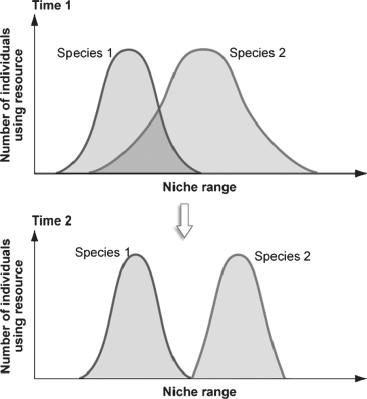 Figure 52.2
-What is the term used to describe the process shown in the panels in the figure above?
Figure 52.2
-What is the term used to describe the process shown in the panels in the figure above? (Multiple Choice)
4.9/5 (61)
(61) While traveling in Texas, you stumble across a snake with red, yellow, and black bands. You somehow remember that this could be a poisonous coral snake or a harmless milk snake, but you forget how to differentiate them because they both have similar colours and banding patterns. You wisely decide not to pick up the snake. What defence was successful in preventing you from grabbing the snake?
(Multiple Choice)
5.0/5 (85)
(85) 
Filters
- Essay(0)
- Multiple Choice(0)
- Short Answer(0)
- True False(0)
- Matching(0)