



 Chat with AI
Exam 5: The Structure and Function of Large Biological Molecules

Exam 1: Evolution, the Themes of Biology, and Scientific Inquiry51 Questions
Exam 2: The Chemical Context of Life61 Questions
Exam 3: Water and Life55 Questions
Exam 4: Carbon and the Molecular Diversity of Life58 Questions
Exam 5: The Structure and Function of Large Biological Molecules70 Questions
Exam 6: A Tour of the Cell66 Questions
Exam 7: Membrane Structure and Function68 Questions
Exam 8: An Introduction to Metabolism67 Questions
Exam 9: Cellular Respiration and Fermentation68 Questions
Exam 10: Photosynthesis65 Questions
Exam 11: Cell Communication65 Questions
Exam 12: The Cell Cycle66 Questions
Exam 13: Meiosis and Sexual Life Cycles64 Questions
Exam 14: Mendel and the Gene Idea62 Questions
Exam 15: The Chromosomal Basis of Inheritance58 Questions
Exam 16: The Molecular Basis of Inheritance65 Questions
Exam 17: Gene Expression: From Gene to Protein67 Questions
Exam 18: Regulation of Gene Expression66 Questions
Exam 19: Viruses54 Questions
Exam 20: Dna Tools and Biotechnology57 Questions
Exam 21: Genomes and Their Evolution44 Questions
Exam 22: Descent With Modification: a Darwinian View of Life60 Questions
Exam 23: The Evolution of Populations64 Questions
Exam 24: The Origin of Species67 Questions
Exam 25: The History of Life on Earth59 Questions
Exam 26: Phylogeny and the Tree of Life75 Questions
Exam 27: Bacteria and Archaea75 Questions
Exam 28: Protists79 Questions
Exam 29: Plant Diversity I: How Plants Colonised Land82 Questions
Exam 30: Plant Diversity Ii: the Evolution of Seed Plants80 Questions
Exam 31: Fungi70 Questions
Exam 32: An Overview of Animal Diversity67 Questions
Exam 33: An Introduction to Invertebrates83 Questions
Exam 34: The Origin and Evolution of Vertebrates82 Questions
Exam 35: Vascular Plant Structure, Growth, and Development65 Questions
Exam 36: Resource Acquisition and Transport in Vascular Plants74 Questions
Exam 37: Soil and Plant Nutrition52 Questions
Exam 38: Angiosperm Reproduction and Biotechnology60 Questions
Exam 39: Plant Responses to Internal and External Signals61 Questions
Exam 40: Basic Principles of Animal Form and Function68 Questions
Exam 41: Animal Nutrition64 Questions
Exam 42: Circulation and Gas Exchange67 Questions
Exam 43: The Immune System69 Questions
Exam 44: Osmoregulation and Excretion64 Questions
Exam 45: Hormones and the Endocrine System66 Questions
Exam 46: Animal Reproduction68 Questions
Exam 47: Animal Development70 Questions
Exam 48: Neurons, Synapses, and Signalling68 Questions
Exam 49: Nervous Systems65 Questions
Exam 50: Sensory and Motor Mechanisms67 Questions
Select questions type


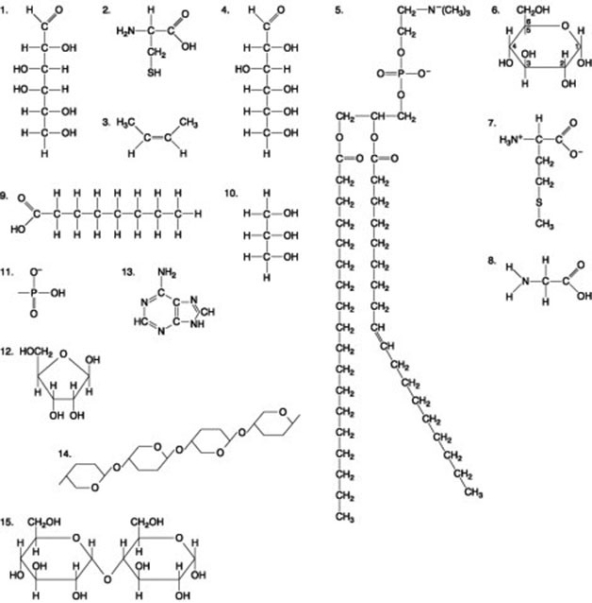 - Which of the following molecules act as building blocks (monomers) of polypeptides?
 (Multiple Choice)
4.8/5  (90)
(90) The central rule of molecular biology states that ________.
(Multiple Choice)
4.9/5 (74)
(74) Which of the following statements about the 5 end of a polynucleotide strand of RNA is correct?
(Multiple Choice)
4.9/5 (76)
(76) People who are lactose intolerant cannot extract energy from milk because ________.
(Multiple Choice)
4.8/5 (73)
(73) A new organism is discovered in the forests of Costa Rica. Scientists there determine that the polypeptide sequence of haemoglobin from the new organism has 72 amino acid differences from humans, 65 differences from a gibbon, 49 differences from a rat, and 5 differences from a frog. These data suggest that the new organism is more closely related to ________.
(Multiple Choice)
4.9/5 (78)
(78) For lipids to be fluid at room temperature, they should have ________.
(Multiple Choice)
4.9/5 (81)
(81)
- Which of the following molecules is the pentose sugar found in RNA?
- Which of the following molecules is the pentose sugar found in RNA? (Multiple Choice)
4.9/5 (74)
(74) In carbohydrates, the ratio of hydrogen (H) to oxygen (O) is ________.
(Multiple Choice)
4.9/5 (78)
(78) A glycosidic linkage is analogous to which of the following in proteins?
(Multiple Choice)
4.8/5 (72)
(72) Enzymes that break down DNA catalyse the hydrolysis of the covalent bonds that join nucleotides together. What would happen to DNA molecules treated with these enzymes?
(Multiple Choice)
5.0/5 (95)
(95) Which of the following provides the information necessary to stipulate a protein's 3-D shape?
(Multiple Choice)
4.9/5 (80)
(80) Which polysaccharide is an important component in the structure of many animals and fungi?
(Multiple Choice)
4.8/5 (74)
(74) The relation between amino acid and polypeptide is similar to the relation between ________.
(Multiple Choice)
4.7/5 (76)
(76) 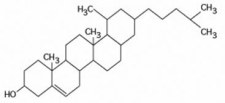 The molecule shown in the figure is a ________.
Which parts of the amino acids X and Y are involved in the formation of a peptide bond?
X-Y
(Multiple Choice)
4.9/5 (59)
(59) Which of the following pairs of base sequences could form a short stretch of a normal double helix of DNA?
(Multiple Choice)
4.8/5 (72)
(72) 
Filters
- Essay(0)
- Multiple Choice(0)
- Short Answer(0)
- True False(0)
- Matching(0)