



 Chat with AI
Exam 5: Obstetrics & Gynecology

Exam 1: Medicine2 k Questions
Exam 2: Pediatric723 Questions
Exam 3: Psychiatry336 Questions
Exam 4: Surgery563 Questions
Exam 5: Obstetrics & Gynecology469 Questions
Select questions type


A 38-year-old woman, gravida 7 para 6, at 37 weeks gestation comes to the office for a routine prenatal visit. For the past week, the patient has had leakage of clear fluid whenever she stands from a sitting position, forcing her to change her underwear twice daily. She has had no vaginal bleeding or contractions. The patient did not experience similar leakage during her other pregnancies, all of which ended in uncomplicated term vaginal deliveries. During this pregnancy, she was treated for chlamydia at 10 weeks gestation. Blood pressure is 110/70 mm Hg and weight is 105 kg (231.5 lb). Fetal heart rate is 150/min. Speculum examination shows a slightly open cervix and a scant amount of clear fluid in the posterior vagina, but no fluid emerges from the cervix when the patient coughs. The vaginal fluid does not turn nitrazine paper blue; a dried smear shows no ferning on microscopy. Which of the following is the most likely cause of this patient's symptoms?
(Multiple Choice)
4.9/5  (70)
(70) A 39-year-old woman, gravida 3 para 2, comes to the emergency department at 37 weeks gestation due to leakage of fluid for the last 2 hours. She has also had some vaginal bleeding and contractions for the last hour. Fetal movement is normal. The patient immigrated to the United States 6 months ago and has had no prenatal care this pregnancy. Her previous pregnancies were uncomplicated and delivered vaginally at term. Blood pressure is 100/60 mm Hg, pulse is 102/min, and respirations are 16/min. On speculum examination, rupture of membranes is confirmed and the patient has some small blood clots at the cervical os. An ultrasound reveals an active fetus in cephalic presentation whose growth is consistent with gestational age and placental tissue covering the cervix. Fetal heart rate baseline is 150/min with accelerations and no decelerations. Tocodynamometry shows contractions every 3 minutes. Which of the following is the most appropriate next step in management of this patient?
(Multiple Choice)
4.7/5 (85)
(85) A 32-year-old woman, gravida 2 para 1, at 37 weeks gestation is undergoing a prolonged induction of labor for a twin pregnancy. During the induction, the patient abruptly loses consciousness, has stiffness of the arms and legs, and then begins to have muscle jerking. She is unresponsive for several minutes, but slowly regains consciousness. The patient has been receiving an oxytocin infusion for the last 8 hours, and epidural analgesia was placed several hours ago after spontaneous rupture of membranes. She has no chronic medical conditions and takes no daily medications. Temperature is 37.2 C (99 F), blood pressure is 158/98 mm Hg, pulse is 118/min, and respirations are 24/min. The patient is alert but disoriented. The neck is supple. Heart sounds are regular, and the lungs are clear to auscultation bilaterally. Patellar deep tendon reflexes are 3+, and there are no focal neurologic deficits. Laboratory results are as follows: 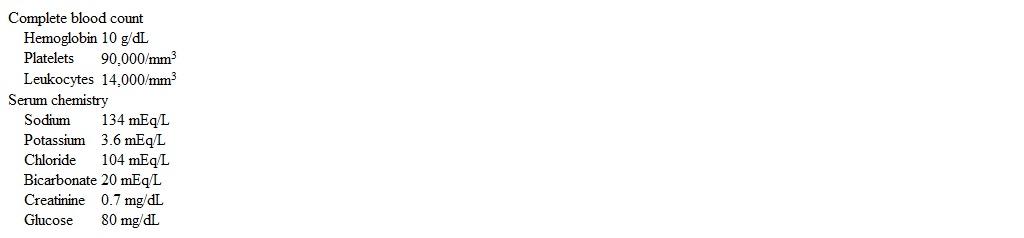 Which of the following is the best next step in management of this patient?
 (Multiple Choice)
4.8/5 (85)
(85) A 39-year-old woman comes to the office due to worsening urinary symptoms for the past several weeks. The patient has increasingly had sudden, intermittent urges to urinate followed by small-volume urine. On several occasions, she has had difficulty reaching the bathroom in time and has involuntarily leaked a small amount of urine. The patient reports no fever, dysuria, hematuria, abdominal pain, or abnormal vaginal discharge. She was diagnosed with multiple sclerosis 3 years ago after an episode of gait unsteadiness. Since then, she has had several acute exacerbations, most recently 2 months ago, which were treated with glucocorticoids. Her other medical conditions include hypertension and glucocorticoid-induced hyperglycemia. She does not use tobacco, alcohol, or illicit drugs. Vital signs are normal. Physical examination shows hyperreflexia of the lower extremities and mild intention tremor. The remainder of the examination shows no abnormalities. Urine dipstick is negative for leukocyte esterase and nitrite but positive for glucose. Postvoid bladder scan reveals a contracted, small bladder. Which of the following is the most likely cause of this patient's urinary symptoms?
(Multiple Choice)
4.7/5 (77)
(77) A 42-year-old woman comes to the office due to night sweats and insomnia. For the past month, the patient has awakened soaked with sweat almost every night, despite having turned down the thermostat. She has also had difficulty concentrating at work and controlling her emotions, which is putting a strain on her marriage. The patient has had irregular menstrual periods for the past 6 months. She has a history of hypertension controlled with medication. The patient quit smoking 5 years ago and does not use illicit drugs. She typically has an alcoholic beverage before bedtime. Temperature is 36.7 C (98.1 F), blood pressure is 140/90 mm Hg, pulse is 80/min, and respirations are 14/min. Examination of the skin is normal and there is no periorbital edema. The thyroid is nonenlarged and nontender, and there are no masses. Abdominal examination is normal. The uterus is small and anteverted. There are no palpable adnexal masses. Urine pregnancy test is negative. Which of the following is the best next step in management of this patient?
(Multiple Choice)
4.9/5 (82)
(82) A 26-year-old woman, gravida 1 para 1, comes to the office for a 6-week postpartum checkup following an induction of labor and vaginal delivery at 38 weeks gestation for preeclampsia with severe features. Her pregnancy was otherwise uncomplicated, and the patient has no chronic medical conditions. She is currently breastfeeding and supplementing with pumped breast milk. The patient has not resumed her menses and is taking a progestin-only pill for contraception. The patient says, "The baby is healthy, which is great, but I haven't been sleeping much and have been very tired. My mom is coming to stay with us, so I'm hoping to get some rest soon." Temperature is 36.7 C (98 F), blood pressure is 130/80 mm Hg, and pulse is 68/min. BMI is 24 kg/m2. Breast and pelvic examinations are normal. Which of the following should be performed at this visit?
(Multiple Choice)
4.9/5 (80)
(80) A 32-year-old woman comes to the office due to several days of vaginal itching and discharge. She also has pain with sexual intercourse. The patient has had no fever, chills, abdominal pain, urinary frequency, or dysuria. In the past year she has had 2 new male sexual partners. She takes oral contraceptives and uses condoms on most occasions. The patient has no chronic medical conditions and has had no surgeries. She takes no other daily medications. The patient drinks several glasses of wine each week but does not smoke or use illicit drugs. Her last menstrual period was 3 weeks ago. Temperature is 36.7 C (98 F) and blood pressure is 100/60 mm Hg. Pelvic examination shows vulvar and vaginal erythema and a small amount of vaginal discharge with a pH of 4. Which of the following is the most likely causal organism?
(Multiple Choice)
4.7/5 (94)
(94) A healthy 22-year-old woman, gravida 2 para 1, comes to her physician for a routine prenatal visit. She is 28 weeks pregnant, feeling well, and gaining weight appropriately. She has no bleeding, fluid leakage, or uterine contractions and feels fetal movement. The patient recently ended her relationship with the father of the baby. Her first trimester prenatal testing results were as follows: 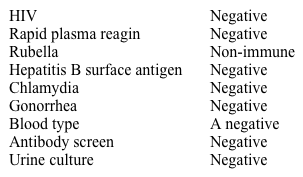 Which of the following is the most appropriate next step at this gestational age in pregnancy?
 (Multiple Choice)
4.8/5 (68)
(68) A 29-year-old woman, gravida 1 para 0, at 35 weeks gestation comes to the emergency department due to possible leakage of amniotic fluid. The patient has had clear vaginal discharge for the past few hours. She has had no vaginal bleeding or contractions. Fetal movement is normal. The patient's pregnancy has been otherwise normal. She has no chronic medical conditions, and her only medication is a daily prenatal vitamin. Blood pressure is 128/76 mm Hg, and pulse is 84/min. The abdomen is soft and has no fundal tenderness. On sterile speculum examination, there is no pooling of fluid; nitrazine testing is negative. Microscopy reveals no ferning, clue cells, or motile organisms. A nonstress test is performed for 40 minutes, and results are shown in the exhibit. 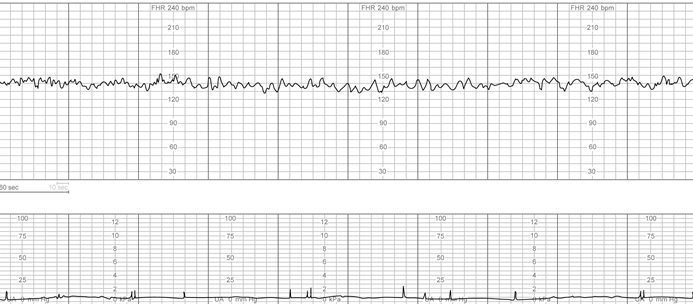 Ultrasound results are as follows:
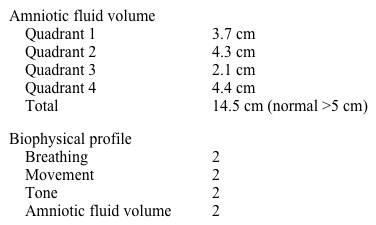 Which of the following is the best next step in management of this patient?
Ultrasound results are as follows: Which of the following is the best next step in management of this patient? (Multiple Choice)
4.8/5 (75)
(75) A 20-year-old woman comes to the office due to 3 days of malodorous vaginal discharge and severe vulvar pruritus. The patient is sexually active and had a copper-containing intrauterine device placed for contraception last year. She has no chronic medical conditions and has had no surgeries. Vital signs are normal. Pelvic examination shows a thin, frothy, and green vaginal discharge with marked vulvar and vaginal erythema. Vaginal discharge pH is 5.5. The intrauterine device strings are visualized and protrude through the cervical os. Microscopic examination of this patient's vaginal discharge will most likely reveal which of the following?
(Multiple Choice)
4.8/5 (80)
(80) A 37-year-old woman, gravida 2, para 1, comes to the physician for a routine prenatal visit. Her estimated gestation age is 16 weeks based on last menstrual period. She has been married for 8 years and has a healthy 5-year-old son. The woman is healthy and has no relatives with genetic disorders, intellectual disability, developmental delay, or autism. She has been intermittently compliant with prenatal vitamins due to "morning sickness." Laboratory results are as follows: 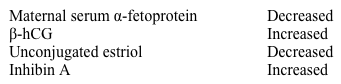 Which of the following fetal conditions is the most likely cause of these laboratory results?
 (Multiple Choice)
4.9/5 (94)
(94) A 55-year-old woman comes to the office due to occasional bloody spotting on her toilet paper over the past few weeks. The patient has no hematuria, dysuria, hematochezia, melena, heavy vaginal bleeding, or vulvar pruritus. Her last menstrual period was 4 years ago. She had a normal Pap test last year with no history of abnormal results. She has no medical conditions and takes daily supplements of calcium with vitamin D. The patient is not sexually active and does not use tobacco, alcohol, or illicit drugs. BMI is 32 kg/m2. Pelvic examination shows sparse pubic hair and fissures along the vestibule. The vagina has multiple areas of petechiae; the cervix is flush with the vaginal wall. There is minimal clear vaginal discharge but no active bleeding. Vaginal pH is 6. Urinalysis is normal. Fecal occult blood test is negative. Pelvic ultrasound reveals a small, anteverted uterus with a 3-mm endometrial stripe. Which of the following is the most likely explanation for the findings in this patient?
(Multiple Choice)
4.8/5 (82)
(82) A 24-year-old primigravid woman at 10 weeks gestation is brought to the emergency department for vaginal bleeding. She has colicky pain in the suprapubic region radiating to her back. Her temperature is 37 C (98.7 F), blood pressure is 110/76 mm Hg, pulse is 94/min, and respirations are 18/min. Physical examination shows a dilated cervix with visible products of conception. Suction curettage is performed and all products of conception are evacuated. Maternal serum laboratory results are as follows: 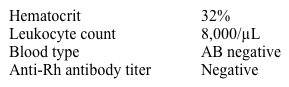 Which of the following is the most appropriate next step in management of this patient?
 (Multiple Choice)
4.8/5 (78)
(78) A 31-year-old woman, gravida 3 para 2, at 40 weeks gestation is in active labor. The patient has had a normal prenatal course. Her first pregnancy was an uncomplicated term vaginal delivery. Her second pregnancy ended with an emergent cesarean delivery for a nonreassuring fetal heart rate pattern. She has epidural anesthesia and is feeling mild pelvic pressure. Spontaneous rupture of the membranes occurred 15 minutes ago with blood-tinged amniotic fluid. Blood pressure is 124/76 mm Hg, pulse is 78/min, and respirations are 18/min. On pelvic examination, the cervix is 6 cm dilated and 80% effaced, and the fetal presenting part is at +1 station. The fetal heart rate tracing is shown in the exhibit. 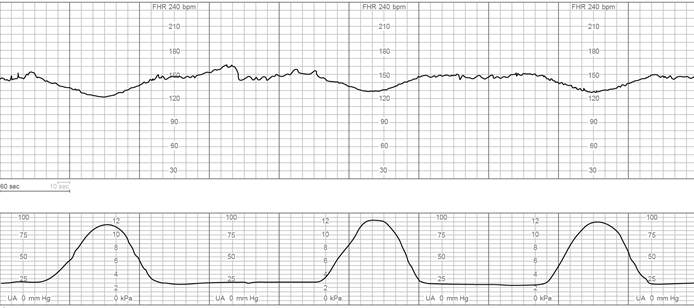 Which of the following is the most likely cause of this fetal heart rate pattern?
 (Multiple Choice)
4.7/5 (96)
(96) A 29-year-old woman, gravida 1 para 0, at 33 weeks gestation is an inpatient on the antepartum unit for management of known vasa previa. A few minutes ago, the patient had rupture of membranes with leakage of blood-tinged fluid. She has no contractions or heavy vaginal bleeding. The pregnancy was the result of in vitro fertilization and has otherwise been uncomplicated. A fetal growth ultrasound performed yesterday revealed a cephalic fetus with an estimated fetal weight at the 50th percentile and a normal amniotic fluid index. Temperature is 36.7 C (98.1 F), blood pressure is 110/70 mm Hg, and pulse is 70/min. Fetal heart rate is 100/min. The uterus is nontender and has no palpable contractions. Which of the following is the best next step in management of this patient?
(Multiple Choice)
4.8/5 (84)
(84) A 24-year-old woman comes to the office for an annual examination. The patient feels well and has no concerns. She has no chronic medical conditions and takes no daily medications. Her last Pap test was performed 3 years ago and was normal. She is sexually active with 1 partner and has no history of sexually transmitted infections. The patient had a progestin-containing intrauterine device placed 2 years ago and has been amenorrheic for the past year. Temperature is 36.1 C (97 F), blood pressure is 110/80 mm Hg, and pulse is 65/min. On pelvic examination, the uterus is small with no cervical motion or adnexal tenderness. On speculum examination, the intrauterine device strings are visible through the cervical os. There are no cervical lesions or abnormal discharge. A Pap test performed today indicates no evidence of cervical dysplasia but shows multiple Actinomyces organisms. Which of the following is the best next step in management of this patient?
(Multiple Choice)
4.7/5 (85)
(85) A 24-year-old woman, gravida 1 para 0, at 35 weeks gestation comes to the office for a routine prenatal visit. The patient has dichorionic diamniotic twins and has had no complications during the pregnancy. Fetal movement is normal for each twin. Over the past week, the patient developed a pruritic rash on the abdomen. The pruritus has become progressively more severe and is preventing her from sleeping. She has no chronic medical conditions. Vital signs are normal. The fetal heart rate for both twins is 150/min. Fundal height is 38 cm. Physical examination is seen in the exhibit. 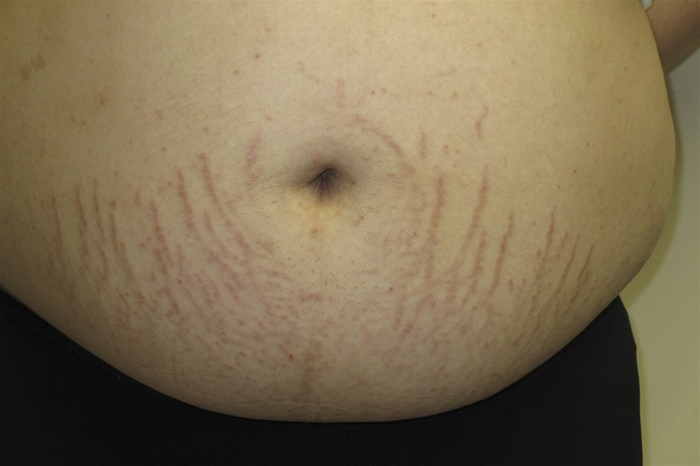 No other lesions are visualized. Which of the following is the most appropriate treatment for this patient?
 (Multiple Choice)
5.0/5 (71)
(71) A 38-year-old woman, gravida 4 para 3, at 8 weeks gestation comes to the office to establish prenatal care. She has had no bleeding or cramping. The patient was diagnosed 6 months ago with type 2 diabetes mellitus and started a daily exercise routine with a stationary bicycle. Her diabetes has been well controlled, and her most recent hemoglobin A1c was 6.8%. Her first pregnancy was a cesarean delivery at term gestation for breech presentation. The patient then had 2 painless, second-trimester deliveries consistent with cervical insufficiency. Vital signs are normal. BMI is 29 kg/m2. On pelvic examination, the cervix is closed and there is no vaginal bleeding. Transvaginal ultrasound shows an 8-week intrauterine gestation with positive heart tones. The patient asks if she can continue her current exercise program. Which of the following is this patient's contraindication to exercise in pregnancy?
(Multiple Choice)
4.8/5 (82)
(82) A 32-year-old woman, gravida 1 para 1, is evaluated on the postpartum floor due to fluid leakage from her incision. Two days ago, the patient underwent a cesarean delivery after failed induction of labor and intraamniotic infection. She had her incision bandage removed this morning with minimal clear fluid on the bandage. The patient then walked to the nursery, where she noticed that serosanguineous fluid had stained her hospital gown. Fluid has continued to drain from her abdominal incision. Temperature is 37.2 C (99 F). BMI is 35 kg/m2. The uterus is palpable below the umbilicus and has no fundal tenderness. The Pfannenstiel incision has a 4-cm defect at the right corner that is draining scant serosanguineous fluid. There is no surrounding erythema or induration. The subcutaneous tissue has no areas of necrosis or crepitus, and the rectus fascia is intact. Which of the following is the best next step in management of this patient?
(Multiple Choice)
5.0/5 (64)
(64) A 36-year-old woman, gravida 1 para 0, at 38 weeks gestation comes to the hospital due to increased leakage of fluid. She reports spontaneous rupture of membranes approximately 48 hours earlier, and contractions started 12 hours after rupture. She reports intermittent vaginal spotting and regular fetal movement. The patient was attempting a home birth but came to the hospital because her cervix has been 6 cm dilated for the past 5 hours. Temperature is 39.4 C (103 F), blood pressure is 120/80 mm Hg, and pulse is 108/min. Digital examination reveals the cervix to be 6 cm dilated and 70% effaced, with the fetal vertex at 0 station. The fetal heart tracing is shown in the exhibit. 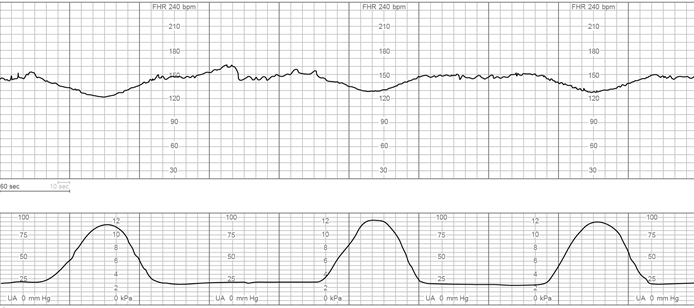 Which of the following is most likely responsible for the findings on this patient's fetal monitoring?
 (Multiple Choice)
4.9/5 (82)
(82) 
Filters
- Essay(0)
- Multiple Choice(0)
- Short Answer(0)
- True False(0)
- Matching(0)