



 Chat with AI
Exam 5: Obstetrics & Gynecology

Exam 1: Medicine2 k Questions
Exam 2: Pediatric723 Questions
Exam 3: Psychiatry336 Questions
Exam 4: Surgery563 Questions
Exam 5: Obstetrics & Gynecology469 Questions
Select questions type


A 29-year-old woman, gravida 1 para 0, at 34 weeks gestation comes to the office for a routine prenatal visit. She has had no contractions, vaginal bleeding, or leakage of fluid. Fetal movement is normal. The patient has systemic lupus erythematosus with positive anti-Ro/SSA antibodies but has had no flares during this pregnancy. Her medications include hydroxychloroquine, low-dose aspirin, and a prenatal vitamin. Blood pressure is 130/88 mm Hg and pulse is 65/min. Fundal height is 33 cm. The remainder of the physical examination is unremarkable. Urine dipstick has trace protein. A nonstress test is performed for 10 minutes; results are shown in the exhibit. 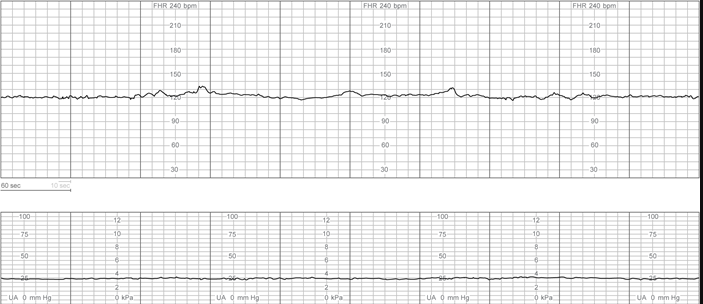 Which of the following is the most likely etiology for this patient's fetal heart rate tracing?
 (Multiple Choice)
4.9/5  (64)
(64) A 57-year-old woman, gravida 1 para 1, comes to the office for a routine examination. The patient has no concerns and has been feeling well. She walks for 30 minutes each morning and is planning on retiring in a few years. The patient is sexually active with her husband and has no pain during intercourse. She had a light menstrual period a month ago after a lapse since age 53. The patient has no chronic medical conditions and has had no previous surgery. Her father had colon cancer, but family history is otherwise unremarkable. She drinks alcohol socially but does not use tobacco or illicit drugs. Mammography and Pap test were normal 2 years ago. BMI is 28 kg/m2. Physical examination is normal. Which of the following is the best next step in evaluation of this patient?
(Multiple Choice)
4.9/5 (85)
(85) A 23-year-old woman, gravida 1 para 0, at 41 weeks gestation is admitted to labor and delivery for contractions over the past 3 hours. The patient has no chronic medical conditions. She had an elevated 1-hour glucose challenge test but normal 3-hour glucose tolerance test at 28 weeks gestation. The patient receives epidural analgesia immediately upon admission and has spontaneous rupture of membranes 2 hours after admission. An intrauterine pressure catheter is placed for variable decelerations, which resolve with an amnioinfusion. Her cervical examinations are shown below: 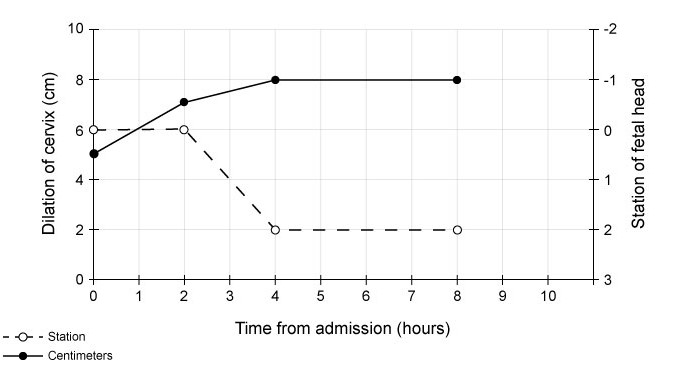 Current temperature is 36.7 C (98 F). Fetal heart rate tracing shows a baseline of 140/min, moderate variability, and multiple accelerations. Intrauterine pressure catheter shows an average of 200 Montevideo units every 10 minutes for the last 4 hours. Which of the following is the best next step in management of this patient?
 (Multiple Choice)
4.8/5 (66)
(66) Which of the following is the most appropriate course of action for this patient?
(Multiple Choice)
4.7/5 (77)
(77) A 39-year-old woman, gravida 2 para 1, at 38 weeks gestation, comes to the office for a routine prenatal visit. The patient feels well and reports normal fetal activity. Last week, she had nausea, vomiting, and diarrhea for 24 hours, but she has been able to eat and drink normally for the past several days. For the past 2 days, the patient has had increased clear vaginal discharge with irregular, painful contractions but no vaginal bleeding. She has no chronic medical conditions, and her only medication is a prenatal vitamin. Temperature is 99.6 F (37.6 C), blood pressure is 132/86 mm Hg, and pulse is 96/min. The uterus is nontender and the fundal height is 34 cm. Fetal heart tones are 135/min. Fetal ultrasound shows a cephalic fetus, measuring at the 50th percentile for gestational age, and an amniotic fluid index of 2 cm (normal: >5 cm). Which of the following is the most likely cause of this patient's amniotic fluid level?
(Multiple Choice)
4.8/5 (80)
(80) A 36-year-old woman, gravida 2 para 1, at 9 weeks gestation comes to the office to initiate prenatal care. The patient's first pregnancy ended in a vaginal delivery after an induction of labor at 37 weeks gestation for preeclampsia without severe features. She is otherwise healthy, and her only medication is a prenatal vitamin. The patient does not use tobacco, alcohol, or illicit drugs. Blood pressure is 120/70 mm Hg. BMI is 23 kg/m2. Pelvic ultrasound shows an intrauterine pregnancy at 9 weeks gestation with a normal heart rate. Prenatal laboratory tests to be drawn include a complete blood count, basic metabolic panel, urinalysis, and urine culture. Which of the following would be considered a normal finding in this patient?
(Multiple Choice)
4.8/5 (72)
(72) A 37-year-old woman comes to the emergency department for abdominal pain, nausea, and vomiting. A week ago, the patient underwent a laparoscopic hysterectomy for severe endometriosis, and she went home the next morning. For the past 2 days, the patient has had increasing diffuse abdominal pain and bloating, and she now has nausea and vomiting. She is voiding normally and passing flatus but has noticed increased vaginal discharge. The patient has no medical conditions, and her only other surgeries were 2 cesarean deliveries in her 20s. Temperature is 38 C (100.4 F), blood pressure is 128/72 mm Hg, and pulse is 88/min. The abdomen is moderately distended but soft and nontender. The laparoscopic incisions are intact and without palpable masses or defects. On pelvic examination, there is watery vaginal discharge and the vaginal cuff appears closed. Laboratory results are as follows.  Urinalysis is normal. Abdominal ultrasound reveals a large amount of intraabdominal fluid with no internal echoes. Which of the following is the most likely diagnosis in this patient?
 (Multiple Choice)
4.8/5 (66)
(66) A 34-year-old woman, gravida 2 para 1, at 20 weeks gestation comes to the office in November for a routine prenatal visit. She is feeling well and has had no vaginal bleeding or cramping. Several weeks ago, the patient had 2 days of fever and pharyngitis that resolved spontaneously. Her 3-year-old son and several of his playmates at day care had similar symptoms. The pregnancy has otherwise been uncomplicated; prenatal screening results from 13 weeks gestation were as follows:  The patient has no chronic medical conditions and is current on her vaccinations. Vital signs are normal. The uterine fundus is below the umbilicus. Ultrasound shows a fetus with bilateral periventricular intracranial calcifications and an enlarged liver with multiple intrahepatic calcifications. The estimated fetal weight is consistent with 16 weeks gestation. Which of the following pathogens is the most likely cause of this patient's ultrasound findings?
 (Multiple Choice)
5.0/5 (82)
(82) An 18-year-old woman comes to the office due to lower abdominal pain that radiates to her lower back and thighs during menses. The patient had no pain while on oral contraceptives but stopped taking them 5 months ago due to unscheduled breakthrough bleeding. Menstrual periods now occur every 30 days with 5 days of bleeding. The pain and bleeding are worse on the second day, requiring the patient to change her pad every 4 hours. She also has nausea and fatigue during the first 2 days of menses. The patient is sexually active with a male partner and uses condoms inconsistently. She has no intermenstrual bleeding or pain with intercourse. Vital signs are normal. BMI is 19.5 kg/m2. Pelvic examination reveals a small, mobile uterus and no palpable adnexal masses. Which of the following is the most likely diagnosis in this patient?
(Multiple Choice)
4.9/5 (86)
(86) A 34-year-old woman, gravida 1 para 1, comes to the emergency department due to sudden-onset heavy vaginal bleeding. For the last 4 hours, she has felt weak and has had heavy bleeding that has soaked 2 pads per hour. She has no associated fever, nausea, vomiting, or abdominal pain. Two weeks ago, the patient had a forceps-assisted vaginal delivery complicated by postpartum bleeding from a large vaginal laceration that required extensive repair. She had a blood transfusion on postpartum day 1 and was discharged home on postpartum day 3. Temperature is 36.7 C (98 F), blood pressure is 100/52 mm Hg, and pulse is 98/min. The abdomen is soft and nontender. Pelvic examination shows a well-approximated vaginal laceration. The cervix is slightly dilated and has active bleeding from the os, but no cervical or additional vaginal lacerations are present. The uterus is small, firm, mobile, and nontender. Laboratory results are as follows:  Pelvic ultrasound shows no endometrial masses or increased vascularity of the uterus. Which of the following is the most likely cause of this patient's postpartum hemorrhage?
 (Multiple Choice)
4.9/5 (91)
(91) A 38-year-old nulligravid woman comes to the office due to persistent abnormal uterine bleeding. The patient's menstrual periods previously occurred monthly and consisted of 4 days of moderate bleeding and light cramping. However, for the past 8 months, she has had intermenstrual spotting and bleeding that have occurred at varying intervals and last 3-7 days. She was started on combination oral contraceptives 4 months ago, which has not improved the bleeding pattern. Temperature is 37.2 C (99 F), blood pressure is 126/76 mm Hg, and pulse is 86/min. BMI is 29 kg/m2. Speculum examination shows dark red blood in the posterior vaginal vault but no cervical or vaginal lesions. The remainder of the pelvic examination is normal. Laboratory results are as follows: 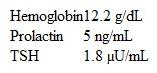 Urine pregnancy test is negative. Pelvic ultrasound shows an anteverted uterus and no adnexal masses. Which of the following is the best next step in the management of this patient?
 (Multiple Choice)
4.8/5 (74)
(74) A 54-year-old woman, gravida 2 para 2, comes to the office for evaluation of leakage of urine. Over the past 2 years, the patient has had increasingly frequent involuntary loss of urine and now wears a sanitary napkin to prevent urine from dribbling on her clothes after she voids. For the past week, she has had burning with urination but no frequency or urgency. In the last year, the patient has had 3 urinary tract infections that were treated with antibiotics. The patient had 2 term vaginal deliveries in her 30s. She has no chronic medical conditions and has had no prior surgeries. Blood pressure is 118/64 mm Hg and pulse is 82/min. BMI is 33 kg/m2. On pelvic examination, the patient does not leak urine with Valsalva and the vagina is dry and atrophic. A 2-cm tender anterior vaginal mass is palpable and causes expression of a bloody discharge at the urethral meatus. Postvoid residual is 50 mL. Which of the following is the most likely cause of this patient's symptoms?
(Multiple Choice)
4.8/5 (62)
(62) A 28-year-old woman with sickle cell disease undergoes an induction of labor and has a spontaneous vaginal delivery. After delivery of the placenta, the patient begins to have heavy vaginal bleeding and passage of large, fist-sized clots. She is administered a high-dose oxytocin infusion and multiple uterotonic agents but continues to bleed heavily. Ten minutes later, the patient suddenly develops shortness of breath and chest pain. Blood pressure is 70/40 mm Hg, pulse is 118/min, and respirations are 28/min. Cardiac examination shows sinus tachycardia. Respiratory examination reveals tachypnea but clear lung bases. The uterus is soft and distended above the umbilicus, and the patient continues to have profuse vaginal bleeding. Laboratory results are as follows: 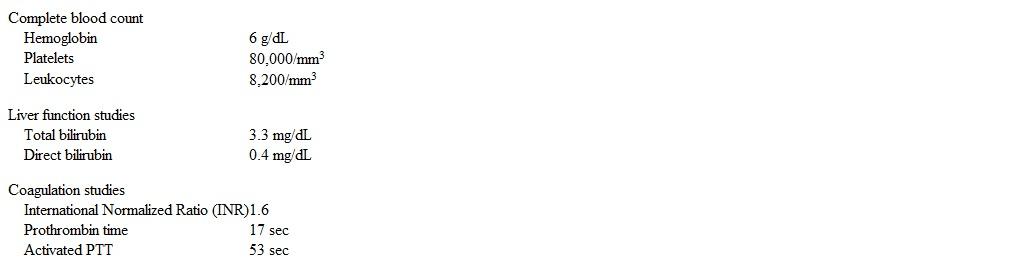 Which of the following is the most likely cause of this patient's acute decompensation?
 (Multiple Choice)
4.7/5 (69)
(69) A 37-year-old woman comes to the office for evaluation of abnormal vaginal discharge. She noticed increased clear, watery vaginal discharge 4 months ago and now has intermenstrual bleeding. She reports no pruritus or dysuria. The patient is sexually active with a male partner and uses condoms for contraception. She has had 5 lifetime sexual partners. She has no medical problems or previous surgeries. The patient has a 24-pack-year smoking history but does not use alcohol or illicit drugs. Blood pressure is 120/70 mm Hg and pulse is 88/min. On pelvic examination, a raised, ulcerative lesion is noted on the cervix, and clear discharge is present. The vaginal mucosa is not erythematous and has no lesions. The uterus is small, mobile, and anteverted, with no adnexal masses or cervical motion tenderness. No inguinal lymphadenopathy is present. Which of the following is the best next step in the diagnosis of this patient's condition?
(Multiple Choice)
4.8/5 (87)
(87) A 29-year-old woman comes to the office for a colposcopy after a cervical cancer screening last week revealed abnormal intraepithelial lesions. The patient feels well and has had no abnormal vaginal bleeding or discharge. She has no chronic medical conditions and has had no prior surgery. The patient's only medication is an oral contraceptive. She does not use tobacco, alcohol, or illicit drugs. BMI is 23 kg/m2. On colposcopy, the squamocolumnar junction is not completely visualized, and an ectocervical biopsy reveals cervical intraepithelial neoplasia (CIN) 1. An endocervical curettage shows CIN 3. Which of the following is the best next step in management of this patient?
(Multiple Choice)
4.9/5 (85)
(85) Bimanual massage of the uterus is performed, and 2 large-bore intravenous lines are placed due to ongoing bleeding. Blood pressure is 100/60 mm Hg, pulse is 112/min, and respirations are 18/min. Which of the following is the best next step in management of this patient?
(Multiple Choice)
4.8/5 (75)
(75) A 34-year-old woman, gravida 3 para 3, comes to the office 2 weeks after a spontaneous vaginal delivery for evaluation of urinary leakage. Since delivery, the patient has had leaking of urine in small amounts 5-6 times daily. She sometimes does not feel the urge to urinate despite a good appetite and frequent hydration. The patient has no dysuria or hematuria. She has no chronic medical conditions and has had no surgeries. Temperature is 98.8 F (37.1 C), blood pressure is 124/78 mm Hg, and pulse is 86/min. The uterus is firm, nontender, and extends 2 fingerbreadths above the pubic symphysis. There is urethral leakage of urine with Valsalva maneuver, but no urine in the vaginal vault. A postvoid residual is normal. The perineum is intact and there is scant lochia. Which of the following is the best next step in management of this patient?
(Multiple Choice)
4.9/5 (90)
(90) A 35-year-old woman, gravida 4 para 1 aborta 2, comes to the office for her first prenatal visit. Her last menstrual period was 7 weeks ago, and she is concerned about a recent episode of vaginal bleeding and cramping. A home pregnancy test was positive a few days after the patient's missed menstrual period. Around that time, she had nausea that has since subsided. She has had 1 prior full-term delivery followed by 2 early first-trimester losses requiring dilation and curettage procedures. Six months ago, she had an isolated episode of sudden right arm weakness and slurred speech, which resolved spontaneously 2 hours later. The patient takes a daily prenatal vitamin but no other medications. BMI is 34 kg/m2. Blood pressure is 130/80 mm Hg. Pelvic examination shows a closed cervix; no vaginal bleeding; and a slightly enlarged, irregularly shaped uterus. Ultrasound reveals an empty uterus with a single subserosal fibroid that is 2 cm in diameter. β-hCG is 23 IU/L. Which of the following maternal factors is the most likely cause of this patient's miscarriage?
(Multiple Choice)
5.0/5 (84)
(84) A 19-year-old woman comes to the office due to vaginal bleeding and cramping that started 2 hours ago. The patient has no nausea, vomiting, fever, chills, or abnormal discharge. Her last menstrual period was 10 weeks ago. She has no chronic medical conditions and takes no medications. The patient does not drink alcohol but smokes a pack of cigarettes daily and uses illicit drugs on occasion. Temperature is 36.7 C (98 F), blood pressure is 120/70 mm Hg, and pulse is 76/min. BMI is 23 kg/m2. On physical examination, the abdomen is soft and nontender. Pelvic examination reveals a 10-week-size, nontender uterus; a closed cervix; and a small amount of bright red blood in the vaginal vault. A urine pregnancy test is positive. A urine drug screen is positive for amphetamines. Ultrasound confirms a 10-week intrauterine gestation with a normal fetal heartbeat. This patient is at risk for which of the following pregnancy complications?
(Multiple Choice)
4.9/5 (74)
(74) A 34-year-old woman comes to the office for evaluation of amenorrhea. Last year the patient had a missed abortion that was surgically managed with suction curettage. At her follow-up visit a few weeks later she had a copper-releasing intrauterine device placed. Her menstrual periods were initially irregular and heavy, but the bleeding became increasingly lighter. Now the patient has not had a menstrual period in 6 months. Prior to the intrauterine device placement she had regular menses. The patient has had no weight changes, changes in vision, or galactorrhea. She has generalized anxiety disorder. Her older brother has severe intellectual disability due to fragile X syndrome. Vital signs are normal. BMI is 22 kg/m2. Pelvic examination shows a small, mobile uterus with no adnexal masses. There is no tenderness over the perineum with speculum examination. Pregnancy test is negative. TSH is normal and FSH is elevated. A progesterone challenge is performed and the patient has no withdrawal bleeding. Which of the following is the most likely diagnosis in this patient?
(Multiple Choice)
4.7/5 (75)
(75) 
Filters
- Essay(0)
- Multiple Choice(0)
- Short Answer(0)
- True False(0)
- Matching(0)