



 Chat with AI
Exam 5: Obstetrics & Gynecology

Exam 1: Medicine2 k Questions
Exam 2: Pediatric723 Questions
Exam 3: Psychiatry336 Questions
Exam 4: Surgery563 Questions
Exam 5: Obstetrics & Gynecology469 Questions
Select questions type


Two wide-bore intravenous lines are placed, and intravenous fluids are administered. Which of the following is the best next step in management of this patient?
(Multiple Choice)
4.7/5  (81)
(81) A 37-year-old woman comes to the emergency department due to persistent nausea and vomiting. The patient has had intermittent nausea for the past week and nausea and vomiting for the past 2 days. Now, she is unable to tolerate solids or liquids. The patient has had no fever, chills, abdominal pain, diarrhea, constipation, or sick contacts. She has well-controlled chronic hypertension and hypothyroidism. The patient has had no surgeries. She is sexually active and uses condoms intermittently. The patient smokes half a pack of cigarettes daily but does not use alcohol or illicit drugs. Temperature is 36.7 C (98 F), blood pressure is 130/88 mm Hg, and pulse is 108/min. Mucous membranes are dry and capillary refill time is delayed. The thyroid is nontender and diffusely enlarged on palpation. Cardiac examination shows sinus tachycardia and no murmurs. The abdomen is nontender and nondistended. A urine pregnancy test is positive. Urinalysis is positive for ketones. Pelvic ultrasound reveals a viable, 8-week intrauterine twin gestation. Which of the following is the most significant risk factor for this patient's current symptoms?
(Multiple Choice)
4.7/5 (73)
(73) A 36-year-old woman, gravida 1 para 0, comes to the office for an initial prenatal visit. The patient recently immigrated to the United States and has not received prenatal care. She is at 22 weeks gestation by a sure, regular last menstrual period. Vital signs are normal. Height is 152.5 cm (5 ft 0 in). BMI is 26 kg/m2. Fundal height is 27 cm. Routine prenatal laboratory results include:  Ultrasound reveals a male fetus with an edematous scalp and nuchal fold. The fetal abdomen contains a large amount of echolucent fluid. The biparietal diameter and femur length measure at 22 weeks gestation. The single deepest pocket of amniotic fluid is 12 cm, and the placenta is thickened to 6 cm. Fetal heart rate is 170/min. Which of the following is the most likely cause of this fetal presentation?
 (Multiple Choice)
4.9/5 (78)
(78) A 37-year-old woman, gravida 3 para 2, at 32 weeks gestation comes to the office for evaluation of leg pain and numbness. For the past few weeks, she has noticed numbness and a "pins and needles" sensation over the lateral aspect of the left thigh that has progressively worsened. The patient is a kindergarten teacher and now has difficulty standing for prolonged periods of time. She has no chronic medical conditions and her only medication is a daily prenatal vitamin. Vital signs are normal, and BMI is 37 kg/m2. On examination, the patient walks with a widened gait and has an exaggerated lordosis of the lower back. The left leg has a large area of numbness over the upper lateral thigh. Straight leg raise test is negative, but the patient has pain with hip extension. There is no tenderness to palpation over the left hip or buttock. Reflexes are intact and strength is 5/5 bilaterally. Which of the following is the most likely cause of this patient's pain?
(Multiple Choice)
4.9/5 (78)
(78) A 37-year-old woman, gravida 2 para 1, comes to the emergency department due to painful contractions and leakage of fluid. She has not received prenatal care during this pregnancy and is at 24 weeks gestation by a sure, regular last menstrual period. The patient has no chronic medical conditions. She precipitously delivers a male fetus with no cardiac activity. Examination of the fetus shows edematous, peeling skin. The scalp is edematous, but the palate appears normal and there are no dysmorphic facial features. The fetal abdomen is tense and fluid-filled. The placenta appears thickened and edematous. Maternal laboratory results are as follows:  Which of the following is the most likely etiology of this patient's fetal demise?
 (Multiple Choice)
4.9/5 (82)
(82) A 15-year-old girl comes to the office due to a self-palpated breast mass. The patient discovered the breast lump 2 days ago while taking a shower and noted that it is mildly tender. Breast development began at age 9 and menses at age 11. The patient's menstrual cycles were irregular for the first year after menarche, but now they occur monthly. Her last menstrual period was a week ago. She has no chronic medical conditions and takes no medications. The patient's mother has a history of breast cancer diagnosed at age 38. BMI is at the 75th percentile. Vital signs are normal. Physical examination reveals a firm, smooth, mobile mass in the superior outer quadrant of the right breast. There is no palpable lymphadenopathy. The remainder of the physical examination is unremarkable. Which of the following is the best next step in management of this patient?
(Multiple Choice)
4.8/5 (91)
(91) A 39-year-old woman, gravida 2 para 1, at 28 weeks gestation comes to the hospital due to painful uterine contractions for the past 4 hours accompanied by the passage of clear fluid from her vagina. She initiated prenatal care a week ago, during which an anatomy ultrasound revealed a fetus with anencephaly. Her prior pregnancy was uncomplicated. She has no chronic medical conditions and has had no surgeries. The patient does not use tobacco, alcohol, or illicit drugs. Temperature is 37.2 C (99 F), blood pressure is 110/70 mm Hg, and pulse is 80/min. A sterile speculum examination reveals pooling of nitrazine-positive fluid in the vagina. The cervix is 4 cm dilated and 80% effaced. Bedside ultrasound reveals anhydramnios and an anencephalic fetus in breech presentation. Fetal heart rate is normal. Tocometer shows contractions every 3 minutes. Which of the following is the best next step in management of this patient?
(Multiple Choice)
4.8/5 (85)
(85) This patient's condition increases her risk for which of the following complications?
(Multiple Choice)
4.8/5 (92)
(92) A 23-year-old woman, gravida 1 para 0, comes to the office for an initial prenatal visit. She had a positive home pregnancy test 2 weeks ago and started taking a daily prenatal vitamin at that time. The patient had some light vaginal bleeding 3 weeks ago, which has resolved. She has had no nausea, vomiting, or pelvic pain. The patient was diagnosed with type 1 diabetes mellitus at age 5 and is on an insulin pump. She has no other chronic medical conditions. Blood pressure is 120/74 mm Hg and pulse is 80/min. BMI is 22 kg/m2. Pelvic examination shows an enlarged uterus and a closed cervix. Ultrasound shows a twin intrauterine gestation; both twins measure at 7 weeks gestation and have normal heart rates. Laboratory results are as follows:  Which of the following is the best next step in management of this patient?
 (Multiple Choice)
4.8/5 (87)
(87) A 42-year-old woman comes to the emergency department for severe lower abdominal pain. The pain started several hours ago and has progressively worsened. She has associated nausea and vomiting but no fever, diarrhea, or abnormal vaginal discharge. The patient was diagnosed with adenomyosis last month due to increasingly heavy menses and dysmenorrhea and is currently taking tranexamic acid as needed. Her menses started yesterday, but she reports that the pain is more severe than usual and radiates to the left lower quadrant. Temperature is 37.8 C (100 F), blood pressure is 110/74 mm Hg, and pulse is 110/min. The abdomen is soft with normoactive bowel sounds, and there is voluntary guarding in the left lower quadrant. On pelvic examination, the uterus is globular and boggy, and there is dark red blood with small clots in the vagina. The left adnexa is tender on bimanual examination, and there are no palpable adnexal masses. Urine pregnancy testing is negative. Hemoglobin is 11 g/dL. Which of the following is the best next step in management of this patient?
(Multiple Choice)
4.7/5 (75)
(75) A 26-year-old primigravid woman at 25 weeks gestation comes to the hospital due to preterm labor. For the last 6 hours, the patient has had intermittent, painful contractions but no vaginal bleeding or leakage of fluid. Blood pressure is 110/66 mm Hg and pulse is 90/min. BMI is 23 kg/m2. Cardiopulmonary examination is normal. The uterus is nontender. On sterile speculum examination, the cervix is visibly 2 cm dilated. Fetal heart rate monitoring shows a baseline of 150/min, no decelerations, no accelerations, and minimal variability. Contractions occur every 2-3 minutes on tocodynamometry. The patient is administered indomethacin for tocolysis. This intervention increases this patient's risk for which of the following obstetric complications?
(Multiple Choice)
4.9/5 (83)
(83) A 45-year-old woman comes to the office due to increasing difficulty sleeping for the past few months. She is unable to concentrate at work and is not exercising due to fatigue. The patient reports a 4.5-kg (9.9-lb) weight gain and is now unable to wear her normally fitting clothing. She has no mood changes, hair loss, weakness, or changes in bowel or bladder function. She has no chronic medical problems or previous surgeries. The patient's menstrual periods have become irregular over the last 2 years; her last period was 3 months ago. She is currently sexually active. She does not use tobacco, alcohol, or illicit drugs. Blood pressure is 120/70 mm Hg and pulse is 80/min. BMI is 31 kg/m2. The patient has moist mucous membranes with normal capillary refill. There is no acanthosis nigricans. The abdomen is obese; there is no hepatosplenomegaly or ascites. On bimanual examination, the uterus is symmetrically enlarged. There are no palpable adnexal masses. Which of the following is the best next step in management of this patient?
(Multiple Choice)
4.7/5 (81)
(81) A 32-year-old woman, gravida 2 para 1, at 28 weeks gestation comes to the office for a prenatal visit. The patient has had no contractions, vaginal bleeding, or leakage of fluid. Fetal movement has been normal. This pregnancy has been uncomplicated, but her last pregnancy ended with a low transverse cesarean delivery due to an abnormal fetal heart rate tracing. The patient has no chronic medical conditions and takes a daily prenatal vitamin. Vital signs are normal. Fetal heart rate is 145/min and fundal height is 24 cm. An ultrasound is performed due to a discrepancy between fundal height and gestational age, and shows a posterior placenta; a normal amniotic fluid volume; a fetus in transverse lie with shoulder presentation; and estimated fetal weight consistent with gestational age. The patient is concerned about the fetal presentation; she asks if the baby will stay in this presentation and if she can have a vaginal delivery. Which of the following is the most appropriate response to this patient?
(Multiple Choice)
4.8/5 (86)
(86) A 24-year-old woman, gravida 1 para 1, is evaluated on labor and delivery for heavy vaginal bleeding. Thirty minutes earlier, the patient underwent a forceps-assisted vaginal delivery of a 4.4 kg (9 lb 11 oz) male infant at 41 weeks gestation. She feels dizzy and nauseated. The patient has asthma and has had to use her albuterol inhaler with increasing frequency throughout her pregnancy. Temperature is 36.1 C (97 F), blood pressure is 104/78 mm Hg, and pulse is 102/min. Oxygen saturation is 98%. The patient appears pale. The abdomen is soft and nontender, and the fundus is boggy and palpable above the umbilicus. Pelvic examination shows an intact perineal repair, no vaginal or cervical lacerations, and profuse vaginal bleeding with passage of large clots. Uterine massage and high-dose oxytocin do not resolve the bleeding. Which of the following is the best next step in management of this patient?
(Multiple Choice)
4.8/5 (73)
(73) A 17-year-old primigravida at 29 weeks gestation comes to the clinic due to headaches. For the last 2 weeks, she has had an intermittent throbbing pain in the left frontal region when she wakes up. The pain is sometimes accompanied by a rhythmic pulsating sound. Acetaminophen provides minimal improvement. The patient has had no fever, right upper quadrant pain, contractions, or vaginal bleeding. She recalls no trauma and has no chronic medical conditions. Prepregnancy BMI is 31 kg/m2, and the patient has gained 20 kg (44 lb) so far. Temperature is 37.1 C (98.8 F), blood pressure is 136/76 mm Hg, pulse is 80/min, and respirations are 18/min. Fetal heart rate is 160/min. There is no neck stiffness. Visual field testing is normal. Funduscopic examination shows bilateral optic disc edema. Bilateral deep tendon reflexes are 2+. The remainder of the neurologic examination is unremarkable. Urinalysis has trace protein. Which of the following is the best next step in evaluation of this patient?
(Multiple Choice)
4.9/5 (78)
(78) A 33-year-old woman comes to the office for evaluation of a vaginal mass. The patient first noticed the mass 2 weeks ago after having pain during intercourse. She has avoided intercourse since, but the mass is still present. The patient has had no irregular menstrual bleeding or postcoital bleeding. She has had 4 sexual partners in the last year and uses combination oral contraceptives. The patient had 3 term vaginal deliveries in her 20s; her largest baby was 4.54 kg (10 lb). She had an abnormal cervical cancer screening 2 years ago but a normal follow-up colposcopy. Temperature is 36.7 C (98 F), blood pressure is 120/70 mm Hg, and pulse is 76/min. BMI is 26 kg/m2. On pelvic examination, there is a 3-cm mass on the anterior aspect of the vaginal wall that does not change in size with Valsalva maneuver. The mass is tender to palpation and expresses a purulent urethral discharge. Which of the following is the most likely diagnosis in this patient?
(Multiple Choice)
4.8/5 (80)
(80) A 37-year-old woman, gravida 2 para 1, at 22 weeks gestation comes to the office for a fetal anatomy ultrasound. The patient has had limited prenatal care this pregnancy but had a normal dating ultrasound in the first trimester. Her first pregnancy resulted in a term vaginal delivery. The patient has had no vaginal bleeding, contractions, or leakage of fluid, and she has been taking a daily prenatal vitamin. Vital signs are normal. Prepregnancy BMI was 22 kg/m2, and she has had appropriate weight gain. Fundal height is 27 cm. The fetal ultrasound reveals a dilated fluid-filled stomach and dilated proximal intestinal segment, as seen below. The remainder of the bowel has no intraluminal air or fluid. Amniotic fluid measurement shows: 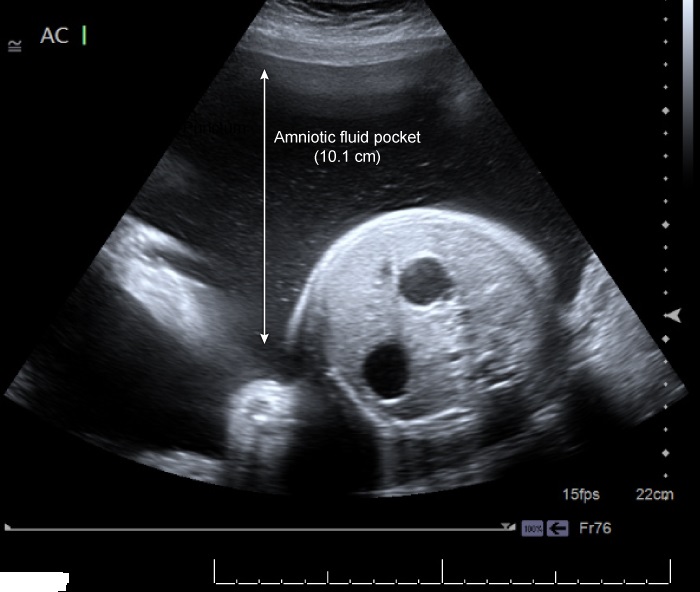 Which of the following additional findings is most likely to be found on this fetal ultrasound?
 (Multiple Choice)
4.8/5 (102)
(102) A 29-year-old woman, gravida 1 para 0, at 21 weeks gestation comes to the office for a fetal anatomy ultrasound. She feels well and has had no vaginal bleeding, leakage of fluid, or contractions, but she has not yet felt any fetal movement. The patient has no chronic medical conditions and her pregnancy has been uncomplicated. Vital signs are normal. Ultrasound reveals minimal amniotic fluid, consistent with oligohydramnios. A singleton male fetus is in the breech presentation. Fetal heart rate is 170/min. Fetal lungs appear hypoplastic and have no surrounding pleural fluid bilaterally. The fetal abdomen has a large fluid-filled mass arising from the pelvis, consistent with a distended bladder. Bilateral fetal kidneys are enlarged and have thin renal cortices. Which of the following is the most likely underlying cause of these ultrasound findings?
(Multiple Choice)
4.9/5 (85)
(85) A 46-year-old woman comes to the office due to fecal incontinence. For the past several years, the patient has had fecal incontinence a few times per year. However, over the past year, it has worsened and now occurs once or twice a week, with leakage of liquid fecal material and a small amount of diarrhea. The patient has a formed bowel movement once a day. She has tried to change her diet, increasing dietary fiber and avoiding dairy products, but has had no improvement in her symptoms. The patient takes metformin for type 2 diabetes mellitus, and her last hemoglobin A1c was 7.2%. She has had 2 vaginal deliveries and no surgeries. BMI is 24 kg/m2. Vital signs are normal. The abdomen is soft and nontender and has normoactive bowel sounds. There is a moderate amount of soft stool in the rectal vault, and anal sphincter tone is decreased. Deep tendon reflexes and sensation are intact in the bilateral lower extremities. Which of the following is the most likely cause of this patient's presentation?
(Multiple Choice)
4.9/5 (85)
(85) A 36-year-old primigravid woman at 34 weeks gestation arrives at the emergency department after being found unresponsive on the floor by her husband. She was found unconscious about 30 minutes ago and became gradually responsive over a few minutes. The husband reports the patient has had increasing nausea and vomiting over the past few hours and a severe frontal headache. Currently she has no symptoms other than the headache. Medical history is significant for migraines, and the patient takes no daily medications. Temperature is 36.7 C (98.1 F), blood pressure is 138/98 mm Hg, pulse is 78/min, and respirations are 20/min. Cranial nerves are intact, and the neck is supple. Funduscopic examination is normal. The lungs are clear to auscultation bilaterally. Cardiac examination demonstrates normal heart sounds. The abdomen is nontender, and the uterine fundus measures 34 weeks gestation. There is minimal pretibial edema, and deep tendon reflexes are 3+. Motor examination is normal. Laboratory results are as follows: 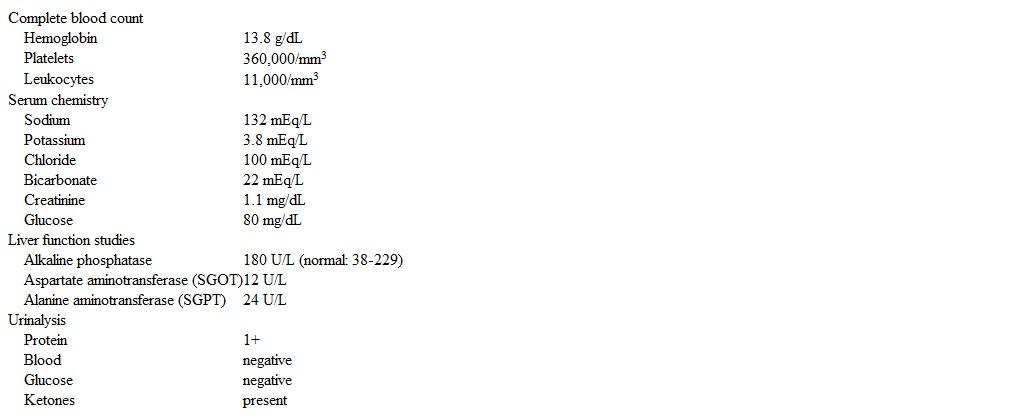 Urine drug screen is negative. CT scan of the head reveals bilateral frontal lobe edema but no mass lesions or bleeding. Which of the following is the best next step in management of this patient?
 (Multiple Choice)
4.8/5 (76)
(76) 
Filters
- Essay(0)
- Multiple Choice(0)
- Short Answer(0)
- True False(0)
- Matching(0)