



 Chat with AI
Exam 3: Biochemistry

Exam 1: Anatomy291 Questions
Exam 2: Behavioral science240 Questions
Exam 3: Biochemistry156 Questions
Exam 4: Biostatistics117 Questions
Exam 5: Embryology52 Questions
Exam 6: Genetics103 Questions
Exam 7: Histology24 Questions
Exam 8: Immunology129 Questions
Exam 9: Microbiology336 Questions
Exam 10: Pathology816 Questions
Exam 11: Pathophysiology464 Questions
Exam 12: Pharmacology538 Questions
Exam 13: Physiology272 Questions
Select questions type


As part of a research study investigating enzymatic activity in both normal and diseased liver tissue, hepatocytes are isolated from biopsy samples obtained from patients undergoing routine care at a local tertiary referral center. The cells are homogenized and centrifuged to remove membrane components and organelles. Following subsequent rounds of centrifugation, the remaining supernatant contains only cytosol and cytosolic proteins. Activity of which of the following enzymes will most likely be detectable in the supernatant of healthy liver cells?
(Multiple Choice)
4.7/5  (64)
(64) A 31-year-old man comes to the office for a routine checkup. He has no significant medical problems and does not take any medications. The patient works as a fitness trainer and lifts weights recreationally. He has been consuming carbohydrate-rich food prior to his weightlifting sessions and claims that it increases muscle strength. A literature review shows that the rate of glycogenolysis within myocytes increases several hundredfold during active skeletal muscle contraction. Which of the following substances is most likely responsible for increasing the reaction rate during active contraction?
(Multiple Choice)
4.8/5 (90)
(90) A 68-year-old man comes to the emergency department due to abdominal pain and nausea for the past 2 days. He has a history of atherosclerotic cardiovascular disease and underwent coronary artery bypass surgery 2 years ago. Blood pressure is 105/65 mm Hg and heart rate is 120/min and irregular. Abdominal examination reveals mild diffuse tenderness and decreased bowel sounds. Laboratory studies are as follows: 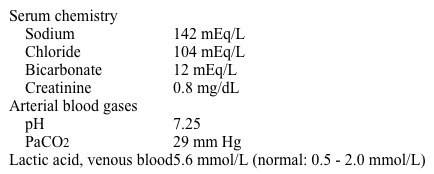 ECG shows absent P waves and an irregular rate and rhythm. CT scan of the abdomen reveals colonic wall thickening and no enhancement with intravenous contrast. Urinalysis shows acidic urine. Renal metabolism of which of the following amino acids is most important for maximizing acid excretion in this patient?
 (Multiple Choice)
4.9/5 (76)
(76) A 34-year-old woman comes to the physician with abdominal pain and melena. She also complains of progressive fatigue and a 5 kg (11 lb) weight loss over the last 2 months. She has a strong family history of colon, endometrial, and ovarian cancer. Colonoscopy shows a protuberant, friable mass in the ascending colon, and biopsy is diagnostic for colon adenocarcinoma. Genetic analysis confirms a mutation consistent with Lynch syndrome (hereditary nonpolyposis colon cancer). Which of the following is most likely responsible for the development of colon cancer in this patient?
(Multiple Choice)
4.9/5 (94)
(94) A 48-year-old woman comes to the emergency department with headache, dizziness, and nausea for the past several hours. She has no fever, nasal congestion, or cough but reports that her husband has also been complaining of headache. The patient has been burning wood in the fireplace to warm her house after losing electricity during a snowstorm. Her temperature is 37 C (98.6 F), blood pressure is 135/70 mm Hg, and pulse is 94/min and regular. Physical examination is unremarkable. The substance responsible for this patient's condition most likely impairs hemoglobin function through which of the following mechanisms?
(Multiple Choice)
4.9/5 (84)
(84) Erythroblasts isolated from a bone marrow biopsy sample of a patient with neonatal jaundice are incubated in a medium containing radiolabeled glucose. The cells are unable to generate NADPH from glucose metabolism but are able to convert fructose-6-phosphate to ribose-5-phosphate, which is required for nucleic acid synthesis. Which of the following enzymes is essential for the latter conversion?
(Multiple Choice)
4.9/5 (83)
(83) A 6-month-old boy is brought to the emergency department by his mother because of recent onset of vomiting, irritability, and jaundice. The infant was born at term and had been healthy until the onset of these symptoms. All of his vaccinations are up-to-date. He had been breast-fed exclusively until 1 week ago, when cereals and fruit juices were introduced into his diet. Further evaluation reveals hepatomegaly and abnormal liver function tests. Which of the following enzymes is most likely to be deficient in this patient?
(Multiple Choice)
4.9/5 (77)
(77) A 4-month-old boy is brought to the office for his first visit since arriving in the United States. The patient was recently adopted, and his adoptive mother says the boy is tremulous compared to her biological children. Over the past week, the boy has also had episodes of upward eye deviation and bilateral arm and leg shaking for approximately 2 minutes at a time. Biological family history is not available. His temperature is 36.7 C (98.1 F), blood pressure is 90/40 mm Hg, pulse is 120/min, and respirations are 30/min. Examination shows a fair-skinned infant with blue eyes and a musty body odor. Which of the following amino acids is most likely essential in this patient?
(Multiple Choice)
4.9/5 (81)
(81) An 11-year-old girl is evaluated for blurry vision. The patient was adopted internationally at age 9. She has no history of head or eye trauma or exposure to ionizing radiation. Motor and cognitive milestones have been achieved at the appropriate age. She has a good appetite and does not follow any specific diet. The patient takes no medications and has no allergies. Vaccinations are up to date. Vital signs are normal. She is at the 40th percentile for height and weight. Other than bilateral lens opacities, the rest of her examination is normal. Urine is positive for reducing substances. Deficient activity of which of the following enzymes is the most likely cause of this patient's eye condition?
(Multiple Choice)
4.8/5 (92)
(92) A 64-year-old man comes to the emergency department due to severe abdominal pain, nausea, and vomiting. He has a history of hypertension, myocardial infarction, and systolic heart failure. His blood pressure is 100/60 mm Hg, pulse is 116/min and irregular, and respirations are 24/min. Examination shows a soft, mildly distended, and tender abdomen. Laboratory results are as follows: 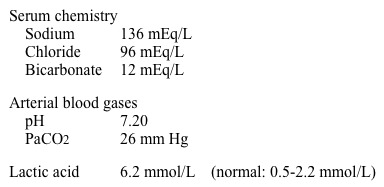 CT scan of the abdomen reveals distal ileal wall thickening and lack of enhancement with intravenous contrast. Decreased activity of which of the following enzymes best explains the acid-base disorder in this patient?
 (Multiple Choice)
4.8/5 (72)
(72) A 54-year-old man comes to the emergency department with a 3-month history of fatigue and exertional dyspnea. He has early satiety and frequent upper abdominal discomfort. On physical examination, the patient has palpable splenomegaly but no lymphadenopathy. Laboratory tests are as follows: 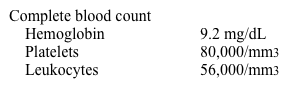 Reverse transcription polymerase chain reaction is used to diagnose chronic myelogenous leukemia in this patient. Which of the following is most likely to be detected by this test?
 (Multiple Choice)
4.7/5 (97)
(97) A 44-year-old homeless man is brought to the emergency department after police officers found him agitated and confused. During transport to the hospital, he is started on intravenous fluids with dextrose. On arrival, the patient is disoriented but cooperative. Physical examination shows bruises on his forehead, forearms, and shins. Extraocular findings include bilateral horizontal nystagmus and decreased lateral eye movements. He also has an unsteady gait with widely-spaced legs and short steps. The ambulance personnel state that the patient's extraocular movements were intact when they picked him up. A review of the medical record shows that the patient has been admitted to the hospital with alcohol intoxication several times before. Which of the following reactions is likely to be the most impaired in this patient? 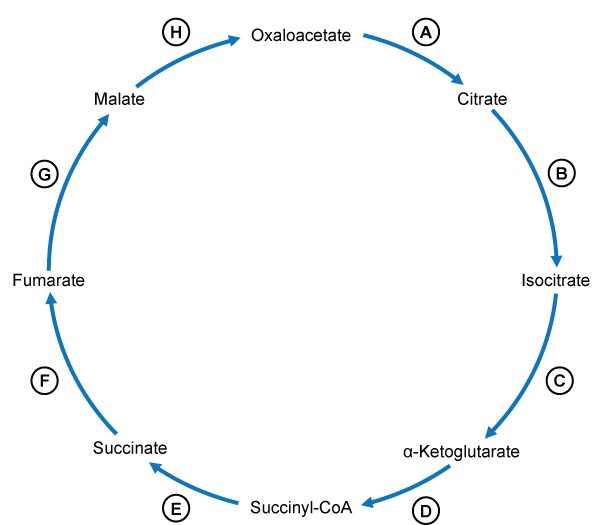
(Multiple Choice)
4.8/5 (83)
(83) Researchers lyse human cells and isolate a specific messenger RNA template using gel electrophoresis. Reverse transcription polymerase chain reaction is then used to synthesize complementary DNA (cDNA) from the RNA template. Next, the cDNA is modified into an expression vector containing an optimized bacterial promoter, ribosomal binding site, and terminator sequence. After insertion of the vector into appropriate bacterial hosts, the transformed bacteria are cultured in a bioreactor and produce large quantities of a protein containing a domain that binds to a specific DNA sequence. This protein is most likely the receptor for which of the following hormones?
(Multiple Choice)
4.8/5 (72)
(72) A 6-year-old girl is brought to the office for evaluation of short stature. Her parents have noticed that she bears little resemblance to her 2 older siblings. The patient's mother and father are 172.5 cm (5'8") and 183 cm (6') tall, respectively. On physical examination, the patient's height is 3 standard deviations below the mean for her age. Other findings include low-set ears, a high arched palate, a webbed neck, and cubitus valgus. Chromosomal analysis reveals a 45,XO karyotype. The patient is started on a medication to improve growth and normalize her height. Which of the following intracellular pathways is stimulated by the medication used in this patient?
(Multiple Choice)
4.9/5 (89)
(89) A 39-year-old woman comes to the emergency department due to several episodes of severe upper abdominal pain. Her pain is triggered by fatty foods and resolves spontaneously. The symptoms first began a few months earlier after an uncomplicated pregnancy. Past medical history is notable for hypertension, for which the patient takes a calcium channel blocker, and hypertriglyceridemia, which is treated with a fibrate. Temperature is 37.2 C (98.9 F) and blood pressure is 143/76 mm Hg. The patient weighs 95 kg (210 lb) and is 173 cm (5 ft 8 in) tall. Ultrasound reveals thickening of the gallbladder wall, with tenderness elicited by the ultrasound probe directly over the gallbladder. She undergoes a laparoscopic cholecystectomy, with multiple stones noted in the contents of the gallbladder. Decreased activity of which of the following enzymes would most likely have contributed to this patient's condition?
(Multiple Choice)
5.0/5 (87)
(87) A 28-year-old man comes to the emergency department due to anxiety, weakness, dyspnea, and headaches. He is a graduate student in chemistry and was accidentally exposed to nitrites in his research laboratory. Physical examination is notable for cyanosis that is not improved by administration of supplemental oxygen via facemask. Analysis of a sample of arterial blood drawn from this patient prior to any oxygen supplementation is most likely to reveal normal values for which of the following?
(Multiple Choice)
4.8/5 (75)
(75) A 35-year-old woman comes to the emergency department with nausea, vomiting, and fever. Her symptoms began 24 hours ago, and she has been unable to eat or drink anything since. She has a 3-year-old daughter who had similar symptoms 2 days earlier but is now fine. Laboratory studies show a blood glucose level of 82 mg/dL despite her 24-hour fast. Maintenance of this patient's blood glucose levels is facilitated by hepatic conversion of pyruvate into glucose. Which of the following substances directly stimulates the first enzyme involved in this process?
(Multiple Choice)
5.0/5 (78)
(78) A 24-year-old postpartum woman comes to the office for follow-up of gestational diabetes. The patient was diagnosed with gestational diabetes mellitus during routine screening at 28 weeks gestation; she was treated with dietary modification and exercise and required insulin briefly. Since delivery 12 weeks ago, she has continued to follow dietary recommendations, and her blood glucose has been fairly well controlled without insulin. The patient has fasting blood glucose levels of 100-120 mg/dL. Medical history is otherwise unremarkable. Family history is significant for diabetes mellitus in her mother and gestational diabetes in her sister. Vital signs are within normal limits. BMI is 22 kg/m2. Physical examination shows no abnormalities. Her gestational diabetes and fasting hyperglycemia are suspected to be genetically predisposed. This patient's condition is most likely caused by reduced activity of which of the following enzymes?
(Multiple Choice)
4.9/5 (70)
(70) A 9-month-old boy is brought to the clinic for a routine follow-up. His mother is concerned because the patient is not yet able to sit up unsupported. He was born at term and has had muscle weakness since birth. Vital signs are normal. The patient is alert but has diminished tone. Examination shows a prominent forehead with a depressed nasal bridge. Eye examination shows epicanthal folds. Analysis of lysosomal acid hydrolases shows an increased concentration within the serum and a decreased level within the cultured skin fibroblast cells. This patient most likely has a defect in which of the following steps of enzyme production?
(Multiple Choice)
4.7/5 (91)
(91) Researchers studying chronic lymphocytic leukemia (CLL) observe that in some patients the disease is indolent, with limited growth over more than a decade, whereas in other patients the disease is more aggressive and becomes symptomatic early on. They find that genetic abnormalities can be detected in a majority of patients with CLL and may play a role in determining the difference between the 2 disease courses. A clinical study is conducted with the hypothesis that individuals with CLL with trisomy of chromosome 12 have a more favorable course than individuals with other genetic changes. Which of the following laboratory techniques would be most useful for identifying patients with this genetic abnormality?
(Multiple Choice)
4.9/5 (59)
(59) 
Filters
- Essay(0)
- Multiple Choice(0)
- Short Answer(0)
- True False(0)
- Matching(0)