



 Chat with AI
Exam 3: Biochemistry

Exam 1: Anatomy291 Questions
Exam 2: Behavioral science240 Questions
Exam 3: Biochemistry156 Questions
Exam 4: Biostatistics117 Questions
Exam 5: Embryology52 Questions
Exam 6: Genetics103 Questions
Exam 7: Histology24 Questions
Exam 8: Immunology129 Questions
Exam 9: Microbiology336 Questions
Exam 10: Pathology816 Questions
Exam 11: Pathophysiology464 Questions
Exam 12: Pharmacology538 Questions
Exam 13: Physiology272 Questions
Select questions type


An 8-year-old boy is brought to the emergency department due to vomiting and lethargy. The patient had been on an overnight hiking trip with his family. During the trip, the family lost their food pack while canoeing and had to hike back to their car. The child became weak and was carried for the last mile. None of the family has eaten for approximately 24 hours. On examination, the patient appears listless. Mild hepatomegaly is noted. Laboratory results are as follows: 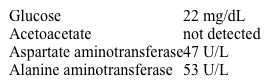 The patient begins seizing shortly after arriving at the emergency department. Which of the following enzymes is most likely deficient in this patient?
 (Multiple Choice)
4.9/5  (83)
(83) A 43-year-old man prospecting for gold in Arizona becomes stuck in the desert after his truck breaks down. He brought a large supply of water with him but only a few granola bars as food. After 3 days, he is able to flag down a passing vehicle and obtain transportation to the nearest settlement. During this ordeal, his liver begins to synthesize large quantities of glucose from source molecules such as alanine, lactate, and glycerol. As part of this process, phosphoenolpyruvate is formed from oxaloacetate in a reaction that requires a specific nucleoside triphosphate as a cofactor. Which of the following reactions directly synthesizes this cofactor? 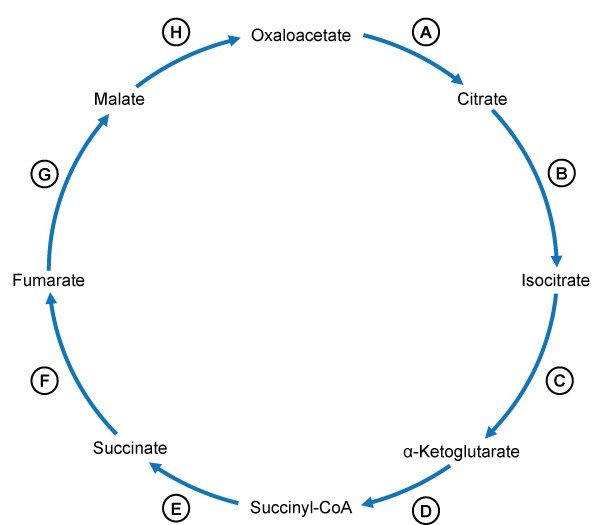
(Multiple Choice)
4.9/5 (66)
(66) A 62-year-old man comes to the emergency department due to severe colicky upper abdominal pain, nausea, and vomiting. He reports several episodes of similar abdominal discomfort in the past. The patient does not use tobacco, alcohol, or illicit drugs. He immigrated to the United States from East Asia several years ago. Physical examination shows right upper quadrant abdominal tenderness. An imaging study shows several gallstones in the common bile duct and gallbladder. The stones are removed from the duct endoscopically, and a cholecystectomy is also performed. The gallstones are dark brown, soft, and composed primarily of calcium bilirubinate with variable amounts of cholesterol. Which of the following enzymes most likely played an important role in the pathogenesis of this patient's condition?
(Multiple Choice)
4.7/5 (69)
(69) A pharmaceutical researcher is studying a target protein involved in the signal transduction and cellular response to TSH. The protein is isolated and purified from thyroid follicular cells. Further analysis reveals that the protein contains multiple alpha-helical regions. Each of these regions is composed of approximately 20 amino acid residues consisting primarily of valine, alanine, and isoleucine. This particular region of the protein most likely performs which of the following functions?
(Multiple Choice)
4.8/5 (71)
(71) An 8-year-old boy is evaluated for exercise intolerance. The patient experiences fatigue, muscle pain, and cramps during exercise as well as severe muscle stiffness following strenuous activity. Physical examination is unremarkable. A forearm ischemic exercise test is performed by applying a blood pressure cuff on the patient's exercising forearm and sampling blood lactate several minutes after the exercise. The patient's blood samples show no rise in lactate levels. Biochemical analysis of a muscle biopsy reveals absent lactate dehydrogenase activity. In this patient, strenuous exercise leads to inhibition of glycolysis in skeletal muscle due to intracellular depletion of which of the following substances?
(Multiple Choice)
4.9/5 (89)
(89) A 17-year-old girl comes to the office for follow-up on anemia. She has taken iron supplements regularly since being diagnosed with iron deficiency anemia 3 months ago. However, the patient still feels fatigued and does not think that the supplements have improved her symptoms. She has occasional gingival bleeding when brushing her teeth. Menses occur every 27-28 days and last 7-8 days with heavy flow, sometimes requiring her to change pads every hour. Platelet count is normal. Further evaluation reveals that the patient's platelets do not agglutinate appropriately in response to ristocetin. When normal plasma is added to the solution of patient platelets and ristocetin, appropriate platelet agglutination occurs. Which of the following is most likely deficient in this patient?
(Multiple Choice)
4.7/5 (77)
(77) A 12-year-old boy is brought to the emergency department with severe chest pain. He has had intermittent substernal chest pain for the past few months that typically occurs after heavy activity. The boy's activities have been limited due to the chest pain, and he is no longer able to play on the soccer team. The patient does not use tobacco or illicit drugs. His temperature is 36.7 C (98 F), blood pressure is 130/80 mm Hg, pulse is 132/min, respirations are 24/min, and pulse oximetry is 98% on room air. BMI is 17 kg/m2. Physical examination shows an anxious-appearing boy with a rapid but regular pulse. No abnormalities are seen. Troponin is elevated, and ECG reveals ST segment elevations in leads II, III, and aVF. After acute stabilization and treatment, further laboratory workup shows an increased serum methionine level. Which of the following amino acids is most likely essential in this patient?
(Multiple Choice)
4.9/5 (77)
(77) A 47-year-old homeless man comes to the emergency department due to a "pins-and-needles" sensation in his legs. He also has painful lesions on his lips and corners of his mouth. He has had no loss of consciousness, nausea, vomiting, or diplopia. The patient drinks alcohol heavily on a daily basis and has a history of intravenous heroin use. On physical examination, he appears unkempt and ill appearing. Temperature is 36.8 C (98.2 F), blood pressure is 146/90 mm Hg, and pulse is 106/min. He has glossitis and angular stomatitis. Abdominal examination reveals hepatomegaly. Laboratory evaluation shows very low urinary riboflavin excretion. Activity of which of the following enzymes is most likely directly impaired in this patient?
(Multiple Choice)
4.8/5 (82)
(82) A group of investigators is studying the process of bone remodeling in response to steroid hormones. Twenty adult female rats are randomly divided into 2 groups, with one group undergoing bilateral oophorectomy and the other undergoing sham laparotomy to serve as a control group. Eight weeks after the surgery, bone samples are obtained from all animals. Immunohistochemical evaluation shows overexpression of receptor activator of nuclear factor kappa B (RANK) on the surface of certain bone cells in the oophorectomized animals. Which of the following is the most likely effect of the observed finding?
(Multiple Choice)
4.9/5 (88)
(88) A 24-year-old man comes to emergency department complaining of abdominal pain, vomiting, and severe watery diarrhea. He recently returned from a camping trip and admits to eating wild mushrooms that he collected in the woods. His past medical history is insignificant and he takes no medications. He does not use illicit drugs. On physical examination, he is ill-appearing and jaundiced. His liver edge is soft, tender, and palpable 4 cm below the right costal margin. Laboratory tests are significant for elevated levels of alanine aminotransferase, aspartate aminotransferase, and bilirubin. Synthesis of which of the following is most likely to be directly inhibited by the responsible toxin?
(Multiple Choice)
4.8/5 (99)
(99) A 45-year-old man is referred to an endocrinologist for newly diagnosed diabetes mellitus. A week ago, his primary care physician noted an elevated fasting serum glucose level. The endocrinologist discusses the different treatment options available, including oral and injectable medications. He recommends treatment with a medication that alters glucose metabolism within the liver by increasing the concentration of fructose 2,6-bisphosphate within hepatocytes. Which of the following conversions will be inhibited by high intracellular concentrations of this metabolite?
(Multiple Choice)
4.8/5 (69)
(69) A group of investigators is researching the changes in oxygen-hemoglobin binding that occur under various clinical conditions. They are especially interested in situations that alter the shape and position of the oxygen-hemoglobin dissociation curve. Which of the following processes would most likely cause a shift from the blue curve to the red curve in the graph below? 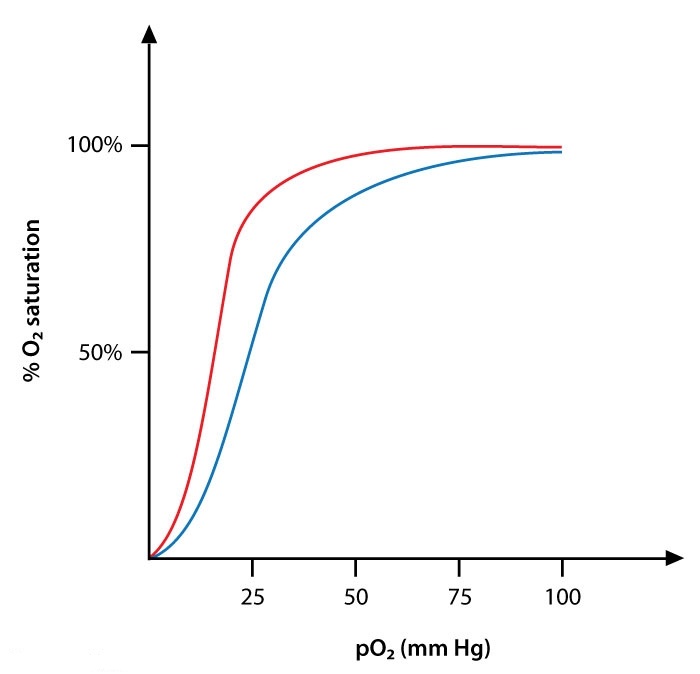
(Multiple Choice)
4.7/5 (90)
(90) A 34-year-old man develops severe chest and abdominal pain while shopping in a mall. Paramedics arrive and find him in severe distress. Several minutes later, he suffers a cardiac arrest with pulseless electrical activity and cannot be resuscitated. Postmortem examination reveals an internal hemorrhage as the cause of death. Histochemical evaluation of the patient's tissues reveals a defect affecting a large extracellular glycoprotein. This protein is normally found abundantly in large blood vessels, periosteum, and zonular fibers of the lens and functions to form microfibrils by surrounding elastin. This patient most likely suffered from which of the following conditions?
(Multiple Choice)
4.8/5 (93)
(93) A 55-year-old man comes to the office for follow-up of hypertension and coronary heart disease. He has been on several medications in the past with suboptimal blood pressure control. The physician considers adding verapamil to the patient's current regimen, as its vasodilatory properties make it useful for controlling systemic hypertension. Verapamil also affects cardiac contractility but has a minimal effect on skeletal muscle. Which of the following properties of skeletal muscle is responsible for its resistance to the medication?
(Multiple Choice)
4.9/5 (90)
(90) A 1-day-old boy is diagnosed with hyperphenylalaninemia by newborn screening. He is placed on a special phenylalanine-restricted diet with tyrosine supplementation. The parents are extensively counseled on the boy's condition and informed of the necessary dietary restrictions. They are also instructed to return to his physician for regular follow-up visits. Several months later, laboratory test results indicate that the infant has a normal serum phenylalanine level. Careful examination, however, reveals some neurological abnormalities, including axial hypotonia and microcephaly. Further workup is notable for elevated prolactin, and his physician suspects a cofactor deficiency. Which of the following enzymes is most likely deficient in this patient?
(Multiple Choice)
4.9/5 (80)
(80) In an animal experiment, mice proerythroblasts are cultured in 2 different growth media; the first medium is folate deficient, whereas the second (control) is supplemented with folic acid. Both media contain high concentrations of erythropoietin. Over 48 hours, cells in the control media proliferate and differentiate into reticulocytes, whereas in the folate-deficient media, cell proliferation is minimal, with the majority of cells undergoing apoptosis. In another experiment, a substance is added to the folate-deficient media, which prevents apoptosis and permits proliferation of the proerythroblasts. Which of the following is the most likely substance added to the growth medium?
(Multiple Choice)
4.8/5 (90)
(90) A 69-year-old woman with Alzheimer disease is brought to the emergency department after getting lost while taking a walk in her neighborhood. Her son has been unable to contact the patient for the last 2 days, and today the police found her wandering in a park. The patient says that she drank water from a park fountain but has not had anything to eat for over 24 hours. On physical examination, she is mildly confused with dry mucous membranes. Laboratory studies show a blood glucose level of 92 mg/dL. Which of the following hormones binds to an intracellular receptor to help maintain this patient's laboratory findings within the normal range?
(Multiple Choice)
4.8/5 (73)
(73) A 14-year-old boy is brought to the emergency department due to excessive urination and thirst. He has lost 4.5 kg (10 lb) in the last 3 weeks. The patient has no past medical problems. His father has type 1 diabetes mellitus. Physical examination shows dry mucous membranes. Laboratory studies reveal blood glucose of 455 mg/dL, normal anion gap, and hemoglobin A1c of 11.3%. The patient is diagnosed with type 1 diabetes, and treatment with insulin is initiated. In addition to lowering blood glucose, insulin increases glycogen synthesis in hepatocytes. Activation of which of the following molecules most likely promotes this metabolic effect?
(Multiple Choice)
4.7/5 (82)
(82) A 2-year-old boy is brought to the office by his parents. He is currently toilet-training during the day and at nighttime. After he urinated in the toilet last night, his parents forgot to flush the toilet and noticed that the boy's urine turned black overnight. The child has no significant past medical history and takes no medications. He can say 2-word sentences, follow 2-step directions, and jump with 2 feet off the ground. Examination shows a well-nourished child with no swelling or tenderness of any joints. Urinalysis results are as follows: 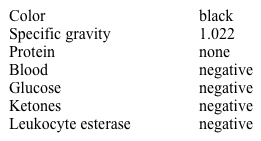 Which of the following conversion pathways is most likely deficient in this patient?
 (Multiple Choice)
4.8/5 (62)
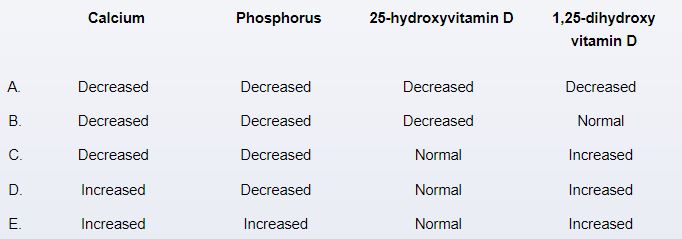
(62) A 2-year-old girl is being evaluated for bilateral leg pain and muscle weakness with associated growth delay. She is able to sit but unable to stand or walk without support due to pain. Physical examination shows patchy alopecia, frontal bossing, wrist widening, and lateral bowing of the tibia and fibula. Skeletal imaging reveals generalized osteopenia with cupping and fraying at the metaphyseal ends of the long bones of the upper and lower extremities. Further evaluation reveals a homozygous inactivating mutation in the gene encoding the vitamin D receptor. A serum sample would most likely show which of the following findings?
(Multiple Choice)
4.7/5 (76)
(76) 
Filters
- Essay(0)
- Multiple Choice(0)
- Short Answer(0)
- True False(0)
- Matching(0)