



 Chat with AI
Exam 48: Osmoregulation and Disposal of Metabolic Wastes

Exam 1: A View of Life66 Questions
Exam 2: Atoms and Molecules the Chemical Basis of Life69 Questions
Exam 3: The Chemistry of Life Organic Compounds68 Questions
Exam 4: Organization of the Cell71 Questions
Exam 5: Biological Membranes69 Questions
Exam 6: Cell Communication69 Questions
Exam 7: Energy and Metabolism73 Questions
Exam 8: How Cells Make Atp Energy-Releasing Pathways66 Questions
Exam 9: Photosynthesis Capturing Light Energy72 Questions
Exam 10: Chromosomes, Mitosis, and Meiosis66 Questions
Exam 11: The Basic Principles of Heredity78 Questions
Exam 12: Dna the Carrier of Genetic Information68 Questions
Exam 13: Gene Expression82 Questions
Exam 14: Gene Regulation77 Questions
Exam 15: Dna Technology and Genomics81 Questions
Exam 16: Human Genetics and the Human Genome75 Questions
Exam 17: Developmental Genetics83 Questions
Exam 18: Introduction to Darwinian Evolution66 Questions
Exam 19: Evolutionary Change in Populations72 Questions
Exam 20: Speciation and Macroevolution139 Questions
Exam 21: The Origin and Evolutionary History of Life67 Questions
Exam 22: The Evolution of Primates70 Questions
Exam 23: Understanding Diversity Systematics66 Questions
Exam 24: Viruses and Subviral Agents51 Questions
Exam 25: Bacteria and Archaea59 Questions
Exam 26: Protists69 Questions
Exam 27: Seedless Plants70 Questions
Exam 28: Seed Plants69 Questions
Exam 29: The Fungi69 Questions
Exam 30: An Introduction to Animal Diversity66 Questions
Exam 31: Sponges, Cnidarians, Ctenophores, and Protostomes99 Questions
Exam 32: The Deuterostomes75 Questions
Exam 33: Plant Structure Growth and Development73 Questions
Exam 34: Leaf Structure and Function76 Questions
Exam 35: Stem Structure and Transport75 Questions
Exam 36: Roots and Mineral Nutrition84 Questions
Exam 37: Reproduction in Flowering Plants81 Questions
Exam 38: Plant Developmental Responses to External and Internal Signals84 Questions
Exam 39: Animal Structure and Function an Introduction84 Questions
Exam 40: Protection Support and Movement68 Questions
Exam 41: Neural Signaling66 Questions
Exam 42: Neural Regulation67 Questions
Exam 43: Sensory Systems78 Questions
Exam 44: Internal Transport90 Questions
Exam 45: The Immune System Internal Defense79 Questions
Exam 46: Gas Exchange93 Questions
Exam 47: Processing Food and Nutrition90 Questions
Exam 48: Osmoregulation and Disposal of Metabolic Wastes111 Questions
Exam 49: Endocrine Regulation69 Questions
Exam 50: Reproduction95 Questions
Exam 51: Animal Development88 Questions
Exam 52: Animal Behavior83 Questions
Exam 53: Introduction to Ecology Population Ecology90 Questions
Exam 54: Community Ecology73 Questions
Exam 55: Ecosystems and the Biosphere91 Questions
Exam 56: Ecology and the Geography of Life81 Questions
Exam 57: Biological Diversity and Conservation Biology68 Questions
Select questions type


Match the excretory structure with its description or animal
Premises:
tubule open at both ends surrounded by capillary network
Responses:
protonephridia
nephridia
metanephridia
Correct Answer: Verified
Premises:
Responses:

Free
(Matching)
4.7/5  (81)
(81) Correct Answer:Verified
VerifiedThe outermost region of the kidney is called the:
Free
(Multiple Choice)
4.9/5 (73)
(73) Correct Answer:Verified
VerifiedD
Match the part of the human urinary system with its description.
Premises:
contains podocytes
Responses:
distal convoluted tubule
urethra
collecting duct
Correct Answer:Verified
VerifiedPremises:
Responses:
Free
(Matching)
4.9/5 (81)
(81) Correct Answer:Verified
VerifiedWhat is one disadvantage of excreting urea as opposed to uric acid?
(Multiple Choice)
4.9/5 (70)
(70) Simple epithelial cells of the renal tubule have abundant ____ to increase the surface area for reabsorption and numerous ____ to provide energy for actively transporting materials.
(Multiple Choice)
4.8/5 (65)
(65) Match the waste product with its description or the animal that excretes it.
Premises:
highly toxic nitrogenous waste
Responses:
urea
uric acid
ammonia
Correct Answer:Verified
VerifiedPremises:
Responses:
(Matching)
4.9/5 (73)
(73) Which of the following statements about the loop of Henle is true ?
(Multiple Choice)
4.8/5 (82)
(82) Figure 48-2 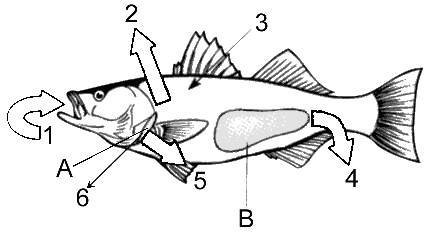 Refer to the accompanying figure in terms of a marine environment. What is the function of the structure labeled as A?
 (Multiple Choice)
4.9/5 (78)
(78) Match the waste product with its description or the animal that excretes it.
Premises:
excreted by birds and some reptiles
Responses:
uric acid
urea
ammonia
Correct Answer:Verified
VerifiedPremises:
Responses:
(Matching)
4.8/5 (94)
(94) Match the waste product with its description or the animal that excretes it.
Premises:
highly soluble; requires water for excretion
Responses:
urea
uric acid
ammonia
Correct Answer:Verified
VerifiedPremises:
Responses:
(Matching)
4.8/5 (84)
(84) The main point of entry of water into the blood of freshwater fishes is through the:
(Multiple Choice)
4.7/5 (82)
(82) Match the term below with its definition/description.
Premises:
forms from blood plasma and bathes all cells
Responses:
osmolarity
osmoregulation
osmoregulators
Correct Answer:Verified
VerifiedPremises:
Responses:
(Matching)
4.8/5 (82)
(82) Which nitrogenous waste product would be least toxic to an embryo developing in the aqueous environment found inside a shelled egg?
(Multiple Choice)
4.9/5 (74)
(74) Match the waste product with its description or the animal that excretes it.
Premises:
excreted by amphibians and mammals
Responses:
urea
uric acid
ammonia
Correct Answer:Verified
VerifiedPremises:
Responses:
(Matching)
4.9/5 (75)
(75) Match the term below with its definition/description.
Premises:
animals whose body fluid concentration varies along with changes in sea water
Responses:
osmole
electrolytes
osmoconformers
Correct Answer:Verified
VerifiedPremises:
Responses:
(Matching)
4.9/5 (96)
(96) Match the part of the human urinary system with its description.
Premises:
aldosterone makes the walls of this structure as well as the walls of the collecting duct permeable to sodium
Responses:
proximal convoluted tubule
Bowman's capsule
loop of Henle
Correct Answer:Verified
VerifiedPremises:
Responses:
(Matching)
4.7/5 (88)
(88) 
Filters
- Essay(0)
- Multiple Choice(0)
- Short Answer(0)
- True False(0)
- Matching(0)