



 Chat with AI
Exam 3: The Chemistry of Life Organic Compounds

Exam 1: A View of Life66 Questions
Exam 2: Atoms and Molecules the Chemical Basis of Life69 Questions
Exam 3: The Chemistry of Life Organic Compounds68 Questions
Exam 4: Organization of the Cell71 Questions
Exam 5: Biological Membranes69 Questions
Exam 6: Cell Communication69 Questions
Exam 7: Energy and Metabolism73 Questions
Exam 8: How Cells Make Atp Energy-Releasing Pathways66 Questions
Exam 9: Photosynthesis Capturing Light Energy72 Questions
Exam 10: Chromosomes, Mitosis, and Meiosis66 Questions
Exam 11: The Basic Principles of Heredity78 Questions
Exam 12: Dna the Carrier of Genetic Information68 Questions
Exam 13: Gene Expression82 Questions
Exam 14: Gene Regulation77 Questions
Exam 15: Dna Technology and Genomics81 Questions
Exam 16: Human Genetics and the Human Genome75 Questions
Exam 17: Developmental Genetics83 Questions
Exam 18: Introduction to Darwinian Evolution66 Questions
Exam 19: Evolutionary Change in Populations72 Questions
Exam 20: Speciation and Macroevolution139 Questions
Exam 21: The Origin and Evolutionary History of Life67 Questions
Exam 22: The Evolution of Primates70 Questions
Exam 23: Understanding Diversity Systematics66 Questions
Exam 24: Viruses and Subviral Agents51 Questions
Exam 25: Bacteria and Archaea59 Questions
Exam 26: Protists69 Questions
Exam 27: Seedless Plants70 Questions
Exam 28: Seed Plants69 Questions
Exam 29: The Fungi69 Questions
Exam 30: An Introduction to Animal Diversity66 Questions
Exam 31: Sponges, Cnidarians, Ctenophores, and Protostomes99 Questions
Exam 32: The Deuterostomes75 Questions
Exam 33: Plant Structure Growth and Development73 Questions
Exam 34: Leaf Structure and Function76 Questions
Exam 35: Stem Structure and Transport75 Questions
Exam 36: Roots and Mineral Nutrition84 Questions
Exam 37: Reproduction in Flowering Plants81 Questions
Exam 38: Plant Developmental Responses to External and Internal Signals84 Questions
Exam 39: Animal Structure and Function an Introduction84 Questions
Exam 40: Protection Support and Movement68 Questions
Exam 41: Neural Signaling66 Questions
Exam 42: Neural Regulation67 Questions
Exam 43: Sensory Systems78 Questions
Exam 44: Internal Transport90 Questions
Exam 45: The Immune System Internal Defense79 Questions
Exam 46: Gas Exchange93 Questions
Exam 47: Processing Food and Nutrition90 Questions
Exam 48: Osmoregulation and Disposal of Metabolic Wastes111 Questions
Exam 49: Endocrine Regulation69 Questions
Exam 50: Reproduction95 Questions
Exam 51: Animal Development88 Questions
Exam 52: Animal Behavior83 Questions
Exam 53: Introduction to Ecology Population Ecology90 Questions
Exam 54: Community Ecology73 Questions
Exam 55: Ecosystems and the Biosphere91 Questions
Exam 56: Ecology and the Geography of Life81 Questions
Exam 57: Biological Diversity and Conservation Biology68 Questions
Select questions type


What type of protein accelerates the thousands of different chemical reactions that take place in an organism?

Free
(Multiple Choice)
4.9/5  (81)
(81) Correct Answer: Verified
A
Which of the following is a purine base found in nucleotides?
Free
(Multiple Choice)
5.0/5 (67)
(67) Correct Answer:Verified
VerifiedC
Carotenoids are composed of isoprene subunits.
__________________
Free
(True/False)
4.9/5 (82)
(82) Correct Answer:Verified
VerifiedTrue
Condensation and hydrolysis reactions are catalyzed by the same enzymes..
__________________
(True/False)
4.8/5 (93)
(93) Which functional group forms bridges to help stabilize a protein's quaternary structure?
(Multiple Choice)
4.9/5 (61)
(61) Glucose and fructose are ____ because they have identical molecular formulas but their atoms are arranged differently.
(Multiple Choice)
5.0/5 (98)
(98) Figure 3-1 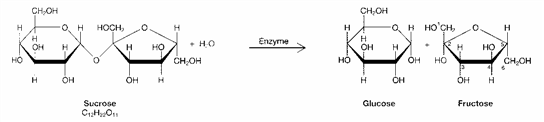 The products of the process in the accompanying figure are:
 (Multiple Choice)
5.0/5 (66)
(66) What carbohydrate energy storage molecule is found in animal liver and muscle cells?
(Multiple Choice)
4.9/5 (90)
(90) An amino group is weakly basic and includes a(n) ____ atom covalently bonded to two hydrogen atoms.
(Multiple Choice)
4.8/5 (86)
(86) Assume that the shaded portions of the molecule in the accompanying figure each represent different polypeptide chains. What does this represent? 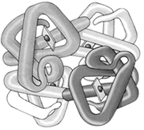
(Multiple Choice)
5.0/5 (79)
(79) Which pair matches the correct macromolecule with the bond that joins its subunits?
(Multiple Choice)
4.8/5 (74)
(74) Chitin is a polymer composed of N-acetyl glucosamine monomers.
__________________
(True/False)
4.9/5 (75)
(75) A(n) essential amino acid is one that the body cannot synthesize in sufficient amounts.
__________________
(True/False)
4.8/5 (73)
(73) How many electron pairs are shared between carbon 2 and 3 in the accompanying figure? 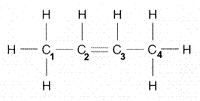
(Multiple Choice)
4.7/5 (86)
(86) Compare and contrast the structure, physical characteristics, and biological functions of two of the following: fats, steroids, and phospholipids.
(Essay)
4.9/5 (79)
(79) Analysis of a certain polymer shows that it contains phosphate groups, ribose groups, and pyrimidines. Based on this information, what statement best describes this compound?
(Multiple Choice)
4.9/5 (78)
(78) Which description illustrates the tertiary structure of a protein molecule?
(Multiple Choice)
4.7/5 (86)
(86) 
Filters
- Essay(0)
- Multiple Choice(0)
- Short Answer(0)
- True False(0)
- Matching(0)